Friday, December 26, 2025
Home Blog Page 601

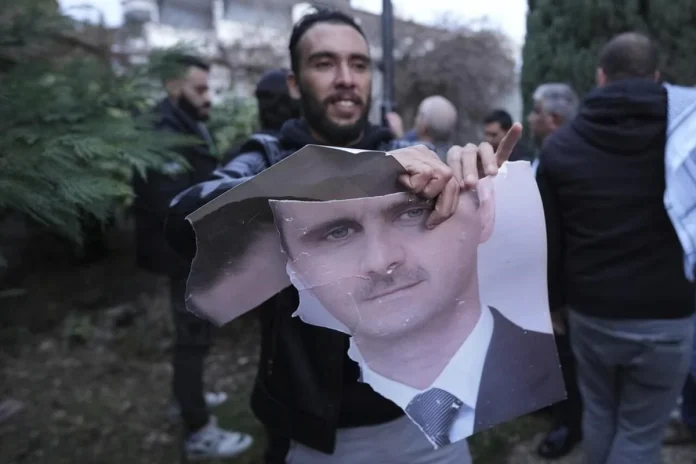
UK has blood of Syrians on its hands: Iran

Esmael baghaei

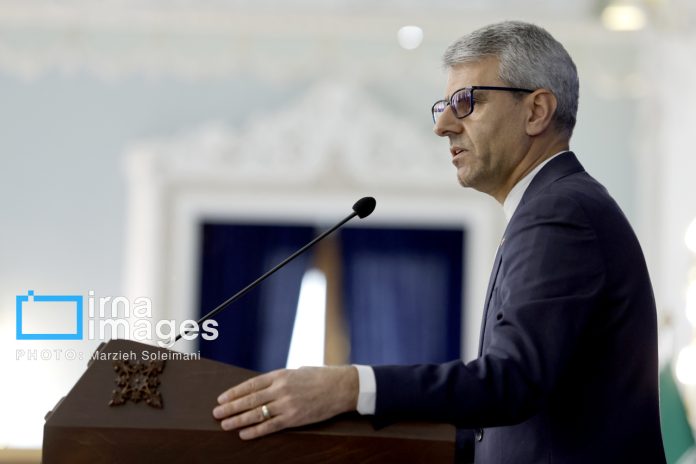
In a message posted on the social media platform X on Wednesday, Baqaei reminded Lammy, whom he called “an apologist for Israel by profession,” that he has been branded a “genocide denier” by Francesca Albanese, the UN Special Rapporteur on human rights in Palestinian territories.

He said it was “a new low” for Lammy, whose government has been persistently complicit in the “colonial erasure” of Palestinians, to be preaching about the situation in Syria and rejoicing in the “bloodshed there”.

“Mr. Lammy should be asked, among others, how much of the ‘over four billion pounds’ he claims the UK spent on the Syrian crisis was indeed used to ‘create’ and ‘sustain’ the crisis in the first place?” he asked.

In a statement to the House of Commons on the situation in Syria on Monday, Lammy said the current government in London refused to engage with President Bashar Assad when other governments were starting to “step up their presence in Damascus” because Assad was “a butcher with the blood of countless innocents on his hands”.

Baghaei asserted that the blood of Syrians was on the hands of those actors, including the United Kingdom, which contributed to the creation and expansion of the Daesh terrorist group in Syria and Iraq and provided the Israeli regime with lethal weapons.

“Syrian people are being pounded right now by lethal weapons that the UK has supplied to Israel,” he added.

“That’s far from graceful and glorious, not even for a country that has a long history of dark settler-colonial practices accompanied by repeated genocide of indigenous and aboriginal peoples.”

Armed militants, led by Hayat Tahrir al-Sham (HTS), took control of Damascus on Sunday and declared an end to President Assad’s rule in a surprise offensive that was launched from their stronghold in northwestern Syria, reaching the capital in less than two weeks.

The militants, blacklisted by the US, along with the UK and EU, have long been backed by the West and the Israeli regime to overthrow the Assad government.

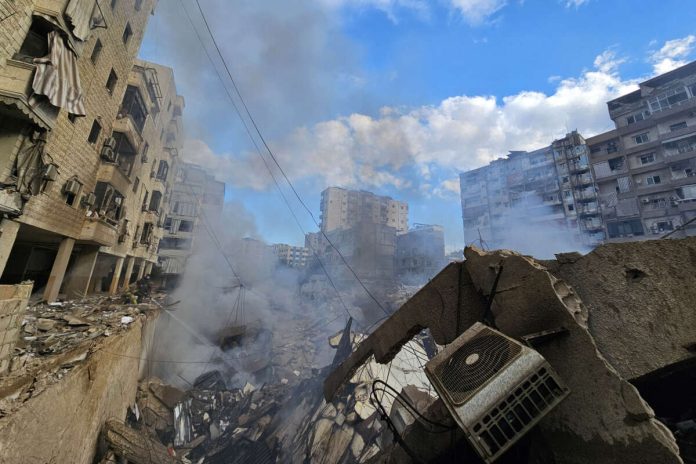
Since Sunday, the Israeli military has conducted hundreds of airstrikes on Syria and pushed its troops beyond a so-called buffer zone in the occupied Golan Heights and deep into Syrian territory in what has been condemned as a new “land grab” scheme by the regime.
Tehran’s air quality remains hazardous, residents advised to stay indoors

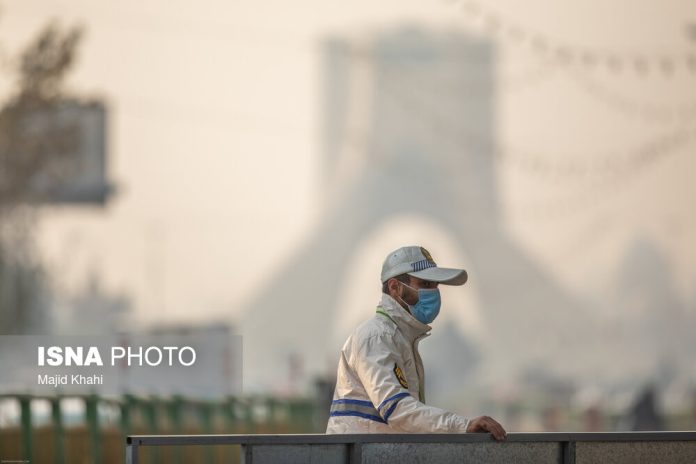
The air quality in the capital is currently in the “red zone”, indicating dangerous conditions.

Authorities are urging all residents, especially the elderly, children, heart and lung disease patients, and pregnant women, to remain indoors if possible.

Data from Tehran’s air quality monitoring stations reveal that 23 areaqs are in the red zone, meaning unhealthy for all age groups, while other areas are in the orange and yellow zones, based on the color-coding by the Air Quality Control Company.

Over the past 24 hours, the air quality index remained at 164, posing health risks to everyone.

Since the beginning of this year, Tehran residents have experienced only 5 days of clean air, 175 days of healthy air, 79 days of unhealthy air for sensitive groups, and 8 days of unhealthy air for all age groups.

Israeli attacks kill five in southern Lebanon amid fragile ceasefire

“An Israeli enemy drone strike on the town of Ainata killed one person and wounded another,” the ministry said.

An “Israeli strike on the town of Bint Jbeil killed three people,” while a third “on Beit Lif killed one person”, it added.

There was no immediate comment from the Israeli military on the attacks.

Israel’s army escalated its attacks on Lebanon in late September after more than 11 months of cross-border exchanges of fire with the Lebanese armed group Hezbollah, which began firing rockets towards Israel after the Palestinian group Hamas’s attack on southern Israel on October 7, 2023.

A United States-brokered ceasefire started on November 27, but both sides have accused the other of repeated violations. Israel has launched near-daily strikes, mostly in southern Lebanon, that have killed scores of people since the deal took effect.

Under the terms of the agreement, the Lebanese army is to deploy in the south alongside United Nations peacekeepers as the Israeli army withdraws over a period of 60 days.

Hezbollah is required to withdraw its forces north of the Litani River, about 30 kilometres (20 miles) from the border, and dismantle its military infrastructure in the south.

The Lebanese army said it deployed troops around Khiam, a key town just five kilometres (three miles) from the border that witnessed heavy Israeli air raids and fighting between Israeli soldiers and the Iran-aligned group.

The Lebanese military added “units deployed in five positions around the town of Khiam” in coordination with UN peacekeepers and “within the framework of the first phase of deployment in the area, at the same time as the Israeli enemy withdrawal”.

“The deployment will be completed in the next phase, while specialised units” will survey the town to “remove unexploded ordnance”.

Earlier, UN peacekeepers entered Khiam “to inspect the road and verify the Israeli enemy army’s withdrawal”, Lebanon’s state-run National News Agency (NNA) reported.

The NNA announced that the peacekeepers found the body of a man “in the vicinity of his house” in the border town.

The NNA reported that ambassadors from the United States, France, Saudi Arabia, Qatar and Egypt held a meeting Wednesday with Lebanon’s Speaker of Parliament Nabih Berri, a Hezbollah ally who has scheduled a parliament session in January for lawmakers to elect a president.

Crisis-hit Lebanon has been without a head of state for more than two years amid deadlock between pro- and anti-Hezbollah blocs in Parliament.

Envoys from the five countries who met Berri have been working for months to facilitate the process.

Separately, US Army General Erik Kurilla, who leads US Central Command, met with the head of the Lebanese army General Joseph Aoun to discuss ongoing American support for the implementation of the ceasefire agreement.

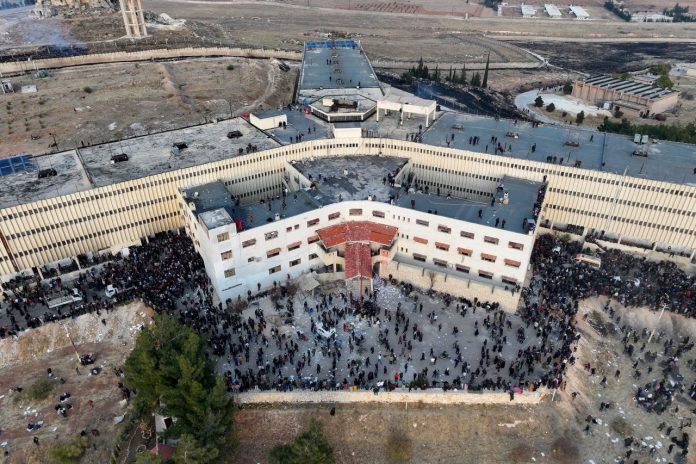
HTS leader promises to punish those involved in torture, murder of detainees in Syria

Syria War

“We will pursue them in Syria, and we ask countries to hand over those who fled so we can achieve justice,” Hayat Tahrir al-Sham (HTS) leader Ahmed al-Sharaa, also known as Abu Mohammed al-Julani, said in a statement published on the Syrian state TV’s Telegram channel on Wednesday.

His comments came after thousands of detainees were released and families hoped to find others who disappeared in the country’s notorious jails, including the Sednaya Prison.

The world is carefully watching to see if Syria’s new rulers can stabilise the country after a 13-year war devastated the country.

The new interim prime minister has also stated he aimed to bring back millions of Syrian refugees, create unity and provide basic services, but rebuilding would be daunting.

“We have no foreign currency and as for loans and bonds, we are still collecting data,” said Mohammed al-Bashir, who headed a HTS-led administration in Idlib before the lightning offensive swept into Damascus and toppled al-Assad over the weekend.

He stated that the full appointees of the interim government will be announced within days.

He explained that most government employees have returned to work and reiterated that the door was open for those to join the interim government, except, he said, those who were involved in “the blood of the people” would not be welcomed back.

Starting next week, schools and universities will reopen, he added.

According to HTS, the current transitional government is set to rule until March 2025.

Militants waged a surprise two-pronged attack on Syria’s Aleppo and the countryside around Idlib on November 27.

Soon afterward, they seized control of several major Syrian cities, including Hama, Homs, Dara’a, and Suwayda, before entering the capital Damascus.

On Sunday, armed groups, led by HTS militants, announced that they had fully captured Damascus, and confirmed reports of the fall of Assad’s government.

United Nations Secretary-General Antonio Guterres said on Wednesday during a visit to South Africa that there were some signs of hope from the end of “the Syrian dictatorship”.

Guterres added that the UN was totally committed to a smooth transition of power in Syria.

“I fully trust Syrian people to be able to choose their own destiny,” Guterres continued.

UN envoy for Syria Geir Pedersen also stated that Syria’s transitional government must strive to be inclusive to avoid new “civil strife”.

“My biggest concern is that the transition will create new contradictions in the manner that could lead to new civil strife and potentially a new civil war.”

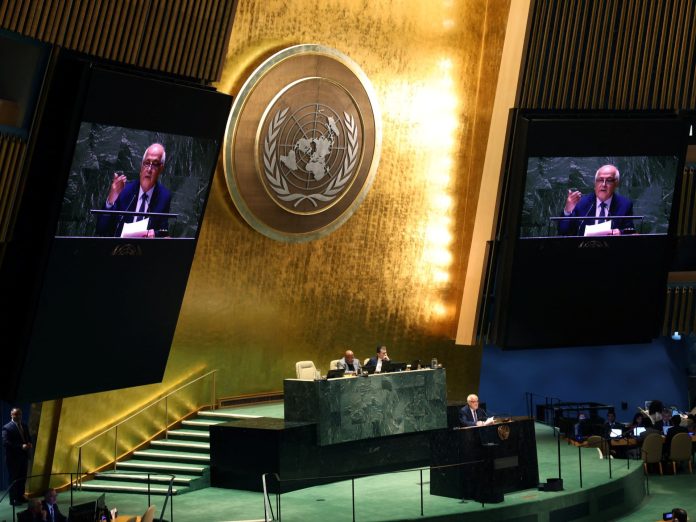
UN General Assembly calls for immediate and unconditional Gaza ceasefire

The UN General Assembly on Wednesday overwhelmingly adopted a resolution calling for an immediate and unconditional ceasefire in the besieged enclave, a symbolic gesture rejected by the United States and Israel.

The resolution — adopted by a vote of 158-9, with 13 abstentions — urges “an immediate, unconditional and permanent ceasefire”, and “the immediate and unconditional release of all hostages” — wording similar to a text vetoed by Washington in the Security Council last month.

At that time, Washington used its veto power on the Council — as it has before — to protect its ally Israel, which has been at war with Hamas in the Gaza Strip since the Palestinian militant group’s October 7, 2023 attack.

It has insisted on the idea of making a ceasefire conditional on the release of all captives in Gaza, saying otherwise that Hamas has no incentive to free those in captivity.

While UN Security Council resolutions are legally binding, General Assembly resolutions are not, though they do reflect world opinion.

The Palestinians and their supporters went to the General Assembly after the US vetoed a Security Council resolution on November 20 demanding an immediate Gaza ceasefire.

The language of the ceasefire resolution adopted by the assembly is the same as the text of the vetoed Security Council resolution, and demands “an immediate, unconditional and permanent ceasefire to be respected by all parties,” while also reiterating a “demand for the immediate and unconditional release of all hostages”.

Palestinian UN Ambassador Riyad Mansour stated last week, during the first day of debate in the assembly’s special session on the issue, that Gaza is “the bleeding heart of Palestine”.

“The images of our children burning in tents, with no food in their bellies and no hopes and no horizon for the future, and after having endured pain and loss for more than a year, should haunt the conscience of the world and prompt action to end this nightmare.”

At least 44,805 Palestinians, mostly women and children, have been killed as a result of the war that was launched on October 7, 2023 following a retaliatory military operation staged by Gaza’s resistance movements in response to the Israeli regime’s decades-long campaign of occupation and deadly attacks against Palestinians.

Former Iranian MP Falahatpisheh: Assad’s downfall does not mean defeat for axis of resistance 

Syria War

He emphasized that the primary losers in these events are the Syrian people themselves.

Falahatpisheh noted that the separation of Iran’s national interests from the fate of the Assad regime is a positive sign.

Reflecting on his past role in investigating the case of Imam Musa Sadr, a Lebanese-Iranian Shia politician who disappeared several decades ago, he mentioned that there was no indication linking Sadr’s fate to Damascus, as investigations were primarily directed towards Libya.

He acknowledged that after former Libyan dictator Muammar Gaddafi’s fall, there were discussions about Sadr, but they did not lead to any significant breakthroughs.

Falahatpisheh advised Iranian officials to focus on commonalities rather than fostering enmity, to prevent new centers of hatred from emerging in Iran-Syria relations.

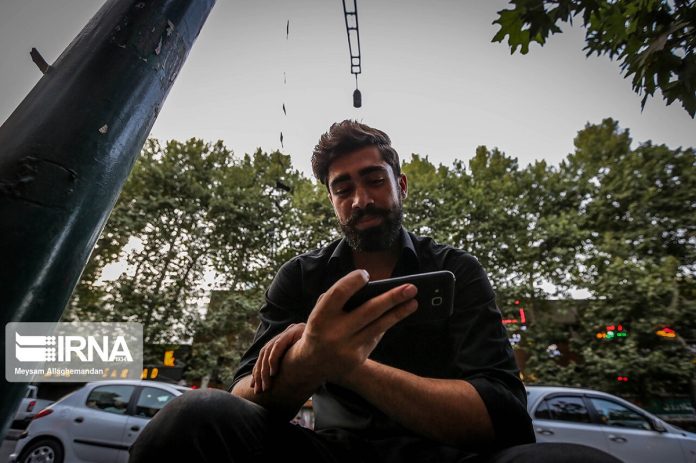
Iranian politician urges lifting of internet filtering 

Mobile Internet Iran

Vaezi stated that in today’s era, where the virtual space has emerged, both public awareness has increased and people are comparing themselves with others, which necessitates that governments adapt to this situation.

He emphasized that we should not seek people only for elections but should engage them at all times.

Vaezi also mentioned that the issue of hijab law has not yet been implemented, which has caused dissatisfaction, and noted that discussions about filtering have been ongoing for about four months, revealing that the Supreme Council of Cyberspace is an obstacle in this regard.

The lifting of the filtering was a promise President Pezeshkian made while campaigning for president several months ago.

He has been making strenuous efforts to follow through on the pledge. But it’s still unclear if he will be successful.

Iran denies rumors of $42 million theft from Syria embassy following Assad’s fall

Israeli strike on Iranian consulate in Syria

In a statement shared on its X account on Wednesday, the embassy clarified that no assets or equipment were present in its Damascus building at the time of the incident, contradicting media reports alleging $42 million in cash had been looted.

The embassy emphasized that all necessary measures were meticulously taken before the evacuation of the premises, ensuring the security of its belongings.

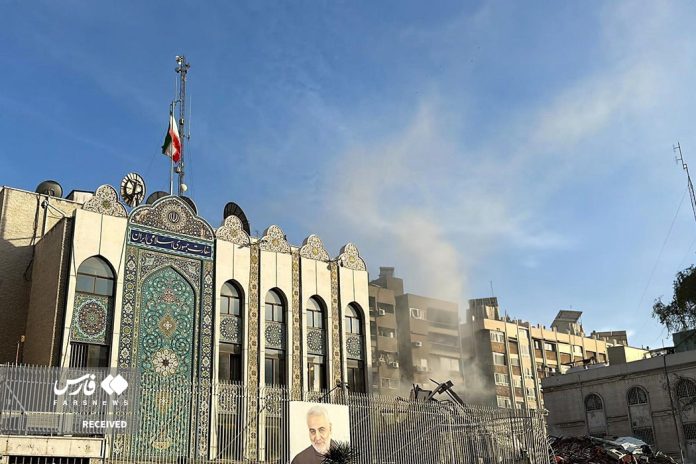
Foreign-backed militants, led by Hayat Tahrir al-Sham, have ransacked the Iranian embassy in Damascus after the government of President Bashar al-Assad fell early Sunday.

Videos and photos circulated online Sunday showed the militants tearing down the poster that depicted martyred Iranian anti-terror commander General Qassem Soleimani and Hezbollah chief Seyyed Hassan Nasrallah, at the diplomatic mission’s exterior.

They also broke the windows of the embassy and looted its offices.

Iran dismisses E3 allegations about its nuclear program

Esmail Baghaei

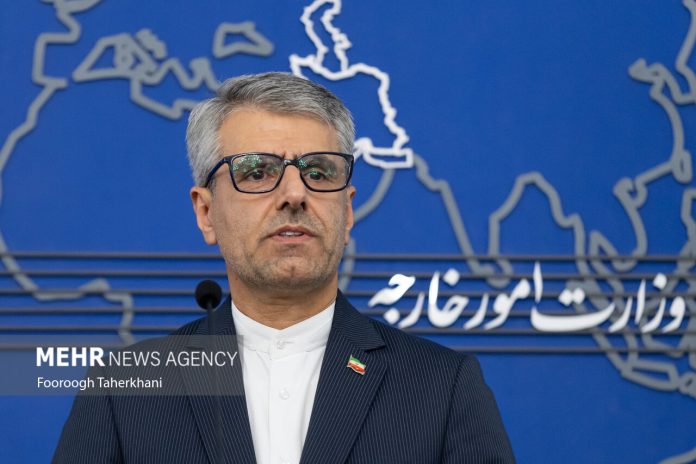
Iran’s spokesperson for the Ministry of Foreign Affairs rejected the claims made in the joint statement issued by the foreign ministry spokespersons of France, Germany, and the United Kingdom regarding recent developments in the peaceful nuclear program of the Islamic Republic of Iran.

Esmaeil Baqaei emphasized that the recent decision to activate a greater number of advanced centrifuges was taken within the framework of the explicit rights of NPT members, with appropriate notifications and under the supervision of the International Atomic Energy Agency (IAEA).

Baqaei added that the Islamic Republic of Iran, as a responsible member of the IAEA, has demonstrated its commitment to cooperation with the agency. He added that the understandings reached during the IAEA Director General’s visit to Tehran on November 14–15, 2024, stand as evidence of this commitment.

He stated it is regrettable that the three European countries, disregarding the achievements of the Director General’s visit—which could have served as a foundation for strengthening future cooperation—persisted in their unconstructive approach and adopted a resolution against Iran.

Referring to the meeting held on November 29, 2024, with representatives of the three European countries in Geneva, the spokesperson affirmed that the Islamic Republic of Iran remains committed to constructive engagement based on mutual respect. At the same time, he emphasized that Iran will respond appropriately to any confrontational or unlawful behavior within the framework of its legal rights.

Baqaei stressed that the root cause of the current situation regarding the implementation of the JCPOA is not Iran’s peaceful nuclear activities or its remedial measures, but rather the unilateral withdrawal of one member and the failure of the three European members to fulfill their obligations.

The Iranian Foreign Ministry spokesperson reiterated the importance of mutual adherence to the path of constructive engagement and advised the three European countries to address the root causes of the current situation.

He urged them to abandon provocative and unhelpful statements about Iran’s peaceful nuclear activities and focus instead on the primary reasons for the prevailing conditions, namely their ongoing breach of commitments and the unlawful and inhumane policy of pressure and sanctions against the Iranian people.

Baqaei made the remarks on Tuesday while responding to a joint statement by France, Germany, and the UK that accused Iran of failing to honor its commitments under the 2015 nuclear deal and the United Nations Security Council Resolution 2231.

The European statement came after a report by the UN nuclear watchdog indicating that Tehran had stepped up uranium enrichment activity, fulfilling its pledge to respond to a Western-sponsored censure resolution criticizing the country for what was described as a lack of cooperation with the IAEA.

Iran has reduced its commitments under the agreement over the past years following the re-imposition of sanctions lifted under the accord and the failure of European parties to compensate for the losses incurred by Iran.

US considering implementing harsher sanctions on Russian oil ahead of Trump’s return: Report

Russia Oil

Oil revenues are a crucial source of funding for Russia’s war machine, and have been repeatedly targeted by Western sanctions since the start of full-scale invasion of Ukraine.

Although no concrete decisions have been made on the potential sanctions, sources familiar with the discussions told Bloomberg that a number of avenues are being explored, including sanctions on Russia’s so-called ‘shadow fleet’.

The additional sanctions, targeting Russian oil tankers that carry billions of dollars worth of oil and oil products, may be unveiled in the coming weeks, the sources said.

The new sanctions are expected to be announced ahead of the January presidential inauguration, amid uncertainty over a future Trump administration’s handling of peace negotiations.

While Trump has pledged to get the US “out” of Russia’s war and negotiate a quick peace deal, Ukrainian officials have urged the president-elect to maintain support and adopt a “peace through strength” approach in dealings with Russia.

As the White House prepares for a transition and President Joe Biden’s influence diminishes in the lead-up to the inauguration, the new sanctions are under consideration amid declining oil prices, according to sources cited by Bloomberg.

Following the US presidential election, Biden has continued to implement hardline foreign policy decisions much to the detriment of Russia, including authorizing Ukraine to use US-supplied long-range ATACMS missiles for strikes inside Russia

In late November, the Biden administration imposed harsher sanctions on dozens of Russian banks, including Gazprombank, Russia’s main conduit for energy-related payments — sinking the Russian ruble to levels it has not seen since March 2022, following the full-scale invasion.

The decisions to sanction Gazprombank stirred blowback from some Western allies, namely Hungary and Turkey — with officials fearing that similar strict future sanctions may drive up oil prices.

The latest discussions on additional sanctions comes the Biden administration rushes to deliver the remaining approximately $5 billion in military aid to Ukraine ahead of the inauguration of Trump, amid concerns that a future Trump administration would halt weapons shipments before they reach Kyiv.

Two administration officials told Politico in early November that the White House plans to expedite the weapons delivery ahead of the January inauguration, as Trump has previously stated that he would cease military aid to Ukraine unless it agrees to hold peace negotiations with Russia.