Friday, December 26, 2025
Home Blog Page 602

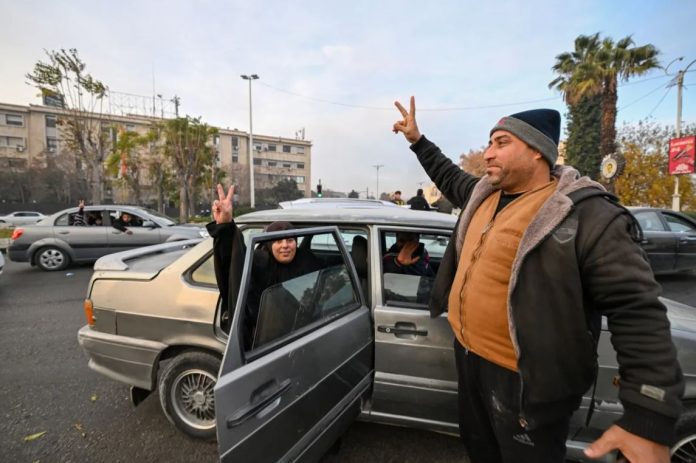
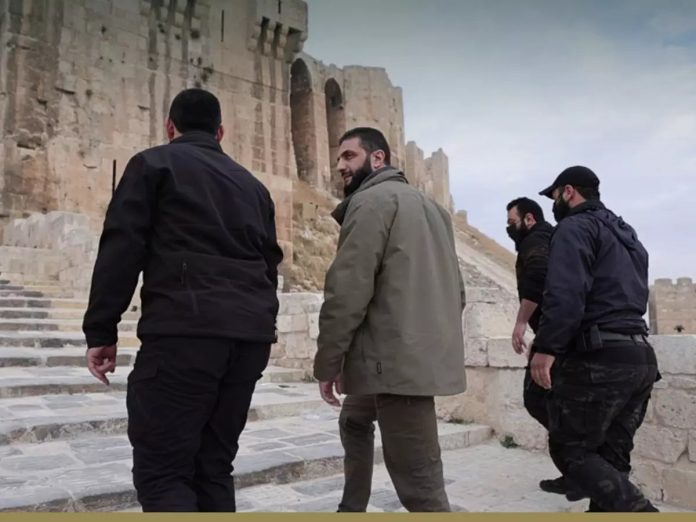
Syria ‘exhausted from war’: HTS leader

Syria War

“People are exhausted from war. So the country isn’t ready for another one and it’s not going to get into another one,” Ahmed al-Sharaa, also known as Abu Mohammed al-Julani, said.

“The source of our fears was from the Iranian militias, Hezbollah and the regime which committed the massacres we are seeing today. So their removal is the solution for Syria. The current situation won’t allow for a return to panic.”

Al-Sharaa added Syria will be rebuilt and he sought to reassure foreign countries.

“Their fears are unnecessary, God willing. The fear was from the presence of the [al-Assad] regime. The country is moving towards development and reconstruction. It’s going towards stability,” he continued.

A spokesperson for the Department of Political Affairs in Damascus has also issued a statement urging unity in the country as it transitions away from the Bashar al-Assad government’s administration of Syria.

“Syria needs the efforts of all its people in the coming period,” the spokesperson said.

“The revolution has many cadres,” the spokesperson continued, saying that the new administration would not ignore them.

“We do not accept a divided Syria, and everyone must prepare themselves for the change that has occurred. There will be no room for carrying weapons outside the state,” he added.

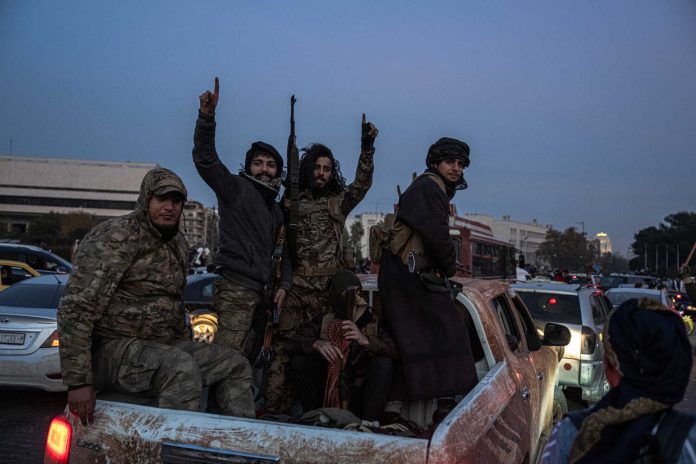
Militants waged a surprise two-pronged attack on Syria’s Aleppo and the countryside around Idlib on November 27.

Soon afterward, they seized control of several major Syrian cities, including Hama, Homs, Dara’a, and Suwayda, before entering the capital Damascus.

On Sunday, armed groups, led by HTS militants, announced that they had fully captured Damascus, and confirmed reports of the fall of Assad’s government.
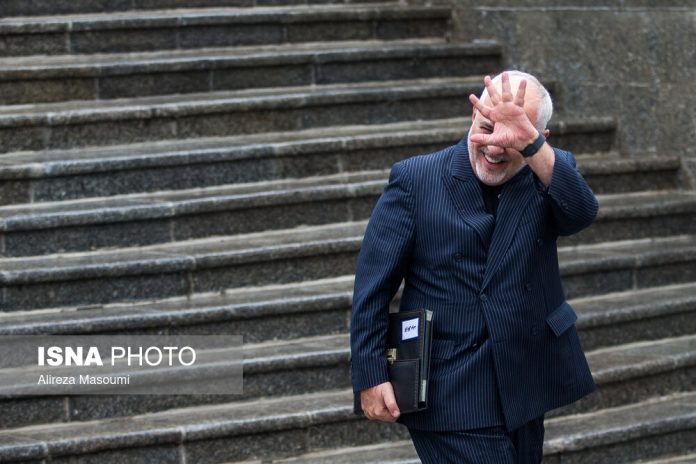
Iran’s Zarif attributes Assad downfall to ‘arrogance, failure to achieve political agreement’

Syria War

In a post on Instagram, Zarif wrote that Assad’s collapse was unpredictable, but advised Syrians to form a comprehensive government that respects all its people and their sanctities.

He also warned that the threat of Daesh and terrorism remains a significant concern.

The vice president dismissed the notion that Assad’s fall weakened Iran, arguing that the resistance movement is not a proxy force created or sustained by Iran, but rather “a response to Israeli occupation and apartheid, existing even before the Iranian Revolution.”

Zarif reiterated that the resistance movement operates independently of Iran, driven by its own national goals.

“As two examples out of dozens of historical examples, the October 7 operation (by Palestinian groups against Israel) was carried out without Iran’s knowledge, and True Promise 1 and 2 operations (by Iran against Israel) were conducted from Iranian territory and not by the resistance,” he argued.

He also underscored Iran’s strength and ability to defend itself, despite the high costs, and stressed the importance of building on the achievements inside the country with a focus on development, welfare, and regional cooperation.

US says not seriously considering delisting HTS terror designation

HTS has been designated as a terrorist organization by the US, UK, and UN. However, the group and its leader, Abu Mohammad al-Jolani, have sought to rebrand themselves as a more moderate force in Syria, emphasizing inclusion and a political path forward.

“There are no discussions right now about changing the policy with respect to HTS,” White House national security spokesman John Kirby told reporters in a call.

Kirby said that the US is closely watching the group’s actions, saying that Abu Mohammad al-Jolani, the leader of HTS, and others are “saying all the right things”.

“We got to we got to watch and see what they actually do, and the degree to which they make good on their pledges,” Kirby noted, adding, “We’re just not at a point now where we can have a serious discussion about delisting anyone at this point.”

Kirby said that the US is in communication with HTS and “all” of the Syrian rebel groups.

“We do have ways to communicate with all of them, and we are pulling on those ways as you would expect that we would,” he added.

Secretary of State Antony Blinken also said in a statement Tuesday that the United States “will recognize and fully support” a new Syrian government that is chosen by the Syrian people and adheres to four key principles,

It is the first explicit pledge of US recognition following the fall of the Assad government this weekend.

“The United States reaffirms its full support for a Syrian-led and Syrian-owned political transition. This transition process should lead to credible, inclusive, and non-sectarian governance that meets international standards of transparency and accountability, consistent with the principles of United Nations Security Council Resolution 2254,” Blinken said in a statement.

The four principles he outlined include commitments to:

“fully respect the rights of minorities”
“facilitate the flow of humanitarian assistance to all in need”
“prevent Syria from being used as a base for terrorism or posing a threat to its neighbors”
“ensure that any chemical or biological weapons stockpiles are secured and safely destroyed”

Blinken called on all countries to “support an inclusive and transparent process and refrain from external interference.”

“The United States will recognize and fully support a future Syria government that results from this process,” he continued, adding, “We stand prepared to lend all appropriate support to all of Syria’s diverse communities and constituencies.”

US State Department spokesman Matthew Miller has also responded to a reporter’s question about plans to reopen the embassy, which closed in 2012.

“It’s not something we have immediate plans to do, but we have made clear the steps that we want to see the government of Syria take,” Miller said.

Since the ouster of Bashar al-Assad days ago, the US has repeatedly announced that it is waiting to evaluate the actions of Hayat Tahrir al-Sham, the main victorious opposition group in Syria, before making a decision on how to engage with it.

“Should we see a process that follows those principles, we are prepared to recognise a Syrian government that does so, and of course … the opening of an embassy is the type of step that follows such recognition,” Miller added.

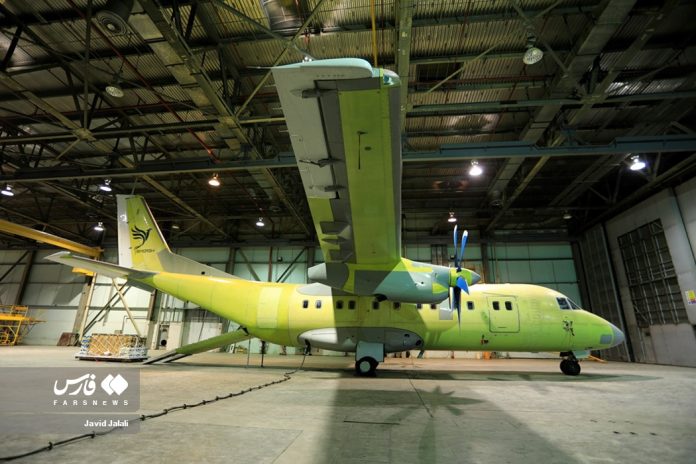
Iran’s Defense Ministry unveils Simorgh light aircraft

Iran transport plane Simorgh

Designed and manufactured by Iran’s Ministry of Defense and knowledge-based companies, the aircraft meets international standards and regulations.

Defense Minister Brigadier General Aziz Nasirzadeh highlighted Iran’s advancements in the defense and military sectors, emphasizing the significant strides made in recent years towards developing the aviation industry.

He pointed out the crucial role of young local engineers in achieving the developments and noted the importance of collaboration with knowledge-based companies in the aviation sector.

The commander of the Islamic Republic of Iran Air Force, Brigadier General Hamid Vahedi, underscored the value of the International Aerospace Exhibition for fostering growth and innovation in the aviation sector.

He emphasized Iran’s self-sufficiency in the aviation industry, noting that sanctions have not hindered their resolve or capabilities.

Meanwhile, Mohsen Rezaei, Secretary of the Economic Coordination Council, expressed Iran’s readiness to sell military equipment, including drones and missiles, to other countries, particularly Arab nations, to help them defend against aggressions.

The exhibition also honored notable figures in Iran’s aviation industry, celebrating their contributions to the field.

With over 300 foreign guests in attendance, the event continues until December 14th, offering daily aircraft displays in Kish along the Persian Gulf.

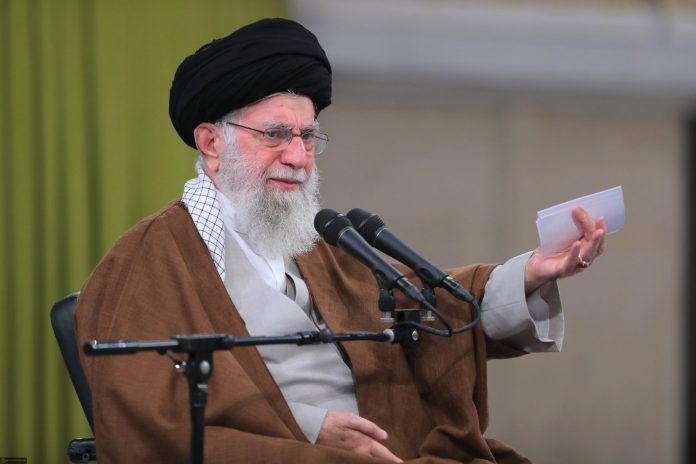
Iran Leader: US, Israel orchestrated events in Syria

Ayatollah Khamenei

Addressing a large crowd on Wednesday, Ayatollah Khamenei emphasized while a neighboring country of Syria has played a clear role, the main conspirators and command centers are located in the US and Israel.

Ayatollah Khamenei stated, “There should be no doubt that what has happened in Syria is the result of a joint American and Zionist plan. Yes, a neighboring country of Syria has played a clear role in this matter and continues to do so – everyone can see this – but the main plotters and the main command center are in the US and the Zionist regime.”

The Leader further noted, “We have evidence. These pieces of evidence leave no room for doubt.”

Ayatollah Khamenei also emphasized the steadfastness and growing influence of the resistance movement in the region.

He pointed out, “Resistance is this: the more pressure you apply, the stronger it becomes; the more crimes you commit, the more motivated it becomes. The more you fight it, the wider it spreads. And I tell you, by the grace of God, the scope of resistance will extend across the entire region more than ever before.”

The Leader criticized analysts who underestimate the resilience of the resistance, suggesting that a weakened resistance would lead to a weakened Iran.

Ayatollah Khamenei reiterated, “Those ignorant analysts who are unaware of the true meaning of resistance think that if resistance weakens, Islamic Iran will also weaken. I tell you, by God’s grace, with God’s permission, Iran is strong and will become even stronger.”

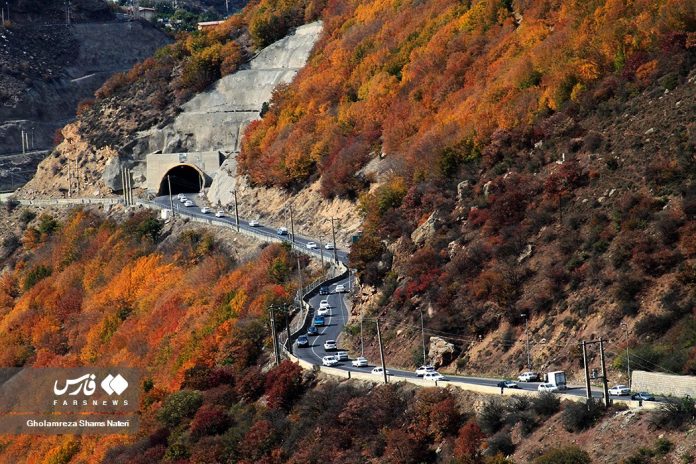
Heavy traffic in northern Iran roads as Tehran residents flee pollution during closures

Iran Road

The decision, made by the Tehran Air Pollution Emergency Committee, aimed to protect public health during the peak of pollution, however, the influx of vehicles, coupled with snowfall and rain, has resulted in heavy traffic congestion, especially on the Kandovan and Haraz highways leading to the provinces of Mazandaran and Golestan.

Colonel Hadi Ebadi, the acting head of Mazandaran province’s road police, reported extremely heavy traffic on major roads, including the Kandovan route from Shahrestanak to Nesa and the Tehran-North Freeway.

Ebadi urged travelers to drive carefully, manage their trips, and adhere to traffic laws to ensure safety.

The Iranian capital and several other cities have been hit by severe air pollution over the past week, forcing schools and universities to rely on remote leading.

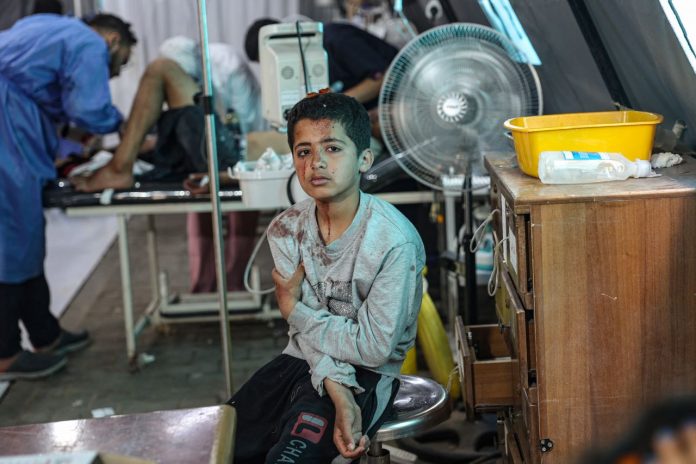
Authorities say dozens of patients at Gaza hospital at risk of starving to death

Gaza War

The Ministry of Health in Gaza said in a statement late on Tuesday that 60 patients were “at risk of death”.

“The humanitarian situation inside the hospital has become extremely dangerous, as the wounded lack basic needs, which increases their suffering under the difficult conditions imposed by [Israeli] forces,” the ministry added.

The hospital is located in Beit Lahiya in the north of the Gaza Strip, which has been under Israeli military siege since early October.

The death toll from more than 14 months of Israeli attacks on Gaza has reached 44,800 people, the ministry announced. An estimated 1,200 people were killed in Israel during attacks led by the Palestinian armed group Hamas on October 7 2023, and 250 were taken captive.

The ministry’s latest update came after Sigrid Kaag, the United Nations’ humanitarian coordinator for the Gaza crisis, briefed members of the UN Security Council in a closed meeting in New York on Tuesday afternoon.

Speaking to reporters after the briefing, Kaag said she told the council the situation in the Gaza Strip is “a very, very bleak picture”.

“I’ve spoken of the inhumane conditions in which our fellow human being civilians are trying to survive, the young and the old,” she added.

Kaag also stated she discussed with members of the UN Security Council “our hope for a ceasefire and the unconditional release of the hostages that this would enable, obviously, a further surge of assistance”.

Kaag’s comments came as Israel’s Channel 13 reported that Israeli National Security Council ministers have been briefed that Hamas has expressed an interest in reaching a ceasefire and captive agreement.

Channel 13 also reported that Qatar has been “playing a significant role in negotiations for the deal” after previously announcing it was suspending its role as mediator.

Speaking at the Doha Forum on Saturday, Qatari Foreign Minister and Prime Minister Sheikh Mohammed bin Abdulrahman Al Thani said “momentum is coming back” to ceasefire talks.

The latest expectations of a truce come as the Israeli military announced it had launched 480 attacks on Syria in the 48-hour period after Syrian rebels toppled the decades-long government of the al-Assad family.

Israeli soldiers also seized Syrian-controlled territory in a buffer zone of the Golan Heights that was established by a 1974 ceasefire agreement with Damascus.

A separate ceasefire deal between Israel and Hezbollah in Lebanon has largely continued to hold.

Iran vice president Zarif clarifies children’s US citizenship

Javad Zarif

Zarif said, “At the time of the birth of both my children, I was not a diplomat. If I had been a diplomat, my children would not have received citizenship.”

“I had a regular passport. I had a G visa, not an A visa as some claim; this visa is for UN employees and representatives to the United Nations,” he noted.

The former Iranian foreign minister also explained that he received his first diplomatic passport in 1988, while his son was born in 1984, and his daughter in 1987.

Zarif asserted that his children are natural-born citizens of the US, and dismissed claims that he applied for citizenship as false.

“My children are 40 years old, and I am not their guardian,” he concluded.

The statements come in light of recent scrutiny over the citizenship of Iranian officials’ children and spouses, raising questions about their loyalty and commitment to the country.

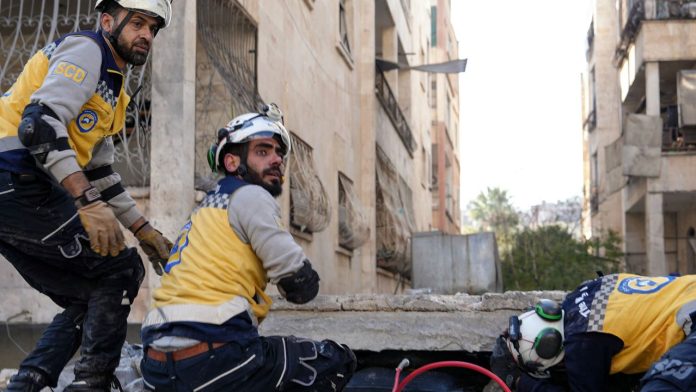
Syrian civil defense group urges Putin to pressure Assad to reveal locations of secret prisons

White Helmets

Assad fled to Russia – one of his key allies — after rebels took the Syrian capital, Damascus, over the weekend.

“We at the Syrian Civil Defense have submitted a request to the United Nations through an international mediator, urging Russia to pressure the criminal wanted for justice in Syria, Bashar al-Assad, to hand over maps of secret prison locations and lists of detainees’ names so we can reach them as quickly as possible,” White Helmets Director Raed Al-Saleh posted to X on Tuesday.

He said the “brutality and crimes committed by the Assad regime against Syrians — through killing, detention, and torture — are beyond description, prolonging the pain and heartbreak of mothers” adding that justice for the victims and holding “perpetrators accountable” would be “the first step towards healing wounds and supporting peace-building efforts”.

The Assad government’s notorious detention facilities were black holes where, as far back as the 1970s, anyone deemed an opponent disappeared, CNN wrote in a report.

Saydnaya prison was one of the most infamous sites, known as “the slaughterhouse” – where as many as 13,000 people were hanged between 2011 and 2015, according to Amnesty International.

Syrian rebels freed many prisoners from Saydnaya amid their swift advance this past weekend. But the White Helmets did not find any evidence of secret, sealed-off areas holding people after speculation mounted online of secret cells.

Israel says carried out about 480 strikes in Syria in two days

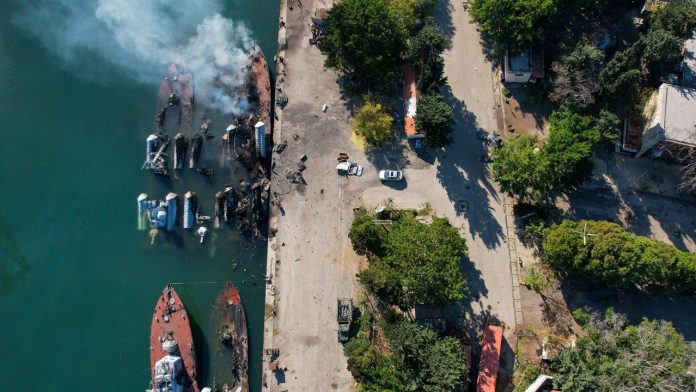
The Israeli military said in a statement Tuesday that it carried out about 480 strikes over the past 48 hours on strategic military targets in Syria.

The regime’s military claimed that it struck facilities and that it struck most of the strategic weapons stockpiles in Syria.

The military added the targets included 15 naval vessels, anti-aircraft batteries and weapons production sites in several cities.

Also, reports suggest that weapons depots, navy vessels and a research center have been destroyed.

Israel has also sent troops into a buffer zone east of the occupied Golan Heights. Still, the regime denies advancing towards Damascus, insisting that its forces were stationed within the zone.

Hundreds of Israeli strikes have been reported since the fall of President Bashar al-Assad’s government in Syria.

The Israeli army has claimed that it had destroyed as much as 80% of the military capabilities of al-Assad’s government.

Army operations “have been completed, with 70-80% of Assad’s regime’s military capabilities destroyed,” according to Israeli Army Radio, which indicated that “350 Israeli warplanes carried out strikes from Damascus to Tartus, targeting dozens of aircraft, helicopters, air defense systems, and ammunition depots”.

Israel has also announced it is planning a “sterile defence zone” in southern Syria as it continues attacking the country in the wake of al-Assad’s ouster.

The UN special envoy for Syria has called the Israeli attacks a deeply troubling development, describing the current situation in the Arab country as highly fluid.

Geir Pedersen said tensions remain unresolved and urged other countries to avoid actions that could impede the ongoing transformation.