Friday, December 26, 2025
Home Blog Page 603

Putin says Russia has possible replacement for atomic weapons

Vladimir Putin

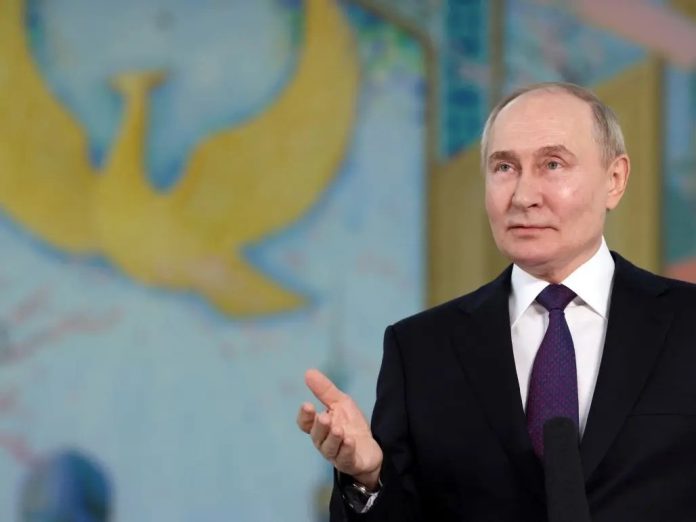
Russia is not tightening, but improving its nuclear doctrine, Putin said regarding the recent update to the country’s nuclear posture. He explained that Russia needs to improve its new missile system more than it does its nuclear doctrine.

“What we need now is not to improve the nuclear doctrine, but the Oreshnik, because, if you look at it, a sufficient number of these modern systems… simply put us on the brink of virtually no need to use nuclear weapons,” the president added.

The Russian leader has warned that the use of Western-supplied long-range missiles would drastically “change the nature” of the Ukraine conflict and insisted that such sophisticated weapon systems could not be operated without the direct involvement of NATO personnel.

In November, Russia officially revised its nuclear doctrine, lowering the threshold for using nuclear weapons. According to the document, Moscow reserves the right to deploy its nuclear arsenal against a nuclear or conventional attack that poses “a critical threat to its sovereignty and/or territorial integrity”.

The updated nuclear doctrine states that an attack against the country by a foreign nation that does not have weapons of mass destruction, but is backed by a nuclear power, should be considered a joint attack by both.

Last week, after signing a security treaty with his Belarusian counterpart Alexander Lukashenko, the Russian president noted that Oreshnik systems could be stationed in Belarus as early as the second half of next year, depending on how soon they enter regular service with Russia’s strategic forces.

Belarusian Deputy Chief of the General Staff Sergey Lagodyuk later stated that the decision to deploy Oreshniks in Belarus was a direct response to US plans to station medium-range missiles in Germany.

Rebels name Mohammed al-Bashir as caretaker PM of Syria

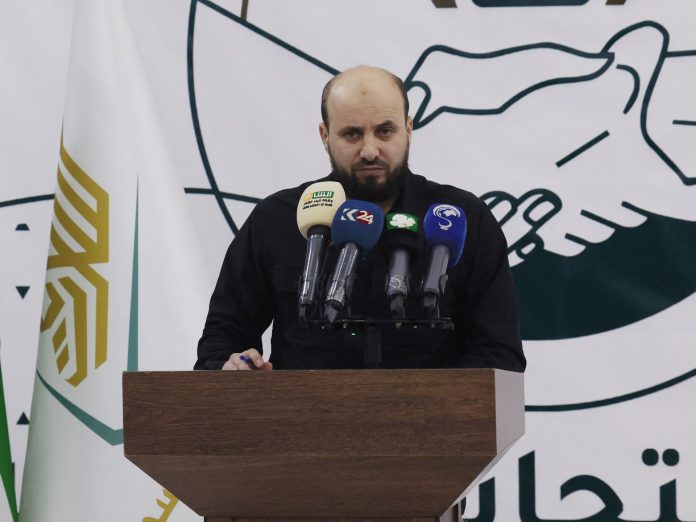
Al-Bashir, who headed the Hayat Tahrir al-Sham-led de facto government in Idlib province, will lead a transitional Syrian government until March 1, 2025, he said on Tuesday in a televised statement.

The appointment comes after al-Bashir met with members of al-Assad‘s government.

“Today we had a meeting for the cabinet and we invited members from the old government and some directors from the administration in Idlib and its surrounding areas, in order to facilitate all the necessary works for the next two months until we have a constitutional system to be able to serve the Syrian people,” he told Al Jazeera.

“We had other meetings to restart the institutions to be able to serve our people in Syria,” he told Al Jazeera.

He stated that his country needed peace and stability after nearly 14 years of war.

“Now it is time for this people to enjoy stability and calm.”

Al-Bashir headed the Syrian Salvation Government (SSG) in Idlib province before the 12-day lightning offensive swept into Damascus, toppling longtime leader al-Assad and ending more than half a century of al-Assad family rule.

Al-Bashir has close ties to Hayat Tahrir al-Sham (HTS) – the group that led the Damascus takeover – which is tied to the SSG he headed.

The SSG, with its own ministries, departments, judicial and security authorities, was set up in the northwest bastion of Idlib in 2017 to assist people in the rebel-held area who were cut off from government services.

Al-Bashir also previously held the role of development minister in the SSG.

The SSG has begun rolling out assistance in Aleppo, the first major city to fall from government hands after opposition forces began their offensive.

A Facebook page of the rebel administration says al-Bashir was trained as an electrical engineer, later received a degree in sharia and law, and has also held posts in education.

HTS’s leader Ahmed al-Sharaa, also known as Abu Mohammed al-Julani, met outgoing Prime Minister Mohammed Ghazi al-Jalali on Monday to discuss the transition to a caretaker government.

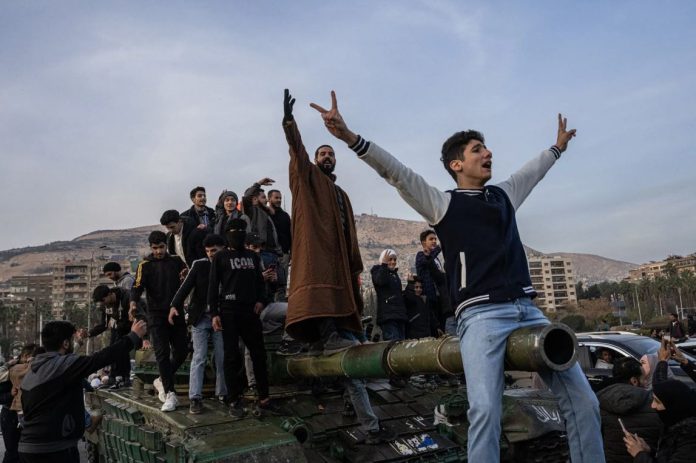
As the caretaker prime minister was announced, life in the Syrian capital showed some signs of a return to normalcy, with banks and shops reopening.

The Syrian war started as a largely unarmed uprising against al-Assad in March 2011, but eventually turned into an all-out war that dragged in foreign powers, killed hundreds of thousands of people, and turned millions into refugees.

Iran’s oil minister elected as OPEC president for 2025

OPEC

Paknejad expressed gratitude for the trust placed in him, pledging to utilize all his efforts and resources to strengthen OPEC’s unity and progress.

“Serving as OPEC president is an honor for me and for Iran, as one of OPEC’s founding members,” he said.

Paknejad highlighted the importance of maintaining unity within OPEC and fostering cooperation with non-OPEC partners under the Declaration of Cooperation (DOC).

He also congratulated members on the eighth anniversary of the DOC, emphasizing its critical role in navigating global energy challenges.

Iraq’s Oil Minister was also elected as vice president for the upcoming term.

Additionally, OPEC’s Secretary General Haitham Al-Ghais from Kuwait was reappointed for another three-year term.

The 189th OPEC meeting, chaired by Gabon’s Oil Minister Marcel Abeke, finalized key decisions, including approving OPEC’s budget and urging timely financial contributions from member states.

Iran will assume the presidency on January 1, 2025, in alignment with OPEC’s alphabetical rotation policy.

Iran advocates for Syrian-led dialogue, stability

During a recent meeting with Foreign Minister Seyed Abbas Araghchi, Rezaei noted, the Iranian top diplomat reiterated Iran’s commitment to the sovereignty, independence, and territorial integrity of Syria.

Rezaei highlighted Araghchi’s remarks, stating, “We strongly support peace, stability, and the active participation of the Syrian people in governing their country.”

He added that ensuring the security of Iran’s diplomatic missions and safeguarding sacred sites in Syria remain key priorities for Tehran.

Araghchi reportedly assured the National Security and Foreign Policy Commission of Iran’s readiness to continue its engagement in supporting Syria, despite acknowledging the challenges of gaining a comprehensive understanding of the current situation.

He stressed the importance of closely monitoring developments to adapt to emerging dynamics in the region.

Schools, universities, offices in Tehran province closed due to air pollution

This closure includes public and private institutions, except for banks and essential health and service centers, according to the Deputy for Urban Affairs of Tehran Province governor.

This comes as the Meteorological Organization issued an orange-level warning for worsening air pollution, predicting unhealthy air quality in eight cities, including the capital Tehran.

The agency cautioned that without controlling pollution sources, air quality may reach hazardous levels.

The stagnant atmospheric conditions forecast for Wednesday and Thursday will lead to increased pollution in major cities such as Tehran, Isfahan, Arak, Tabriz, Urmia, Qazvin, Karaj, and Qom.

This situation is expected to result in unhealthy air for all population groups.

In high-traffic areas, pollution indices could escalate to dangerous levels if emissions from stationary and mobile sources are not mitigated.

Authorities urge residents to minimize outdoor activities and take necessary precautions to safeguard their health during this period of deteriorating air quality.

IRGC chief: Iran’s power ‘impervious’ to fall of Syrian gov’t

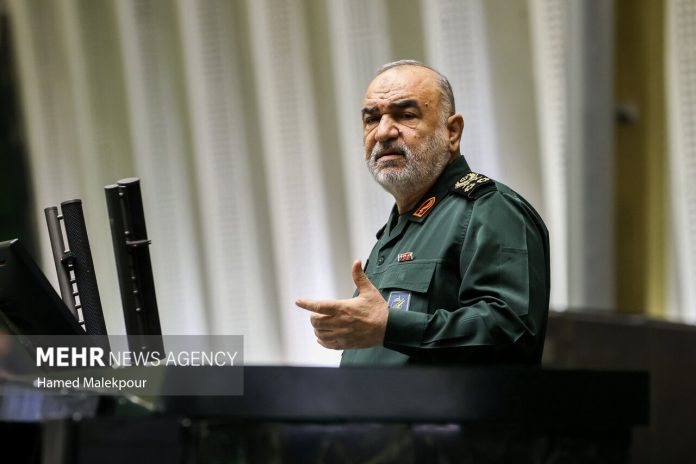
Major General Hossein Salami made the remarks on Tuesday as he attended a closed-door briefing session at the Iranian Parliament (Majlis) on Tuesday over the situation in Syria, after militants, led by Hay’at Tahrir al-Sham (HTS), seized the capital Damascus and declared the end of al-Assad’s 24-year rule.

Briefing reporters after the session, the spokesperson for the Iranian Parliament’s National Security and Foreign Policy Committee, Ebrahim Rezaei, said the IRGC chief provided an in-depth analysis of the status quo in West Asia, stating, “Our sphere of power and influence has not shrunk, and our military might has not suffered a setback at all.”

Salami also stressed that attempts aimed at the downfall of the Zionist regime remain high on the Islamic Republic’s agenda, praising the influential role of the late top Iranian anti-terror commander, Lieutenant General Qassem Soleimani, in the elimination of the Takfiri Daesh terrorist group, Rezaei added.

The IRGC chief also emphasized that forces within the Axis of Resistance have gained self-sufficiency in developing various types of munitions and military hardware, the Iranian legislator pointed out.

Militants waged a surprise two-pronged attack on Syria’s Aleppo and the countryside around Idlib on November 27.

Soon afterward, they seized control of several major Syrian cities, including Hama, Homs, Dara’a, and Suwayda, before entering the capital Damascus on December 8.

Armed groups, led by HTS militants, announced that they had fully captured Damascus, and confirmed reports of the fall of Assad’s government.

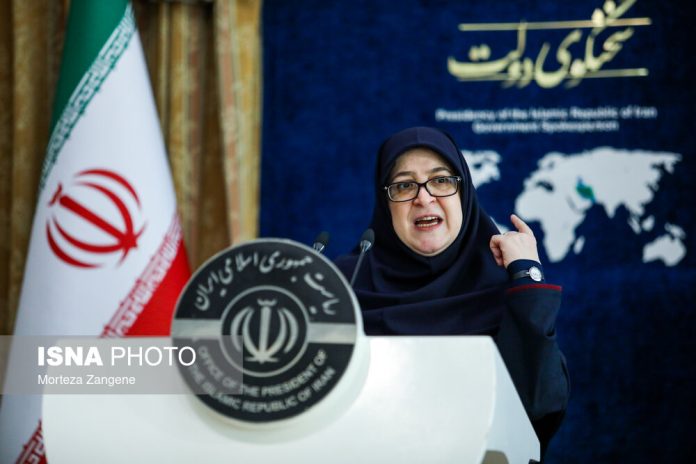
Iran pursuing national interests in Syria after overthrow of Assad: Gov’t spokesperson

Mohajerani told reporters on Tuesday that, to preserve national interests, the Islamic Republic will make all necessary follow-ups and hold consultations with different parties in Syria, following the change of government in the Arab country.

She stated that Iran will advance its ties with other countries based on the three principles of dignity, wisdom, and expediency, as pointed out by the Supreme Leader.

The spokeswoman also called for the defense of sacred sites and diplomatic premises, as well as the protection of human dignity in Syria.

Referring to the long-standing cultural and civilizational ties between Iran and Syria, Mohajerani wished the Syrians all the best.

She also urged respect for Syria’s national sovereignty and territorial integrity.

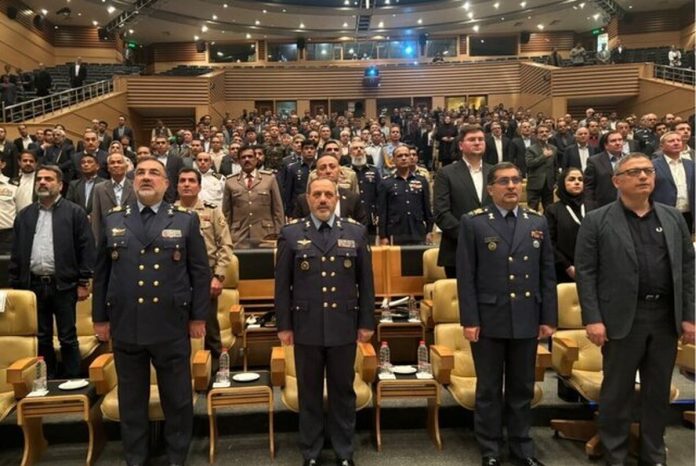
Iran’s Int’l Aviation and Aerospace Exhibition opens with defense minister’s attendance

The event opened on Tuesday morning with the presence of Air Force Commander Brigadier General Hamid Vahedi, the head of the Defense Ministry’s Aviation Industry Organization Brigadier General Afshin Khajeh-Fard, and head of the Civil Aviation Organization Siavash Pourfarzaneh.

Running from December 10 to 13, 2024, the exhibition is the largest gathering in Iran’s aviation and aerospace sector.

It brings together domestic and international companies, research centers, aerospace faculties, and knowledge-based companies.

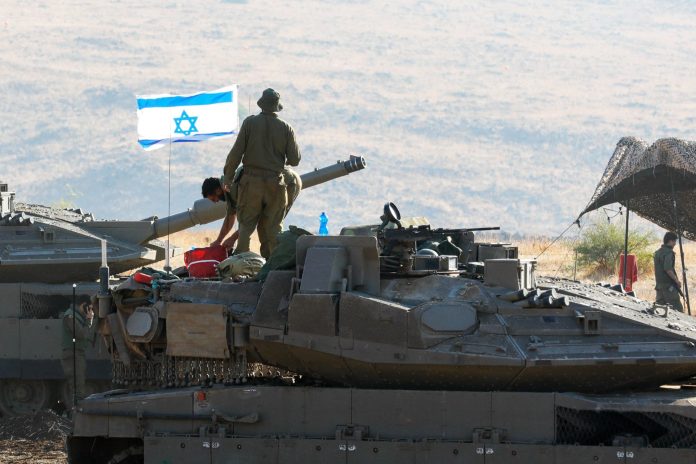
Israeli tanks reach outskirts of Damascus in wake of gov’t fall

Israel Army

According to Al Mayadeen, the tanks advanced beyond the buffer zone, where Israel moved troops earlier this week, and were stationed near the southern village of Qatana, 21 kilometers from the Syrian capital.

The Israel Defense Forces (IDF) has yet to comment on the information, Al Mayadeen added.

As Syrian rebels captured the country’s capital Damascus over the weekend, Israel ordered its military to seize the buffer zone that separates the Israeli-occupied Golan Heights from the rest of Syria.

Israeli Prime Minister Benjamin Netanyahu has claimed that these actions were taken in response to recent developments in the Arab country and are of a “defensive nature”. He stated that the Syrian Golan Heights will remain part of the occupied territories “for eternity”.

The Israeli military has also launched airstrikes on at least 250 targets across Syria following the collapse of the al-Assad regime, Israel’s Army Radio reported Monday.

Beyond the land incursion, Israeli military has been bombing several targets across Syria since Al-Assad’s ouster on Sunday.

The Golan Heights was partly occupied by Israel in 1967, with a buffer zone separating territory they control and territory still held by Syria created in 1974.

Several Arab states condemn Israel’s seizure of buffer zone in Syria’s Golan Heights

Egypt’s Foreign Ministry described the move as “an occupation of Syrian territory and a flagrant violation to the 1974 Disengagement Agreement”.

The agreement led to Israel’s withdrawal from some Syrian territories but left the Golan Heights under Israeli control.

Egypt announced Israel’s action was a breach of international law and a violation of Syria’s territorial integrity.

It called on the United Nations Security Council and world powers to assume their responsibilities and take “a firm position” against Israel’s attack on Syria.

Saudi Arabia’s Ministry of Foreign Affairs said “the assaults carried out by the Israeli occupation government, including the seizure of the buffer zone in the occupied Golan Heights and the targeting of Syrian territory by Israeli occupation forces, confirm Israel’s continued violations of international law and its intent to sabotage Syria’s chances of regaining security, stability and territorial integrity”.

The statement emphasized “the need for the international community to condemn these Israeli violations and reaffirm respect for Syria’s sovereignty and territorial integrity and that the Golan is occupied Syrian Arab land”.

Qatar, in a statement from its Foreign Ministry, strongly condemned “the Israeli occupation’s seizure of the buffer zone with the sisterly Syrian Arab Republic and the neighboring leadership sites”, describing it as “a dangerous development and a blatant attack on Syria’s sovereignty and unity, as well as a flagrant violation of international law”.

It warned that the Israeli policy, including its attempts to seize Syrian territories, “will lead the region to further violence and tension.”

Kuwait, in a statement from its Foreign Ministry, also expressed “its strong condemnation and denunciation of the Israeli occupation forces’ seizure of the buffer zone on the Syrian border”.

It described the act as “a blatant violation of international laws and UN Security Council resolutions, which emphasize the necessity of respecting Syria’s sovereignty, independence, territorial integrity and regional safety”.

In this context, Jordanian Foreign Minister Ayman Safadi, speaking before his country’s parliament, said: “We condemn Israel’s actions of entering Syrian territory and taking control of the buffer zone,” according to a statement from the Ministry of Foreign Affairs.

Safadi stressed that “Israel’s aggression against Syria and the occupation of this land constitute a breach of international law, an unacceptable escalation and an assault on the sovereignty of an Arab state.”

Iraq’s Ministry of Foreign Affairs also issued a statement condemning “the Zionist entity’s seizure of the buffer zone with Syria in the Golan and the adjacent lands”, adding that “this act represents a blatant violation of international law and relevant international legitimacy resolutions”.

The Arab League, in a statement on Sunday, expressed “its full condemnation of Israel, the occupying power, for its illegal attempts to exploit Syria’s internal developments, whether through seizing additional lands in the Golan Heights or declaring the 1974 Disengagement Agreement void.”

Israeli Prime Minister Benjamin Netanyahu ordered his army on Sunday to capture the buffer zone in the Golan Heights, an area under Tel Aviv’s occupation for decades.

Images and videos released by the Israeli military showed soldiers and armored vehicles in the buffer zone, further consolidating Israel’s hold on the region.

Assad and his family fled to Russia after militant groups took control of the capital Damascus early Sunday, marking the collapse of the Baath Party regime, which had been in power in Syria since 1963.