Friday, December 26, 2025
Home Blog Page 604

Al-Julani, Erdogan potential casualties of Syrian events, Iranian daily argues

Jomhouri-e Eslami predicts that Erdogan is unlikely to realize his dream of establishing a new Ottoman Empire despite his cooperation with the Israeli regime and his alignment in executing what it called “a joint US-Russia conspiracy” in Syria to topple Bashar al-Assad’s government.

“Analysts suggest five potential outcomes for Syria’s future: the formation of an Islamic state by Tahrir al-Sham, a pro-Israel anti-Islamic state, a US-backed federal republic, a democratic republic with diverse party participation, or the division of Syria into multiple countries leading to prolonged civil wars,” Jomhouri-e Eslami pointed out.

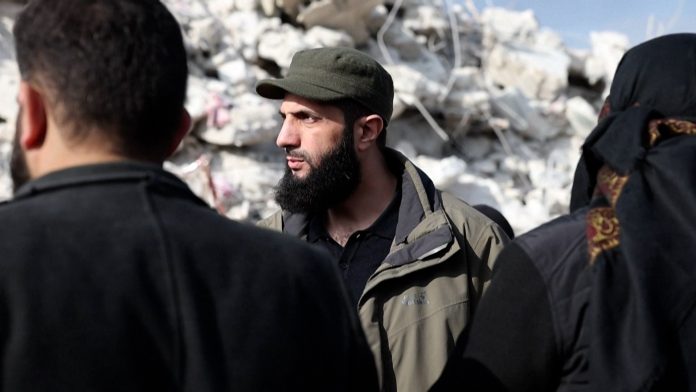
It also painted a grim picture of Syria’s future, noting that regardless of the outcome, the country will likely face chaos, violence, and power struggles, with figures like al-Julani being sacrificed by external powers who initially used them to achieve their goals.

Furthermore, Israel is expected to maintain its influence over Syria, having strategically supported militants to overthrow Assad, it warned.

It also predicted that Erdogan, despite his role in the conspiracy, will not achieve his ambitions and may be ousted sooner than the leaders of Arab countries that funded the uprisings in Syria.
Syrian rebels to name senior Assad gov’t officials wanted for torture

For half a century, the Assad family ruled over the country with an iron fist, with long-documented reports of “mass incarceration, torture, extra-judicial killings and atrocities” against their own people.

The rebels will “announce List no. 1 that includes names of the most senior officials involved in torturing the Syrian people”, according to a statement from Military Operations Command, the rebel coalition led by armed group Hayat Tahrir al-Sham (HTS).

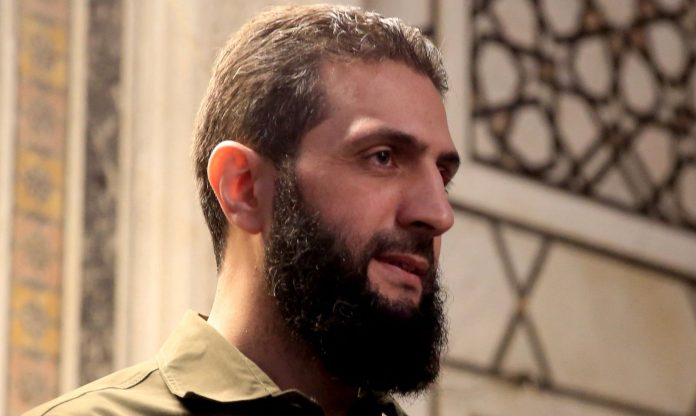
HTS “will not hesitate to hold accountable the criminals, murderers, security and army officers involved in torturing the Syrian people”, said its leader Ahmed Al Sharaa, better known by his nom de guerre Abu Mohammed al-Jolani.

“We will pursue war criminals and demand them from the countries to which they fled so that they may receive their just punishment.”

The statement added rewards would be offered for information about senior army and security officers involved in alleged war crimes.

Sharaa also reiterated that a general amnesty for conscripted soldiers in the Syrian military remains in force. The rebels earlier urged the Assad regime’s security forces to register with what they are calling “a settlement center”. Amnesty does not apply to officers and soldiers who volunteered to serve.

Hayat Tahrir-al-Sham militants, along with other anti-government factions, seized control of Damascus on Saturday following a swift advance in several regions of Syria.

US sanctions failed to crimp Iran’s oil supply: Chevron CEO

Iran Oil

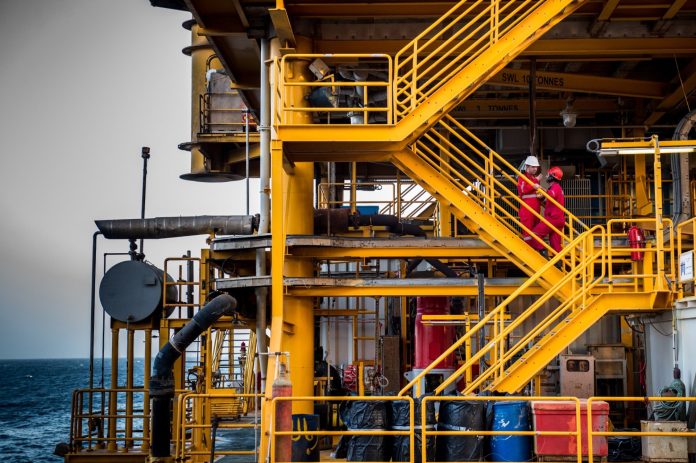
CEO of US oil company Chevron said in recent remarks made to the think tank Atlantic Council that current US sanctions have not really kept Iranian barrels out of the market, but rather redirected them.

“And that is true for a lot of the sanctions that are in place right now. They haven’t really crimped supply. They’ve just redirected supply,” Michael Wirth stated.

Wirth was referring to the fact that a bulk of Iranian crude oil supplies are being purchased by private buyers in China instead of being sold to governments around the world.

Iran has ramped up its exports of oil to Chinese buyers in the past year with recent estimates suggesting current Iranian oil supplies delivered to China are at over 1.5 million barrels per day (bpd).

Importing more than 0.75 million bpd of oil from Iran, China was the largest official buyer of Iranian oil before 2018 when former US president and current president-elect Donald Trump withdrew from an international deal on Iran’s nuclear program and imposed sanctions on the country.

However, the sanctions caused China to stop its official purchase of Iranian oil and instead allow its teapot refiners to buy the shipments.

Wirth, whose company is the only US firm involved in oil production activity in a sanction-hit country, made the remarks as he hopes a new administration led by Trump would adopt better policies with regard to oil supplies from countries like Venezuela, where his company is working, as well as from Iran and Russia.

Israel’s presence in Syria buffer zone violates 1974 deal: UN

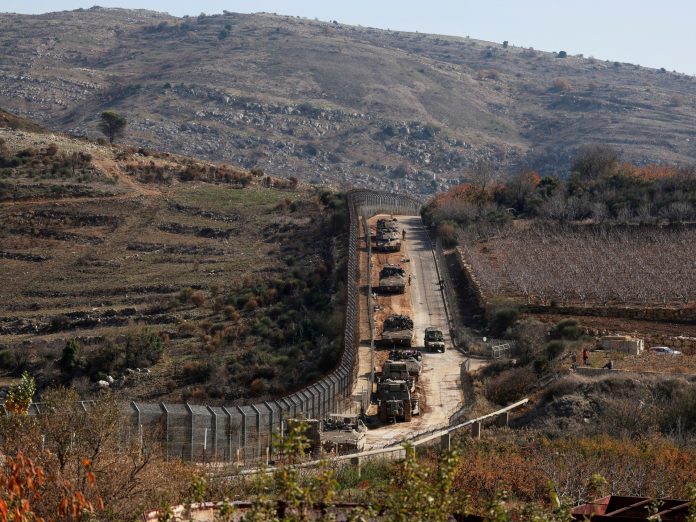
Prime Minister Benjamin Netanyahu on Sunday stated that he had ordered the military to “take control” of the buffer zone, which separates the Israeli-occupied Golan Heights from the rest of Syria.

The UN has confirmed that Israeli troops entered the buffer zone and were moving within that area, where they remain in at least three locations, according to Dujarric.

“There should be no military forces or activities in the area of separation,” he said.

Dujarric also added UNDOF personnel, who are tasked with maintaining a ceasefire between Israel and Syria and supervising the areas of separation and limitation, remain at their positions and are carrying out their mandated activities.

“Currently, the situation in the UNDOF area of operations is relatively calm.”

Iran condemns continued Israeli attacks on Syrian infrastructure, Golan Heights

Esmael baghaei

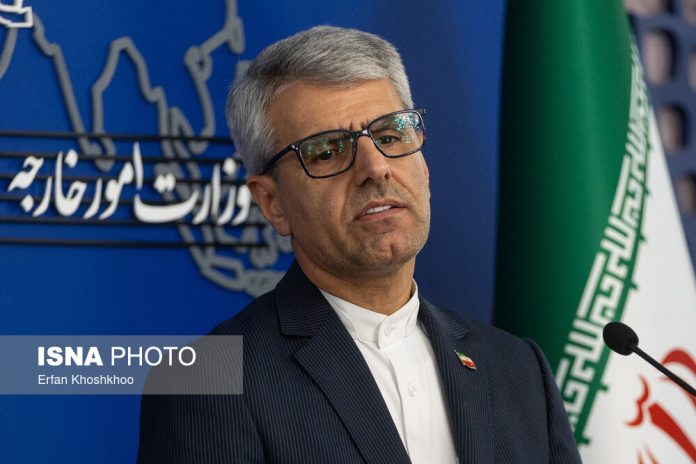
Baqaei criticized the Western countries for their silence and inaction regarding the violation, which Israel interprets as approval of its aggressive moves.

He highlighted that the Zionist regime’s military aggression against Syria, while the Syrian people are experiencing developments amid the political changes, is a blatant violation of the United Nations Charter.

Baqaei called for an immediate response from the UN Security Council to halt the aggression and hold the occupying regime accountable.

The spokesperson also noted that Israel’s occupation of the Golan Heights and its violations of UN Security Council resolutions reflect its expansionist and belligerent approach, showing disregard for international legal norms.

He stressed the need to utilize all regional and international capacities to stop Israel’s aggressions against Syria.

The Israeli military on Sunday moved to seize a buffer zone in the occupied Golan Heights as the Bashar Assad government falls in Damascus.

The Golan Heights was partly occupied by Israel in 1967, with a buffer zone separating territory they control and territory still held by Syria created in 1974.

Iran warns of strong reaction to snapback mechanism threats

Iran Nuclear Program

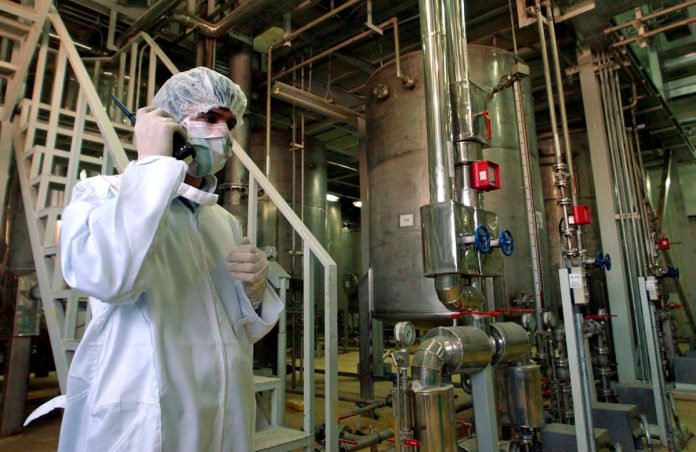
In a letter to the UN Security Council and secretary general, Amir Saeed Iravani criticized “unfounded accusations” by Britain, Germany, and France against Iran regarding its commitments under the Joint Comprehensive Plan of Action (JCPOA) nuclear accord and UN Resolution 2231.

The envoy emphasized that Iran remains committed to good faith diplomacy and addressing common challenges through all diplomatic avenues.

He highlighted that meaningful diplomacy requires genuine engagement and adherence to commitments.

The letter also pointed out that the current JCPOA issues stem from the unilateral US withdrawal in 2018 and the subsequent failure of the European Troika and the EU to fulfill their obligations.

He called for the recognition of Iran’s efforts to uphold the agreement despite ongoing provocations and violations by the US and the Troika.

The letter also criticized the Troika’s misrepresentation of Iran’s cooperation with the IAEA and reiterated Iran’s transparency and compliance despite external pressures including the US sanctions.

Iravani urged the Troika to acknowledge the necessity of real engagement and respect for commitments to achieve meaningful diplomatic progress.

Germany, France set condition for interaction with Syria’s new government

The joint position emerged from a telephone conversation between German Chancellor Olaf Scholz and French President Emmanuel Macron following the weekend overthrow of longtime Syrian leader Bashar al-Assad by anti-government armed groups.

“Assad had caused terrible suffering to the Syrian people and great damage to his country,” German government spokesman Steffen Hebestreit quoted the leaders as saying in a statement following their discussion.

“Both agreed that they are ready to work with the new rulers on the basis of fundamental human rights and the protection of ethnic and religious minorities,” he stressed.

In their conversation, the two leaders emphasized the importance of preserving Syria’s territorial integrity and sovereignty, Hebestreit noted.

“Both agreed to work together to strengthen the European Union’s engagement in Syria, including supporting an inclusive political process in Syria,” he said, adding the leaders would discuss the next steps in close coordination with partners in the region.

The EU has not yet established contact with Hayat Tahrir al-Sham (HTS) – a leading group in the downfall of the government in Syria, but one also on the bloc’s official list of terrorist groups – and will consider both its statements and actions before making any decisions, a spokesman stated on Monday.

Asked about the EU’s stance on engaging with HTS, Anouar El Anouni, European Commission spokesperson, highlighted that the group and its affiliates remain classified as terrorist entities by the EU.

“What I can say at this stage is that a lifting under the EU terrorist list is not planned currently. As HTS takes on greater responsibilities, we will need to assess not just their words, but also their actions,” he told a press briefing.

Al-Assad, Syria’s leader for nearly 25 years, fled to Russia after militant groups took control of Damascus early Sunday.

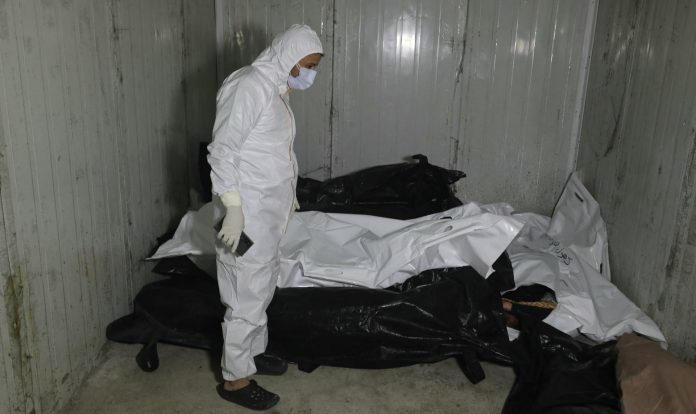
Rescuers continue search amid rumours of hidden prisoners in Syria’s Sednaya

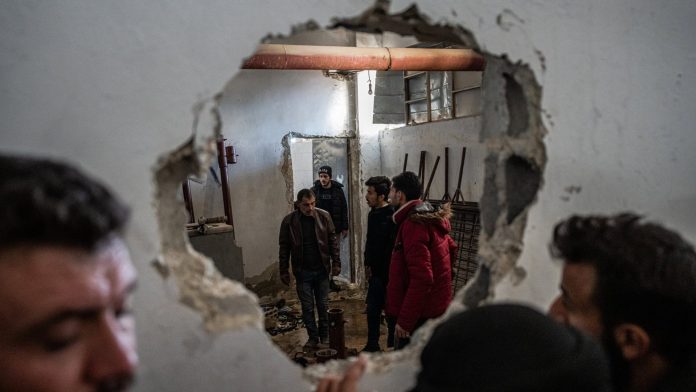
The Syrian Civil Defence, also known as the White Helmets, are still digging and searching for ways to reach the prisoners in Sednaya’s underground sections, known as the red prison.

While the Association of Detainees and The Missing in Sednaya Prison said on X that there were no prisoners remaining in the facility, rescuers are still trying to reach lower, underground levels.

The prison, known as a “human slaughterhouse” for its highly documented human rights abuses, was found to be much more complex than previously expected.

In a statement shared online, the White Helmets offered a financial reward of $5,000 “for anyone who provides direct information leading to the identification of secret prisons in Syria where detainees are being held”, raising the amount from $3,000.

“We extend a special invitation to former security officers and those working in the security branches to help in accessing these secret prisons, as we emphasise the importance and necessity of this contribution, and we guarantee to them that we will maintain the confidentiality of the sources,” the organisation noted.

In the afternoon, the White Helmets said no evidence has yet been found of any prisoners remaining in the facility, though their search continues.

Crowds of people remain gathered around the prison, having flocked there hoping to find their disappeared loved ones, while Facebook groups are flooded with images of people’s missing relatives.

Rebels and rescuers searching Sednaya prison’s facilities found cameras that allegedly showed inmates in their cells.

They also found an “iron execution press”, which was reportedly used by the Syrian government to crush inmates after their execution.

Nearby blood stained ropes were found.

Thousands of inmates have already been freed from government prisons across Syria, including Sednaya.

Syrian doctors have also rushed to the Sednaya prison to help prisoners who have been freed from the notorious detention facility.

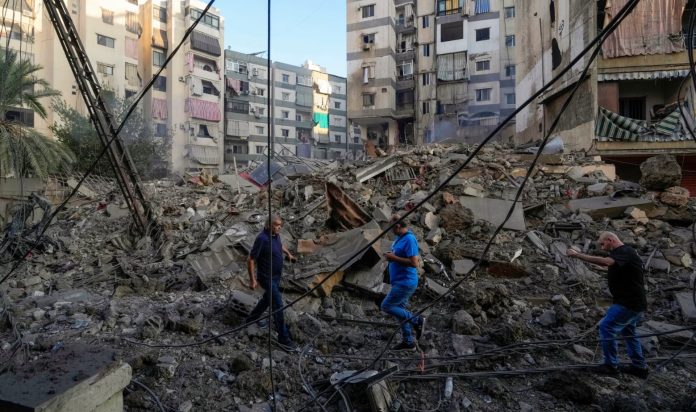
Israeli attacks southern Lebanon despite cease-fire, casualties reported

Lebanon War

A military statement said Israeli forces struck a car near a military checkpoint in Bint Jbeil district, killing one person and injuring four soldiers.

Israeli forces also shelled the outskirts of the southern town of Naqoura, the state-run National News Agency said, without providing details about injuries.

On Sunday, three Lebanese were killed in an Israeli airstrike in Dibbin town in southern Lebanon.

At least 24 people have been killed and 24 others injured since a cease-fire deal between Lebanon and Israel took effect on Nov. 27, according to figures released by the Lebanese Health Ministry.

Lebanese authorities have reported around 160 Israeli violations of the cease-fire since the deal came into force last month.

Under the cease-fire terms, Israel is required to withdraw its forces south of the Blue Line – a de facto border – in phases, while the Lebanese army is to deploy in southern Lebanon within 60 days.

The US and France are responsible for overseeing the agreement’s implementation, but details on enforcement mechanisms are unclear.

Over 4,000 people have been killed and more than 16,500 injured in Israeli attacks in Lebanon, and over 1 million others have been displaced since October 2023, according to Lebanese health authorities.

Iran Health Minister: 50k Iranians die of air pollution each year

Iran Air Pollution

He emphasized the human cost of air pollution, which translates into a financial burden estimated between $12 billion and $20 billion, surpassing the projected budget for oil revenue in 2025, which is set at $11 billion.

Zafargandi noted that the loss of ordinary human resources due to pollution has significant economic implications.

His findings have been presented to the government, highlighting the urgent need for action against this pressing issue.

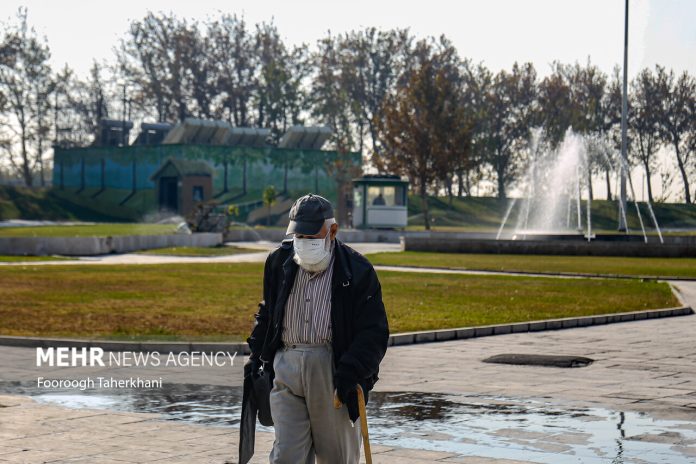
The comments come as all schools in Tehran and many other Iranian cities have been shut down for the last three days due to air pollution.

The Iranian capital is one of the most polluted cities in the world. The air pollution of Tehran in this time of the year is partly blamed on the weather phenomenon known as inversion.

But what is mostly to blame for the Tehran pollution is the huge number of vehicles in the city and the relatively low quality of the fuel they use.

Authorities in Tehran have been trying to reduce the air pollution including halting the burning of mazut for generating electricity. But observers say this measure along will not be able to considerably reduce air pollution in Tehran.