Sunday, January 18, 2026
Home Blog Page 540

Iran’s president visits latest defense, space achievements

Accompanied by Defense Minister Brigadier General Aziz Nasirzadeh, President’s Chief of Staff Mohsen Haji Mirzaei, and Government Spokesperson Fatemeh Mohajerani, the president engaged with specialists in defense and space industries.

Upon arrival at the Defense Ministry’s Aerospace Organization, President Pezeshkian paid homage to the martyrs of the Ministry of Defense before starting his tour.

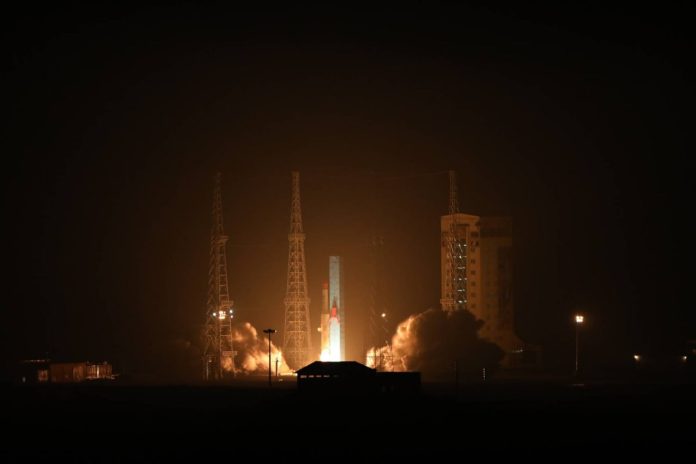
He got a first-hand view of new advancements, including the Simorgh launch and satellite carrier system.

Recalling the Iran-Iraq war in the 1980s, he emphasized that Iran’s defensive capabilities are now a “symbol of strength and progress.”

“At the beginning of the imposed war, the Ba’athist regime bombarded the Iranian people from both land and air, but today, our strength in the defense industries has become renowned,” he said.

He underscored the importance of developing defense power through the talents of young, creative individuals and specialized scientists to ensure that no country could threaten Iran’s sovereignty.

The day was marked as National Space Technology Day in Iran’s official calendar in commemoration of the launch of the Omid satellite by Iranian scientists on February 2nd, 2009.

IRGC Navy unveils new subterranean base

Cruise missiles with the capability of countering enemy destroyers’ electronic warfare are stored in the IRGC’s new underground missile city, Sepah News reported.

The report added that the missiles, which have undergone significant upgrades to their weapon systems and electronic warfare countermeasures, can be deployed in the shortest possible time.

IRGC Chief Commander Major General Hossein Salami and Commander of the IRGC Navy Rear Admiral Ali Reza Tangsiri unveiled the facility on Saturday. They inspected the latest combat readiness status of the IRGC Navy as well.

Back on January 18, the IRGC Navy unveiled an underground naval missile base built on the shores of Iran’s southern waters to house a large fleet of fast attack craft and other vessels.

Iranian Armed Forces, including the IRGC and the country’s Army, have been continuously enhancing their military hardware and combat readiness in line with the directives of Leader of the Islamic Revolution Ayatollah Seyyed Ali Khamenei.

The forces have vowed to defend the country’s sovereignty and territorial integrity in the face of the threats by the Iranian nation’s enemies.

The Islamic Republic launched some 200 missiles at the Israeli entity’s military, and espionage and intelligence bases all over the occupied territories on October 1 as part of Operation True Promise II.

The operation came in response to the regime’s assassinations of senior leaders of the Palestinian and Lebanese resistance and a senior IRGC commander.

In the early hours of October 26, Israel targeted two Iranian border provinces, Ilam and Khuzestan, as well as Tehran. The country’s integrated air defense system successfully intercepted and countered the aggression.

Iran has stressed it will respond to the recent Israeli act of aggression against the country and will not abandon its rights.

Iranian commander says air force planes equipped with advanced systems

Iran Air Force

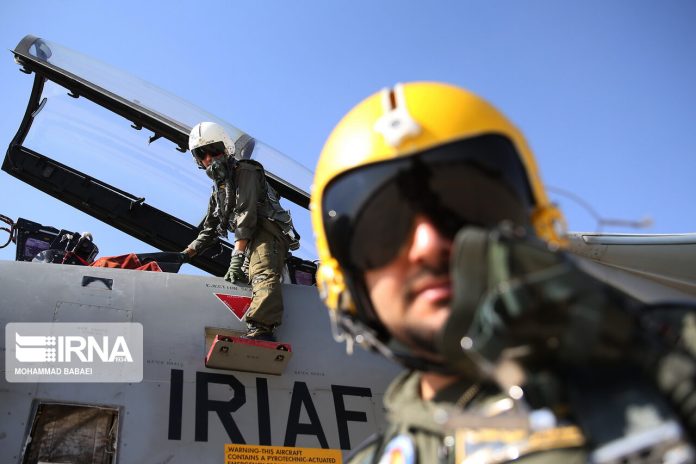
During a visit to an air base in Iran’s eastern city of Birjand on Saturday, Brigadier General Vahedi said the planes and unmanned aerial vehicles of the Iranian Air Force have been equipped with the world’s modern-day systems.

He noted that the Air Force will soon unveil two new achievements.

The commander stated that the Iranian Armed Forces are fully prepared to counter any threat at any level.

In December 2024, the Air Force said the pilotless version of its homegrown stealth fighter jet “Qaher (Conqueror)” has shown promising performance in flight tests.

The Iranian fighter jet Qaher-313 was unveiled in February 2013. The single-seat stealth fighter jet can take off and land on short runways.

At least five Palestinians killed in Jenin by Israel

In the first attack, an Israeli drone hit a group of people on a street in the city of Jenin, killing 16-year-old Ahmad al-Sadi and wounding two others critically, according to the Palestinian Wafa news agency and local officials.

The Palestinian Health Ministry later announced that four more had been killed in Israeli air strikes on the Jenin area.

The second and third attacks occurred minutes later in two separate locations, according to the governor of Jenin, Kamal Abu al-Rub.

“After the strike that killed the child [Sadi], an Israeli drone strike hit a car in Qabatiya and killed two youths,” al-Rub told the AFP news agency.

“Minutes later, another drone strike in Jenin killed two more youths who were on a motorcycle.”

The deadly raids, which Israel calls the “Iron Wall” campaign, were launched just days after a ceasefire was agreed upon in Gaza. Since then, Israeli forces have killed at least 20 Palestinians across the occupied territory, and wounded dozens of others.

Since October 2023, the Israeli military and settlers have killed at least 880 Palestinians in attacks across the occupied West Bank.

On Thursday, Palestine’s Prime Minister Mohammad Mustafa described what is happening in the occupied West Bank as “a systematic effort to destroy the foundations of the Palestinian state”.

“We are witnessing military incursions into northern West Bank governorates, accompanied by killing, detention, infrastructure destruction and demolition of homes and structures. This demands urgent international action to put this to an end.”

Earlier this month, United Nations Secretary-General Antonio Guterres called for “maximum restraint” from Israeli forces. He told a UN Security Council meeting about his fears of “an existential threat to the integrity and contiguity” of Gaza and the occupied West Bank from Israel.

Arab countries reject Trump’s Gaza displacement plan

Gaza War

The meeting, held at Egypt’s invitation and attended by representatives from Saudi Arabia, the United Arab Emirates (UAE), Qatar, Jordan, Palestine and the Arab League, issued a statement stressing the importance of working toward a just and lasting peace in the Middle East.

The statement also expressed support for collaboration with the administration of US President Donald Trump to achieve a comprehensive peace in the region, based on the two-state solution.

The participating countries voiced strong opposition to any attempt to infringe on the inalienable rights of Palestinians, including settlement activities, forced expulsions, house demolitions, land annexations or any measures encouraging the displacement or uprooting of Palestinians from their land.

The six nations urged the international community, particularly global powers and the UN Security Council, to take immediate action toward implementing the two-state solution.

The countries also emphasized the “importance of maintaining the ceasefire to ensure the unhindered delivery of humanitarian aid to all areas of the Gaza Strip, removing any obstacles to the entry of humanitarian, shelter, recovery, and rehabilitation support in a safe and effective manner.”

They stressed the need “for the complete withdrawal of Israeli forces from Gaza and firmly rejected any efforts to divide the Strip,” calling for efforts to “enable the Palestinian Authority to resume its responsibilities in Gaza as part of the occupied Palestinian territories, alongside the West Bank and East Jerusalem, to allow the international community to address the humanitarian crisis caused by the Israeli aggression.”

Additionally, they reaffirmed “the pivotal, indispensable, and irreplaceable role of the United Nations Relief and Works Agency for Palestine Refugees (UNRWA) and categorically rejected any attempts to bypass or diminish its role.”

The meeting comes in the wake of repeated statements from Trump, who suggested to “clean out” Gaza and resettle Palestinians to Egypt and Jordan, describing the enclave as a “demolition site.”

Egypt and Jordan, however, vehemently rejected any call for the displacement or relocation of Palestinians from their land.

Trump’s proposal came after a ceasefire agreement took effect Jan. 19 in Gaza, suspending the Israeli war, that has killed more than 47,400 Palestinians, most of them women and children, since a cross-border attack by Hamas on Oct. 7, 2023. The relentless Israeli attacks have reduced the enclave to a wasteland of ruins and rubble.

Trump’s proposal has received widespread condemnation, with critics calling it “ethnic cleansing” and a “war crime.” Many countries in the Muslim and Arab world as well as European nations such as France have firmly rejected the idea.


EU divided over peacekeeping forces in Ukraine: Times

Russia Ukraine War

Berlin opposes the idea, partly because it does not want to commit ahead of its February elections, according to the British daily newspaper.

The Baltic states and Poland – among Kiev’s most vocal supporters throughout the conflict – are reportedly concerned that such a deployment would divert NATO’s attention and resources away from their own defense, leaving them “exposed.”

The UK, France, and the Nordic nations are the most vocal advocates for a Western peacekeeping mission. However, even among them, officials worry that the EU would not be able to carry out the operation without US involvement.

A European diplomatic source told The Times that Washington’s participation would be necessary because “they have capabilities that all of Europe lacks,” including the “ability to retaliate at scale if needed.” US President Donald Trump has previously stated that Washington should not provide troops or funding for such a mission.

Kiev’s European backers were also reportedly “irked” by Ukrainian President Volodymyr Zelensky’s recent demand for a “minimum” of 200,000 peacekeepers – a number the EU alone would struggle to provide.

Moscow has consistently rejected the idea of Western-led peacekeepers in Ukraine. Earlier this week, senior Russian diplomat Rodion Miroshnik warned that any military force entering Ukraine without Russia’s consent would be considered a legitimate military target.

“If Russia does not buy the idea it is dead and if the US does not provide a hammer the idea is dead,” an unnamed senior Western military official admitted, according to The Times.

The Kremlin could perceive a large-scale NATO troop deployment in Ukraine as a significant threat to Russia, potentially serious enough to trigger another mobilization wave, Aleksey Zhuravlev, First Deputy Chairman of the Russian State Duma Defense Committee, warned on Friday.

Some EU officials believe a non-Western UN peacekeeping force, composed of troops from more neutral countries such as India, Bangladesh, or China, would be a “wiser alternative.” This approach, they argue, would not require US participation and might be more acceptable to Moscow.

Kremlin spokesman Dmitry Peskov stated in December that any talk of deploying peacekeepers is moot at this point, given that Zelensky signed a law banning any talks with the current Russian leadership.

Russia’s Foreign Intelligence Service has warned that the West could use peacekeepers to “occupy” Ukraine and once again buy time for a new conflict with Moscow.

Iran to unveil two new satellites on Sunday  

Iran Satellite

Pars 2 is the upgraded version of Pars 1 Satellite and will be unveiled during a ceremony at the Ministry of Communications. This satellite features significantly enhanced imaging capabilities, with a resolution of 8 meters in color and 4 meters in black and white.

Meanwhile, the telecommunications satellite Navak, designed to strengthen high-altitude communications, will also be introduced on National Technology Day on Sunday.

This satellite is capable of testing communications in an elongated elliptical orbit, marking its first deployment in such an orbit.

Alongside this event, an exhibition showcasing the achievements of researchers in the field of aerospace technology will be held.

Hassan Salarieh, the head of Iran’s Space Organization, recently announced that there are currently 25 satellites under construction, with 8 satellites ready for launch.

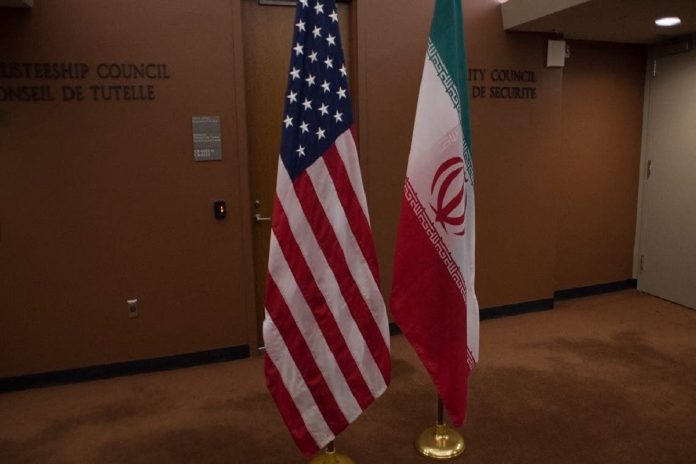
Iranian university professor: Any talks with US must be direct

Iran US Flags

According to Etemadonline news outlet, Nasser Hadian added that Iran also needs to also make an effort to get sanctions imposed on the nation removed while it’s trying to blunt the impact of the bans.

Hadian also said to get the sanctions lifted, Iran should send positive signals and show its readiness for negotiations with the other side.

The Iranian university professor added that it is essential that Iran have channels of communication with Trump beyond just the appointed individuals, as Trump, due to his business-minded mentality, tends to show more inclination for talks.

According to Hadian, the US president is well aware that resolving the Iran issue, both politically and economically, would be a significant achievement for him.

Hadian’s comments come as Iran’s President Masoud Pezeshkian and Vice President for Strategic Affairs Mohammad Javad Zarif, among others, have said on several occasions that Tehran is ready for genuine talks with other sides including the US over the nuclear dispute and also the Western sanctions on the Islamic Republic.

Hamas releases three Israeli captives in exchange for over 180 Palestinians

French-Israeli dual national Ofer Kalderon and Israeli citizen Yarden Bibas were handed over to the Red Cross in the southern Gaza Strip city of Khan Younis, Al Jazeera TV showed on Saturday.

Over an hour later, American-Israeli dual national Keith Siegel was handed over to Red Cross officials in Gaza City in the northern part of the enclave.

Hundreds of Hamas fighters were seen lining up and managing the crowd in both Khan Younis and Gaza City, as Kalderon, Bibas and Siegel waved to the crowd of Palestinians at the handover.

Kalderon and Bibas have reached Israel, where they will undergo an initial medical check-up before meeting their families. The fate of Bibas’ wife and two young children, who were also taken captive by Hamas, is still unknown.

As of 0900 GMT, Siegel was being escorted by the Red Cross back to Israel.

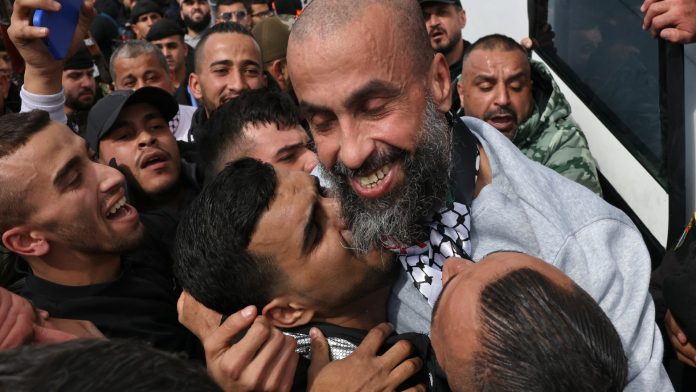
As part of the ceasefire deal entered on January 19, Israel freed 183 Palestinian prisoners in the fourth such exchange. A total of 73 have been serving long-time prison terms and lifetime sentences.

There are an estimated 4,500 Palestinian prisoners being held in Israeli prisons – 310 of them held under the so-called “administrative detention” without the right to a trial.

Negotiations are due to start by Tuesday on agreements for the release of more than 60 remaining captives, the release of more Palestinian prisoners from Israeli prisons and the withdrawal of Israeli troops from Gaza in a second phase of the deal.

The initial six-week ceasefire, agreed with Egyptian and Qatari mediators and backed by the United States, has so far stayed on track despite a number of incidents that have led both sides to accuse the other of violating the deal.

Also on Saturday, the Rafah border crossing between Gaza and Egypt is likely to be reopened to allow sick and seriously injured Palestinians to finally get treatment.

The Hamas attack on October 7, 2023 killed 1,200 people and took more than 250 captives, according to Israeli figures.

An Israeli military campaign following the Hamas attack destroyed much of the densely populated Gaza Strip and killed more than 47,000 Palestinians, according to Gaza’s health authorities.

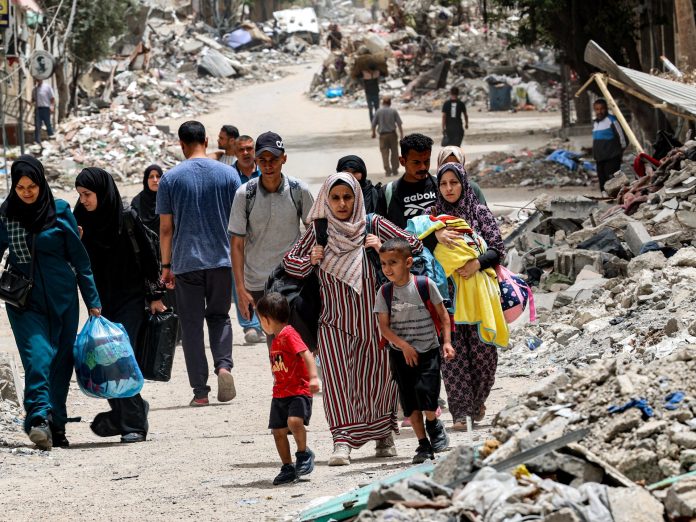
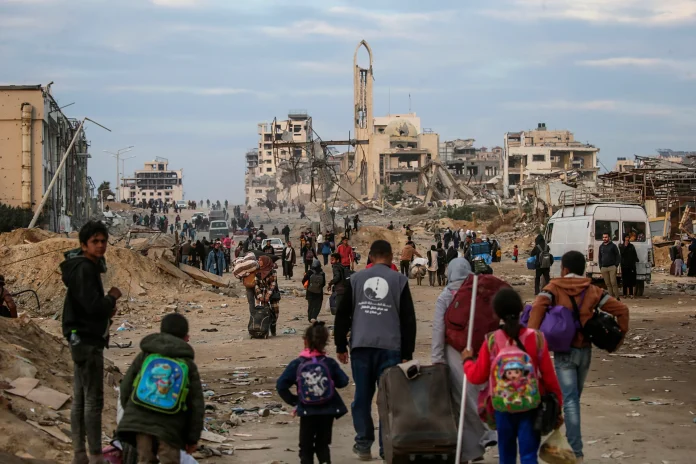
Nearly half a million people return to north Gaza following truce: UN

Citing the Office for the Coordination of Humanitarian Affairs (OCHA), spokesman Stephane Dujarric stated during a news conference that “displaced Palestinians are also moving from north to south, though in smaller numbers.”

Humanitarian partners say displaced Palestinians are also moving from north to south, though in smaller numbers, he said, adding, “As of today, about 8,500 people have crossed from the northern areas of Gaza to the southern side.”

Noting that the UN and its humanitarian partners are intensifying their response at monitoring points along the way, Dujarric said, “This includes first aid and psychological support for the most vulnerable, including children, women, and older people. They are also expanding aid operations in northern Gaza.”

“Yesterday, an OCHA team visited two sites in the South Remal and Tel el Hawa neighborhoods in Gaza City. People there say they urgently need water, kitchen supplies, bedding, and cleaning items,” he added.

Dujarric further expressed deep alarm over the “worsening humanitarian situation in northern areas, as Israeli forces’ operation in Jenin (in the West Bank) continued for an eleventh day.”

“Repeated operations there have resulted in widespread destruction of homes and infrastructure. Nearly all of Jenin refugee camp’s 20,000 residents have been displaced over the past two months in the context of both Palestinian and Israeli operations,” he continued.

The escalation in the occupied West Bank came after a ceasefire and prisoner exchange deal took effect in Gaza on Jan. 19, following 15 months of Israel’s genocidal war that killed over 47,400 and reduced the enclave to rubble.

Reports say Israeli Prime Minister Benjamin Netanyahu ordered the escalation over threats from right-wing parties to bring down his government over the Gaza ceasefire, which they oppose.

Since the beginning of Israel’s war on Gaza in October 2023, at least 890 Palestinians have been killed across the occupied territory in attacks by Israeli forces and settlers.