Sunday, January 18, 2026
Home Blog Page 541

US pressuring Lebanese leadership to isolate Hezbollah: Reuters

Hezbollah

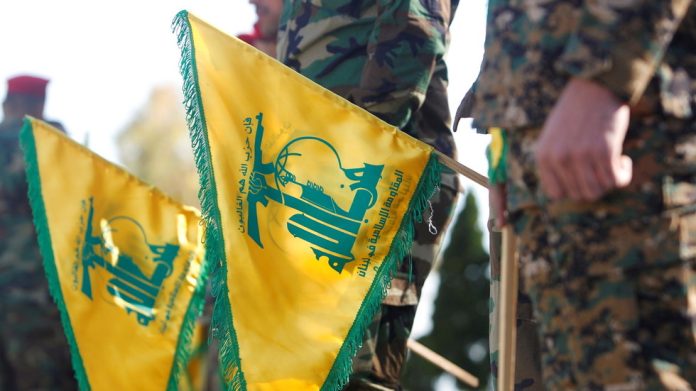
Five unnamed sources, quoted by Reuters, said US officials have passed on messages to Lebanese Prime Minister-designate Nawaf Salam and to President Joseph Aoun to limit Hezbollah’s sway over the country’s sectarian politics.

“Washington is pressuring top Lebanese officials not to allow Hezbollah or its allies to nominate the country’s next finance minister,” they said.

“US officials have passed on messages to Salam and to Lebanese President Joseph Aoun that Hezbollah should not be included in the next cabinet.”

According to the report, US-Lebanese businessman Massaad Boulos, appointed by US President Donald Trump as an advisor on affairs in the West Asia region, is one of those who have been conveying the messages.

Three other sources said that Salam allowing Hezbollah or its ally, the Amal Movement, to nominate a finance minister will “hurt Lebanon’s chances of accessing foreign funds” for efforts to rebuild areas of the country ravaged by Israel’s indiscriminate and destructive war.

Recent reports said that Lebanese Parliament Speaker and Amal Movement leader Nabih Berri had decided to nominate Yassin Jaber, a former minister close to his party, as finance minister.

The tug-of-war over the finance minister and some other cabinet members has sparked political tensions in Lebanon, with the Christian Lebanese Forces Party – a staunch opponent of Hezbollah – threatening to boycott the government if Hezbollah and Amal name that minister and other key positions.

The process of forming a government often takes considerable time due to Lebanon’s political and social complexities as Lebanon’s power-sharing system designates state positions on a sectarian basis, with the presidency going to a Maronite Christian, the premiership to a Sunni Muslim and the speaker of parliament to a Shia Muslim.

Army Commander General Joseph Aoun was elected by the Lebanese parliament last month as head of state ending over two years of political vacuum since President Michel Aoun left office in October 2022.

His election has raised hopes of lifting the war-battered eastern Mediterranean country out of the economic crisis.

WhatsApp confirms Israeli spyware company targeted dozens of its users

Instagram Whatsapp

The official told the Reuters news agency on Friday that WhatsApp had sent Paragon a cease-and-desist letter following the hack.

The official declined to say who, specifically, was targeted but confirmed that WhatsApp is referring targets to the Canadian internet watchdog group Citizen Lab.

He declined to say how WhatsApp ascertained that Paragon was responsible for the breach. He said law enforcement and industry partners had been informed, but would not go into detail.

In a statement, WhatsApp said the company “will continue to protect people’s ability to communicate privately”.

WhatsApp also told the United Kingdom’s Guardian newspaper that it had “high confidence” the users in question had been targeted and “possibly compromised”.

Paragon declined to comment.

Citizen Lab researcher John Scott-Railton told Reuters that the discovery of Paragon spyware targeting WhatsApp users “is a reminder that mercenary spyware continues to proliferate and as it does, so we continue to see familiar patterns of problematic use”.

Paragon sells high-end surveillance software to government clients. They typically advertise their services as critical to fighting crime and protecting national security.

Similar spy tools – which allow remote access to mobile devices without the victim’s knowledge – have been discovered on the phones of journalists, activists, and at least 50 US officials, raising concerns about the unchecked proliferation of spyware technology.

Several reports in recent years have found that Israeli-made Pegasus spyware has been used by governments across the world to spy on activists, journalists, and even heads of state.

Paragon, which was co-founded by former Israeli Prime Minister Ehud Barak, was reportedly sold to a US private equity firm, AE Industrial Partners, for $900m in 2024.

The company’s website advertises “ethically based tools, teams, and insights to disrupt intractable threats”.

Natalia Krapiva, senior tech-legal counsel at the advocacy group Access Now, said Paragon had the reputation of being a more responsible spyware company, “but WhatsApp’s recent revelations suggest otherwise”.

“This is not just a question of some bad apples — these types of abuses [are] a feature of the commercial spyware industry,” she told Reuters.

Reuters said that AE did not immediately return a message seeking comment.

Attack on Iran’s nuclear facilities will lead to ‘widespread regional war’: FM

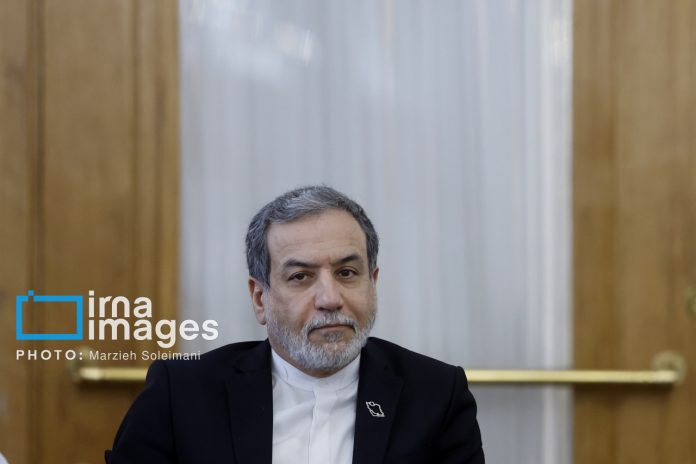
Abbas Araghchi

“My assumption is that in this case (a likely attack against the Islamic Republic’s nuclear facilities), we will enter into a widespread war in the region, a catastrophe that no one, neither in the region nor outside the region, wants,” the top diplomat said on Friday.

“I doubt that the Americans will make such a major miscalculation,” added Araqchi in remarks to Qatar’s Al Jazeera Arabic television network during a short stay in the Persian Gulf country, addressing the likelihood of Washington’s aiding Tel Aviv in such an act of aggression.

“Unlike previous times, if Iran’s nuclear facilities are attacked, Iran’s reaction will be immediate and decisive,” he noted.

Iran has so far retaliated twice, namely during Operations True Promise I and II, against Israeli aggression against its soil by successfully targeting sensitive and strategic Israeli targets deep inside the occupied Palestinian territories with hundreds of ballistic and cruise missiles.

The Islamic Republic, however, took its time before resorting to legitimate reprisal, apparently taking various domestic and regional conditions into account.

“The Americans and Israelis know what targets we can target,” Araqchi stated concerning the aspects of Iran’s response to potential aggression against its nuclear facilities.

He, meanwhile, reiterated that “Iran will definitely be able to respond” to such aggression, and strongly advised the US against making “one of the biggest historical mistakes” by contributing to such an attack.

Still addressing the potential of such an attack, the foreign minister declined to consider such a likely act of aggression to be capable of causing much damage to Iran’s nuclear sites.

He noted that, far from just being present on the ground, Iran’s nuclear might and capabilities lay “in the minds and thoughts of Iranian scientists.”

“This capability and program will not be destroyed by bombing or airstrikes.”

Secondly, Iran’s nuclear facilities were not situated in one or two locations, he went on, adding that the facilities were scattered across many locations and were being guarded by very good and strong defenses.

“These facilities are in places that are very difficult, even impossible, to access even by airstrikes.”

And thirdly, he underlined the certitude of the Islamic Republic’s “immediate and decisive” reaction to a likely attack.

Elsewhere in his remarks, Araqchi reiterated that “nuclear weapons are not part of Iran’s military doctrine,” asserting, “Our security is provided through other methods, and nuclear weapons are haram (forbidden) in our view.”

He cited the relevant fatwa (religious decree) that was issued by Leader of the Islamic Revolution Ayatollah Seyyed Ali Khamenei forbidding either achievement, storage or deployment of such weapons as per religious and moral concerns.

The official, however, said the country was capable of making the weapons, but repeated that there was no such will on the part of the Islamic Republic towards their production.

Araqchi also responded to a question concerning the potential resumption of negotiations between Iran and the US.

“Unfortunately, the history of our relationship with the US is full of very bad and negative events and positions,” he said.

The foreign minister noted how since the victory of Iran’s Islamic Revolution in 1979 and the subsequent establishment of the Islamic Republic, Tehran had constantly faced hostility and adversarial actions on the part of Washington.

He cited the cases of the US’s 2018 withdrawal from a nuclear agreement between Iran and others and Washington’s assassination of Lieutenant General Qassem Soleimani, Iran’s former top anti-terror commander, in 2020.

“All these events have created a history full of hostility and, most importantly, a history full of distrust between Iran and America. Of course, all of this cannot be compensated for with a single word.”

Araqchi noted that even the United States former administration of President Joe Biden — who had expressed a willingness to return to the nuclear deal — “had very hostile positions. The policy of pressure on Iran and severe sanctions against Iran intensified under the previous US administration.”

Tehran, however, was closely following the positions of the new US administration of Donald Trump and what policy it could adopt regarding Iran, the nuclear deal, or Iran’s nuclear energy program, he noted.

“And we are examining them. We will make our decisions based on their positions and coordinate our own positions accordingly.”

Under the current circumstances, though, “There is no basis for opening a new chapter in relations with America,” he added, referring to the hostile environment governing the ties that has been brought about by America’s hostile measures.

Araqchi cited the potential unblocking of Iran’s frozen assets across the world as a likely step that Washington could take towards beginning to regain Tehran’s trust.

Resumption of negotiations between the two sides, “requires perseverance and a change of position on the part of the US government, and it requires the American side to take positive steps. I think they themselves know better than anyone what steps they can take,” he stated.

Separately, Araqchi addressed the issue of the Israeli regime’s deadly aggression against the regional peoples, including the Palestinians and the Lebanese nations, which had led to the martyrdom of some of their high-ranking resistance figures.

“The martyrdom of [the Lebanese resistance movement Hezbollah’s former secretary-general] Seyyed Hassan Nasrallah was not a small loss; the martyrdom of other commanders and forces of Hezbollah and [the Palestinian resistance movement] Hamas incurred heavy costs,” he said.

“But all of this does not mean the disappearance of the resistance or even, in my opinion, its weakening. All of these were very important experiences that the resistance learned, and I am sure they will be useful in the future.”

Iranian newspaper advocates smart use of negotiation opportunities with US

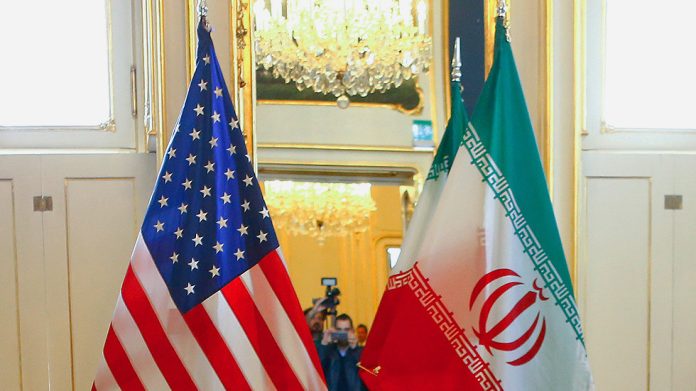
Iran US Flags

The article highlighted three primary perspectives within Iran regarding U.S.-Iran relations: absolute opposition, opportunistic divergence, and pragmatic engagement.

The first approach, rooted in historical antagonism, views the US as an inherent adversary, arguing that any negotiation would be detrimental to Iran’s interests, it explained.

It further noted, the second approach acknowledges the US’s global influence and suggests leveraging diplomatic opportunities to secure economic and security benefits, albeit with caution.

The third and most advocated approach, pragmatic engagement, calls for a balanced strategy that protects Iran’s national identity and interests while capitalizing on international opportunities, it points out.

The editorial noted that recent US steps, such as refraining from criticizing Iran’s human rights record at the UN and the removal of hawkish officials like Brian Hook, signal a potential shift in Washington’s stance.

It argued that Iran should seize this moment to engage in smart diplomacy, leveraging its regional influence and national achievements to secure favorable outcomes.

Only 4% of Israelis believe objectives of Gaza war met: Poll

Israel Hamas Hostages

The Lazar Institute survey, which sampled 517 Israelis with a margin of error of 4.4%, was published by the Israeli daily newspaper Maariv.

When asked if Israel had met its goals in the Gaza war, 4% of respondents said the objectives had been fully achieved, 57% said they had not been fully realized, 32% believed the objectives had not been achieved at all, and 7% were unsure.

Regarding the return of Palestinians to northern Gaza, 31% of respondents saw it as a sign the war had ended, while 57% disagreed, and 12% were uncertain.

The poll also revealed that 36% of Israelis believe the ceasefire deal between Israel and Hamas will be fully implemented, while 36% think it will not be completed, and 28% were unsure.

In response to an ultimatum issued by ultra-Orthodox parties to Prime Minister Benjamin Netanyahu — demanding either the passage of a military conscription law for religious students or early elections — 57% of respondents favored elections, 30% supported passing the conscription law, and 13% were undecided.

The poll indicated that if elections were held today, Netanyahu’s right-wing and religious bloc would secure 49 seats in the Knesset, while the opposition would gain a majority with 61 seats. Arab parties are projected to win 10 seats.

The Israeli Knesset has 120 seats, with 61 required to form a government. Despite the poll’s findings, early elections remain unlikely as Netanyahu continues to resist calls for a vote while the war is ongoing.

A previous Maariv poll, published last Friday, showed Netanyahu’s bloc winning 51 seats, while the opposition was projected to claim 59.

The poll results come nearly two weeks after a ceasefire agreement in Gaza — mediated by the US, Egypt, and Qatar — took effect on Jan. 19, 2025.

Israel’s war has killed more than 47,400 Palestinians, most of them women and children, and injured more than 111,000 since Oct. 7, 2023.

The International Criminal Court issued arrest warrants in November 2024 for Netanyahu and his former Defense Minister Yoav Gallant for war crimes and crimes against humanity in Gaza.

Israel also faces a genocide case at the International Court of Justice over its actions in the enclave.

Gaza ceasefire ‘at risk’ if UNRWA forced to stop aid operations

UNRWA

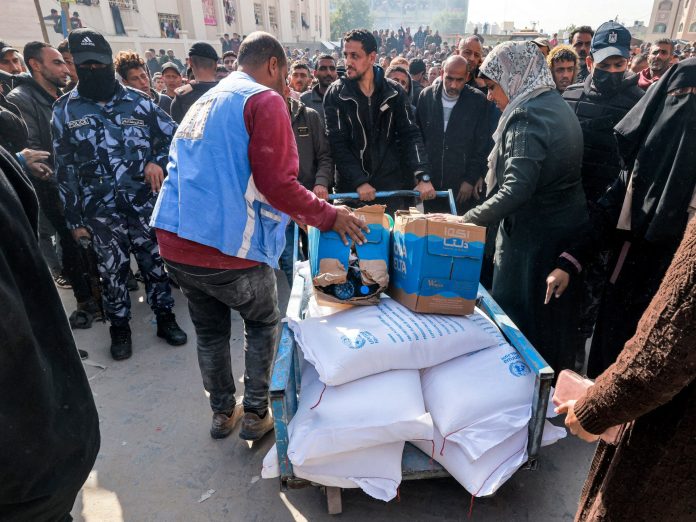
UNRWA has for more than seven decades provided essential aid and assistance to Palestinian refugees.

UNRWA chief Philippe Lazzarini has described the organisation as “a lifeline” for nearly six million Palestinian refugees under its charge in Gaza and the occupied West Bank.

Israel had accused UNRWA of providing cover for Hamas, an allegation that the agency strongly denied. It also accused UNRWA staff members of being part of the October 7 attack. Israel has not provided evidence for its claims and allegations.

Subsequently, it passed legislation severing ties with the agency, which came into force on Thursday, a move likely to hamper its vital services after 15 months of war in the besieged enclave.

The agency is banned from operating on Israeli soil and contact between it and Israeli officials is also forbidden.

“If UNRWA is not allowed to continue to bring and distribute supplies, then the fate of this very fragile ceasefire is going to be at risk and is going to be in jeopardy,” Juliette Touma, director of communications of UNRWA, told a Geneva press briefing on Friday.

UNRWA issued the warning as the United Kingdom, France and Germany reiterated their “grave concern” over Israel’s ban.

“We urge the government of Israel to work with international partners, including the UN, to ensure continuity of operations,” the joint statement from the three nations, published by the British government, said.

In a statement, UNRWA spokesperson Jonathan Fowler admitted that the organisation is now operating in a “nightmare scenario”.

Fowler added UNRWA has 5,000 staff still working in Gaza as the “backbone of the international aid operation” and their work may be compromised by the situation.

“Our biggest fear is that there is no plan B.”

Stephane Dujarric, spokesman for UN chief Antonio Guterres, earlier insisted that despite the ban, “UNRWA clinics across the occupied West Bank, including East Jerusalem, are open.”

Rebuilding Gaza could take 10-15 years: Trump’s Middle East envoy

Gaza War

Steve Witkoff, who recently returned from a trip to the Middle East, described the devastation as overwhelming.

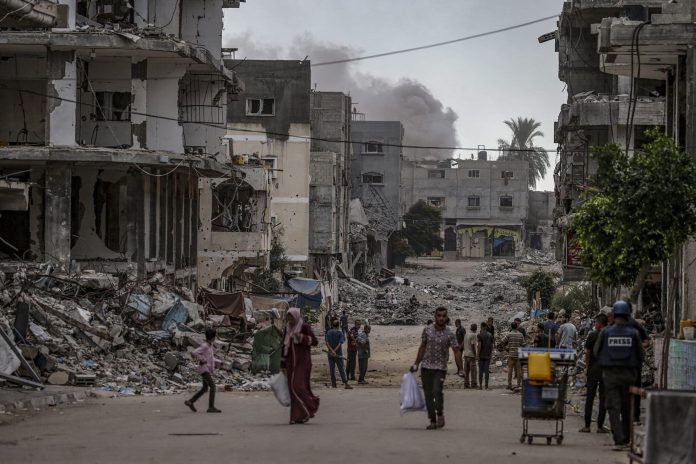
“There is almost nothing left of Gaza,” he told the Axios news website.

“People are moving north to get back to their homes and see what happened and turn around and leave … there is no water and no electricity. It is stunning just how much damage occurred there.”

Witkoff, a real estate investor and developer, estimated that clearing the debris alone could take five years, with additional time needed to assess underground tunnels before reconstruction could begin.

“There has been this perception we can get to a solid plan for Gaza in five years. But it’s impossible. This is a 10- to 15-year rebuilding plan,” he added.

Witkoff arrived Wednesday in Israel where he met Israeli Prime Minister Benjamin Netanyahu and visited Gaza.

On Thursday, he met Israeli Finance Minister, who is the leader of the far-right Religious Zionism Party, Bezalel Smotrich.

The first six-week phase of the Gaza ceasefire agreement took effect Jan. 19, suspending Israel’s genocidal war, which has killed more than 47,400 Palestinians, most of them women and children, since Hamas’ cross-border attack on Oct. 7, 2023, according to Gaza’s health authorities.

Nearly 1,200 people were killed Oct. 7 in Israel, and 250 were taken to Gaza as hostages, according to official figures.

Ten Israeli captives have been released in return for 290 Palestinian prisoners since the deal took effect.

Under the first phase of the deal, 33 Israeli captives are set to be released in exchange for an estimated 1,700 to 2,000 Palestinian detainees.

The Israeli onslaught on Gaza has left more than thousands of people missing, with widespread destruction and a humanitarian crisis that has claimed the lives of many elderly people and children in one of the worst global humanitarian disasters ever.

The International Criminal Court issued arrest warrants in November for Netanyahu and his former Defense Minister Yoav Gallant for war crimes and crimes against humanity in Gaza.

Israel also faces a genocide case at the International Court of Justice for its war on the enclave.

Israeli war on Gaza costs nearly $42bn: Report

Gaza War

Yedioth Ahronoth daily reported that as of mid-January, the war had cost 150 billion shekels ($42 billion), citing Gil Pinchas, Economic Advisor to the Israeli army’s Chief of Staff and head of the Budget Department at the Ministry of Defense.

The newspaper said that the average daily cost of the war on Gaza was approximately 300 million shekels ($83.8 million).

It also noted that “a single night of defending Israel’s skies with the help of the international coalition against the Iranian missile attack cost us 1 billion shekels ($279 million).”

On Oct. 1, last year, Tehran launched around 180 ballistic missiles on Israel in retaliation for the recent assassinations of Hezbollah and Hamas leaders and an Iranian commander.

Yedioth Ahronoth added that “the heaviest expenditure item in the defense budget is the funding of the reserve army, which reached 45 billion shekels ($12.5 billion).”

On Jan. 19, a ceasefire agrrement between Hamas and Israel went into effect, initially lasting 42 days, during which negotiations will continue for subsequent phases of the deal. The accordis mediated by Egypt and Qatar, with support from the US.

Israel’s genocidal war has killed more than 47,400 Palestinians, most of them women and children, and injured more than 111,000 since Oct. 7, 2023.

The Israeli onslaught on Gaza has left more than 11,000 people missing, with widespread destruction and a humanitarian crisis that has claimed the lives of many elderly people and children in one of the worst global humanitarian disasters ever.

The International Criminal Court issued arrest warrants in November last year for Israeli Prime Minister Benjamin Netanyahu and his former Defense Minister Yoav Gallant for war crimes and crimes against humanity in Gaza.

Israel also faces a genocide case at the International Court of Justice for its war on the enclave.

At least two killed in Israeli attacks on Lebanon

Lebanon War

The Israeli army claimed on Friday it struck “multiple” Hezbollah targets in the area near the border with Syria in the east, as tensions escalated following its extension of a recent deadline for removing its troops from the country.

The army claimed that the sites it targeted in the overnight attack include “underground infrastructure used to develop and manufacture weaponry” and sites on the border used to “smuggle weaponry into Lebanon”.

Later on Friday, Lebanon’s Health Ministry said two people were killed and 10 wounded in the attack.

Hezbollah official Ibrahim Moussawi condemned the air raids, calling them “a very dangerous violation and a blatant and explicit aggression”, urging Lebanon to halt Israel’s continued attacks.

Israel was supposed to complete its army’s withdrawal from Lebanon by January 26 under a ceasefire agreement with Hezbollah agreed last November. However, it refused to do so and the deadline was then extended to February 18.

Under the terms of the ceasefire, the Lebanese army is to deploy in the south as Hezbollah pulls its forces back north of the Litani River, some 30km (20 miles) from the border.

Israel made clear it had no intention of meeting the deadline, claiming that the Lebanese army had not fulfilled its side of the bargain.

In the two months from November 27 to Monday, Israel killed at least 83 people in Lebanon, according to data obtained from Lebanon’s Ministry of Public Health.

At least 228 were also injured as displaced residents tried to return to villages where Israeli soldiers remain stationed.

Earlier this week, as thousands of people in Lebanon tried to return to their homes, Israeli forces killed at least 24 in southern Lebanon.

This week, Lebanese media reported repeated violations of the ceasefire deal by the Israeli military, including attacks on the town of Taybeh and village of Kfar Kila.

The most recent drone attack injured at least five people in the southern Lebanese town of Majdal Selem on Wednesday, the Reuters news agency reported.

From the beginning of the conflict on October 8, 2023 to November 26, 2024, Israeli soldiers killed at least 3,961 people across Lebanon and injured more than 16,520.

Netanyahu to visit White House Tuesday, first foreign leader since Trump assumed office

Trump Netanyahu

Spokesperson Karoline Leavitt described Netanyahu’s trip as “a working meeting and visit with” Trump.

She stated that the meeting “emphasizes” Trump’s “continued support for Israel, and ensuring that brutal terrorists in that region have hell to pay.”

Recently, Trump proposed moving Palestinians out of the Gaza Strip and stressed Jordan and Egypt should take more Palestinians from the besieged enclave, which has drawn sharp criticism.

Trump’s proposal came after a ceasefire accord took effect in Gaza on Jan. 19, suspending Israel’s genocidal war that has killed more than 47,300 Palestinians, most of them women and children, and injured more than 111,000 since Oct. 7, 2023.

The Israeli onslaught has left more than 11,000 people missing, with widespread destruction and a humanitarian crisis that has claimed the lives of many elderly people and children in one of the worst global humanitarian disasters ever.

The International Criminal Court issued arrest warrants in November last year for Netanyahu and his former Defense Minister Yoav Gallant for war crimes and crimes against humanity in Gaza.

Israel also faces a genocide case at the International Court of Justice for its war on the enclave.