Tuesday, January 13, 2026
Home Blog Page 4634

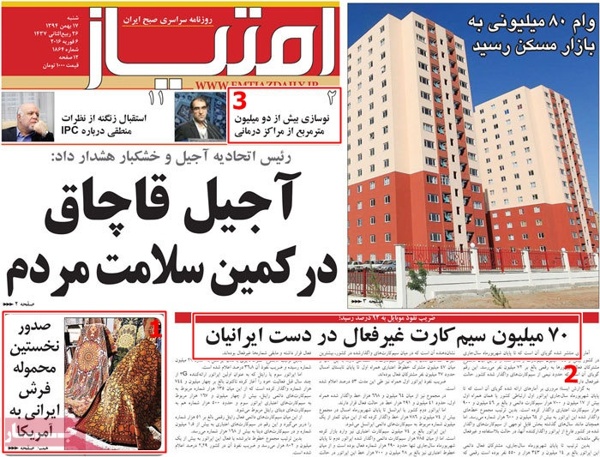
Iran to resume export of hand-woven carpets to US

Talking to IRNA, Karegar reiterated that the US Congress halted the imports of Iranian carpet in 2010.

‘Before imposing of sanctions on Iran, the US markets were considered as the first exports hub of Iranian carpets.

Kargar reinterred that over four million tons of Iranian hand-woven carpets, worth $230 million, were exported during the 10 months of current Iranian calendar year, started March 21, 2015.

He described the figure as too meager, reiterating that imposing of sanctions against Iran and economic recession as the main reasons behind the decline of the exports of Iranian carpets.

Karegar said Europeans are also the enthusiastic buyers of Persian carpets.

He said that Persian hand-woven carpets in the past seven months of the current Iranian year (started on March 21) fetched more than 142 million dollars.

Karegar said based on statistics released by Iran Customs Administration, 2,620 tons of hand-woven carpets were exported to 80 countries in the past seven months.

Export of the Persian carpets amounted to $166 million, showing 14 percent growth compared to the figure in the preceding period.

The exported hand-woven carpets weighed more than 3,100 tons, showing 16 percent growth.

Moreover, the eight-month statistics showed more than 3,900 tons of hand-woven carpets, worth more than $202 million, were exported to more than 80 countries, showing increases of 24 and 12 percent in weight and value respectively compared to the figures in the same period in the year 1392 (2013-14).

Germany, Italy, Switzerland, and France in Europe, Lebanon, Qatar, the UAE and Kuwait in the Middle East and China and Japan in east of Asia are major buyers of Iranian hand-woven carpets in the seven-month period.

Iran National Carpet Center put the value of exports of Iranian hand-woven carpets at more than 330 million dollars the year before.

Saudi Military Intervention in Syria Amounts to War, Russia Warns

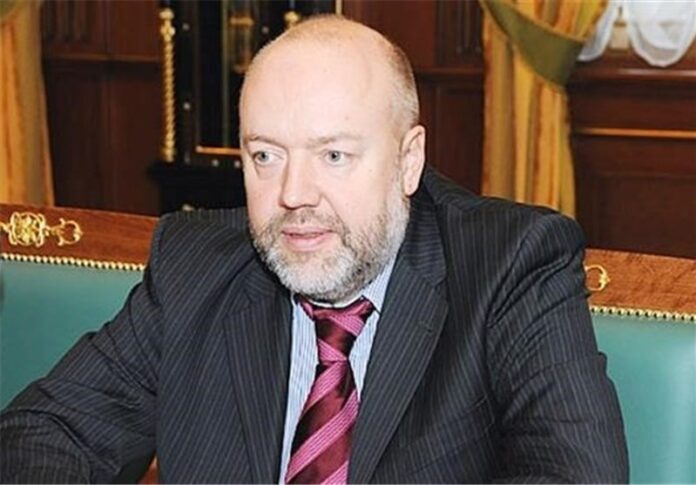
“Syria has to give official consent, to invite, otherwise it will be a war. The same applies to international law,” Pavel Krasheninnikov, the head of the State Duma committee, told Interfax on Friday.

Krasheninnikov said that by promising a ground operation in Syria, Riyadh now “intends to send troops to the territory of a sovereign state essentially without declaring a war.”

Saudi Arabia on Thursday voiced readiness to participate in any ground operations in Syria if the US-led coalition allegedly targeting terrorists decides to start such operations.

US State Department spokesman John Kirby also welcomed the Saudi decision, Press TV repoted.

Saudi Arabia is a member of the so-called US-led coalition that has been conducting air raids against what are claimed to be the Daesh terrorists inside Syria without any authorization from the Syrian government or a UN mandate since September 2014.

The US-led strikes have on many occasions targeted infrastructures and left many civilians dead.

Syrian President Bashar al-Assad said during an interview in March 2015 that the US-led military campaign does not aim to “do away” with the terror group.

Washington and its regional allies, including Turkey and Saudi Arabia, have been backing militants fighting against the Syrian government and people. Since the Syria conflict started in 2011, they have been providing military and financial aid to the militants who are accused of widespread war crimes and crimes against civilians.


Iran’s Nuclear Deal Means Diplomacy Works: Zarif

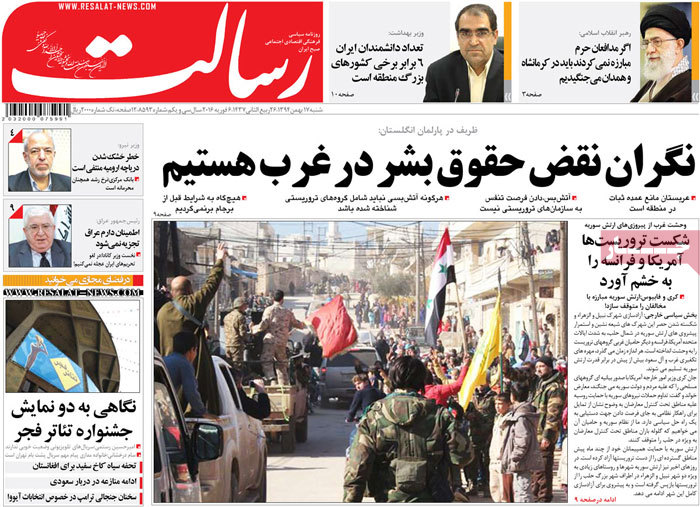
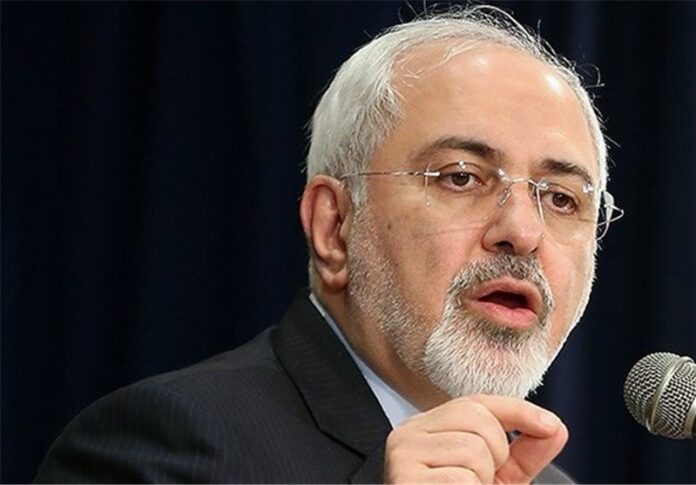
“With the nuclear agreement we demonstrated that diplomacy works,” Zarif said in a speech in the British parliament on Thursday, referring to the nuclear deal between Iran and the Group 5+1 (Russia, China, the US, Britain, France and Germany), reached on July 14, 2015 and implemented on January 16 this year.

And now, there is a hope that the international community can resolve its difficult problems through diplomacy, he added.

He further pointed to the ongoing crisis in Syria, saying that since the beginning of the UN-brokered negotiations to end war in the Arab country, Iran has called for ceasefire along with political transition.

However, he added, any ceasefire in Syria should not include stopping military operations to combat terrorism.

“Ceasefire, based on everybody’s interpretation, does not include giving a breathing space to recognized terrorist organizations,” Zarif said. “Having a ceasefire is different from letting up the fight against terrorism.”

He named the Nusra Front and Daesh (ISIL) as such organizations.

Syria has been gripped by civil war since March 2011 with Takfiri terrorists from various groups, including Daesh, currently controlling parts of it.

According to the United Nations, more than 250,000 people have been killed and one million wounded during the conflict.

In the meantime, Iran has remained a close ally of Syria and supports its legitimate government in the face of foreign-backed militancy.


Gorgeous sunset on Kish Island(PHOTOS)

The coral-rimmed, oval-shaped Island of Kish off the southern coast of Iran shines a fiery orange in the sunset, creating a unique and fascinating sight.


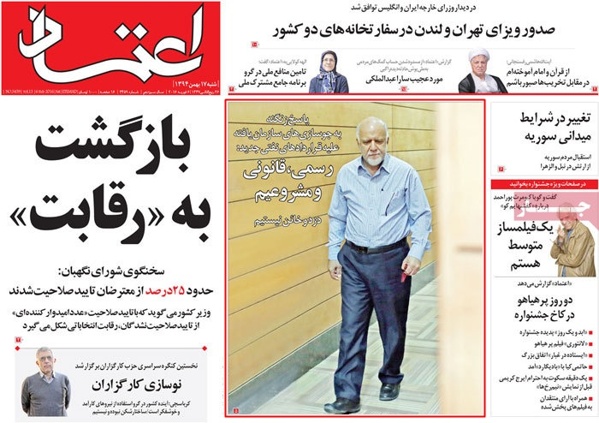
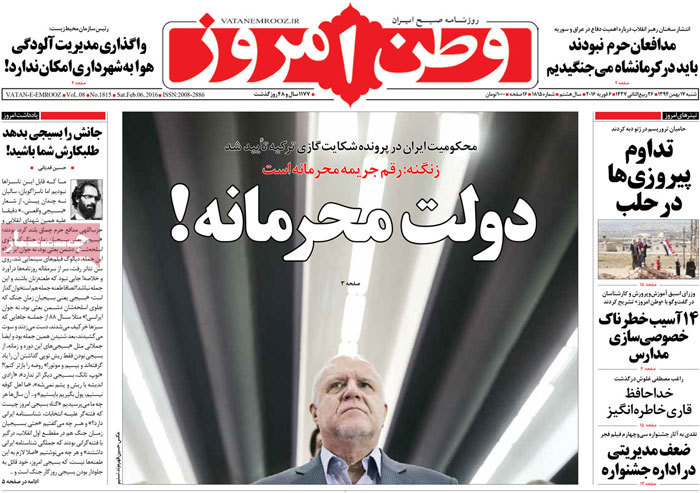
Iran putting finishing touches to IPC contracts: Zangeneh

“So far, no contract has been signed and even the text of this model of contracts has not been readied yet,” Bijan Zangeneh told the ministry’s official news agency SHANA.

“The drafting of the contracts is under way and we will negotiate with [foreign] companies after finalization,” said the minister.

He said that petroleum ministry officials are open to discussing the framework of the Iran Petroleum Contract (IPC) – drafted to replace unattractive buybacks – to assuage their concerns.

“I agree that there are concerns about oil and there have always been [such concerns]. We want to give assurances provided that the critics are for negotiations, are rational and observe the minimum criteria,” said Zangeneh.

He dismissed criticisms that foreign companies should not be engaged in oil contracts with Iran.

“Development of oil production capacity with focus on joint fields with a view to enhancing recovery rate is enshrined in the general policy [of oil plans],” said Zangeneh.

“I’m sure that the lawmakers who are critical of this framework have goodwill. Although they are opposed to me, their intention is the development of the country,” he said.


IPC, an attractive model

Iran cancelled an oil conference that was scheduled for this month in London to unveil new terms for oil contracts.

South Pars gas


The London conference was planned to be held Feb. 22-24 as international sanctions have been lifted following the entry into force of Iran’s landmark nuclear agreement with world powers last month.

IPC is replacing buyback deals. Under a buyback deal, the host government agrees to pay the contractor an agreed price for all volumes of hydrocarbons the contractor produces.

But under the IPC, National Iranian Oil Company (NIOC) will set up joint ventures for crude oil and gas production with international companies which will be paid with a share of the output.

More than 100 energy companies, including Britain’s BP, France’s Total, Italy’s Eni and Spain’s Repsol attended a conference in Tehran last November to hear about the IPC.

Under the IPC, different stages of exploration, development and production will be offered to contractors as an integrated package, with the emphasis laid on enhanced and improved recovery.

Architects of the new contract say foreign companies can no longer dash out of their contractual obligations if sanctions are ever re-imposed on Iran. But critics cite numerous shortcomings which seriously plague the new formula.


Canada lifts Iran sanctions, to restore ties

The government of Prime Minister Justin Trudeau announced in a statement that it had amended its “broad-reaching autonomous sanctions against Iran to allow for a controlled economic re-engagement, including lifting the broad ban on financial services, imports and exports.”

The statement, issued by Foreign Affairs Minister Stéphane Dion and International Trade Minister Chrystia Freeland, says the changes announced Friday mean “Canadian companies will now be better positioned to compete with other companies globally.”

All applications for export permits will be considered on a case-by-case basis, read part of the statement.

This is seen by the media as a key step to make Canadian companies more competitive against rivals doing business in Iran.

Nevertheless, the country has emphasized that it will continue to maintain tight restrictions on exports to Iran of goods, services and technologies considered sensitive from a security perspective.

Foreign Minister Dion has been quoted by the Canadian media as saying on Friday that the country is considering the restoration of diplomatic contacts with Iran, as well.

He had said last week that if Airbus is allowed to sell to Iran, then Canadian aircraft maker Bombardier Inc should be allowed to export there as well.

The Canadian foreign minister had also said in late January that it will move to quickly normalize relations with Iran and lift the sanctions it has imposed against Tehran in order not to miss the business opportunities that have arisen following the recent implementation of Tehran’s landmark nuclear agreement with six world powers.

He had emphasized that Ottawa would act “in a speedy fashion” to normalize ties and remove economic sanctions against Iran.


Iran urges US to tell EU banks trade Ok

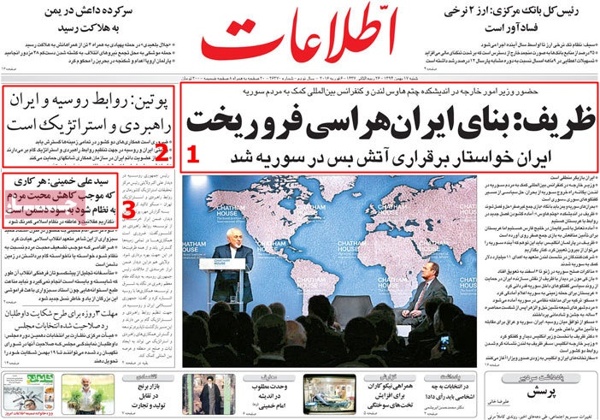
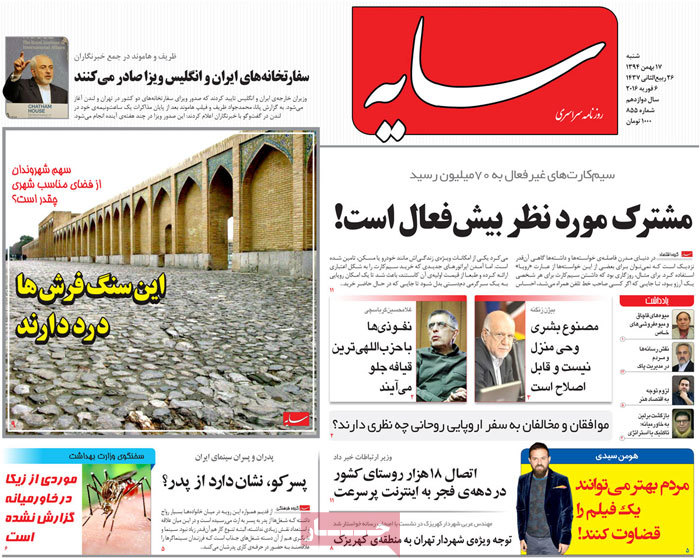
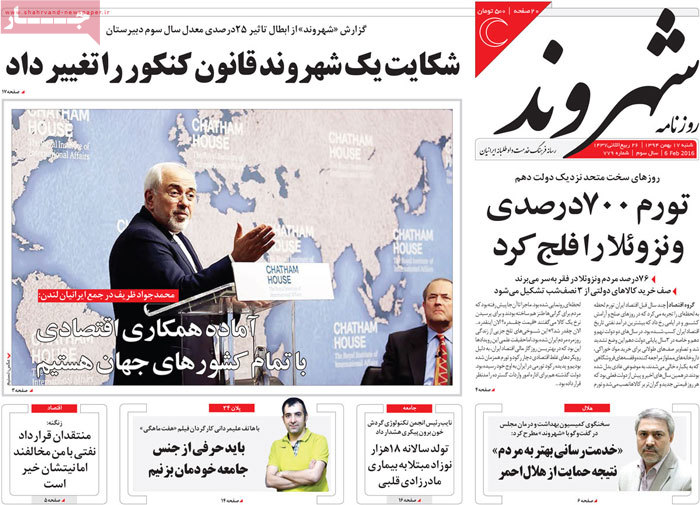
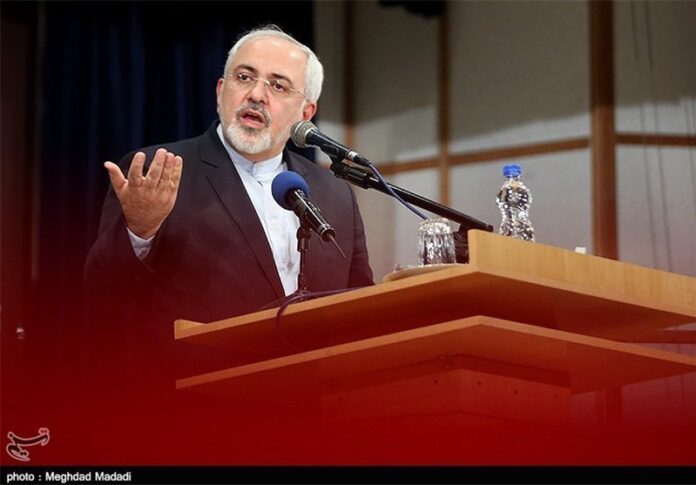
The call was made on Thursday by Iran’s Foreign Minister Mohammad-Javad Zarif in a forum at the British think-tank Chatham House in London.

“Rebuilding the confidence of the banks that the United States will not re-intervene in their relations with Iran may require some further assurance from the United States,” Reuters quoted Zarif as saying.

“We don’t need any more legalese – we need clear precise assurances that banks can do business with Iran,” he said. “I hope that is fast coming because if not it would be a problem of implementation.”

Iran saw a series of nuclear-related economic sanctions lifted in mid-January when a landmark deal with the P5+1 group of countries – the five permanent members of the Security Council plus Germany – was implemented.

Nevertheless, some restrictions over the country’s commercial activities still remain, Reuters reported.

Washington still prevents US nationals, banks and insurers from trading with Iran and also prohibits any trades with Iran in U.S. dollars from being processed via the US financial system.

This is a significant complication given the dollar’s role as the world’s main business currency, the report added.

European banks are also cautious – with some, including Deutsche Bank and BNP Paribas, remembering past fines from US regulators for breaking sanctions.

Last April, BNP Paribas SA was sentenced to five years probation by a US judge in connection with a record $8.9 billion settlement resolving claims that it violated sanctions against Iran, as well as Sudan and Cuba.

Also, US regulators said in November 2015 that the Deutsche Bank will pay $258m in fines for doing business with US-sanctioned countries like Iran and Syria.


Iran, Japan sign investment agreement to up economic ties

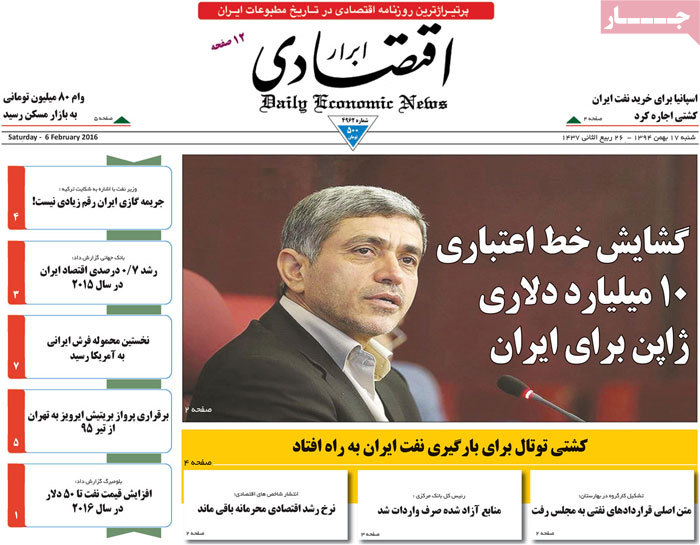
The agreement was signed by Japanese Foreign Minister Fumio Kishida and visiting Iranian Minister of Finance and Economic Affairs Ali Tayyeb-Nia in Tokyo on Friday following Japan’s move to lift Iran sanctions as a result of the implementation of a nuclear deal between Tehran and the P5+1 group of countries.

According to the Friday agreement, all rights and assets of potential Japanese investors in Iran will be protected, Tayyeb-Nia said.

The Iranian minister added that the foreign party will be insured against all possible non-trade risks under this agreement.

He expressed Iran’s keenness to improve relations with Japan after the removal of sanctions and noted that the signed pact can play a leading role in achieving this objective.

The Japanese foreign minister, for his part, said Tokyo is firmly determined to strengthen economic cooperation with Tehran due to its great potential.

Kishida expressed hope that the investment agreement would help the two countries improve their relations.

Iran and the five permanent members of the UN Security Council – the United States, France, Britain, China and Russia – plus Germany started to implement Joint Comprehensive Plan of Action (JCPOA) on January 16.

After JCPOA went into effect, all nuclear-related sanctions imposed on Iran by the European Union, the Security Council and the US were lifted. Iran in return has put some limitations on its nuclear activities. The nuclear agreement was signed on July 14, 2015 following two and a half years of intensive talks.


Why German FM Came to Tehran Once Again?

The recent visit of German Foreign Minister Frank-Walter Steinmeier to Iran is important both to us and to the European country’s regional policy. A senior official with the German foreign ministry said, “We have rights and interests as much as others do. I think it is the time for Berlin to fulfill its international duties more responsibly. We have shouldered the burden and fulfilled our responsibilities by doing what we could do for Europe within the past fifty years.”


According to a report by the Persian newspaper Ghanoon translated by the Iran Front Page (IFP), the German official did not provide further details on what he described as international commitments and the heavy burden of Europe. However, the increase in Berlin’s diplomatic efforts at the international level, particularly in the Middle East and Persian Gulf, reveals to a great extent the secret willingness of German officials to play the role they believe their country has so far failed or avoided to play.

This German official, who was afraid of reactions to his remarks and spoke on condition of anonymity, added, “Our foreign and defense policy is not supposed to be limited to Europe forever. In the Middle East, the Persian Gulf, and the Arab countries of Africa, there is no bad impression of Germany unlike our allies.”

It is not clear how much the German official’s remarks can be reflective of the views of German authorities. During the past 60 years at least, whether based on the call of its NATO allies or for fear of USSR’s reaction, Germany’s foreign policy (that of the West Germany during the Cold War and the current united Germany) has been mainly focused on economic and technological rather than military diplomacy. It was an efficient and straightforward policy that first turned to a political habit, and then provided Germany with the opportunity to reconstruct its economic and technical infrastructures after the World War II.

As regards the gradual change in Germany’s strategic foreign policy, one can now witness numerous signals indicating that Berlin is getting out of its nearly 60-year cocoon. However, as far as the special policies adopted by Berlin in the Arab Middle East and Persian Gulf are concerned (a completely-classic but forgotten view), the acceleration of Germany’s diplomacy and attempts to play a totally active role in regional political and security developments is no longer an issue to be concealed or denied, or that allies like France and Britain would hinder it through their relative dissatisfaction; especially now that the US seems willing to welcome Berlin’s new role, which will practically lead to further balance of strategic power in the crisis-hit Middle East and now in Persian Gulf.

The surprising capability German diplomats, Foreign Minister Steinmeier in particular, showed during the talks on Iran’s nuclear energy program was well recognized by political observers. Western diplomatic sources as well as the Iranian foreign ministry have noted that back in June and July 2015, in the course of the international community’s negotiations with Iran over its nuclear energy program, Steinmeier played a very constructive role in Vienna talks, which finally led Iran and the Group 5+1 (Russia, China, the US, Britain, France, and Germany) to a common point after several months. At least this could lead Tehran and Washington as the two main sides of negotiations to a common and defendable point through diplomatic goodwill.

The German Foreign Minister arrived in Tehran on February 2 for the second time in less than four months in a bid to pursue his country’s foreign policy based on “acceleration of presence in the region, enhancement of power in Berlin, and extension of influence in Europe”, an approach he considers himself as its architect.

Steinmeier was accompanied by a high-ranking delegation of senior economic and cultural representatives during his Tehran visit. However, given his recent stances after the escalation of tension between Iran and Saudi Arabia, the majority of political and diplomatic sources in Tehran and Berlin believe that, aside from economic cooperation, his trip is mainly aimed at political and security objectives regarding regional issues, Syrian crisis in particular, whose repercussions have deeply influenced Germany. Moreover, it is said that Steinmeier will head for Riyadh after leaving Tehran.

After the traditional tensions between Tehran and Riyadh escalated in early January, Steinmeier described the situation as very deep, and initiated efforts to control the tension and mediate between the two sides. Saudi officials, unlike Iranians, did not welcome Germany’s attempt. Nevertheless, the sensitive conditions in the Middle East, especially the worrying situation in Syria and the conflicts between Iran and Saudi Arabia – which might affect the Syrian crisis and the ongoing Geneva talks – convinced Berlin to follow up on its Middle East diplomacy, especially given the positive view and insistence of the US on the issue.

We can be hopeful about the achievements of Steinmeier’s regional visit. It was said that the German foreign minister “will face new positions and remarks in Tehran”. If it is the case, the story would go beyond Steinmeier’s success on Iran-Saudi ties. Germany would prove to be a more reliable path for Iran in its general diplomacy on Western countries, especially on both sides of the Atlantic.

Iran-Europe Ties: Past, Present, and Future

During President Hashemi Rafsanjani’s term, Iran and Europe held a series of talks referred to as Critical Dialogues. These talks were resumed during President Mohammad Khatami’s term under the name of Constructive and Comprehensive Dialogues. The Critical Dialogues were left unfinished after the Mykonos restaurant assassinations, when European ambassadors left Tehran. The Comprehensive Dialogues also remained unfinished, and were curtailed when the country’s nuclear issue escalated. Now that the nuclear deal (JCPOA) between Iran and world powers has been implemented, we are hearing news of “High-Level Talks” between Iran and the European Union (EU) at the level of deputy ministers, which are scheduled to commence in the coming days.

A Fararu reporter held an interview with Dr. Mousavian, who spent more than a decade of his diplomatic life on improving Iran’s ties with Europe, and now has a considerable presence in European conferences and meetings. In this interview, Mousavian was asked about his viewpoint on the current state and future perspective of Iran-EU ties.

Here is the full text of the interview, which has been translated by Iran Front Page (IFP).


Mr. Mousavian, let’s get straight to the questions without any introduction. Since there are fundamental differences between the viewpoints of Iran and Europe on such issues as human rights and terrorism, and as Europe is part of the Western world and a strategic ally of the United States, on what basis one can be hopeful about the future of serious relations [between Iran and Europe]?

MousavianObviously, we have basic differences of opinion with Europe. However, we should not deceive ourselves; there is no country in the world with which we are in total agreement and accord.

The government of the Syrian President Bashar al-Assad is one of the few Iran considers as a strategic ally. However, the Islamic Republic of Iran has a conflict even with Assad’s government in terms of its most fundamental principle, which is “religious government”. The Syrian government has taken a secular form, both under former President Hafez Assad and now his son Bashar Assad, while the basis of the Islamic Republic is a religious ruling system. Under Bashar’s government, Islamic hijab is not compulsory, dancing and use of alcoholic drinks are permitted, and so on. This shows that we should admit that we have to move forward in our foreign relations, based on national interests. Regarding ties with Europe, if we consider them as being based on national interest, we would like to be able to achieve “balanced and sustainable ties” at most, but not “strategic ties.”


Those “balanced relations” that you mentioned – are they the implication of President Hassan Rouhani’s recent visits to Italy and France?

No, President Rouhani’s trip was an excellent start for breaking the ice in the previously frozen Iran-Europe relations. The move is a great starting point.

In fact, because of deep ideological differences, Iran and Europe have conflicting opinions on such issues as human rights, terrorism, Israel, and the like. These differences will remain until the reappearance of Imam Mahdi, unless the nature of the Islamic Republic ruling system changes or Europeans convert to Shiite Islam, neither of which is going to happen. There won’t be any change in the nature of Islamic Republic, and the Europeans wouldn’t convert to Twelver Shiism. Even if Europeans convert, I fear they would act like our neighboring Shiite country, Azerbaijan, which has always been a US ally.

Even if Europeans become Muslims, we would not have strategic ties, because the history of our foreign relations after the 1979 Revolution has shown that our problems with certain Muslim states like Saudi Arabia have not been improved, and may even have got worse than those we have with Westerners. Within the decade before the nuclear deal, the Saudis became an ally of the Israelis, and put unprecedented pressure on the US to launch military attacks on Iran. However, the Europeans kept advising Washington against waging war on Iran.


Mr. Mousavian, as we’ve talked about, there are basic differences between the viewpoints of Iran and Europe on such issues as human rights and terrorism. How is it possible to achieve the “balanced and sustainable relations” that you mentioned, so that the new dialogues will bear fruit, unlike previous ones? Deputy Foreign Minister Majid Takht Ravanchi is going to start the negotiations soon. What is your suggestion?

We have had unstable relations with Europe since the Revolution. During the eight years of war Iraq imposed on Iran, many Europeans leaned towards Saddam Hussein. After the war, we started the critical dialogues with Europe to rebuild relations. I was the one who agreed upon their basis with Europe during a trip to Dublin in 1990, which was then the president of the Council of the European Union. At that time, I was the director-general of relations with Western Europe, and met the European troika (incumbent, preceding, and successor presidencies) for the first time. Later, we raised the level of negotiations to deputy ministers, after which Mr. Vaezi held responsibility for the talks for some years. In the last years of President Hashemi Rafsanjani’s term, the talks were ended due to a Berlin court’s verdict on the assassination of Kurdish leaders in a Mykonos restaurant.

After a while, the talks were resumed under the reformist administration, and there was the potential for a change from “critical dialogues” to “constructive dialogues.” However, the exacerbation of US hostility toward Iran prevented that from happening, because George W. Bush held extreme anti-Iran stances. Later, under the administration of Mr. Ahmadinejad, our ties with Europe were totally destroyed.

However, the situation is different now under President Rouhani’s government. It is now possible to establish some kind of strategic dialogue in a bid to achieve “balanced and sustainable ties” with Europe.

This goal, however, requires six basic conditions:

1. A national political will and consensus is needed within the country on the type of relations we want to have with Europe. The SNSC should determine and approve the minimum, maximum, content, and other aspects of these relations. If these are deemed suitable by the Leader of the Islamic Revolution, the foreign ministry should start the negotiations with a specific plan and goal, so that once a deal is reached, we would not get engaged in domestic controversy and conflict, or, God forbid, we would not challenge the deal.

2. We should accept the fact that the anti-Iran domestic consensus in the United States is broken. No party in the US believes in “regime change” in Iran any longer. They believe in mutual interaction with Iran. However, there are still people inside the country who wish to play good-cop, bad-cop in the US.

3. For the new strategic talks with Europe to succeed, the Islamic Republic of Iran should be able to control the trend of decreasing tension with the US, and also to maintain the current gap between the US government and its elites on the issue of Iran, so as to prevent another anti-Iranian domestic consensus within the US. In the best-case scenario, Iran could turn the oppositional sides within the US into minimal and neutral forces. However, I don’t see such a chance given the current circumstances in Iran.

Maintaining the existing gap requires consultation and dialogue with a US party that believes in working with Iran. The clear example is what President Rouhani did recently, under the Leader’s supervision, in the cases of the nuclear deal (JCPOA), prisoner swaps, the release of the US sailors, and in claiming the $1.7 billion the US has owed to Iran for 37 years. Europeans should also follow that lead. During the nuclear negotiations, Europeans established active lobbies in the US.

If this trend goes on, not only will the hostility between the US and Iran decrease, but also the gap in the US would persist, and can be further widened; especially given the fact that all current US presidential candidates have vowed to take much stricter policies than those of Barack Obama.

Maintaining the gap which already exists in the US would allow Europe to develop its cooperation with the Islamic Republic.

4. Iran and Europe should engage in multipurpose dialogue which includes both areas of conflict like human rights, and common interests like Daesh (ISIS), WMD (Weapons of Mass Destruction), a Free Middle East, and the fight against illicit drug trafficking. The two sides should both negotiate and instigate operational co-operation at the same time. Such a development would lead to an “Iran-Europe Political-Security Partnership” on issues related to regional and international peace, stability, and security.

The weak point in Europe’s past ties with Iran was that Europeans, under US pressure, would only negotiate on areas of conflict, and wouldn’t co-operate with Iran on areas of mutual interest.

During my mission in Germany, thanks to the support provided by Deputy Foreign Minister Mr. Vaezi, Foreign Minister Mr. Velayati, SNSC Secretary Mr. Rouhani, and President Hashemi Rafsanjani, we held very important talks with the German Chancellery. Rouhani, Velayati, and Vaezi even held personal meetings with the then-Chancellor, discussing these issues specifically. Chancellor Helmut Kohl also accepted such co-operation, but we were surrounded and defeated by a four-sided problem.

The first side was US opposition. Kohl raised the issue of co-operation with Iran during two of his visits to the US, but the White House didn’t accept it.

The second side was the heavy pressure exerted by Israelis.

The third side was the negative role Britain played in the restoration of Iran-Germany ties.

And the fourth side was provided by incidents as the separate assassinations of Kurdish leaders in Berlin, former Iranian Prime Minister Shapour Bakhtiar (the last one under the Shah), and the famous Iranian poet and entertainer Fereydoun Farokhzad in Bonn, as well as the confiscation of a Germany-bound mortar shell cargo in the Belgian port city of Antwerp. This, and many other similar cases, every now and then would ruin any new progress in Iranian-European relationships like a bomb. The US and Israel would also take advantage of such incidents to increase their negative propaganda against Iran’s relations with Germany and Europe.

5. We should avoid such provocative measures as the 2011 attack on the British embassy in Tehran, Holocaust denial (under ex-president Ahmadinejad), and the recent attack on the Saudi embassy. If the culprits behind such attacks are not detained, they must at least be controlled. And, if they are agent provocateurs, they should be countered. Of course in this case, the Europeans should also avoid provocative issues. A clear example was the case of Salman Rushdie, who insulted the tenets of Islam and 1.5 billion Muslims, but who was repeatedly invited to prestigious events and given awards. Whenever we talked about that case, they would raise the issue of freedom of speech. I told Europeans that you don’t consider freedom of speech whenever you arrest people for denying the Holocaust, which you regard as a crime. Therefore, you should also criminalize any insult to divine religions, such as Islam, Christianity, and Judaism, in the same way.

6. Finally, the economic ties between Iran and Europe should be promoted from “surface-level trade” ties to “deep industrial and economic” ties, in which the focus is on joint ventures, energy partnerships, joint presence in regional markets, and the like. To achieve this goal, Iran has to sign trade agreements with the EU and join the World Trade Organization (WTO).