Friday, December 26, 2025
Home Blog Page 4620

Iran’s Salehi Talks of Leader’s Conditions for Nuclear Talks

Salehi, who is also one of Iran’s vice presidents, said the Leader of the Islamic Revolution Ayatollah Seyed Ali Khamenei was involved at every step of the way in the secret so-called “second track” with Washington.

“Without the Supreme Leader, we were not able to start the second track. That is for sure,” he said in an exclusive interview with NBC News correspondent in Tehran Richard Engel.

Salehi said Washington initiated the dialogue, indirectly at first, through a businessman from the Arab sultanate of Oman.

The Iranian nuclear chief added, however, that he wanted more than just the word of a middleman before going to the Leader to propose something as important as negotiations with Washington over the nuclear program.

“I said, ‘Look, we have to receive an official letter from the Omanis that would give us the assurance that this is a serious proposal. Otherwise, we cannot just rely on (the) verbal note of a person,'” he said.

“So the Sultan of Oman wrote a letter to our Supreme Leader, expressing the fact that the US is ready to enter into negotiation with Iran on a bilateral basis, or a second track, you may say. And then, I submitted the letter to the leader, and then I discussed the issue with him. And, yes, he said, ‘Okay, I agree that you start this second track. But you have to take four conditions into consideration.'”

Salehi said the Leader’s four conditions limited how far the negotiators were able to go in their talks with Washington.

“One condition was that, ‘Look, you just discuss the nuclear issue. You do not enter into any other issue. I mean, no political negotiations. It’s only nuclear issue negotiation.'”

The second condition, he said, was for the talks to be quick, and not drag on “lethargically.”

“The third condition was that they (Washington) will have to recognize our basic right, which is enrichment. And the fourth condition was a condition that, let’s keep it for ourselves.”

Much has been reported about the personal relationship that developed between US Secretary of State John Kerry and Iran’s Foreign Minister Javad Zarif, but it wasn’t the only personal relationship that mattered.

Salehi was Iran’s chief technical nuclear negotiator. His American counterpoint was Energy Secretary Ernest Moniz, who had taught at MIT when Salahi was a student there, though the two men did not know each other at the time, the NBC News reported.

“But later, when we met each other for the first time,” Salahi recalled, they discovered that they had friends in common, “and they had told him about me.” It was, he said, “as if we knew each other.”

“Had it not been the case that me (and) Professor Moniz were in the negotiation, it would have been very difficult for experts to make decisions,” he said.

The two scientists could discuss both the specific safeguards Washington wanted to place on Iran’s nuclear program and the specific facilities that Iran wanted to keep.

“He (Moniz) was a very rational person, wise person. Of course, he was looking for his own national interest, as I was looking for my own national interest,” Salehi said.

The negotiations over Iran’s nuclear program culminated with smiling press announcements from Kerry and Zarif in Vienna earlier this month, but this didn’t all happen peacefully. There’s blood on the ground too.

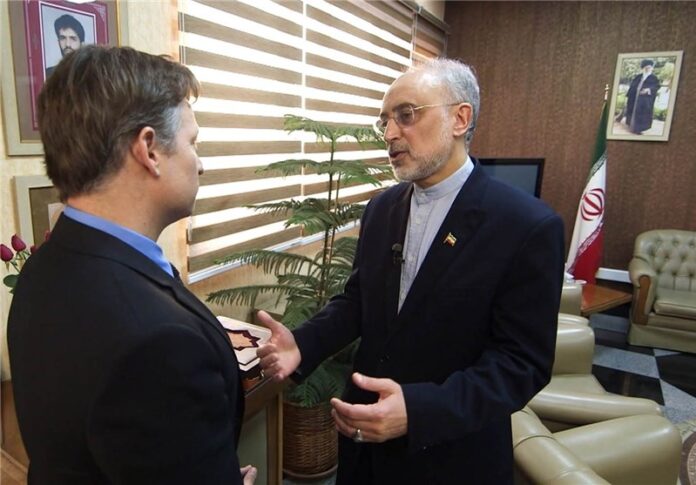
Five photographs are prominently displayed on the wall of Salahi’s Tehran office. The quiet, soft spoken man, who speaks fluent, barely accented English, became emotional when he showed them to us, his voice instantly hardening.

The photographs are of four nuclear scientists and a driver murdered in Tehran in an effort to sabotage Iran’s nuclear program. Salehi blamed Israel for the murders but says Washington shares the responsibility.

“We have all the information that it was the Zionist regime,” he said. “But there is — there was — a tacit, we think, agreement from the United States as well, unfortunately.”

According to NBC, US officials have denied involvement in the killings. Israeli officials have not confirmed the regime’s involvement, but expressed satisfaction that the Iranian nuclear scientists were killed.

Asked if he expected a sixth photograph on his wall, Salehi showed a passion previously hidden behind his relaxed demeanor.

“I hope it’s me. I hope it’s me,” he said. “Because this is a source of pride, I told you. We look for martyrdom. We are not frightened of that.”
 

Diplomacy, logic can settle regional issues: Rouhani

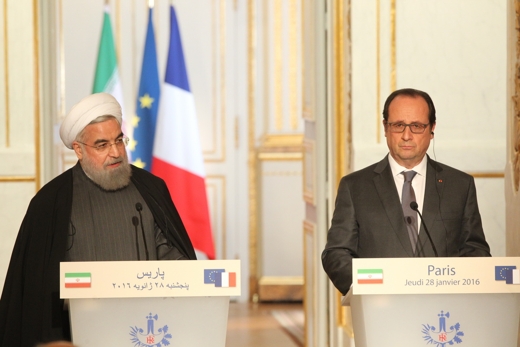
In a Thursday presser with his French counterpart Francois Hollande in Paris, Rouhani said the diplomatic process that culminated in last July’s deal on the Iranian nuclear issue should serve as a model in efforts to address other issues of international significance such as the crisis in Syria.

The Iranian president further said it is up to Syrians to decide their political future, calling on other players to avoid interference in the country’s affairs and merely assist the Arab nation to resolve the crisis on its own.

“The main problem in Syria is not such and such person, the main issue is terrorism and Daesh,” said the Iranian president, criticizing the foreign parties that fuel the crisis in Syria by arming the terror groups and being involved in illegal oil trade with them.


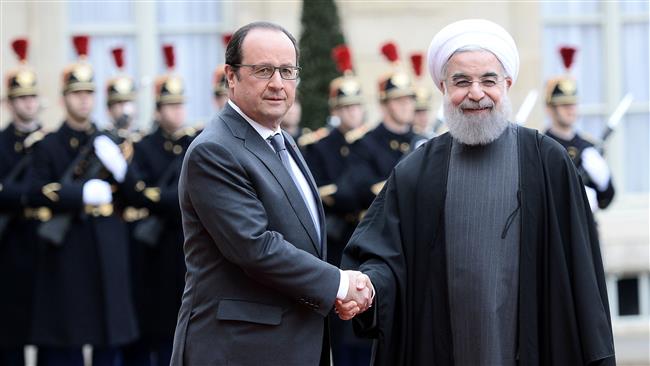
French President Francois Hollande (R) shakes hands with his Iranian counterpart Hassan Rouhani upon his arrival on January 28, 2016 at the Élysée Palace in Paris. ©AFP


Hollande, in turn, said Iran and France have agreed to make efforts to protect the cultural heritage of war-torn Iraq and Syria from destruction.

The French head of state further highlighted the role of Iran in the political process aimed at resolving regional crises.

Echoing Rouhani’s call for joint fight on terrorism, Hollande said Muslims in the Middle East are falling prey to Daesh terrorist acts.

He noted that Iran and France “share responsibility” for fighting terrorism which he said is threatening “regional countries, including Iran.”

“Terrorism is our sole enemy,” he said, adding that terrorism threatens human beings of every religious belief.

Referring to ongoing crisis in Syria, Hollande said it was “urgent to implement humanitarian measures and to negotiate political transition.”

“It’s possible,” said the French president.

Earlier in the day, Rouhani sat down for talks with Hollande after his meeting with the country’s senior executives and businessmen.

Rouhani was officially welcomed by the French leader at the Élysée Palace in Paris.

Also on Thursday, Rouhani and Hollande oversaw the signing of several memoranda of understanding between Iran and France in various sectors, including telecommunications, environment, tourism, agriculture, higher education and transportation.

In a landmark deal, Iran agreed to buy 118 Airbus aircraft worth about $25 billion.

“The sky has brightened for Iranian passengers, and Airbus is pleased to welcome the return of Iran to the international civil aviation community,” Airbus boss Fabrice Bregier said after signing the memorandum.

The agreement to purchase 73 long-haul and 45 medium-haul planes, covers “new aircraft orders and a complete package of cooperation in the civil aviation sector,” according to an Airbus statement.

Meanwhile, France’s energy giant Total signed a letter of intent with National Iranian Oil Company (NIOC) for buying crude oil from Iran.

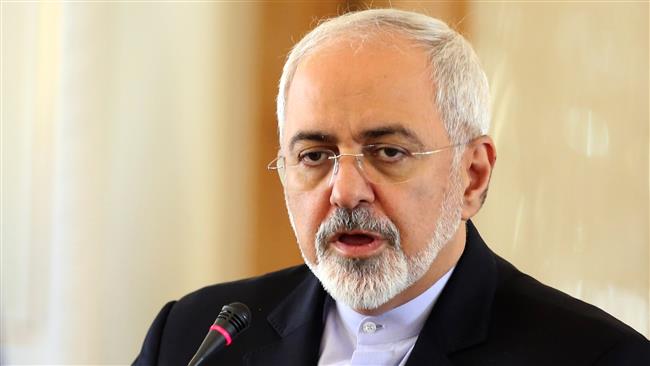
Iranian Foreign Minister Mohammad Zarif was also on Thursday welcomed by his French counterpart Laurent Fabius at the French Foreign Ministry, where the two signed a set of cooperative agreements.

Zarif and Fabius signed a set of letters of intent on political dialogue between Iran and France and the establishment of business council.

The two ministers also discussed a wide range of issues including Middle East crises and monitoring of implementation of Iran’s nuclear agreement with world powers.
On January 16, Iran and the five permanent members of the UN Security Council – the United States, Britain, France, Russia and China – plus Germany started to implement the nuclear agreement they had reached in July 2015.

After JCPOA went into effect, all nuclear-related sanctions imposed on Iran by the European Union, the UN Security Council and the US were lifted. Iran, in return, has put some limitations on its nuclear activities.

Rouhani censures policy of imposing sanctions on countries

“The policy of sanctions has always been a wrong policy and has never proved to be successful in the course of history,” Rouhani said in a Thursday meeting with French executives and businessmen in Paris.

Two unnamed EU officials were cited on Wednesday as saying that France had asked its partners to consider new sanctions on Iran over its recent missile tests. The report by the Associated Press, however, was refuted hours later by EU diplomats and a French official.

“No such request was made,” said one EU diplomat, speaking on condition of anonymity.

President Rouhani also said the nuclear deal reached last year between Iran and the P5+1 group of countries proved how dialog can pave the way for the progress of nations.

Iran and the P5+1 – the US, Britain, France, China, and Russia plus Germany – reached the nuclear agreement, dubbed the Joint Comprehensive Plan of Action (JCPOA), in July 2015. The deal went into force on January 16, its “implementation day.”

“This agreement told the world… that the negotiating table can be quite influential and effective,” Rouhani said.

Referring to the long history of relations between Tehran and Paris, the president said time is ripe for the two sides to enhance their relations, adding Tehran is prepared to open a new chapter in the ties.

Leading a high-ranking political and business delegation, Rouhani arrived in Paris on Wednesday from a two-day visit to Italy.

France will be the last leg of Rouhani’s tour of Europe. The trip is expected to open a new chapter in business and trade relations between the two countries as officials strike deals worth billions of dollars.

Deals signed 

In their business forum on Thursday, officials of the two countries announced a set of business tie-ups and export deals, including the sale of dozens of Airbus planes and a car factory revamp.

French Prime Minister Valls said there would also be agreements signed in the areas of health, agriculture and the environment.

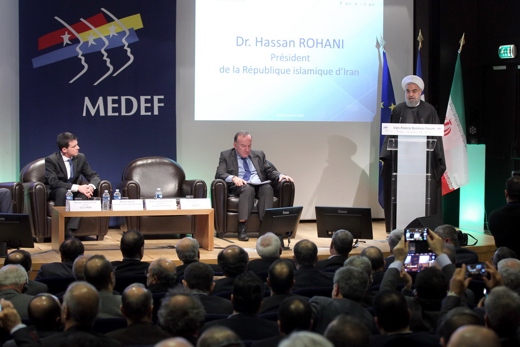
“Let’s forget past differences and start anew,” Rouhani said in a speech to the forum, in an apparent refrain to France’s hardline stance in nuclear talks and on issues related to regional developments.

“We are ready to turn the page” and establish a “new relationship between our countries,” Rouhani added.

Four business arrangements are flagged by France’s main industry body including the PSA Peugeot Citroen tie-up and a plan to sell over 100 Airbus passenger planes.

French officials said Iran was putting the finishing touches to the Airbus deal. People close to the discussions said technical talks were continuing.

Pierre Gattaz, head of France’s Medef employers association, said French national railway operator SNCF and aluminum company Fives were also expected to unveil deals.

“Iran’s needs are enormous,” Gattaz told reporters. “Iranians need everything. The country is not starting from scratch, it’s got a very educated workforce, a real development
potential.”

Iran Urges UNESCO Push to Protect Cultural Heritage in Syria, Iraq

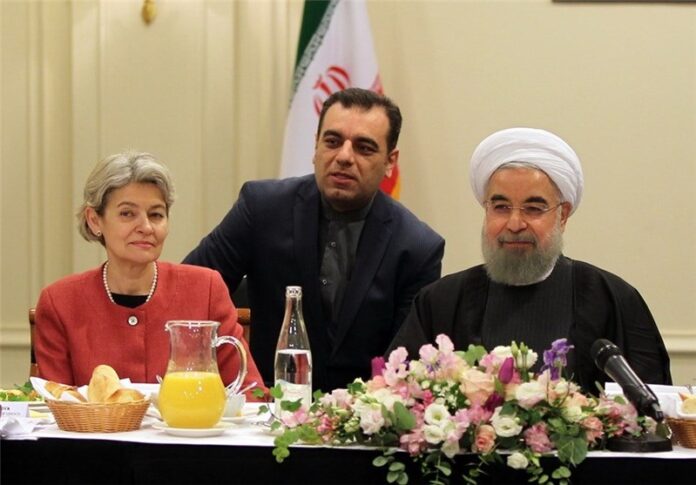
In a meeting with UNESCO Director-General Irina Bokova in Paris on Thursday, President Rouhani reminded international organizations, UNESCO in particular, of their heavy responsibility to safeguard the cultural heritage in war-torn countries like Syria and Iraq.

“Unfortunately, cultural and archeological sites in our region are being destroyed by terrorists, and destruction of these monuments is destruction of the identity of religions, cultures and thoughts,” the president warned.

He also cautioned that terrorist groups destroy the historic monuments in order to separate the youth from their identity and recruit them afterwards.

The president further called on UNESCO to take a more active role in using “cultural capacities” to combat violence and terrorism, specifically to prevent destruction of cultural heritage by terrorist groups.

Pointing to Iran’s World Against Violence and Extremism (WAVE) initiative -put forth to the United Nations General Assembly in September 2013- President Rouhani underscored that culture is the basis for implementing the WAVE resolution and guaranteeing its success.

He then proposed that the UNESCO initiate programs and practical culture-based plans in different countries to let school children know about the dire consequences of violence and extremism.

For her part, Bokova slammed the destruction of cultural heritage in the Middle East as a humanitarian tragedy, saying the UNESCO has focused efforts on the youth, given the fact that terrorists are trying to seduce them into taking extremist measures.

The director-general also expressed appreciation for the breadth of UNESCO’s cooperation with the Islamic Republic of Iran, spanning education, culture and science, and underlined the necessity to leverage these areas to bring about transformative change.

At the end of the meeting, she presented President Rouhani with the certificates for Iran’s two newly-inscribed World Heritage sites, Susa and the Cultural Landscape of Maymand, as well as for two Memory of the World registers, Al-Masaalik Wa Al-Mamaalik and Kulliyyāt-i-Sa’di; which all stand as symbols of cultural dialogue.

She also congratulated President Rouhani for Iran’s election to UNESCO’s Executive Board, one of the Organization’s governing bodies.


Iran Urges Stronger Ties with Qatar

In a message on Thursday, Zarif congratulated Sheikh Mohammed bin Abdulrahman Al Thani, a member of Qatar’s royal family, for his new post as the foreign minister.

The top Iranian diplomat also highlighted the significance of enhanced ties between Tehran and Doha, and the need for closer consultations between the two countries on regional and international issues.

On Wednesday, Qatar’s emir issued a decree for a major reshuffle in the cabinet, combining some of the country’s 18 ministries, dropping some ministers and assigning others to different titles.

Khalid al-Attiyah, the outgoing foreign minister whose father was the founder of the Qatari armed forces, will become state minister for defense affairs.

The emir, Sheikh Tamim bin Hamad Al Thani, who took over in 2013 after his father stepped down, holds the post of defense minister.


Iran: Saudi wants to send ‘terrorists’ to Syria talks

The kingdom brought together a number of militant groups in Riyadh Wednesday to decide whether to attend UN peace talks due in Geneva on Friday. They failed to reach a final decision, postponing it until Thursday.

Iran’s Deputy Foreign Minister Hossein Amir-Abdollahian said on Thursday Saudi Arabia is trying to raise its influence at the Geneva talks by including “terrorists” in the opposition lists.

“Terrorists with a new mask should not sit down at a negotiating table with the representatives of the Syrian authorities,” he told a news conference during a visit to Moscow.  

“This is the most important condition,” Amir-Abdollahian said, calling on Saudi Arabia to stop stoking tension in the Middle East.

“We believe that Saudi Arabia’s insistence on including recognizable terrorists … in one list or another, is certainly not a constructive action on its part,” he added.

Amir-Abdollahian and his Russian counterpart Mikhail Bogdanov said after a meeting on Wednesday that the two countries shared a common view on the settlement of the regional crises.

“Moscow and Tehran have common position on the regulation of the Middle East problems; we also have the same position on Syria,” Amir-Abdollahian told reporters after the meeting. 

Bogdanov serves as Russian President Vladimir Putin’s special envoy for the Middle East and Africa. Amir-Abdollahian arrived in Moscow on Wednesday for consultations with Russian officials on regional issues. 

The senior diplomats stressed the need for finding a political solution to the conflict in Syria in keeping with UN Security Council Resolution 2254.

Amir-Abdollahian said Tehran supports the efforts of UN special envoy Staffan de Mistura to ensure dialog with Syria. 

A UN resolution, adopted on December 18, 2015, calls for a nationwide ceasefire in Syria and the formation of a “credible, inclusive and non-sectarian” government within six months and UN-supervised “free and fair elections” within 18 months.

The talks on a ceasefire in Syria were supposed to start on Monday, but they have been put off until Friday due to disagreements over who should sit at the negotiating table.

In their meeting, Amir-Abdollahian and Bogdanov also discussed the situation in Lebanon, Yemen, and the Persian Gulf region.

What CEOs of Total, Airbus, Renault and Peugeot told Rouhani?

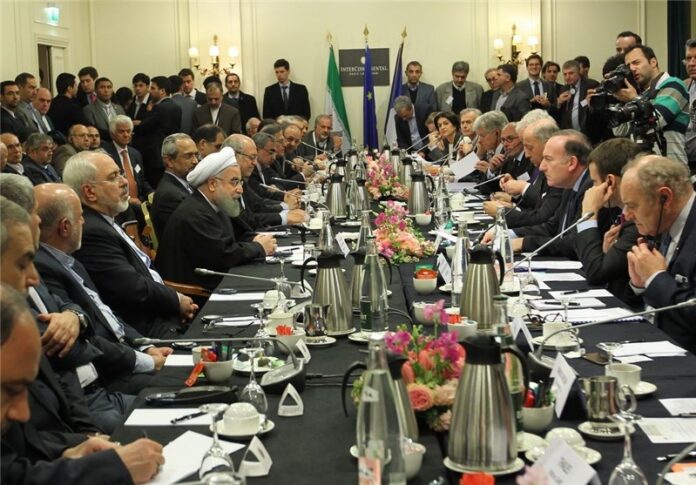
Iranian President, Hassan Rouhani, met with CEOs of major French companies as he arrived in Paris on Wednesday afternoon.

Welcoming Rouhani’s visit to Paris, Foreign Minister, Laurent Fabius, said France and Iran have had historical ties and today we should begin a new chapter in our cooperation and extend it to all levels.

“Iran is a great country with bright future and today major French companies are determined to begin widespread cooperation with the country”, said Fabius.

France’s Economy Minister, Emmanuel Macron, in his meeting with members of Iranian delegation accompanying President Rouhani said Paris has mobilized major French companies to resume economic ties with Tehran.

While stressing needs for securing investment, he said 10 years ago cooperation with Iran was among 10 top insurance coverage of French government and at the moment, we are interested to use every investment channel to revive the economic ties between the two countries.

All the representatives of French businesses in economic infrastructure, aviation, airport, and railways and energy sectors are ready to participate in Iranian market, said the French economy Minister.

In the meeting attended by top executives of Total, Airbus, Orange, Sanofi, Peugeot Citroen and Thales,  Pierre Gattaz, head of France’s employers’ group MEDEF welcomed Iranian President’s visit to France and said all French business leaders hope to enhance their relationship with their Iranian counterparts in post sanction era.

During the meeting, some of French executives in brief statements, expressed interest and willingness to involve in making investment and taking part in development of Iran’s all economic sectors.

Vice Chairman of MEDEF International, Yves Thibault DE SILGUY, told Rouhani this institution is poised to resume cooperation with Iran and extend it further.

Head of Total told Rouhani the French oil giant has been present in Iran for years and the lifting of sanctions paves the way for Total to resume its activities in Iranian energy sector.

Airbus Chief Executive, Fabrice Bregier, who was part of the French delegation, said Airbus eyes to supply Iranian aviation needs and is ready to equip Iran’s airlines as well as offer training and maintenance services.

Renault representative recalling his firm cooperation with Iran in the past, said Iran is one of the few countries in the world with national automobile industry and has a strategic place in Renault’s plans. He continued by saying: we never breached our commitments toward Iran and we are interested in boosting our cooperation with all Iranian automakers.

Also head of French Suez Company which operate in environment field expressed his hope to return to Iran and added we could have cooperation in supply and efficient use of water reserves as well as desalination in Iran.

Emphasizing on telecommunication cooperation record of Orange with Iran, Head of French telecoms firm told Iranian President: we always seek to expand our ties with Tehran and we have no limit to interact with Iranian counterparts and transfer of technology.

Welcoming Iranian President’s visit to his country, Alstom Chief said the French multinational company is one of top global companies in train coaches manufacturing and railway construction and is ready to invest and transfer its technologies to Iran.

Meanwhile, head of Sagem expressed his company’s interest in maritime and port terminal cooperation with Iran.

Senior Iranian, Russian diplomats discuss Syria crisis

Iran’s Deputy Foreign Minister Hossein Amir-Abdollahian and his Russian counterpart Mikhail Bogdanov said after a meeting in Moscow Wednesday that the two countries shared a common view on the settlement of the regional crises.

“Moscow and Tehran have common position on the regulation of the Middle East problems; we also have the same position on Syria,” Amir-Abdollahian told reporters after the meeting. 

Bogdanov serves as Russian President Vladimir Putin’s special envoy for the Middle East and Africa.

The senior diplomats stressed the need for finding a political solution to the conflict in Syria in keeping with UN Security Council Resolution 2254.

Amir-Abdollahian said Tehran supports the efforts of UN special envoy Staffan de Mistura to ensure dialog with Syria

A UN resolution, adopted on December 18, 2015, calls for a nationwide ceasefire in Syria and the formation of a “credible, inclusive and non-sectarian” government within six months and UN-supervised “free and fair elections” within 18 months.

The talks on a ceasefire in Syria were supposed to start on Monday, but they have been put off until Friday due to disagreements over who should sit at the negotiating table.

Some opposition groups met in Saudi Arabia on Wednesday without reaching a final decision on whether they would attend the Geneva talks. The so-called High Negotiations Committee has postponed a decision until Thursday.

A Syrian government delegation, however, will attend the talks.

Syria has been gripped by a foreign-backed militancy since March 2011. The conflict has reportedly claimed the lives of over 260,000 people and displaced nearly half of the country’s pre-war population of about 23 million within or without its borders.

In their meeting, Amir-Abdollahian and Bogdanov also discussed the situation in Lebanon, Yemen, and the Persian Gulf region.

The Iranian diplomat arrived in Moscow on Wednesday for consultations with Russian officials on regional issues.


Islamic Novice Raises Ostriches

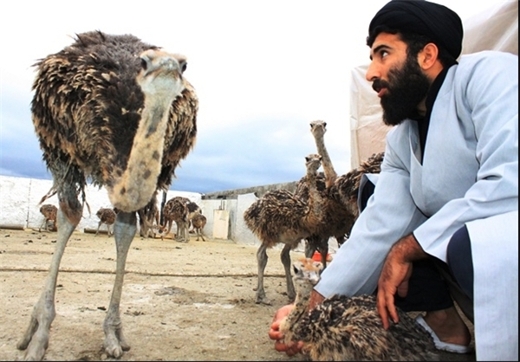
According to Fars News Agency, Seyyed Hadi Alavi, a young scholar from Bandar-e Gaz who is active in both clerical and commercial interests, believes that one can use any space for job creation.

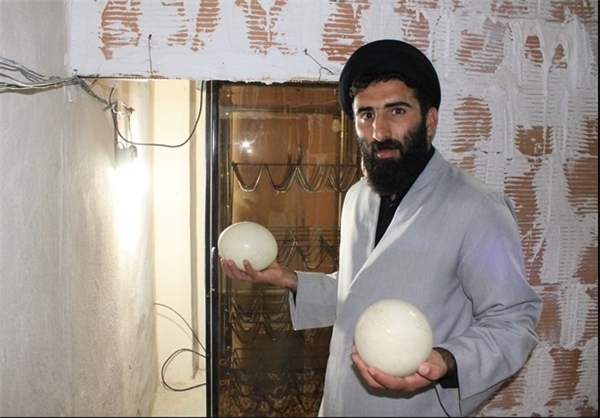
Although the business hasn’t been running for long, he has created a small hatchery on his rooftop, purchasing an incubator and a few ostrich eggs, and he already has 20 ostrich chicks.

Seyyed Hadi Alavi talked about his reasons for entering this field, saying, “With the idea of a Resistive Economy in mind, I chose ostrich cultivation after lengthy research, mainly because it has a higher efficiency and it’s more environmentally adaptable than cow, sheep or other bird and animal farming.

13940827000248_PhotoLThe young scholar added, “I started this project without any governmental support and with less than $10,000, which was spent on buying the incubator, ostrich eggs, a plot of land and other tools. Hopefully it will become operational by Nowrouz (the Persian New Year in March).”
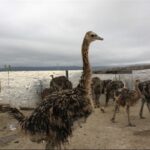
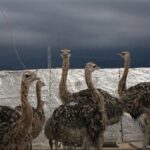
Alavi mentioned, “The price for a one-day old ostrich is about $50, a one month old is between $70 and $85, and the nutritional expenses to raise an ostrich to adulthood (which takes one year) is about $110. At this stage, the price of an ostrich, depending on its weight, starts from about $440. If you sell all its derivatives such as its meat, oil, skin, eyes, and so on, then you can surely make more profit.”

He explained about ostrich characteristics and said: “Ostriches are environmentally adaptable animals. Their meat is the only meat which contains no cholesterol and also it has less fat, a suitable combination of amino acids and a high percentage of saturated and unsaturated amino acids. It is highly recommended for people who are suffering from heart disease and high blood pressure or those who are on a diet.”

Alavi commented on the lack of support from some authorities for the younger generation’s economic activities, saying, “To develop my business I have bought a piece of land, but then I faced some problems regarding obtaining an ostrich farming license, and with providing electricity for my farm. I have permission for this activity, but the authorities of the Ministry of Agriculture wouldn’t give me a license for ostrich farming, with the excuse that there’s no ostrich farm in Golestan Province. Also, on order to rig up electricity to my land, the electric company has asked for about $2700, which is a big obstacle for my very limited capital.”

He continued, “At the moment three of my family and I are working to get this project to realization, but as the business develops, there will surely be more people involved, both directly and indirectly. The government should provide special support for young people who have a real intention to create more jobs and economic growth, whether by reducing their expenses or providing incentives.”


3-Year-Old Tanbur Player Performs at Kermanshah Province Fajr Music Festival

Today, on January 26th, Roshana will be exactly 3 years old. She is already an accomplished Tanbur player. She sometimes sings along when she plays, but is never out of tune, as she can follow the music very well.

Seyyed Payman Haqiqi, Roshana’s father, said in an interview with an ISNA (Iranian Students News Agency) journalist in Kermanshah,“ Roshana became familiar with the sound of the Tanbur( a Persian long necked  string musical instrument) at home right from early days. This led her to pick it up and begin to play, from the age of 2. Her mother and I always encouraged her, and thankfully she was also a talented learner. In a short time, she learnt how to play it.”

Masters Hessamedin Seraj and Hazhir Mehrafrouz are her favorite singers, and she has souvenir photos with both of them. Now, she is preparing for her first public performance – the opening of Kermanshah Fajr Music Festival.

Roshana Sadat Haqiqi was born into a music-loving family on 25th January 2013, and, as her father claims, from her early days she would fall asleep to the sound of the Tanbur. From this passion, she began playing the Tanbur at the young age of 2.

Before she was born, her father made her a little Tanbur, and today, Roshana uses the very same instrument to practice, sitting next to her father.