Sunday, December 28, 2025
Home Blog Page 4514

Envoy: Iran welcomes peace, tranquility

In an article published in “Navya Waqt” newspaper on the occasion of the victory anniversary of the Islamic Revolution in Iran, he gave a brief revolutionary era history and outlined its unique characteristics.

He referred to the close alliance between the Iranian nation and its leader as the key for its overcoming numerous plots hatched by enemies against it and said even during the negotiations with the P5+1 on its nuclear program, the country managed to manifest the power of its diplomatic skills.

The ambassador said that during the negotiations the nation succeeded to prove that it could be quite vigorous even in diplomatic arenas.

Honardoust said that now in the post-sanctions era, Iran is opening a new chapter in its relations with the world especially the regional countries.

Seoul to finance South Korean firms’ projects in Iran

“Government-wide assistance will be offered so businesses can gain access to the resource-rich country,” Minister of Trade, Industry and Energy Joo Hyung-hwan said.

He was speaking to a group of senior executives from Hyundai Motor Co., LG Electronics Inc., Daelim Industrial Co. and other South Korean companies planning to do business in Iran.

South Korea lifted sanctions against Iran last month after Tehran’s landmark nuclear accord reached in July 2015 with world powers went into effect.

Joo said a high-ranking business delegation will travel to Tehran soon to explore opportunities for renewed cooperation.

“To promote trade and investment, Seoul is committed to maintaining the current Korean-won based settlement of accounts system while adding other forms of exchange using different foreign currencies,” he said, adding, “The euro and Japanese yen can be used in tandem with the won to settle accounts.”

Joo said South Korean companies would set up joint ventures with Iranian partners and reach technical transfer deals in such sectors as car manufacturing, petrochemicals and steel production.

“If headway is made, South Korean exports, including parts and components, will increase and benefit companies,” he said.

South Korea’s exports to Iran rose to $4.14 billion in 2014, up 8.3% year-on-year, according to data compiled by the state-run Korea Trade-Investment Promotion Agency.

Last month, South Korea’s official export credit agency KEXIM said it was raising its sovereign credit rating for Iran by one notch in anticipation of a strong economic growth.

The agency has already pledged to provide financial support to Korean firms trying to secure business in Iran as international companies jockey to enter the market.

Iran hints at ‘unexpected’ jump in oil prices

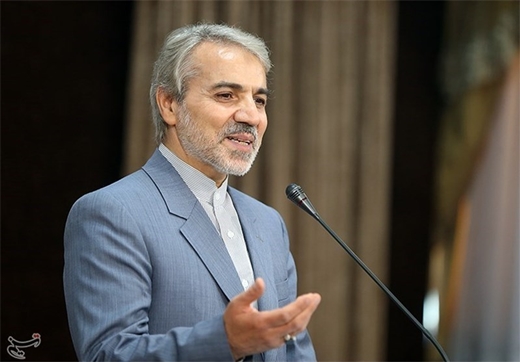
nobakht

“We can expect oil prices to jump unexpectedly next [calendar] year and given the experience of the past decades, an unrestrained jump may be awaiting the price of oil,” Iranian government spokesman Mohammad-Baqer Nobakht said.

Nobakht, who is also head of Iran’s Management and Planning Organization which drafts annual budget bills, said no international agency had forecast oil prices to drop below $30 a barrel in 2014.

Iran is preparing to supply more crude oil on markets owing to the lifting of international sanctions in January.

Because of overproduction chiefly by Saudi Arabia and non-OPEC producers, there is currently up to 2.5 mb/d of excess oil in the market which has caused crude prices to lose around 60% of their value since mid-2014.

However on Friday, oil prices made gains on the strength of speculation on OPEC’s willingness to consider output cuts in a bid to ease the global supply glut.

US benchmark West Texas Intermediate (WTI) for March delivery finished at $29.44 a barrel on the New York Mercantile Exchange, up $3.23.

North Sea Brent crude for April delivery, the European benchmark, shot up $3.30 to $33.36 a barrel in London.

In its annual Energy Outlook report, Britain’s BP forecast the oil price to spike to $100 a barrel over the coming years as a global oversupply of oil will eventually be eroded.

OPEC decided last December to increase its collective output ceiling to 31.5 mb/d from the previous 30 mb/d.

OPEC approved a Saudi plan to scrap allocating fixed production quotas to member countries in December 2011 and introduced output ceiling of 30 mb/d which does not specify quotas.

7 things to consider before sending troops to Syria

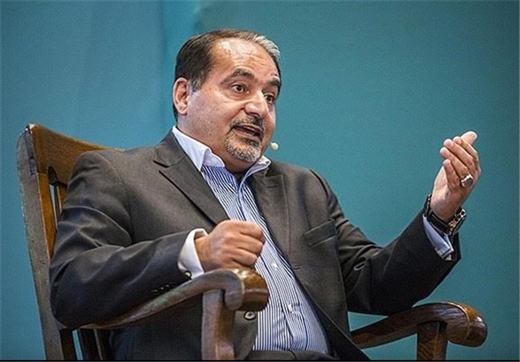
Mousavian

Saudi Foreign Minister Adel al-Jubeir has stated: “The United States government was very supportive and very positive about the kingdom’s readiness to provide special forces to the operation in Syria.” It seems Washington and Riyadh have not learned from their past mistakes, of which there have been many:
1. The United States supported the revolutions in Tunisia and Egypt and even flirted with supporting the Muslim Brotherhood. The US made the mistake of believing that Syria could follow in Egypt’s footsteps, even though Syria had a far more sensitive sectarian and political balance than either of those countries.
2. Turkey, Qatar and Saudi Arabia cast aside their relatively friendly relations with Syria the second they saw an opening for the Muslim Brotherhood (in Turkey and Qatar’s case) or Salafist groups (in Saudi Arabia’s case) to seize power. They wanted to advance their interests at the expense of Iran’s and were willing to do anything to this end, including taking an extremely sectarian position in the Syrian conflict and trying to uproot Alawites from power — regardless of the cost.
3. The administration of US President Barack Obama also saw an opportunity in toppling the Syrian government and supporting US “allies” in the region — namely, Turkey, Qatar and Saudi Arabia — while in reality, it only perpetuated the neoconservatives’ “creative chaos” vision. The result after years of conflict is that the United States’ demand for the removal of Syrian President Bashar al-Assad is now unattainable.
4. By participating in a major anti-government demonstration in 2011, US Ambassador to Syria Robert Ford emboldened extremist forces by making them believe Washington was on their side.
5. In June 2012, the United States and Russia signed the Geneva I agreement, which set the ground for a road map to resolve the Syrian conflict. Instead of vigorously and rapidly pursuing this plan to forge a peace process, the United States backed off and delegated its policies to the Turks, Qataris and Saudis, who unleashed massive military and financial support to the opposition. This was the biggest misstep of the past five years. Diplomacy, just as it solved the Iranian nuclear dispute, is the only way to resolve the Syrian conflict. The situation ultimately became such that Assad could not afford to step down without both himself and the Alawite minority facing a mortal threat. He thus responded with extreme military force after being surrounded in a winner-takes-all conflict. Subsequently, his extreme response backfired by inflaming the opposition and reducing the chances for reconciliation.

6. Supplying the Syrian opposition with arms and unlimited financial and logistical support, even as it had no credible political, secular or nationalist leadership, opened the door to extremist elements becoming dominant and killing the Syrian people’s democratic aspirations. The Syrian army could no longer rely on the majority Sunni population for its base and had to open the door for Hezbollah, Iran and more recently Russia to counter the terrorist groups it faces. The conflict has thus become an all-out regional and international proxy war. The Syrian military’s reliance on air power led to the massive destruction of towns and cities as terrorist groups entrenched themselves in civilian quarters. Areas controlled by the terrorists have become fierce battle grounds. This has caused an unprecedented refugee situation internally and externally.
7. Drawing a line between moderate and extreme opposition factions has now become impossible, and almost a sad joke. These groups draw their ranks based on who pays the highest salaries, tribal and regional affiliations, and ever-shifting allegiances and financial sponsors. They are often led by fanatic religious zealots who are willing to do anything to advance their agenda. Every foreign member of IS, al-Qaeda and Jabhat al-Nusra has entered Syria via NATO-member Turkey, where in many instances they were supplied with money, weapons, drugs, women and training camps and then sent off to Syria.
These and many other elements have contributed to the tragic mess in Syria today. The current challenge posed by IS is the biggest threat currently facing both the Muslim world and Western civilization. IS is now the No. 1 threat to the peace, stability and security of the Middle East — and the world. It’s of supreme importance to note that IS was for years funded by wealthy donors in Kuwait, Qatar and Saudi Arabia, all of which are US allies.
Make no mistake: Saudi Arabia’s main goal in Syria is to overthrow Assad. In this vein, Saudi ground troops entering the conflict would only strengthen terrorist groups like IS. While the Saudis have in the past pressured the United States to attack both Syria and Iran, they have launched a brutal assault on Yemen to uproot the Houthis from power. The United Nations has confirmed that Saudi forces have violated international humanitarian law, requiring an international investigation. Riyadh also deployed military forces into neighboring Bahrain in 2011 to quash the Arab Spring-inspired uprising there in support of the continued minority rule of the Sunni al-Khalifa monarchy. Saudi Arabia has failed to achieve the aims it has sought through all of these measures.
By supporting a Saudi ground invasion of Syria, the United States would be aiding and abetting the expansion of terrorism as well as pushing Iran and Russia toward threatening the very viability of the House of Saud. This would be a devastating mistake that the United States and Saudi Arabia should not make. Riyadh is already overstretched and does not have the capacity to meet its commitments. Last but certainly not least, one should bear in mind the Russian prime minister’s dire warning: “Deploying ground troops in Syria would spark World War III.” (al-monitor.com)
(Mousavian is Associate Research Scholar at Woodrow Wilson School Princeton University. He is also a former senior Iranian nuclear negotiator)

Nuclear deal outstanding victory for Iran: Culture Minister

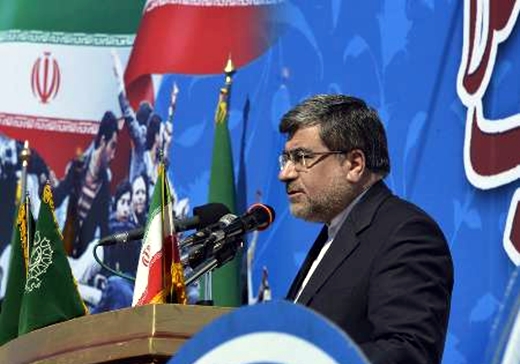
Addressing a gathering of people in the southeastern city of Zahedan on the occasion of the anniversary of the Islamic Revolution’s victory on Thursday, Jannati said, “The nuclear victory was a great success which was made possible by people’s cooperation, the Leader’s guidelines and nonstop efforts by the negotiating team of the Rouhani Administration.”

He said the draconian sanctions made the past few years very difficult especially in economic fields for the Iranian nation and government.

“Western and arrogant governments sought to defeat the Iranian nation by imposing sanctions but they realized their mistake when they saw integration of the Iranian nation and government,” he said.

The 6 anti-Iran UNSC resolutions would lead to a military confrontation against Iran but the negotiating team could annul the resolutions through dialogue and finalization of the nuclear deal, Jannati added.

“The nuclear deal was proof that nuclear energy is the right of the Iranian nation and the world community has endorsed this right,” he said.

The deal also cleared Iran of accusations that the West leveled at Tehran saying its nuclear program is aimed at developing a nuclear bomb, he said.

The Iranian culture minister further said the nuclear deal has promoted the country’s economy and banking system and has freed the country’s frozen assets.

The senior official said the swift reception of Iranian president by France and Italy is an indication of the significance of Iran for the world.

He said the administration of prudence and hope could have the sanctions removed which were the biggest hurdle in the country’s scientific advancement.

He said the administration is also making every effort to remove obstacles to boosting production, economy, curbing inflation and dependence on oil revenues.

For the time being, hundreds of globally recognized companies have expressed their readiness to enter the Iranian market and invest in its development projects.

Zarif urges parties’ seriousness in Syrian talks

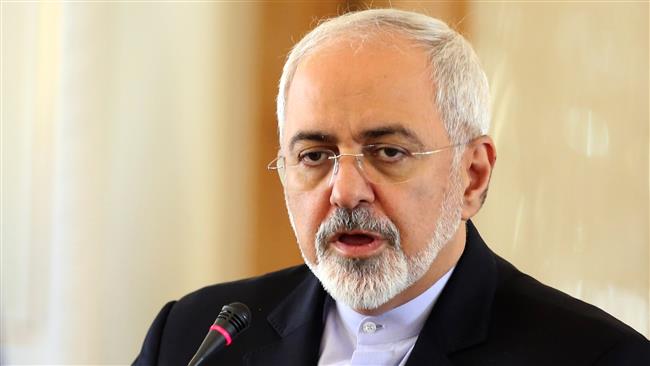
Upon arrival in Munich on Thursday, he told the reporters that western and regional states should reach a rational solution to end the Syrian crisis.

Zarif who is in the German city, to attend the Munich Meeting on Syria as well as Munich Security Conference, added, ‘We also believe that settlement of the Syrian crisis has been delayed due to certain wrong policies and irrational and illegal preconditions.’

Noting that a lot of time has been wasted, the minister added that those outside Syria are duty-bound to facilitate the process of peace not setting conditions and preconditions for the public.

He further noted that the earlier round of Syrian peace talks was suspended due to the obstacles created in the way of the negotiations.

‘Currently, we are at a very significant juncture and the talks must be pursued seriously,’ he said.

Stressing the need for distinguishing terrorists from the opponents to follow up the talks, Zarif said, ‘Prior to Munich Meeting tonight, we will hold talks with Russian and Chinese foreign ministers and UN special envoy for Syria.’

Zarif also said that he will discuss implementation of Joint Comprehensive Plan of Action (JCPOA) with members of 5+1 Group on the sidelines of Munich Meeting slated for February 12-13.

Munich Meeting is to be attended by foreign ministers of 15 countries and representatives of the regional and international institutes.

Deputy foreign minister for Arab-African affairs is accompanying Zarif during his Munich trip.

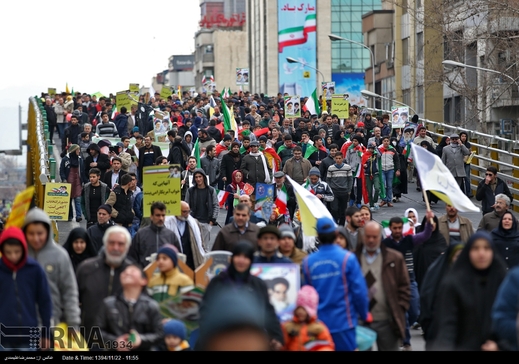
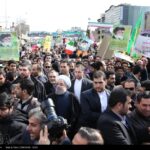
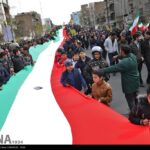
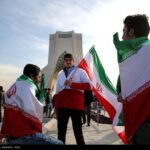
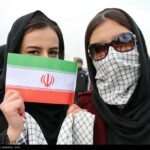
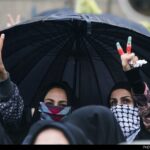
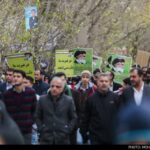
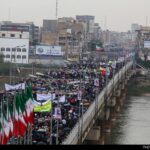
Millions of Iranians rally to mark anniversary of Islamic Revolution

The nationwide rallies on Thursday mark the victory of the 1979 Revolution, led by late Imam Khomeini, which put an end to the monarchical rule of the US-backed Pahlavi regime.

On February 11, 1979, the 22nd of the month of Bahman on the solar calendar year of 1357, the monarchy of the Pahlavi regime in Iran was overthrown after months of public unrest and protest.


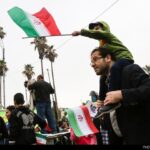
On Thursday, the anniversary of the Revolution, people took to the streets all over the country, including the capital, Tehran, in their millions to remember the day and the sacrifices they made during the Revolution, which saw the Pahlavi regime cracking down on protests and demonstrations ruthlessly.

Various Iranian officials joined the Thursday rallies to remember the Revolution and voice continued support for it.

Iranian President Hassan Rouhani joined the rallies in Tehran on Thursday. President Rouhani is due to make a speech on the occasion later in the day.


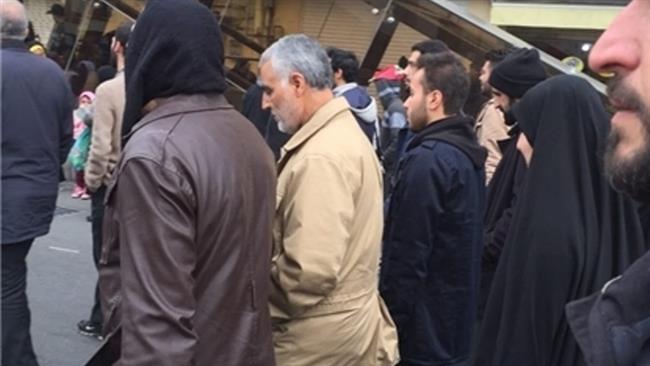
Commander of the Quds Force of Iran’s Islamic Revolution Guards Corps (IRGC) Major General Qassem Soleimani (in light cream coat) joined the rallies in the capital, Tehran.


Commander of the Quds Force of Iran’s Islamic Revolution Guards Corps (IRGC) Major General Qassem Soleimani was one of the senior officials joining the rallies in the capital.

More than 5,200 journalists from Iran and other countries are covering the nationwide rallies.

Iran’s scientific and defensive achievements, including the indigenous Simorgh (Phoenix) satellite carrier and the precision-guided long-range Emad ballistic missile are on display on the routes of the rallies on streets of Tehran.


US Republicans Had Urged Iran to Delay Prisoner Swap, Shamkhani Says

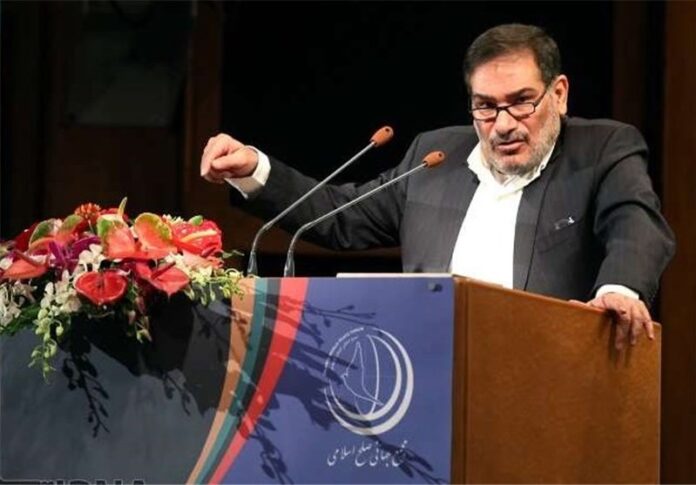
“In the course of the talks for exchanging prisoners, the Republican rivals of the current US administration who claim to be humanitarians and advocates of human rights sent a message telling us not to release these people (American prisoners) and continue this process (of talks) until the eve of US presidential elections,” Shamkhani said Thursday in an address to a rally held in the central city of Yazd to mark the 37th anniversary of the 1979 Islamic Revolution’s victory.

“However” he said “we acted upon our independent resolve and moved the process forward.”

Iran’s move to exchange prisoners was based on the country’s humanitarian approach and was made in accordance with ensuring the country’s interests and securing the release of Iranian citizens in the US, he added.

Shamkhani underlined that on the issue of prisoner swap, Iran proved that it is not influenced by any foreign or domestic pressure but acts against spies and infiltrators decisively.

Iran on January 16 released four prisoners with dual citizenship based on a decision by the country’s Supreme National Security Council within the framework of a prisoner swap.

Amir Mirzaee Hekmati, Jason Rezaian, Saeed Abedini, and Nosratollah Khosravi who hold US citizenship were among the released prisoners.

On the same day, 7 Iranian nationals imprisoned in US jails were released as per the prisoner swap.

The release of the inmates came hours before the official start of a nuclear deal finalized by Iran and the Group 5+1 (Russia, China, the US, Britain, France and Germany) back in July 2015.

With the enforcement of the deal, known as the Joint Comprehensive Plan of Action (JCPOA), all nuclear-related anti-Iran sanction were terminated.


Daesh buys land in Afghanistan to set up camp

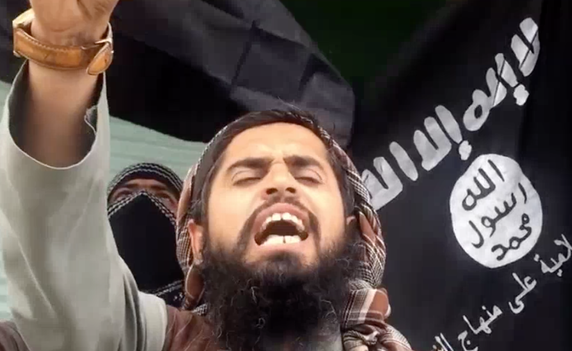
ISIS Daesh in Afghanistan

According to IRNA, Fazlulhagh in an interview with a local news agency on Wednesday said before start of winter season, presence of Daesh elements in this region was certain.

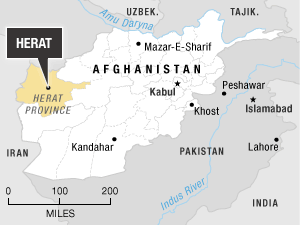
map-afghanistan-HeratDue to Mafia nature of land transactions in Afghanistan and determining whether the person who has purchased the land is connected to the terrorist Daesh group is difficult right now.

Afghan security officials refuse to comment on this dangerous move by Daesh. General Jomeh Khan the former head of provincial security department in Ghor pronince who is now living in Kabul said he heard of such stories during his assignment in the region.

The General Governor of Ghor Province said he has no information about purchasing of land by a person affiliated to Daesh but said from time to time he hears some stories about presence of Daesh members in his province.

Elements affiliated to Daesh are more active in Nangarhar Province and last months they set up a bilingual Persian and Pashton Radio station in the province aimed at recurring new members and inciting people to stand against Afghan government. After 20 days this Radio station was discovered and destroyed and 20 people were also arrested in the raid.

Anniversary of Islamic Revolution was marked in Iranian embassy in Damascus

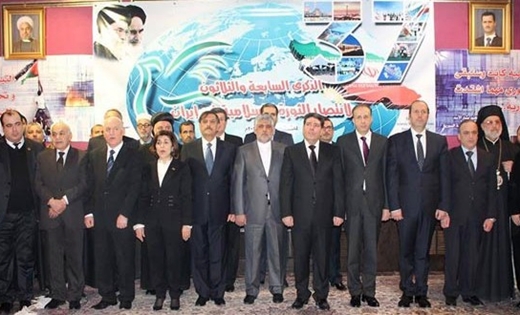
According to Syrian official News Agency (SANA), Syrian Prime Minister speaking on the occasion, said Iran and Syria have historical ties and brotherly and friendly relations between the two nations has grown in various aspects.

wael Nader al Halqi said Iran is a determining power in international arena and a source of stability in the region and stands like a fortress against the plots hatched by the Zionist regime and the United States in the region.

He added that Iran is the real friend of Syrian nation and has not abandoned Syrians during their dark days.

Syrian Prime Minister went on saying that Iran and Syria together make up the real axis of resistance against terrorism and all complicated machinations targeting in the region.

Syrian Speaker of Parliament, Minister of Defense, Electricity and Petroleum, Natural Resources, Economy and Trade, Health and several other high ranking political cultural, media and religious figures also attended the ceremony held on the anniversary of Islamic Revolution in Iranian Embassy in Damascus.