Saturday, December 27, 2025
Home Blog Page 4504

Riyadh Failed in Spreading Takfiri Ideology: Lebanese Politician

Saudi Arabia has recently expressed its readiness to deploy special forces to the war-hit Syria if the US-led coalition allegedly hitting the Daesh terrorist group decides to deploy ground troops.
Rodrick Khoury, the Leader of the Lebanese orthodox party Masarik, lashed out at the Saudi decision as a plot to spread Takfirism across the Middle East, but at the same time noted that Riyadh’s direct or indirect interventions have always been doomed to failure.

“In the Middle East, we are witnessing two types of conflicts and disputes. The conflicts are between two projects, namely the moderate project led by Russia, Iran, and Syrian government, and the Takfiri and extremist project, which is being implemented by certain countries like Saudi Arabia, Qatar, and Turkey,” Khoury said in an interview with Mehr News Agency on Tuesday.

“Past experiences indicate that Saudi Arabia always try to deploy certain groups to different region to have its plots implemented,” he went on to say.

However, Khoury added, when Saudi hirelings fail to bring achievements for Riyadh in a region, Saudis raise the issue of direct interference.

“We witnessed such an instance in Yemen. Saudi Arabia could not realize its goals in Yemen through its hirelings and allies, so it decided to directly deploy troops to the Arab country,” he added.

He further pointed to the Saudis’ decision to deploy ground troops to Syria, saying, “In recent years, Saudis have being supporting Takfiri terrorist groups in Syria, and in fact, these groups were Riyadh’s instrument in Syria, but now that Russia has incurred a heavy defeat on Daesh and other terrorist groups in Syria, Saudi Arabia is talking about the project of direct military presence in the country.”

“Saudi Arabia has failed in imposing its ideology in Syria; especially after Russia’s military aid and the Syrian nation’s sacrifices defeated the Saudi plots in Syria, they have raised the issue of direct interference,” he noted.

Khoury went on to say that the Takfirism and its spread across the region, from Yemen to Lebanon and Syria, is the Saudis’ plot for the region.

“Riyadh is trying to implement its plots whether through its hirelings or via direct intervention in regional countries,” he added.

However, he said, the important fact is that Saudis’ direct or indirect intervention in the region has always been doomed to failure.

For example, Khoury mentioned, on Iran and its Islamic Revolution, the entire world was against Iran, but the Iranian nation proved that it can realize its demands and stand against the world through its resolve.

The Syrian nation has also decided to resist the project of Saudis, namely the Takfiris, the Lebanese figure added.

“Currently, the situation in Syria is better that that of Iran in the course of the Islamic Revolution (1979), because the global system has now changed, and the unilateralist viewpoint does not exist anymore. The US and its allies cannot impose their will on today’s world,” he said.

The Masarik party leader further described Russia as a powerful country and Iran as an influential one in the Middle East.

Therefore, he added, whether Saudis send their ground forces to Syria or have an indirect presence there through their proxies, they would not be able to make any achievement, because “we will resist all these plots.”

Elsewhere in his remarks, Khoury referred to the election of Lebanese president, and stressed that both Suleiman Frangieh and Michel Aoun are powerful and loyal Maronites and candidates of March 8 Alliance, none of whom can be preferred to the other.

The issue, therefore, needs further and closer investigations, he said, reiterating that Aoun and Frangieh are distinguished figures who have supported the Resistance project against Zionism and Takfirism.

“Masarik party is an orthodox Christian one with popular bases in Lebanon, Syria, Jordan, and Palestine,” he said about the party he leads.

“This party believes that Christians are both targeted by Takfiris and Zionists, and we have witnessed that in Palestine,” he added.

“As a Christian party, we are proud of the Islamic Revolution of Iran, and I think the most important message of this Revolution was that Islam is not an enemy of Christianity, and the divine religions of Islam and Christianity share common values,” Khoury said.

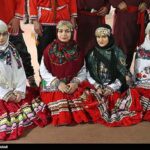
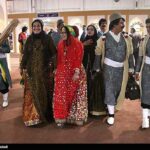
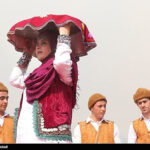
International Tourism Exhibition Kicks Off in Tehran

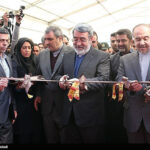
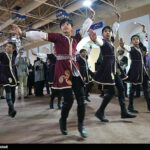
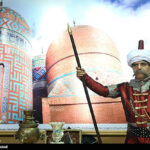
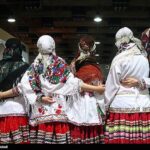
The 9th International Tourism Festival has kicked off on Tuesday in Tehran, the opening ceremony has seen Interior Minister Abdolreza Rahmani Fazli and Masoud Soltanifar, head of Cultural Heritage Organization.

The international fair will go on until February 19.


Iran Signs Deal with Turkey to Smooth Financial Transactions

The Chief Executive Officer (CEO) of Iyzico, an Istanbul-based payments startup, said the company has signed a deal with an Iranian firm, which would allow its customers to process international transactions inside the Islamic Republic.

Iyzico’s agreement with Tehran-based electronic payments platform PECCO lets its customers process transactions from some 230 million payment cards that until recently weren’t connected to any financial system outside Iran, according to Barbaros Ozbugutu, Iyzico’s German-Turkish chief executive.

The deal is the first of its kind, he said, according to a Bloomberg report.

Since visiting Tehran last year, the founders of the World Bank-backed company have been working on expanding in Iran, Ozbugutu said. That gives them a foothold in a country that’s been so far untapped by US-based competitors Paypal Holdings Inc. and Stripe Inc.

“We’re fulfilling the role Paypal was providing in places like Germany, where they were the preferred provider during that country’s digitalization phase,” Ozbugutu said of Iyzico’s home market. It made sense to expand to Iran because there are “two major markets in the region with high card penetration, and they’re Iran and Turkey. Both have populations of 80 million, a very young population and quite high Internet penetration.”

While PayPal’s website says it’s active in more than 200 markets, Iran isn’t one of them. San Francisco-based Stripe also says it does not support transactions in the Iranian rial.

While Iyzico to expanding to Iran is “a no-brainer,” larger competitors may have more difficulty making the move, according to Sal Karatas, founder of mobile security company SAASPASS. More established companies are “slow to move into weird foreign markets because it’s a whole lot of effort in order to benefit from a market that’s basically the size of Michigan.”

If Iran’s economy’s is worth just less than Michigan’s now, its integration into the global economy will spur growth of 4.5 percent to 6 percent by next year, Renaissance Capital estimates.

Iran’s development will probably be similar to Turkey, and Turkish corporations will be the ones rushing in to drive the change, according to Mike Harris, head of research at Renaissance.

In Iran, all banks are integrated into one unitary clearance system, called Shetab, which means Iyzico’s clients can sell to any card holder in the nation without establishing relationships with individual Iranian banks, Ozbugutu said.

Iyzico last year raised $6.2 million in a round led by the International Finance Corporation, or IFC, the investing arm of the World Bank. Its customers in Turkey include BMW, Allianz and online marketplace Sahibinden.com.

Iyzico signed the deal to enter Iran after restrictions excluding the country from the SWIFT banking system began to be dismantled as part of the nuclear deal finalized by Iran and the Group 5+1 (Russia, China, the US, Britain, France and Germany) in July 2015, and implemented in mid-January.

The comprehensive nuclear deal, also known as the Joint Comprehensive Plan of Action (JCPOA), terminated all nuclear-related sanctions on Iran after coming into force, and has led to expectations for an economic boom in Iran.

German banks ready to inaugurate branch offices in Iran

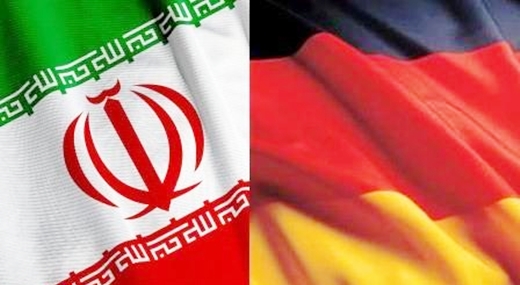
Aigner told Chairman of Tehran Chamber of Commerce Masood Khansari , who is visiting Germany at the head of a commercial delegation, that in her upcoming visit to Iran she will carry good messages to Iran on part of his country for opening banking and insurance offices in Iran.
Khansari, for his part, noted that inter-banking issues, insurance of contracts and commercial exchanges are among obstacles to expansion of mutual relations.
The Iranian official said he had informed the German party of ongoing problems in related sectors.
Khansari said that over the past months, economic facilities have been provided by Iran and certain European countries, including Italy and France. ‘One of the factors that can give an impetus to mutual economic cooperation is establishment of banking and insurance relations and in this connection, French and Italian industries have been able to take appropriate and serious steps.
He also highlighted the responsibility of Iranian and German private sectors for removing problems facing the small- and medium-sized institutions of Iran and Germany. He said for the time being, exchanges between Iranian and German banking systems is the requisite for expansion of mutual cooperation.
He suggested that German companies contribute to renewable industries, water and sewage treatment, auto manufacturing, steel, mining, pharmaceuticals, chemical industries, electronics and tourism and embark on joint investment with Iranian institutions.

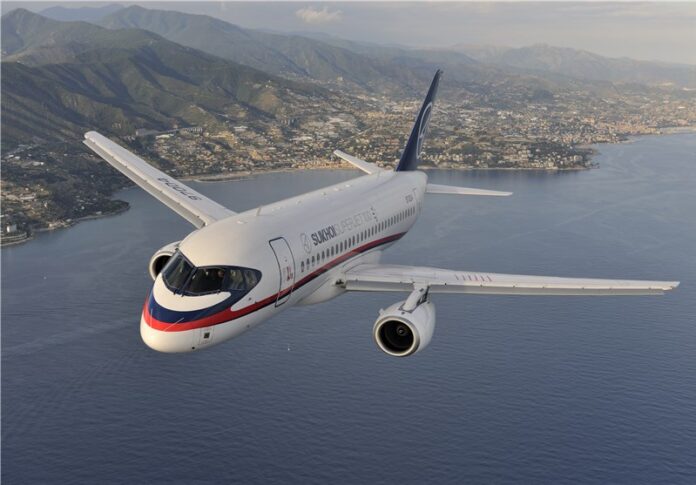
Russia can supply 100 Sukhoi superjet to Iran — manufacturer

‘We reviewed the potential market of Iranian airlines, according to various estimates, we can talk about 100 aircraft,’ Masalov said.
According to him, ‘We have set up a working group, because we are talking about wider contracts, not only for the supplies of aircraft, but the intention to localize production of components.’
Masalov also noted, ‘Due to the lifting of sanctions, there are no formal restrictions on supplies, but since a number of components for aircraft are American-made, we must receive permission.’
Speaking about other aircraft manufacturers contacts with Tehran, Masalov said, ‘For example, Airbus occupies a different segment.’
At the same time, he noted, ‘There are a lot of regional companies a lot, so the UAC hopes to secure a footing’ in the Iranian market.
A total of 64 Sukhoi Superjet 100 aircraft are currently in service, according to Sukhoi Civil Aircraft (SCA) data.
The largest aircraft operators are Aeroflot (26 airplanes), Mexico’s Interjet (19) and Gazpromavia (10 jets of the long-range series).
The SSJ-100 aircraft are produced in two versions: 75-seat and 95-seat jets (the number of seats may vary depending on the passenger cabin configuration).

Iran voices disinterest in oil majors’ deal

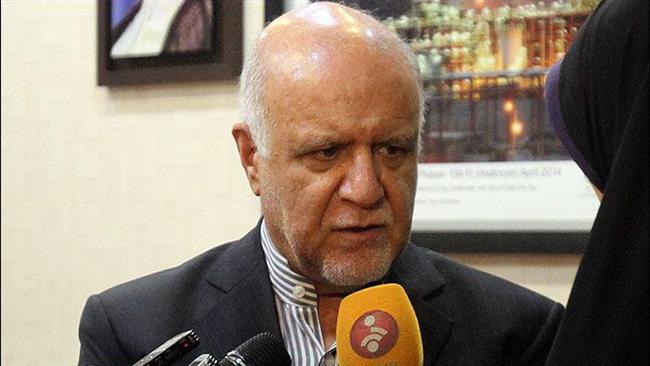
Iran’s Oil Minister Bijan Zangeneh told reporters in capital Tehran that he was not aware about the details of what his peers from Saudi Arabia, Venezuela, Russia and Qatar had agreed on in an emergency meeting in Doha on Tuesday.

Zangeneh, nevertheless, emphasized that any move by the world’s biggest oil players to push the market toward stability means nothing unless it is fully endorsed by all producers.

“According to what has appeared in the media about which I am not still fully informed, they (Saudi Arabia, Venezuela, Russia and Qatar) have discussed about fixing a production ceiling,” he told reports.

The Saudi and Russian oil ministers, along with their Venezuelan and Qatari counterparts, “agreed to freeze the production at (the) January level provided that other major producers follow suit”, Reuters quoted Qatar’s Energy Minister Mohammed bin Saleh al-Sada as saying on Tuesday.

Oil prices have tumbled about 70 percent since June 2014, hit by oversupply, sluggish demand and concerns over the global economic outlook.

Zangeneh emphasized that a deal to fix a production ceiling for the world’s biggest producers needs to be thoroughly studied and discussed. “It should be specified what they (the producers that gathered in Doha) really mean by it,” the local media quoted the Iranian minister as saying.

He further added that he will host his Venezuelan and Iraqi counterparts on Wednesday for a tripartite meeting to discuss oil.  Other reports suggested that the oil minister of Qatar may also join his Venezuelan and Iraqi peers in their trip to Tehran.

“What is important [to consider] is that firstly the oil market is currently oversupplied and secondly Iran will not relinquish over its market share,” Zangeneh said.

Iran on Sunday showed a strong return to the market by announcing that it had increased its crude production by 400,000 barrels per day.

It also announced on the same day that it had shipped four million barrels of oil to Europe – a move that marked the first shipment of oil by the country after signing a nuclear deal with the P5+1 that ended multiple years of sanctions on the Iranian oil industry.

Based on a draconian US-engineered regime of sanctions that were made ineffective when the nuclear deal with the P5+1 was implemented last month, foreign investors had been banned from making investments in Iran’s oil industry.  Also, clients had been barred from purchasing oil from Iran above around 1 million barrels per day.

Iran’s Deputy FM Urges Enhanced Ties with Japan

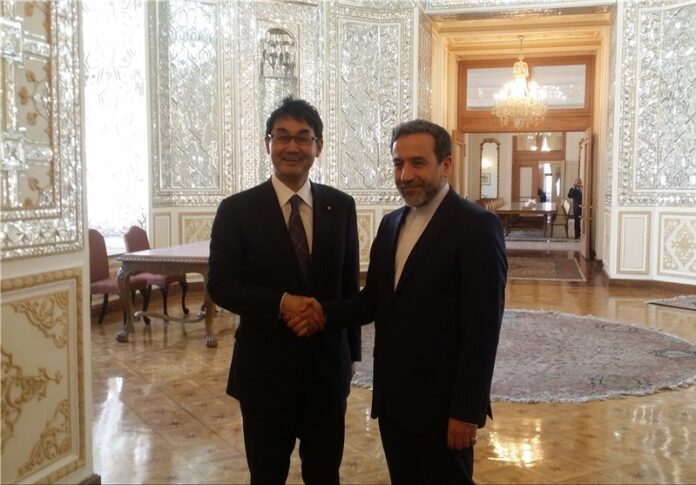
In a meeting with Katsuyuki Kawai, a senior adviser to the Japanese premier, Araqchi underlined the need for enhanced ties between Tehran and Tokyo after the implementation of a nuclear deal between Tehran and world powers (known as the JCPOA) , which took effect in mid-January.

The Iranian official further called on Japan’s companies to play a more active role in the Iranian market after the termination of anti-Iran sanctions.

Elsewhere, Araqchi welcomed a prospective visit by Japanese Prime Minister Shinzo Abe to Tehran, and appreciated Tokyo’s cooperation in the course of nuclear negotiations between Iran and world powers that led to the finalization of the JCPOA.

He also referred to the experience of JCPOA implementation, which was achieved through a win-win approach, as an achievement for the region and the international community, and a successful model for resolution of regional and even global problems.

Kawai, for his part, said his visit to Tehran is aimed at finding ways to develop Tehran-Tokyo cooperation after the JCPOA implementation and before the Japanese PM’s trip to Iran.

The two sides in this meeting also conferred on the expansion of mutual cooperation in such fields as energy, transport, and nuclear energy.

During his Iran visit, the Japanese adviser has held several meetings with Iranian officials including the Central Bank of Iran (CBI) Governor Valiollah Seif and Culture Minister Ali Jannati.

In his meeting with CBI chief, Kawai highlighted Japanese banks’ enthusiasm for stronger presence in Iran, and demanded that Tokyo receive the necessary information from Iranian banks that are willing to promote cooperation with Japanese ones.

For his part, Seif hailed Japan as Iran’s “big economic partner in East Asia”, saying the ground is set for the expansion of trade ties between the two countries.

Iran, Russia review mutual, regional and int’l developments

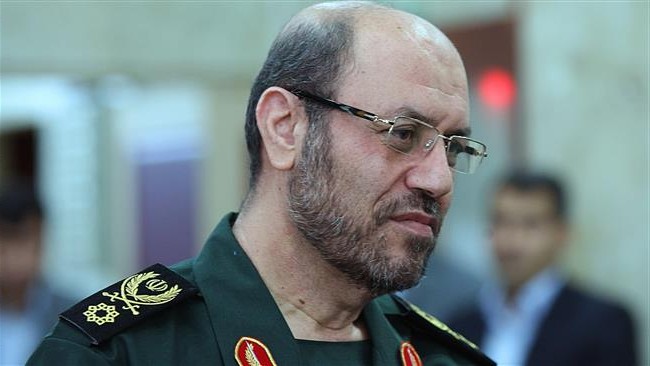
General Dehghan

The two officials called for expansion of cooperation in all fields including the defense and military areas which are essential to help restore peace, stability and security of the region.
Expansion of cooperation at regional and international level is of prime importance in international campaign against terrorism and Takfiri groups, Dehqan said.
Iranian defense minister is to confer with Russian president and his counterpart on issue of mutual interests and regional developments in the next few hours.
Iranian Minister of Defense Brigadier General Hossein Dehqan heading a high ranking delegation arrived in Moscow on Monday.

Shamkhani: Iranian regional power unchallengeable

US Opposition to Iran’s IMF Loan Bid Breaching Right to Health Peremptory Norm

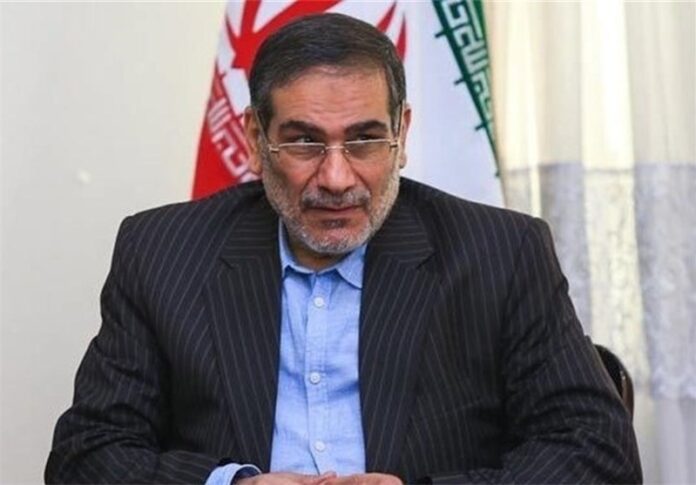
Shamkhani made the remarks in the Conference on ‘World on its historical path and significant role of the Islamic Republic of Iran in geometry of power in the world’.
Firm determination and creativity are two main criteria required for restoring globe security, he said.
In the past, the role of Iran in regional developments were under the shadow of the then superpowers but now the country has turned to be the first regional power with major impacts on global equations and stability and security of the region, Shamkhani said.
Iran should forcefully defend its status in the region and share its significant role to this end, he said.
In the new world order, the outdated hegemony of the western powers is diminishing, he said.
He expressed deep concern about deterioration of humanitarian crises in Syria, Libya, Iraq and Afghanistan, saying that the current regional crises have no military solution requiring the wise understanding of the people in the region.
Iran is not to push others from the scene but seeks to prepare grounds for the nations to play their significant role in restoring stability and security as vital requirement to achieve economic development, he said.

Sunni cleric urges massive turnout in upcoming elections

Mamusta Marouf Khaledi said that enthusiastic participation of people in the elections to send to most qualified candidates to the parliament will make yet another epic move in the history of the Islamic Republic.
He said that the enemies of the Islamic Revolution are exploiting all tools to sow discard among different sections of the Iranian nation, adding that a strong turnout in the elections will blow a fierce blow to the hegemonic powers.
Many Iranian senior officials have already urged the nation to manifest a strong turnout for the upcoming elections.
Elections for the 10th term of the Parliament as well as the 5th term of the Assembly of Experts will take place simultaneously on February 26.
Last month, Supreme Leader of the Islamic Revolution Ayatollah Seyyed Ali Khamenei cited the democratic aspect of the elections, saying that election is a blessing to guarantee people’s rights.
The screening body should welcome eligible persons and any lenience to ineligible candidates is regarded as violation of public rights, the Supreme Leader said.
The procedure in conduct of elections should be fully observed and all officials are duty bound to safeguard the public trust, the Supreme leader added.
He advised the political parties to prepare their lists and manage to nominate qualified candidates.