Saturday, December 27, 2025
Home Blog Page 4503

A look at Iranian newspaper front pages on Feb 17

Iran Newspaper front pages

Guardian Council, the body in charge of vetting the credentials of hopefuls for the late February elections of the parliament and the Assembly of Experts, has released the final list of qualified candidates. This means all political factions will start releasing lists of their candidates. Tonight, the candidates will officially start their election campaigns across Iran. Most of the papers on Wednesday February 17, 2016 covered these developments.

Minister of Foreign Affairs Mohammad Javad Zarif’s address in the European Parliament was also covered by most papers on the day. Furthermore, developments in Yemen, Saudi policies in the region and Iran’s latest oil industry developments were also taken up by the dailies.

Here are the top headlines:


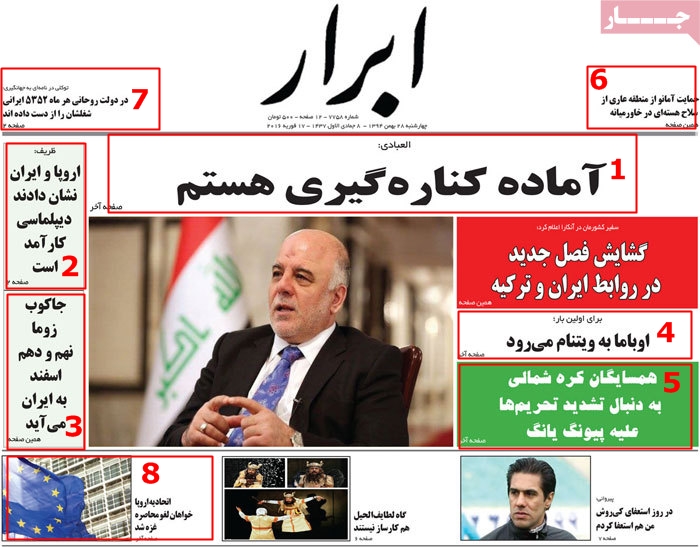
Abrar:

  1. Al-Ebadi says ready for resignation
  2. FM Zarif: EU, Iran proved diplomacy works
  3. S. African President Jacob Zuma to visit Iran Feb 28
  4. Obama to pay first visit to Vietnam
  5. N. Korea neighbors call for more sanctions on Pyongyang
  6. Amano endorses nuclear arms-free zone in Middle East
  7. MP to Veep: Over 5,000 Iranian lose jobs under Rouhani admin every month
  8. EU calls for ending Gaza siege


Abrar


Arman-e Emrouz:

  1. Ali Motahhari: They kept silence because Ahmadinejad was one of them

Ali Motahhari was an outspoken government critic during Ahmadinejad administration.

  1. Rafsanjani: Humiliating other nations is favored by a certain minority
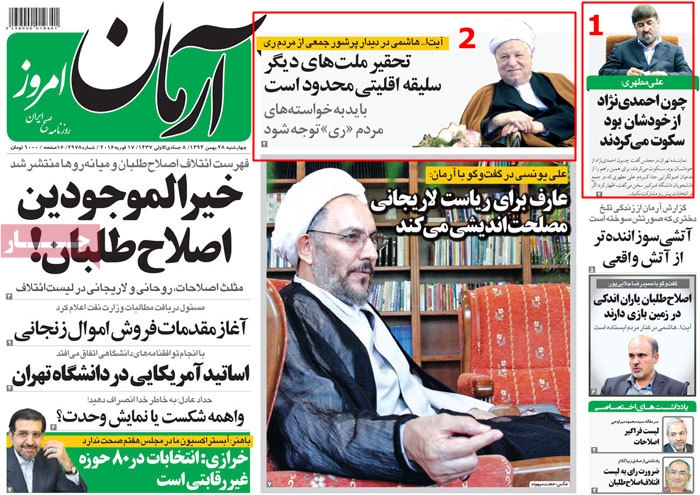
 

Arman


Ebtekar:

  1. Parliament election campaigns officially start tonight
  2. Zarif to EU Parliament: We will either survive or sink together
  3. New oil opportunity for Iran

Russia, Saudi Arabia, Qatar and Venezuela have collectively agreed to reduce their crude oil supply to global markets in a bid to diminish the market oversupply that has slashed prices by at least 70% over the past 18 months.
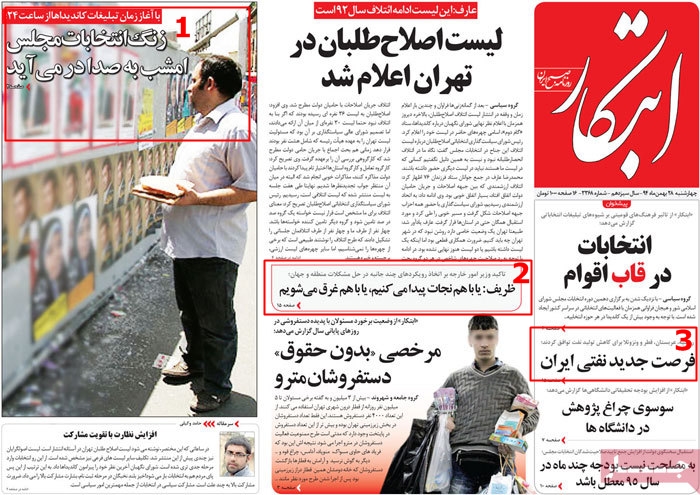
 

Ebtekar


Asrar:

1.Post-JCPOA Iran no country for goods imports: official

The director of the presidential office has said the Iran will have no room for the import of goods now that the JCPOA, commonly called nuclear deal, has gone into effect.

2.Iran first, determining power in region: Shamkhani

Ali Shamkhani, the secretary of Iran’s Supreme National Security Council, said this.

3.Zarif to EU Parliament: Syrians, not Saudis, will determine result of talks

4.Sale of Iranian corporate mogul’s assets from next week

Iran has finished hearing sessions in the trial of Iranian billionaire Babak Zanjani, who is facing corruption charges. As a verdict, his properties will be sold to pay for his debts.

5.Iran weightlifter Behdad Salimi beck to exercises
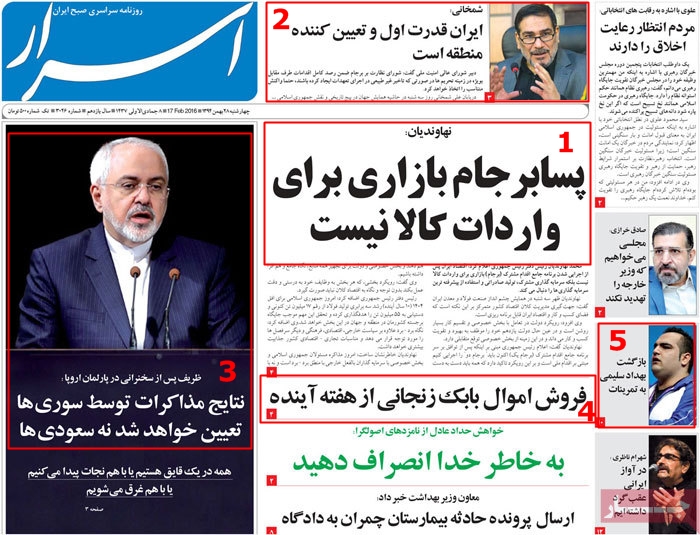
 

Asrar


Ettela’at:

  1. FM Zarif: Some regional states hand in glove with terrorist groups
  2. Iran revers Quran servants
  3. Rouhani: Iran keeps lobbying to bolster regional security
  4. Damascus: Turkey equips Takfiri terrorists with chemical weapons
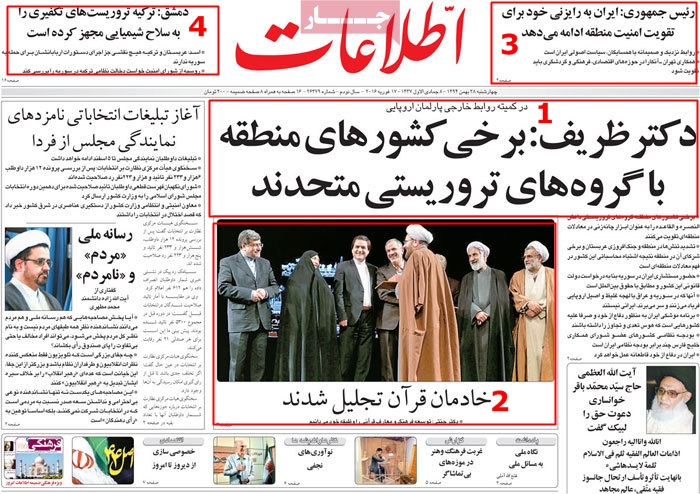
 

Ettelaat


Afkar:

  1. 6,233 hopefuls qualified for parliament election
  2. Gov’t Spokesman: Troubles of production units real
  3. Culture minister calls for creation of artworks out of Qur’anic, ethical values
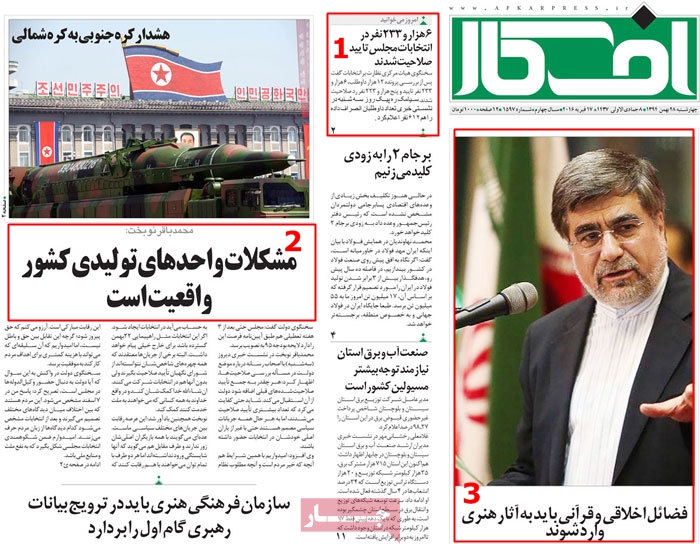
 

Afkar


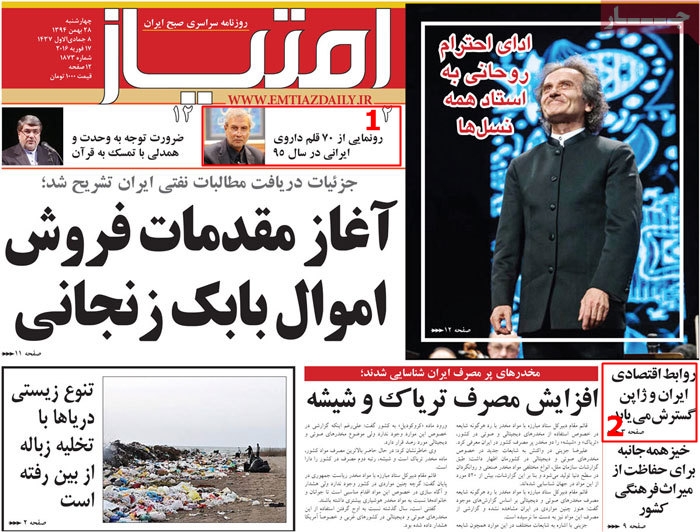
Emtiaz:

  1. Unveiling of 70 indigenized drugs since March
  2. Iran, Japan to boost trade


Emtiaz


Iran:

  1. Iranian ethnic fete in major tourism exhibit

Iran and Russia has signed a MoU to enhance tourism ties.

  1. List of reformist, moderate hopefuls finalized
  2. Gov’t spokesman hopes developmental thinking wins elections
  3. Iran poised to initiate economic JCPOA: Official
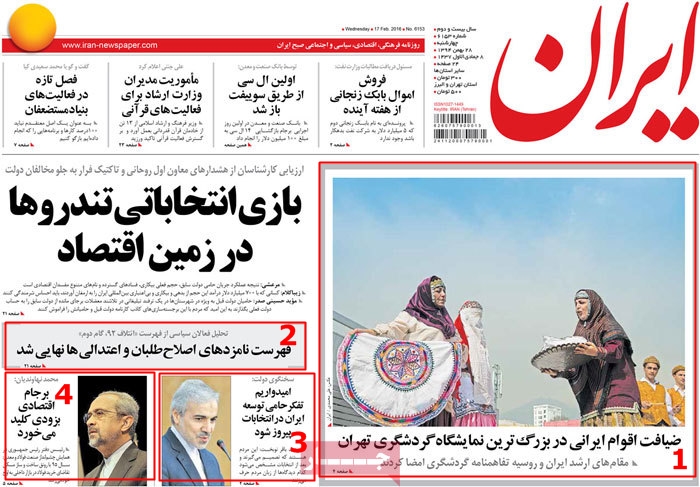
 

Iran


Payam Zaman:

  1. JCPOA 2 no longer confidential: Gov’t Spokesman

Iran: No plans for Saudi talks

  1. Shamkhani says people’s well being is the chief priority of nuclear deal
  2. Vice President: Fate of Iran economy tied to sea interests
  3. Iran gas distribution network top in world
  4. 3 futsal players eye becoming top Asia scorers
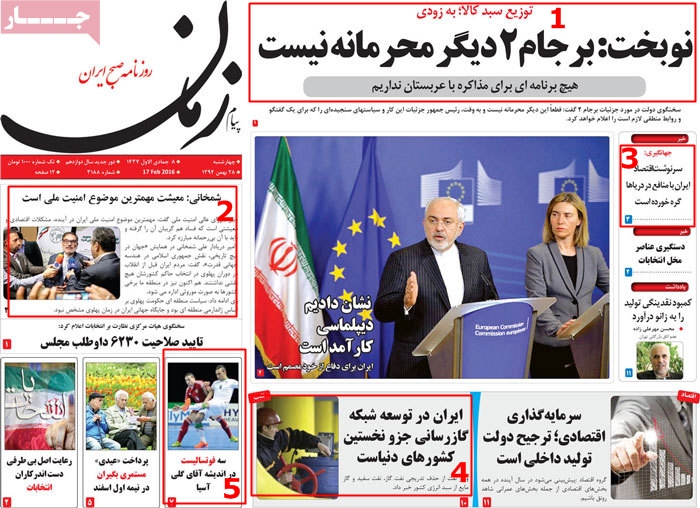
 

payam


Jomhouri Islami:

  1. Iran reacts to new Saudi oil market plot

Iran says it will keep boosting crude exports to its pre-sanctions quota.

  1. Iran unveiled 14 new drugs
  2. Saudi-UAE clashes intensify over Yemen
  3. Rouhani: Cementing close, friendly ties with regions is Iran’s principal policy
  4. Iran opens largest hospital for burning incidents
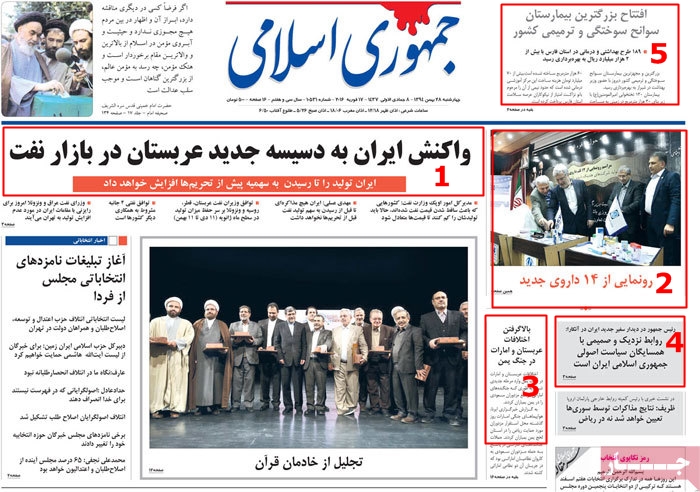
 

Jomhouri


Hosban:

  1. Petroleum Ministry endorses diesel engines for cars
  2. Labor Minister: insurance coverage under way for kidney, liver transplants
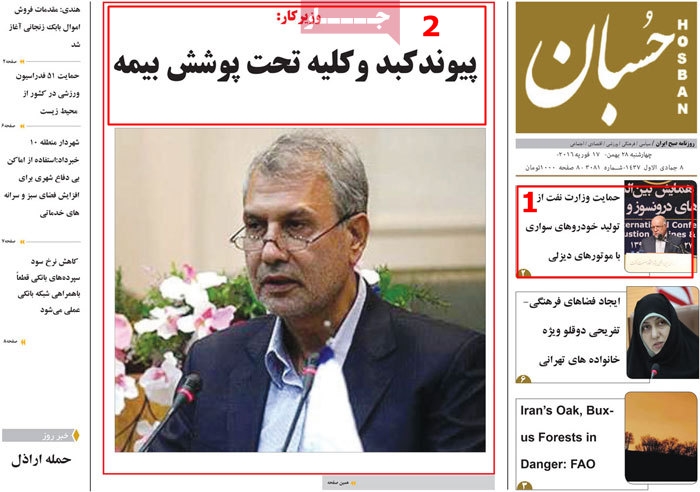
 

Hosban


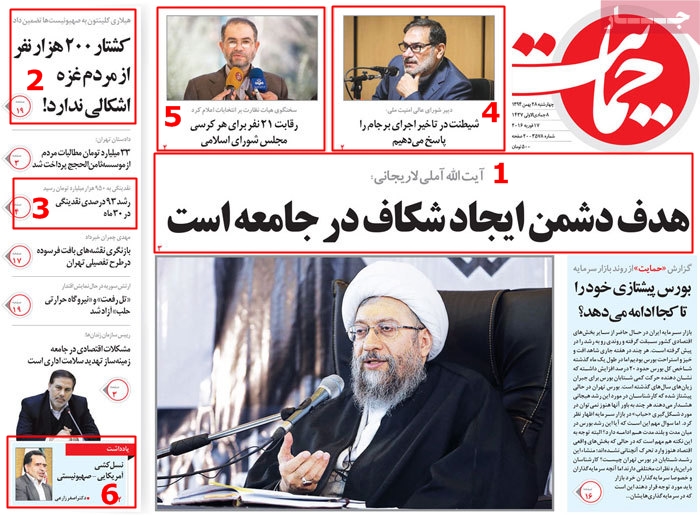
Hemayat:

  1. Judiciary Chief: Enemy aims at creating chasm in society
  2. Clinton pats Zionists for killing 200k Gazans
  3. Liquidity growth 93% in 30 months
  4. Shamkhani: Iran to respond mischief in JCPOA implementation
  5. 21 contenders for every parliament seat in upcoming election
  6. Viewpoint: American-Zionist genocide


Hemayat


Khorasan:

  1. EU trial in EU Parliament

Minister of Foreign Affairs Mohammad Javad Zarif answered questions in the European parliament openly and spoke of European double standards.
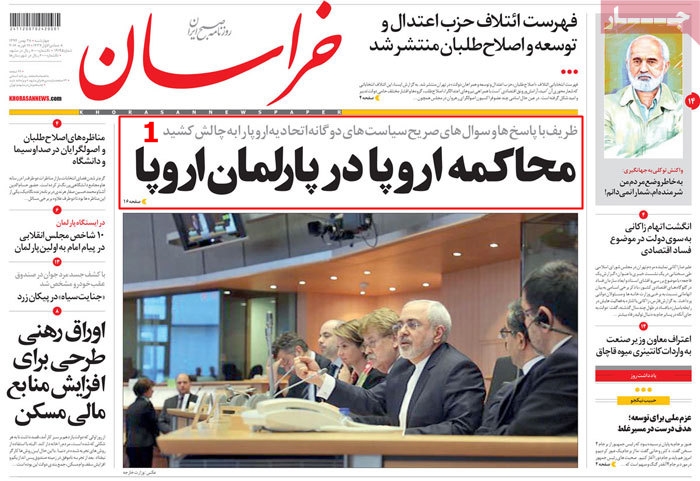
 

Khorasan


Rah-e Mardom:

  1. 75m Iranians receive monthly cash handouts from gov’t
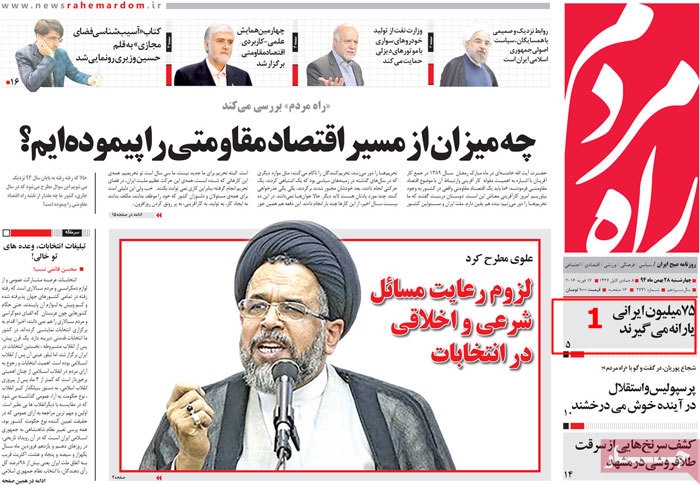
 

Rah-e-mardom


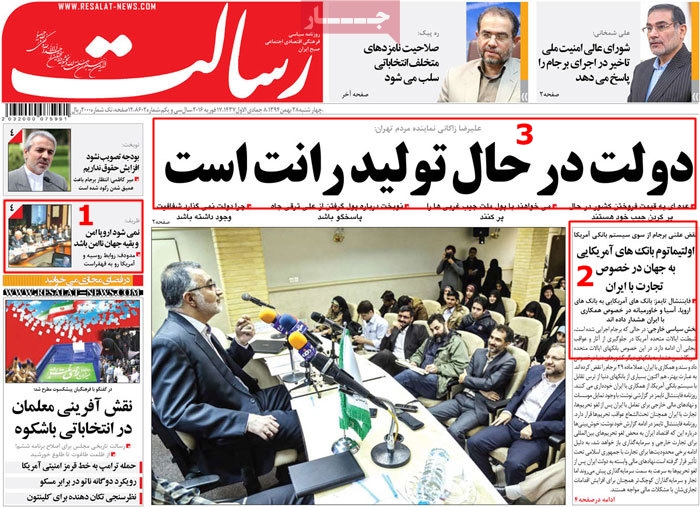
Resalat:

  1. Zarif to EU Parliament: Europe cannot be safe while other parts of world are unsafe
  2. US banks’ ultimatum to world on trade with Iran
  3. MP [government critic]: Admin fueling rent seeking
 

Resalat


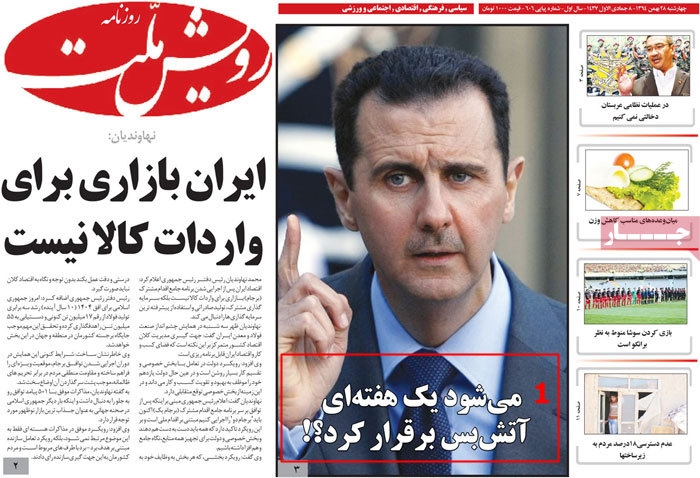
Rooyesh Mellat:

  1. Can ceasefire be established in Syria in a week time?
 

Rooyesh-e-mellat


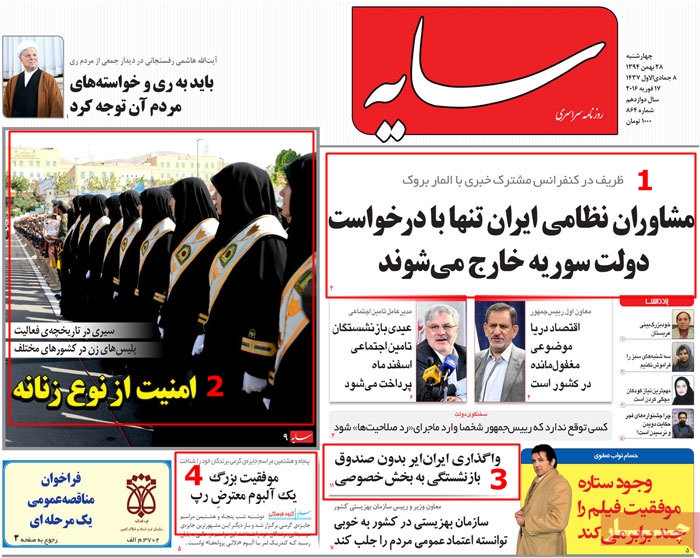
Sayeh:

  1. Iran military advisors will leave Syria only at Syrian gov’t’s request: FM Zarif
  2. Security the female kind

A report about the history of women police officers and their activities in different countries.

  1. Iran Air ceded to private sector
  2. Rap music album becomes a hit


Sayeh


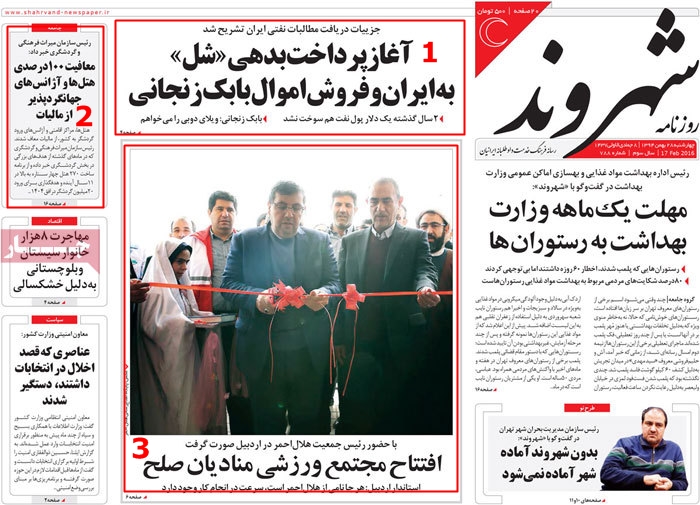
Shahrvand:

  1. Shell starts paying debts to Iran
  2. 100% tax exemption for hotels, travel agencies
  3. Iran launches stadium in Ardebil


Shahrvand


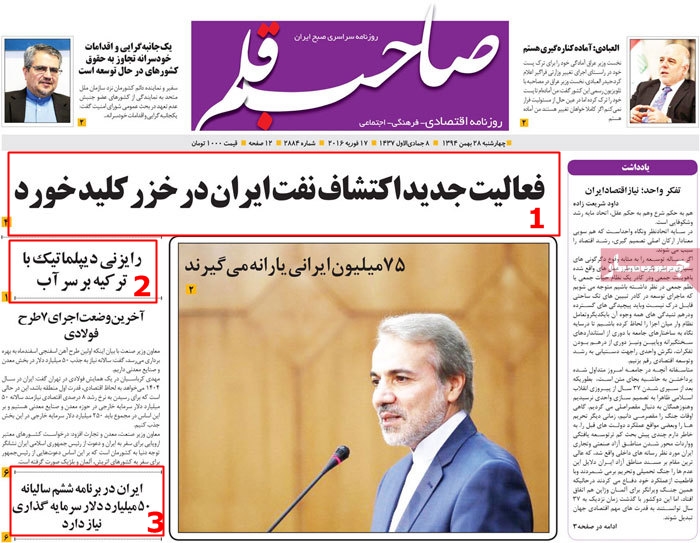
Sahib Ghalam:

  1. Iran resumes searching for oil in Caspian sea
  2. Iran in diplomatic talks with Turkey over water
  3. Iran needs $50bn/y investments in 6th plan
 

Saheb


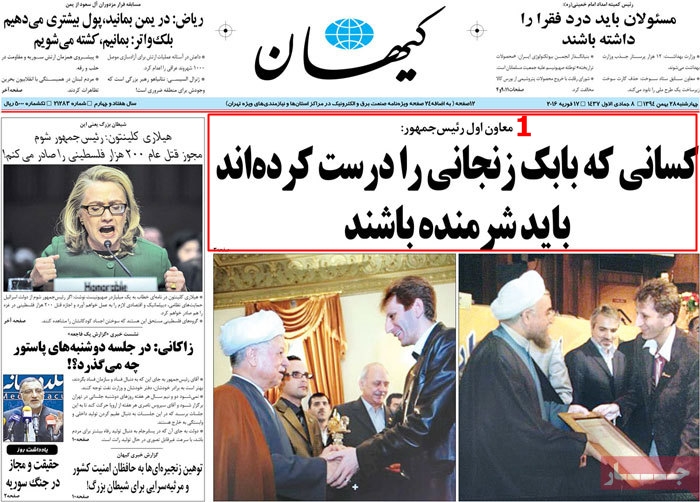
Kayhan:

  1. Those who created Babak Zanjani (corporate mogul) must be ashamed: Vice President
 

Kayhan

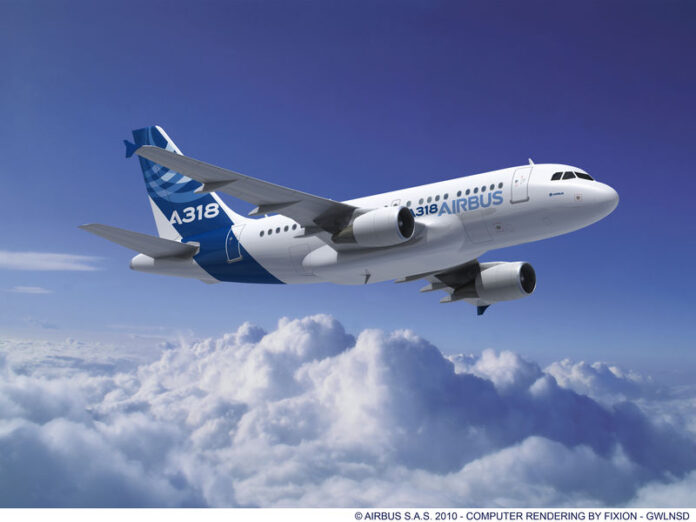
Airbus executive urges European banks to get over Iran fears

According to Reuters, French banks, deterred by a $9 billion US fine on BNP Paribas in 2014 for violating US financial sanctions, have been reluctant to handle deals with Iran despite Iranian authorities urging them to return now the measures have been lifted.

For companies like Airbus, which signed a deal to sell Iran 118 Airbus jets worth $27 billion after international sanctions were lifted against Tehran last month, that makes getting financing for such deals more complicated.

European governments and their export credit agencies support resumption in trade with Iran, said Nigel Taylor, senior vice-president for Customer, Project and Structured Finance at Airbus.

‘With this blessing, I can’t understand why we only see the back of banks at the moment. Don’t be afraid!’ he told a conference on export financing at the French Finance Ministry on Tuesday.

However, the head of the French banking federation, Marie-Anne Barbat-Layani, also on the panel, said the US legal framework regarding sanctions remained too uncertain for now.

‘To be able to intervene, we banks need to have complete legal security and clarity,’ she said. ‘We’re not there yet.’

Senior French bankers have said the memory of BNP Paribas’ fine remained too fresh and the current legal framework, with a possibility to snap sanctions back in place, was off-putting.

Barbat-Layani also said European companies should make an effort and bill their sales in euros rather than US dollars to avoid falling foul of the US legal system.

‘We need to develop euro-denominated financing, even if that’s not enough,’ she said.

Iran has asked foreign oil companies that owe it money from the pre-sanctions period to pay in Euros rather than dollars.

S. Arabia, Russia to freeze oil output

OPEC-OIL
OPEC-OIL

According to Bloomberg, it’s the first significant cooperation between OPEC and non-OPEC producers in 15 years and Saudi Arabia said it’s open to further action.

Oil pared gains after the accord was announced, signaling traders see no immediate end to the global supply glut.

The deal to fix production at January levels, which includes Qatar and Venezuela, is the “beginning of a process” that could require “other steps to stabilize and improve the market,” Saudi Oil Minister Ali Al-Naimi said in Doha Tuesday after the talks with Russian Energy Minster Alexander Novak.

Qatar and Venezuela also agreed to participate, he said.

Saudi Arabia has resisted making any cuts in output to boost prices from a 12-year low, arguing that it would simply be losing market share unless its rivals also agreed to reduce supplies.

Naimi’s comments may continue to feed speculation that the world’s biggest oil producers will take action to revive prices.

“The reason we agreed to a potential freeze of production is simply the beginning of a process” over the next few months, Naimi told reporters.

“We don’t want significant gyrations in prices. We don’t want a reduction in supply. We want to meet demand. We want a stable oil price.”

**Prices Fall

More than a year since the Organization of Petroleum Exporting Countries decided not to cut production, oil remains about 70 percent below its 2014 peak, hovering around $140 a barrel.

Supply still exceeds demand and record global oil stockpiles continue to swell, potentially pushing prices below $20 a barrel before the rout is over, Goldman Sachs Group Inc. said last week.

While Novak has said he could consider cuts if other countries joined in, Russia faces significant obstacles to doing so. The freeze is conditional on other nations agreeing to participate, Russia’s Energy Ministry said in a statement.

The group of producers plans to monitor output and prices for four months, Venezuelan Oil Minister Eulogio Del Pino said in an e-mailed statement.

“This is an announcement of a production freeze among countries whose production didn’t even grow recently,” said Eugen Weinberg, head of commodities research at Commerzbank AG in Frankfurt.

Oil erased gains in London after rising before the meeting amid speculation the countries would discuss production cuts. Brent crude fell 3.6 percent to settle at $32.18 a barrel Tuesday in London, having earlier climbed as much as 6.5 percent.

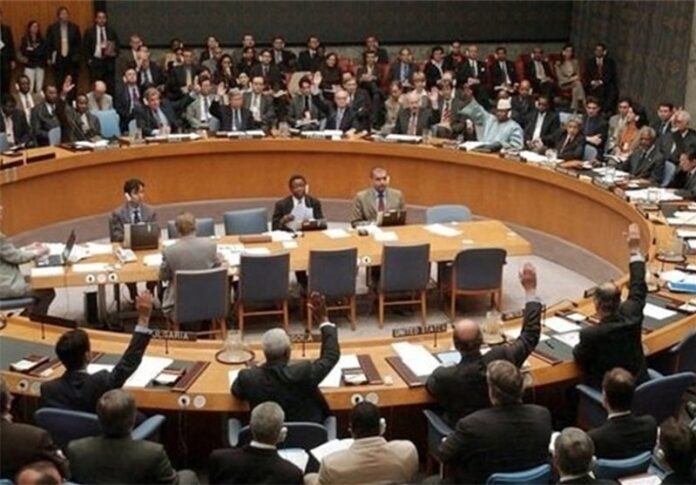
UNSC Urges Turkey to ‘Comply with Intl Law’ in Syria

The closed-door meeting late on Tuesday was called to discuss recent Turkish shelling of Kurdish YPG militia targets in Syria’s north.

“UN Security Council members are concerned with the Turkish attacks on a number of Syrian regions,” Venezuelan Ambassador Rafael Ramirez, who now chairs the UNSC, said after the meeting, Russia Today reported Wednesday.

The UN Security Council received a letter from the Syrian government in which Damascus condemned Turkey’s attacks in the north of Syria, Ramirez explained, noting that the entire council expressed “concern” about these violations.

“All members of the Security Council … agreed to ask for Turkey to comply with international law,” he added.

The UNSC also reiterated its commitment to the Munich agreement, expecting that all parties involved in the discussions will work toward a ceasefire to “allow humanitarian access for every place in the Syrian territory.”

When asked if the UNSC discussed the shelling of the hospitals and schools in Northern Syria on Monday which left close to 50 people dead, Ramirez said the Council indeed discussed the issue, but reached “no agreement” or “consensus” because of “different sources” of information on the incidents.

“Everybody is concerned about airstrikes over humanitarian installations,” said Ramirez, stressing that the UNSC is trying to get “more information.”

The UNSC president highlighted the need to have Kurds represented in the Syrian peace process, and for Ankara not to escalate the situation even further.

“One of the issues expressed by some countries, including Venezuela, is that the Kurdish people have to be included in the discussion. Now that is the principle concern of Turkey,” Ramirez said during the briefing.

“Something that is important – the Kurds are fighting against the terrorist groups on the ground and this is an important factor for everybody,” Ramirez emphasized.

Turkish artillery units have been shelling targets in Syria for the fourth day in a row, as Ankara maintains its commitment to stopping the Kurdish Democratic Union Party (PYD) from claiming more territory in the north of the country. According to the Russian Ministry of Defense, both government and opposition-held towns over the border from Turkey have fallen under Ankara’s shelling.

Brazil ditching dollar to boost Iran trade

Trade Minister Armando Monteiro has said Brazil seeks to boost business relations with Iran after the lifting of sanctions on Tehran, even though Washington has opted to maintain its “primary” embargo on the country.

“Everyone is racing after Iran now. The trade potential is very big,” Monteiro told Reuters on Tuesday.

He said Brazil will find ways to settle payments and the type of payment and currency in transactions with Iran which President Dilma Rousseff could visit this year.

Rousseff lifted sanctions against Iran last week after meeting with the Iranian ambassador, hoping to bolster trade between the two nations, which have enjoyed warm ties for years despite tensions with the West.

Latin America’s biggest economy aims to triple trade with Iran to $5 billion by 2019, Monteiro said.

He said Iran has already contacted Brazil’s Embraer, the world’s No. 3 commercial plane manufacturer, for the purchase of commercial jets for regional aviation.

Iran is eyeing the four models of Embraer’s E1 family of regional jets, because of their low maintenance costs, Reuters said, quoting an official spokesman for the company.

“Iran is a very interesting market because there is a lot of repressed demand and it is a huge country so there is great potential for regional aviation,” the spokesman said.

Monteiro said Iran is also interested in Brazilian cars and trucks as well as machinery to renew its oil refinery network.

He visited Tehran with a delegation of 60 traders and state officials through October 26-29 to discuss strengthening commercial ties.

Monteiro said Brazil is interested in importing natural liquefied gas from Iran which possesses the world’s largest gas reserves.

Iran is the biggest economy to rejoin the global trading system since the collapse of the Soviet Union more than two decades ago.

Iranian officials say the Central Bank of Iran (CBI) has decided to carry out all foreign trade in euros since the US is preventing its banks from doing business with Iran despite the lifting of sanctions.

Washington says it has eased “secondary” sanctions targeting companies outside the US and Americans seeking certain businesses in Iran but most “primary” sanctions related to terrorism and rights accusations remain in place.

Under the order, all foreign banks operating in the US are forbidden from clearing dollar-denominated transactions involving Iran through American banks.

The measures have only clipped the wings of US companies as major companies from Asia to Europe have been rushing to resurrect trade with Iran.

With a population of more than 80 million and annual output of $400 billion, Iran sits on the worlds’ biggest oil and gas reserves combined as well as sizable mineral deposits.

Tehran, Riyadh ties vital for regional peace, stability: Envoy

In an interview with France24 TV broadcast on Tuesday, he said Iran has always pursued friendly relations with other countris because its national interests require joint cooperation whereas Saudi Arabia is after tension.
About Iran’s presence in the region as a key player including in Iraq and Syria, he said, ‘When they ask for our defense assistance, we are completely ready to help them because the future of the people of Syria and Iraq and their countries should be considered.’
He said Iran has been skeptical about the Western-led coalition against terrorism in the region and added that fighting against the menace of terrorism demands good-will and a serious determination.
Ahani said that President Hassan Rouhani in recent meeting with his French counterpart expressed Iran’s readiness for cooperation with France in the joint fight against terrorism because it is a global threat.
The Iranian envoy stressed that terrorism in Syria has to be curbed and eradicated adding that Iran supports a political solution to the Syrian crisis.
Regarding the upcoming parliamentary elections in Iran, he said that Iranians can express their voice through democratic means.
Ahani also said that majority of executions in Iran have been related to drugs-related convictions because the country is used as a transit route to smuggle narcotics from Afghanistan to Europe.

Zangeneh: Iran to export gas to Georgia

Speaking to reporters after a meeting with Georgian Energy Minister Kakha Kaladze on Tuesday, Zangeneh said export of Iran’s gas to Georgia was discussed in the meeting as the Caucasian nation needs gas and there is possibility of joint investment in petrochemical sector.
He said that in light of joint investment in the petrochemical sector of Georgia, Iran will supply its feedstock and invest along with Georgian companies in the sector.
He referred to Georgia’s advantage for export of goods to European Union and said the issue will absolutely be conveyed to Iranian private sector for investment.
He added that studies should be conducted in the field and ‘we hope it will be successful and investment will be made.’
He also said the two countries will introduce to each other their companies for cooperation.
The Georgian minister said details of gas exports from Iran to his country will be investigated. ‘We hope bilateral ties will expand in the post-sanctions era.’
He noted that prospects of cooperation is clear regarding extensive historical relations.
On gas imports from Iran, Kaladze said talks on volume and price of gas will continue and meetings will be held to this end.
He suggested two options for export of gas from Iran to Georgia: Firstly through Azerbaijan and secondly through Armenia.
‘Further details on gas exports of Iran to Georgia will be mulled in the upcoming sessions,’ he added.

Iran’s Bank Sepah reconnected to SWIFT

Bank Sepah Governor Mohammad-Kazem Chogazardi has been quoted by the media as saying that the reconnection to SWIFT was established on Monday afternoon (15 February 2016).

“After the reconnection of the bank to the global services network, a group message was sent out to the clients that the international activities have been re-established and the bank has officially returned to the global scene,” added Chogazardi.

He further emphasized that Bank Sepah has tried to live up to its commitments toward its clients in face of the sanctions.

The official added that the bank has prepared the required infrastructure over the past two years to perfectly handle international services as soon as the sanctions against Iran are lifted.

SWIFT is used by nearly every bank around the world to send payment messages that lead to the transfer of money across international borders. It provides a wide range of service including transmitting letters of credit, payments and securities transactions among 9,700 banks in 209 countries.

However, it became off limits to Iranian banks in 2012 after the implementation of the US-led sanctions against the country. Accordingly, around 30 Iranian banks were blocked from using SWIFT services, literally cutting off Iran from the global banking system.

Last month, the economic sanctions against Iran were lifted after a nuclear deal that the country had sealed last year with the P5+1 group of countries – the five permanent members of the Security Council plus Germany – was implemented.

A central theme of the sanctions was putting restrictions on Iran’s banking transactions with the international financial institutions through various mechanisms including closing SWIFT services to the country.

Iran’s VP Assures Syrian PM of Iran’s Continued Support

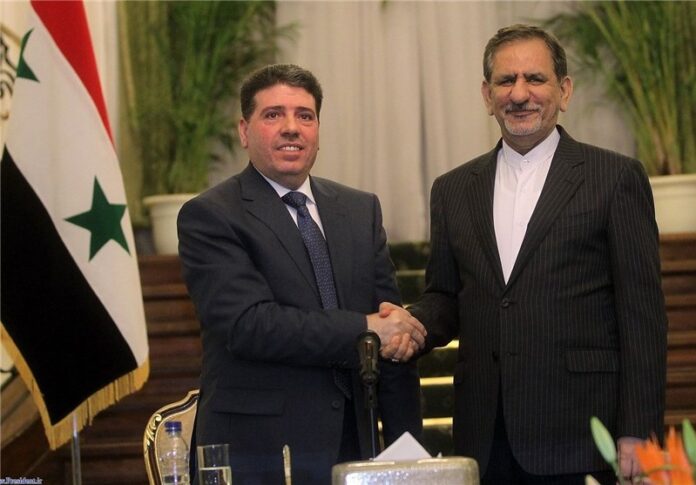
In a telephone conversation on Tuesday, Iranian Vice-President said Iran’s resolve and determination to support the Syrian nation and government’s resistance against terrorist groups “continues unabated”.

“Iran will support Syria in this time of hardship as much as possible,” he underscored.

He further lauded the recent achievements made by the Syrian forces and allied volunteer fighters in the north of the country in pushing militants out of areas across the province of Aleppo.

Jahangiri at the same time underlined the necessity for finding a political solution to the crisis in the Arab country, and said, “Putting an end to the Syrian crisis has definitely a Syrian-Syrian solution and a political approach and political negotiations are the only solutions to the Syrian crisis.”

He further noted that only the Syrian people are entitled to make a decision about their country’s fate and future.

During the conversation, Halqi thanked Iran’s assistance for Syria’s campaign against terrorism, and expressed the hope that he would pay a visit to Iran soon to discuss ways to further expand Tehran-Damascus relations.

Riyadh Failed in Spreading Takfiri Ideology: Lebanese Politician

Saudi Arabia has recently expressed its readiness to deploy special forces to the war-hit Syria if the US-led coalition allegedly hitting the Daesh terrorist group decides to deploy ground troops.
Rodrick Khoury, the Leader of the Lebanese orthodox party Masarik, lashed out at the Saudi decision as a plot to spread Takfirism across the Middle East, but at the same time noted that Riyadh’s direct or indirect interventions have always been doomed to failure.

“In the Middle East, we are witnessing two types of conflicts and disputes. The conflicts are between two projects, namely the moderate project led by Russia, Iran, and Syrian government, and the Takfiri and extremist project, which is being implemented by certain countries like Saudi Arabia, Qatar, and Turkey,” Khoury said in an interview with Mehr News Agency on Tuesday.

“Past experiences indicate that Saudi Arabia always try to deploy certain groups to different region to have its plots implemented,” he went on to say.

However, Khoury added, when Saudi hirelings fail to bring achievements for Riyadh in a region, Saudis raise the issue of direct interference.

“We witnessed such an instance in Yemen. Saudi Arabia could not realize its goals in Yemen through its hirelings and allies, so it decided to directly deploy troops to the Arab country,” he added.

He further pointed to the Saudis’ decision to deploy ground troops to Syria, saying, “In recent years, Saudis have being supporting Takfiri terrorist groups in Syria, and in fact, these groups were Riyadh’s instrument in Syria, but now that Russia has incurred a heavy defeat on Daesh and other terrorist groups in Syria, Saudi Arabia is talking about the project of direct military presence in the country.”

“Saudi Arabia has failed in imposing its ideology in Syria; especially after Russia’s military aid and the Syrian nation’s sacrifices defeated the Saudi plots in Syria, they have raised the issue of direct interference,” he noted.

Khoury went on to say that the Takfirism and its spread across the region, from Yemen to Lebanon and Syria, is the Saudis’ plot for the region.

“Riyadh is trying to implement its plots whether through its hirelings or via direct intervention in regional countries,” he added.

However, he said, the important fact is that Saudis’ direct or indirect intervention in the region has always been doomed to failure.

For example, Khoury mentioned, on Iran and its Islamic Revolution, the entire world was against Iran, but the Iranian nation proved that it can realize its demands and stand against the world through its resolve.

The Syrian nation has also decided to resist the project of Saudis, namely the Takfiris, the Lebanese figure added.

“Currently, the situation in Syria is better that that of Iran in the course of the Islamic Revolution (1979), because the global system has now changed, and the unilateralist viewpoint does not exist anymore. The US and its allies cannot impose their will on today’s world,” he said.

The Masarik party leader further described Russia as a powerful country and Iran as an influential one in the Middle East.

Therefore, he added, whether Saudis send their ground forces to Syria or have an indirect presence there through their proxies, they would not be able to make any achievement, because “we will resist all these plots.”

Elsewhere in his remarks, Khoury referred to the election of Lebanese president, and stressed that both Suleiman Frangieh and Michel Aoun are powerful and loyal Maronites and candidates of March 8 Alliance, none of whom can be preferred to the other.

The issue, therefore, needs further and closer investigations, he said, reiterating that Aoun and Frangieh are distinguished figures who have supported the Resistance project against Zionism and Takfirism.

“Masarik party is an orthodox Christian one with popular bases in Lebanon, Syria, Jordan, and Palestine,” he said about the party he leads.

“This party believes that Christians are both targeted by Takfiris and Zionists, and we have witnessed that in Palestine,” he added.

“As a Christian party, we are proud of the Islamic Revolution of Iran, and I think the most important message of this Revolution was that Islam is not an enemy of Christianity, and the divine religions of Islam and Christianity share common values,” Khoury said.