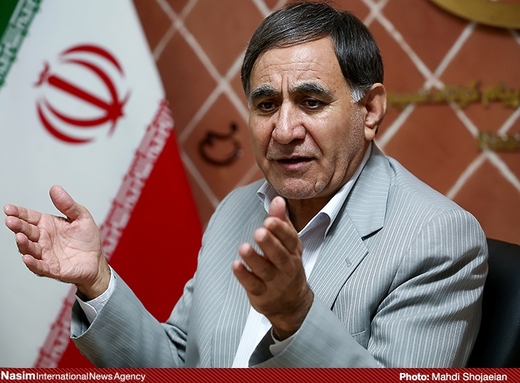
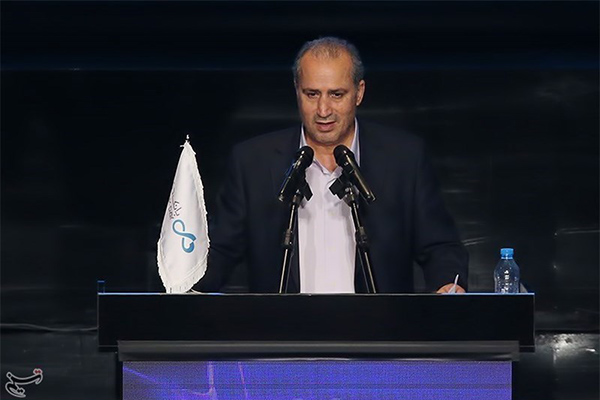
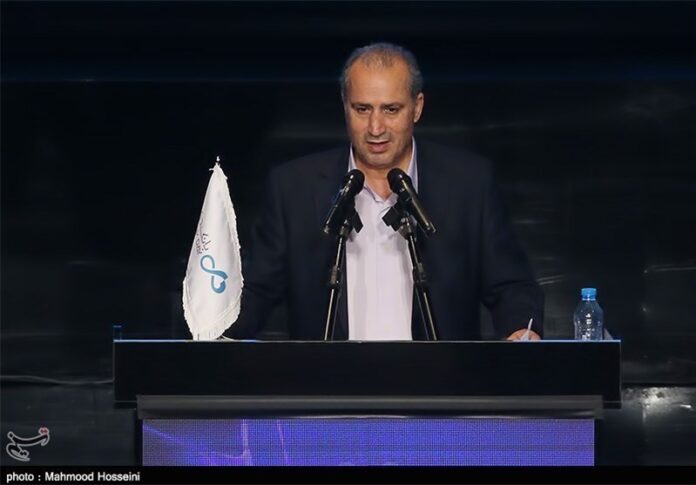
In the elections, held in Tehran’s Olympic Academy, Taj managed to capture 50 votes, followed by Mostafa Ajorlou with 15 votes and Aziz Mohammadi with six votes.
Taj was elected for a four-year term until 2020.
The former IFF Vice President replaced Ali Kaffashian as the new President of the Iran Football Federation.
Kaffashian is the longest-serving president in Iranian football history, having served for eight years and four months.
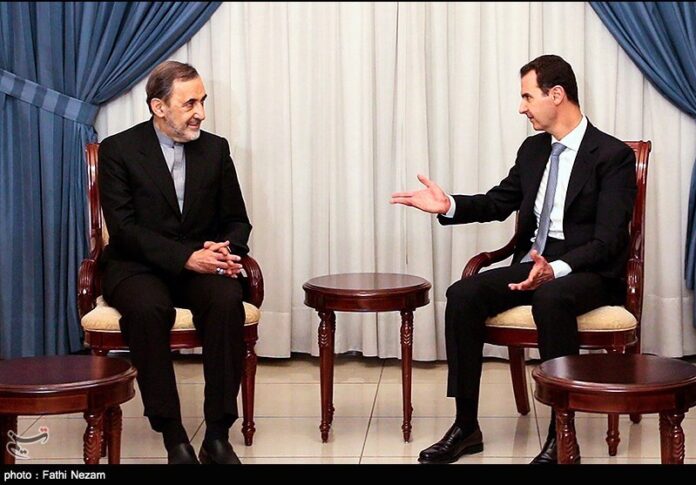
In a meeting with Head of the Strategic Research Center of Iran’s Expediency Council Ali Akbar Velayati in Damascus on Saturday, Assad exchanged views on a range of issues, including the latest developments in the Middle East and mutual cooperation between Tehran and Damascus in diverse areas.
“I am grateful to the Leader (of the Islamic Revolution Ayatollah Seyed Ali Khamenei) and the Iranian nation and government for the support you provide for the Syrian nation and government,” Assad told Velayati, who is also a top adviser to Ayatollah Khamenei.
He also expressed optimism about Syria’s victory in the “unbalanced war” that terrorists and their supporters have waged on the Arab country.
Veleyati, for his part, commended the resistance of the Syrian nation against foreign-baked terrorism, describing such resistance as unprecedented in history.
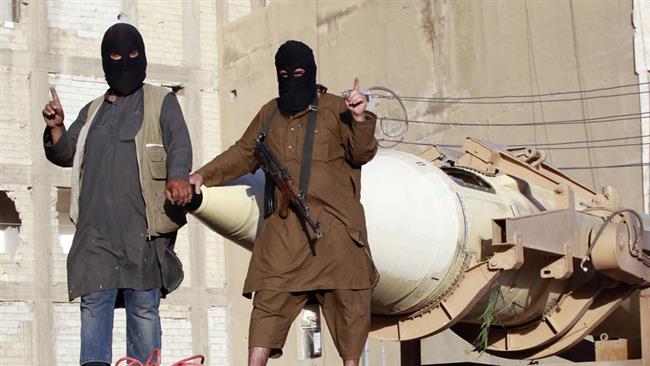
Syria has been gripped by civil war since March 2011 with various terrorist groups, including Daesh (also known as ISIS or ISIL), currently controlling parts of it.
According to a new report by the Syrian Center for Policy Research, the conflict has claimed the lives of over 470,000 people, injured 1.9 million others, and displaced nearly half of the country’s pre-war population of about 23 million within or beyond its borders.
In the meantime, Iran has remained a close ally of Syria and supports its legitimate government in the face of foreign-backed militancy.
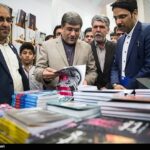
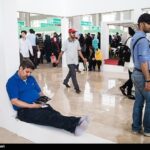
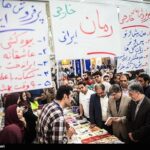
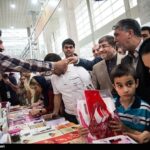
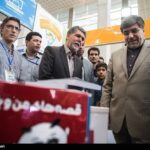
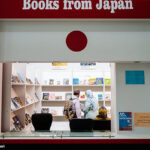
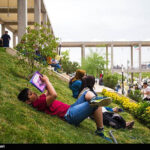
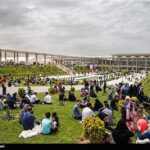
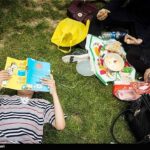
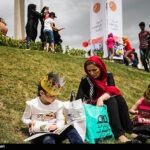
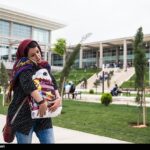
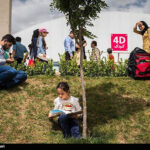
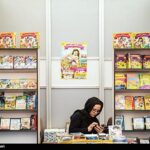
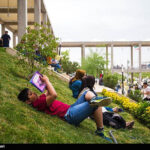
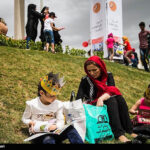
The 29th edition of Tehran International Book Fair (TIBF) opened its doors to people for a new day at a large, new fairground south of Tehran on Saturday.
To see photos of the newly opened, purpose-built exhibition site, Shahr-e Aftab, click here.
Since the lifting of sanctions in January under a nuclear agreement, Iran has been ramping out oil production to claw back lost market share.
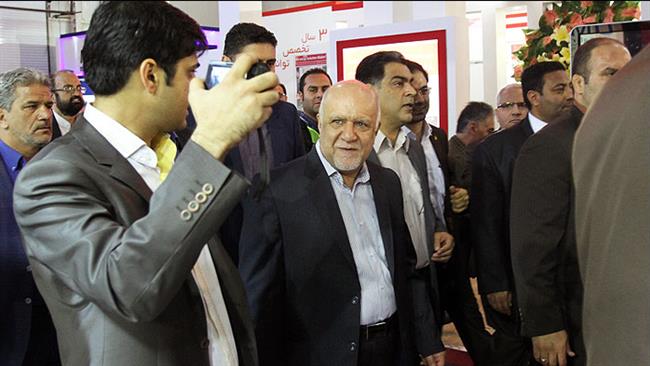
“During sanctions, exports of oil and gas condensates combined stood at 1.35 million barrels per day; those exports have now risen to 2.4 million barrels,” Zangeneh told the opening of an international oil and gas exhibition in Tehran Saturday.
On Friday, another senior official said Iran had raised its oil production to the level it desired, indicating that the country was ready to join a possible output freeze proposed by key producers.
Head of the Iraqi Turkmen Front, Arshad Salihi, said in a statement on Friday that the extremists lobbed a barrage of mortar rounds, which contained chemical agents, on the town of Tuz Khurmatu, situated 25 kilometers (15.5 miles) south of oil-rich city of Kirkuk, on March 9.
Three civilians lost their lives in the attack and hundreds more suffered injuries.
“Daesh has materials to produce these kinds of prohibited weapons […] and has also experts to produce these weapons,” Salihi said.
Director General of the Organization for the Prohibition of Chemical Weapons (OPCW) Ahmet Uzumcu said on Tuesday that fact-finding teams from The Hague-based watchdog have discovered evidence suggesting the use of sulphur mustard in Daesh attacks against areas in Iraq and neighboring Syria.
“Although they could not attribute this to Daesh… there are strong suspicions that they may have used it (chemical weapons),” Uzumcu said.
“Secondly, the suspicions are that they may have produced it themselves, which is extremely worrying,” he pointed out.
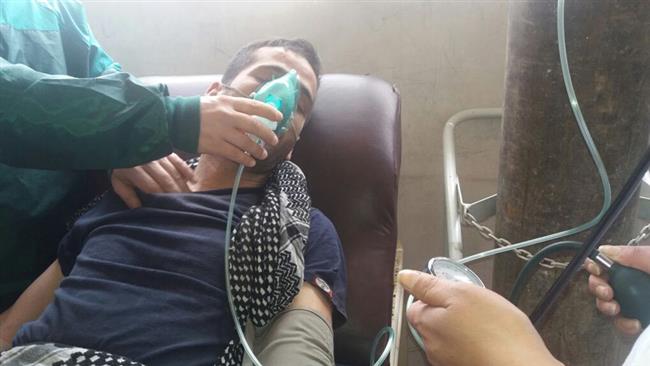
A young man receives treatment at a hospital following a Daesh chemical attack in the Sheikh Maqsood neighborhood of Syria’s northwestern city of Aleppo on April 7, 2016. (by Russia Today)
He further said “it proves that they have the technology, know-how and also access to the materials which might be used for the production of chemical weapons.”
On April 7, 23 people were killed and over 100 others injured in a chemical attack by Daesh terrorists against members of the Kurdish People’s Protection Units (YPG) in a neighborhood of the northwestern Syrian city of Aleppo.
Videos posted online purportedly showed yellow gas rising over Sheikh Maqsood neighborhood in Aleppo, located some 355 kilometers (220 miles) north of the capital, Damascus.
According to a report by the Syrian-American Medical Society, Daesh has carried out more than 160 attacks involving “poisonous or asphyxiating agents, such as sarin, chlorine, and mustard gas” since the beginning of the Syrian conflict in 2011. At least 1,491 people have been killed in the chemical attacks.
In the elections held in Tehran’s Olympic Academy, Taj managed to capture 50 votes in the election, followed by Mostafa Ajorlou with 15 votes and Aziz Mohammadi with six votes.
Taj was elected for a four-year term until 2020.
IFF vice president replaced Ali Kaffashian as new president of Iran Football Federation.
Kaffashian is longest-serving president in Iran football history with eight years and four months.
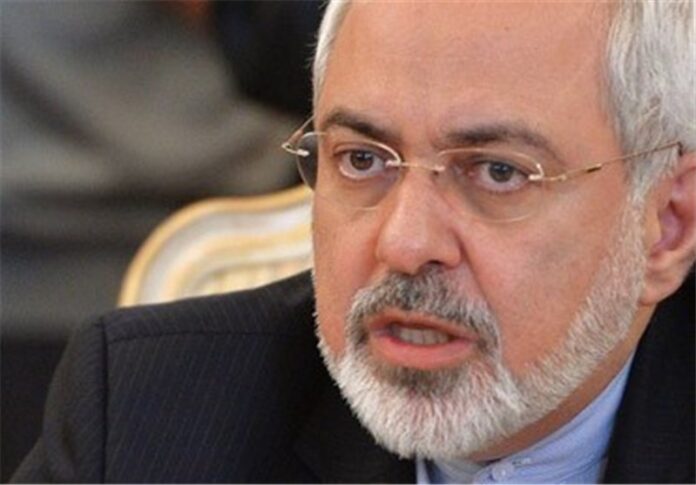
“The enemies and ill-wishers of Iran, including the Zionists, seriously seek to portray an unsafe investment atmosphere in Iran… and to scare off (foreign) investors,” Zarif said in an address to a gathering of newly elected lawmakers in Tehran on Saturday.
Urging efforts to attract foreign investment, the top diplomat added, “We should announce it to the world in unison that Iran is the safest, best and most profitable country for investment in the globe.”
His comments came against the backdrop of growing international interest in investment in Iran after implementation of the Joint Comprehensive Plan of Action (JCPOA), a lasting nuclear agreement between Tehran and the Group 5+1 (Russia, China, the US, Britain, France and Germany).
The nuclear deal terminated anti-Iran sanctions when it came into force on January 16.
Elsewhere in his remarks, Zarif underlined that Iran seeks peace and does not want confrontation with any country.
“We announce that we have not been and are not after war against any country,” the minister stated, underlining, however, that no country or individual could comment on Iran’s defense capabilities.
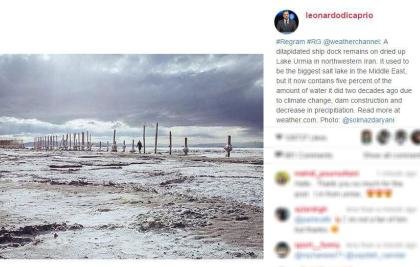
The actor posted a picture of the lake and wrote the following under it on his Instagram page.
“A dilapidated ship dock remains on dried up Lake Urmia in north-western Iran. It used to be the biggest salt lake in the Middle East, but it now contains five per cent of the amount of water it did two decades ago due to climate change, dam construction and decrease in precipitation,” DiCaprio wrote on his page.
As reported by Mehr, the message was liked by 251,000 users only in one day.
Now, the ULRP has invited the American movie star to visit the place.
Worried about environmental issues, DiCaprio set up the Leonardo DiCaprio Foundation in 1998, to promote environmental awareness and later in 2014, and was later appointed as a United Nations representative on climate change.
DeCaprio’s move was welcomed by many environmentalists, climate change activists, and Iranian figures. Gary Lewis, the UNDP Resident Representative and UN Resident Coordinator in Iran, Mahnaz Afshar, a renowned Iranian actress, and Seyyed Hadi Bahadori, an MP from Urmia constituency and a member of one of the projects of reviving the lake were among those who welcomed the move.
An endorheic salt lake between two Iranian Azerbaijan provinces, Lake Urmia was, at its full size, the largest lake in the Middle East and the sixth largest saltwater lake on the earth with a surface area of approximately 5,200 km².
Home to migratory birds like flamingos, pelicans, ducks and egrets, the lake along with its once approximately 102 islands, is protected as a national park by the Iranian Department of Environment.
“Today, the government is responsible for governing the country, and should settle people’s problems without pinning the blame on others,” Ebrahim Aqa-Mohammadi said in a recent address to Parliament, as reported by Fars and translated by IFP.
“Employment and livelihood are the main problems of the Iranian people. Unemployment is the worst disaster… But the government’s entire economic plan is limited to the JCPOA.”
“We paid the price for the JCPOA so that our frozen money would be released and employment would increase […] but the Big Devil [a derogatory slang term for the US] is seizing Iran’s assets rather than releasing them,” the Iranian lawmaker added.
“We have sanctified the JCPOA, and we don’t let anyone question it. Deputy Foreign Minister Araqchi says the issue of the JCPOA is like a house that we have purchased; the ownership has been transferred to us, but the previous owner hasn’t given it to us yet,” he added.
“People have yet to see any results from the JCPOA in their lives,” Aqa-Mohammadi warned.
He pointed to the frequent warnings by experts “sympathetic” to the government, urging officials to prevent Big Satan from abusing the JCPOA, but they were described as “radical” and “opponents of the government”.
Today, however, proponents of the JCPOA have to resort to complaining to UN Secretary-General Ban Ki-moon about the arrogant thievery of the US, and the violation of its commitments, he stated.
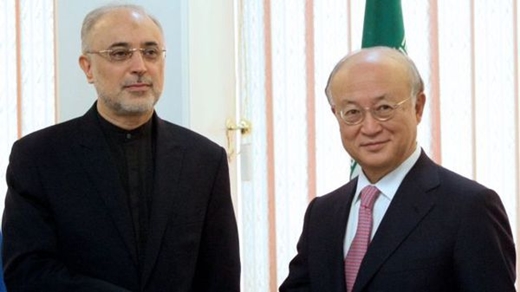
“Amano issued a good report about the implementation of the JCPOA, in line with our demands that the IAEA just consider the JCPOA and not other interpretations,” said Ali Akbar Salehi, the Head of the Atomic Energy Organization of Iran (AEOI), after meeting with Yukiya Amano, the director general of the International Atomic Energy Agency (IAEA) in Vienna.
Salehi told the media that the meeting was intended to be about the implementation of the JCPOA (the Joint Comprehensive Plan of Action signed between Iran and sextet on July 14, 2015, in Vienna) and the measures taken within that framework, in the first three months of the project. He said that he was content with Amano’s report but he had again articulated Iran’s concerns in the meeting.
“The JCPOA is a thick tome full of articles, and it is possible to make different inferences about the content of it. For that reason, we [the government of the Islamic Republic of Iran] insist that the text itself to be the [legal] touchstone, and not the inferences or interpretations,” the head of Iran’s atomic energy organization underlined.
He reaffirmed that Iran’s relationship with the IAEA is excellent, and the tasks are being seriously followed up by Mr. Amano and his colleagues.
“Matters were discussed very transparently and clearly, with fewer political concerns, and more technical and legal considerations, and the overall output of the meeting was positive,” stated the Iranian official.
He also described his two day visit to the Czech Republic and Slovakia as positive, and voiced hope that with joint projects, Iran will benefit from the expertise of the two countries.







 “A dilapidated ship dock remains on dried up Lake Urmia in north-western Iran. It used to be the biggest salt lake in the Middle East, but it now contains five per cent of the amount of water it did two decades ago due to climate change, dam construction and decrease in precipitation,” DiCaprio wrote on his page.