Friday, December 26, 2025
Home Blog Page 4494

Japan Eyes Development of Iranian Port: Report

Tokyo hopes to team up with India in the development of the regional logistics hub in southeastern Iran, according to the Nikkei Asian Review citing its sources on Sunday.

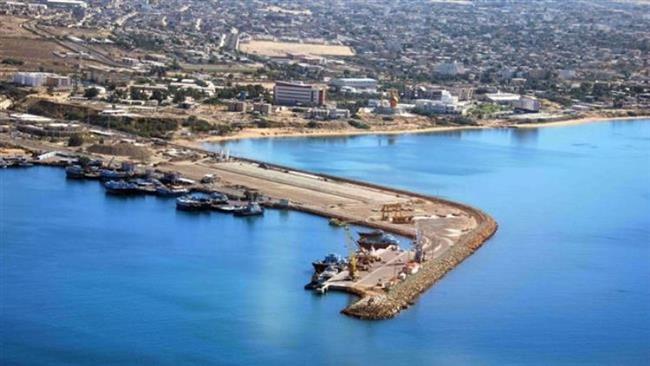
The report said Tokyo wants to be part of a project on the construction of a site, which is set to include a port and an industrial complex in Chabahar.

It said Tokyo is keen to build stronger ties with Tehran and that Japanese Prime Minister Shinzo Abe hopes to reach a deal on the port during a planned visit to the Iranian capital later this year.

In April, the Indian government announced plans to invest some $20 billion to build fertilizer and petrochemical plants at Chabahar.

The Japanese government hopes to start drawing up specific plans for Chabahar development by the end of this year through the Japan International Cooperation Agency. Tokyo will decide on details such as the necessary infrastructure and a list of companies it will invite to tender for the project. The investment will use official development assistance, the report added.

It said Japan hopes to develop the area into a trading center for resource-rich Central Asian countries such as Turkmenistan, the world’s fourth largest producer of natural gas. It also hopes that Chabahar will serve as a logistics pivot for Iran and Afghanistan.

Late in April, local Iranian media reports said China also wanted to have a stake in Chabahar, with the official IRNA news agency saying a technical team of Chinese experts visited Chabahar in Iran’s province of Sistan-Baluchestan for the launch of a Chinese industrial town project there.

Chabahar is located in the Gulf of Oman on the border with Pakistan. It is the closest and best access point of Iran to the Indian Ocean and Iran has devised serious plans to turn it into a transit hub for immediate access to markets in the northern part of the Indian Ocean and Central Asia.

In May 2014, India and Iran signed a Memorandum of Understanding (MoU) to jointly develop the port once the international sanctions against Iran were lifted. Both sides agreed as per the MoU to allow India lease two docks at the port for a period of 10 years, a move that was meant to cut India’s crude oil and urea transportation costs by around 30 percent.

Iran Says 13 IRGC Forces Killed in Syria

In a statement on Saturday, the IRGC said the forces were all from Iran’s northern province of Mazandaran.

It added that they were killed and injured in the town of Khan Tuman, located in the southwest of the Syrian province of Aleppo.

The statement said the identity of the victims would be released later.

On Thursday, the Syrian army troops delivered a major blow to al-Nusra Front terrorists after the latter launched an attack on the government forces in Khan Tuman.

According to the so-called Syrian Observatory for Human Rights on Friday, dozens of the Takfiri terrorists as well as government forces lost their lives during the heavy fighting.

The UK-based group further claimed that the Takfiri militants had managed to retake Khan Tuman and its surrounding villages from the army troops.

The Syrian military is yet to confirm reports about Khan Tuman’s fall into the hands of the terrorists. The Syrian armed forces had driven the terrorists out of Khan Tuman in December.

Iran maintains military advisers in Syria, where the government of Syrian President Bashar al-Assad is fighting an array of foreign-backed militant forces, including, but not limited to, those of the Daesh terrorist group.

Syria has been gripped by foreign-backed militancy since March 2011. UN Special Envoy for Syria Staffan de Mistura estimates that over 400,000 people have been killed in the conflict, which has furthermore displaced over half of Syria’s pre-war population of about 23 million.


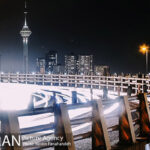
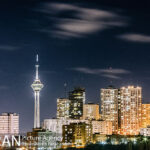
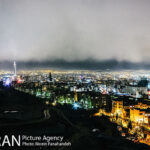
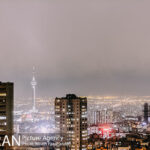
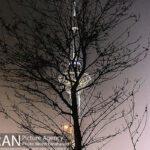
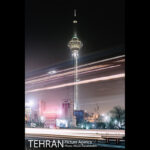
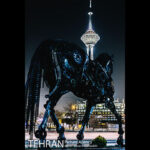
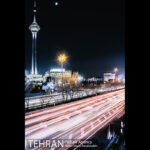
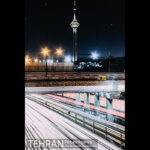
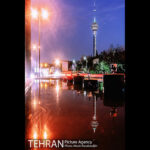
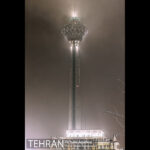
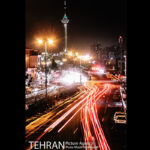
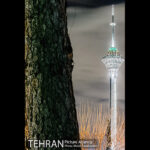
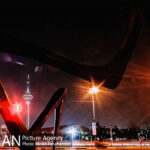
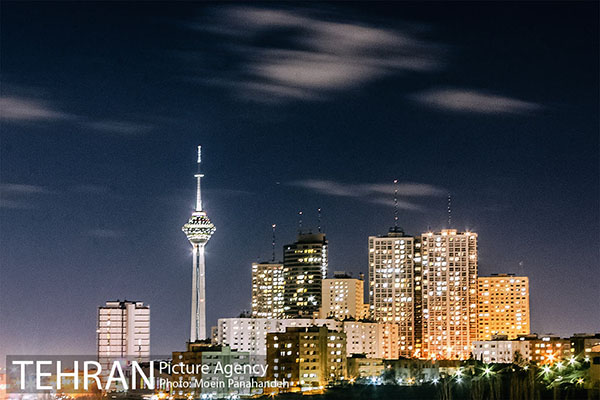
Milad Tower at night

IFP: One of Tehran’s most notable and visible landmarks, Milad Tower can be seen from points all across the city, and has become a recognizable symbol of Tehran, defining the skyline at all times of day and night, and in all weathers and seasons. It was officially opened in 2009, and stands at 435m tall, making it the the tallest tower in Iran, and the sixth tallest telecommunication tower worldwide.

Here you can see the tower in some of its many guises, in a collection originally presented by Tehran Picture Agency.


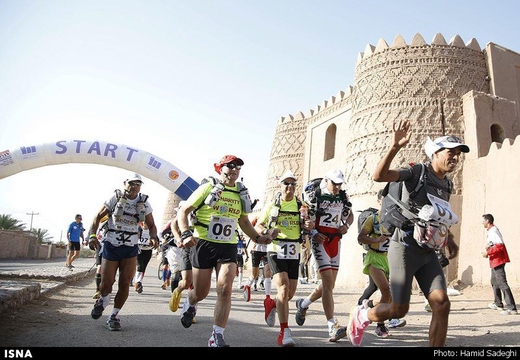
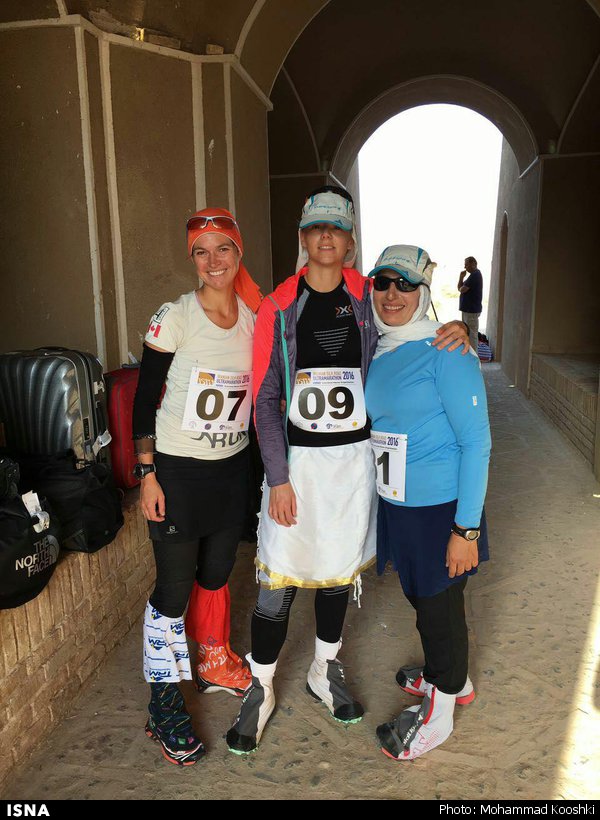
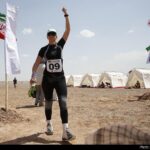
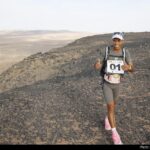
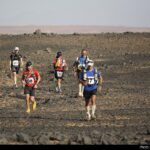
Ultra-Marathon in Iranian Deserts Approaching Finish Line

According to IFP’s translation of a report by ISNA, 43 runners from Iran, Italy, Canada, Britain, Germany, Austria, Norway, India, Morocco, and Lebanon will cross the finish line on Sunday, and the winners will be announced.

The marathon is being held in six stages, in each of which the runners run between 35 and 45 kilometres.

Ultra-Marathon in Iran 12The most difficult stage, the Long March, was held on Thursday, during which the runners ran a distance of 80km in two consecutive days without any overnight accommodation. During the march, the temperature rose to 48 degrees Celsius in certain hours.
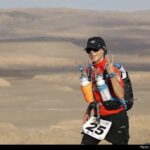
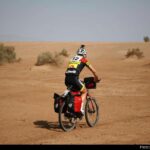
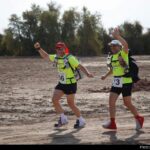
Mohamad Ahansal, the famous Moroccan ultra-marathon runner, has been the best runner so far.

Many of the runners ran in this stage continuously without any rest even in the night, and the last runner finally crossed the finish line [of this stage] on Friday morning.

Since Saturday morning, they have started the sixth stage after a full rest on Friday.

The ultra-marathon, mainly aimed at introducing Iran as a safe and intact place to the world, is held in two integral and lite formats, each of which is in 6 stages.

The slogan of the event is, “Run with us in the hottest place on Earth”.


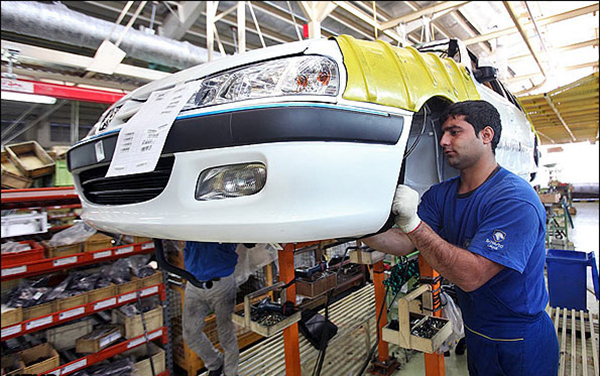
Fourth IKCO Car to Enter Iran’s Market

Referring to car production as a goal to supply both domestic and international markets, Keyvan Vaziri, IKCO Deputy CEO Assistant in New Product Development said, “The production target for the car based on the “X409TC” project will be 100,000 units per year.”

“The car has already been designed, and the body stamping dies are prepared; mass production of the car (which will be the 4th IKCO car) will start by February 2017,” he asserted.

According to Vaziri, the main export markets for this car will primarily be the CIS and Persian Gulf countries, Azerbaijan and Armenia.

In the meantime, he claimed that this car meets all the required safety, pollution, fuel consumption and quality standards, and also covers Europe’s compulsory safety standards.

“The sunroof has a new style and appearance, designed by IKCO engineers. It enjoys a turbocharged engine and an automatic gearbox,” he said and added, “Considering safety and performance criteria, this car is being tested under the supervision of IKCO NPD in Spain, Germany and South Korea.”

Vaziri also emphasized that this new IKCO product, to be produced this year, could compete with some Korean and even European cars.

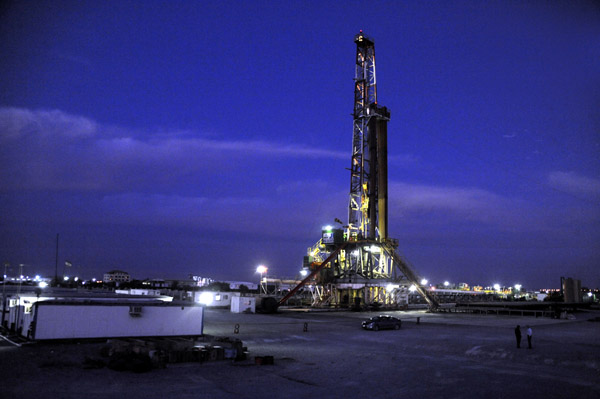
Total to cooperate in development of South Azadegan oil field

Managing Director of Petroleum Engineering and Development Company (PEDEC) Abdolreza Hossein-Nejad made the remarks on the sidelines of the 21st International Oil, Gas and Petrochemical Exhibition currently underway in Tehran.

Hossein-Nejad said Total is set to present its preliminary proposal in July 2016.

‘Iran also has inked an agreement to avoid disclosure of the information of South Azadegan oil field,’ he added.

Touching upon the second phase development of North Azadegan oil field, Hossein-Nejad said a Chinese company should present its plan as soon as possible, otherwise the development of this phase would be pursued in the framework of new oil agreements.

‘The Chinese company should present its plan in early June 2016,’ he added.

Hossein-Nejad reiterated that North Azadegan gas field is ready to become operational and produce 75,000 bpd.

In March 2016, Tehran and France’s oil giant Total signed a non-disclosure agreement on the development of the South Azadegan oil field shared by Iran and Iraq.

According to Iranian Minister of Petroleum Bijan Zangeneh, Tehran and Total have agreed to keep the articles of the accord confidential.

Iran discovered Azadegan oil field in 1999 which was the country’s biggest oil find in decades.

Azadegan is the world’s third largest oilfield with in-place reserves of about 33.2 billion barrels and recoverable resources of about 6 billion barrels.

Iranian, Turkmen FMs Discuss Closer ties

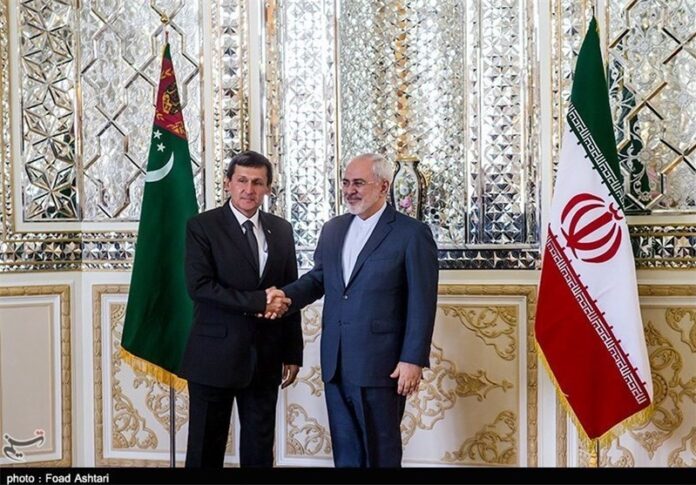
During the meeting with Turkmen Foreign Minister Rasit Meredow, Zarif highlighted the good prospects of relations between Tehran and Ashgabat, saying that continued consultations between two countries’ leaders have paved the way for expansion of bilateral ties.

He further said the recent reciprocal visits by the two countries’ presidents, which led to the signing of 27 memorandums of understanding (MoUs), are indicative of the firm determination on both sides to further boost the relations.

Zarif also voiced the Islamic Republic’s readiness to strengthen interactions between Iranian and Turkmen people, merchants in particular, through facilitating the process of issuing visas.

The Turkmen top diplomat, for his part, described Tehran-Ashgabat ties as growing and age-old, saying that his country attaches great importance to its relations with Iran.

Back in March 2015, Iran and Turkmenistan signed 17 cooperation documents in economic, cultural, political, legal, scientific, and technological fields during a visit to Ashgabat by Iranian President Hassan Rouhani.

The Iranian chief executive announced at the time that Iran and Turkmenistan have decided to increase the total value of their economic exchanges from the then $3.7 billion to $60 billion in a ten-year period.


New era in Turkey to start as Davutoglu resigns

Following that resignation, Davutoglu called for an extraordinary congress to elect his successor.

A day after his Wednesday meeting with President Erdogan, Davutoglu announced that the AKP will hold an extraordinary congress on May 22 in which he will not be candidate for the party’s leadership.

He made the announcement at the party’s 35-minute meeting of Central Executive Board.

The May 22 extraordinary congress of the AKP will be the second in the past 14 years after the party was founded in August, 2001.

During the first extraordinary congress held two years ago, Davutoglu was elected as leader of the party, while this year he will quit power there.

At the Thursday meeting, Davutoglu stressed he sees his tenure as Turkish prime minister as a successful period.

Then, he elaborated on achievements gained during the 22-month-long tenure, pointing to his successes at the period in preserving unity inside the party and victory at the General elections as well as fulfillment of election promises that brought improvement in economic situation.

Davutoglu criticized the recent decision made by the party’s Central Executive Board that took back authority from the chairman to appoint AKP provincial and district heads.

He said he prefers the party to hold an extraordinary congress to elect a new chairman, instead of changing the board that will bring negative outcomes to the AKP.

Davutoglu’s resignation is a record of its kind in the Turkish political era.

History of different parties in Turkey shows that there had been no such measure as what taken by Davutoglu.

Issue of last year General elections that followed by arresting and detaining a number of journalists in Turkey has been declared as a disagreement between Davutoglu and Erdogan.

Opposite to Erdogan who has radical attitudes towards different issues, Davutoglu mostly follows moderate views.

Also, disagreement between those two had been repeatedly published in Turkish government’s opposition newspapers and declared by opposition parties.

Despite all those claims, Davutoglu had said over and over that there was not even a small disagreement between his viewpoints and Erdogan’s.

According to political experts, taking back authority from Davutoglu to appoint AKP provincial and district heads last week has openly paved the way for his resignation.

Even some opposition newspapers declared the move as a coup against Davutoglu.

‘Who will take the authority after Davutoglu?’ is a question to which just Erdogan can answer. It is not clear that who will be Davutoglu’s successor, but surely he/she will be Erdogan’s favorite choice.

Turkish premier-to-be will be the one who coordinates president’s intentions with the cabinet members. Executive power will be in Erdogan’s hands as long as he works as Turkish president.

When the presidential system of government starts work, Turkey does not need any prime minister practically, because President Erdogan will exert power in the system directly.

Some experts have described Davutoglu’s measures to quit his posts as leader of AKP and prime minister as practical implementation of presidential system by Erdogan.

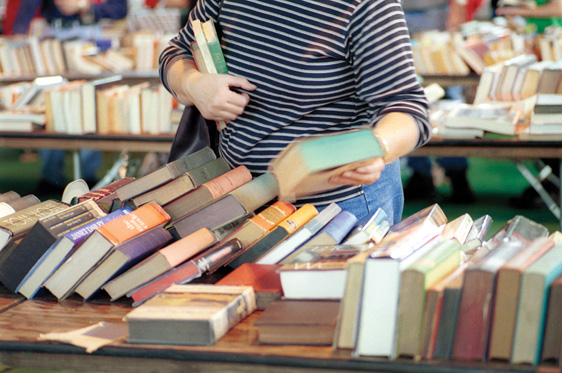
2,000 Books on Display in Turkey’s Stall in Tehran Int’l Book Fair

According to a report by IRNA, Uthman Habaki Said Turkey has been participating in Iran’s International Book Fair since 2009, and this year, 2,000 Turkish books have been put on display.

He added that Turkey is interested in having cultural ties with Iran.

Meanwhile, about 300 books on Armenian culture and art have also been displayed for the first time in the fair.

Director of the Armenian stall Armen Sarkesian said Yerevan had decided for the first time to take part in this year’s book fair in Tehran as Armenians are to celebrate the 25th Independence Anniversary of the Republic of Armenia this year.

August 23, marks the day when the Declaration of Independence of the Republic of Armenia was adopted in 1990.

Sarkesian added that the displayed books are in the fields of painting, novels, pictures, and traditional and modern carpet designs.

Tehran International Book Fair is presenting Iranian and non-Iranian books as of May 4 for 11 days.

‘Tomorrow Is Too Late to Read’ is the motto of the current international book fair.

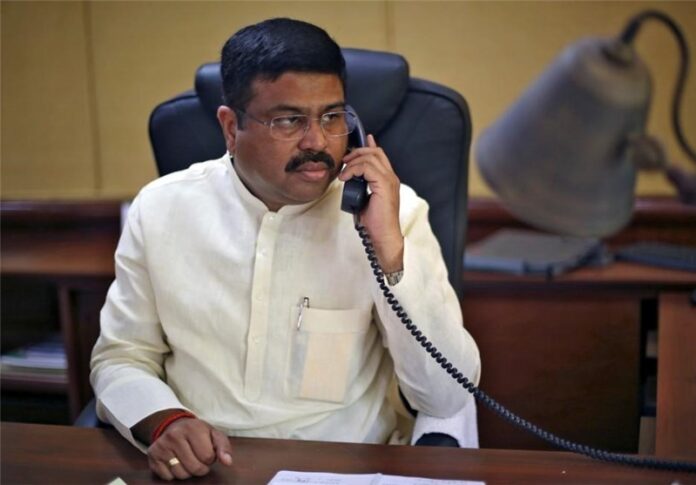
India Says to Pay Iran Oil Dues via European Banks

Iran and India have agreed to use European banks to process pending oil payments to Tehran, Dharmendra Pradhan told Reuters on Friday.

“There is an agreement between (India and Iran’s) central banks. European banks will be the clearing agent. They will be dealing with Iranian banks and we have to pay those European banks,” he said.

He added that the country’s finance ministry was dealing with the issue.

The remarks came after Indian government sources announced earlier that there had been discussions with Iranian officials on clearing the dues for oil imports from Iran.

Indian refineries should pay some $6.5 billion in outstanding oil dues that have been frozen in bank accounts as a result of sanctions against Iran.

Essar Oil has to pay Iran about $3.1 billion, Mangalore Refinery and Petrochemicals Ltd owes $2.8 billion, and Indian Oil Corp owes $581 million. HPCL-Mittal Energy Ltd (HMEL) has to pay $97 million and Hindustan Petroleum Corp owes $29 million.