Monday, December 29, 2025
Home Blog Page 4491

War Veteran Talks about Life after Being Wounded in Syria

It has been four months since he was wounded on January 2. Now when we ask him “what it means to be a wounded veteran,” he gives a deep and bitter answer after a short pause.

“I think a wounded veteran means a left behind; one who has a permanent regret, and is going to live and grow up with a permanent and big regret,” Abdollahi said, according to an interview by Tasnim, as translated by IFP.

“Years ago, I used to congratulate my wounded friends on the Wounded Veterans Day – whether the ones who were wounded during the Sacred Defence (8-year war imposed by Iraq) or those who were wounded to ensure the country’s security, and even the ones recently wounded in the fight against terrorism in Syria and Iraq. I used to call them, but now that as a wounded veteran I’m suffering a series of problems, my viewpoint has changed,” he said.

“On this occasion, if I was healthy enough, I would have been visiting wounded veterans all day long,” the Iranian veteran added.

According to official statistics, there are nearly 550,000 disabled veterans of the Iran-Iraq War living in Iran as of June 2014. Many have also been wounded during the advisory missions in Syria and Iraq in the ongoing campaign against terrorism.

Iran and China Discuss Cooperation on Fighting Corruption

Seraj is heading a high-ranking delegation to Beijing, attending the 9th Annual Conference and General Meeting of the International Association of the International Authorities (IAACA).

Cao, for his part, appreciated the mutual interactions in fostering cooperation in international arenas. He also praised Iran’s General Inspection Organization for its readiness to host the next annual meeting of the IAACA.

On Tuesday, Seraj and Chinese Minister of Supervision Huang Shuxian discussed the expansion of mutual cooperation in different areas.

Seraj and Huang underlined the need for the broadening of relations between the two countries to extradite convicts in financial corruption cases. “Fortunately, Iran and China share views on fighting corruption,” Seraj noted.

The Chinese minister, for his part, said that his country is ready to share its experience with Iran in the field of fighting financial corruption.

In late April, Iranian and Chinese officials in a meeting in Tehran underlined the necessity for serious action to fight against terrorism and dispatch more humanitarian aid to the Syrian people.

Leader Appoints New IRIB Chief

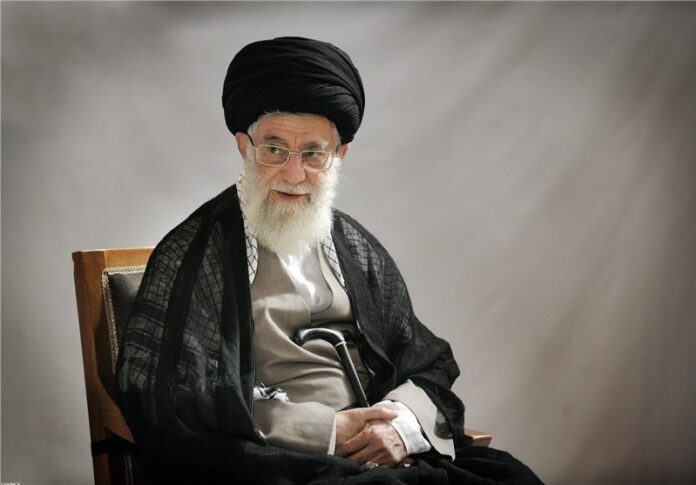
In the decree, Ayatollah Khamenei accepted the resignation of Mohammed Sarafraz, who has held the IRIB presidency since November 2014, and expressed gratitude to him for his “revolutionary efforts”.

The Leader further appointed Ali Asgari as the new IRIB head and urged him to pay attention in his term to planning, executing macropolicies, recruiting and training revolutionary and competent personnel and having an effective presence in cyberspace.

Ali Asgari had served as the IRIB’s technical deputy during the presidency of Ezzatollah Zarghami (2004-2014).

According to Iran’s Constitution, the IRIB chief is picked directly by the Leader for a five-year term.


IFP: This announcement puts an end to various speculations over who would replace Mohammed Sarafraz as head of the national broadcaster. For the first time since the Islamic Revolution, an IRIB chief has failed to complete their constitutionally mandated term, with Sarafraz’s resignation officially having been accepted on May 11.

Iraqis Horrified by Daesh Barbarism in Kirkuk

On Tuesday, the Daesh terrorists burned a family of five people in central al-Riyad vicinity in public, pouring white oil material on them.

An Iraqi security source said, “ISIS committed this crime on charges of leaving the land of caliphate.”

The Takfiri group has committed countless heinous crimes against innocent people in the past few years but the fresh heartless move by the foreign-backed terrorists has shocked the Iraqi nation.

Iraq has been gripped by a deadly militancy since Daesh captured areas in north and west of the country in the summer of 2014.

However, the Iraqi army and Popular Mobilization Forces as well as other volunteers have managed to retake some positions from the militants in the north and operations continue for the liberation of other areas.

UNIDO Ready to Promote Hamedan Leather Industry

He made the remarks in a speech to Hamedan Province Employment and Investment Working Group.
Babaei said that UNIDO had helped several industries in Iran receive educational support, including the leather industry.

The deadline for the implementation of the project is 3-5 years, and Hamedan is one of the seven provinces designated by UNIDO.

The people of Hamedan have a long history in the leather industry and 1,000 leather producers currently operate in the province, he said. At present, Hamedan is exporting leather to Turkey and Italy.

UNIDO mainly aims to help promote industrial development in developing countries, as well as those with transition economies.

No Government Can Decide on Another Country’s Assets: Rouhani

The US Supreme Court ruled on April 20 that Iranian assets frozen in a bank account, worth around $2 billion, should be turned over to American families of those killed in a 1983 bombing in Beirut and other attacks blamed on Iran. Tehran has denied any role in the attacks.

The money, which belongs to the Central Bank of Iran (CBI), had been blocked under US sanctions before the court ruling.

Speaking in a press conference in the southern Iranian city of Kerman on Wednesday May 11, President Rouhani slammed Washington’s move, reiterating that governments and central banks have immunity to such rulings.

“A domestic court cannot prosecute and issue a verdict against, or decide on the assets of, the government or central bank of another country,” the Iranian chief executive said.

He further referred to efforts to retrieve the assets, saying that a committee has been formed to follow up on the issue, and that the case will also be presented to the Judiciary to take necessary measures.

In similar remarks on Tuesday May 10, Rouhani had said that Iran would soon lodge a complaint against Washington with The Hague over the US court ruling.

“The government will never allow money that belongs to the Iranian nation to be so easily gobbled up by the Americans,” he said.

Rouhani pledged that Iran would “take this case to the International Court [of Justice] in the near future and will not spare any effort toward the restoration of the nation’s rights through legal, political and banking channels.”

Iranian Foreign Minister Mohammad Javad Zarif had earlier denounced the seizure of the frozen assets as “highway robbery,” vowing that the Islamic Republic will retrieve the sum anyway.

“It is a theft. Huge theft. It is highway robbery. And believe you me, we will get it back,” Zarif told The New Yorker magazine in an interview published on April 25.

Iranian Academic Highlights Role of Freedom in Rooting Out Corruption

“I agree with [senior MP and economist Ahmad] Tavakkoli that corruption, particularly economic corruption, is the most important danger and threat to the country,” Pazooki said in an interview with Fararu, astranslated by IFP.

“This is because corruption is the root cause of all unrest, inequality, cruelty, and injustice.”

“Based on the existing global experience and information, economic corruption in Iran has its roots in a lack of transparency. Corruption grows in a society without economic transparency, where there is no competition and everything is monopolized,” he said.

Independence and freedom were among the most basic slogans of the Iranian people in the 1979 Revolution, and freedom was considered an integral part of independence, Pazooki noted.

“I believe that if there is no economic freedom, society will definitely move towards corruption,” he added.

“Unfortunately, because of the short-sighted views held by opponents of democracy in Iran, whenever one talks about freedom, they think it means libertinism; however, the main objective of freedom and transparency is the free flow of information,” he stressed.

“In a society where information flows transparently, the costs of [information] exchange are reduced,” Pazooki asserted, stating that once such expenses go down, society becomes more economically stable and secure, paving the way for productive investments.

He also criticized the country’s economic indiscipline (including monetary, financial, and administrative indiscipline), and blamed it for ongoing corruption.

“When the system does not have discipline, it causes structural problems for the economy. [Such ill-disciplined] Laws and regulations can also lay the groundwork for the growth of corruption,” he added.

Asked about the need for a special body to root out corruption, Pazooki stressed that he is in favour of the formation of a special body to fight economic corruption with great authority.

However, he noted, the precondition for such a body is that it works independently of other institutes, and that no one interferes in its affairs.

“Freedom is the best means to counter corruption; that is, freedom of information should be so extensive that if anyone steals anything, public opinion crushes him or her. Making a connection between awareness, freedom, and transparency is actually the most important step in rooting out corruption.”

PGPIC to Re-open European Offices

Speaking at a local ceremony, he said that due to sanctions, Iran was not able to purchase the technical knowledge required for complementary industries.

In the sanctions era, Iran lost its position in the European market, but Tehran is committed to reviving it, Nejad-Salim added.

The Persian Gulf Petrochemical Industry Company (PGPIC) was established with the aim of implementing Article 44 of Iran’s Constitution, which calls for the privatization of major state-owned industries and sectors. This comes in the wake of the first phase of privatization in Iran’s petrochemical sector.

Smugglers in Afghanistan Use Catapult to Get Drugs over Iran’s Borders

Traffickers make use of any means to smuggle illegal substances into and out of Iran, finally transferring them to other countries, Jazini said, as reported by Entekhab and translated by IFP.

Now that Iran’s police have managed to block the land borders and maintain great control over the waterways, smugglers are resorting to means such as catapults to get their drugs into Iran, he noted.

“This has mostly happened around the Sistan and Baluchestan borders [in south-east Iran, bordering both Afghanistan and Pakistan],” Jazini noted, adding that the individuals who had retrieved the thrown bundles of drugs had been arrested and punished.

Iran and Germany Promote Cultural Cooperation

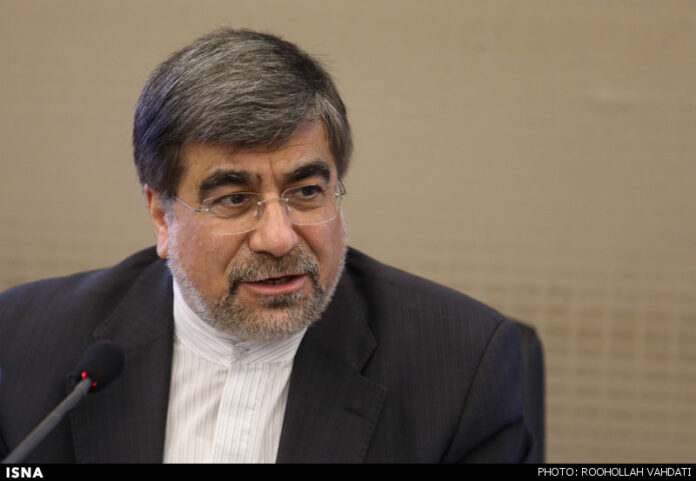
During their meeting, Jannati said that there are good grounds for cooperation between Tehran and Berlin in the fields of culture, arts, science and economics.

He urged the exchange of experience and signing cooperation documents between the two sides in the areas of language teaching, archeology, cultural heritage, cinema, theatre, and music, in order to boost all-out ties.

Iran is ready to teach German language in its schools, the Culture Minister said.

For his part, the German official hailed the expansion of cultural ties between Tehran and Berlin, and welcomed the signing of cooperation documents in the above-mentioned areas.