Saturday, April 4, 2026
Home Blog Page 4492

Baghdad Chaos Detrimental to Both Iran and Iraq’s National Interests: Analyst

Sabah Zangeneh
Sabah Zangeneh

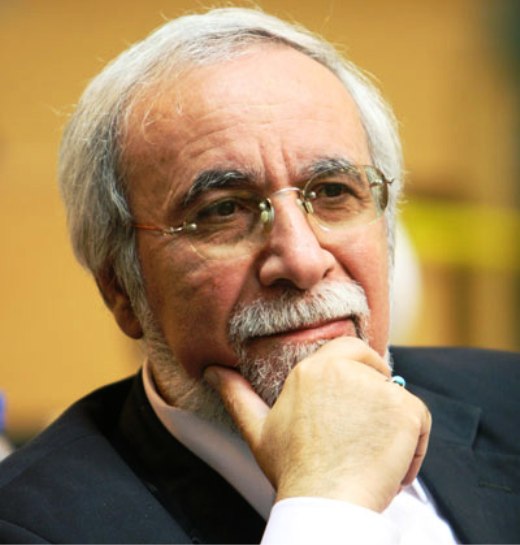
Sabbah Zanganeh, an expert in Middle Eastern affairs, stressed that Tehran should beware of its attitudes towards the ongoing tension in its neighbouring country, Iraq, particularly towards the recent turmoil caused by proponents of Muqtada al-Sadr, the prominent Iraqi figure.

What follows is the IFP’s translation of excerpts from Zanganeh’s interview with Fararu.

“Iran should stay neutral towards Muqtada al-Sadr, but must guard against tension without appearing to be supporting any group in particular,” Zanganeh said.

“Iran supports [the introduction of] reforms in Iraq, but these changes should take place through legal and official channels,” he went on to say.

Therefore, he added, “Chaos in Iraq is to the detriment of both Iraq and Iran’s national interests.”

Tehran Hosting Regional Chemical Weapons Convention Meeting

The regional meeting is jointly organized by the Iranian government and the Organization for the Prohibition of Chemical Weapons (OPCW), and is attended by 54 representatives from 25 Asian countries.

The meeting, which highlights Iran’s active role in the OPCW, will last until May 25 and focus on important issues related to the implementation of the CWC.

The CWC is an arms control treaty which outlaws the production, stockpiling, and use of chemical weapons and their precursors. The full name of the treaty is the Convention on the Prohibition of the Development, Production, Stockpiling and Use of Chemical Weapons and on their Destruction.

The OPCW, an intergovernmental organization based in The Hague, Netherlands, is the implementing body of the CWC. It has 192 member states working together to achieve a world free of chemical weapons.

Rezaei Urges Action over Saudi Behaviour

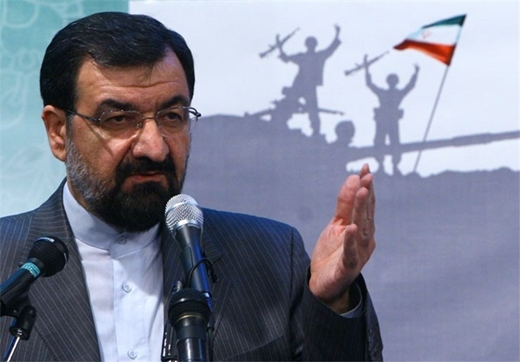
“Saudi officials are not going to change their conduct with the [current] restraint shown by Iran,” Rezaei said on Monday May 23, urging action against Riyadh.

“The Saudis opened a consulate in Iraq’s Erbil and deployed a number of terrorist groups to Iran to carry out bomb operations, all of whom were arrested (by the Iranian security forces),” Rezaei told reporters in the western city of Khorramabad.

He further called on the Foreign Ministry to release documents revealing connections between those groups and Saudi Arabia to let other countries know how Saudis are “maniacally disturbing the region’s calm and safe atmosphere and pursuing acts of terrorism.”

Relations between Iran and Saudi Arabia have been tense in recent months.

Tensions between the two Persian Gulf countries ran high mainly due to Riyadh’s execution of prominent Shiite cleric Sheikh Nimr al-Nimr, and a subsequent attack by outraged Iranian protesters on the Saudi embassy in Tehran, which resulted in the Arab country’s decision to sever its ties with the Islamic Republic.

On January 2, Saudi Arabia announced that it has executed Sheikh Nimr, among dozens of others. The execution ignited widespread international condemnation, from both political and religious figures.

The next day, furious demonstrators in the Iranian cities of Tehran and Mashhad stormed Saudi Arabia’s diplomatic buildings in protest at the execution of Sheikh Nimr.

Although Iranian officials criticized the embassy attack and police arrested dozens involved, Saudi Arabia cut off diplomatic relations with the Islamic Republic.

Leader Says Iranian Defiance behind US Enmity

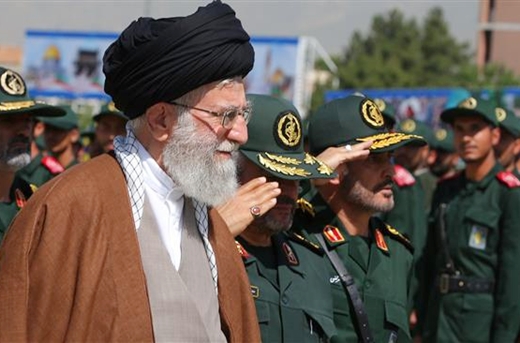
“The main cause of all this enmity and fabrication of pretexts is [Iran’s] defiance of Arrogance [a reference to the axis of US and its allies],” the Leader said, while addressing a commencement ceremony for graduates of the Imam Hossein Military Academy in Tehran on Monday.

Ayatollah Khamenei was referring to the US hostile stances against Iran’s nuclear program, missile power and human rights record.

“Were the Iranian nation ready to surrender, they [the arrogant powers] would have compromised over [Iran’s] missile power and nuclear energy, and would have made no mention of human rights,” said the Leader.

Regarding Iran’s missile program, Ayatollah Khamenei said, “Recently they have embarked on massive [media] campaign, but they must know that such a hue and cry will have no effect, and they cannot do anything.”

The Leader said the US officials have acknowledged that the Iranian nation refuses to submit to the bullying tactics of arrogant powers, due to its adherence to Islamic ideology.

Ayatollah Khamenei highlighted “steadfastness”, “defiance of the enemy” and “safeguarding revolutionary and Islamic identity” as the main pillars of strength of the Islamic establishment and the Iranian nation.

“Americans and other powers are extremely sad at this issue, but have no other option. That is why they made huge efforts in order to bring the country’s decision-making and decision-taking centres under their control, but they failed, and thanks to God they will [continue to] fail to do so.”

Ayatollah Khamenei said that the arrogant powers had resorted to every tool in an attempt to “bring the Islamic establishment to its knees and force it into submission” but that the Iranian people had refused to follow the arrogant powers, due to their Islamic beliefs.

Iran, Afghanistan, India Holding Trilateral Meeting Regarding Chabahar Port

Jaber Ansari-2

Here is IFP’s translation of a report by KhabarOnline on his remarks.


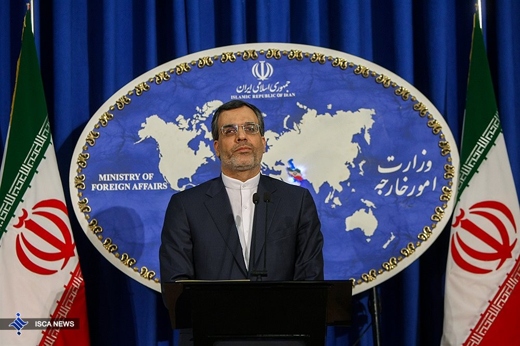
“During Modi’s visit, 14 cooperation agreements, particularly in economic fields, are to be signed between Iran and India. At the same time, the Afghan President is also here, and the trilateral meeting of Iran, Afghanistan, and India will be held on the issue of Chabahar Port,” Jaberi Ansari said in his weekly press conference held in Tehran on Monday, May 23.

These trips will have promising economic results for the country, he said, highlighting the positive impact of such visits on Iran’s development.

For more news and views on this story, see:

Chabahar Deal: Afghan President in Tehran

DM: Kidnapped Iranian Diplomats Alive in Israeli Prisons

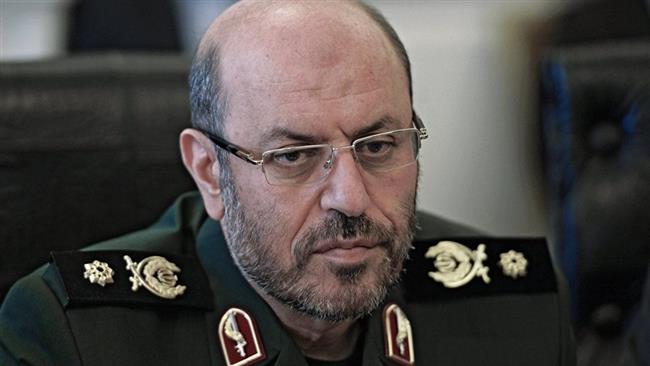
General Dehghan“We claim on the basis of evidence that they are alive and incarcerated by the Zionist [Israeli] regime,” General Dehqan said in an interview with Defa Press website.

He underlined that the Israelis are responsible for the health of the Iranian diplomats, adding that Tehran will also pursue their fate legally and politically.

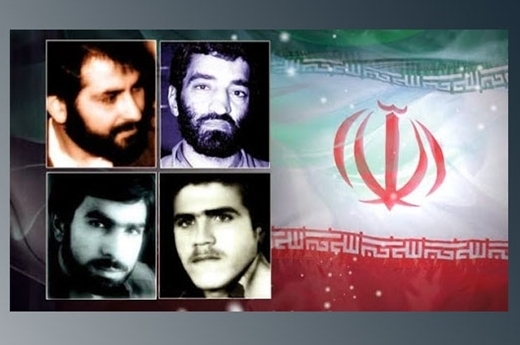
The then charge d’affaires of the Iranian Embassy in Beirut, Seyed Mohsen Mousavi, military attaché Ahmad Motevaselian, embassy technician Taghi Rastegar Moghadam and journalist of the Islamic Republic News Agency Kazzem Akhavan were kidnapped by the Lebanese mercenary army – also known as the Phalangists – at gunpoint in Northern Lebanon in 1982, and were later handed over to the Israeli army.

Israel has released contradictory reports on the issue. It alleged in a statement last year that the diplomats had never been surrendered to Israel. Elsewhere it claimed, in response to a request put forward by the Lebanese Hezbollah group, that the four were already dead.

In January 2009, the then Iranian foreign ministry spokesman said that Iran had received a report from Israel which said the kidnapped Iranian diplomats had not been transferred to Tel Aviv and laid the blame on the Lebanese mercenary army affiliated with Israel.

In reaction to the report, the spokesman said at the time that the report “will not relieve the Zionist regime of its responsibility” for the health and safe repatriation of the diplomats.

Iraqi War Veteran: Saddam Ordered Us to Kill All Iranians in Khorramshahr

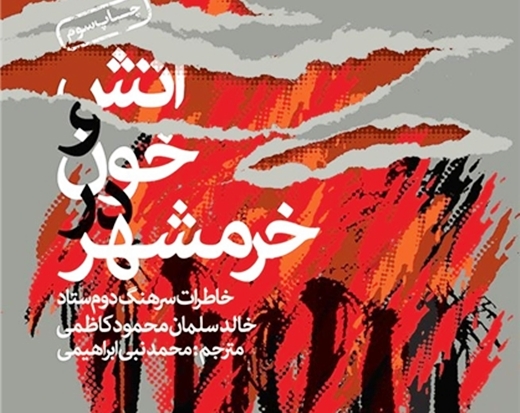
IFP has translated excerpts from his book Fire and Blood in Khorramshahr, his memories of the acts they committed against Iranian people, as reported by Fars.


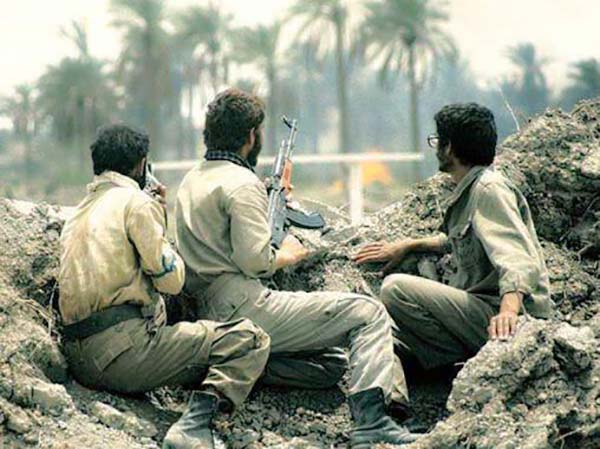
On September 22, 1980, we were ordered to move towards the Iranian border and enter their territory. It was written in the order, “Set fire to everything; kill everyone; there is no need for taking prisoners; destroy their houses; uproot the trees, and burn all the farms.” […]

A commander told me, “We were ordered to shell the city and not to wait for any further notice. Based on the orders we received, no one was to consider ethical or humanitarian issues. For example, we were not to be influenced by a child crying, a woman begging, or the presence of the elderly. According to the order, we had to attack all of them, and we were supposed to fully carry out these orders.” […]

“We were faced with an army of angels. Although we outnumbered them, we were terrified; we thought we could seize the city in one hour, but in fact, we witnessed the killing of many of our soldiers for a few metres of ground,” he said in his book.


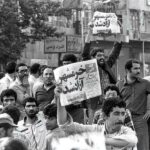
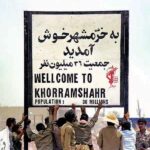
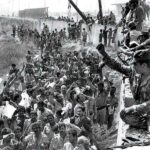
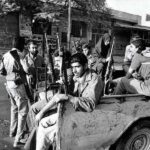
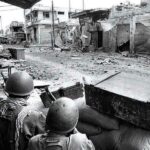
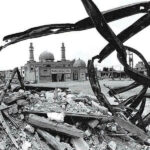
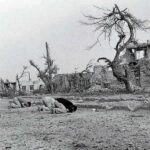
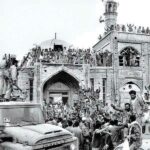
IFP: On May 24, 1982, Iranian people liberated Khorramshahr after 575 days. See photos of the liberation here and read more about today’s celebrations here.

Anniversary of Khorramshahr Liberation in Pictures

On May 23 this year, Iranian people mark the anniversary of the liberation of the strategic port city of Khorramshahr in south-western Iran, which was retaken after 575 days on 24 May 1982.

[The celebration is held every year on 2 Khordad in the Persian calendar, which either falls on 23 or 24 May in the Gregorian calendar, depending on the leap year]

To read more about the celebrations, click here.

Iran and India Sign 12 Cooperation Documents

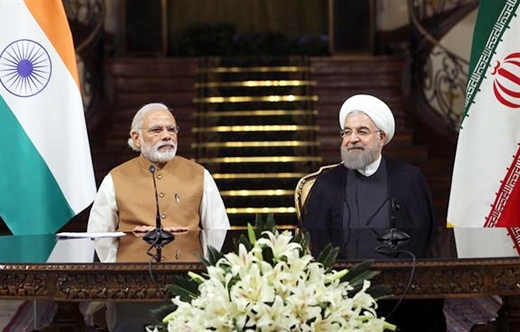
The signing ceremony was held in the presence of Iran’s President Hassan Rouhani and visiting Indian Prime Minister Narendra Modi.

Modi, heading a high-ranking delegation, arrived in Tehran on Sunday and was officially welcomed by President Rouhani on Monday morning.

Also, Afghan President Ashraf Ghani arrived in the Iranian capital on Monday morning to sign a trilateral [Iran, Afghanistan and India] agreement regarding the Chabahar port.

Rouhani said that good relations between Iran and India can benefit both nations and the entire region. He made the remarks at a joint news conference with Modi.

“Today, the two sides are determined to enhance bilateral relations from merely trade ties into comprehensive economic ones,” said Rouhani.

Our Blindness towards Iran

In a travel piece written for Paris news magazine L’Obs, Jean-Claude Guillebaud shares his reflections on his recent visits to Iran, where he was shocked at the vast gulf between the media representation of the country and the reality which he found. His viewpoint, which speculates on the reasons for this, was covered by Mehr [in Farsi] and translated from the original French by IFP.


A combination of circumstances allowed me to cross paths with Iran for the second time on my one-year trip from April 2015-April 2016. Again, along with thirty of my compatriots, I felt the same shock. The word shock, though, is an understatement. Astonishment would be better.

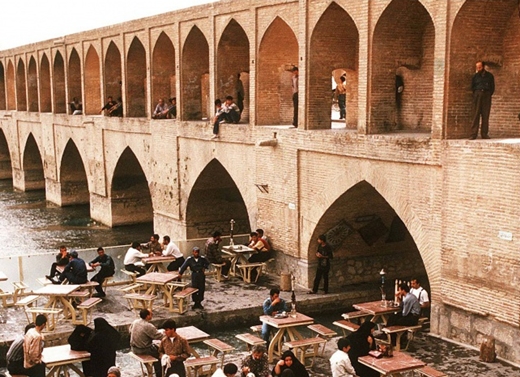
The group I accompanied was frankly and deliberately secular. Nobody had the slightest hint of complacency or even indulgence for the Mullahs of the Islamic Republic, who have been in power for about thirty-seven years.  As the kilometres rolled by, however, from Tehran to Shiraz, passing through Kashan, Abyaneh, Isfahan, Nain, and Yazd Ardakan – our amazement grew more intense.

All travellers are familiar with that gap between an imagined country and a discovered country. In the case of Iran, the difference is stunning. The number of ways in which this country is misrepresented in the media could make up a book. While a repeated refrain evokes Iran as a country locked in archaism and dictatorship, other nations like Saudi Arabia are far less condemned, despite being suffocated by misogyny, and keeping women under veils and in ignorance.

Despite international sanctions and the embargo that Iran has been suffering from for a long time, this country appears to the visitors as a great one (nearly three times the area of France), sheltering 80 million inhabitants and endowed with some of the best-educated youth of the Middle East. Civil society has learned to be cunning in its interactions with the regime – one might say it has modernized all on its own. Besides, women have never been so numerous in universities and in several professions such as medicine, law, social work, and teaching. Along the way, French members of the group marvelled at the clean modernity of the cities that we passed through (Isfahan has 1.5 million inhabitants and Shiraz a little more), and at the almost European standards of living, as well as the literacy rate.

All this is added, of course, to a courtesy and hospitability which has few rivals. Ancient Persia has left its mark on the cultural refinement of a country where even taxi drivers recite poems by Hafez, Sa’adi or Omar Khayyam. Let’s add to all this a freedom of speech (sound different?) that permits many to proclaim their mistrust towards the regime right in front of us, in a loud, clear voice. This happened to us, for example, in a Shirazi restaurant where we were invited to join a birthday party, and where conversations blazed. Political fearlessness and communal songs made this Franco-Persian party last even longer! The gap between the image of Iran in political media and its Persian reality is staggering, and deserves to be questioned.

So, where does this blindness come from?

Is there still a kind of unacknowledged remnant of the period when, out of hostility to Iran (like the Americans), we supported Saddam Hussein’s Iraq in the dreadful war that killed 750,000 from 1980-88? Is it due to the secular horror that this 1979 religious revolution hasalways inspired in the French?  Is there a new explanation? Those in power on the left in France have chosen to be a friend – and a grateful customer – of Saudi Arabia, where people are publically beheaded and the official religion is a Wahhabi Islam which is an ideological “black box” of terrorism.

Despite all of this, however, it is clear that Iranians remain very Francophile. At the peak of the tourist season (I can see twice as many tourist groups and air-conditioned cars than last year), the French people are the most numerous, followed by the Germans and Italians. Paradoxically Iran, which has been denigrated for so long, is now becoming a trendy destination for Europeans. Now, they are waiting for the Americans! Fifty 5-star hotels are planned to be built in the coming year! This is a new “invasion,” carrying a different threat for this land of poets…