Wednesday, December 31, 2025
Home Blog Page 4468

Larijani Elected Iran’s New Parliament Speaker

Larijani, a Conservative, won the post on Sunday with 173 votes in a race against Mohammad Reza Aref, who had been fielded by the Reformist camp and secured only 103 votes.

Independent members were apparently crucial in electing Larijani, because no single party holds an overall majority in the new Majlis.

He was also the speaker of the previous Parliament, which was dominated by Conservatives.

The vote served as the bellwether for the 290-member chamber’s inclinations, as several lawmakers from the Reformist camp broke ranks to vote against the head of their own List of Hope.

The election is the second victory for conservatives in the past week, after the Assembly of Experts – a body tasked with appointing or dismissing Iran’s Leader – voted Ayatollah Ahmad Jannati as its new chairman.

A vote for a permanent speaker is due to be held in the next few days, after the full house approves the credentials of individual MPs, as required by Iran’s constitution.

The Fars news agency quoted Reformist MP Mohammad Ali Vakili as saying that Aref will not run again for the post, meaning Larijani is almost certain to secure the position.

On Saturday, President Hassan Rouhani praised Larijani for supporting Iran’s nuclear pact and called for greater “interaction” between Parliament and the government to “solve the problems and crises of the country.”

The 290-member Parliament was inaugurated Saturday in the presence of 281 members, with three seats vacant after votes for two MPs were nullified by Iran’s constitutional oversight body, the Guardian Council, and a third member died in a car accident.

The new parliament includes a record 17 women, an achievement Rouhani said made him “very happy.”

In a message to the opening, Leader of the Islamic Revolution, Ayatollah Seyyed Ali Khamenei, hailed the big turnout of the people in the February elections as the “re-alliance with the Islamic Republic.”

The Leader called on the elected legislators to be vigilant in the face of regional and international challenges.

“The turbulent state of the region and the world and the international adventurism of oppressors and their vassals have confronted Islamic Iran with conditions more complicated than before,” said the message, read to a packed parliament chamber.

“It is your revolutionary and legal duty to make the Parliament a stronghold against the schemes, charms and impudently excessive demands of the arrogant powers,” the Leader said.

Zarif Calls for ‘Tangible’ European Steps to Facilitate Banking Transactions

Speaking in a Saturday May 28 meeting with Lithuanian Foreign Minister Linas Linkevicius in Tehran, Zarif highlighted the banking problems hampering the progress of Iran’s economic ties with foreign countries after the nuclear deal with the Group 5+1 (Russia, China, the US, Britain, France and Germany), known as the Joint Comprehensive Plan of Action (JCPOA).

“We expect the European sides to take tangible and concrete steps toward facilitating (Iran’s) banking ties, so that we will be able to see its results in the country’s economy,” he said.

During the meeting, the Iranian and Lithuanian top diplomats also exchanged views about the latest efforts to promote relations between the two countries in various areas, economics in particular.

While the Joint Comprehensive Plan of Action (JCPOA), a 159-page nuclear agreement between Iran and the Group 5+1 (Russia, China, the US, Britain, France and Germany) came into force in January, some Iranian officials have complained about the US failure to fully implement the accord.

Back in March, Leader of the Islamic Revolution Ayatollah Seyyed Ali Khamenei said Americans have yet to fulfil what they were supposed to do as per the nuclear deal.

Iran still has problems in its banking transactions or in restoring its frozen assets, because Western countries and those involved in such processes are afraid of Americans, the Leader said at the time, criticizing the US for its moves to prevent Iran from taking advantage of the sanctions removal.

Mercedes Benz Showcase in Tehran

On the anniversary of the establishment of the Benz Museum, a huge number of classic and brand new Mercedes Benz cars gathered for a ceremony held on Friday, May 27, in the karting arena of Azadi Stadium in Tehran, in cooperation with the Mercedes Club and the Benz representative in Iran.

Iran and Japan to Cooperate on Energy Efficiency

According to Majid Mohammadi Hosseinabadi, deputy for international affairs at the IIES, this study centre will prepare Iran’s energy efficiency management plan in cooperation with the JCCME.

Speaking to Shana, Hosseinabadi said that IIES and JCCME will ink a cooperation document in the near future to carry out a joint study on energy efficiency management in Iran.

IIES has already signed a Memorandum of Understanding with JCCME on the transfer of technology and experience to Iran in the field of energy efficiency.

According to the MoU inked between IIES and JCCME, the Japanese side will finance the project.

Tehran Symphony Orchestra’s New Conductor Gives First Performance

Some musicians, including violin virtuosos Arsalan Kamkar and Bardia Kiaras, and drummer Milad Omranlu, who separated from the Tehran Symphony Orchestra under Rahbari, accompanied the orchestra at the performance.

Pieces by Russian composers Sergei Vasilievich Rachmaninoff and Alexander Borodin, and German composer Ludwig van Beethoven highlighted the repertoire of the orchestra in the first part of its performance.

It also performed pieces by Iranian composers Hossein Dehlavi and Heshmat Sanjari.

“I selected maestro Heshmat Sanjari’s Circle Dance for this concert, because this great musician made very substantial contributions to the progress of the orchestra,” Rohani said.

Rohani got a surprise when the orchestra celebrated his birthday by performing “Happy Birthday to You” when he had left the stage for an intermission.

“I will never forget this night,” said Rohani with a voice full of emotion, after returning to the stage.

“I am happy that this celebration was held for me in my homeland.”

Rohani, who has led some prestigious orchestras, including London’s Royal Philharmonic Orchestra, was appointed to the orchestra on May 8.

He has also been the guest conductor for Minnesota Orchestra, Colorado Symphony Orchestra, San Diego Symphony and the American Youth Philharmonic Orchestras.

Iranian ‘Macbeth’ Awarded by Russia Association of Theatre Critics

The 19th International Festival of Children and Young Choirs in Saint Petersburg, Russia, hosted a number of plays from France, Denmark, Poland, Estonia, the US, Japan, Bulgaria, Britain, Russia and Georgia.

Reza Servati’s work has so far won the Best Director Award and the Best Costume and Stage Awards at the 12th International University Theatre Festival.

The play is an adaptation of the Shakespearean tragedy, which won the Special Jury Award from the International Section of the Fajr International Theatre Festival in 2010.

2016 Tehran Auction Breaks Sales Record

Last night, Azadi Hotel hosted the 5th edition of the Tehran Auction, where the best of Iranian art ranging from established and emerging artists was presented to art collectors and the global audience.

50 out of 80 presented artworks were ‘Untitled’, which, considering the fact that modern artworks are usually untitled, becomes meaningful only when compared to the 18 classical works, all with rather lengthy titles.

40 works, which made 50% of the auction, were by non-living artists.

One artwork failed to be sold, and two works sold below their low estimates, while 31 works were sold at the estimated prices and 46 above them, which is considered a major success for the Tehran Auction.

Tehran Auction 2016-1

The highest-valued pieces at the 5th Tehran Auction included: two untitled artworks by poet and painter Sohrab Sepehri (1928-1980) bought at $985,200 and $509,020, a work by Manouchehr Yektai (b. 1922) at $482,748, artwork by Mahmoud Farshchian (b. 1929) which went for $410,500, ‘Blue Dance’ by Mohammad Ehsai (b. 1939) and ‘SAT+HE+SAT’ by Hossein Zendehroudi (b. 1937), both of which sold at $328,400.

The total proceeds of Tehran Auction 2016 stood at $8,328,880 which broke last year’s record of $6,909,536.

The first of its kind in Iran, Tehran Auction was launched in 2012 as an independent and private initiative to support the domestic art market as a key basis for the international market.

The First Cyber Shots of a New Cyber War?

After a cyber-attack on an Iranian official website, allegedly launched by a Saudi hacking team, Iranian cyber activists hacked a couple of Saudi websites in response. The move was followed by counter-attacks, which is now raising the question whether the two countries are involved in an outright cyber-war.

Here’s IFP’s coverage of various media reports on the ongoing tension between Tehran and Riyadh in cyberspace.


According to a report by Al Monitor, numerous Iranian media outlets announced on May 25 that the website of The Statistical Centre of Iran was hacked and temporarily put out of use.

Later on, the portals of Iranian Organization for Registration of Deeds & Properties, the Post Company, and Ahvaz University of Shahid Chamran were also reportedly hacked by unknown groups of hackers. The hackers’ signatures on these websites were “Mafia Hacking Team” and “Da3s Hacker”, TechRasa reported.

News agencies wrote that the hackers were “outside of Iran” but little else was known about them. On May 28, Mizan quoted Iranian Communications Minister Mahmoud Vaezi as saying that the IP of hackers who infiltrated Iran’s government websites was in Europe.

However, many websites speculated that either ISIS or Saudi Arabia had conducted the attack. The low-level attack was followed by two attacks, on Saudi Arabian statistical websites and the portal of King Abdulaziz University on May 26. Tasnim quoted a statement by the Iranian hackers as published on the hacked websites, “Iranian Hackers were here. Hacked by Shahin Sh. Iran Security Team.”

In an article headlined “The Announcement of a Cyber-War by Saudi Arabia against Iran?” Tabnak wrote, “While many websites assumed this website was hacked by [ISIS] … it appears it was a Saudi hacker group.”

Al Monitor quoted Tabnak as rejecting the idea of ISIS involvement because the hackers referred to themselves as “Da3s,” as in “Daesh,” an acronym the terrorist group does not use for itself. A Twitter account associated with Da3s hackers followed a few well-known Saudi accounts, and Tabnak concluded that a Saudi group had conducted the attack with government backing.

The DA3S, which has officially claimed responsibility for the cyber-attacks, wrote on the main page of the hacked websites that it is not linked with the ISIS terrorists group, aka Daesh, and is only “one Sunni Muslim”, Trend quoted Iranian media as saying.

As DA3S sounds like Daesh, it could be mixed up with the Arabic name of the ISIS terrorist group.

In any case, the screenshots provided of the hacked website appear to show that the hackers either wanted Iran to know that they were Saudi or that they intended to make it appear that they were.

An article in Iran newspaper, perhaps in an attempt to downplay the speculation and tensions, reported that a source in the Statistical Centre of Iran denied that its website was hacked at all. The official called the problems with the site “a natural issue with no relation to [ISIS] or other individuals.” The official added, “We should not open this small issue wide enough to create rumours across the country.” The official also urged Iranians to not fan the flames of conjecture.

Iran’s Supreme Council of Cyberspace also announced that there was no threat to citizens’ information on the government website.

The Council announced that the hackers used fake names for propaganda. The Secretary of the Council stated that these hacks were no surprise, happening everywhere around the world, as even the SWIFT network was attacked recently.

“As the result of the recent hacking of government websites, we can assure you that there are no problems whatsoever regarding citizens’ information,” stated Abolhassan Firouzabadi, Secretary of the Supreme Council of Cyberspace.

Tasnim reported on May 26 that two Saudi statistical websites had been hacked just one day after Iran’s statistics centre was hacked. According to the article, no one had taken responsibility for the hacking, but some social media users speculated that the attacks on the Saudi statistical websites were in revenge for the hacking of Iranian statistical websites.

In a special May 25 report headlined “Saudi Arabia’s Cyber-War against Iran, What Is Iran’s Cyber Army’s Response?” Tasnim wrote that the hacker group Da3s also put an image of former Iraqi President Saddam Hussein on Iran’s statistical website, concluding that the hackers therefore were likely linked to Ba’athists or Takfiri [extremist] groups.

Tasnim reported that General Gholam-Reza Jalali, who heads Iran’s Civil Defence Organization [a military unit in charge of combating sabotage], had warned that Saudi Arabia intended to conduct cyber-attacks against Iran, though few paid attention to his warnings. Jalali said cyber-attacks would be the prime threat to Iran’s security this year.

Tasnim wrote that the attack on Iran’s statistical centre can be considered the “first bullet in the beginning of a cyber-war.”

Iran has previously been the victim of cyber-attacks. The United States was behind an attack on Iran’s nuclear facility in Natanz, using a computer worm called Stuxnet, unique in its ability to cause damage.


Iranian Machine for Treatment of Malignant Tumours Completing Final Tests

Here is IFP’s translation of IRNA’s May 26 interview with Nejatbakhsh, the chairperson of Behyar San’at Sepahan knowledge-based company:


“The company’s experts started designing the machine about three years ago, and finally finished building it, along with its software application and accessories, almost two months ago,” Nejatbakhsh said.

“The machine was designed and manufactured by Iranian experts at the knowledge-based company, and is totally indigenous.”

“The water phantom device, and other complementary radiotherapy machines, have also been built by Iranian specialists working inside the country,” Nejatbakhsh said.

He further noted that developing such advanced technology will help the country save foreign exchange currency, as well as providing better patient services.

“The production licences must be obtained from two bodies, the Atomic Energy Organization of Iran (AEOI) and the Health Ministry’s Medical Equipment Department,” he said, adding that the process is in its final stages.

Nejatbakhsh referred to the machine as one of the major plans of the office of the President’s Deputy for Science and Technology, which will position Iran as one of the five manufacturers of this advanced technology globally, once released.

“Currently, the US, Britain, Poland, and China produce the machine, and Iran […] will become the fifth international producer of the linear accelerator (LINAC),” he added.

“We are very hopeful that we can be successful in the export of these machines, thanks to the support provided by the President’s Deputy of Science and Technology, and the Health Ministry.”

General Rejects Slowdown in Iran’s Missile Tests

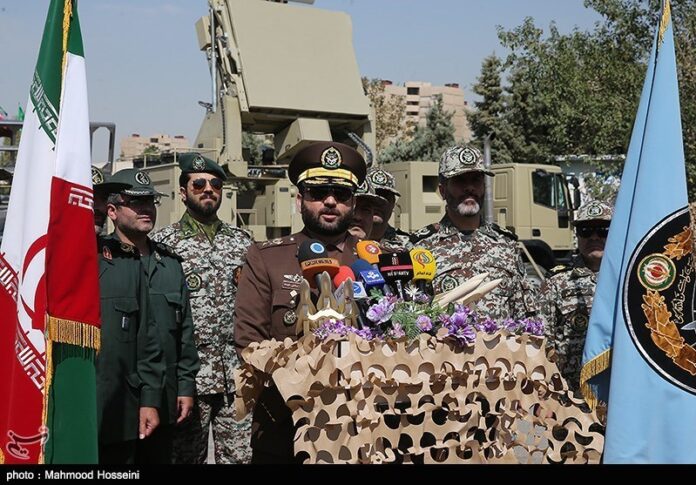
Speaking to Tasnim, Deputy Chief of Staff of the Iranian Armed Forces Major General Mostafa Izadi made it clear that Tehran will never accept any restriction on its defensive progress.

Iran’s test of missiles has nothing to do with the Joint Comprehensive Plan of Action (JCPOA), the nuclear agreement between Iran and the Group 5+1 (Russia, China, the US, Britain, France and Germany), he added.

Iran has repeatedly announced that test of missiles is an issue related to the defence of its territorial integrity and that none of its missiles are designed to carry nuclear weapons.

Iran has also frequently underscored that its military power poses no threat to other countries and that the Islamic Republic’s defence doctrine is entirely based on deterrence.