
The agreement was made at a meeting attended by Masoud Karbasian, the head of IRICA, Ebrahim Pourfaraj, the head of the Iranian Tour Operators Association, and Vali Teymouri, director of the Monitoring and Assessment Office at Iran’s Cultural Heritage, Handicraft and Tourism Organization. Jamshid Hamzezadeh, president of Iran Hoteliers’ Society, also attended the meeting that discussed the tourism industry’s issues with regard to customs duties, ISNA reported.
“Based on the agreement, hoteliers and other parties that import hotel equipment will present a bank guarantee instead of paying an “exorbitant customs fee” until moderate tariffs are defined and agreed upon by relevant bodies,” he said.
Referring to the agreement as “a dramatic change and a positive measure” by ICHHTO in support of the county’s hospitality industry, Hamzezadeh said the temporary measure will help revise import tariffs by giving everyone breathing room to discuss the matter.
As agreed at the meeting, a list of imported hotel equipment and their new tariffs will be prepared by experts. The plan will be then submitted to the Ministry of Economic Affairs and Finance as well as the Industries, Mining and Trade Ministry for approval before being presented to the Cabinet for final approval.
“If everything goes well, hoteliers will hopefully benefit from tax exemptions, too,” said Hamzezadeh.
Categorized as luxury items, hotel equipment is taxed at the highest possible rate, which has impacted the industry and contributed to rising room rates. Many hotels, which cannot afford the high customs fees, have resorted to purchasing substandard products, leading to a drastic drop in their quality of services.
According to Hamzezadeh, the approval of the scheme will solve a major obstacle facing the hotel industry as many hotels had been unable to standardize their services in recent years due to high taxes. Aging four- and five-star hotels are also interested in upgrading their equipment and the new scheme, if approved, will provide them that opportunity.
The society has repeatedly called on the Majlis [Parliament] to remove the value-added tax from rooms and grant hotels permanent exemption from income tax.
Customs Incentive to Support Hotel Industry
S Korea to Up Iran’s Ultra-Light Crude Oil Imports
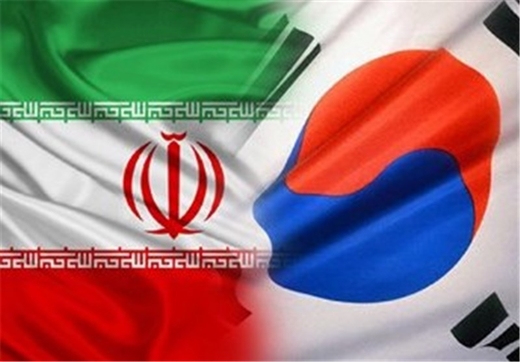
According to a report carried by Reuters on Friday June 10, traders believe that the expected June shipments from Iran of at least 6m barrels, or 200,000 barrels a day, would be a record level.
Two South Korean buyers, refiners SK Energy and Hanwha Total Petrochemical Co, are set to lift at least 6m barrels of Iranian South Pars condensate in June, up from about 3-4m barrels in April and May, two sources with knowledge of the matter said.
A Hanwha spokesman said the refiner planned to import about 2m barrels of Iranian condensate in June, as it was cheaper than oil from Qatar and the company wanted to diversify its sources of supply. SK Energy officials declined to comment.
The report added that Iranian condensate imports could witness a further rise, if Iran clinches a deal with Hyundai Chemical to supply the company’s new splitter. Talks between the National Iranian Oil Company (NIOC) and Hyundai Chemical on a term supply deal are underway.
Iran’s crude exports are now close to pre-sanctions levels of around 2.5m barrels per day.
No More Paper Tickets for Museums?
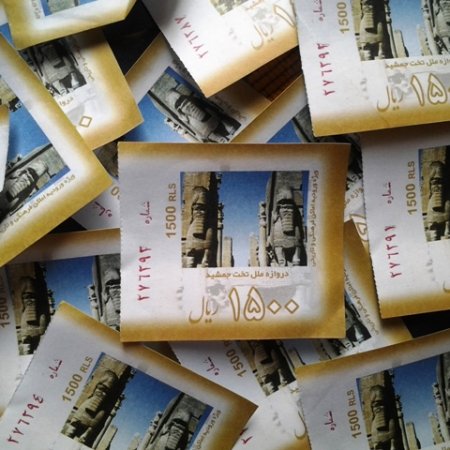
The plan, which has long been on ICHHTO’s agenda, has so far been implemented in a few museums in Tehran. Mohammad Reza Kargar, the head of museums at ICHHTO, told Mehr that implementing the plan across the country will take time, but no new tickets will be printed until the old ones are sold out.
“A limited number of tickets will be printed in Tehran to be used in case old ones run out or e-tickets face technical problems,” he said.
This is while Tehran’s palace complexes, such as Niavaran and Sa’dabad, which were supposed to implement the e-ticket pilot scheme, still do not offer internet reservation services, and visitors have to visit the palace complex in person to receive an A4 printout of the e-ticket at the gate, which defeats the purpose of the scheme.
Education and Economics Delaying Marriage
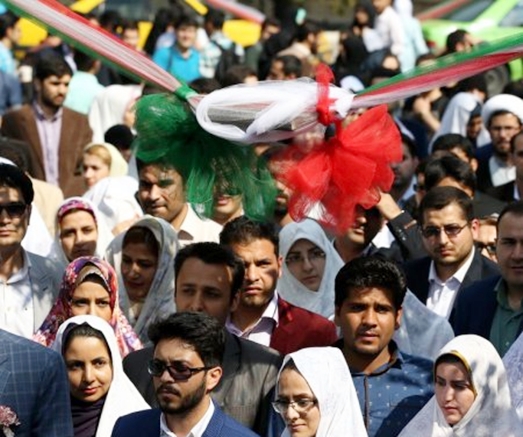
On the sidelines of the National Population Day ceremony last month, Seyed Alireza Avaee, Deputy Interior Minister and head of the NOCR, said, “In the past few years, the median age of first marriage has risen significantly in both men and women; however the increase has been dramatic in women.” Stating that the record for adults who have never been married is also high, he pointed out that currently, there are 11 million singles in the country and “many of them have crossed the marriage median age,” the Persian-language weekly Tejarat-e-Farda reported.
He stressed the need for the development of programs for encouraging and supporting healthy marriages and said “economic hardship isn’t the only culprit” for the problem. Cultural issues are also at play.
According to the latest United Nations study, since the year 1980 the marriage average age has increased by 6 years globally. The main reason cited for this increase is that people spend more time on higher education and achieving better living standards, therefore postpone getting married.
Non-Economic Reasons
In an interview with Tejarat-e-Farda, sociologist Afsar Afshar-Naderi said tough economic conditions are said to be the main reason for delayed marriages, but in reality they are not. “So far, several measures have been taken by the government to encourage the youth to marry young. Unfortunately, many of them are simply hopeless, if not harmful.”
“In the past, wedding ceremonies and traditions were beautiful dreams for every girl and boy. Holding mass wedding ceremonies for a large number of university students has ruined that dream and the nuptials,” she said.
“It is the worst measure that could be undertaken in order to make marriage attractive to youth.” To facilitate marriage for Iranian youth, “we shouldn’t simplify the customs which can devalue marriage. Instead we need to empower young people, and simplify their lives by creating jobs,” for the army of unemployed.
Although this is not the only reason for lack of willingness to marry, it is definitely one of the reasons that have belittled marriage in the minds of young people. The other is the changes to the family law. In July 2007, during the presidency of Mahmoud Ahmadinejad (2005-2013), the ‘Family Protection Bill’ was devised and approved by the government and sent to parliament for approval. The bill became law soon after. According to the Family Protection Law (many believe the name is a misnomer), men don’t need their wife’s permission to take a second wife. They should just provide proof that they can afford a second wife.
“When we denigrate marriage by taking such wrong actions, how can we expect the youth to value it?” she asked.
Also, many young students, both girls and boys, leave home to attend university in other cities and as a result become independent, and less inclined to enter matrimony.
Divorce Rate Up
The marriage rate has declined in the last 3½ years — down 1.9% in 2012, 5.1% in 2013, 6.7% in 2014 and 7.2% in the first months of 2015. While the number of marriages ranged between 870,000 and 890,000 from 2007 to 2011, it decreased to 820,000 in 2012 and 770,000 in 2013.
On the other hand, divorce rates have jumped by 11.5% as 69,182 cases were registered, the National Organization for Civil Registration said last September.
Marriage now is not the first priority on the list for youngsters and comes fourth after employment, education, and home ownership as per a survey conducted in 2012. “The younger generation is more concerned with improving their financial status rather than creating a home and family,” according to Shahla Kazemipour, sociologist and faculty member of Tehran University.
The average life of Iranian marriages has reduced to three years. Only 11% of Iranians have the chance to celebrate their 20th wedding anniversary. About 6% of all divorces occur during the first year of marriage.
Unnecessary Delays
While unnecessary delays to marriage should be avoided, according to a recent study conducted by the US Marriage Health Research Center, postponing marriage to have a higher education level and better job prospects is associated with having a more successful and long-lasting marriage.
Couples who are economically secure are less likely to commit domestic violence and they can provide a better life for their children. The study showed that for the university-educated, delaying marriage has been a success, but not for others. There is also a significant relationship between divorce and the level of education. Almost 70% of male divorcees and 65% of female divorcees in Iran don’t have university education.
Married couples are considerably less likely to engage in risky behavior, such as substance abuse. They are also considerably less likely to develop severe mental illnesses, and different kinds of health complications including cardiovascular diseases.
Iranian Researchers to Build DBS Electrode to Treat Addiction
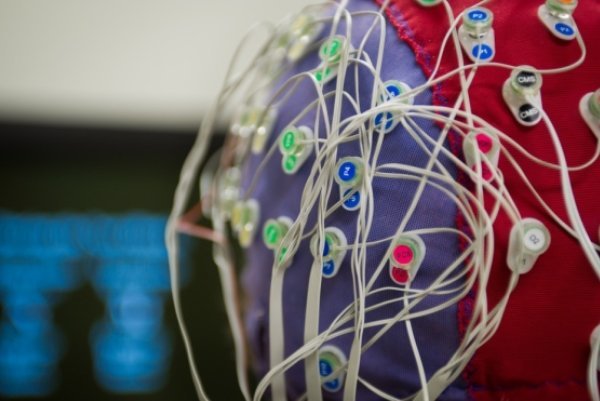
Mohammad Taghi Joghataei, the project manager, told Mehr that his team is working on a procedure to study a variety of disabling neurological symptoms—most commonly the debilitating symptoms of Parkinson’s disease (PD), as well as addiction, in which the base of the brain is altered.
He noted that the DBS project has three phases including tests on mice, monkeys and finally humans, saying “In the first phase, a team of engineers at the School of Electrical and Computer Engineering of the University of Tehran began building electrodes that cause brain stimulation. Currently these electrodes, which are used in brain surgery, have been tested on small animals such as mice and bigger animals such as monkeys.”
Joghataei went on to add that the project was launched two years ago and the third phase includes testing the electrodes on humans. “Last year, the experiment on mice was conducted successfully. We began testing on monkeys in March, and if the results are reported as successful, we will conclude that the test will also work on humans,” he explained. He maintained that the electrode used on the monkeys is of the same kind that will be tested on humans.
“Since the costs of building and planting electrodes in the brain is very high, we have been unable to use them in brain surgery in Iran, but if the project achieves good results, we can stop the import of electrodes from abroad,” he said.
The DBS project is currently being conducted by researchers from the School of Electrical and Computer Engineering at the University of Tehran and Iran University of Medical Sciences, Hazrat Rasoul Medical Complex.
Experts Urge Iran to Supply Market Heavy Crude Demand

The article, written by Masoud Hashemian, Ali Asghar Arshi and Zahra Sattari Nasab, was first released in the Academic-Research Journal of Exploration & Production of Oil & Gas.
The experts referred to the removal of limitations imposed on Iran during the sanctions era and called for the implementation of Resistance Economy outlined by the Leader in order to prevent effects of oil price instability on the Iranian economy.
The article pointed to Russia, Saudi Arabia, UAE and Kuwait as being incapable of supplying the market with extra heavy crude oil, and urged the Islamic Republic to use the opportunity.
Supplying China, India, Japan and Europe with extra heavy crude oil with gravities of less than 28°API can be used by Iran in order to seize these countries’ markets, the article added. The Experts urged the use of light crude oil and gas condensates for domestic production of oil products.
Heavy Grade is Iran’s main export grade, which must compete with Latin America, Iraq and Saudi Arabia—all of whom supply a similar grade. Iran is using a calculative approach towards increasing its share and is looking to consolidate and increase exports to its existing Asian partners such as China, South Korea, and India.
Demand from Europe has been a little slow to pick up due to ship insurance and banking-related issues. Nevertheless, the first shipment to Europe landed in southern Spain on 6 March 2016. Three more tankers – one bound for Romania, another to France and a third to the Mediterranean – are expected to reach their destinations soon.
Former clients of Iran are the ones who are likely to return as buyers. Italy, Spain and Greece were the top EU importers in 2011.
The mid-March meeting between OPEC, Russia and other major producers offers a window of opportunity for Iran to increase production gradually, since the major nations have agreed to a production freeze. On top of that, Russia is planning to offer a different deal to Iran, which will allow it to ramp up its production to pre-sanction levels.
Qeshm Geopark to Become Tourist Destination

Hamid Reza Mohsenpour made the announcement while talking to reporters on Saturday June 11. Recorded as the only Geopark in the Middle East, the Qeshm Geopark has capacities which will turn it into an Iranian tourism brand, the official said.
The 7th International UNESCO Conference on Global Geoparks, which is to be held in Britain in September, 2016, will discuss the issue of Qeshm Island Geopark, the official said.
Two inspectors from the Global Geoparks Network will travel to Iran about two months; before the Conference to compile a final review of the situation in this southern Iranian island. After discussion at the UNESCO meeting, the green card will be awarded to Qeshm; Mohsenpour noted.
Located in the strategic region of the Persian Gulf in south of Iran, Qeshm Island Geopark holds a special position.
Iran’s Private Sector Steel Production Rising despite Global Decline
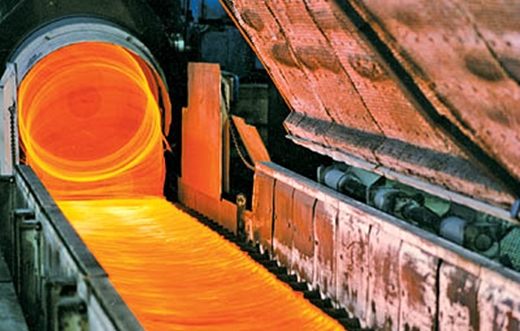
Based on a report by the Society of Iran Steel Producers, the performance of private sector steel industries rose by 14.5% during the first month of the current Iranian year (started March 20) compared to the same period last year. This is despite the fact that the world steel producers are suffering from a slump due to poor market demands.
Iranian private sector steel units produced a total of 491,900 tons during the period.
Managing Director of Isfahan Mobarakeh Steel Complex Bahram Sobhani said on Saturday June 11 that the Joint Comprehensive Plan of Action clears the way for the development plans of the steel industry to produce 11m tons of sponge iron to rank first on the global scene. He told IRNA that statistically, Iran’s total steel output in the first quarter of the year 2016 was 3.7m tons.
Iran, India and Saudi Arabia took the top three world rankings respectively in producing sponge iron. He said that Iran ranks 14th among world steel producers and that Iran produced 16.5m tons of steel last year.
Direct Iran-Denmark Flight Launched

The direct air route linking Iran and Denmark was inaugurated in a ceremony in Copenhagen Airport on Friday June 10 with the managers of Mahan Air and the Iranian ambassador to Denmark as well as Danish officials in attendance.
In a speech during the ceremony, the Iranian envoy pointed to the growing relations between the two countries in recent months and expressed the hope that grounds would be further provided to facilitate travel of citizens from both countries.
He further pointed to recent reciprocal visits by the Iranian and Danish officials, saying the trips are indicative of the two countries’ determination to deepen bilateral ties.
Back in January, Denmark’s Foreign Minister Kristian Jensen paid an official visit to Tehran and held talks with senior Iranian officials on ways to promote relations.
Petropars, Interoil Italia, PSEEZ Agree to Develop Oilfield
“This is the first document signed to carry out feasibility studies for the development of the Pars 3 region in Iran,” Mohammad Javad Shams told Shana, after signing a memorandum of understanding (MoU) with Stinnes Interoil Italia Srl and PSEEZ in Tehran on Thursday June 9.
In the first phase of the MoU, added Shams, the three partners will run feasibility studies and the Italian partner will act as the investor in the project. This phase will take 8 months.
Interoil has the experience of investing in the construction of major ports in Africa. The company contacted Petropars to cooperate with the company, which resulted in the MoU, added Shams.
Previously, the company cooperated with Petropars in the development of Phase 12 of the supergiant South Pars gas field, and the latter views Interoil as its technical arm in the development of the Pars 3 region.
