Friday, December 26, 2025
Home Blog Page 3696

Saudi Arabia Trading Its Independence for Security: Iran FM

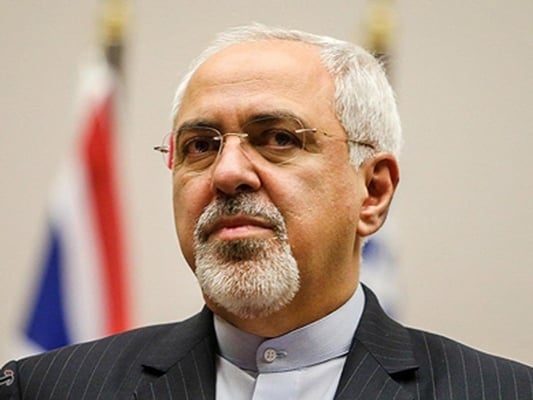
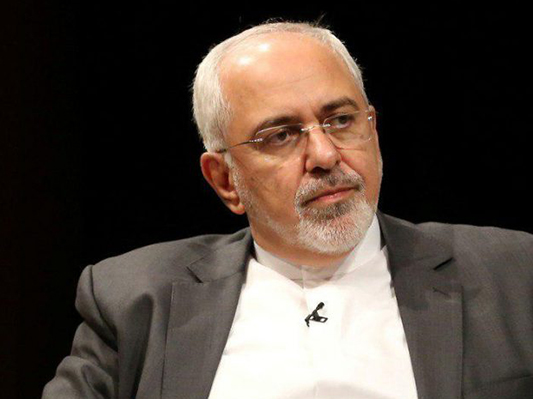
Speaking at a conference in Tehran on Saturday, Zarif referred to the countries which depend on super powers for their security.

“There are countries around Iran whose security depends on transregional countries, and which feel shivers down their spines once supers powers become furious, but feel secure and euphoric once they (major powers) smile,” he said, according to a Farsi report by Fars News Agency.

“After the JCPOA was signed, [Leaders of] some countries hurriedly went to Camp David and said ‘Why did you leave us alone? We don’t have any security and independence without you.’ And When Trump travelled to the region and had sword dance with rulers of those countries, they became ecstatic and felt they had been given new security,” Zarif said.


Trading Independence for Security
He said there are countries which trade their independence, dignity and reputation for security and allow foreign weapons companies to loot their rich resources in order to provide security for them.

“Persian Gulf countries spent $116 billion on arms last year,” the top diplomat noted.

He said Saudi Arabia overtook Russia, a nuclear superpower, in terms of arms spending last year.

“Saudi Arabia now ranks third in the world when it comes to arms spending,” said the foreign minister.

“None of these countries feels they have security, and the world does not regard any of those countries as secure and powerful,” he said.


Neighbouring Countries Not Ready for Talks
He said Iran holds negotiations with a country that “respects us.” He said Tehran has no problem sitting at the negotiating table with neighbouring countries, and added, “They are the ones who are not ready.”

The Iranian foreign minister further underlined weapons and defence preparedness are important for Iran, so that criminals such as former Iraqi strongman Saddam Hussein would not be able to launch missile attacks on Iranian cities and “we will be able to defend our citizens.”


Iran’s Missile Program Non-Negotiable
The top diplomat reiterated that Iran will not sit down for talks on its missile activities.

“Definitely, Iran’s missile program is both important and non-negotiable,” the foreign minister said as quoted by the Persian-language Fars News Agency.

He then lashed out at the double standards adopted toward Iran’s nuclear and missile programs.

Zarif said Iran is criticized for its missile program while its neighbours possess ultra-modern warplanes and weapons, including missiles. He said Saudi Arabia is in possession of nuclear-capable and intercontinental ballistic missiles with ranges up to 2,500 kilometres.

“The military spending of Iran, with such an expanse and a population of 80 million, is between 12 to 16 billion dollars. Saudi Arabia, with this population and US support, has paid $67 billion to buy arms,” Zarif said.


Iran Always at Negotiating Table
The foreign minister said the other parties to the talks on Tehran’s nuclear program were trying to create the impression that it was they that brought Iran to the negotiating table.

“But Iran was always at the negotiating table and never left it,” Zarif noted.

He said the West saw that their crippling sanctions had further united Iranian people and officials rather than divide them.

“They arrived at the conclusion that sanctions are a nonstarter and cannot bring these people (Iranians) to their knees,” he said.

IRGC General Calls for Int’l Poll to Compare Popularity of Iran, Saudi Arabia

In remarks made on Saturday, Brigadier General Esmaeil Kowsari, the lieutenant commander of the IRGC’s Tharallah Base, recommend that the Saudi foreign minister conducts an international poll to compare the Islamic Republic’s popularity with that of the tribal government run by the house of Saud.

According to a Farsi report by Mizan News Agency, Kowsari said the “incompetent” Saudi authorities are highly unpopular in the international arena, hence few would buy into their anti-Iran rhetoric.

Kowsari was responding to Friday remarks by the Saudi foreign minister in Brussels who said, “The single biggest threat to the region and perhaps to the world.”

According to Al-Arabiya, Jubeir who was addressing the Egmont Royal Institute for International Relations also said “Iranian-backed militias” play a negative role in the region.

Jubeir was apparently referring to the Lebanese movement Hezbollah and Popular Mobilization Forces, an Iraqi group comprising volunteer forces that played a big role in defeating the ISIS terrorist group late last year, among others.

The feud between Iran and Saudi Arabia has dominated the political landscape of West Asia in the past couple of years.

Relations between Iran and Saudi Arabia soured after a deadly human crush during the hajj rituals in Mina, near Mecca, in Sept. 2015, in which hundreds of Iranian pilgrims, among others, lost their lives.

Tensions between the two countries were further escalated when the kingdom executed a prominent Shiite cleric Sheikh Nimr al-Nimr without due process in January 2016.

Riyadh severed ties with Tehran shortly afterwards, when angry protests broke out against the execution outside its diplomatic premises in Tehran and Mashhad.

Iran has frequently invited Saudi Arabia to dialogue for settling differences, but its overtures have been spurned by an increasingly aggressive Riyadh that accuses Tehran of aspiring to dominate the region.

Snipers with Air Guns Deployed to Take on Tehran Rats (+Video)

Tehran has had a decades-long struggle with rats. Tehran’s Urban Animal Control Department, which is in charge of the rat extermination, launched a poison control program in 2000 to keep the rat population down.

However, according to Hamshahri newspaper, the initiative has apparently failed to curb the problem, as the rats show resistance to traditional poisons and continue to become larger and more prevalent.

So now, in addition to chemicals, the municipality has deployed sniper teams for night-time hunting. The sniper teams roam Tehran’s rat-infested streets at night, looking out for rats on the run to take them down.

According to statistics released in 2015, Tehran’s rat population is up to two millions, some of whom are the size of a young cat.

But people fear the real number is much higher, with some estimates running as high as 50 million, outnumbering citizens in Tehran by six times.

Rats in Tehran and other cities are of Norwegian origin. People say they have infiltrated Iran on cargo containers.

Norwegian rats can give birth to 6-12 babies per litter and are able to get pregnant three to five times a year on average.

What follows is a video of the rat hunt in Tehran produced by euronews:

A Look at Iranian Newspaper Front Pages on February 24

A Look at Iranian Newspaper Front Pages on November 18

Almost all newspapers today covered the important remarks made by Iranian Deputy Foreign Minister Seyyed Abbas Araqchi in his address to the London-based Chatham House think tank. The Iranian diplomat stressed that Tehran may withdraw from the Iran nuclear deal if its economic expectations are not met.

Also a top story was the search operation which is still underway in Iran’s Dena Mountain to find the remnants of those killed in the recent plane crash.

Several papers also covered the latest developments in Syria’s Eastern Ghouta and the Syrian government’s attacks on the terrorists and rebels there, who are using civilians as a human shield.

The above issues, as well as many more, are highlighted in the following headlines and top stories:


19 Dey:

1- Search Operation in Dena Mountain Halted Due to Bad Weather

A Look at Iranian Newspaper Front Pages on February 24


Abrar:

1- 102 MPs Call on Parliament’s Presiding Board to Summon Rouhani

2- Pence: Trump Won’t Certify Iran Nuclear Deal Again

3- Iraqi Source: Al-Baghdadi’s Deputy Killed in Airstrike

4- Araqchi: Iran Nuclear Deal Not Renegotiable

A Look at Iranian Newspaper Front Pages on February 24


Abrar-e Eqtesadi:

1- Aseman Airlines’ Speculations about Recent Plane Crash

  • Iran’s Old Aviation Industry Caused the Crash

A Look at Iranian Newspaper Front Pages on February 24


Afkar:

1- IRGC General Rezaei: Iran’s Revolutionary Police Won’t Allow Rioters to Cause Insecurity

A Look at Iranian Newspaper Front Pages on February 24


Aftab-e Yazd:

1- Will Iraq Outpace Iran in Foreign Trade?

2- Why Araqchi Said in London JCPOA Has Not Been Successful

A Look at Iranian Newspaper Front Pages on February 24


Arman-e Emrooz:

1- Case of Former Mayor of Tehran Sent to Court

A Look at Iranian Newspaper Front Pages on February 24


Asrar:

1- Araqchi: Trump’s Opposition to JCPOA Means Confrontation with Int’l Community

A Look at Iranian Newspaper Front Pages on February 24


Ebtekar:

1- Washington’s New Plan for Damascus

  • US Threatens to Attack Syria amid UN Security Council Meeting on Ghouta

2- Are Saudis Betraying OPEC Member States?

  • A Report on Riyadh’s Performance Regarding OPEEC Deal, Its Role in Oil Price

A Look at Iranian Newspaper Front Pages on February 24


Etemad:

1- Syria’s Resolve to Liberate Damascus Suburbs

  • Will Eastern Ghouta Return to Calm?

A Look at Iranian Newspaper Front Pages on February 24


Ettela’at:

1- Araqchi to BBC: US Preventing Iranian People from Reaping Benefits of JCPOA

2- Saudi Arabia Attacks UN’s Food Program Caravan in Yemen’s Sa’dah

3- General Soleimani: IRGC Defending Islamic Republic’s Personality

A Look at Iranian Newspaper Front Pages on February 24


Ghanoon:

1- Islamic Mercy, Spirit of Law

  • A Review of Laws on Women Removing Their Hijab in Public

A Look at Iranian Newspaper Front Pages on February 24


Iran:

1- Araqchi: Negotiation over Non-Nuclear Issues Hinges on JCPOA’s Success

2- New Ambiguities in Case of Plane Crash

A Look at Iranian Newspaper Front Pages on February 24


Javan:

1- Araqchi: We Won’t Remain Deprived of JCPOA Benefits

2- US President: We Won’t Remain in Iran Nuclear Deal without These 6 Conditions

A Look at Iranian Newspaper Front Pages on February 24


Jomhouri Eslami:

1- Several New Drugs Produced by Iranian Scientists

2- Iran Says Accelerated Work on Nuclear Propulsion Not Unrelated to US Behaviour in JCPOA

A Look at Iranian Newspaper Front Pages on February 24


Kayhan:

1- Araqchi: Nuclear Deal Has Had No Gain for Iran

2- Using All Its Capacities, West Starts Saving Last Stronghold of Terrorists in Syria

3- Police Chief: We Won’t Allow Any Cult, Group, Sect to Disrupt Security

A Look at Iranian Newspaper Front Pages on February 24


Khorasan:

1- When American Schools Turn into Barracks

  • Trump’s Offer to Teachers: Secretly Carry Guns to Counter Shootings!

A Look at Iranian Newspaper Front Pages on February 24


Rah-e Mardom:

1- Doubts over Iran Nuclear Deal

A Look at Iranian Newspaper Front Pages on February 24


Resalat:

1- Ayatollah Javadi Amoli: People Are Critical of Officials, but Support Establishment

2- West’s Direct Role in Slaughter of Yemeni Kids

  • European Arms in Hands of Saudi Hirelings

A Look at Iranian Newspaper Front Pages on February 24


Rooyesh-e Mellat:

1- Iran Not after Restoring Persian Empire: Larijani

A Look at Iranian Newspaper Front Pages on February 24


Sayeh:

1- Iran Ranks Third Worldwide in Terms of Number of Engineering Graduates

A Look at Iranian Newspaper Front Pages on February 24


Shahrvand:

1- 7,500 Children Annually Born in Iran with Drug Addiction

A Look at Iranian Newspaper Front Pages on February 24


Shargh:

1- Consultation over Iran Nuclear Deal in London, Paris

  • Araqchi: Iran Does Not Recognize Second Nationality for Its Citizens

A Look at Iranian Newspaper Front Pages on February 24


Ta’adol:

1- FATF Removes Iran from Blacklist for Four Months

A Look at Iranian Newspaper Front Pages on February 24

Iran FM Says ISIS Ideology Still Lingers On

Addressing a conference in Tehran on Saturday, Zarif said ISIS terrorists were defeated on the ground, but the ideology behind it and the terrorist group’s financial supporters are still there.

“The potential that created ISIS has not been eliminated,” said the top diplomat, as quoted by the Persian-language Iranian Students’ News Agency (ISNA).

He said some potentialities in the Middle East region and beyond contributed to the emergence of ISIS.

“When we speak of the post-ISIS era, we shouldn’t think that this ideology is gone. One of the mistakes that is sometimes made is that it is believed ISIS is wiped out,” said the foreign minister.

He further said the ISIS terrorist group created a situation in the Middle East which still lingers on.

Zarif then touched upon the reasons why ISIS was created.

“One of the key reasons behind this issue is foreign interference in our region. ISIS is the fallout from the US invasion of Iraq,” the foreign minister underscored.

He said the regional governments’ failure to address the most important needs of the people in the region, including their failure to secure the rights of Palestinian people, also contributed to the creation of ISIS.

Elsewhere in his remarks, Zarif, termed the Israeli regime as a “cancerous tumour” in the Middle East. He said the close relationship between some Arab states and Tel Aviv has also contributed to the creation and sustenance of the ISIS ideology.

Yet another contributor to the creation of the ISIS ideology has been efforts by some regional countries to cover up their domestic issues by playing a blame game and deflecting attention to a “foreign enemy,” the foreign minister noted.

He said the contact and communication networks of ISIS still exist.

“ISIS elements are spreading across different parts of the region, and probably areas beyond the region.”

Therefore, he said, ISIS is still a reality in the West Asia region and beyond.

Festival of Iranian Films Kicks Off in Azerbaijan Republic

The event got underway with the screening of the film “Bodyguard’ directed by Ebrahim Hatamikia.

According to a Farsi report by IRIB News Agency, a large number of Azerbaijani people interested in Iranian films attended the opening ceremony of the festival, which is co-organized by the Azerbaijan Ministry of Culture and Tourism and the Cultural Centre of the Iranian Embassy in Azerbaijan.

In this ceremony, Azeri Minister of Culture and Tourism Abulfas Garayev referred to the development of relations between the Islamic Republic of Iran and the Republic of Azerbaijan in various sectors, especially culture and art, saying that the two neighbours have successfully collaborated in cultural spheres and have so far registered a number of common cultural heritages at the UNESCO.

The Head of Iran’s Islamic Culture and Relations Organization Abouzar Ebrahimi Torkaman also made a speech saying that Iranian movies are well acclaimed worldwide with some of them finding their ways into the Academy Awards or the Oscars.

During the 4-day event, “Bodyguard”, “The Sweet Taste of Imagination”, “Crazy Rook” and “Where Are My Shoes” will be screened for the audiences at Nezami cinema theatre in Baku.

Azerbaijani and Iranian peoples have common cultural and religious traditions. The two countries successfully cooperate in many areas, including agriculture, transport, tourism, industry and other sectors.

Saudi-led Coalition Recruits Afghan, Pakistani Hirelings to Fight Yemen War

Saleh Ali al-Samad, the President of Yemen’s High Political Council, says over the past nine months, the Saudi-led coalition invaded a number of Yemeni cities including Sana’a, Sa’ada, Hudaydah and many others but Yemeni forces backed by popular committees thwarted their plots.

“The fourth phase of the Saudi-led coalition’s war on Yemen has already begun after recruiting new forces from Afghanistan and Pakistan,” he was quoted as saying in a Farsi report by Mehr News Agency.

He said to defend themselves the Yemenis don’t need any help from other countries. “We don’t need to recruit any forces from abroad because there are enough skilled forces in our army and tribes.”

The Yemeni official then referred to the national reconciliation meetings held in Yemen and added the Yemenis have no way but to cope with the new targeting of the coalition.

Al-Samad underlined that Yemenis are completely prepared to defend themselves against the enemies and added “Yemeni leaders and nation are looking for peace. To this effect, we have already set forth many plans. We welcome peace but at the same time are ready to retaliated Saudi Arabia’s airstrikes.”

He then said the Saudi-led coalition uses the arms made by the US, the UK, France and Israel in its invasion of Yemen. “Saudi Arabia has been launching its airstrikes on Yemen over the past years despite heavy criticisms by the Arab League and the United Nations Security Council.”

The Yemeni official also slammed the West’s silence toward the invasion of Yemen and added if “the West as it claims is the true defender of human rights in the world, it needs to put pressure on Saudi Arabia to stop its airstrikes on Yemen.

Al-Samad then said Yemenis will strongly continue their retaliatory attacks against the Saudi-led coalition and added the attacks will gain momentum in the near future.

“We will stand up by whatever in our power against the enemy which has the full support of the US and Israel,” he concluded.

38 Killed in Twin Car Blasts in Somalian Capital (+Video)

The car bombings and subsequent gunfire also wounded 20 people, medical workers said.

A loud explosion reportedly took place on Friday, followed by a second blast and sustained gunfire which broke out near the president’s residence. The second blast took place beside a popular hotel.

The Aamin Ambulance service, which confirmed the death toll, transported victims to the hospital.

The armed group al-Shabab claimed responsibility for the attack, Al Jazeera reported.

“As far as we know, there has been one blast beside the presidential palace, and another close to a popular hotel,” Major Mohamed Ahmed, a police officer, told local media.

The attack comes a day after the Somali government had issued a “terror warning” in the capital.

The explosions shattered a months-long period of calm in Mogadishu, which is often the target of attacks by al-Shabab.

In December, 18 police officers were killed when an al-Shabab fighter blew himself up inside the country’s main police academy in Mogadishu.

The capital was also the target of a truck bombing in October that killed 512 people in the deadliest attack in Somalia’s history. The Somali government blamed that blast on the al-Qaeda linked al-Shabab.

Iranian, British Officials Reach ‘Major’ Decision on Yemen War

Hamid Baeedinejad

In an article published in his channel at a mobile messaging service on Friday, Hamid Baeedinejad hailed the successful results of Iranian Deputy Foreign Minister Abbas Araqchi’s visit to London for the second round of Iran-Britain comprehensive political talks.

Pointing to “considerable disagreement” and “lack of complete accord” between Tehran and London when it comes to the regional developments, the ambassador, however, said the two countries have made “major decisions” on the ways to resolve the conflicts in Yemen.

Tehran and London share views about the need for an immediate end to the war in Yemen, which has become a full-fledged inhuman war, the envoy added.

Baeedinejad also noted that Iran has voiced “strong opposition” to a UN Security Council draft resolution that is designed to condemn Iran for alleged violation of an arms embargo on Yemen.

“It is planned that the two parties (Iran and Britain) continue intensive consultations to resolve the problem,” the ambassador said of the draft resolution on Yemen.

As regards the Joint Comprehensive Plan of Action (JCPOA) and Washington’s attempts to scrap the deal, the Iranian envoy underlined that Tehran and London support the nuclear agreement and stand against any attempt to revise the deal, as proposed by US President Donald Trump.

“What is clear is that Britain and the European states have serious conflict with the US over the issue (JCPOA),” he added.

Iran and the Group 5+1 (Russia, China, the US, Britain, France and Germany) reached the 159-page nuclear agreement in July 2015 and implemented it in January 2016.

Since the historic deal was signed in Vienna, the International Atomic Energy Agency (IAEA) has repeatedly confirmed the Islamic Republic’s compliance with its commitments under the JCPOA.

Iran’s ICT Ministry Launches Donation Campaign for Quake-Hit People

Iran’s ICT Minister Mohammad-Javad Azari Jahromi invited the IT companies in Iran to join the campaign and donate part of their budget for advertisement during the Nowruz (Persian New Year) holidays to the quake-hit people.

In a letter, the Director General of ICT Ministry called on the ministry’s departments to adopt the required measures to this effect, a Farsi report by ISNA said.

“In line with the order of the ICT minister for paying serious attentions to the conditions of the Kermanshah quake’s survivors, it is up to the departments’ managers to make the legal arrangements for launching the donation campaign,” the letter read.

So far, the Telecommunication Company of Iran (TCI), RighTel, and Mobinnet operators have joined the campaign, vowing to give their share of donation after making preliminary coordination with the ICT Ministry and Kermanshah governor-general.

A powerful 7.3-magnitude earthquake hit Kermanshah province back in November, killing about 630 people. The operations for restoring normal life to the quake-hit areas are still underway.