Wednesday, December 24, 2025
Home Blog Page 3685

“Return of Terrorists to Homelands Biggest Concern for Europe”

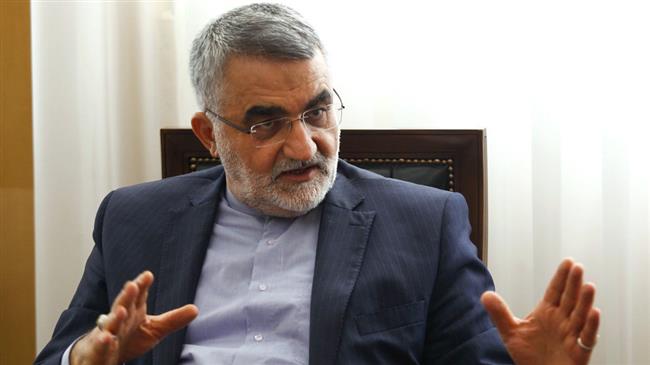
Alaeddin Boroujerdi, the head of the Iranian Parliament’s National Security and Foreign Policy Commission, said members of the international community must join hands for a real fight against terrorism, the biggest challenge confronting the globe.

Boroujerdi urged European governments to play a greater role in efforts to curb terrorism in the region, as the return of European terrorists to their native countries could significantly affect the stability of the green continent.

He made the remarks in a meeting with Miodrag Vukovic, a member of the Montenegro-Iran Parliamentary Friendship Group, in Tehran, according to a Farsi report by ICANA.

Vukovic said in turn that his country is concerned with the spread of terrorism in the region, fearing the instability might spill over into the neighbouring regions, particularly Europe.

The lawmaker said Montenegro, who is working with other European governments to prevent their citizens from joining the terror groups operating in West Asia, welcomes closer anti-terror cooperation with Iran.

“Return of Terrorists to Homelands Biggest Concern for Europe”During the meeting, the two sides also discussed bilateral relation. The Iranian lawmaker said he is pleased to see Iran and Montenegro are working to strengthen bonds of friendship, expressing hope for closer economic and tourism cooperation between the two sides.

The Montenegrin MP, for his part, said the country is eager to reinforce friendly ties with the Islamic Republic and expand bilateral economic collaboration.

“The Montenegrin government and parliament welcome closer relations with Iran,” he added.

Vukovic said the two parliaments should move to establish closer contacts, as it helps them gain a better understanding of each other and paves the way for greater bilateral trade.

Iran Rejects UN Chief’s “Biased, Worthless” Human Rights Report

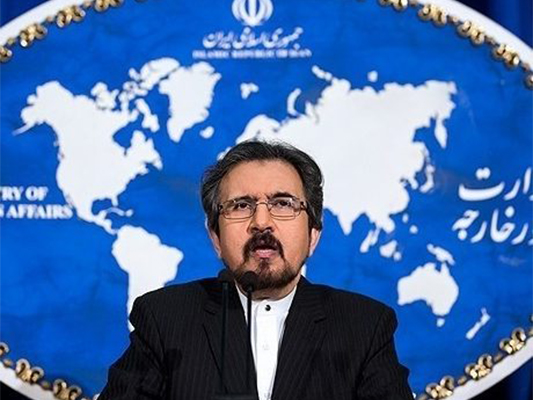
In a Thursday statement, Qassemi referred to the report by António Guterres prepared for the ongoing meeting of the UN Human Rights Council, and said “as we have witnessed in the past, reports like this are replete with lots of fundamental problems both in nature and procedures.”

He underlined that the Islamic Republic of Iran deems the report as invalid and worthless.

The spokesman then added the UN chief’s report on Iran’s human rights situation suffers from a lot of faults and problems. “The report has drawn on not only an unfair and politically-motivated resolution but also unreliable, false and completely invalid sources and data.”

Qassemi said the UN chief has also prepared an “unbalanced and biased” report on human rights situation in Iran by “ignoring and completely closing his eyes on the Islamic Republic of Iran’s progress and determined efforts in this field.”

He then pointed out that Iran has a resolute will to further promote civil rights within “the progressive principles of Islam and Islamic Republic’s Constitution.”

The spokesman condemned “double-standard and politically-motivated” mechanisms and approaches as well as any “instrumental use” of human rights [against others] and said, “The Islamic Republic has always maintained that while most regions in the world and certain states in the Middle East are suffering from deplorable humanitarian crises due to the imposed war on them, the UN’s continuous move to adopt politically-motivated decisions as well as double standards in dealing with human rights situations in the world will only increase the international community’s mistrust towards the world body.”

Earlier this week, the UN secretary general read out a report on the situation of human rights in Iran saying the UN remained alarmed by what he called the large number of rights abuses in the country.

Iran, Bolivia Discuss Bilateral Ties, Int’l Issues

During the talks, the two sides exchanged views on a number of bilateral and international issues.

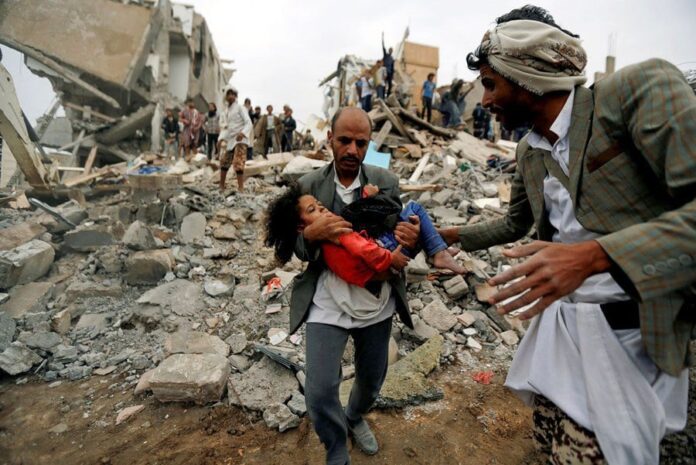
They also discussed the latest UN Security Council resolution on Yemen and Bolivia’s “principled” stance toward the UK-drafted resolution.

The UK-drafted resolution, strongly supported by the US, garnered 11 favourable votes in the 15-member Security Council but was blocked by Russia’s veto. China and Kazakhstan abstained, while Bolivia voted against the anti-Iran resolution.

Instead, the UNSC unanimously adopted a Russian-proposed resolution on Yemen extending the mission of the UN Expert Committee on Yemen for another year.


Possession of Nukes Should Be Regarded as Unethical: Iran

Speaking at a Conference on Disarmament attended by high-ranking officials from different countries at the United Nations Office in Geneva (UNOG), Dehqani elaborated on the Islamic Republic’s positions on nuclear disarmament in the world.

In his speech, the Iranian diplomat said that the Zionist regime’s nuclear weapons program is a threat to the Middle East.

He said based on religious teachings Iran believes that possession of nuclear weapons not only is not an honour, but, on the contrary, under the fatwa of the Leader of Islamic Revolution, the production, possession, and the use of nuclear weapons is unlawful, harmful, dangerous, Haram, and a great sin.

He also noted that Iran had fully implemented its commitments under the JCPOA, but the United States had failed to do so, through polices, actions and statements that aimed to deprive Iran of the benefits of the deal.

The Conference on Disarmament continued its high-level segment, hearing addresses by ministerial officials from Turkey, Russia, Romania and South Africa.

Ahmet Yildiz, Deputy Minister of Foreign Affairs of Turkey, said that during the current review cycle of the of the Treaty on the Non-Proliferation of Nuclear Weapons, it was essential all three of its pillars be addressed in a balanced manner, allowing States in compliance to tap into the benefits of nuclear energy.

Sergei Lavrov, Minister of Foreign Affairs of the Russian Federation, said that all nuclear-weapon states must join in further efforts to implement the Non-Proliferation Treaty, stressing that all factors influencing the current security environment must be considered, including the non-ratification of the Comprehensive Nuclear-Test-Ban Treaty and the possibility of the deployment of offensive weapons in outer space.

Iran Hails Russia’s “Principled” Veto of UNSC Resolution

During the Thursday talks, the two sides exchanged views on bilateral and regional issues including the Caspian Sea legal regime.

Russia’s latest “principled” move to veto the United Nation Security Council resolution on Yemen was also among the main topics discussed by the two sides.

Earlier Monday, Russia vetoed the resolution drafted based on a report condemning Iran for allegedly violating an arms embargo by sending weapons to Yemen.

Backed by the United States and France, the British-drafted resolution was supported with 11 votes in favour, before Russia used its veto and other member states abstained from voting.

Instead, the UNSC unanimously adopted a Russian-proposed resolution on Yemen extending the mission of the UN Expert Committee on Yemen for another year.

FIFA Chief Vows to Work for Settling Iran-Saudi Venue Dispute

“I don’t think problems related to the venue for matches between Iranian and Saudi clubs are unsolvable”, FIFA President Gianni Infantino said.

FIFA Chief Vows to Work for Settling Iran-Saudi Venue DisputeInfantino was speaking after a meeting with Iran’s Sports Minister Massoud Soltanifar in Tehran on Thursday, the Persian-language Varzesh3 website reported.

Tensions between Saudi Arabia and Iran, who have had no diplomatic relations since an attack on the Saudi embassy in Tehran in 2016, have affected matches between Iranian and Saudi teams in the AFC Champions League.

Saudi Arabia does not want its teams to play in Iran over what it calls security concerns. Tehran, on the other hand, has opposed playing games in neutral venues.

The AFC has mainly chosen to side with Saudi Arabia, refusing to allow the Iranian clubs to host Saudi teams at home.

“Neither politics nor football should intervene in each other. You can be sure that I will talk with whoever I can in this regard”, Infantino said.

He entered Iran Wednesday, upon the formal invitation of the Iranian Football Association.

Early February, IFA President Mehdi Taj had flown to Switzerland to urge Infantino to intervene in a politically-charged Asian Champions League game between Tehran-based Esteghlal and Saudi Arabian club Al-Hilal scheduled for late last month.

Esteghlal opted to host their game in Qatar on February 20 with Al-Hilal choosing Kuwait as hosts on April 16.

However, the Iranian team’s choice was vetoed by the AFC, who choose Oman with no opportunity to find an alternative venue.

The replacement was made due to recent tensions between Saudi Arabia and Qatar.

The match was finally held in Oman, where the Tehran-based team beat the Saudi side 1-0.

Speaking after the meeting, Soltanifar said he asked Infantino to urge the AFC to adopt a non-political stance and allow Iranian teams to host Saudi teams in Iran in the next fixture of the Champions League.

“Iran is a secure country. Infantino totally agrees with us and said he will inform the AFC of his view to help address the problem”, Soltanifar said.

Soltanifar also said Infantino is to invite Iranian President Hassan Rouhani to attend the opening ceremony of the 2018 FIFA World Cup to be held in Russia.

FIFA Chief Vows to Work for Settling Iran-Saudi Venue DisputeInfantino also held a meeting with Rouhani later on Thursday.

He had earlier congratulated IFA on booking a berth in the 2018 World Cup after Iran qualified for the tournament last year.

The FIFA president also watched Tehran’s derby between Esteghlal and Persepolis at Azadi stadium later Thursday, which ended with Esteghlal’s 1-0 win.

Infantino visited Tehran in February 2017 as the UEFA chief and visited the Iran National Football Academy during his one-day trip.

He also held a meeting with the Iranian media and negotiated with Iranian officials on solutions to develop football in Iran.

EU Fully Backs “Robust” Iran Nuclear Deal: Croatia

In the Thursday meeting held in Zagreb, Pejčinović expressed Croatia and Europe’s full backing for the implementation and maintenance of the Iran nuclear deal, describing the JCPOA as one of the most significant and robust agreements of its kind.

She said the deal laid the groundwork for further cooperation between Iran and other countries around the world.

The Croatian foreign minister said Tehran and Zagreb have had age-old and strong relations over the years, and hailed Zarif’s trip to her country as an opportunity to further boost reciprocal political and economic relations.

“Good agreements were signed during the Croatian president’s trip to Iran, and your presence here along with an important economic delegation is a sign that those agreements are going into force,” she said.

The Iranian foreign minister, in turn, emphasized Tehran’s determination to promote mutual cooperation in all areas and work towards the implementation of the agreements reached during his visit to Croatia.

The two top diplomats further reviewed bilateral relations in all political, economic and cultural areas as well as the agreements already clinched during trips by the officials of both countries. They also highlighted the need to further enhance mutual ties on all fronts.

Also high on the agenda of the talks were key regional and international issues, including the JCPOA and fighting violence, terrorism and extremism all around the world, the crises in Syria and Yemen, and the current situation in Afghanistan and the Balkans.

Iran Gets Closer to Removal of US Dollar from National Economy

Iran’s domestic media reported that the policy was in line with an official request by the Central Bank of Iran (CBI) and was specifically meant to address fluctuations in market rates of the dollar.

IRNA news agency quoted Mehdi Kasraeipour, CBI’s director of Foreign Exchange Rules and Policies Affairs, as saying that the move had become effective from Wednesday by virtue of a letter sent to the Ministry of Industry, Mines and Trade.

Kasraeipour emphasized that this was not expected to create any major trouble for traders, stressing that this was because the share of the dollar in Iran’s trade activities was not high.

“It’s been for a long time that Iran’s banking sector cannot use the dollar as a result of the sanctions,” he said.

US banks are still banned from dealing with Iran as part of an old US trade embargo that still remains in place. Accordingly, this is believed to have already effectively blocked any transactions with Iran which is based on US dollars because they would ultimately have to be cleared in the US.

“Considering that the use of the dollar is banned for Iran and traders are literally using alternative currencies in their transactions, there is no longer any reason to proceed with invoices that use the dollar as the base rate?” Kasraeipour said.

The official further emphasized that Iranian merchants would need to inform their suppliers to change the base currency from the dollar to other currencies so that the related import documentations can be proceeded at Iran’s entry points.

He said the merchants also needed to specify whether they would proceed with their payments through banks or currency exchange shops.

Kasraeipour said when an invoice is issued in dollars, a demand naturally develops in the network of exchange shops for dollars. He further suggested that this could eventually lead to a rise in the rates of the hard currency.

Meanwhile, criticisms are emerging in Iran’s media over the costs that this policy could create for merchants and eventually the consumers.

ISNA, for example, quoted unnamed merchants as saying that they and the foreign suppliers would have to consider an extra expense for converting the base currency from the dollar to other currencies.  This, it said, would increase the costs for imports and eventually push up the prices of commodities imported.

Abjection of Muslim Nations Blamed on Their Leaders: Ayatollah Khamenei

In a meeting with the Syrian Minister of Endowment and his accompanying delegation on Thursday afternoon, the Leader stated that if a nation is ruled by leaders who feel proud of their identity and Islam, they will retain dignity, and the enemy cannot inflict harm on such a nation.

Speaking on the issue of Syria, Ayatollah Khamenei added that “Syria is at the forefront [of resistance] today and it is our duty to support the Syrian resistance. Distinguished President of Syria Bashar al-Assad appeared as a great example of resistance. He never hesitated and stood strong. This is extremely important for a nation.”

“If the leaders of the countries and the regional nations decide decisively to resist, the enemy cannot do anything,” highlighted the Leader.

Ayatollah Khamenei further pointed to the enemy plots targeting the Islamic Republic during the past decades, and said, “We are almost in the fortieth year after the [1979] Revolution. From the very first day, all of the world’s top powers became united and acted against us. The US, the Soviet Union, the NATO, and the Arab and regional reactionaries all united [against us].”

“But we survived and prospered. What does this mean? It means what the domineering powers want is not necessarily possible. This issue gives insight to the nations and this insight gives them hope and power,” Ayatollah Khamenei added.

“So if we and you and the rest of the resistance elements stay determined, the enemy cannot accomplish a single thing,” underscored the Leader of Iran’s Islamic Revolution.

Ayatollah Khamenei further mentioned that “This is our duty is to support and defend Islam and Islamic movement. One of the preliminaries is to forget these sectarian and historical differences, but there are some who disagree and do not want to see that happen.”

Iran’s Leader went on to say that they provoke some Shiite people and also some of our Sunni brothers and they [Shiites and Sunnis] are forced to act and work against the unity movement.

“Those who play this role should be disregarded if they are not dependent on global politics and arrogance.”

However, he added, “if like Saudis and some others, creating such differences arises from arrogant policies, it must be countered. [We] should stand up against them strongly.”

Ayatollah Khamenei further noted that “We do not recognize the Shiite that London supports. We do not recognize as Muslim the Sunni that is supported by the US and Israel.”

“[The real] Islam is against disbelief, cruelty and oppression. These are our commonalities. Tawhid, Kaaba, the holy prophet (PBUH), and the love for Ahlul-Bayt (AS), etc, are our commonalties. These commonalities are all of our Faridahs. Now if I say Qunut in my prayers and you don’t, it’s not something to make differences.”
The Leader also added that what is important is to believe in one God, Nubuwwah (prophecy), divine support and the doomsday.

Croatian PM Praises Iran’s Constructive Role in Mideast

In a Thursday meeting with Iranian Foreign Minister Mohammad Javad Zarif in Zagreb, PM Plenković praised the positive and constructive role of Iran in the Middle East.

He also referred to the Islamic Republic as an influential country that is doing its best to bring stability into the region.

The Croatian prime minister hailed the very good level of ties between Tehran and Zagreb, and said, “In recent years, major steps have been taken to boost cooperation between the two sides, especially in the economic and commercial spheres, and they need to be continued and promoted.”

For his part, Zarif conveyed the greetings of the First Vice President of the Islamic Republic of Iran to the Croatian Premier, saying that “We are interested in developing bilateral relations with Croatia in all fields.”

The Iranian FM also stated that Halal tourism, energy, agriculture, food industry, advanced technology and banking are among the areas of cooperation between the two countries which are currently underway.

Cooperation with Croatia for investment and implementation of joint projects in neighbouring countries of Iran was one of the other points raised by Zarif.

He also emphasized the promotion of collaborations between the two countries at the regional and international associations and organizations, both bilaterally and within the framework of the European Union.


“Iran Important Country in Croatia’s Foreign Policy”

Earlier in the day, Zarif also met the Speaker of the Croatian Parliament Gordan Jandroković.

At this meeting, the speaker of the Croatian parliament described the two countries’ relations as perfect saying that “I am sure that your visit to Croatia will strengthen relations between the two countries.”

He emphasized that Iran is an important country in Croatia’s foreign policy and Zagreb is ready to develop ties with Tehran in all fields.

Croatian PM Praises Iran’s Constructive Role in MideastFor his part, FM Zarif said bilateral relations in the political and economic spheres are at a very good level, especially the ties between the people of the two countries. He also conveyed the greetings of Iran’s Parliament Speaker to Jandroković.
He further expressed hope that by removing some obstacles and providing the necessary facilities, Tehran and Zagreb could witness the prosperity of mutual relations.

Strengthening parliamentary ties, the visit of the Croatian parliamentary friendship group to Iran, reviewing the areas of business, economic, scientific and cultural cooperation, as well as discussing the most important regional and international issues, especially the need to combat terrorism and extremism were among the other topics discussed at this meeting.


Iran FM, Croatian Economy Minister Discuss Business Ties

Zarif has also held talks with Croatian Deputy Prime Minister and Minister of Economy Martina Dalić.

The meeting was held before the beginning of a joint meeting between Iranian and Croatian businessmen in Zagreb.

On the sidelines of the talks, the Iranian foreign minister signed the book of commemoration of Croatian Chamber of Commerce as well.

The two sides also attended the joint meeting of Iranian and Croatian businessmen.

Croatian PM Praises Iran’s Constructive Role in Mideast

Visit to Zagreb Islamic Centre

Zarif also paid a visit to the Islamic Centre of Zagreb as the last part of his trip to Croatia. During the Thursday visit, Zarif met with the Mufti of Zagreb Mosque Aziz Hasanovic and toured various parts of the mosque.Croatian PM Praises Iran’s Constructive Role in Mideast