Monday, December 22, 2025
Home Blog Page 35

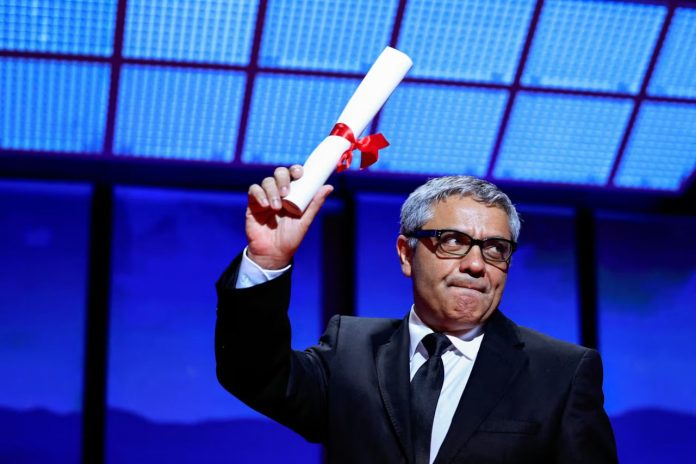
Iran director Majidi receives special honor at First Eurasia International Film Festival

The festival’s top prize, Best Film and a statuette valued at the equivalent of one million dollars, was awarded to the Chinese film Against the Current directed by Xu Zheng.

The ceremony was held Thursday evening in Moscow with the attendance of Russia’s Culture Minister Olga Lyubimova, presidential aide Vladimir Medinsky, and Iran’s ambassador Kazem Jalali.
Nikita Mikhalkov, founder of the Eurasia Film Academy, presented Majidi with the festival’s “Diamond Butterfly” honor, praising his body of work.

During his acceptance speech, Majidi highlighted his long-standing focus on children and paid tribute to the “innocent children of Gaza,” expressing hope for peace for all children affected by war.
The hall screened scenes from his films, including Muhammad (PBUH), accompanied by Iranian music, followed by a minutes-long standing ovation.

The festival’s main award went to China, while winners in other categories each received a prize valued at USD 250,000.

Seventeen countries submitted 34 films to the festival’s first edition, which organizers say aims to promote ethical values and showcase the cultural diversity of Eurasian cinema.
Iran participated with Call Me Ziba, In the Arms of the Tree, and My Daughter’s Hair.

Russia says any military cooperation with Iran follows framework of strategic partnership treaty

Responding to a question on whether Moscow would provide military assistance to Iran if the US or its allies launched an attack, Foreign Ministry spokesperson Maria Zakharova stated that Russia’s cooperation with Tehran is governed by the terms of the bilateral treaty.
She said the document sets out “clear parameters” for military and technical collaboration.

The agreement was signed on January 17, 2025 during Iranian President Massoud Pezeshkian’s visit to Moscow.
According to Russian officials, the treaty formally entered its implementation phase on October 1.

The agreement commits the two sides to maintaining economic and trade cooperation and to engaging in close coordination during joint military exercises.
It also includes a clause stating that if either country faces aggression, the other party must not assist the aggressor.

Additionally, the treaty obliges both states to prevent their territories from being used to support separatist movements that could threaten each other’s territorial integrity.

The agreement is valid for 20 years and will automatically renew for five-year periods thereafter unless either side objects.

Iran strongly blasts Zionist regime’s crimes in West Bank

Esmael baghaei

The spokesperson pointed to the continuous attacks by Zionist forces and settlers on Palestinian camps in Nablus and Jenin, the assassination of Palestinians, arbitrary arrests of West Bank residents, and the destruction of homes and farmlands of Palestinian farmers, and called on the international community to pay attention to the brutal crimes currently taking place in this part of occupied Palestine.

Baqaei also pointed to reports from human rights organizations regarding the prolonged detention of hundreds of Palestinian children and the torture leading to the death of dozens of Palestinian prisoners in the detention centers and prisons of the Zionist regime.

He underlined the responsibility of the international community, especially the United Nations and the UN Human Rights Council, to address the gross violations of Palestinian human rights, stressing the necessity of recording each of these crimes as crimes against humanity and prosecuting and punishing the Zionist perpetrators.

13 killed, several wounded in Israeli attack on Beit Jinn town in Damascus countryside

The state-run TV channel Alikhbaria reported that Israeli drones continued to fly over the area following the strikes, particularly along the road linking the two towns.

Many victims are still trapped under the rubble, it added, as the residents are still working to recover them.

Civil Defense teams and two ambulances from the Damascus countryside health directorate entered the area to transport the dead and treat the wounded following the Israeli attack, the Syrian Arab News Agency (SANA) reported.

The broadcaster said dozens of families fled Beit Jinn toward nearby safer areas after the attack.

Earlier, the channel reported that an Israeli patrol had entered the town and briefly clashed with local residents before withdrawing.

The Israeli army announced in a statement that six Israeli soldiers were injured, including three in critical condition, during the operation.

It claimed that it detained members of “the Jaama Islamiya,” alleging that they “operated in the area of Beit Jinn in southern Syria and advanced attacks against Israeli civilians.”

There have been no comments by the Syrian authorities on the Israeli strike and the claim.

The Israeli army has staged 47 raids in southern Syria in November.

Government data showed that the Israeli military has carried out over 1,000 airstrikes on Syria and more than 400 cross-border raids into the southern provinces since December 2024.

After the fall of the Bashar al-Assad government in late 2024, Israel expanded its occupation of the Syrian Golan Heights by seizing the demilitarized buffer zone, a move that violated the 1974 Disengagement Agreement with Syria.

Israel still committing genocide in Gaza: Amnesty International

The fragile, US-brokered truce between Israel and Hamas came into effect on 10 October, after two years of war.

“The ceasefire risks creating a dangerous illusion that life in Gaza is returning to normal,” said Amnesty’s secretary general, Agnès Callamard.

“But while Israeli authorities and forces have reduced the scale of their attacks and allowed limited amounts of humanitarian aid into Gaza, the world must not be fooled. Israel’s genocide is not over.”

The 1948 UN genocide convention defines genocide as any of five “acts committed with intent to destroy, in whole or in part, a national, ethnic, racial or religious group”.

In December 2024, Amnesty concluded that Israel was committing genocide in Gaza by three of those acts – including deliberately inflicting on Palestinians conditions of life calculated to bring about their physical destruction.

In an update on Thursday, Amnesty announced: “Israel continues to severely restrict the entry of supplies and the restoration of services essential for the survival of the civilian population.

“Despite a reduction in scale of attacks, and some limited improvements, there has been no meaningful change in the conditions Israel is inflicting on Palestinians in Gaza and no evidence to indicate that Israel’s intent has changed.”

Gaza has been devastated by the war triggered by Hamas’s unprecedented attack on Israel on 7 October 2023.

Callamard added, “Israel’s pattern of conduct in Gaza, including the deliberate, unlawful denial of lifesaving aid to Palestinians, many of whom are injured, malnourished and at risk of serious disease, continues to threaten their survival.”

In September 2025, the independent international commission of inquiry set up by the UN concluded that “genocide is occurring in Gaza”. The investigation concluded that Israeli authorities and forces had since October 2023 committed “four of the five genocidal acts” listed in the 1948 genocide convention.

These five acts include killing members of the group, causing them serious bodily or mental harm, imposing living conditions intended to destroy the group, preventing births and forcibly transferring children out of the group.

The international court of justice last year ordered Israel “to prevent and punish the direct and public incitement to commit genocide” in Gaza.

The Gaza war was sparked by Hamas’s 7 October 2023 attack on Israel, which resulted in the deaths of 1,200 people. Israel’s retaliatory onslaught on Gaza has killed at least 69,799 people, according to figures from the territory’s health ministry that the UN considers reliable. The ministry reported that since the ceasefire came into effect, 352 Palestinians have been killed by Israeli fire.

Iranian MP criticizes UN forum for giving platform to separatist groups

United Nations

During the second session of the forum’s opening day in Geneva on Thursday, statements were read by groups identified as terrorist organizations, including the al-Ahwaziya movement. These groups have been involved in violent attacks inside Iran that have led many people dead or injured

Kamal Hossein-Pour, a Kurdish Sunni representative of Piranshahr and Sardasht in Iran’s parliament, delivered a sharp statement condemning a discriminatory and inhumane practice of granting such groups a platform.

He argued that the forum’s actions reflected double standards and undermined human rights principles.

Hossein-Pour also criticized the process of selecting keynote speakers, saying it lacked transparency, impartiality, and fairness as required under international law.

He objected to the choice of a representative from the Baha’i community, who used the opportunity to level accusations against Iran rather than address minority rights in general.

Concluding his remarks, Hossein-Pour stressed that in Iran, social and civic rights are guaranteed to all citizens, and no individual is deprived of rights based on personal beliefs.

Iran reserves right to pursue US accountability for war: Envoy

Amir Saeid Iravani made the remarks in a letter sent to the UN chief and the Security Council president on Wednesday, after the US Air Force acknowledged for the first time that its F-35 stealth fighters penetrated Iran’s airspace and escorted B-2 bombers to target peaceful nuclear facilities in the country.

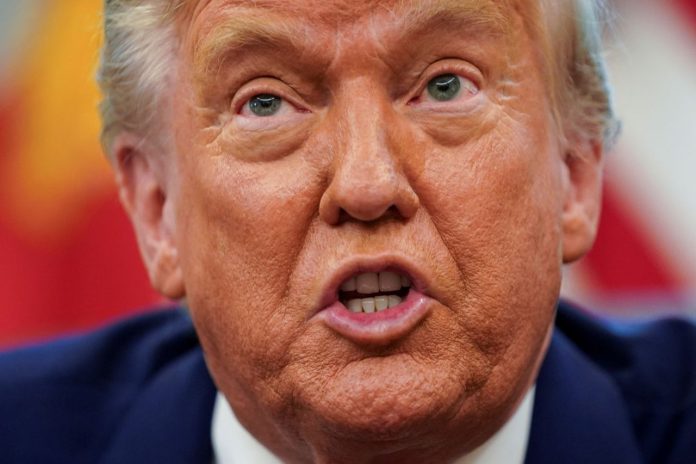
He said that the disclosure is further corroborated by US President Donald Trump’s confession on November 6, when he admitted to being “very much in charge of” the Israeli-American aggression against Iran.

Iravani said the confession entails criminal responsibility of American officials and individuals involved in grave breaches of international humanitarian law, including for the crime of aggression.

Therefore, he added, the Islamic Republic “reserves its full and unequivocal right to pursue, through all available legal avenues, the establishment of accountability for those responsible, and also to secure full reparation for all losses and damages incurred as a result of this internationally wrongful act.”

The Iranian envoy also emphasized that Washington is under an obligation to make full reparation for the violations against Iran and its citizens under established international law.

The UN cannot remain silent in light of the United States’ “own admissions” of its role in committing the wrongful acts against the Islamic Republic, he noted.

On June 13, Israel launched a blatant act of aggression against Iran, killing at least 1,064 people and targeting civilian infrastructure.

On June 22, the United States also entered the war by bombing three Iranian nuclear sites—Fordow, Natanz, and Isfahan— in a grave violation of the UN Charter, international law, and the Nuclear Non-Proliferation Treaty (NPT).

Two days later, Iran managed to impose a halt to the criminal assault after conducting waves of successful retaliatory operations.

Additionally, in his letter, Iravani reiterated Tehran’s call on the UN to “take appropriate measures … to ensure accountability of both the United States and the Israeli regime for these grave violations, and to bring the perpetrators of these crimes to justice.”

He further said that the Israeli-US aggression was directed against Iran’s sovereignty and territorial integrity, in blatant violation of Article 2(4) of the UN Charter.

The 12-day assault included deliberate attacks against civilians and civilian objects, in flagrant disregard of the fundamental principles of international law and international humanitarian law, he pointed out.


Ayatollah Khamenei rejects claims of back-channel messages to U.S.

Ayatollah Khamenei said the United States brings “war, destruction, displacement, and genocide” wherever it intervenes, saying Washington is fueling global instability from Ukraine to the Middle East.

According to the Supreme Leader, the U.S. “ignited the costly war in Ukraine and failed to achieve its goals,” noting that US President Donald Trump had predicted a quick resolution but is now “trying to impose a 28-article plan by force” on the country involved.

He also said Israeli attacks on Lebanon, Syria, the West Bank, and Gaza were taking place “with full American backing,” arguing that global public opinion has turned against the U.S.

Ayatollah Khamenei strongly rejected reports that Iran had sent messages to the United States via a third country, saying: “They fabricate rumors claiming that Iran, the Iranian government, sent a message through such-and-such country to America. This is an absolute lie. Nothing of this sort has happened.”

He further said Washington has betrayed even its own allies, stating: “They support the criminal Zionist gang ruling over Palestine, and for the sake of oil and underground resources, they are prepared to ignite wars anywhere in the world—including now in Latin America. Such a government is not one with which the Islamic Republic would seek relations or cooperation.”

Ayatollah Khamenei declared that the United States suffered a “severe defeat” during the recent 12-day confrontation with Iran.

He said Washington employed “its latest offensive and defensive weapons,” including submarines, fighter jets, and advanced air-defense systems, yet “could not achieve its objectives.”

“The U.S. wanted to deceive the Iranian nation and drag it behind itself,” Ayatollah Khamenei said.

“But the opposite occurred. The unity of the Iranian people against America grew stronger, and they were able to truly thwart the enemy’s plans.”

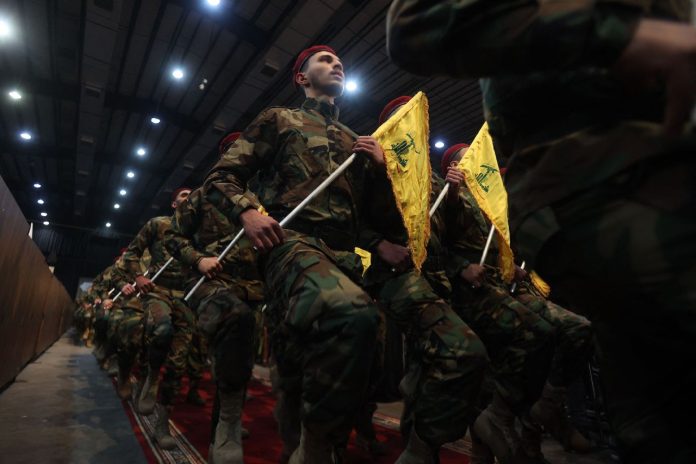
Israel hits Lebanon with nearly 700 air raids since ceasefire: Report

Lebanon War

A ceasefire was reached between Tel Aviv and Beirut on Nov. 27, 2024, after more than a year of attacks against the backdrop of the Gaza war. Over 4,000 people were killed, and 17,000 others were injured in the attacks.

Under the ceasefire, the Israeli army was supposed to withdraw from southern Lebanon this January, but instead only partially pulled out and continues to maintain a military presence at five border outposts.

In a report, the Alma Research and Education Center found that 699 air raids were launched by the Israeli army across Lebanon over the past year on claims of targeting Hezbollah infrastructure.

According to the report, 47% of the airstrikes hit south of the Litani River, and 38.4% north of it. The Bekaa region in eastern Lebanon was targeted by 13% of the attacks, while the remaining 1.6%, which corresponds to 11 strikes, hit the capital Beirut, and its surrounding areas.

The majority of the attacks occurred in the first months of the ceasefire, with an average of 51 strikes per month.

The Israeli institute found that December 2024 and March 2025 recorded the highest number of airstrikes.

The report claimed that 218 Hezbollah operatives have been killed in the Israeli attacks.

On Sunday, senior Hezbollah commander Haitham Ali Tabatabai was killed in an Israeli airstrike in Beirut.

“At this stage, no permanent, continuous, or significant Hezbollah presence or activity is identified along the contact line,” the report added.


No draft of Ukraine peace agreement yet: Putin

The president made the remarks on Thursday during a press conference in Bishkek, Kyrgyzstan, which hosted a summit of the Collective Security Treaty Organization (CSTO), a regional bloc bringing together several post-Soviet nations.

Asked by a journalist about the US-proposed peace plan to end the Ukraine conflict, Putin said that no draft document exists, only a range of issues outlined by Washington to discuss.

“In principle, we agree that this can become the basis of future agreements, but it would be impolite of me to talk about any final drafts now, since there are none,” the president pointed out.

While the US has taken into account Russia’s position in “certain areas,” other “fundamental” issues require serious discussions,” Putin added. “We need to put everything in diplomatic language,” he stated.

A US delegation is expected to visit Moscow early next week to discuss the proposed peace plan, Putin announced. The Russian president refused to speculate on who would represent Washington at the upcoming talks, stating it was up to his US counterpart Donald Trump to decide.

The Russian side will be represented by diplomats with the country’s foreign ministry, as well as presidential aide Vladimir Medinsky, who led direct talks with Ukraine in Istanbul, Putin revealed. Another presidential aide and one of the key figures in the ongoing contacts between Moscow and Washington, Yury Ushakov, is set to participate in the talks as well, the president added.

Sealing a peace accord with Ukraine is “legally impossible” at present, Putin has stated. He stressed that while Moscow would like to ink such an agreement eventually, the current Ukrainian leadership has lost all legitimacy by canceling elections.

He stated that “it makes no sense to sign documents with the Ukrainian leadership – I have covered this topic many times already.”

According to the Russian president, “the Ukrainian leadership made a fundamental, strategic mistake, when it was afraid to hold elections.”

Ukrainian leader Volodymyr Zelensky “lost his legitimate status” as the country’s president, Putin pointed out.

Under Ukrainian law, presidential elections should have been held in May 2024; however, Zelensky refused to hold them, citing martial law. Moscow has considered him an illegitimate leader since.

Putin noted that while Russia is also locked in a military conflict, it nevertheless held presidential elections in March 2024.

The Russian president said that should any peace agreement be signed, the Ukrainian leadership would have to lift martial law and “immediately call elections.” However, as things stand at present, “the Ukrainian leadership could hardly count on an [electoral] victory without rigging” the vote, Putin observed.