Monday, December 22, 2025
Home Blog Page 36

Ayatollah Khamenei rejects claims of back-channel messages to U.S.

Ayatollah Khamenei said the United States brings “war, destruction, displacement, and genocide” wherever it intervenes, saying Washington is fueling global instability from Ukraine to the Middle East.

According to the Supreme Leader, the U.S. “ignited the costly war in Ukraine and failed to achieve its goals,” noting that US President Donald Trump had predicted a quick resolution but is now “trying to impose a 28-article plan by force” on the country involved.

He also said Israeli attacks on Lebanon, Syria, the West Bank, and Gaza were taking place “with full American backing,” arguing that global public opinion has turned against the U.S.

Ayatollah Khamenei strongly rejected reports that Iran had sent messages to the United States via a third country, saying: “They fabricate rumors claiming that Iran, the Iranian government, sent a message through such-and-such country to America. This is an absolute lie. Nothing of this sort has happened.”

He further said Washington has betrayed even its own allies, stating: “They support the criminal Zionist gang ruling over Palestine, and for the sake of oil and underground resources, they are prepared to ignite wars anywhere in the world—including now in Latin America. Such a government is not one with which the Islamic Republic would seek relations or cooperation.”

Ayatollah Khamenei declared that the United States suffered a “severe defeat” during the recent 12-day confrontation with Iran.

He said Washington employed “its latest offensive and defensive weapons,” including submarines, fighter jets, and advanced air-defense systems, yet “could not achieve its objectives.”

“The U.S. wanted to deceive the Iranian nation and drag it behind itself,” Ayatollah Khamenei said.

“But the opposite occurred. The unity of the Iranian people against America grew stronger, and they were able to truly thwart the enemy’s plans.”

Israel hits Lebanon with nearly 700 air raids since ceasefire: Report

Lebanon War

A ceasefire was reached between Tel Aviv and Beirut on Nov. 27, 2024, after more than a year of attacks against the backdrop of the Gaza war. Over 4,000 people were killed, and 17,000 others were injured in the attacks.

Under the ceasefire, the Israeli army was supposed to withdraw from southern Lebanon this January, but instead only partially pulled out and continues to maintain a military presence at five border outposts.

In a report, the Alma Research and Education Center found that 699 air raids were launched by the Israeli army across Lebanon over the past year on claims of targeting Hezbollah infrastructure.

According to the report, 47% of the airstrikes hit south of the Litani River, and 38.4% north of it. The Bekaa region in eastern Lebanon was targeted by 13% of the attacks, while the remaining 1.6%, which corresponds to 11 strikes, hit the capital Beirut, and its surrounding areas.

The majority of the attacks occurred in the first months of the ceasefire, with an average of 51 strikes per month.

The Israeli institute found that December 2024 and March 2025 recorded the highest number of airstrikes.

The report claimed that 218 Hezbollah operatives have been killed in the Israeli attacks.

On Sunday, senior Hezbollah commander Haitham Ali Tabatabai was killed in an Israeli airstrike in Beirut.

“At this stage, no permanent, continuous, or significant Hezbollah presence or activity is identified along the contact line,” the report added.


No draft of Ukraine peace agreement yet: Putin

The president made the remarks on Thursday during a press conference in Bishkek, Kyrgyzstan, which hosted a summit of the Collective Security Treaty Organization (CSTO), a regional bloc bringing together several post-Soviet nations.

Asked by a journalist about the US-proposed peace plan to end the Ukraine conflict, Putin said that no draft document exists, only a range of issues outlined by Washington to discuss.

“In principle, we agree that this can become the basis of future agreements, but it would be impolite of me to talk about any final drafts now, since there are none,” the president pointed out.

While the US has taken into account Russia’s position in “certain areas,” other “fundamental” issues require serious discussions,” Putin added. “We need to put everything in diplomatic language,” he stated.

A US delegation is expected to visit Moscow early next week to discuss the proposed peace plan, Putin announced. The Russian president refused to speculate on who would represent Washington at the upcoming talks, stating it was up to his US counterpart Donald Trump to decide.

The Russian side will be represented by diplomats with the country’s foreign ministry, as well as presidential aide Vladimir Medinsky, who led direct talks with Ukraine in Istanbul, Putin revealed. Another presidential aide and one of the key figures in the ongoing contacts between Moscow and Washington, Yury Ushakov, is set to participate in the talks as well, the president added.

Sealing a peace accord with Ukraine is “legally impossible” at present, Putin has stated. He stressed that while Moscow would like to ink such an agreement eventually, the current Ukrainian leadership has lost all legitimacy by canceling elections.

He stated that “it makes no sense to sign documents with the Ukrainian leadership – I have covered this topic many times already.”

According to the Russian president, “the Ukrainian leadership made a fundamental, strategic mistake, when it was afraid to hold elections.”

Ukrainian leader Volodymyr Zelensky “lost his legitimate status” as the country’s president, Putin pointed out.

Under Ukrainian law, presidential elections should have been held in May 2024; however, Zelensky refused to hold them, citing martial law. Moscow has considered him an illegitimate leader since.

Putin noted that while Russia is also locked in a military conflict, it nevertheless held presidential elections in March 2024.

The Russian president said that should any peace agreement be signed, the Ukrainian leadership would have to lift martial law and “immediately call elections.” However, as things stand at present, “the Ukrainian leadership could hardly count on an [electoral] victory without rigging” the vote, Putin observed.


Iran condemns Australia’s designation of IRGC as “unlawful, politicized” move influenced by Israel

IRGC

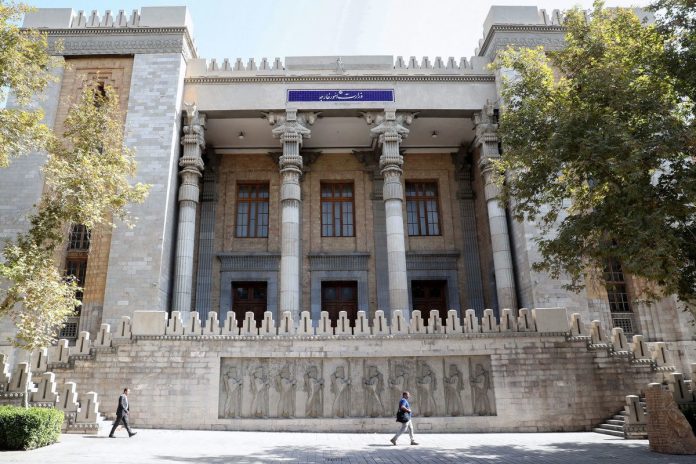
In its statement, the ministry strongly condemned “the offensive and unjustifiable action” by Canberra in labeling Iran’s Islamic Revolution Guard Corps, asserting that the Islamic Republic considers the move unlawful, indefensible, and in violation of legal and international norms governing respect for the sovereign equality of states.

While expressing its strong disapproval of  “the acquiescence of certain Australian policymakers” in the malicious policies of the “genocidal Israeli regime” aimed at spreading falsehoods against Iran, the ministry underscored the Australian Government’s international responsibility for this “wrongful act.”

The statement added that this irresponsible measure continues a grave error previously made by Australia, based on baseless accusations fabricated by Israeli security agencies—an error that turned the longstanding diplomatic relationship between Iran and Australia into a bargaining chip to appease Israel.

According to the ministry, the decision amounts to complicity between those who instigated the measure and perpetrators of crimes currently under investigation by the International Criminal Court.

Security chief: Israel’s recent war against Iran planned years in advance

Speaking at a press conference at the Iranian Embassy in Islamabad during his visit to Pakistan, Larijani said the confrontation “was imposed on Iran” as part of a long-term American-Israeli strategy.

He added that newly surfaced remarks by US President Donald Trump — claiming the United States had been practicing attacks on Iranian nuclear facilities since 2003 — further confirm that “the plot had been in preparation for years.”

Larijani thanked the public, government, parliament, and armed forces of Pakistan for standing with Iran during what the “unjust aggression” carried out by Israel.

He said Pakistan’s response reflected a “principled and mature approach” to global developments.

Citing deep cultural and historical ties between the two neighbors, Larijani described Pakistan as a “friendly, supportive, and culturally kindred nation,” noting that the shared heritage of the Persian language continues to strengthen bilateral relations.

According to Larijani, the recent 12-day confrontation offered key strategic lessons. “Israel, which imagined it could overpower Iran, was left completely frustrated,” he said.

He argued that Iran’s advanced missile capabilities have “shattered Israel’s illusion of security,” even as Iranian forces identified certain operational shortcomings that are now being addressed.

Larijani concluded that the conflict reaffirmed Iran’s determination while exposing Israel’s deep internal turmoil, adding that the outcome underscored the strength and resilience of the Iranian nation.

Russia to fight on unless Ukraine cedes land: Putin

The Russian army has been slowly but steadily grinding through eastern Ukraine in costly battles against outnumbered and outgunned Ukrainian forces.

Washington has meanwhile renewed its push to end the nearly four-year war, putting forward a surprise plan that it hopes to finalise through upcoming talks with Moscow and Kyiv.

“If Ukrainian forces leave the territories they hold, then we will stop combat operations,” Putin said during a visit to Kyrgyzstan.

“If they don’t, then we will achieve it by military means.”

Russia controls around one-fifth of Ukraine’s territory. The issue of occupied land, which Kyiv has said it will never cede, is among the biggest stumbling blocks in the peace process.

Another important issue in the talks are Western security guarantees for Ukraine, which Kyiv says are needed to prevent Moscow from invading again in the future.

Washington’s original plan — drafted without input from Ukraine’s European allies — would have seen Kyiv withdraw from its eastern Donetsk region and the United States de facto recognise the Donetsk, Crimea and Lugansk regions as Russian.

The US pared back the original plan over the weekend following criticism from Kyiv and Europe, but has not yet released the new version.

Putin, who has seen the new plan, stated it could be a negotiation starter.

“Overall, we agree that it could form the basis for future agreements,” he said of the latest draft, which the United States is thought to have shortened to about 20 points. But Russia was still seeking international recognition of the occupied territories, Putin added.

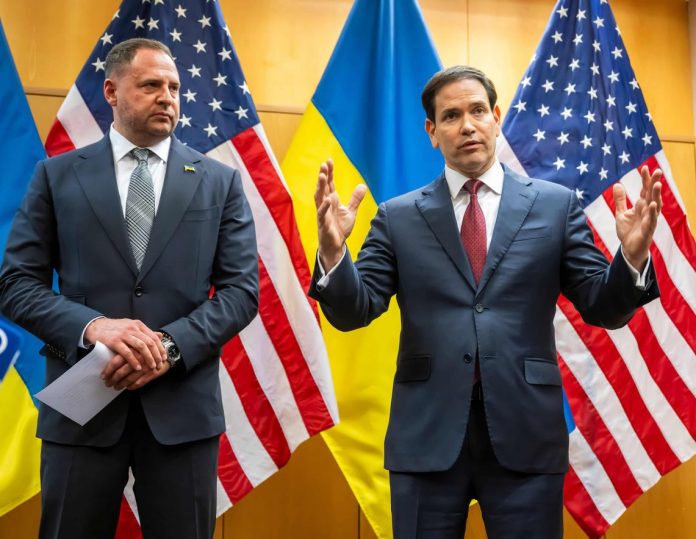
Ukrainian President Volodymyr Zelensky’s top aide, Andriy Yermak, strongly denied that in an interview with US outlet The Atlantic published on Thursday.

“As long as Zelensky is president, no one should count on us giving up territory. He will not sign away territory,” Yermak stated.

“All we can realistically talk about right now is really to define the line of contact,” he continued, referring to the sprawling 1,100 kilometre (700 mile) front line.

US negotiator Steve Witkoff was expected in Moscow next week to discuss the revised document, Putin stated.

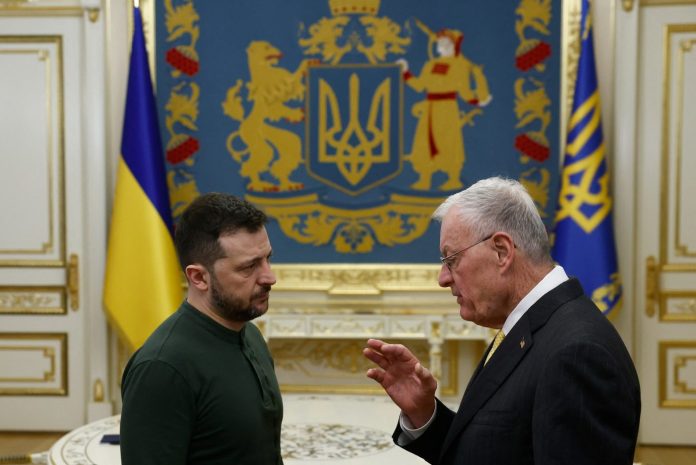
US Army Secretary Dan Driscoll is meanwhile due to visit Kyiv later this week, according to Yermak.

In his remarks Thursday, Putin repeated the claim that Russia had encircled the Ukrainian army in Pokrovsk and Myrnograd in Ukraine’s eastern Donetsk region — the most fiercely embattled area and a key target for Moscow’s forces.

“Krasnoarmeysk and Dimitrov are completely surrounded,” he said, using the Russian names for the cities.

Moscow was also advancing in Vovchansk and Siversk, as well as approaching the important logistic hub of Guliaipole, he added.

The Russian offensive “is practically impossible to hold back, so there is little that can be done about it”, Putin noted.

Ukraine has denied that Pokrovsk and Myrnograd are encircled, insisting its forces continue to hold the enemy along the front line.

According to data analysed by AFP from the US-based Institute for the Study of War (ISW), Russian forces have conquered an average of 467 square kilometres (180 square miles) each month in 2025 — a step up from 2024.

Moscow launched its full-scale invasion of Ukraine in February 2022, triggering the worst armed conflict in Europe since World War II.

The war has killed hundreds of thousands of people and forced millions to flee their homes.

Europe warns against ‘carving up’ of Ukraine amid crunch US-led negotiations

Speaking to European lawmakers in Strasbourg on Wednesday, Ursula von der Leyen said Russia showed “no signs of true willingness to end the conflict” and continued to operate in a mindset unchanged since the days of Yalta – the much-criticised and misunderstood 1945 summit to settle the postwar order.

“So we need to be clear that there cannot be unilateral carving up of a sovereign European nation, and that borders cannot be changed by force. If today we legitimise and formalise the undermining of borders, we open the doors for more wars tomorrow, and we cannot let this happen.”

The US continues to push for an end to the conflict. President Donald Trump’s special envoy Steve Witkoff – who was exposed for coaching the Kremlin on the best way to win the US leader’s favour – is expected to meet President Vladimir Putin in Moscow early next week, while the US army secretary, Dan Driscoll, will meet the Ukrainian side.

Von der Leyen welcomed Trump’s efforts to find peace, describing them as “a starting point”, but made clear that Europe had many concerns about the details outlined in the original 28-point US-Russian plan. Some of the maximalist Russia-friendly demands have since been removed, Ukraine has announced, and the US president has rowed back on his Thursday deadline tied to the US holiday of Thanksgiving amid little sign of progress on key sticking points.

Describing the situation as volatile and dangerous, von der Leyen stated she saw “an opportunity here to make real progress”, adding: “So far we have seen no signs from Russia of true willingness to end this conflict. So we have to keep up the pressure on Russia.”

In a hastily arranged video call on Wednesday, EU foreign ministers “reaffirmed our shared principles”, according to Europe’s foreign policy chief, Kaja Kallas, referring to sovereignty, independence, territorial independence and “Ukraine’s inherent right to self-defence”.

Kallas, a former prime minister of Estonia, stressed that everyone welcomed the US push for peace, before setting out an analysis of the conflict that vastly differed from the worldview informing the 28-point plan.

“Right now we see zero indication that Russia is ready for a ceasefire,” she said. “We still need to get from a situation where Russia pretends to negotiate to a situation where they need to negotiate. We are getting there.”

Kallas referred to the “failed” Russian summer offensive and the impact of western sanctions on Russia’s economy.

“The notion that Ukraine is losing is also flat out false. If Russia could conquer Ukraine militarily, it would have already done so by now. Putin cannot achieve its goals on the battlefield, so he will try to negotiate his way there,” she added.

She noted that in the last century Russia had attacked more than 19 countries, some three or four times.

“So in any peace agreement, we have to put the focus on how to get concessions from the Russian side that they stop the aggression for good and do not try to change borders by force.”

EU officials also argue against limits on Ukraine’s armed forces. Such a restriction would “leave the country vulnerable to future attacks”, von der Leyen said, adding that Ukraine also needed “robust, credible and long-term security guarantees”.

In a leaked recording, Witkoff told a senior Kremlin official last month that achieving peace in Ukraine would require Russia gaining control of Donetsk and potentially a separate territorial exchange. The original 28-point plan called on Ukraine to cede the entire Donetsk region to Russia, including areas under Ukrainian control.

According to a Reuters report citing three sources, the US 28-point plan was drawn from a Russian report submitted to the White House in October. A senior Kremlin aide, Yuri Ushakov, told state TV that Moscow had seen the latest version of the US plan, saying: “Some aspects can be viewed positively, but many require special discussions among experts.”

The Kremlin spokesperson, Dmitry Peskov, said on Wednesday that it was premature to speak about striking a peace deal in the near future, Reuters reported.

Ukraine’s President, Volodymyr Zelensky, said he had thanked von der Leyen for her messages of support.

“We see eye to eye: as long as Russia continues to rebuff all peace efforts, sanctions against it must be tightened and defence and financial assistance for Ukraine must continue.”

Von der Leyen also promised that the European Commission would present a draft legal proposal on using Russia’s frozen assets to fund Ukraine in 2026 and 2027.

EU leaders failed to endorse the idea last month because of legal doubts from Belgium, which hosts about €183bn of assets, most of Russia’s sovereign wealth in the EU and two-thirds of the worldwide total.

Trump’s proposal for the US to take 50% profits on a US-led venture to “rebuild and invest in Ukraine” based on $100bn from the Russian frozen assets is adding to pressure on European leaders to resolve the issue. The US also wants Europe to contribute $100bn to the reconstruction investment fund.

Von der Leyen reiterated her support for the frozen assets plan – an EU loan to Ukraine secured on the assets and the idea that Russia would pay reparations to Kyiv – saying: “I cannot see any scenario in which the European taxpayers alone will pay the bill.”

EU leaders will discuss the frozen assets question next month as they try to nail down a 2026-27 funding deal for Kyiv, which is expected to run out of money next spring.

Von der Leyen added another European priority was the return of Ukrainian children forcibly deported to Russia.

“There are tens of thousands of boys and girls whose fate is unknown, trapped in Russia by Russia. We will not forget them.”

Ukraine’s government has identified nearly 20,000 children who have been unlawfully deported or forcibly transferred to Russia since the full-scale invasion in 2022. A Ukrainian organisation working on the issue, Bring Kids Back, has said 1,835 children have returned from deportation, forced transfers and occupied Ukraine.

Putin is wanted for alleged war crimes by the international criminal court over the abductions. The original 28-point plan proposed a full amnesty for the actions of all parties involved in the conflict.


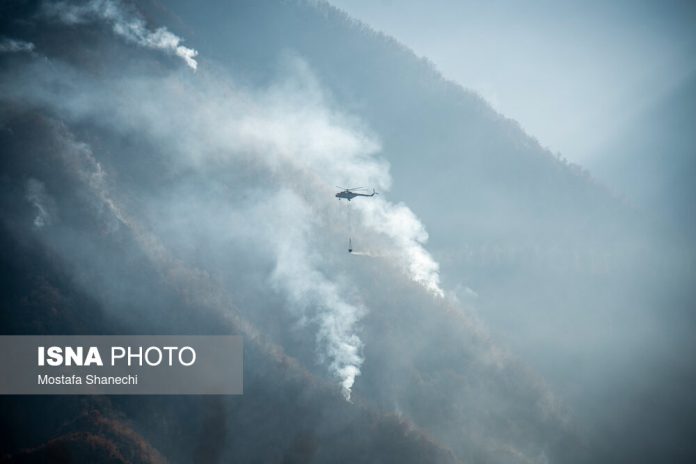
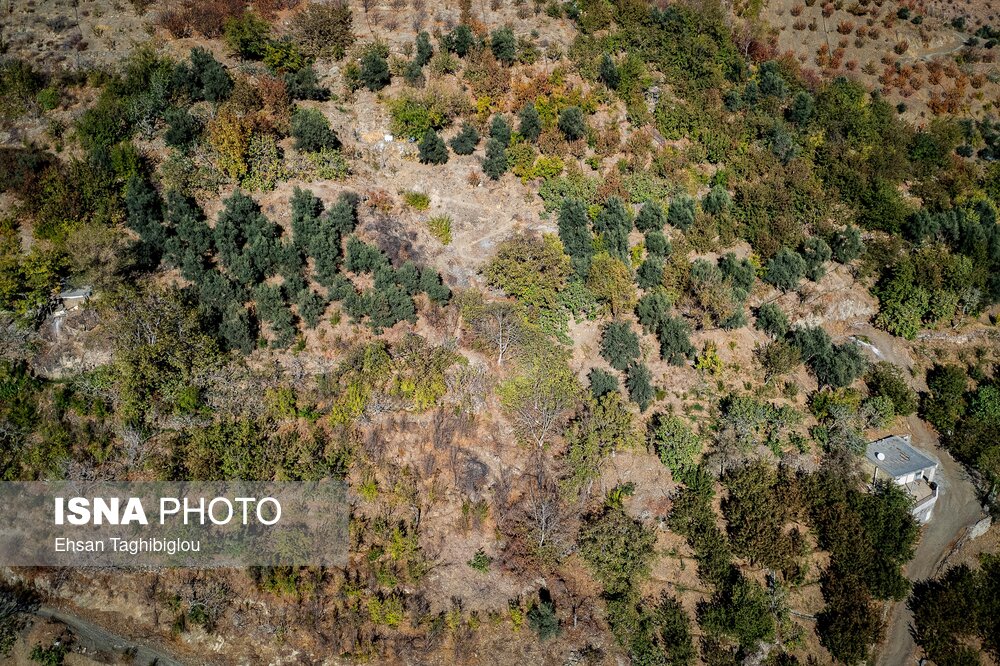
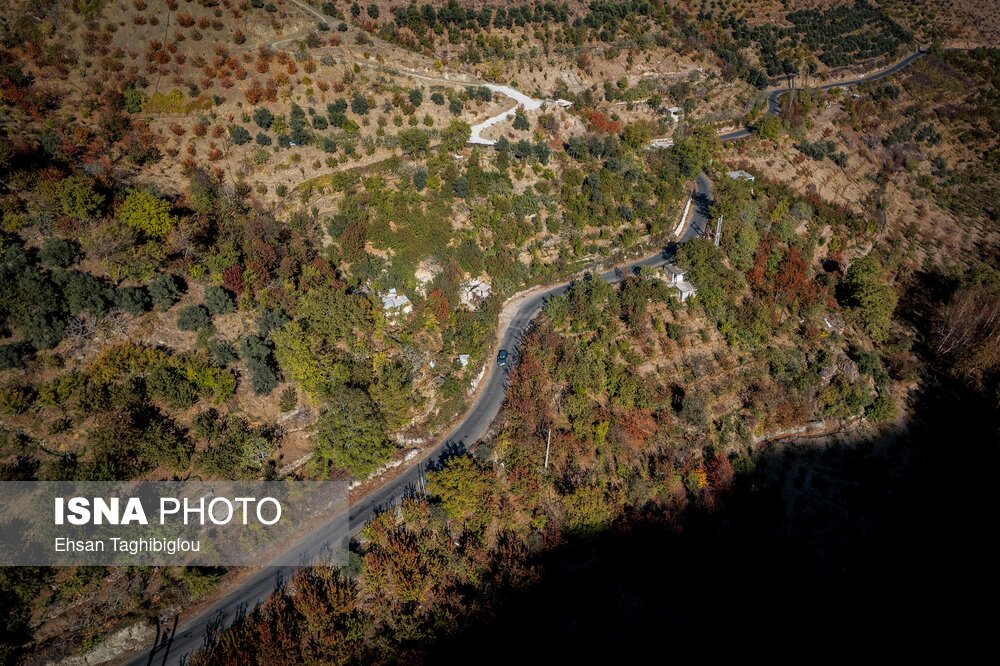
Wildfire destroys nearly 10 hectares of forest in northern Iran

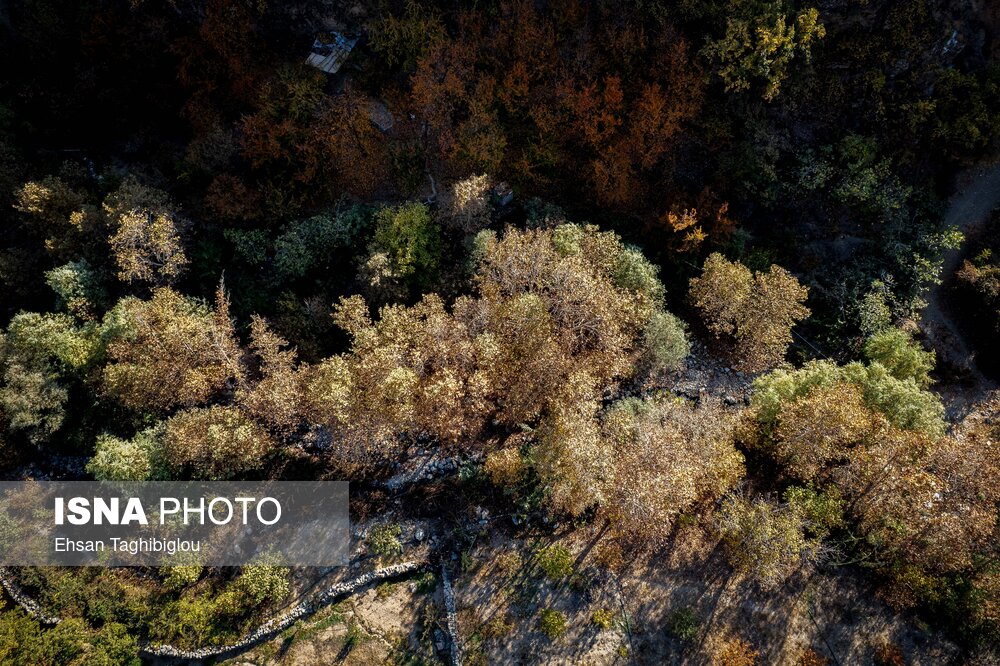
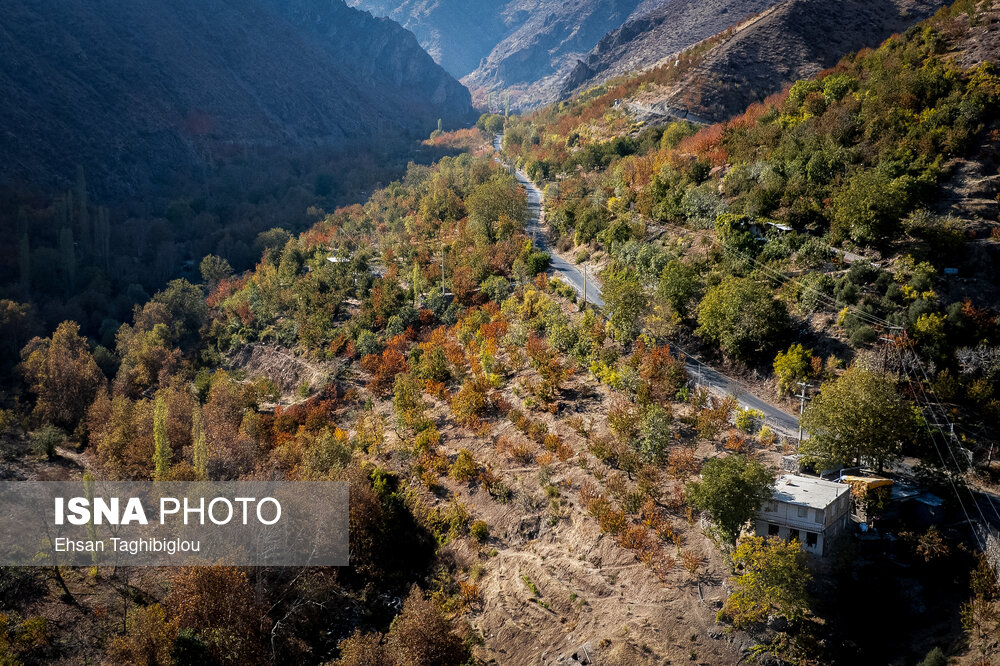
Colonel Majid Zakariaei said that authorities received two wildfire reports from the Elit forest area in Marzanabad during November. The first fire, reported on 10 November, took four days to fully extinguish. The second blaze, reported on 24 November, proved far more difficult to control due to severe environmental conditions.

According to Zakariaei, extremely steep slopes of over 80 percent, prolonged drought, warm winds, humidity below 30 percent, accumulated dry leaf litter—sometimes up to one meter deep—fallen dead trees, and limited access routes for personnel and equipment all contributed to the challenge.

He estimated the burned area at under 10 hectares. More than 520 personnel across 52 specialized teams were deployed, including forest protection units, local volunteers, mountaineers, environmental rangers from the protected area, Basij and IRGC forces, Red Crescent rescuers, military teams, local municipalities, and firefighting units.

Aerial suppression efforts also played a major role, he added.

Tehran hosts “Basij Power” drill with senior IRGC commanders in attendance

The exercise took place at Imam Hussein Officer and Guard Training University in Tehran.

The event was organized by the Mohammad Rasulullah Corps, IRGC’s command for Greater Tehran, and attended by IRGC Commander-in-Chief Major General Mohammad Pakpour and Ahmad Vahidi, deputy chief of the Armed Forces General Staff.

Other officials from the General Staff, the Mohammad Rasulullah Corps and the Basij Organization were also present.

The exercise focused on demonstrating the operational readiness, coordination and mobilization capacity of Basij units in the capital.

More in pictures:

US representatives call for Trump envoy to be fired after leaked Kremlin call

Don Bacon, a Republican representative, called for Steve Witkoff’s immediate dismissal.

“For those who oppose the Russian invasion and want to see Ukraine prevail as a sovereign & democratic country, it is clear that Witkoff fully favors the Russians,” the Nebraska lawmaker wrote on X.

“He cannot be trusted to lead these negotiations. Would a Russian paid agent do less than he? He should be fired.”

Brian Fitzpatrick, a Pennsylvania Republican wrote that the leak represented “a major problem” and “one of the many reasons why these ridiculous side shows and secret meetings need to stop”.

He urged that the secretary of state, Marco Rubio, be allowed to “do his job in a fair and objective manner”.

Democratic representative Ted Lieu went further, calling Witkoff an “actual traitor,” and adding: “Steve Witkoff is supposed to work for the United States, not Russia.”

In a recording obtained by Bloomberg of a 14 October phone call between Witkoff and Yuri Ushakov, Vladimir Putin’s top foreign policy aide, Witkoff said peace would require Moscow gaining control of Donetsk and potentially additional Ukrainian territory.

“Now, me to you, I know what it’s going to take to get a peace deal done: Donetsk and maybe a land swap somewhere,” Witkoff added, according to Bloomberg’s transcript. “But I’m saying instead of talking like that, let’s talk more hopefully because I think we’re going to get to a deal here.”

Witkoff also gave Ushakov tactical advice, including how the Russian leader should approach the issue with Trump. It included suggestions about scheduling a Trump-Putin phone call before the planned visit of the Ukrainian President, Volodymyr Zelensky, to the White House.

On Wednesday, Ushakov appeared to confirm the call’s authenticity to Russian state television, suggesting the leak was meant to “hinder” negotiations. During the conversation, Ushakov stated Putin would congratulate Trump and call him “a real peace man”.

Trump defended Witkoff on Tuesday night.

“That’s what a dealmaker does. You’ve got to say look, they want this, you’ve got to convince them of this,” Trump said while onboard Air Force One.

“That’s a very standard form of negotiation.”

He added that he imagined Witkoff “is saying the same thing to Ukraine”.

The president’s special missions envoy, Richard Grenell, meanwhile, called for the leaker to be fired, not Witkoff.

“Find the leaker and fire them immediately. No excuses. The anonymous leaker is a national security risk,” he wrote in a social media post.

The controversial, 28-point proposal would force Ukraine to surrender the entire Donetsk region, including areas currently under Ukrainian control. These territories would become a demilitarized buffer zone recognized internationally as Russian territory.

The plan would also grant Russia control of Luhansk and Crimea while freezing battle lines in Kherson and Zaporizhzhia. Russia has not fully captured Donetsk despite nearly four years of war.

Putin said earlier this month that the US plan could form the basis for a final settlement, though the Kremlin claims it has not discussed details with Washington.

Trump announced earlier on Tuesday he is sending Witkoff to Moscow to meet Putin and the US army secretary, Dan Driscoll, to meet Ukrainian officials, ahead of a possible Trump-Zelensky meeting on Friday.