Reuters quoted witnesses as saying Saturday that UN teams were overseeing the withdrawal, breathing a fresh lease of life into the peace deal which had been stalled for months.
Mohammed Ali al-Houthi, the head of Yemen’s Supreme Revolutionary Committee, said in Twitter post earlier Saturday that the withdrawal would begin at 10 a.m. local time (0700 GMT).
He said the intention to unilaterally redeploy from the ports was due to the Saudi coalition’s refusal to implement the truce agreement reached between Yemen’s warring sides in Stockholm last December.
Under the deal, representatives from the Houthis and Yemen’s Saudi-backed former government agreed to withdraw their troops from Hudaydah’s main port and two other nearby ports, as well as Hudaydah city and allow deployment of UN monitors.
Yemen faces a humanitarian catastrophe amid a Saudi war and blockade which does not allow the country to import and distribute vital food, fuel and medicines.
Al-Houthi said he holds the UN responsible for the humanitarian crisis in Yemen because of its failure to put an end to the blockade, the closure of Sana’a airport and disruption of salary payments.
On Friday, the UN’s Redeployment Coordination Committee (RCC) said the Houthis would make an “initial unilateral redeployment” between May 11 and May 14 from three Yemeni ports.
The redeployment, it said, should allow the UN to take “a leading role in supporting the Red Sea Ports Corporation in managing the ports” and to enhance checks on cargoes.
The process, it emphasized, must be followed by “the committed, transparent and sustained actions of the parties to fully deliver on their obligations.”
In Stockholm, it was hoped that the redeployment would take place in January, but its implementation has repeatedly been stalled due to a lack of trust between the rival parties.
Yemen’s former information minister Moammar al-Eryani said on Friday the Houthis’ redeployment offer was “misleading” and unacceptable if it did not allow for “joint monitoring and verification”.
Hudaydah, a lifeline for millions of Yemenis, has seen some of the heaviest fighting in the four-year Saudi aggression against the impoverished nation.
Saudi Arabia and the UAE launched the Hudaydah offensive in June 2018, but they have faced strong resistance put up by Yemeni armed forces – led by the Houthis — and the city’s residents.
The Saudi-led coalition claims that the Houthis are using the port city for weapons delivery, an allegation the fighters reject.
Saudi Arabia and a number of its regional allies launched the war on Yemen in March 2015 with the aim of crushing the Houthis and bringing the Riyadh-backed former regime back to power. They have failed to achieve either of the objectives.
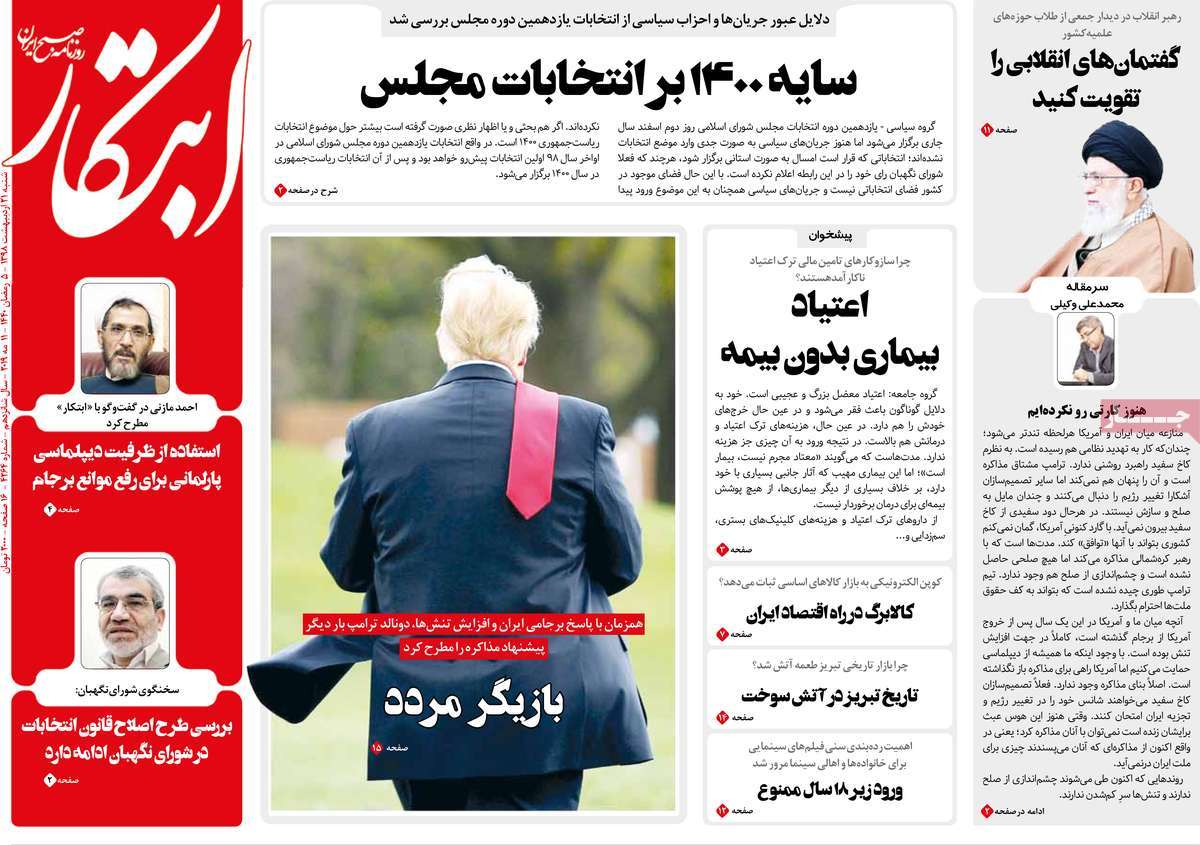
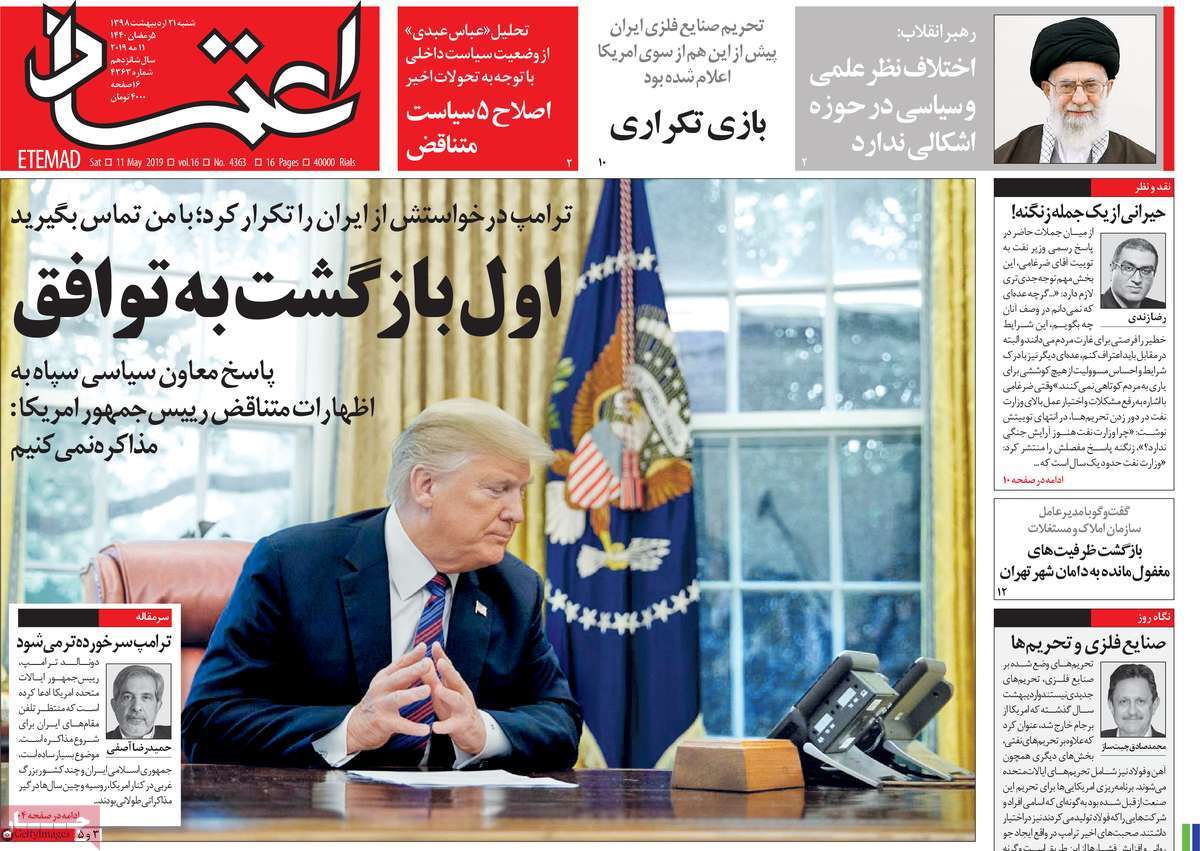
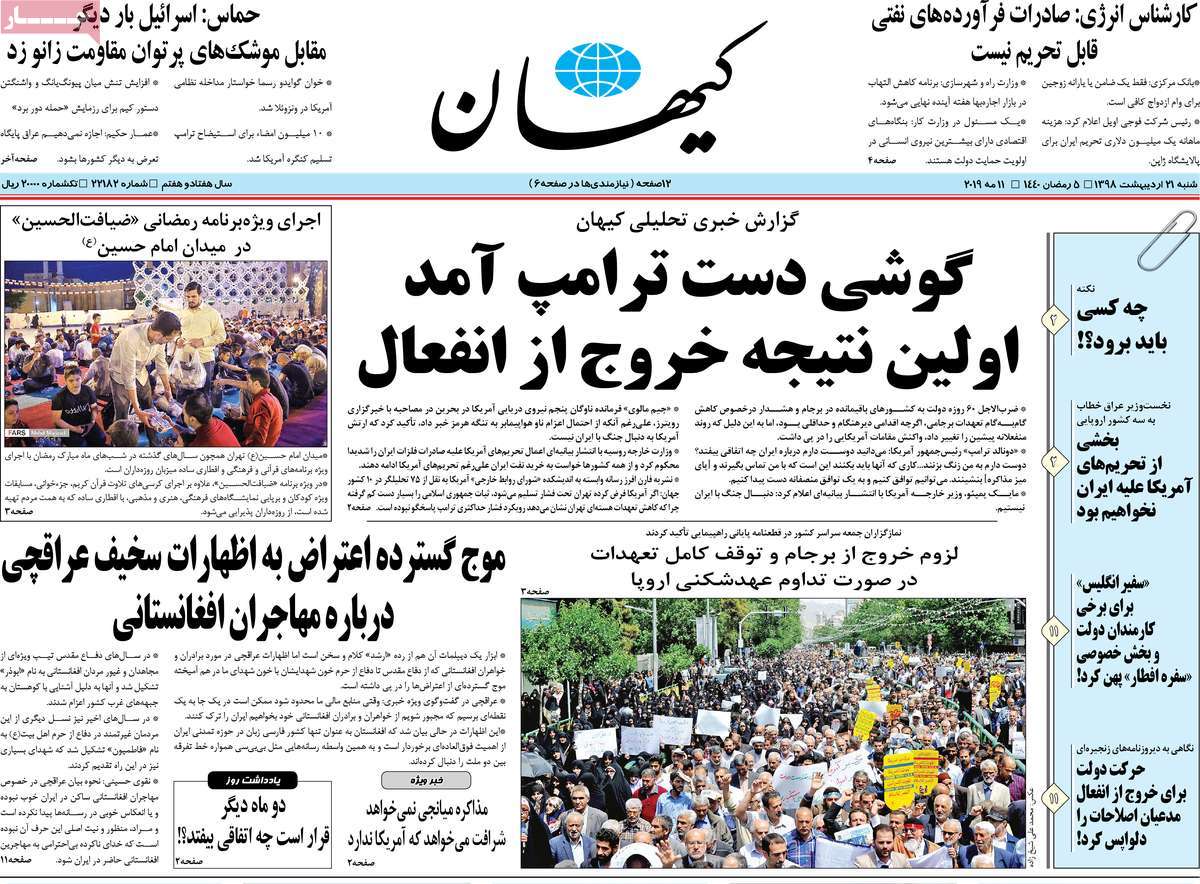
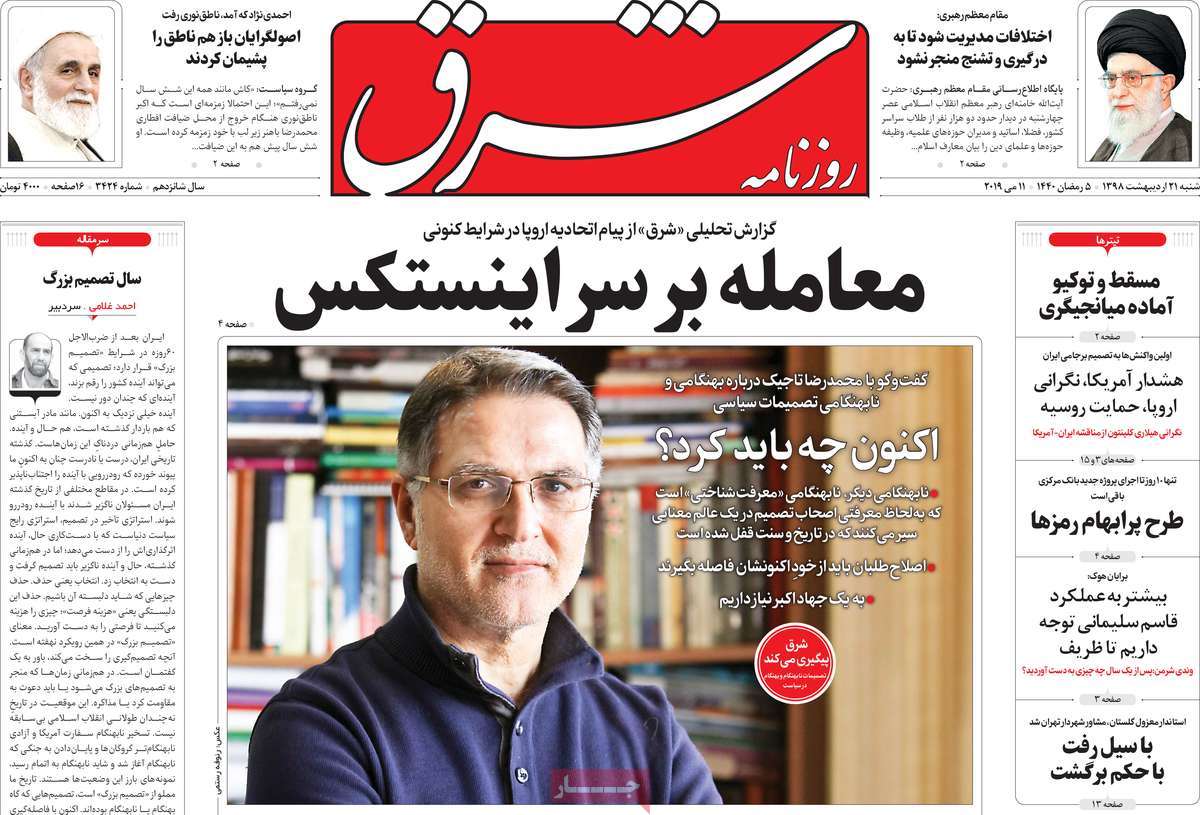
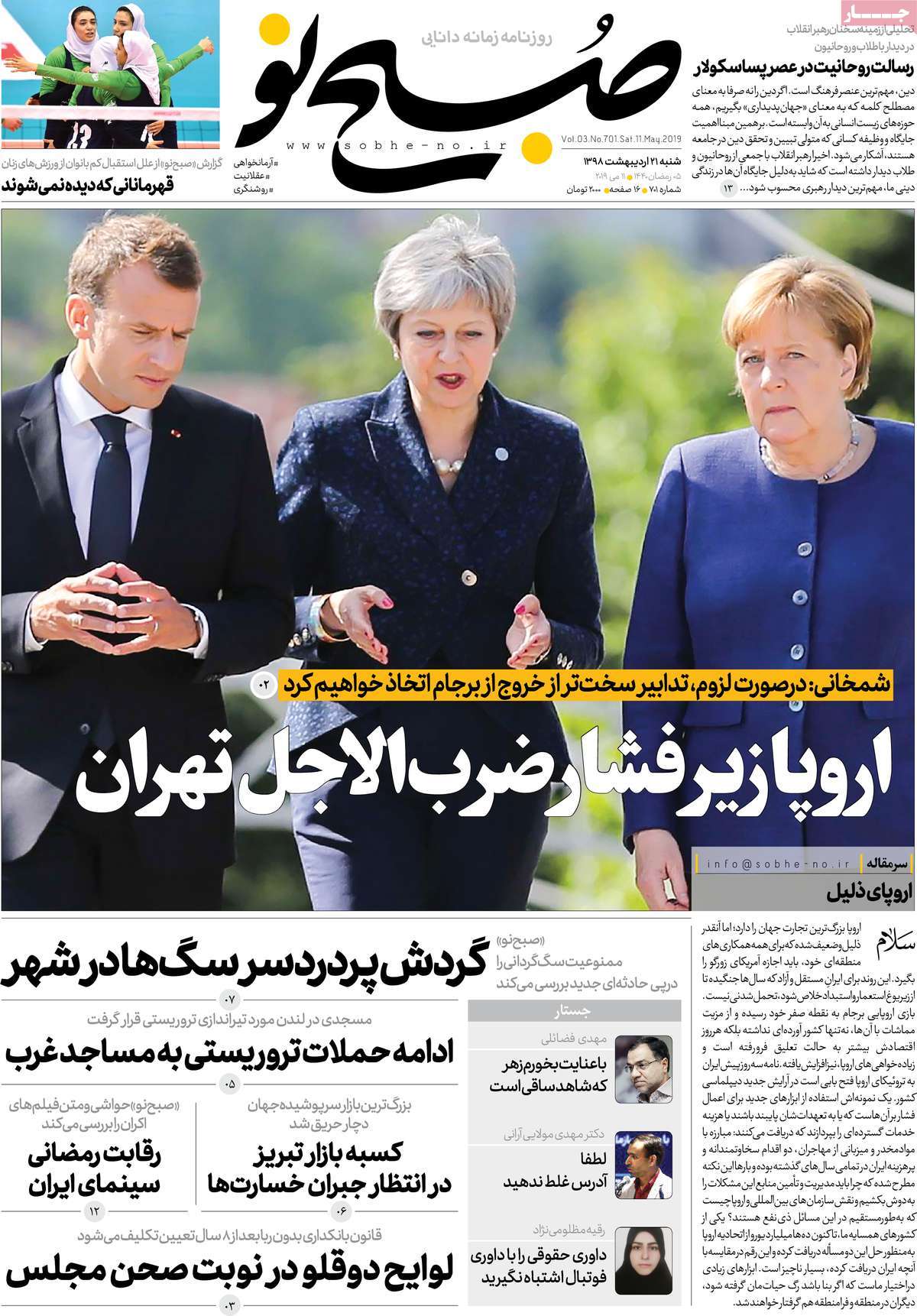
All papers today covered US President Donald Trump’s call for bilateral talks with Iran, and his request from Iran to call him.
Also a top story was the readiness expressed by Japan, Iraq, and Oman to mediate between Iran and the US amid rising tensions between the two arch-rivals.
The above issues, as well as many more, are highlighted in the following headlines and top stories:
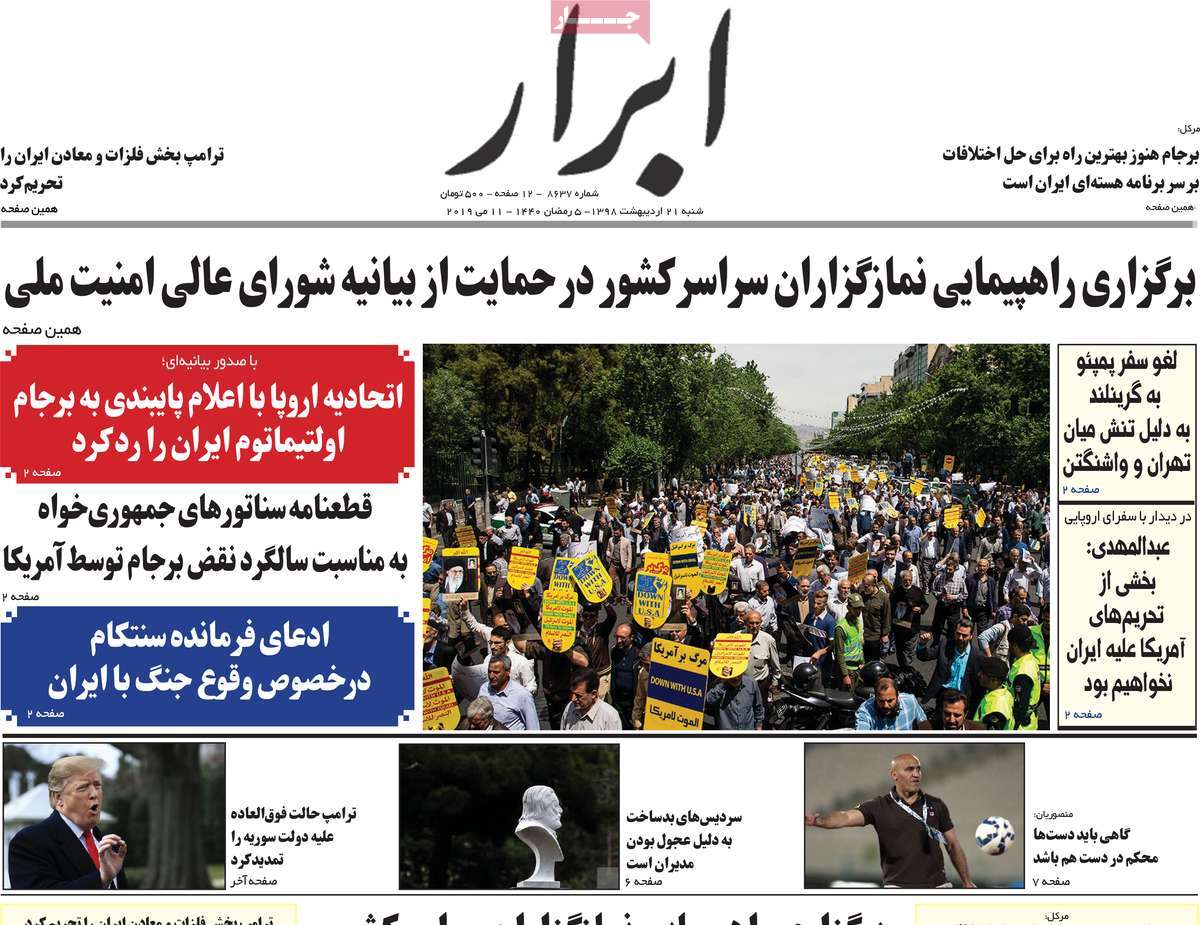
Abrar:
1- Pompeo Cancels Visit to Greenland over Tehran-Washington Tension
2- EU Rejects Iran’s Ultimatum, Underlines Commitment to JCPOA
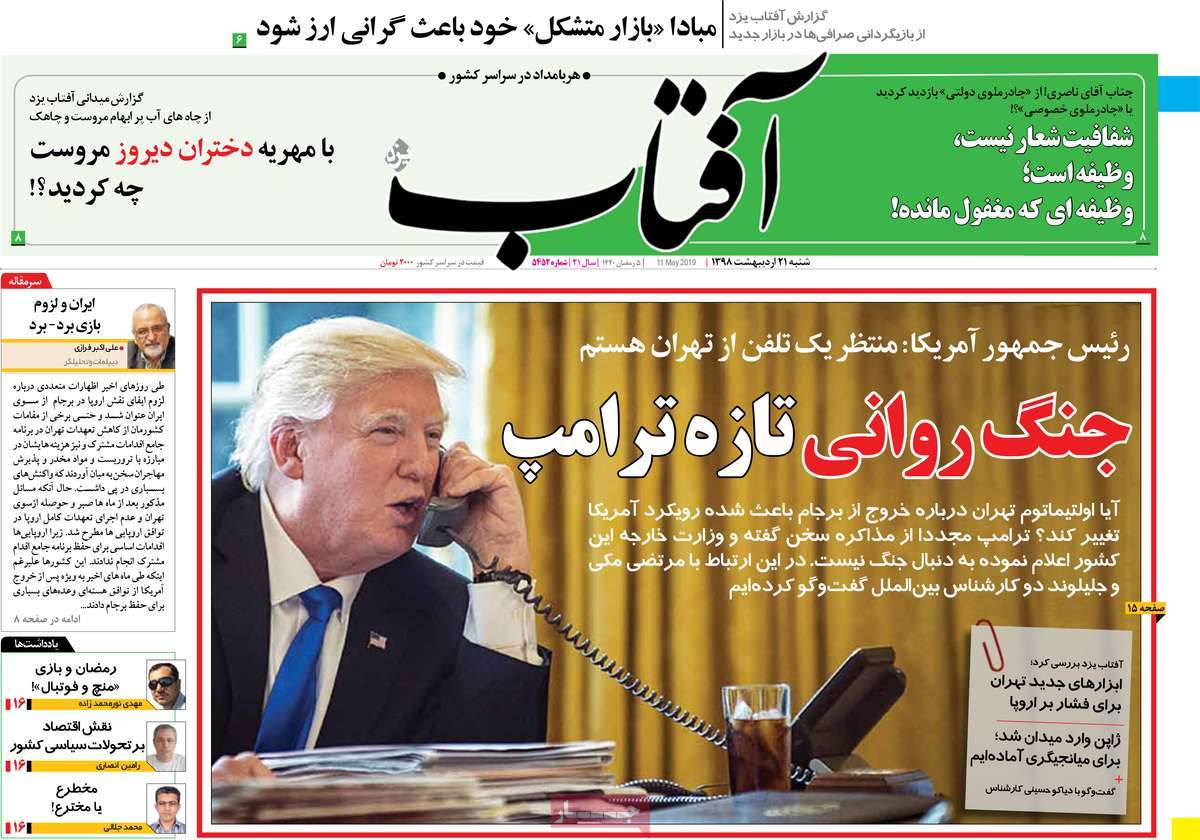
Aftab-e Yazd:
1- Trump’s New Psy-War
* US President Talks of Negotiation with Iran
* Pompeo Says US Not after War with Iran
2- Europe’s New Means to Put Tehran under Pressure
3- Japan Says Ready to Mediate between Iran, US
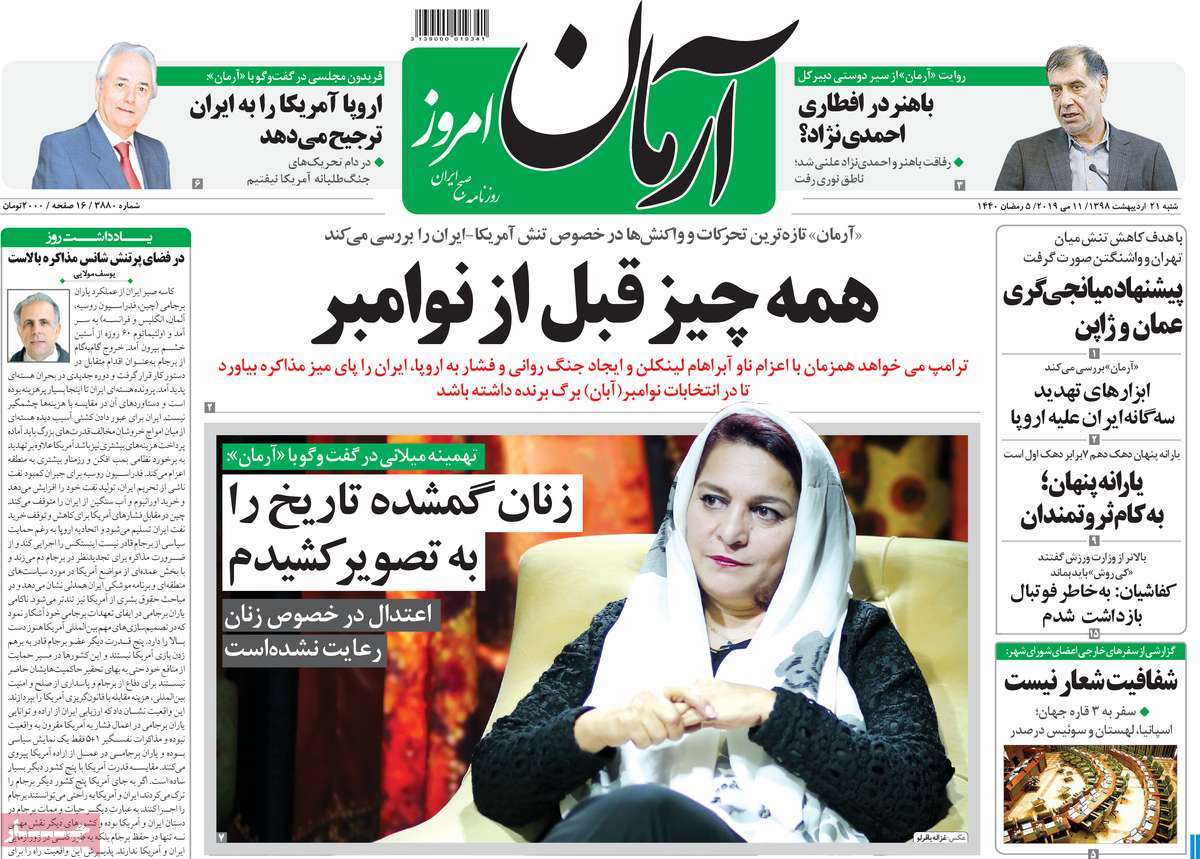
Arman-e Emrooz:
1- Everything before November
* Trump Wants to Take Iran to Negotiating Table to Win Nov. Elections
2- Analyst: Europe Prefers US to Iran
3- Chance of Talks High in Tense Situation [Editorial]
4- Oman, Japan Offer to Mediate
Ebtekar:
1- Trump Once Again Calls for Talks with Iran amid Rising Tension
2- History of Tabriz Burns in Fire
Etemad:
1- First Return to the Deal: Trump Repeats Request from Iran: Call Me!
2- IRGC’s Reaction to Trump’s Contradictory Remarks: We Won’t Negotiate
3- Trump to Get More Frustrated [Editorial]
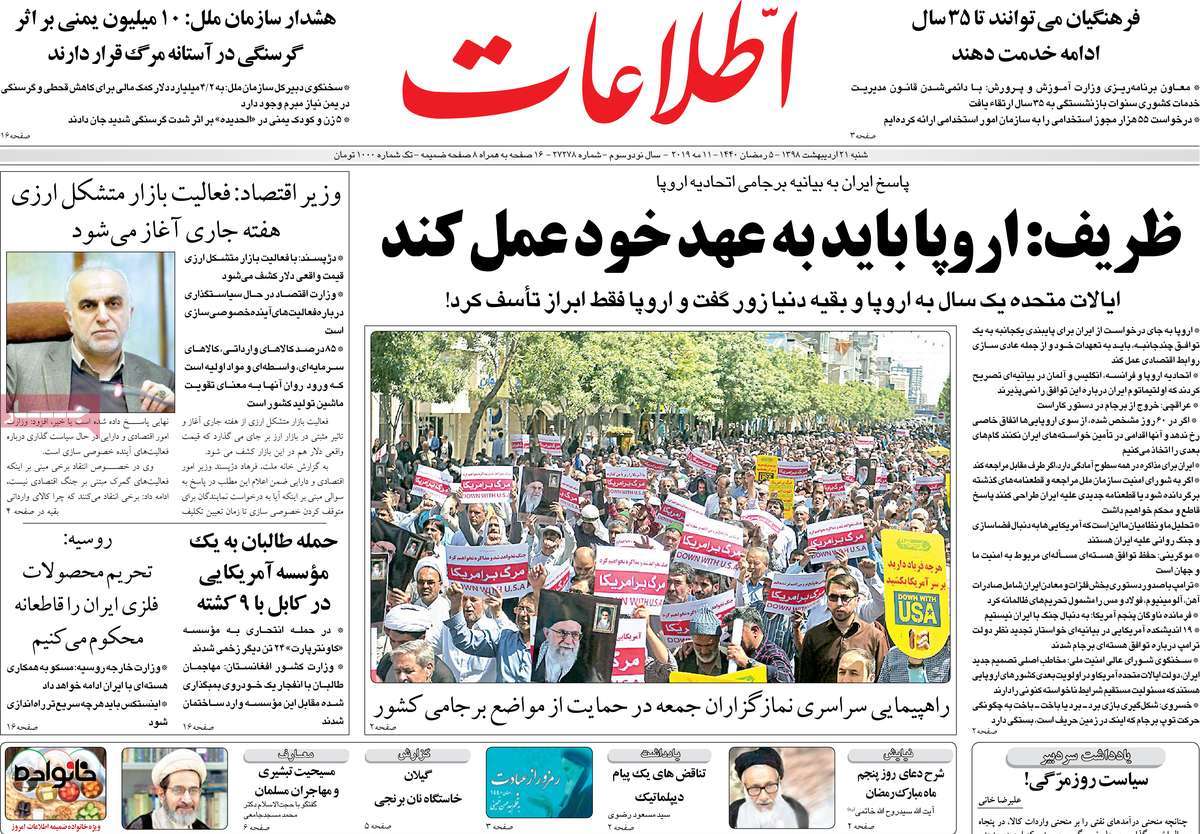
Ettela’at:
1- Zarif: Europe Must Live Up to Its Commitments
* US Bullies Europe, Others for One Year, Europe Just Expressed Regret
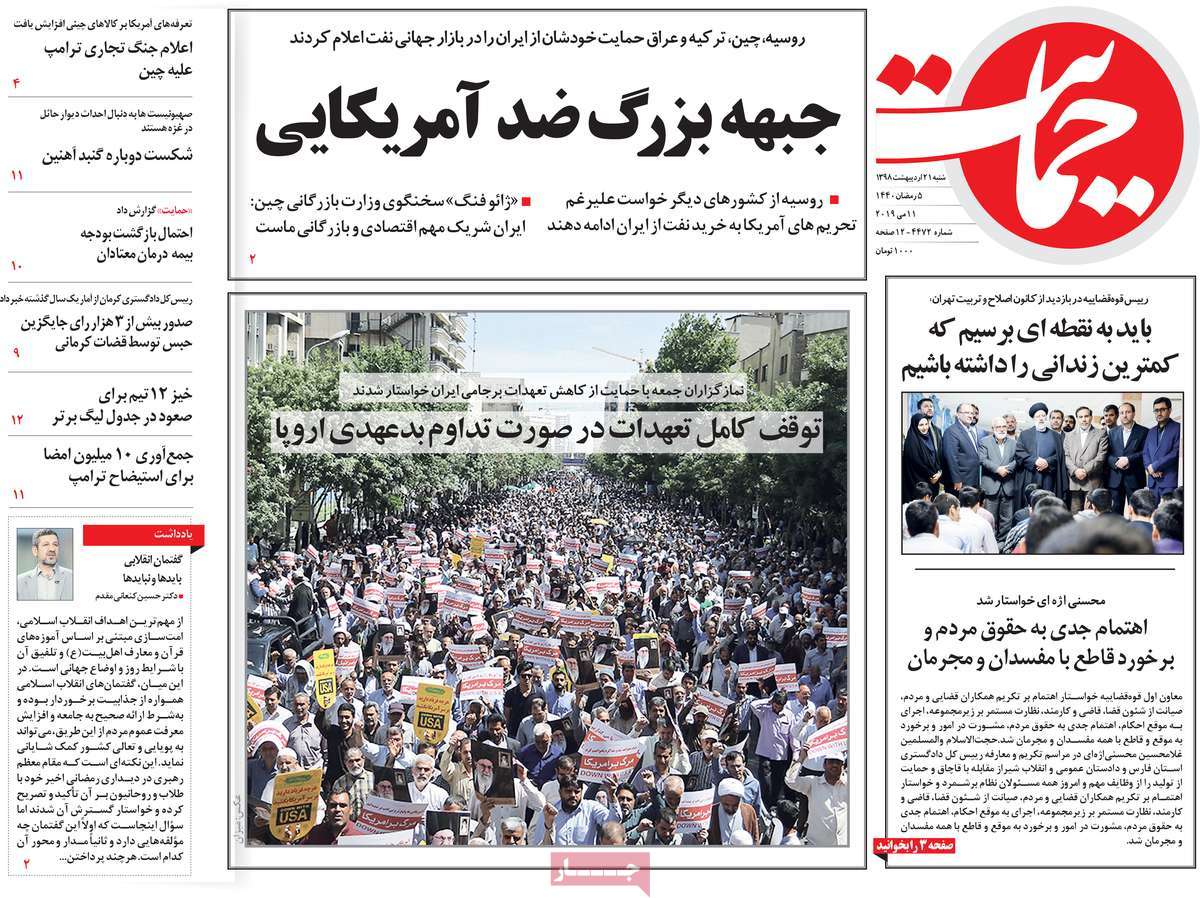
2- Iranian Worshippers Hold Rally in Support of Government’s JCPOA Decision
3- Russia: We Strongly Condemn US’ Sanctions against Iran’s Metal Sector
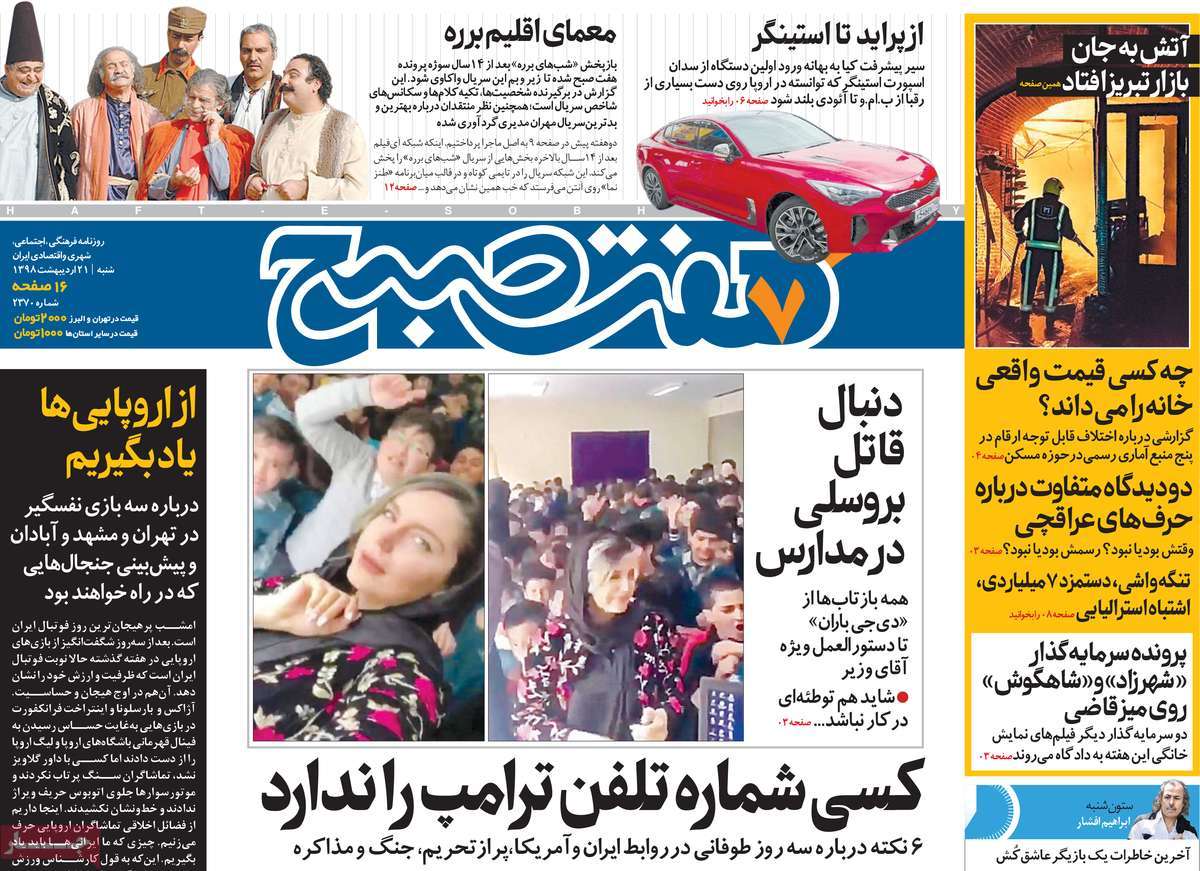
Haft-e Sobh:
1- Does Any One Has Trump’s Number?
* Six Points about 3 Stormy Days in Iran-US Ties: Full of Sanctions, War, Negotiation
Hemayat:
1- Great Anti-American Front: Russia, China, Iraq Support Iran in Oil Market
Jame Jam:
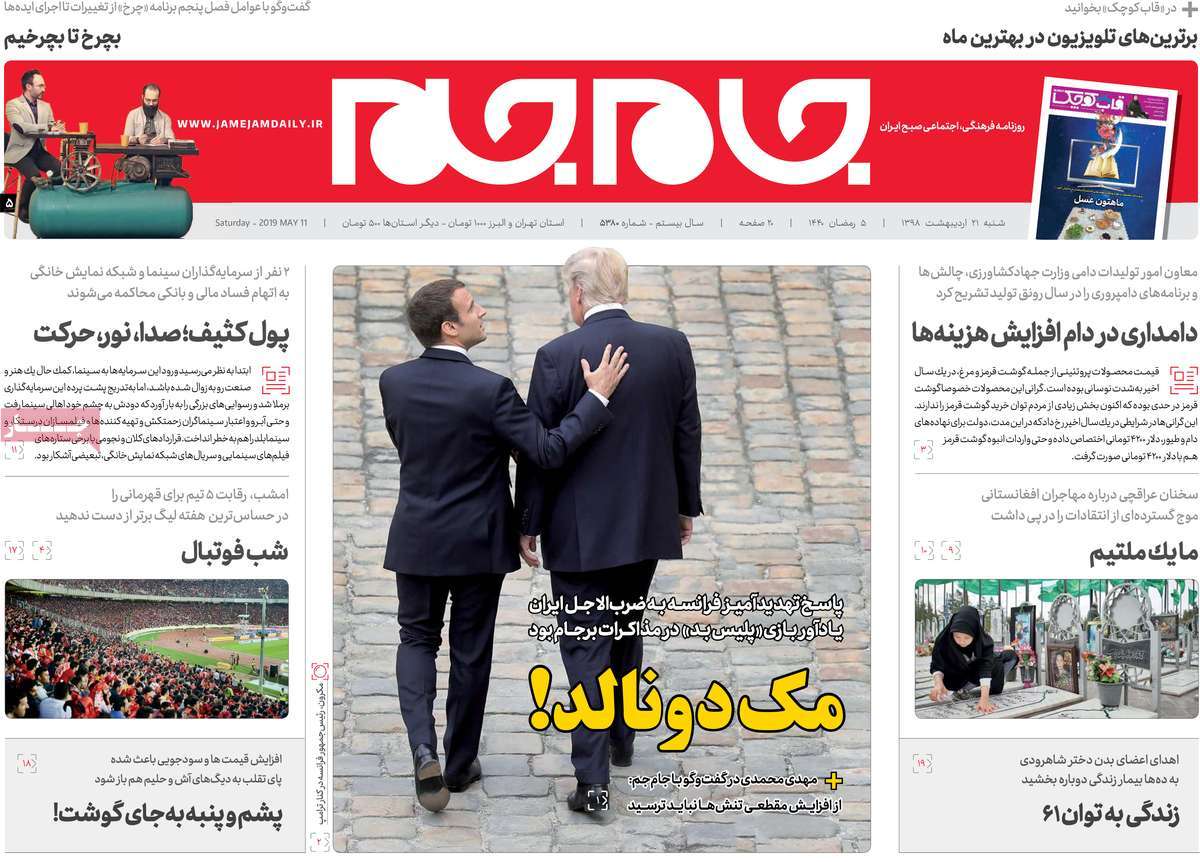
1- France’s Threatening Remarks about Iran’s Deadline Reminiscent of ‘Good Cop/Bad Cop’ Game in JCPOA Talks
Javan:
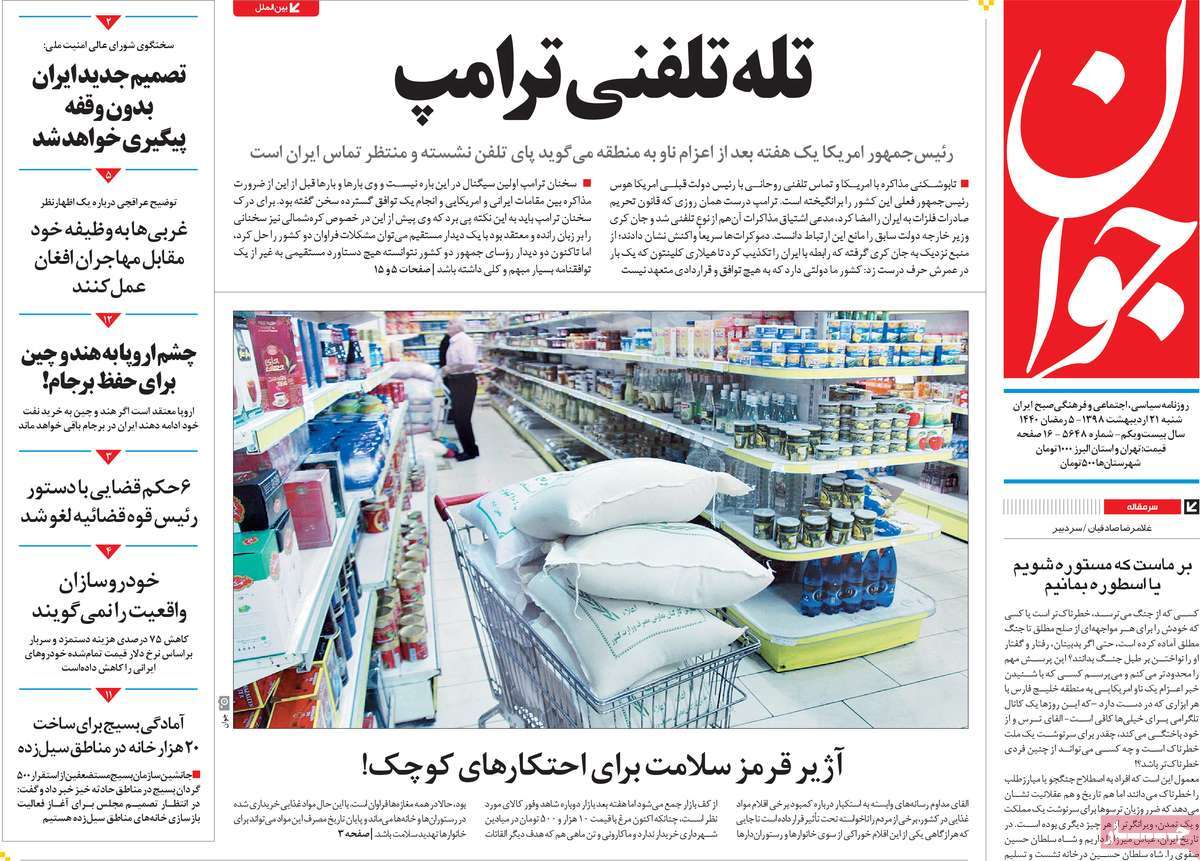
1- Trump’s Phone Trap
* One Week after Deploying Warship in Region, Trump Says I’m Waiting for Iran’s Call
2- Europe Hopes India, China Can Save JCPOA
3- SNSC: Iran’s New Decision to Be Pursued Non-Stop
Jomhouri Eslami:
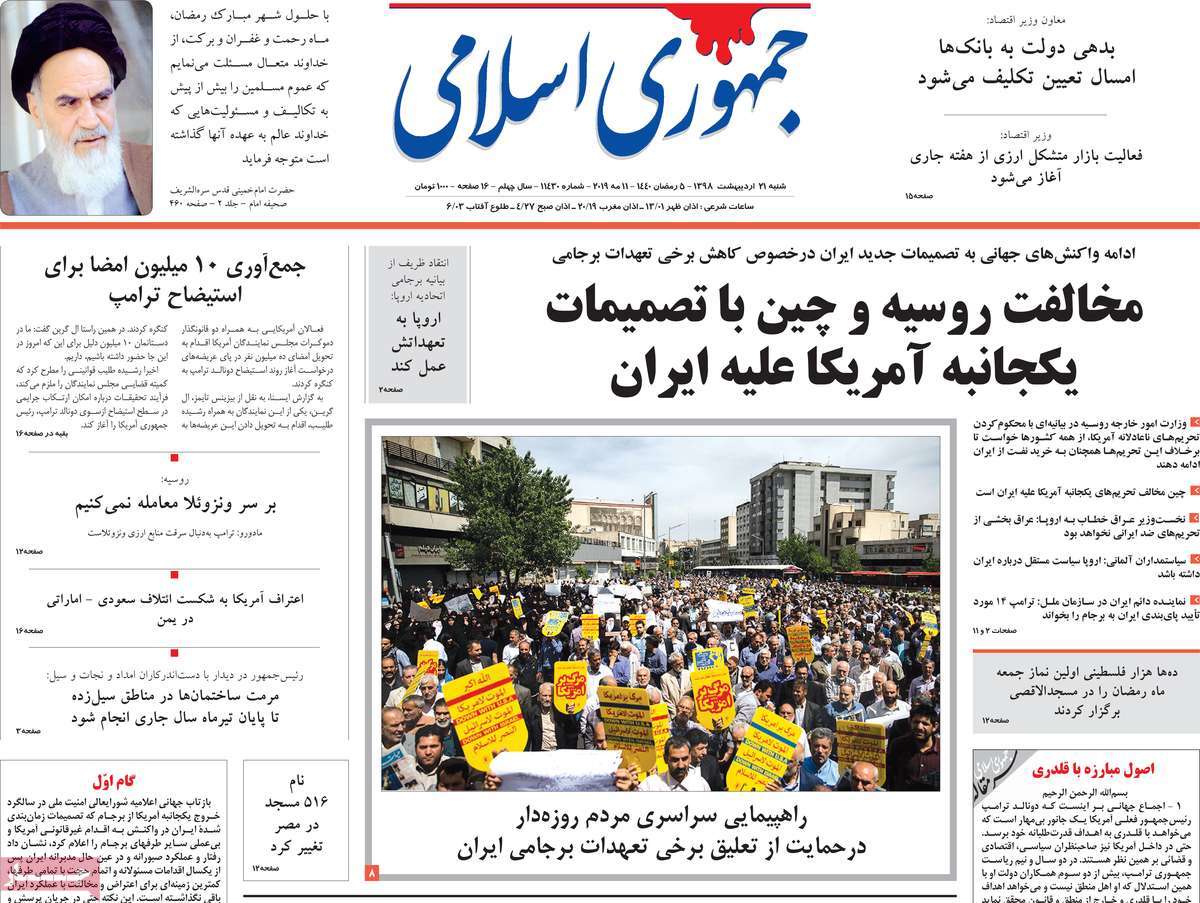
1- Russia, China Opposed to US’ Unilateral Decisions against Iran
2- 10 Million Sign Petition to Impeach Trump
3- US Admits Saudi-Emirati Coalition Defeated in Yemen
4- Nationwide Rallies of Fasting People in Support of Iran’s Nuclear Announcement
Kayhan:
1- Trump Picks Up the Phone after Iran Stopped Passive Stance
2- Energy Expert: Export of Iran’s Oil Products Cannot Be Sanctioned
3- UK Ambassador Gives Iftar to Some Iranian Officials, Private Sector Activists
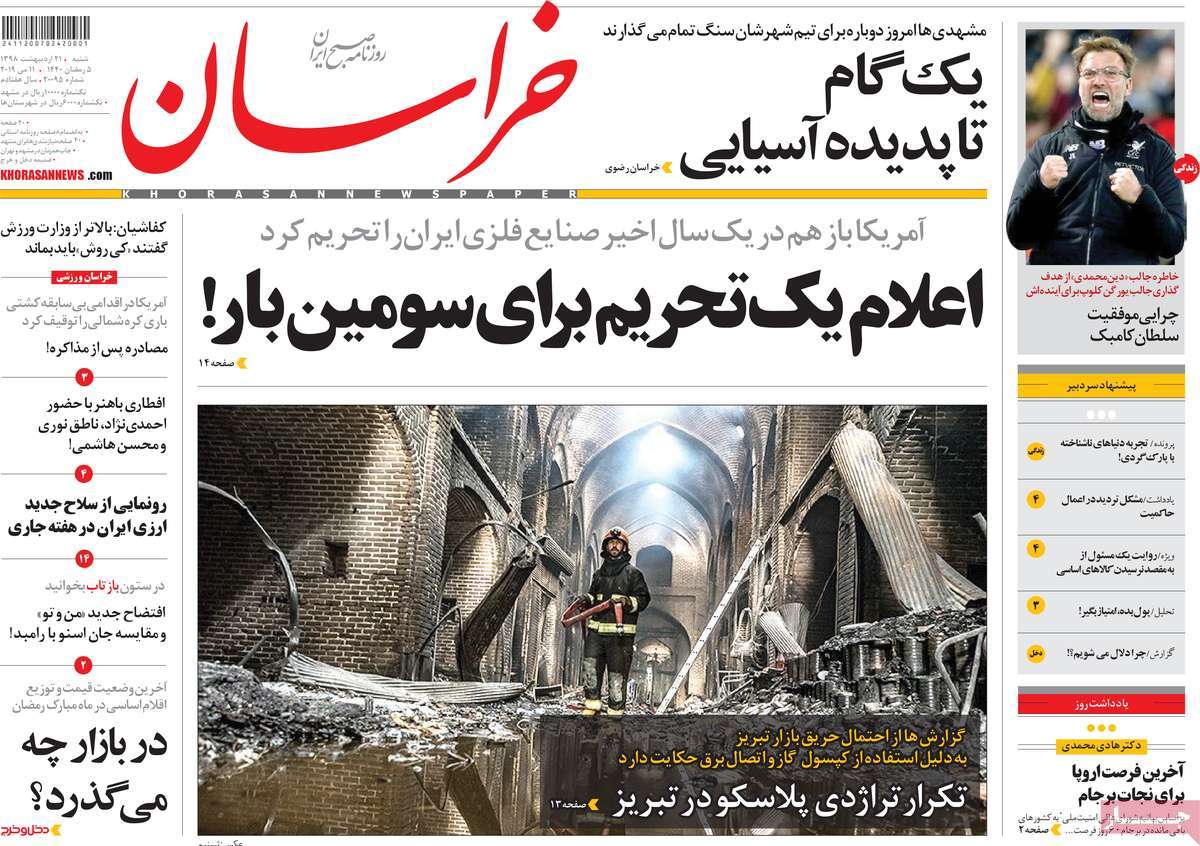
Khorasan:
1- One Sanction Announced for Third Time!
* US Once Again Sanctions Iran’s Metal Sector
2- Europe’s Last Chance to Save JCPOA
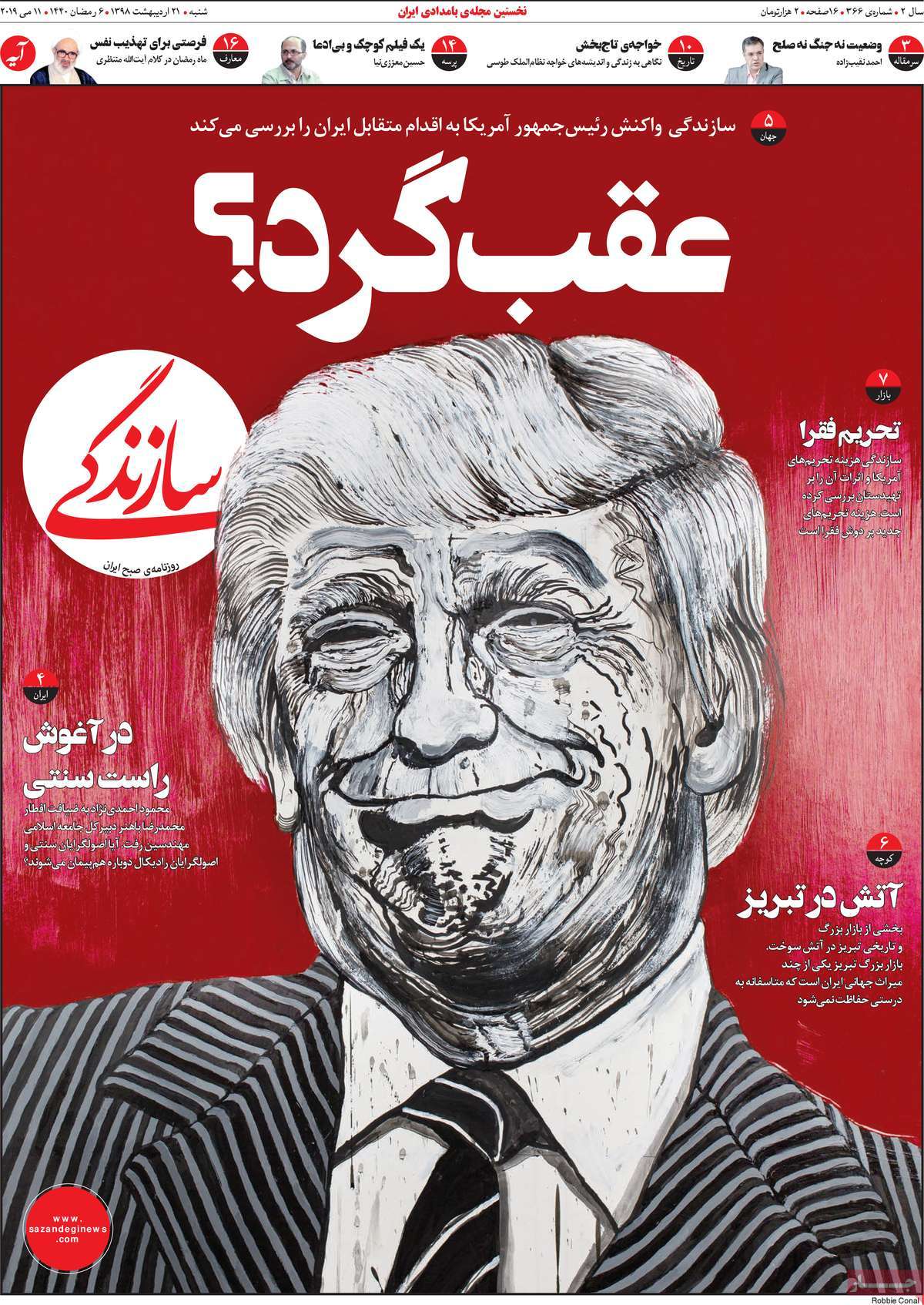
Sazandegi:
1- US Backs Off after Iran’s Reciprocal Measure
2- Fire in Tabriz
* Part of Tabriz Historical Bazaar Burns
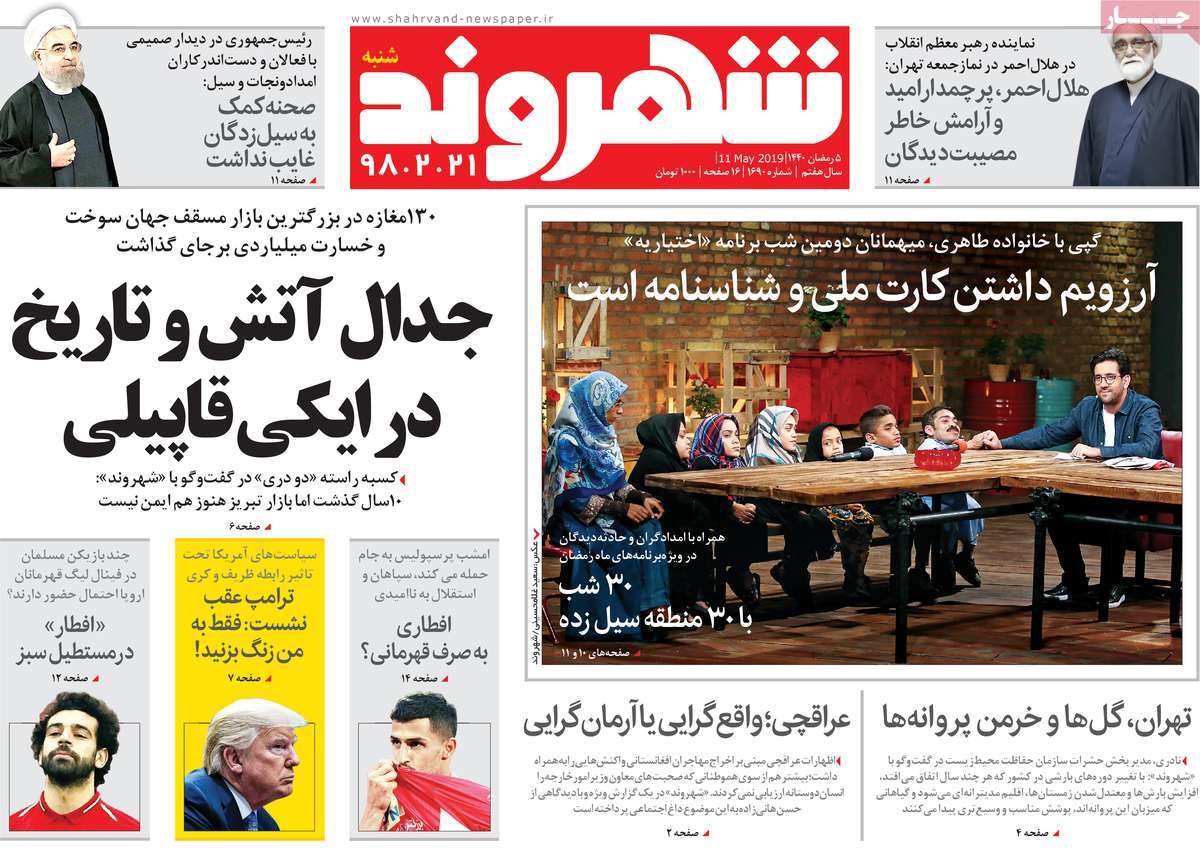
Shahrvand:
1- US Policies Influenced by Kerry-Zarif Ties
2- Trump Backs Off: Just Call Me!
3- 130 Stores in World’s Largest Covered Bazaar Burned
Shargh:
1- Deal over INSTEX
* A Report on EU’s Message under Current Circumstances
2- First Reactions to Iran’s Nuclear Announcement: US Warns, Europe Concerned, Russia Supports
3- Hilary Clinton Worried about Iran-US Conflict
4- Hook: We Pay More Attention to Qassem Soleimani’s Acts, Not Zarif’s
Sobh-e Now:
1- Europe under Pressure of Iran’s Ultimatum
2- Shamkhani: We’ll Adopt Stronger Measures than Withdrawing from JCPOA If Needed
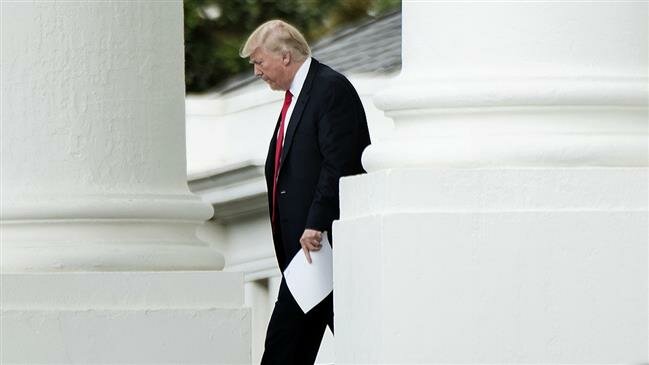
The White House contacted the Swiss on Thursday, the same day Trump publicly appealed to Iran to call him amid heightened tensions, the broadcaster cited a source as saying.
The source, however, said Iran was “highly unlikely” to demand the number from Swiss authorities.
The Swiss embassy represents US interests in Tehran, where Washington has had no mission since 1980.
While Trump called for talks on Thursday, he did not rule out military action against Iran.
Earliest this week, hawkish national security adviser John Bolton announced that the US was deploying an aircraft carrier strike group and a bomber task force to the Middle East in a bid to send a “message” to Iran.
Asked about the deployment decision on Thursday, Trump said Iran had been “very threatening.”
“We have information that you don’t want to know about. They were very threatening, and we just want to have — we have to have great security for this country,” Trump said.
On Friday, a senior commander of Iran’s Islamic Revolution Guards Corps (IRGC) stressed that Tehran would not engage in talks with the Americans.
IRGC’s deputy head for political affairs, Brigadier General Yadollah Javani, said the US thinks it can intimidate Iran into negotiations with a combination of military threats and sanctions, but to no avail.
The senior military commander also said the US will not dare to wage a war on Iran despite its deployment of bombers and an aircraft carrier to the Persian Gulf.
In a further provocative move Friday, the Pentagon announced that it would deploy an amphibious assault ship and a Patriot missile battery to the Middle East to counter the “Iranian threat”.
Many observers have questioned the US administration’s sudden and vague assertions about Iran in the region, citing contradictory remarks made by US intelligence officials and politicians.
Iranian officials have also dismissed the allegations as part of the US administration’s “psychological warfare” against the country.
The #B_Team is at it again: From announcements of naval movements (that actually occurred last month) to dire warnings about so-called “Iranian threats”.
If US and clients don’t feel safe, it’s because they’re despised by the people of the region— blaming Iran won’t reverse that.
Speaking on Thursday, Iran’s envoy to the United Nations Takht Ravanchi slammed the Trump administration’s allegations of rising Iranian threats, saying they were based on “fake intelligence”.
Tensions rose after the US said last month that it would not renew waivers allowing Tehran’s eight largest customers to purchase oil from Iran in order to bring Iranian oil exports to zero.
Washington withdrew from the Joint Comprehensive Plan of Action (JCPOA) last year and reimposed unilateral sanctions that had been lifted under the landmark 2015 agreement.
Iran on Wednesday informed the UK, France, China, Russia and Germany — the remaining five signatories to the deal — that it was suspending some of its commitments under the deal.
Tehran also gave the three European signatories 60 days to meet their commitments, especially in the banking and oil sectors, and guarantee Iran’s interests in the face of US sanctions.
US unilateralism
Countries affected by US sanctions have expressed discontent, citing tight market conditions and high fuel prices that harm oil-dependent industries.
Last month, Iran’s Foreign Minister Mohammad Javad Zarif said the US decision to end sanctions waivers had even angered Washington’s allies.
“People are not happy. China is not happy, Turkey is not happy, Russia is not happy. France is not happy. US allies are not happy that this is happening and they say that they will find ways of resisting it,” said Zarif.
On Friday, Germany’s leading news weekly Der Spiegel published an article highlighting how Washington’s bid to pressure Iran had endangered Washington’s European allies, specifically Germany.
“Trump’s confrontational Middle Eastern policy has exacerbated the tensions between the US and its European allies, because, unlike the situation in Venezuela, Europe would be directly affected. The continent’s very security is at stake,” read the article.
“Washington is exacerbating regional tensions with its policy of applying maximum pressure on Iran,” Niels Annen, a high-ranking official at the German Foreign Ministry, told the publication.
Member of the German parliament with the Green Party and member of the Foreign Affairs Committee Jürgen Tritten said, “The US appears to be looking for a pretext to escalate the conflict with Iran.”
The paper also said the Europeans are in disarray in the face of Washington’s bid to pressurize Iran, with German foreign policy agreeing more with Tehran than its ally in Washington.
Deputy parliamentary group leader for the German SPD party, Rolf Mützenich, urged the German government to push for a UN Security Council resolution “requiring strict compliance with international law in the Middle East”.
The move, Mützenich said, will seek to counter US policies in the Middle East which disregard international law, notably in the case of Trump’s recent dealings over Palestine and Iran’s nuclear deal.
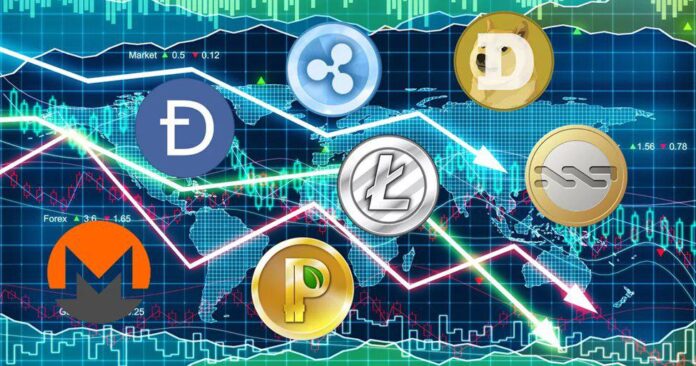
Well, it looked as if the table has turned in the past week. Altcoin is now experiencing an all-time low. This appears to be the onset of a un-season in Altcoin.
It is crystal clear that Altcoin had a brilliant start to the year with an impressive market share. The past few weeks have shown that BTC has experienced a significant increase. Within this period, there were no significant changes in the market cap. This resulted in Altcoin losing its value against BTC and their market share.
It is equally surprising that Binance Coin (BNB), known to be the king of the recent Altcoin season, is also beginning to experience a decline.
Could This Signal the End of the Altcoin Season?
Since there is no doubting the fact that BTC had a great month with massive dominance and gains while Altcoin experienced a great drop, could this be the start of the end of altcoin season?
Well, let’s have a good look at a few exceptions. While the Bitcoin cash has its market share increased by a percent, in the same period, some Altcoin prices have grown against BTC.
This can only mean one thing. The fact that BTC is experiencing a great dominance over Altcoin does not mean that Altcoin can’t undergo a significant increase in their market share.
Come to think of it, when you go down the memory lane, Altcoin does not have the best chance. This is because high volatility in BTC price does not provide the most favorable condition for Altcoin’s survival.
BeaXchange: A Great Medium for Trading
Have you ever been on the lookout for a stable and secure means of crypto currency exchange? Then look no further. BeaXchange works perfectly for this purpose. It is not surprising that many users have come back with testimonies of how great BeaXchange is. This has gone a long way to spreading its gospel to many potential users.
In addition to the comfort and easy navigation that BeaXchange provides, it is safe to say that this medium offers all that you need in an exchange. The importance of having a safe and reliable exchange medium to trade cannot be over-emphasized. BeaXchange is highly recommended.
Why Should You Trust BeaXchange?
BeaXchange provides zero percent commission. With this medium of exchange, all costs are absorbed. There are no percentage deduction for both buyers and sellers. Isn’t that interesting?
Not only that, it also guarantees high liquidity. With BeaXchange, you are assured of a vast trading volume. Instant execution of orders makes it more pleasurable.
In addition, BeaXchange complies with legal terms. It is registered with the European Union. Needless to say, it has large bank support with guaranteed license holders.
Furthermore, it gives maximum security. This ensures that the platform cannot be breached. Complete data encryption, DDOS protection, multiple location server backups, amongst others have all been employed to guarantee an impenetrable security for all.
Also, the website can be easily accessed from anywhere in the world via mobile phones or computers. It allows for a cross-platform trading. It works fine to ensure that maximum comfort is provided.
It is equally interesting to know that BeaXchange provides fiat currency stable coins. This works fine in one of those moments when you feel like getting off the volatility of the crypto currency market
Tied Coin: First Japanese Crypto Currency Launched in Collaboration with BeaXchange
The launch of Tied coin was recently announced as a price stable crypto currency. Tied coin has a complete collateral relationship between Euro and Japanese Yen. It is said that Tied coin would be the first Japanese crypto currency that is backed up by fiat.
Given the fact that Tied coin is massively backed, that means the coin cannot crash. This is because there is actual money behind it and stable coins are issued. Tied coin’s mode of operation is based on the interplay of demand and supply.
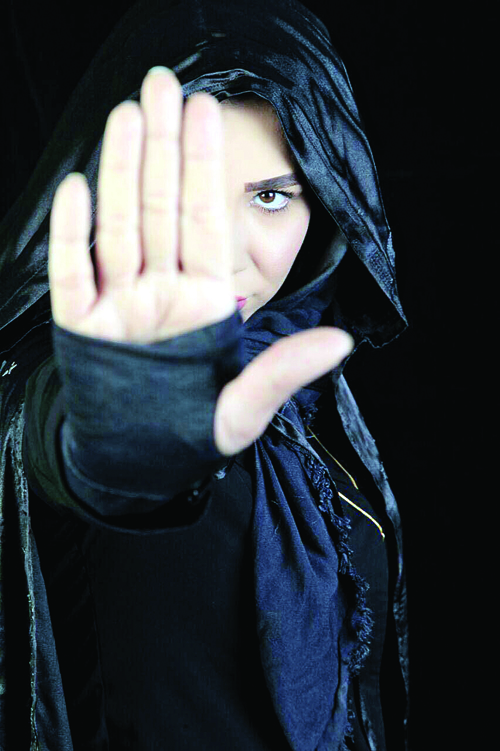
Having discovered all secrets behind the most astonishing magic tricks, she says with certainty that all jaw-dropping performances on the stage are merely optical illusion and not the power of mind or things like that. In an interview, she has told Shahrvand about her career.
– Are you the first, or the only lady magician in Iran?
I am the only lady conjurer who goes on the stage independently. I have men assistants.
– Why did you decide to become a magician, after all?
Since childhood, I had always been interested to do something that would surprise everyone. At that time, I was infatuated with a TV program that showed a conjurer performing magic tricks. Afterwards, I got a couple of props and put on some performances at school. Anyway, I began to move on that path.
– How old were you when you staged your first serious performance?
Seventeen.
– Do you have a conjuring certificate?
Yes. I am a member of the International Magicians Society.
– Didn’t your family have any problems with your job? For example, didn’t they oppose you getting into the conjuring profession because of the beliefs that exist in this career and the fact that all of your colleagues are men?
First, they strongly disagreed. But they gradually got along with it when they saw my performances and I explained to them my interests and goals.
– In your opinion, what positive objective can be pursued in the conjuring career? As you know, it seems more like entertainment and even some believe it has a deceptive nature and, in fact, it is a practice which deceives the audience, which could have a negative impact.
One of my objectives is to fight superstition in the conjuring profession.
– How?
I was brought up in a small town in Khorasan province. Unfortunately, locals believed very much in fortune-telling and geomancy. I remember even when kids had a cold, they wouldn’t take him to a doctor. The first thing they would do was to take him or her to a geomancer. When I got familiar with conjuring, I saw everything the geomancers do can be done by magicians in the form of tricks. But, unfortunately, some conjurers themselves promote superstition in society by claiming to have magic powers and claiming they can read minds. But I always explain to everyone that I don’t have any special energy or power and that there is a trick behind every magic I do.
– Tell us about the secrets of conjuring. For instance, what tricks are there that are simply tricks and not a supernatural phenomenon?
One of the performances which are all the rage today and stun everyone is the mind-reading trick. For example, once a magician on TV said he was able to predict the result of a football match. However, there was a small wardrobe under the board on which he would write the predictions. There was someone inside that wardrobe that would write the predictions on a piece of paper and swiftly gave them to the magician. After that performance, I received messages on Instagram and other social media networks every day in which people asked me about that performance and the power to predict and they wanted me to help solve their problems. But it was all a trick. However, superstition is promoted in society when magicians claim to have supernatural powers.
– As a woman, do you have any suggestion for ladies who are interested in conjuring?
I do not encourage them to become magicians unless they really love this job.
Why?
It is difficult to work along with more than two thousand men conjurers none of whom you know, and every one of whom tries to get you involved in some controversial issue every day. They say behind my back, “How dare a woman do conjuring as long as men are around?” On the other hand, sanctions have, unfortunately, led to a hundred-percent rise in the prices of our props, and now conjuring props are so expensive. Also, our colleagues in the conjuring profession began to compete with one another by lowering their fees for staging performances, making it difficult to continue working in this career.
– What’s people’s reaction when they see you as a lady magician?
Well, we didn’t have a woman conjurer in Iran before. The only reason I’m in love with this profession is people’s complimentary looks. On many occasions, before I go on the state, the MC announces that the audience is going to see a performance by a magician, but they do not expect to see a woman on the stage. But it is interesting for them when they see I am going to stage performances for them. That motivates me to continue my career in the future with interest.
Iranian conservative journalist Abdollah Ganji says Tehran should enter into talks with Europe over sharing the expenditures for refugees in Iran as well as meeting the costs for fighting narcotics.
“Our bahaviour has emboldened the Europeans; they should share the expenses Iran is paying for migrants,” he noted.
“If they do not agree [to share the costs], Iran should open the path for migration,” the journalist noted.
“The Europeans pay $6 billion to Turkey annually to stem the flow of Syrian refugees to Europe. The exodus of migrants is a nightmare for Europe,” he said.
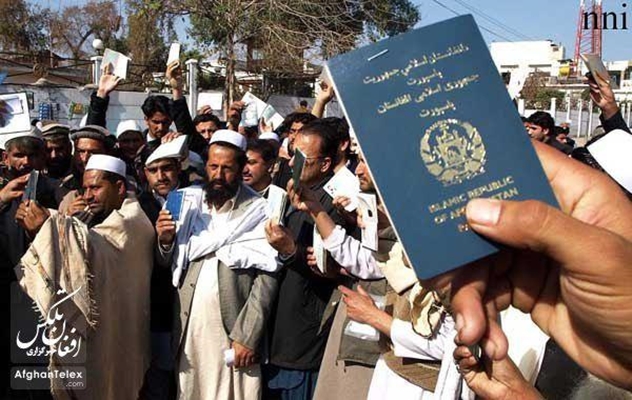
Earlier, Iran’s Deputy Foreign Minister for Political Affairs Abbas Araqchi called on Western countries to discharge their responsibilities with regards to Afghan refugees.
“The issue of migrants and refugees is an international issue, and managing their affairs and meeting their costs are an international responsibility as well,” he said.
He noted Iranian people, based on their humanitarian and Islamic beliefs, have generously hosted Afghans and other refugees over the past 40 days, and will continue to do so.
“However, it should be noted that other countries and international organizations, especially Western countries which have caused many of the predicaments that Afghan people are suffering, should fulfil their duties and responsibilities, too,” he said.
“The European states should pay their share of hosting migrants by either meeting the costs or hosting some of them in their countries,” said the senior diplomat.
“This is a serious demand by the Islamic Republic of Iran,” said Araqchi.
He said Iran has been following up the issue through the UN, European officials and the Afghan government for years, and will continue to pursue the matter seriously.
Meanwhile, spokesperson for Afghanistan’s Foreign Ministry Sibghatullah Ahmadi hailed Iran for hosting Afghan refugees.
“Iran has always treated migrants responsibly,” he said in response to earlier remarks by Araqchi who had said Iran would consider asking Afghan refugees to leave Iran if the US keeps exerting economic pressure on the country and Europe fails to help.
Ahmadi said Afghanistan expects its expatriates to be treated as refugees in accordance with international conventions, and that any possible repatriation of Afghan migrants take place gradually and respectfully.
The spokesman said Iran has always been a very good and reliable friend and partner for Kabul.
He thanked Iran for hosting Afghan migrants and added Iranians have always proven their hospitality.
According to the data collected by Etemad daily newspaper using the 2016 census and other sources, 1,583,979 Afghan migrants live in Iran, accounting for two percent of Iran’s population. Almost 11,000 are studying in Iranian universities and 360,000 go to Iranian schools.
The majority of these migrants (516,000) live in Tehran province. 220,000 live in Khorasan Razavi (which shares border with Afghanistan), 183,000 in Isfahan, 125,000 in Kerman, and 109,000 in Fars province.
Iran, which has a 900-kilometer common border with Afghanistan, has been used as the main conduit for smuggling Afghan drugs to narcotics kingpins in Europe.
Despite high economic and human costs, the Islamic Republic has been actively fighting drug-trafficking over the past three decades.
The country has spent more than $700 million on sealing its borders and preventing the transit of narcotics destined for European, Arab and Central Asian countries.
The war on drug trade originating from Afghanistan has claimed the lives of nearly 4,000 Iranian police officers over the past four decades.
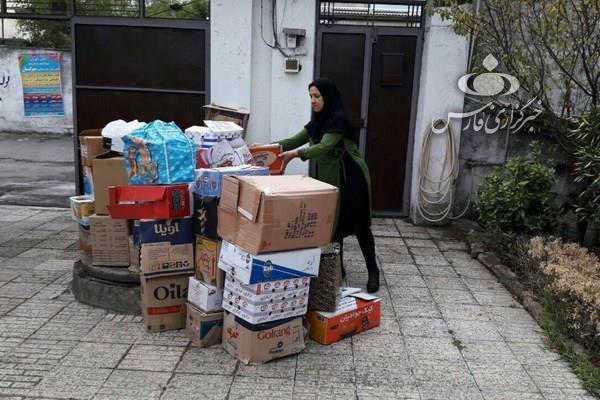
Safoura Ghallezari is a retired teacher from Bandar Anzali in Gilan province. She started her charitable activities by collecting plastic bottle caps and selling them to buy wheelchairs for people with disabilities.
Later on, by collecting waste papers, she decided to create a system to help improve the people’s culture in Anzali.
She retired five years ago after teaching 28 years at private schools and two years at Teacher Training Centre. This year, she is also teaching families at schools how to sort waste materials.
Ghallezari, who has been a social sciences teacher, told Pupils Association News Agency (PANA) that one of her most important interests is the issue of the environment and having a waste-free city.
“At first, I started to collect plastic bottle caps, which had been carried out for the first time by someone in the northwestern city of Tabriz. I used to collect bottle caps in Bandar Anzali for around 2 years with the help of students and colleagues, and spent the money to help patients,” she added.
“With the money, we managed to buy four wheelchairs for patients and people with disabilities.”
She believes she is just a teacher who cares about waste and paper sorting.
“At the time of examinations, I decided to declare to the schools that the students do not throw out their textbooks and books after the exams in a bid to pursue a serious goal with the money made by selling them,” added Ghallezari.
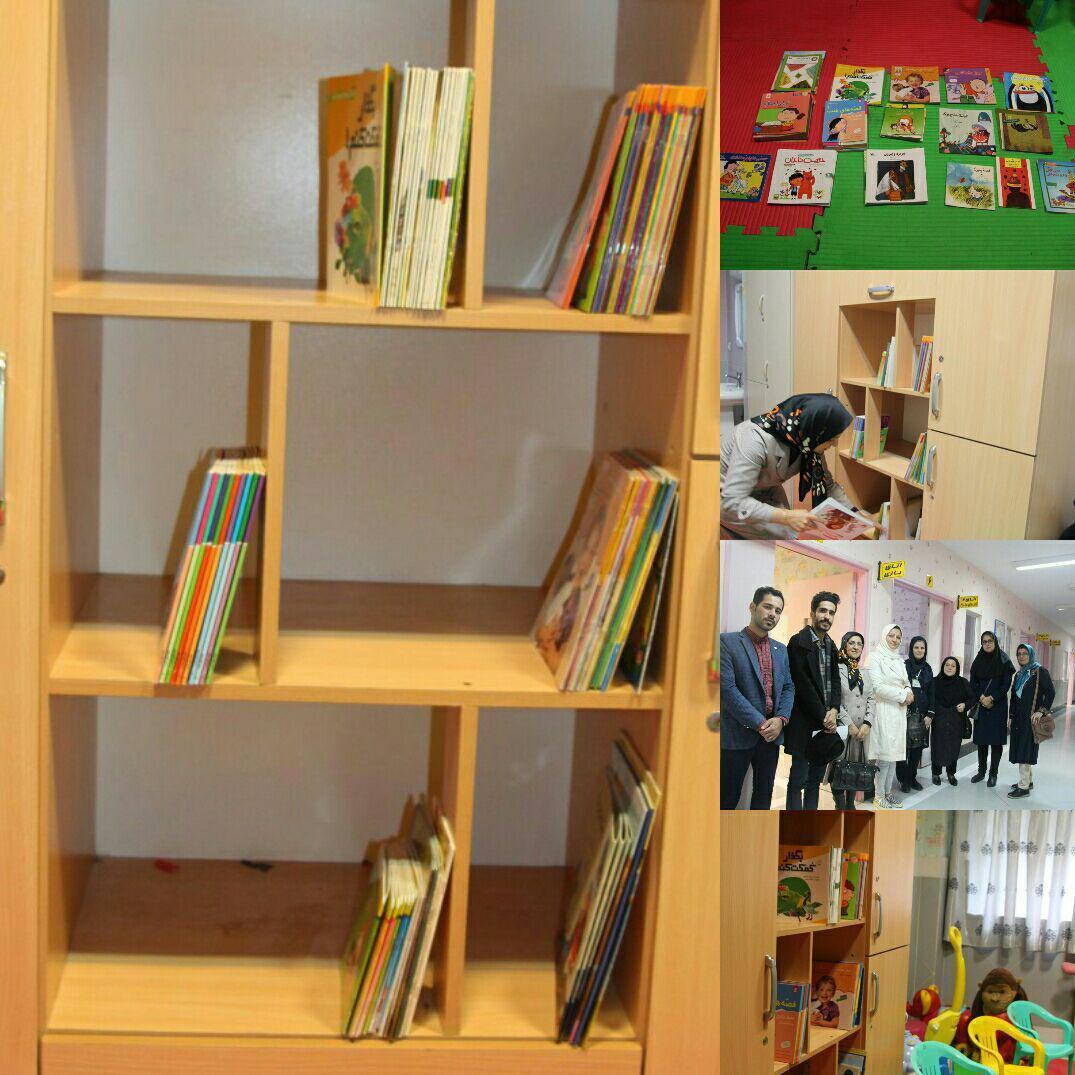
“It was the first time someone was doing it; the goal was to run small libraries. One of school administrators provided me with a warehouse to store waste papers there and teach the families, students and people that paper is not a waste,” she maintained.
“In two years, we collected about 13 tonnes of paper from students, pupils and people who had papers in their cabinets, and ran six libraries in public places with the money earned from selling the papers,” she underlined.
The retired teacher says she has donated 100 books to the prisoners of Anzali. “Along with launching these libraries, I helped the needy by selling waste papers as well.”
Ghallezari has also asked the Education Ministry to issue an order, based on which schools would be obliged to ask their students not to throw away papers and give them back to school at the end of the school year. She believes the Education Ministry can give her a hand in her campaign.
During the Thursday meeting, the two sides discussed the latest developments pertaining to the Iran nuclear deal, officially known as the Joint Comprehensive Plan of Action (JCPOA). They also conferred on bilateral relations as well as regional issues.
Araqchi urged the P4+1 Group to deliver on their commitments under the JCPOA as stipulated in four statements issued by the JCPOA Joint Commission following the United States’ illegal withdrawal from the deal.
He called on Europe to take practical steps to secure Iran’s interests in the domain of oil and banking in the coming 60 days.
He said Europe should not underestimate Tehran’s will to diminish its obligations under the JCPOA step by step.
“Iran has shown enough restraint, but Europe has not seized the opportunities created,” he said.
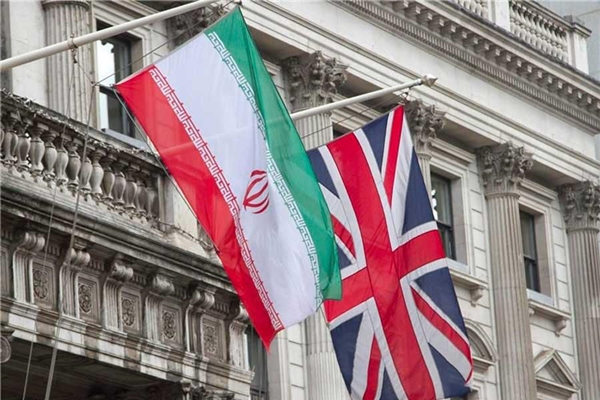
The British official, who is also Britain’s JCPOA negotiator, said his country remains committed to the nuclear deal and will try to implement the Instrument in Support of Trade Exchanges (INSTEX).
Moore also vowed that London will continue its efforts to meet Iran’s demands.
Iran recently stopped performing part of its commitments under the JCPOA in response to Washington’s illegal pullout from the agreement.
Iran gave Europe 60 days to adopt practical measures to ensure Iran’s benefits under the deal. Iran says it will take further action if Europe fails to secure Iran’s interests under the JCPOA.
Iranians who study abroad in Australia can take advantage of a wide range of opportunities, including innovative courses as well as cultural experiences and a great quality of life.
The student visa is valid for up to course duration plus two to three months. Students can stay for a whole degree program but need to renew the visa every year. Iranian students can work up to 20 hours per week on their student visa to earn money. They do need to take a medical test before arriving in Australia.
Iranian students should be able to speak English to ensure that they can succeed in their classes and manage their way around Australia. If students do not think that they have a high enough proficiency in English, a number of the universities (such as Monash), offer a pre-university English course that can help foreign students to get on the right track.
API (Academic Programs International)
API offers students the opportunity to study abroad in Australia at Macquarie University in Sydney. The university has a student population of almost 40,000 and over 11,000 of them are international. The campus is located only 15km from the central business district of Sidney which is easily accessible using public transportation.
API students are able to select from a vast range of subjects, including climate science, engineering, anthropology, astronomy, gender studies and international business.
The educational and athletic facilities at the university are excellent and it has the most technologically-advanced private hospital on its campus.
Australia is a warm and welcoming country and Iranian students can learn a lot at one of its universities, both in and out of class.
Study Abroad Program at Murdoch University
The Study Abroad Program at Murdoch University attracts international students from all over the world, including Iranian students, providing them with an unforgettable learning experience. Situated in Perth, Western Australia, it has the advantage of being close to both the city center and nature.
The study abroad program gives students the chance to spend up to two semesters of an undergraduate degree at the university. Iranian students who battle with English may have to use a writing service and pay to write essay.They can choose from many subjects, write assignments and earn transferrable credits.
Students benefit from the student-centered culture and have the chance to expand their horizons beyond academics, experiencing the country and its culture.
CIEE Arts and Sciences in Perth, Australia
Murdoch University has a CIEE Arts and Sciences study abroad program. It appeals to students with an interest in cross-cultural studies, especially those who have an interest in Australia’s culture.
It is also recommended for students of ecology, biological science, marine biology, and the environment. This program attracts many students who enjoy the outdoors, and are interested in for-credit internships.
The CIEE Resident Director offers academic and personal support to students, arranging cultural events, excursions and volunteer opportunities. Students go on various field trips, learning about the diverse environment.
Cultural activities include trips to theaters, museums and art galleries. Many students take advantage of the opportunities for outdoor recreation, participating in surfing and scuba diving.
IES (Institute for the International Education of Students)
IES offers students the opportunity of studying abroad in Australia in the city of Sidney, one of the most livable and beautiful cities in the word. Students can study an array of disciplines at Macquarie University, the University of New South Wales, or the University of Sydney. They can immerse themselves in the academic life and student culture at these universities.
To be considered for a Sydney Abroad program students normally have completed at least a year of study towards a degree at a recognized institution in their home country and be continuing towards a degree.
Students can gain hands-on professional experience through for-credit internship options in fields such as politics, public relations, business, computer sciences, psychology and biomedical sciences.
They understand more about international relations as they relate to other international students living in residential apartments or colleges.
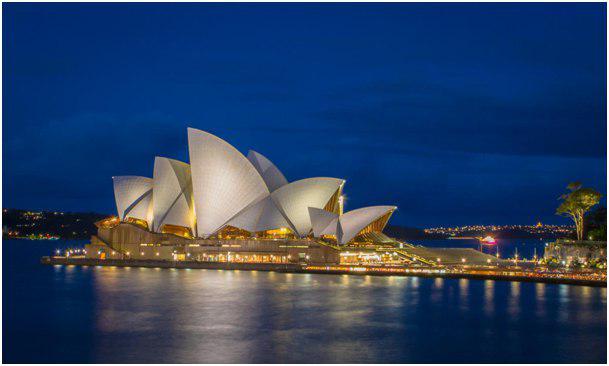
Fields trips to exciting destinations like the Great Barrier Reef are part of the experience. Simply exploring the city offers many exciting cultural experiences – they can visit Sydney’s Museum of Contemporary Art or watch a performance at the Sydney Opera house or enjoy the relaxed beach-side lifestyle of Bondi Beach.
TEAN: Gold Coast – Bond University
Bond University the first and largest private university in Australia. It’s located on the Gold Coast which is known for its great climate and beaches.
The university is a diverse place to study with about half the staff and students coming from abroad. It also has the lowest student-faculty ratio in Australia ensuring that all students receive individual attention. This highly ranked, modern university has comprehensive course offerings and innovative teaching methods.
Accommodation includes TEAN housing close to campus. TEAN has a 5-day Orientation Excursion where students start off the semester by scuba diving in the Great Barrier Reef.
Students have access to the Gold Coast-based Resident Director and in-country staff of TEAN for guidance and support throughout the semester.
Iranian students are able to fund a Bond University degree in a number of ways. It offers international students part-fee scholarships and bursaries at undergraduate and postgraduate level.
ISA (International Study Abroad)
ISA also offers a study abroad experience at Bond University. All the universities in Australia have different entrance requirements and offer different courses, which also have requirements about what is needed to do the course.
IFSA (Institute for Study Abroad)
IFSA is another organization offering students the opportunity of studying at any one of 17 prestigious universities in Australia. One of these is Monash University in Melbourne which offers interactive classes and cutting edge programs. It is ranked in the top 1% of universities in the world.
Australia is also home to top animation schools where students can learn animation and other skills that are in much demand today.
Researchers have found that the UK is coming in third place behind the United States and Australia when it comes to higher education. Australia has been expanding rapidly when it comes to international student numbers and has succeeded in attracting many students from outside Europe. It is marketing itself as an English-speaking country with a welcoming culture for overseas students, an attractive climate and high performing universities.
Final words
Studying abroad in Australia for Iranian students at any one of its prestigious universities is an experience worth pursuing. They offer a comprehensive, high-quality education. And students can experience the excitement of a large university in a metropolitan area or a smaller university where they’re like to get more attention. They can choose one in an urban sophisticated city or in a more laid-back coastal town.
As a multicultural study abroad destination, it is easy for international students to fit in without any cultural shock as such even if you come from a conservative part of the world. Apart from the great educational experience, they can benefit from many cultural activities, outdoor activities and enjoy the natural beauty of the country.
Author’s Bio Michael Turner
Michael Turner has experienced what it’s like to study abroad and is passionate about communicating its benefits. He believes it contributes to a well-rounded educational and cultural experience that can stand students in good stead for the rest of their lives. His interests include reading, writing and traveling.