Friday, December 26, 2025
Home Blog Page 3251

IRGC Says Iran Won’t Sit for Talks with US

In reaction to US President Donald Trump’s latest call for talks with Iran, General Javani said on Friday the Islamic Republic will not hold any talks with the US, and Washington doesn’t dare to wage any war on Iran.

“Trump thought that through sanctions and economic pressure, he could create an internal chaos in Iran and force the country to sit for talks. But the dream never came true and now the Americans have come to this conclusion that they should adopt other measures in line with the sanctions to exert further pressure on the Islamic Republic,” he said.

He also said the US’ blacklisting of the IRGC as a terrorist organization, deploying an aircraft carrier in the Persian Gulf and adopting an aggressive rhetoric against Iran are part of a mechanism that the American officials have devised in line with their sanctions to make them more practical.

“This is what Trump just recently said that he wants Iranians to call him and sit for talks,” he said.

Back on Thursday, Trump offered Iran direct talks with Iran, saying the Iranian leaders should “call me”.

The Iranian military commander said the American officials are suffering from some mess in their thoughts. That’s why they are desperately using whatever in their power to break the 40-year resistance of Iranians. “Any negotiation serves as the beginning of the collapse of our resistance.”

The general also said the Iranian nation are completely familiar with the US plots and don’t trust in the country.

“Our experience, gained over the past four decades, shows that the Iranian nation has no way out but to resist the US pressure,” he said.

The commander also referred to the latest statement by Iran’s Supreme National Security Council on the Iran nuclear deal and said the statement reveals that Iranians have chosen to resist the US pressure.

Iran on Wednesday informed the remaining parties to the 2015 nuclear deal of its decision to suspend the implementation of some of its commitments under the deal. The statement came one year after the US move to quit the deal.
Iran Threatens to Let Migrants, Narcotics Flood Europe

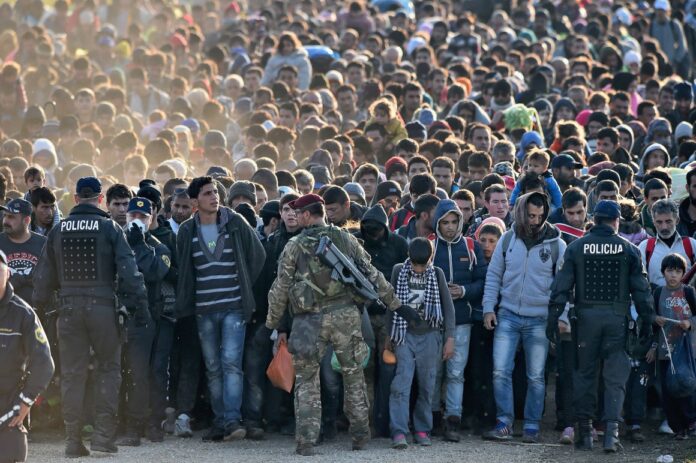
Refugees are escorted by the police through the fields towards a detention centre in the village of Dobova, Slovenia. October 26, 2015. / Photo by Getty

Hesamoddin Ashena, an advisor to the Iranian president, warned the West – particularly the European countries – of the repercussions of the sanctions imposed unilaterally by the US on the Islamic Republic, saying the bans will hamper Iran’s contribution to fight against terrorists, drug smugglers and illegal migrants heading to Europe.

In a thread of tweets, Ashena said if the US continues to impose economic pressure on Iran, the Islamic Republic won’t be able anymore to play an active role in fight against terrorists.

“If the sanctions keep going on, Iran won’t be able to play an active role in fight against terrorists and prevent them from returning to their homelands in Europe,” he said in a tweet.

Ashena went on to say that amid the sanctions, Iran won’t either be able to play a role in preventing smugglers from transferring drug cargoes from the east to the west.

He then referred to the flow of migrants from the Middle East to the West and said Iran can’t contribute any further to efforts to manage and prevent the flow from the East to the West if the sanctions remain in place.  

Earlier, Iranian Deputy Foreign Minister for Political Affairs Seyyed Abbas Araghchi declared that Iran would consider asking Afghan refugees to leave the country if the US keeps imposing economic pressure on the country.

“For the last 40 years, we have hosted immigrants from Afghanistan… Right now, over 3 million Afghans live in Iran, and according to some estimates they are holding over 2 million jobs, and 3 or 4 billion euros are taken out of the country by these people,” he said in a televised interview on Wednesday.

Araqchi underlined that when the US sanctions have an impact, the Islamic Republic is forced to implement special policies for the economy. “And it’s possible we will reach a point where we cannot continue paying these costs, and in that case, we may ask our Afghan brothers and sisters to leave Iran.”

Meanwhile, in a letter to the remaining parties to the JCPOA on Wednesday, Iranian President Hassan Rouhani said Iran is not asking for them to take action for the interest of Iran “but for the interest and future and your own country, you have a responsibility to act.”

Rouhani said Iran’s hosting of refugees has prevented a “wave” of them from flocking to Europe. He said Iran has paid a heavy price in fight against drugs and has lost thousands of soldiers fighting drug smuggling on the border, but may now reconsider its policies if Europe fails to help.

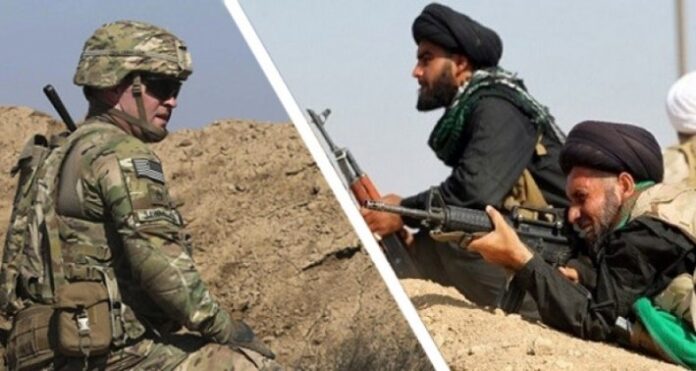
Iraq’s Hashd al-Shaabi Threatens to Declare Anti-US War If Iran Targeted

The threat was made by Jabar al-Ma’mouri, a Hashd al-Shaabi commander in the Iraqi province of Diyala, in response to the US’ recent deployment of its aircraft carrier strike group and B-52 bombers to the Middle East to send an “unmistakable” message to Iran.

US National Security Advisor John Bolton earlier warned of “unrelenting force” if Iran tries to harm any US interests or allies in the region.

Meanwhile, US Secretary of State Mike Pompeo landed in Baghdad on Tuesday and met with Prime Minister Adil Abdul-Mahdi where he reportedly held talks with the premier on the safety of the US forces in the country and also briefing him with Washington’s main goal in its deployment of armaments to the Middle East.

“The message that we’ve sent to the Iranians, I hope, puts us in a position where we can deter and the Iranians will think twice about attacking American interests,” Pompeo said, noting that the US intelligence was “very specific” about “attacks that were imminent.”

However, the Hashd al-Shaabi commander said that the Shiite forces will respond if the US forces attack Iran, warning that “the Middle East is approaching a dangerous tsunami that is monitored by the Zionist regime.”

Iran Says May Go Beyond Withdrawal from Nuclear Deal

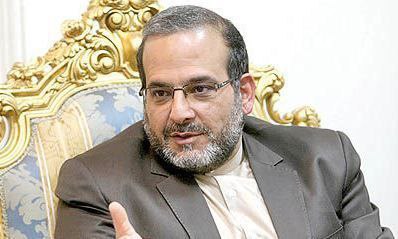
Keyvan Khosravi made the remarks in an exclusive interview with the Iran Front Page (IFP), in the wake of the country’s decision to reduce its JCPOA commitments.

“Iran’s new decision, which has been made using the capacity of Articles 26 and 36 of the same deal, is the continuation of the path of diplomacy for returning the offending sides to the train of JCPOA commitments,” he said.

“Following the Supreme National Security Council’s decision, the path [to withdrawal] will be pursued nonstop and stage by stage.”

Khosravi stressed that Iran’s decision can lead to two major results, but the extent to which they are achieved depends on how much the audiences of the decision correct their behaviours.

“If the offending sides resume implementing what they had undertaken in the JCPOA and respect Iran’s legal rights, Iran will resume implementing its own JCPOA commitments, as it used to do in the past.”

“In any other situation, where Iran’s legal rights are not secured, Tehran would treat the step-by-step path devised by the SNSC’s new decision, and will go on until full withdrawal from the JCPOA and even beyond that if necessary,” he noted.

Whether the game would be a win-win or a lose-lose one depends on how the ball of JCPOA – which is now in the other side’s court – will move, Khosravi said.

Message of Iran’s New Decision

“Diplomacy is the battle of wills for achieving maximum benefits. Nuclear talks were a path in diplomacy for achieving balanced interests based on win-win rule.

“Although the JCPOA was supposed to help realize this goal, the US and Europe turned it into a failure and created a situation where it was totally harmful to remain in the deal. The US did so by pulling out of the international deal and Europe by moving along with the US’ illegal behaviour and killing time, which sounded like deceit. Naturally, Iran’s new decision directly addresses the US government and then the European countries who are directly responsible for the current unwanted situation,” he added.

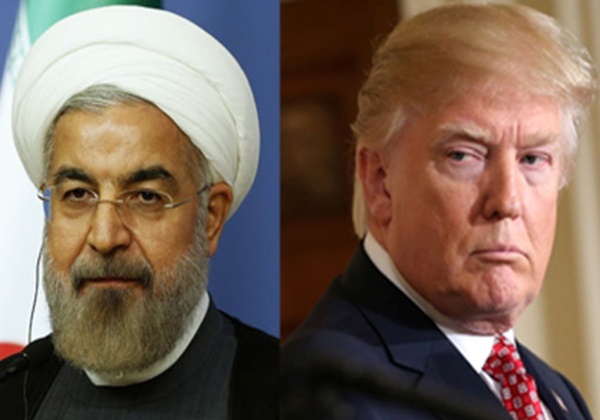
Iran Rules Out Possibility of Trump-Rouhani Talks

Majid Takht-Ravanchi was speaking to the PBS network when asked about the chances of a meeting between Iranian President Hassan Rouhani and his American counterpart Donald Trump.

“It’s no use talking to someone who has pulled out of an international agreement without reservation,” he said.

“How can one trust a person (Trump) who behaves so inconsiderately,” he added.

He said the United States’ bullying of its close allies is the reason why Tehran cannot reap the economic benefits of the Iran nuclear deal known as the Joint Comprehensive Plan of Action (JCPOA).

He was speaking a day after Iran scaled down its commitments under the JCPOA and gave Europeans two months to take practical steps to secure Iran’s interests under the deal.
“If Europeans fail to live up to their commitments in 60 days’ time, it means there is no political will [to do so], and [then] we will make a decision based on our national interests,” he said.

Takht-Ravanchi noted Iran has shown considerable patience over the past year to prove its sincerity with regards to the implementation of the JCPOA.

“Of course, we believe the window to diplomacy has not closed, and we stand ready for talks with our partners in the JCPOA, and we should wait and see what the outcome of the negotiations will be,” Iran’s UN ambassador said.

He underlined radicals in the United States and some reactionary regimes in the region seek to provoke and escalate tension and set the stage for war against Iran.

“We are opposed to waging wars against anybody, but will defend ourselves at any cost,” he said.

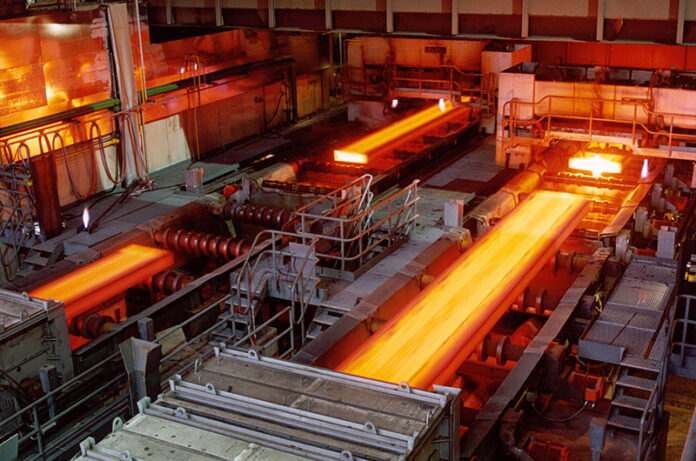
Iran Condemns US Ban on Its Metal Industry

Steel

In a Thursday statement, Seyyed Abbas Mousavi said the US’ measure contravenes the regime’s international commitments, and will result in international liabilities for Washington.

“The sanctions, as has been the case with all the United States’ unilateral measures, counter the basic principles and regulations of international relations,” Mousavi said.

According to the spokesman, the bans are specifically against the US’ international commitments under the UN Charter, the Algeria Declarations, the Treaty of Amity, and the injunction of the International Court of Justice, and the US must be answerable for its offences at the international level through judicial procedures.

The Trump administration announced new sanctions on Iran’s metals sectors Wednesday, the latest step in a push to squeeze Tehran that has heightened tensions in the Middle East.

Trump’s executive order, which imposed sanctions on the steel, aluminum and copper industries, came hours after Iran announced it was reducing some of its commitments under the nuclear agreement. President Donald Trump withdrew the United States from that deal a year ago but Britain, France, Germany, Russia and China remain.

Iran exported over 57 million tonnes of mineral products worth more than $9.2 billion during the fiscal year to March, according to information on the website of Iran’s state-owned mines and metal holding company IMIDRO.

“The responsibility for repairing the damages will lie on the US,” he added.

Iran has about 37 billion tonnes of proven mineral reserves and 57 billion tonnes of potential reserves, worth $800 billion according to 2014 data from an article posted on IMIDRO’s website.

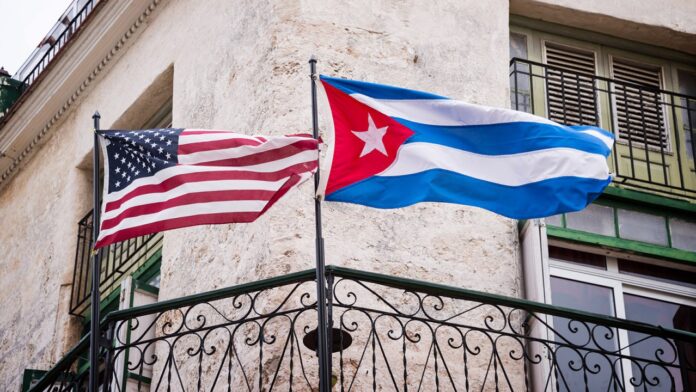
Iran Strongly Condemns US Hostile Policies against Cuba

In a Thursday statement, Mousavi said, “With this move, Washington showed once again that it uses any illegitimate tool to exert pressure on independent countries.”

It also showed that “despite the fact that an overwhelming majority of UN member states annually express their opposition to the economic embargo on Cuba, the US knows no boundaries when it comes to slapping new inhumane sanctions against this country and repeatedly breaching its commitments,” he added.

Mousavi said the Islamic Republic of Iran expresses support for the people and government of the Republic of Cuba against the United States’ new wave of sanctions and threats, and calls on responsible countries to adopt effective measures against Washington’s repeated violations of international law.

The Trump administration said last month it was tightening US travel restrictions on Communist-run Cuba and allowing US citizens to bring lawsuits against foreign companies profiting from property taken from them after Cuba’s 1959 revolution.

The administration is seeking to pressure Cuba’s Communist government into giving up its support for embattled Venezuelan President Nicolas Maduro.

The US is implementing the long-dormant section of the 1996 Helms-Burton Act allowing US lawsuits against companies using confiscated property.

The Cuban Liberty and Democratic Solidarity (Libertad) Act of 1996 also known as the Helms–Burton Act is a United States federal law which strengthens and continues the US embargo against Cuba.

The act extended the territorial application of the initial embargo to apply to foreign companies trading with Cuba, and penalized foreign companies allegedly “trafficking” in property formerly owned by US citizens but confiscated by Cuba after the Cuban revolution.

The act also covers property formerly owned by Cubans who have since become US citizens.

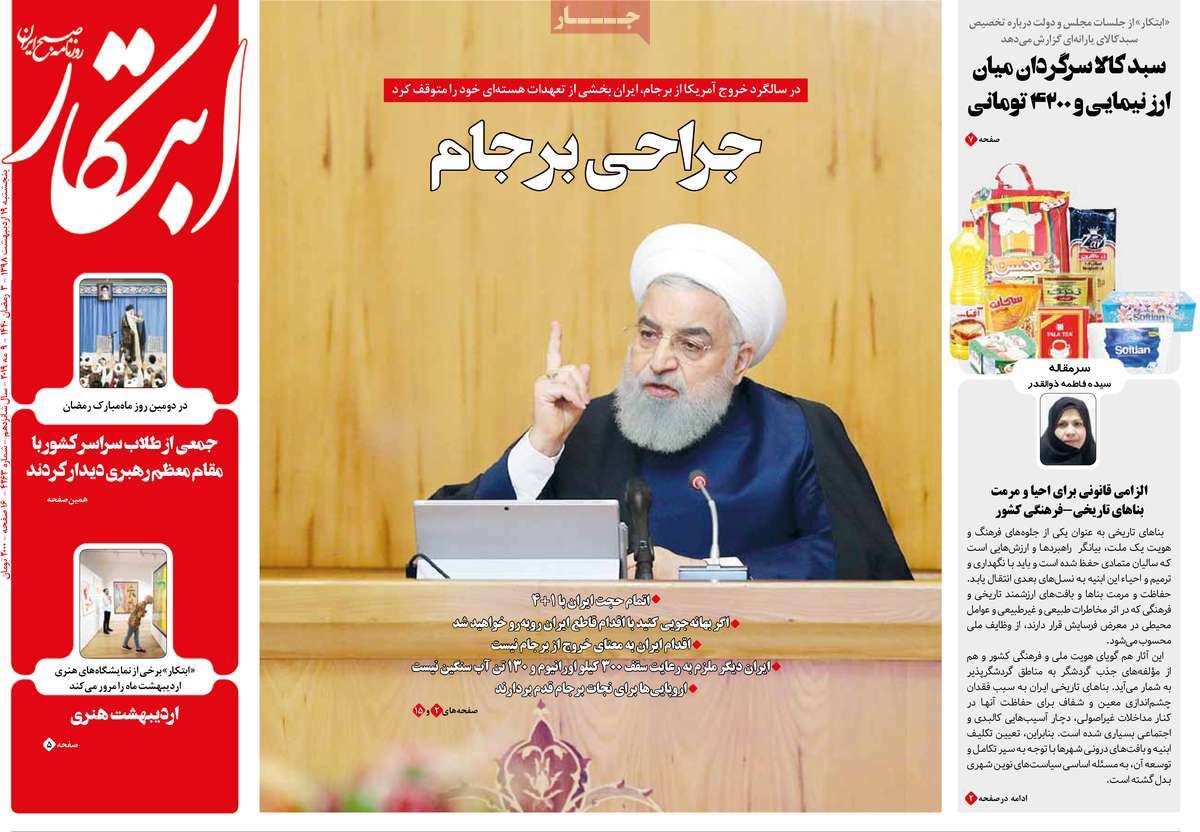
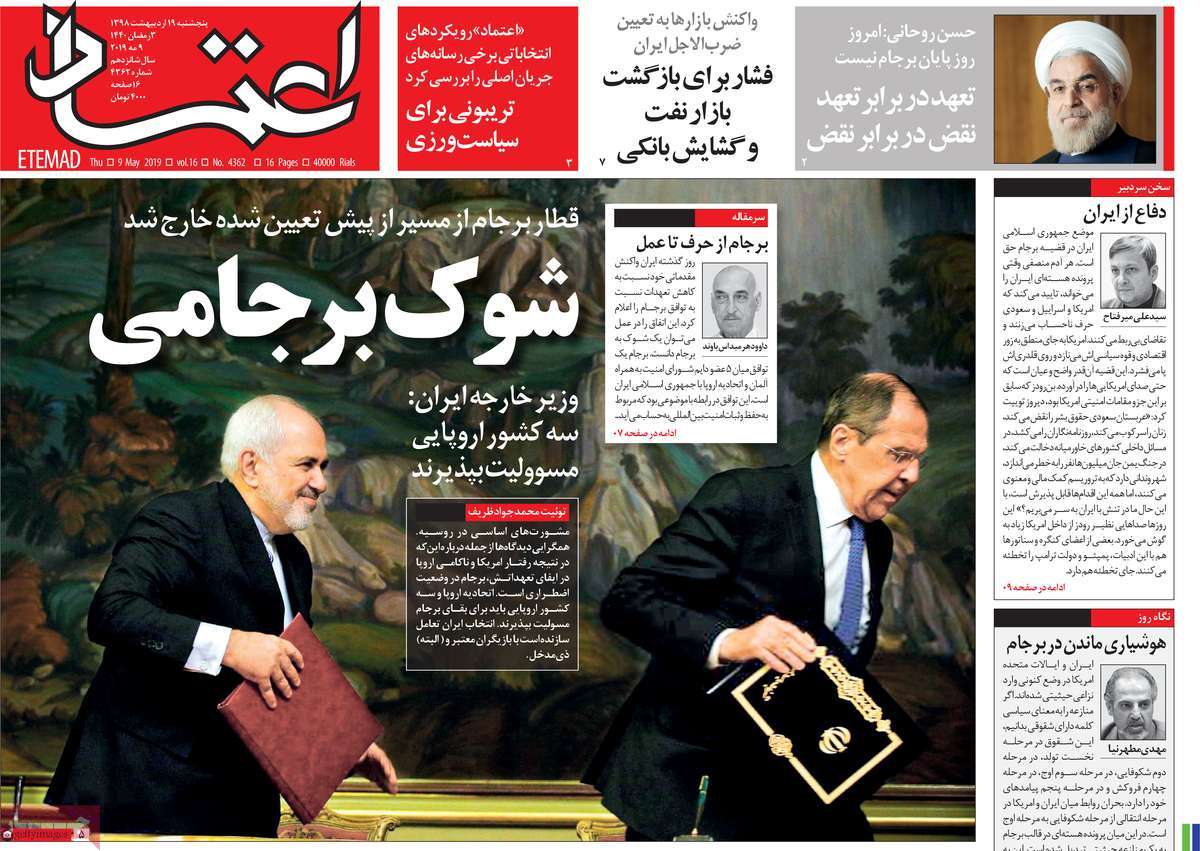
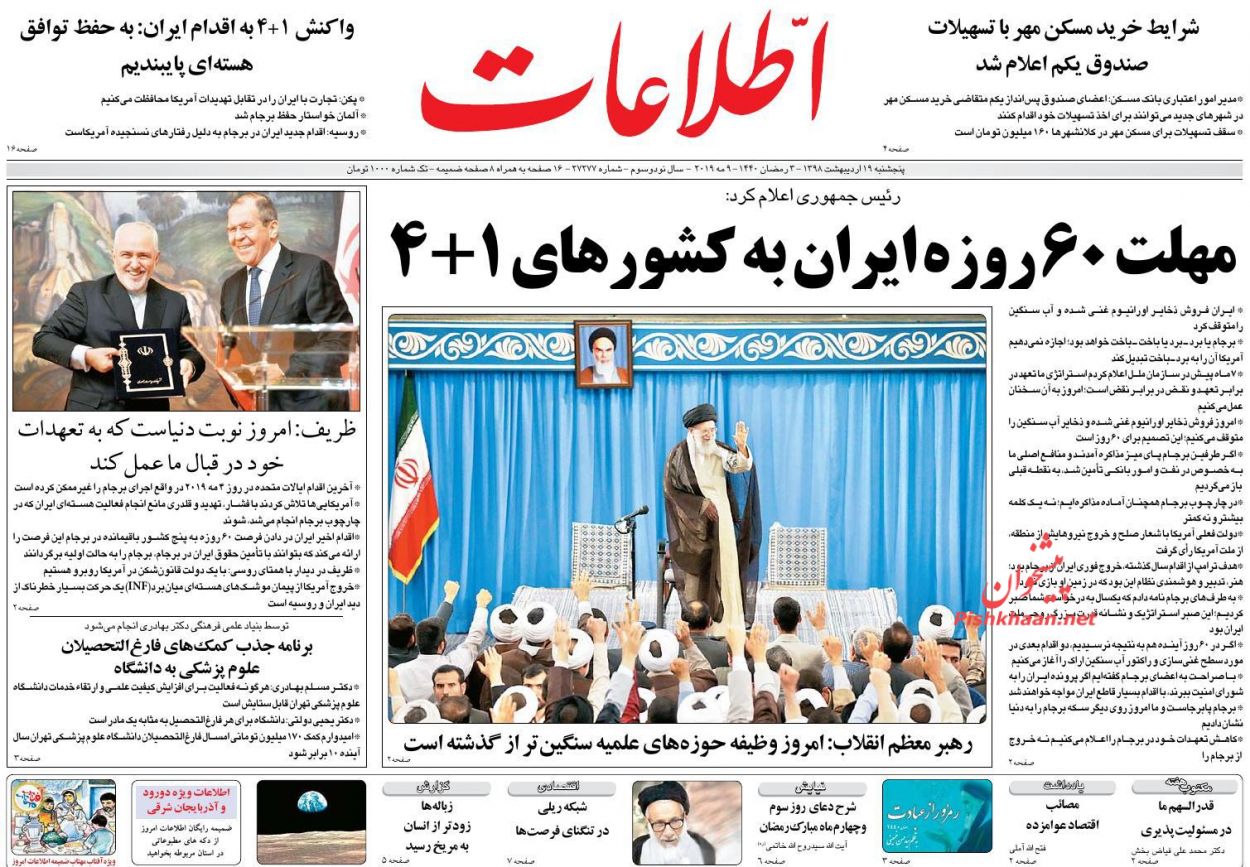
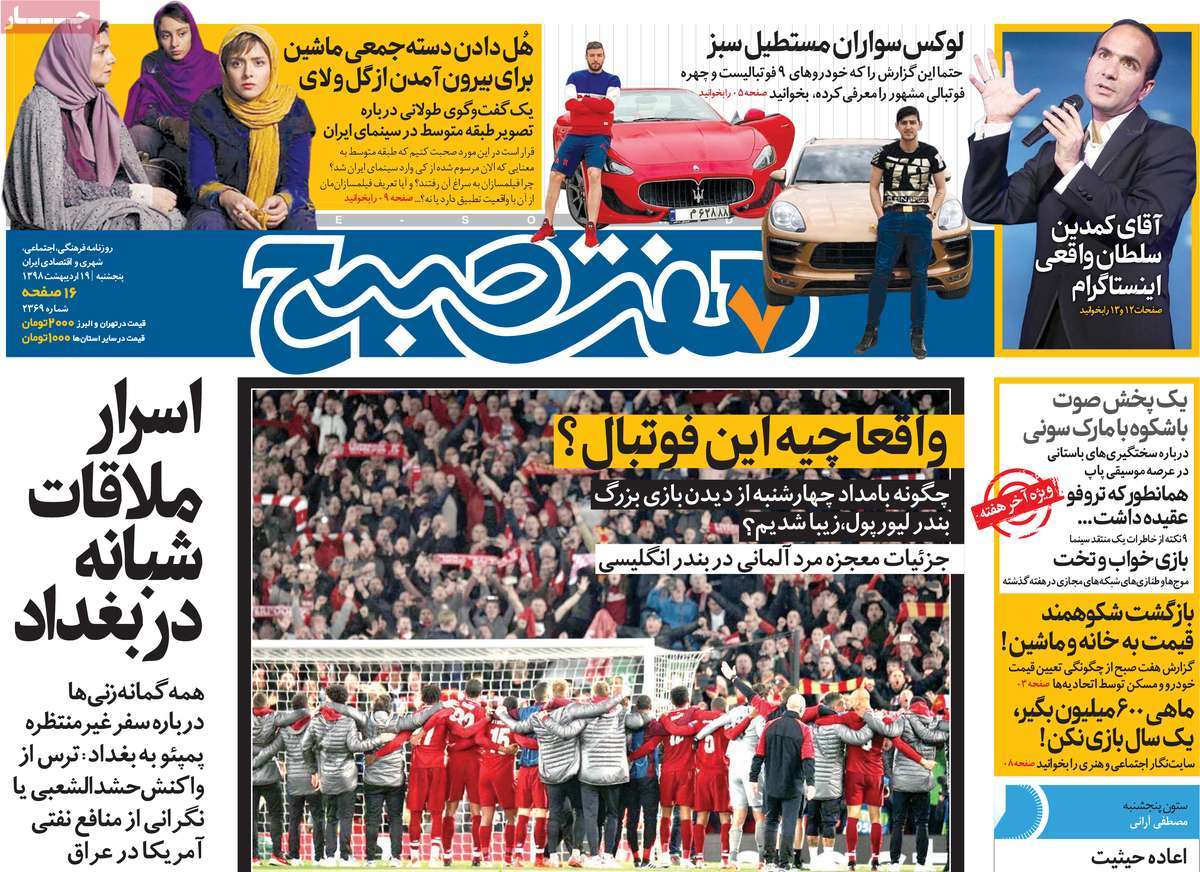
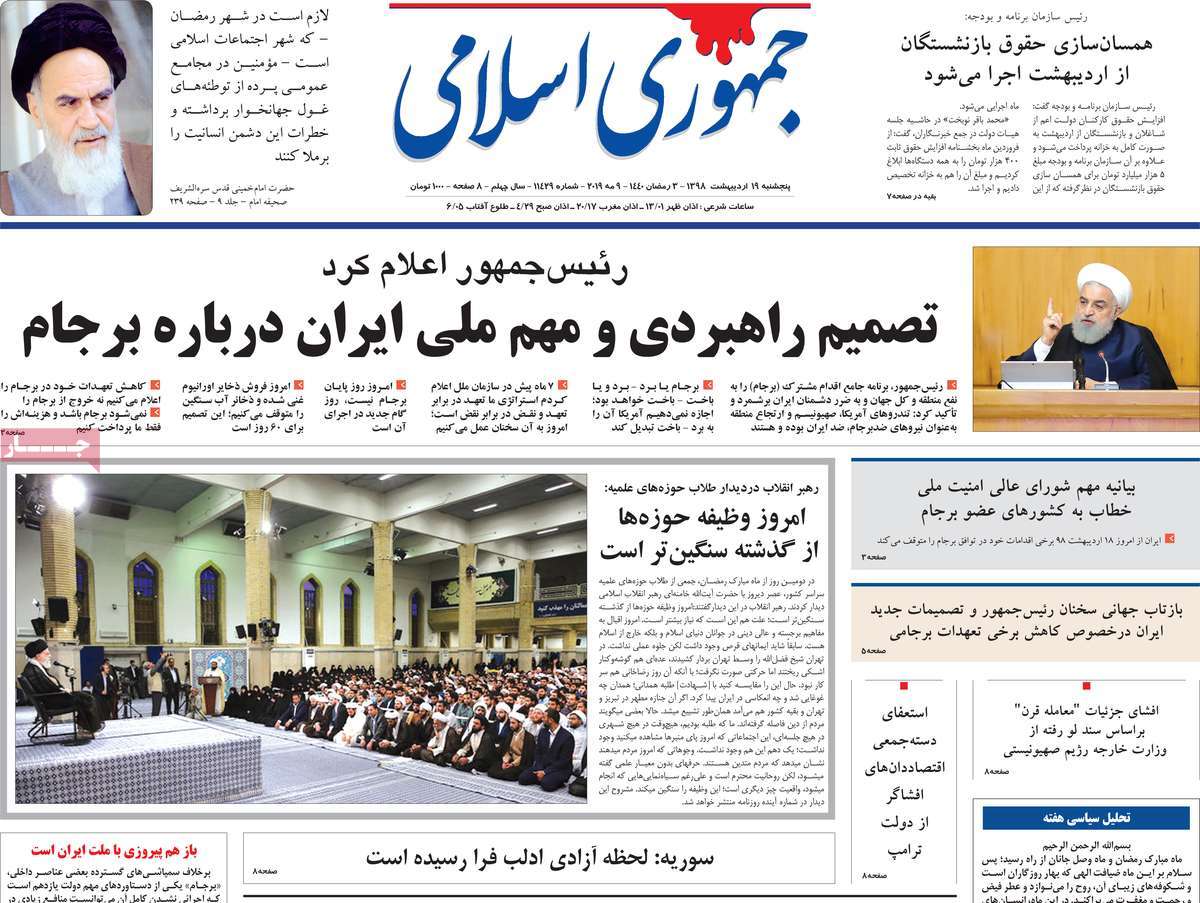
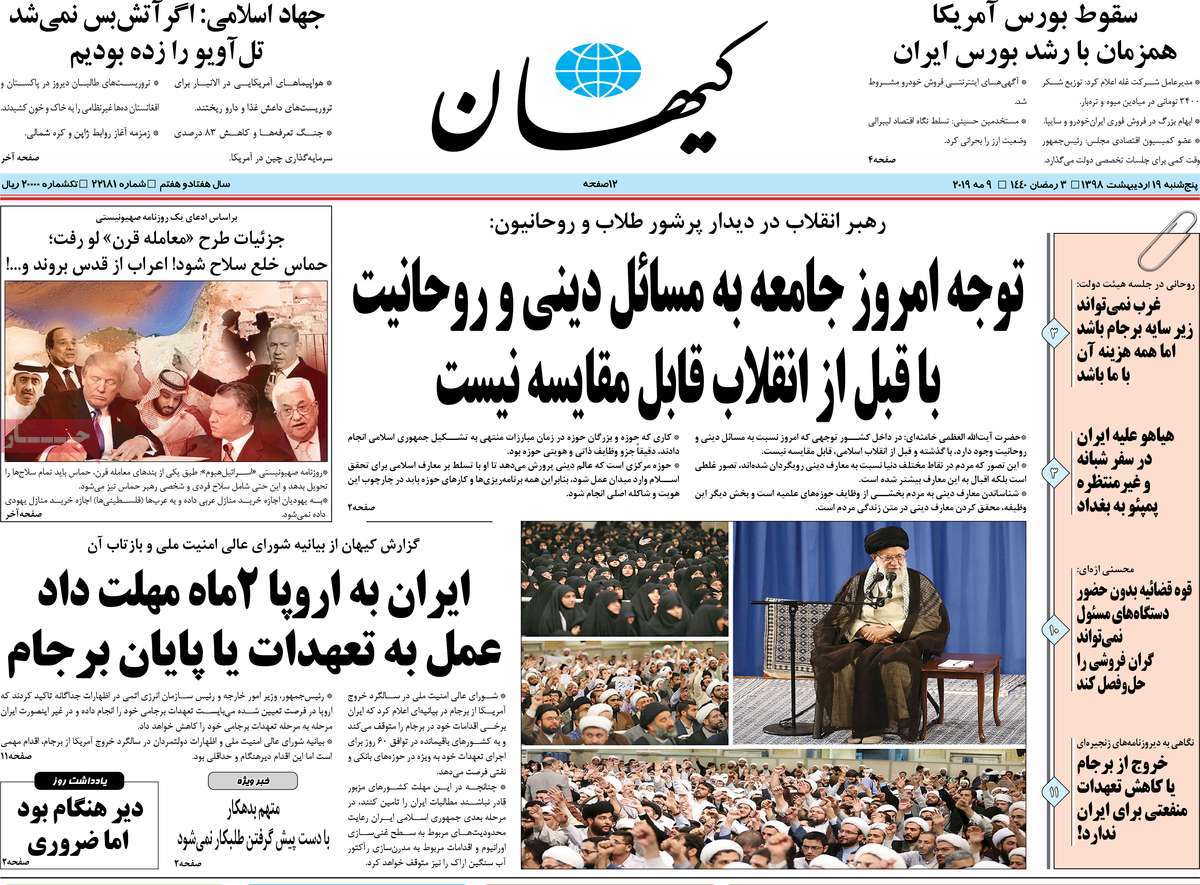
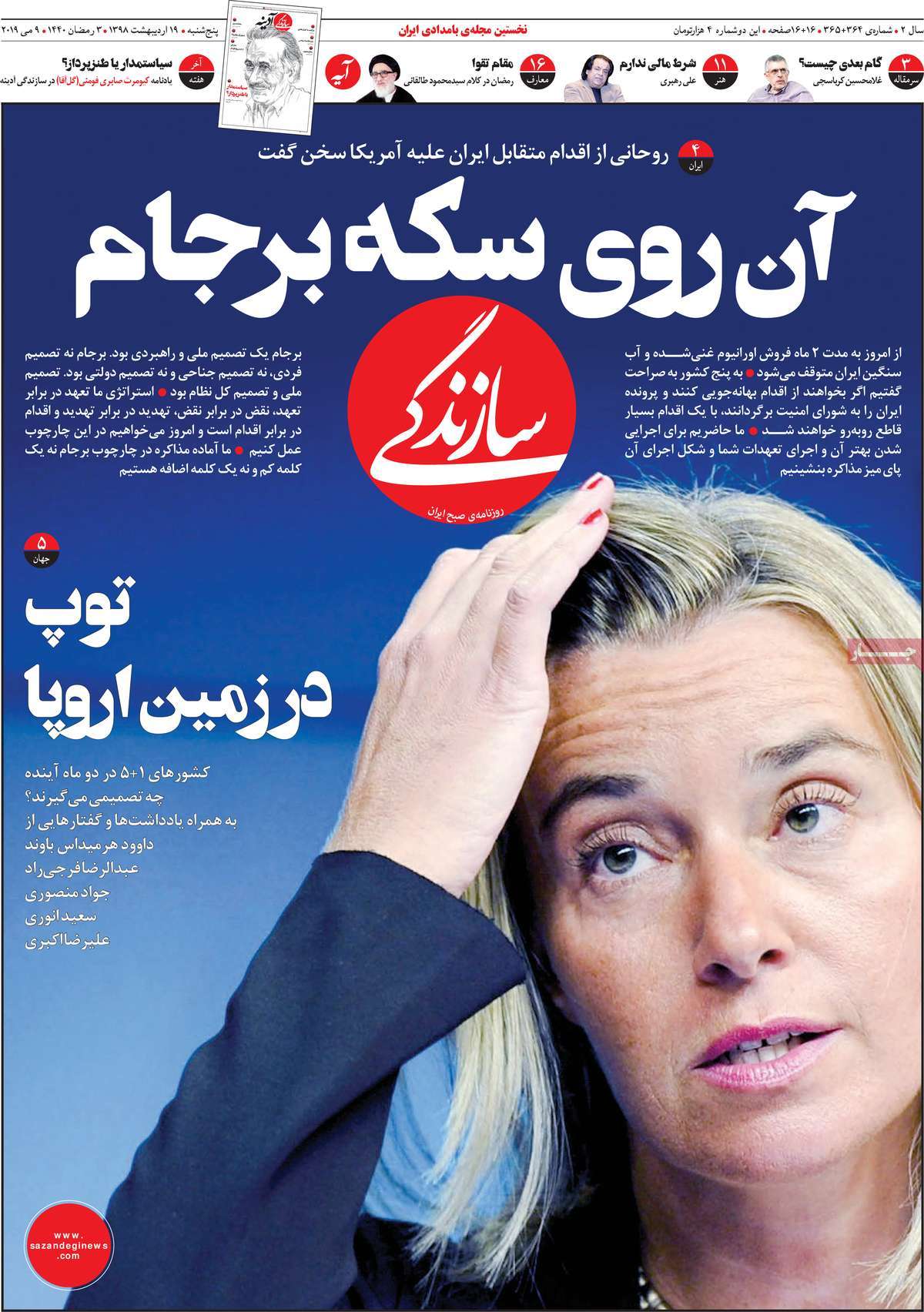
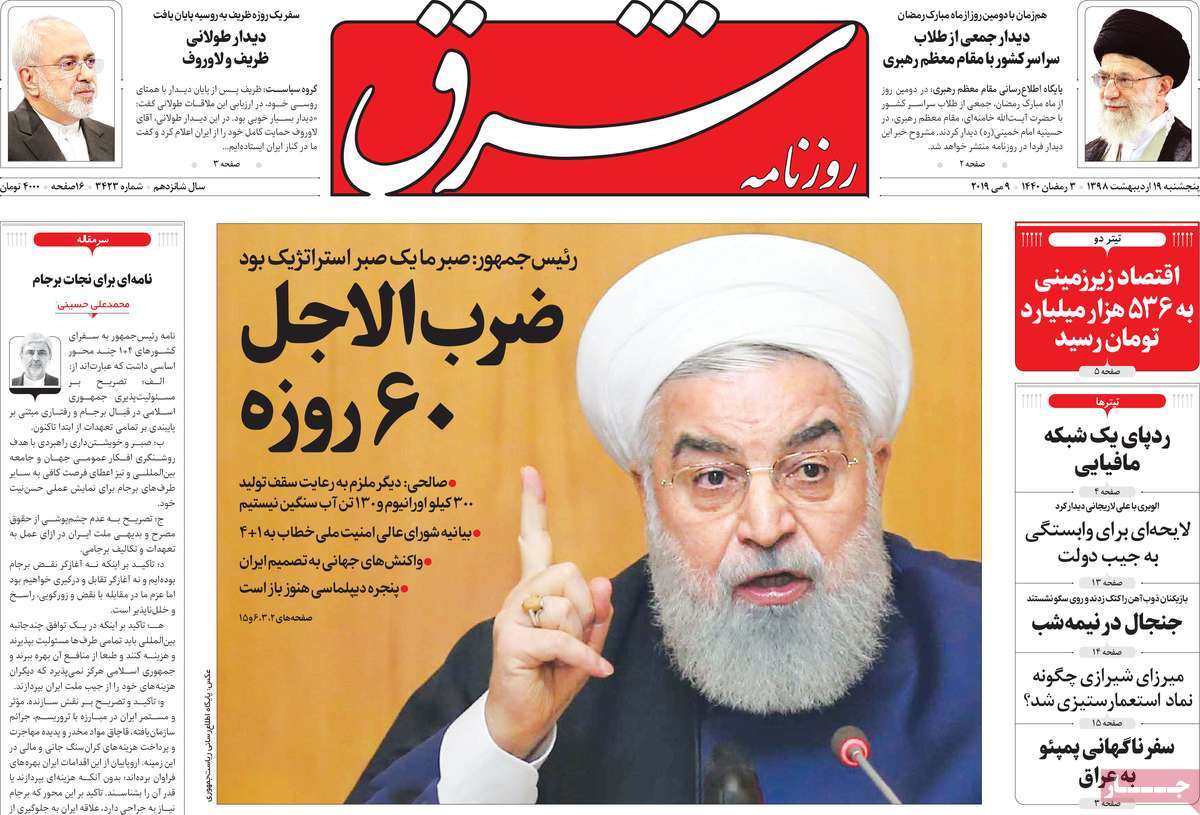
Iran’s Reduction of JCPOA Commitments Makes Headlines

A Look at Iranian Newspaper Front Pages on November 19

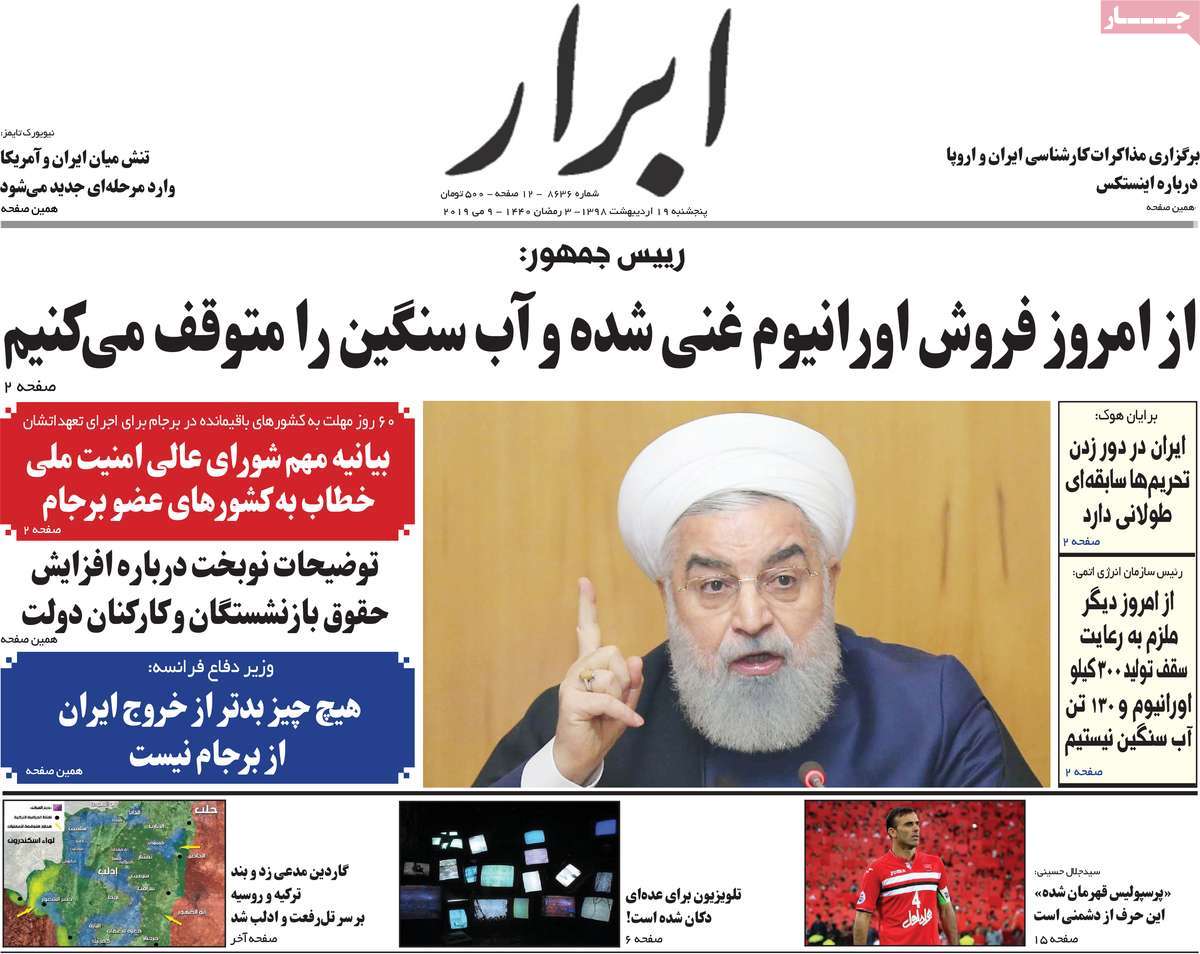
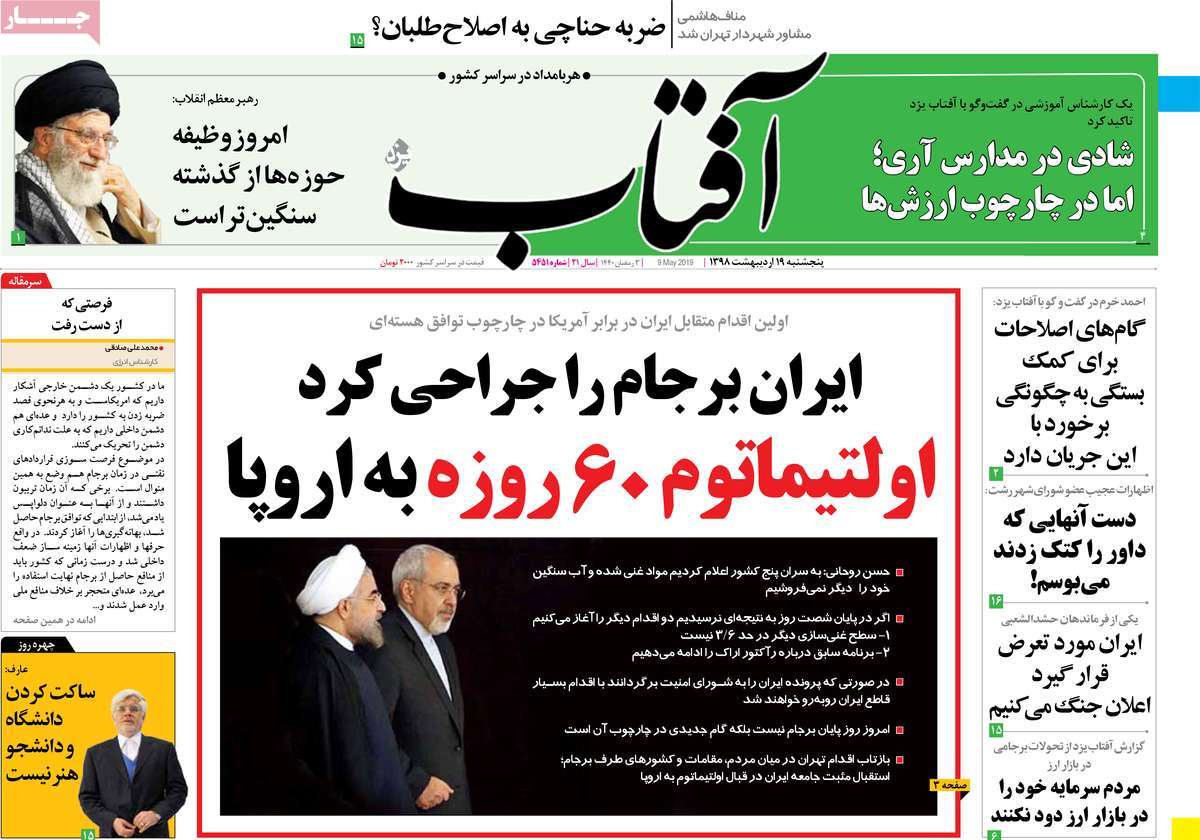
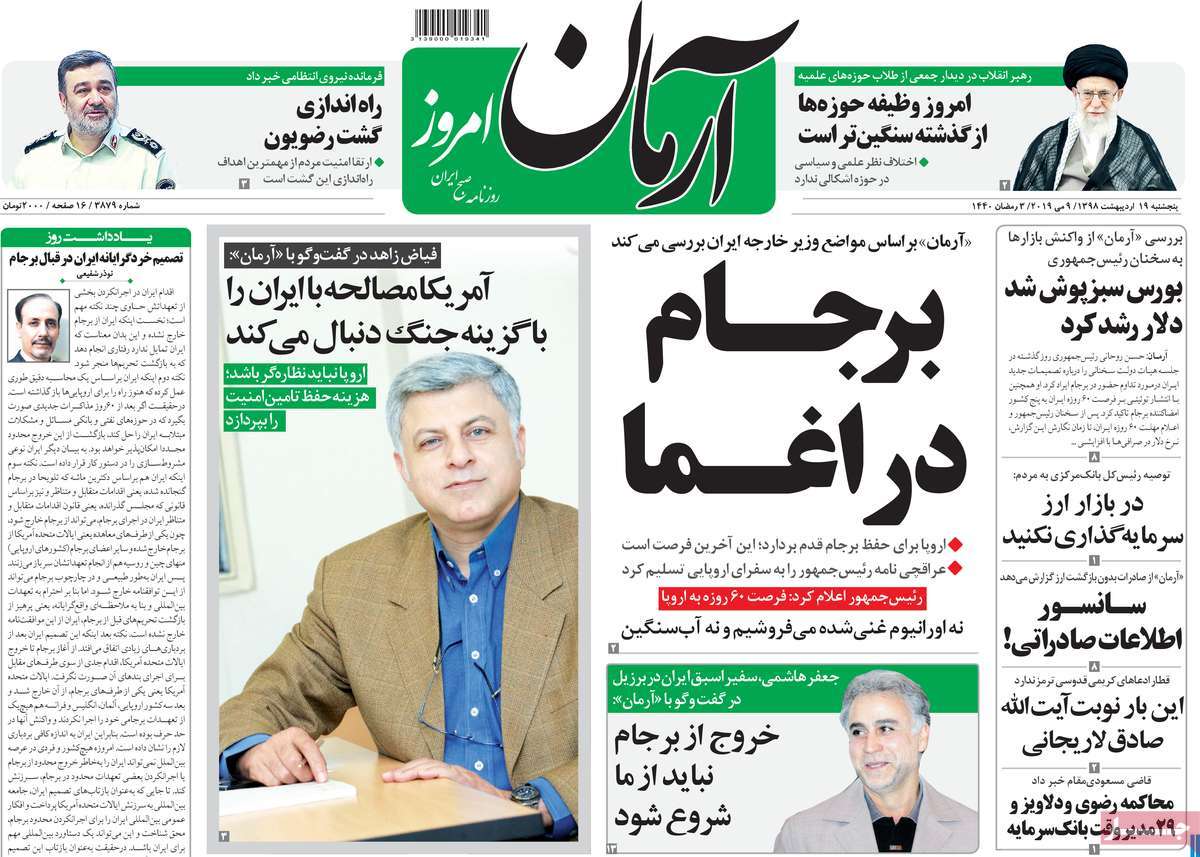
The top story in all Iranian papers today was the country’s Wednesday decision to stop implementing some of its commitments under the 2015 nuclear deal, in reaction to the US’ withdrawal from the JCPOA and Europe’s failure to make up for the losses.

Abrar:
1- Iran-US Tension in New Stage: NY Times
2- French DM: Nothing Worse than Iran’s JCPOA Withdrawal
3- Hook: Iran Has Long History of Bypassing Sanctions
4- Guardian Says Turkey, Russia Colluded over Idlib
5- Iran, EU to Hold Expert-Level Talks on INSTEX

Iran’s Reduction of JCPOA Commitments Makes Headlines


Aftab-e Yazd:
1- Iran Leader: Seminaries Have Heaver Responsibility Now
2- Iran’s Surgery on JCPOA: 60-Day Ultimatum to Europe
3- Hashd al-Shaabi General: We’ll Declare War If Iran Invaded

Iran’s Reduction of JCPOA Commitments Makes Headlines


Arman-e Emrooz:
1- US Pursuing Compromise with Iran through Option of War
* Europe Shouldn’t Just Watch, Must Pay Costs of Providing Security
2- JCPOA in Coma: Europe Must Take Step to Save It, It’s Last Chance

Iran’s Reduction of JCPOA Commitments Makes Headlines


Ebtekar:
1- Surgery on JCPOA: Iran No Longer Obliged to Observe Uranium, Heavywater Stockpiling Limits
2- This Is Not Withdrawal

Iran’s Reduction of JCPOA Commitments Makes Headlines


Etemad:
1- Rouhani: Today Not End of JCPOA; Commitment against Commitment, Violation against Violation
2- JCPOA Shock: Train of Nuclear Deal Out of Its Track
3- Iran FM: E3 Must Take Responsibility

Iran’s Reduction of JCPOA Commitments Makes Headlines


Ettela’at:
1- Iran’s 60-Day Ultimatum to P4+1
2- P4+1’s Reaction: We’re Committed to Saving JCPOA
3- China: We’ll Protect Trade with Iran against US Threats
4- Germany Calls for Keeping Nuclear Deal
5- Russia: Iran’s New Measure Caused by US’ Unreasonable Behaviours
6- Zarif: It’s World’s Turn to Live Up to Its Commitments

Iran’s Reduction of JCPOA Commitments Makes Headlines


Haft-e Sobh:
1- Secrets of Overnight Visit to Baghdad: Speculations Regarding Pompeo’s Unexpected Visit to Iraq
* US Afraid of Hashd al-Shaabi’s Reaction or US Oil Interests in Iraq?

Iran’s Reduction of JCPOA Commitments Makes Headlines


Jomhouri Eslami:
1- Iran’s Important, Strategic National Decision Regarding JCPOA
2- Mass Resignation of Economists from Trump Administration after Whistleblowing
3- Syria: Time for Liberation of Idlib

Iran’s Reduction of JCPOA Commitments Makes Headlines


Kayhan:
1- Iran Leader: Today People Paying Much More Attention to Religious Issues, Clerics
2- US Stock Exchange Market Down While Iranian Counterpart Improves
3- Rouhani: West Cannot Remain under JCPOA Shadow While We Pay All Costs
4- Iran Gives Europe 2 Months to Save or Kill JCPOA

Iran’s Reduction of JCPOA Commitments Makes Headlines


Sazandegi:
1- Other Side of JCPOA Coin: Rouhani Talks of Countermeasure against US
2- Ball in Europe’s Court: What Decision Will P5+1 Make in Two Months

Iran’s Reduction of JCPOA Commitments Makes Headlines


Shargh:
1- Zarif-Lavrov Long Meeting in Moscow
2- Seminary Students from Across Iran Meet with Iran Leader
3- Iran’s 60-Day Ultimatum: World Reacts to Iran’s Decision

Iran’s Reduction of JCPOA Commitments Makes Headlines


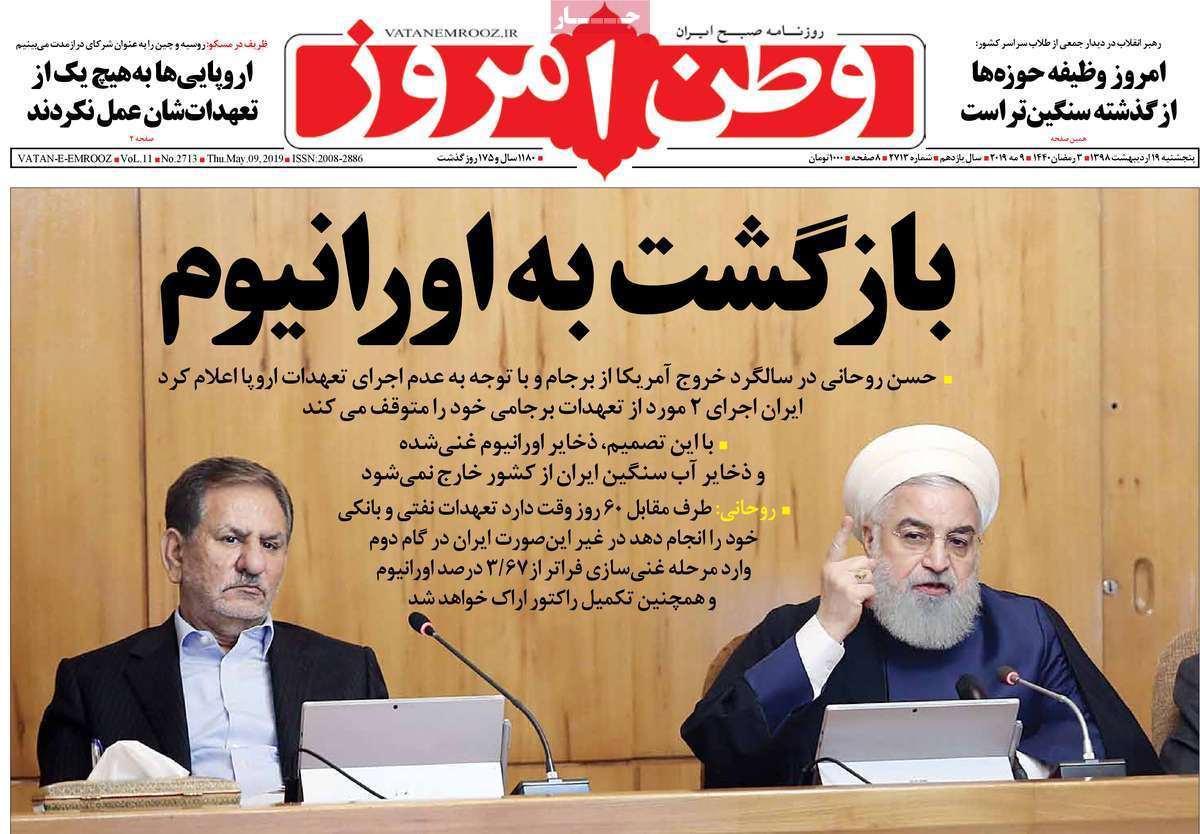
Vatan-e Emrooz:
1- Europeans Did Not Live Up to Any of Their Commitments
2- Zarif: Russia, China Long-Time Partners of Iran
3- Return to Uranium: Iran to Stop Two of Its JCPOA Commitments

Iran’s Reduction of JCPOA Commitments Makes Headlines

Iran Releases Fact Sheet on Reduction of JCPOA Commitments

Iran Releases Fact Sheet on Reduction of JCPOA Commitments

What follows is the full text of the fact sheet released on Wednesday, May 8, 2019, following Iran’s announcement that it will reduce some of its commitments under the 2015 nuclear deal, in reaction to the US’ withdrawal.


In the Name of God


Fact Sheet on Islamic Republic of Iran’s Decision to Suspend Part of Its Commitments under JCPOA in Compliance with Rights Stipulated in Clauses 26 & 36 of JCPOA


  • Since taking office as the US President, Donald Trump has been seeking to scupper the Iran nuclear deal known as the Joint Comprehensive Plan of Action (JCPOA), arguing it has been the “worst and most embarrassing agreement in the United States’ history”.

He tried for so long to make Iran violate the JCPOA to shift the responsibility for scuppering the deal on the Islamic Republic and revive an international consensus against Tehran. This plot against international peace and security was thwarted thanks to Iran’s strategic restraint, vigilance and constant compliance with the JCPOA.

  • Afterwards, Trump tried to take European countries on board with pulling out of the deal, an effort which failed as well.
  • At the end of the day, Trump withdrew from the nuclear agreement without paying attention to the consequences of his decision, including the political isolation of the United States in the international community.
  • From the standpoint of Trump and the bellicose ruling elite in the US, Iran has been the final winner of the JCPOA because under the deal, Iran has established its nuclear program including uranium enrichment, will continue enrichment as well as relevant research and development work, has unraveled the chains of sanctions gripping the country, has found access to international markets, has struck economic cooperation deals with other countries in investment projects, and is respected by the international community. Meanwhile, Iran’s regional and defence policies have remained unchanged and Iran is currently seen as the most powerful country in the region.
  • As a result, the United States pulled out of the JCPOA in order to reinstate bans and make the Islamic Republic of Iran buckle under the heavy weight of sanctions, which amounts to economic terrorism.
  • Now, one year has passed since the US abandoned the JCPOA. Now, Washington has not only re-imposed all of its unilateral and illegal nuclear sanctions, but also officially and explicitly seeks to implement its policies of “maximum pressure” on Iran and “bringing the country’s oil exports to zero.”
  • The United States’ pursuing of these two policies, its illegal withdrawal from the Iran nuclear deal and even its efforts to counter the implementation of the nuclear plans mentioned in the JCPOA are a gross violation of Resolution 2231 of the UN Security Council and encourage other countries to breach the resolution as well. The US has even threatened countries which comply with the resolution. It is regrettable that this irresponsible behaviour has not received any proportionate and appropriate reaction from the UN Security Council and the international community.
  • This comes as the Islamic Republic of Iran, as a committed and responsible member of the international community, has abided by the principle of fulfilling one’s pledges, and the International Atomic Energy Agency (IAEA) has corroborated this compliance in 14 back-to-back reports. The US seeks to drag Iran into a state of “submission or compromise” through political and economic pressures. Such an approach runs counter to the requirements of constructive diplomacy favoured by Iran.
  • The US will not be able to bring Iran to its knees. Nevertheless, the US move has rendered ineffective an important part of the effects of the JCPOA and greatly disrupted the balance with regards to the fulfilment of obligations of parties to the JCPOA.
  • Following the US withdrawal from the nuclear deal on May 9, 2018, Iranian President Hassan Rouhani gave the three European parties to the JCPOA a weeks-long deadline, at their own request, to make up for the repercussions of Washington’s pullout from the deal and restore to the JCPOA the balance lost as a result of the US action.
  • The weeks-long deadline was extended at the request of the above-said countries, and now one year has passed. Nevertheless, except issuing political statements, those countries have not taken any meaningful and efficacious action to compensate for the consequences of the US action.
  • To deal with the issue, the Islamic Republic of Iran utilized the settlement mechanism stipulated in the Article 36 of the JCPOA, and the JCPOA Joint Commission met two times at the level of deputy foreign ministers (on May 25, 2018 and March 6, 2019) and two times at the level of foreign ministers (July 6, 2018 and September 24, 2018).
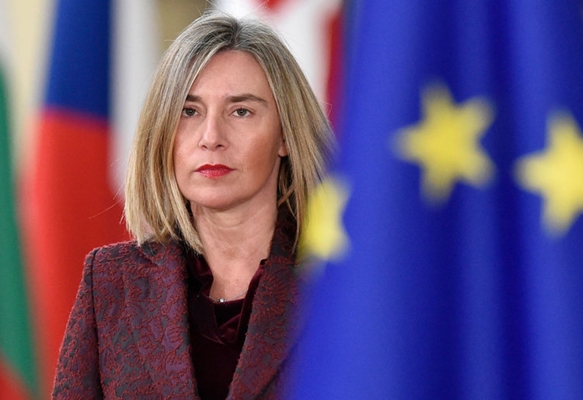
  • Also a joint meeting was held on May 15, 2018, bringing together the foreign ministers of Iran and the three European countries as well as EU Foreign Policy Chief Federica Mogherini.
  • In all of the meetings, the remaining parties to the JCPOA admitted that an essential part of the deal would be to have sanctions lifted and enable Iran to reap the economic benefits of the agreement. They undertook to offer “practical solutions” in order to realize this objective and normalize and even boost economic cooperation with Iran.
  • Those countries undertook to:

– maintain and enhance economic relations with Iran in different domains

– maintain and sustain effective financial channels in order to conduct transactions with Iran

– ensure the continuation of exports of petroleum and gaseous condensates as well as oil and petrochemical products

– ensure the continuation of marine (including shipping and insurance), land, air and rail transportation relations

– boost credit for exports

– offer clear and effective backing to the economic players doing business with Iran, especially small and medium-sized companies that form the centrepiece of many economies

– encourage further investments in Iran

– support economic players in investment plans and other trade and financial activities carried out with, or in relation to Iran

– bring together experts from state and private sectors, including through the reinforcement of trade councils

– offer practical support to trade with, and investment in Iran

– support companies against the extraterritorial consequences of US sanctions

  • Europe’s special financial channel known as the Instrument in Support of Trade Exchanges (INSTEX) is only one of more than ten commitments by the European foreign ministers which have not yet come into force after a year.
  • Over the past year, the Islamic Republic of Iran has shown exceptional self-restraint, creating many opportunities for diplomacy. However, the other side has, unfortunately, not seized the opportunities.
  • Moreover, Iran has time and again reminded, and given the necessary warnings to the other side. For example, in a letter by President Rouhani dated June 6, 2018, and in 16 letters sent to Mogherini by Iranian Foreign Minister Mohammad Javad Zarif, which will be published in due time if necessary, Iran gave warnings to the other side. In those letters, it was announced loud and clear that if Iran’s demands and interests under the JCPOA are not secured as envisaged in the deal, the next step would be for Iran to stop the implementation of a minor or major part of its voluntary moves as stipulated in Articles 26 and 36 of the agreement.
  • Now that Iran’s utmost goodwill and restraint together with Washington’s effrontery and unrestrained violations of laws have been proven to everybody, Iran stops the implementation of some of its voluntary measures under the deal as of May 8, 2019, in order to bring back balance to the parties’ implementation of JCPOA commitments and to secure its national interests, based on the rights stipulated in the JCPOA. Iran will give the said countries 60 days to live up to their commitments, especially with regards to banking transactions and oil exports. Otherwise, Iran will, stage by stage, stop more voluntary measures under the JCPOA and in conformity with Articles 26 and 36 of the deal.
  • Iran’s measures will, in the first phase, include stopping its voluntary compliance with restrictions on the maintenance of enriched uranium and heavy water stockpiles.
  • In the second phase, Iran will stop its voluntary compliance with limitations pertaining to the level of uranium enrichment and measures related to the modernization of the Arak heavy water reactor.
  • It is noteworthy that the United States’ illegal sanction on nuclear cooperation (which was announced last week, but had practically been on Washington’s agenda since a year ago) has actually made it impossible for Iran to voluntarily observe the previous limits on storing enriched uranium and heavy water because the US sanction prevents the export of enriched uranium and heavy water, a blatant breach of the provisions of the JCPOA and UN Security Council Resolution 2231.
  • Iran’s Supreme National Security Council has warned against any irresponsible move and stressed that Iran will show firm reaction if needed.
  • The Islamic Republic of Iran stands ready to continue consultations with the remaining parties to the JCPOA at all levels.
  • Iran entered into nuclear talks with goodwill, reached agreement with goodwill, implemented the deal with goodwill, and, after the US withdrawal from the agreement, gave the remaining parties enough time with goodwill. Now it is the turn of the remaining parties to the JCPOA to prove their goodwill and take serious and practical steps to preserve the JCPOA.

EU Rejects Iran’s JCPOA Ultimatum, Urges Continued Commitment

EU Rejects Iran’s JCPOA Ultimatum, Urges Continued Commitment

“We note with great concern the statement made by Iran concerning its commitments under the JCPoA (Joint Comprehensive Plan of Action),” the statement said on Thursday.

“We remain fully committed to the preservation and full implementation of the JCPoA, a key achievement of the global nuclear non-proliferation architecture, which is in the security interest of all,” it added.

“We strongly urge Iran to continue to implement its commitments under the JCPoA in full as it has done until now and to refrain from any escalatory steps,” it went on to say.

“We reject any ultimatums and we will assess Iran’s compliance on the basis of Iran’s performance regarding its nuclear-related commitments under the JCPoA and the NPT (Treaty on the Non-Proliferation of Nuclear Weapons). In this respect, we recall the key role of IAEA (International Atomic Energy Agency) monitoring and verification of the implementation by Iran of its nuclear-related commitments.”

“We also look to Iran to continue to adhere to established JCPoA formats and mechanisms including the JCPoA Joint Commission,” it added.

“At the same time we recall our own firm commitments under the agreement including as regards sanctions-lifting for the benefit of the Iranian people. In this regard, we regret the re-imposition of sanctions by the United States following their withdrawal from the JCPoA,” the statement said.

“We are determined to continue pursuing efforts to enable the continuation of legitimate trade with Iran, including through the operationalisation of the special purpose vehicle “INSTEX”.”

“We call on countries not party to the JCPoA to refrain from taking any actions that impede the remaining parties’ ability to fully perform their commitments,” the statement concluded.

The statement came after the Supreme National Security Council of Iran declared the country’s decision to stop implementing some of its commitments under the 2015 nuclear deal in reaction to the US’ withdrawal from JCPOA and Europe’s failure to make up for that.

In a statement on Wednesday, the SNSC said as of May 8, 2019, Iran does not commit itself to observing restrictions of stockpiling enriched uranium and heavy water given the US’ violations of the nuclear deal.

The statement also said that Iran gives other JCPOA parties 60 days to implement their commitments, especially in the banking and oil sectors.

Once they fulfil that, Iran will restart implementing its commitments. It’s now the other parties’ turn to show their good faith, the statement added.