Wednesday, December 24, 2025
Home Blog Page 2938

Iran Opens Comprehensive Stem Cell Research Centre

Iran Opens Comprehensive Stem Cell Research Centre

Addressing the Sunday ceremony held at the TMUS, Sattari said “the inauguration of this centre has opened a new aperture in medical sciences, accelerating the technology’s entry into this area.”

“[Now] the youths and researchers active in the fields of engineering and medicine can do joint research,” Sattari noted.

He added “many technologies will be developed in the centre and thanks to the installation of cleanroom equipment we will also see the infrastructure created for youth activities in the fields concerned.”

Referring to “commercialization of stem cells” as “the matter at hand”, he said “the number of products licensed by the Ministry of Heath has increased and the number of the knowledge companies operating in this area has reached 100, which is an appropriate figure, as not every country enjoys this number of such companies and products.”

On the margins of the ceremony, a total of 25 types of intermediates in the fields of tissue engineering, regenerative medicine, chemistry and biology were unveiled by the knowledge-based company Jarf-Andishan.

The intermediates are used in making a whole variety of products such as natural and synthetic polymer substances and their derivations.

The import price of the intermediates, which have a high added value, amounted to over $740 per gram, and indigenization of their production is expected to have a huge impact on the development of a variety of sciences and industries in Iran, and to result in the industries’ self-sufficiency in the relevant areas.


Related Articles:

Iran’s Beauties in Winter: Frozen Wetland of Choghakhor

Iran’s Beauties in Winter: Frozen Wetland of Choghakhor

With an area of more than 2,300 hectares, Choghakhor wetland is located near Boldaji, 40 km from Boroujen county in Chaharmahal and Bakhtiari Province.

The south-western province is going through its coldest days with a temperature as low as -16 °C in some parts.

What follows are Young Journalists Club’s photos of Choghakhor wetland on the slope of Baraftab and Kelar mountains:

Coronavirus as Scary as You’ve Heard about It: Eyewitness

Iranian students pose for a photo during a flight that evacuated them from the Chinese city of Wuhan, the epicentre of the novel coronavirus

The Chinese city of Wuhan is currently in quarantine and its 11 million citizens are cordoned off at homes. When the coronavirus broke out, there were 80 Iranian students living in this city.

These students were repatriated last week and are currently quarantined by the Health Ministry for a two-week period. They say people should not be afraid of them because they are not sick. That’s what the Health Ministry says, too.

Ahead of the evacuation, Iranian journalist Taraneh Bani-Yaghoub conducted interviews with two of these students. What follows are excerpts of Bani-Yaghoub’s report and interviews with these students:

Today, Wuhan goes through a story similar to Jose Saramago’s novel Blindness; a city in quarantine, 11 million confined populations, empty streets, smoke, closed shops, disinfectant odors, bodies that no one dares to approach and 80 Iranian students who are trapped there. They have a health record and they are going to be quarantined for a while after return, but what can they do with their fear?

Sina Safavardi is a business student and representative of Iranian students in Wuhan. He has lived in the city for four years and says Wuhan is his second home.

“Before the outbreak of the novel coronavirus, Wuhan was a quiet student city, but the things I see these days really seem strange to me. I think this situation will continue for the next few months and it will take time to eradicate the disease.”

Sina says the disease is as scary as people have heard about it or seen in movies and photos.

“Just a few days ago, I delivered the food packages that the [Iranian] embassy had provided for our fellows. On the way, I saw a sick person who fell to the ground. I have witnessed how they move the dead and wrap something like a plastic bag around them. It is even hard to see. The guys, who live in the Hankou area, are in a worse situation, especially medical students whose dormitories are near the hospital and can’t get out of the house at all.”

Chinese People - the epicentre of the novel coronavirusQ: Aren’t you scared to go out and deliver the packages?

A: I have no fear at all. Many of the students were stressful and told me not to go. Believe me; this stress in the quarantine is even worse than the fear of disease. When the Chinese themselves understand someone is from Wuhan they treat him badly. They even beat him and forcibly expel him from the restaurant and hotel. Of course, it has been thirteen days now that the city is under military rule and everywhere is closed.

Q: Do you mean the whole urban area when you are talking about the quarantine?

A: The whole city is quarantined. The [Iranian] Embassy has to give permission to you to go to a part of the city. Many of our colleagues can’t even go out to buy food, especially those in the Hankou area. All supermarkets are closed or empty. Of course it’s been three days that they have been feeding the hostels, but unfortunately we are not living at hostels and have to prepare our own meals.

Q: What do you do for food? Does the embassy provide you with the foodstuff?

A: Yes. Packages containing food, vitamin C and masks. They also introduced us to a warehouse. The warehouse was in the suburbs of Wuhan. They also gave us a car for transportation. This warehouse is not owned by the Chinese; it belongs to Muslims and its owner is an Arab. The embassy has helped us a lot and they want to help us return now.

However, the situation is tougher for Mohammad Alizadeh, a medical student who has been in Wuhan for four months.

“We have to stay in our neighbourhood for the first year and move to Hankou the following year, which is the centre of the virus epidemic. We as the newcomers are even more frightened because we are not familiar with the Chinese people, their culture, their language and their customs,” says Mohammad.

Mohammad lives out of the dorm and has not left home these days and has been living with the embassy’s foodstuff, which he says is about to end.

“There is no traffic, no taxis, and no buses. The ban has been imposed. Wuhan has become a ghost town. Even now we have the stress of going back to Iran and the kind of reaction people have.”

Iran Evacuates Its Citizens from China’s Wuhan


Q: Mohammad! Have you been insulted?

A: If you look at different news and social networks, you will find out. Believe us. We are in good health and have had tests and will be re-tested when we return.

Sina also confirms Mohammed’s words that Iranian students are more mentally and psychologically pressured than feared by Corona.

“Some went out of the town, but when they saw their visas and realized that they had come from Wuhan, they didn’t let them in. They were displaced. Please tell people that we will take the tests before leaving Wuhan, and we will be quarantined for 15 days when we arrive in Iran. They said we would stay at a hotel. We needed a lot of permissions from different authorities to be allowed to fly. Mahan Airline’s flight is to return us.”

“The embassy guys really helped out. We were the first country to distribute food packages among the students. They were in constant contact with us, and they resolved the students’ military service issue to facilitate our return. Many countries have returned their nationals, except for the Iraqis, Yemenis and Syrians who cancelled their return and said they would not assist their nationals to return. Iraq was supposed to send a plane, but then said they should stay here. Our biggest fear is the people’s treatment. Tell people we are not a harm to our country.”

The people of “Blindness” novel did well in the end. On the day they realised they could regain things through public empathy, they gained their vision. Many are afraid of the arrival of Corona in Iran these days. Many ask whether this disease can affect us too. Perhaps the only way to prevent the disease in the country is through empathy and accurate information-giving.

Bin Salman to Meet Netanyahu in Cairo: Report

Bin Salman to Meet Netanyahu in Cairo: Report
White House senior adviser Jared Kushner, and Saudi Arabia's Minister of State for Foreign Affairs Adel al-Jubeir are seen as US President Donald Trump holds a working breakfast meeting with Saudi Arabia's Crown Prince Mohammed bin Salman during the G20 leaders summit in Osaka, Japan, June 29, 2019. (Photo by Reuters)

The Jewish News Syndicate (JNS) quoted the Arab sources as saying that US Secretary of State Mike Pompeo and his team have been mediating between representatives from Israel and Saudi Arabia over the past few months to set up the meeting.

“In recent days there have been very intensive discussions between Washington, Israel, Egypt and Saudi Arabia to arrange a summit meeting in Cairo as early as the coming weeks, even before the election in Israel,” one of the Arab sources told JNS. Israel is scheduled to hold a general election on March 2.

Aside from the host, Egypt, the sources said, the summit “will be attended by the United States, Israel, Saudi Arabia and also the leaders of the United Arab Emirates, Sudan, Bahrain and Oman.”

According to the report, Jordan’s King Abdullah declined an invitation to attend the summit in Cairo. The monarch wanted to include Palestinian Authority leader Mahmoud Abbas.

A senior Palestinian official confirmed the report, noting that the Palestinian Authority is likely to reject any invitation, since “Abbas and the leadership in Ramallah will continue to adhere to their boycott of Washington and to freezing diplomatic ties with Israel.”

The Palestinian official said the US hinted to the Palestinians that “this would likely be Abbas’ and the Palestinians’ last chance to climb down from the tree and partake in the diplomatic developments unfolding in the region.”

Earlier this month, the Hebrew-language “Israel Defense” magazine cited sources as saying that Israeli authorities were working hard to arrange a meeting between Netanyahu and MBS in the kingdom.

Saudi Arabia has been one of the main supporters of the plan Trump unveiled alongside Netanyahu at the White House on January 28.

The so-called deal would have, among other contentious things, enshrined Jerusalem al-Quds as “Israel’s undivided capital” and allow the regime to annex settlements in the occupied West Bank and the Jordan Valley.

The plan has been rejected by all Palestinian groups.

Israeli authorities have been injecting more momentum to their efforts to publicize their clandestine relations with a number of Arab countries, particularly Persian Gulf littoral states.

Israel has full diplomatic ties with only two Arab states, Egypt and Jordan, but latest reports suggest Tel Aviv has been working behind the scenes to establish formal contacts with other Arab countries such as the United Arab Emirates, Saudi Arabia and Bahrain.

Iran to Inaugurate Hundreds of Medical Projects

Iran to Inaugurate Hundreds of Medical Projects

During the ten-day celebrations marking the anniversary of victory of the Islamic Revolution, a total of 2,321 health and treatment projects are inaugurated at the medical universities across Iran.

The new projects include 132 rural healthcare facilities, 176 comprehensive health centres, and 13 laboratories.

Moreover, a total of 79 projects will be inaugurated in the emergency medical service sector, including 18 pre-hospital emergency medicine centres, 11 hospital emergency departments, 44 emergency road service centres, as well as 6 projects for air medical and maritime emergency services.

Furthermore, 67 hospital wards will be completed or furnished during the ten-day period, 257 intensive care and 438 ordinary hospital beds will come on stream, 9 administrative buildings will be inaugurated at the hospitals, and 16 new buildings will open at the universities and faculties of Iran.

The Revolution victory anniversary will also mark the opening of 10 new hospitals with a total of 927 beds, 160 physician centres, 10 university and faculty buildings, and 27 special clinics.


Related Articles:

Anti-Iran Propagandist Rouhollah Zam Stands Trial in Iran

Rouhollah Zam

Zam, who was arrested last October in a “sophisticated” operation by the IRGC’s Intelligence Organization, is being tried in Tehran at the 15th Branch of Revolution Court by Judge Salavati.

Zam has been charged with:

  1. Spreading Corruption on Earth
  2. Opening and running anti-Iran Telegram channels Amad News and Sedaye Mardom with the aim of disrupting the country’s security
  3. Spying for the Israeli intelligence service through the spy service of one of the regional countries
  4. Spying for the French intelligence service
  5. Working with the hostile government of US against Iran
  6. Gathering and collusion with the aim of committing crimes against Iran’s national and international security
  7. Extensive complicity in propaganda activities against the Islamic Establishment of Iran and in favour of groups and organizations working against Iran
  8. Membership and management of anti-Iran news website Saham News with the aim of disrupting Iran’s national security
  9. Complicity in provoking and luring people into war and slaughter with the aim of disrupting the country’s national security
  10. Complicity in collection of classified information with the aim of sharing them with others and disrupting the country’s national security
  11. Complicity in extensive dissemination of fake news
  12. Effective provocation of resistance forces and those serving the Iranian Armed Forces into riot, desertion, surrender or refusal to implement their military duties
  13. Insulting the Islamic sanctities
  14. Insulting Imam Khomeini, the founder of the Islamic Republic of Iran, and Ayatollah Khamenei, the Leader of Iran’s Islamic Revolution
  15. Insulting the officials and officers serving the nation
  16. Illicit acquisition of assets totally worth 97,550 euros.

He has also been sued by a number of legal and natural people.

Photo of Zam attending his first trial session on Feb. 10, 2020

Zam who used to live in Paris, operated the opposition Telegram channel and news site dubbed “Amad News” with over one million followers.

The Islamic Revolution Guards Corps (IRGC) in a statement in October described Zam’s arrest as a blow to foreign intelligence services that directed and supported him, especially the French intelligence service as well as the US and Israeli intelligence services.

Shortly after his arrest, Zam appeared on Iran’s national TV and expressed remorse for his wrongdoings. He said “I am sorry for the way I have behaved and misused mass media. I am sorry for trusting foreign governments. Trusting the French government in particular, was wrong. I never thought I would get caught.”

Zam was apparently en route to Baghdad through Amman on October 11 before being arrested. He had even sent his wife a photo of himself in the Amman airport.

There were reports that he had been lured into visiting Iraq and meet with Grand Ayatollah Ali al-Sistani in Najaf, but the top Shiite cleric’s office denied the allegations.

UK Ambassador Returns to Iran, Calls for Bilateral Talks

UK Ambassador Returns to Iran, Calls for Bilateral Talks

“I have recently returned from London to Tehran. It was an important trip that was planned some time ago,” Macaire said in an Instagram video posted on Thursday in Farsi.

He added that during the visit, he had meetings with Britain’s Secretary of State for Foreign and Commonwealth Affairs Dominic Raab and other senior officials and discussed ways to advance issues that are important to Iran and Britain.

Iranian media said on January 15 that the British envoy had left Tehran for London a few days after his brief detention. Macaire’s departure has taken place with prior notice and based on diplomatic protocol.

Iranian Deputy Foreign Minister for Political Affairs Abbas Araqchi later said Tehran has sternly warned the British ambassador for attending an “illegal” gathering and advised him to avoid such a behavior.

“We summoned the ambassador and he was reprimanded severely,” Araqchi said.

He added that the Iranian Foreign Ministry later issued a statement warning that in case of repetition of such a behavior, the ministry will adopt measures tougher than just summoning the ambassador.

Macaire further said in the video posting that Britain wanted to cooperate with Iran, France, Germany, Russia and China as the remaining signatories to a 2015 nuclear deal, officially known as the Joint Comprehensive Plan of Action (JCPOA), after the US unilateral withdrawal from it.

US President Donald Trump, a stern critic of the landmark deal, unilaterally pulled Washington out of the JCPOA in May 2018, and unleashed the “toughest ever” sanctions against the Islamic Republic in defiance of global criticism in an attempt to strangle the Iranian oil trade.

On January 5, Iran took a final step in reducing its commitments, and said it would no longer observe any operational limitations on its nuclear industry, whether concerning the capacity and level of uranium enrichment, the volume of stockpiled uranium or research and development.

In response to the US move, Tehran has so far rowed back on its nuclear commitments five times in compliance with Articles 26 and 36 of the JCPOA, but stressed that its retaliatory measures will be reversible as soon as Europe finds practical ways to shield the mutual trade from the US sanctions.

The British diplomat further added that his country seeks to use the dispute resolution mechanism in the nuclear deal — which Britain, France and Germany triggered last month — to find a path forward in order to be able to “allay international concerns about Iran’s nuclear program and also allay Iran’s concerns about the economic benefits” of the JCPOA.

He also reiterated London’s full commitments to the JCPOA and a non-dollar direct payment channel — officially called the Instrument in Support of Trade Exchanges (INSTEX) — aimed at facilitating trade with Iran in the face of US sanctions even after Britain’s official withdrawal from the European Union.

“In recent weeks, we held important talks with Iranian officials on a number of other issues, including the danger of lack of stability in Iraq and the region, support for families of the victims of the downed Ukrainian plane and some important mutual issues like trade and visa,” Macaire said.

Defence Ministry Helping Iranian Carmakers against Sanctions

Defense Ministry Helping Iranian Carmakers against Sanctions

Brigadier General Amir Hatami paid a visit to Iran Khodro factory on February 5 at the invitation of the Ministry of Industry, Mine and Trade, and visited an exhibition of self-sufficiency in the car components.

During the visit, the Defence Minister lauded the Iranian automaker for the continuous manufacturing of cars in spite of the foreign sanctions, saying the Iranian defence industries have begun to assist the country’s automotive sector.

Highlighting the great technological capacities of Iran’s defence industry, the general said efforts are underway to utilize the defence technologies in order to resolve the problems in the automotive industry.

Denouncing the sanctions that the hegemonic powers have imposed on Iran’s defence industry over the past four decades, the minister said Iran’s defence industries have gained the experience of turning the threats into opportunities and have “shattered the dam of cruel sanctions” by manufacturing more than 3,300 products.

The defence industry has rushed to help the Iranian carmakers since a year ago, Hatami added, saying such cooperation has resulted in the production of various automobile components with modern technologies.

Iran Planning to Build Smart Self-Driving Car

The Iranian defence experts and knowledge-based companies have managed to supply the automakers with many sensitive auto parts such as turbocharger, anti-lock braking system, electronic control units, various types of sensors, safety belt, and airbag, the minister noted.

“The Defence Ministry would by no means get involved in the production of the components and systems which could be manufactured by the private sector,” Brigadier General Hatami emphasized.

He further highlighted the Defence Ministry’s efforts to ensure national calm and security, and described the supports for the automakers or any other industry facing the cruel sanctions as a duty.

At the conclusion of the visit, the Defence Ministry and the Ministry of Industry, Mine and Trade signed a cooperation agreement on the domestic production of auto parts in Iran.

Iran Sympathizes with Thailand after Fatal Shooting

Iran Condemns US Oil Deal with Syrian Kurdish Group

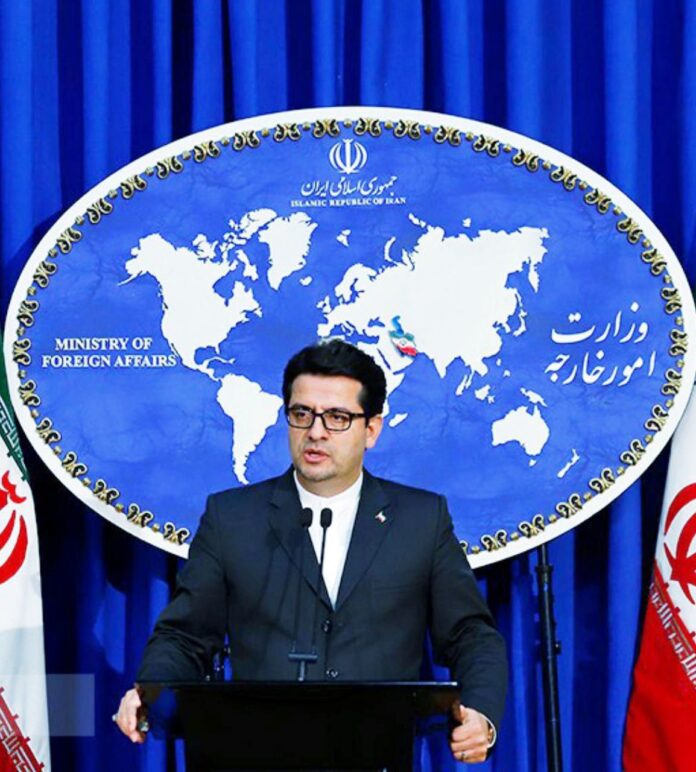
In a message on Sunday, Foreign Ministry Spokesman Seyyed Abbas Mousavi expressed regret at a shooting rampage that has killed and injured dozens of Thai citizens.

He also offered sympathy for Thailand’s government, nation and the families of victims of the bitter incident, and wished the injured a speedy recovery and health.

A soldier went on the shooting rampage in northeastern Thailand, killed at least 29 people, and was finally shot dead by security services after he holed himself up in a shopping center.

Jakraphanth Thomma on Saturday killed his commanding officer before stealing weapons from a military camp.

The Thai police and military sources said they had killed the 32-year-old soldier on Sunday morning, a few hours after a failed raid on the Terminal 21 complex in Nakhon Ratchasima left one member of the security forces dead and two injured.

Iran Launches Zafar Satellite, 90% of Research Objectives Achieved

Iran Launches Zafar Satellite, 90% of Research Obj

Speaking with the Islamic Republic of Iran’s New Network, the spokesperson for the space sector of the Iranian Defense Ministry said the Zafar satellite has been successfully launched with the Simorgh satellite carrier from the Imam Khomeini National Space Center.

Ahmad Hosseini added that, however, the satellite carrier has failed to reach the required velocity for the orbit injection phase, but gave an assurance that the necessary modifications will be made to the process for the next launch.

He explained that the pre-launch preparations have been carried out over the past days at the space center, and the satellite was finally launched at 7:15 pm local time.

For a brief review of Iran’s achievements in various fields of science and technology, check the book “Science and Technology in Iran: A Brief Review – 2019

The satellite carrier performed the first task completely and the launch was carried out flawlessly, he added, noting that the second stage was also performed, when the engines were switched on successfully.

The satellite carrier travelled around 90 percent of the planned trajectory, reached an altitude of 540 kilometers above the Earth, and reached a velocity of 6,500 meters per second, Hosseini noted.

The satellite carrier flew for about 9 minutes, he stated, saying the main objectives for research in the project have been accomplished, and the whole data have been collected.

Unfortunately, the satellite carrier could not reach the needed velocity at the last moments, the spokesman added, but gave an assurance that the necessary modifications will be made to the next operation.

The data received during the launch are going to be processed and analyzed for the optimization of the research project, he noted.

Hosseini said the Iranian scientists have carried out the necessary optimization techniques at the space center and at the satellite carrier, and have made the necessary changes in the engines and the control systems. “The bulk of the changes that have been made gave positive results.”

“As announced before, it was a research launch, and our expectations were satisfied in the respective sectors,” the spokesman explained, saying the main purpose of the research launches is to collect data and optimize the designs.

“We consider the launch as a successful one, because the research launch is not aimed at the injection phase,” Hosseini added, noting that despite the failure to reach the planned orbit, the satellite could connect with the Earth bases for a couple of minutes, transmitted signals, and its performance was tested.

The satellite carrier’s engines were tested for 375 seconds in vacuum conditions, at high velocities and accelerations, he noted, saying it was the first time that the homegrown engines worked for such a period of time in vacuum.
“The data analysis and modifications will be carried out at the shortest time possible and the next launch will be performed soon,” he concluded.

Meanwhile, Iran’s Minister of Information and Communications Technology Mohammad Javad Azari Jahromi announced on his Instagram account that the Zafar-II satellite will be launched in the Iranian month of Khordad (May / June 2020).