Tuesday, January 13, 2026
Home Blog Page 292

Iran’s top military official warns of devastating response to any new attack

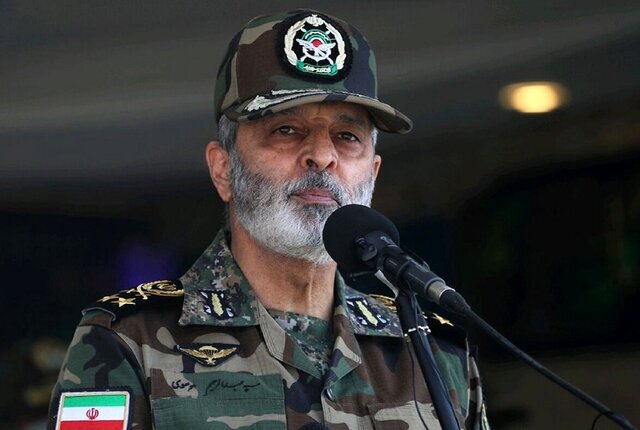
General Mousavi was speaking during a memorial ceremony for Major General Hossein Salami, the martyred commander-in-chief of the Islamic Revolution Guard Corps (IRGC).

Referring to Israel’s recent aggression against Iran, he said: “Following the leader of the Islamic Revolution’s initial command, we had designed a paralyzing operation. We did not get the chance to execute it, but if Iran gets attacked again, they will witness what we are capable of…perhaps even the US won’t be able to save Netanyahu.”

Paying tribute to fallen commanders, Mousavi expressed sorrow over the loss of his comrades, praising their selflessness, courage, and lifelong dedication to defending Iran. “These were commanders of intellect, faith, and humility… they sought no reward for themselves, only martyrdom and divine grace”, he said.

According to Mousavi, Iran’s enemies had been planning the recent conflict for 15 years, aiming to dismantle the Islamic establishment under the pretext of the nuclear issue. “They miscalculated three things: the leadership, the people, and the power of Iran’s armed forces.”

He added that Iranian armed forces delivered a deterrent response first, and then a punitive operation. “The people, against all odds, stood united …this unity forced the US to rush to Netanyahu’s aid and request a ceasefire, but if they return, we are ready.”
Tehran reaffirms conditional cooperation with IAEA following recent aggression against Iran

Tehran reaffirms conditional cooperation with IAEA following recent aggression against Iran

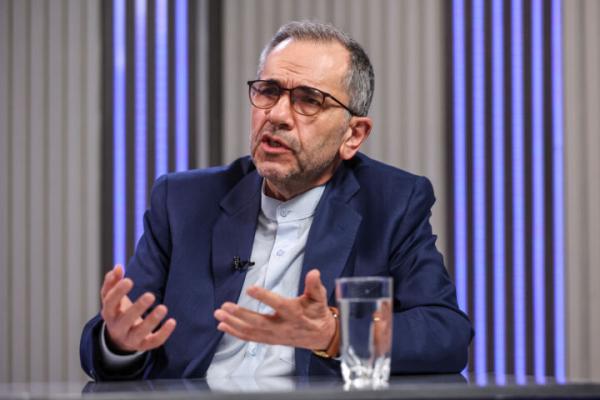
Takhte-Ravanchi noted that the decision to suspend some cooperation with the IAEA was in accordance with new legislation passed by the Iranian Parliament and signed into law by President Masoud Pezeshkian.

However, he said the final direction of Iran’s future engagement with the agency will be determined by Iran’s Supreme National Security Council. “Our ambassador in Vienna remains in contact with the Director General of the IAEA”, he said, underlining that dialogue is ongoing.

The diplomat then slammed a recent IAEA report on Iran, calling it “ill-timed, unfair, and inaccurate”, saying the US and its European allies used it to pass a resolution aimed at isolating Iran.

“That resolution became a pretext for an open act of aggression by the Zionist regime and the US”, he stressed.

He referred to the indirect Iran-US negotiations before the attacks, including a planned meeting in Oman, which was ultimately preempted by military strikes. “This was the biggest blow to diplomacy and to trust”, he said, adding, “We need a clear explanation from the US on why they misled us”.

On Iran’s nuclear program, Takhte-Ravanchi reaffirmed Tehran’s right under the Non-Proliferation Treaty (NPT) to enrich uranium for peaceful purposes.

He rejected Western skepticism about Iran’s 60% uranium enrichment, citing its use in medical and research reactors, particularly the Tehran Research Reactor.

He also highlighted Iran’s long-standing rejection of nuclear weapons, referencing a religious decree by Iran’s Leader.

Iranian president condemns Israeli attacks, defends Iran’s right to self-defense at ECO summit

Iranian president-Azerbaijan

He stated that Iran exercised its legitimate right to self-defense under Article 51 of the UN Charter.

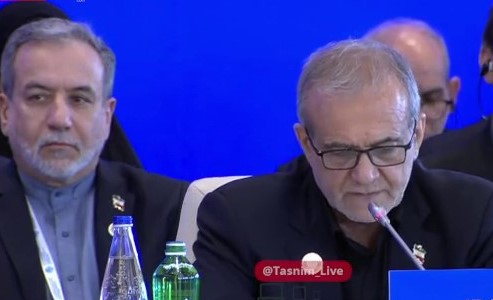
President Pezeshkian said the attacks, carried out during nuclear negotiations between Iran and the US, violated international law, particularly Article 2(4) of the UN Charter, and were supported by US military forces.

The 12-day assault targeted civilians, academics, off-duty military personnel, nuclear facilities under IAEA supervision, and key infrastructure, causing extensive damage and fatalities.

He commended regional nations, especially ECO members, for their “responsible stances” during the crisis and urged global condemnation of the aggression.

Addressing the ECO’s broader mission, President Pezeshkian emphasized the need to strengthen intra-regional trade and logistics.

He criticized the current 8% regional trade rate as “unacceptable” and called for realization of free trade goals outlined in ECO’s Vision 2025 and 2035.

He also highlighted Iran’s willingness to host the next ECO summit and proposed better transit access for landlocked member states, alongside development of international-standard logistics hubs and digital transformation across the region.

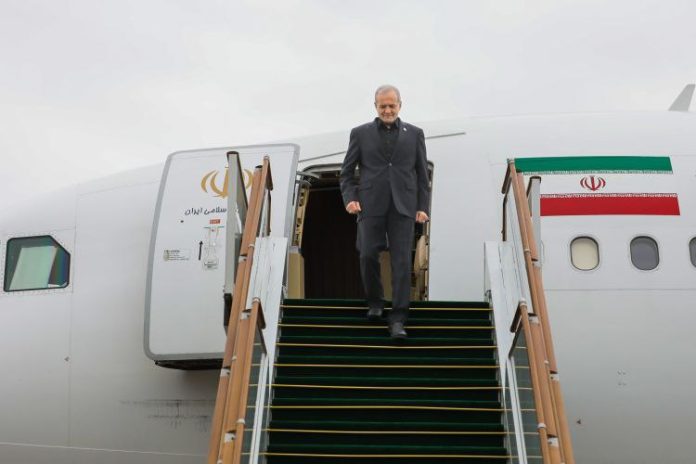
Iranian president arrives in Republic of Azerbaijan’s Khankendi for ECO summit

Pezeshkian was welcomed in Khankendi, the summit venue, where he is expected to deliver a speech and hold bilateral meetings with several participating heads of state and senior officials.

Before departing for Azerbaijan, the president described the summit as an important opportunity to strengthen regional cooperation.

“This trip falls within the framework of trilateral relations among Iran, Turkey, and Pakistan and marks a first step toward broader regional collaboration among 10 member countries,” he stated.

In addition to Iran, participants include Republic of Azerbaijan, Turkmenistan, Afghanistan, Uzbekistan, Tajikistan, and Kazakhstan.

President Pezeshkian emphasized the summit’s potential for dialogue on economic, political, and social issues, aiming to create common ground for mutual benefit.

Highlighting the importance of expanding regional ties, President Pezeshkian expressed hope that the summit would contribute to improved political engagement, stability, and peace.

“The more regional coordination increases, the less room there will be for hostile actors to spread insecurity,” he said.

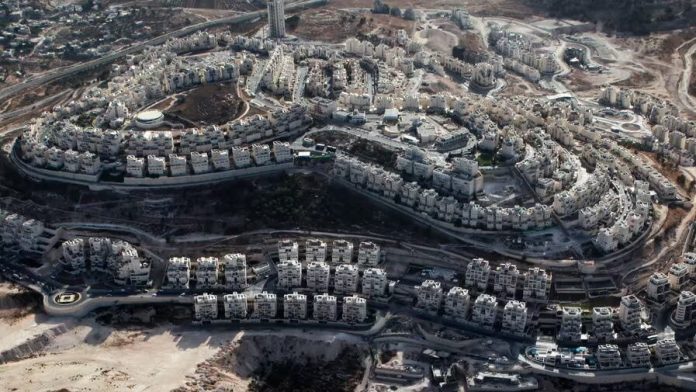
Iran warns against Israel’s plot to fully annex West Bank

Iran warns against Israel's plot to fully annex West Bank

Baqaei called on the international community and Islamic nations to take urgent and decisive action in support of the oppressed Palestinian people and to confront a colonial plan to erase Palestine as a nation with a deep-rooted historical identity.

He also strongly condemned the intensifying genocide in the occupied Palestinian territories and the killing of hundreds of defenseless civilians across various areas of the Gaza Strip in the past week.

The Iranian Foreign Ministry spokesman described the continued attacks by Israeli forces on residential neighborhoods, refugee tents, shelters, and aid distribution centers as unprecedented war crimes.

Referring to repeated, deliberate attacks on refugee gathering sites and the bombing of the Mustafa Hafiz school in Gaza City, Baqaei held the United States, Germany, and other supporters of the occupying regime responsible for the continuation of genocide and crimes against humanity in Gaza.

Baqaei also praised the ongoing efforts of Francesca Albanese, the UN Special Rapporteur on the situation of human rights in the occupied Palestinian territories, for her role in exposing the Zionist regime’s atrocities and defending the rights of the oppressed Palestinian people.

Iran set to expel remaining IAEA inspectors amid suspension of cooperation, MPs say

MP Mahmoud Nabavian wrote on the social media platform X that, under a new law passed by Parliament, the remaining IAEA inspectors, whom he referred to as “spies”, will be expelled in the coming days.

His comments were echoed by MP Amirhossein Sabeti, who also confirmed the imminent removal of the inspectors, citing follow-ups with the Atomic Energy Organization of Iran.

The move comes after Iranian President Massoud Pezeshkian formally enacted legislation requiring the government to suspend all cooperation with the IAEA in response to recent airstrikes by the US and Israel on Iranian nuclear sites amid the IAEA’s ‘biased’ stance.

In a post on X on Thursday, Foreign Minister Abbas Araghchi said Iran remains committed to NPT and its Safeguards Agreement but that future cooperation with the IAEA would be directed by the Supreme National Security Council.

According to the law, no IAEA personnel, including the director general, will be permitted entry, and Iran will halt the operation of surveillance cameras and the submission of nuclear activity reports.

More than a dozen nuclear scientists are among hundreds of the Iranians killed in the Israeli attacks on Iran.

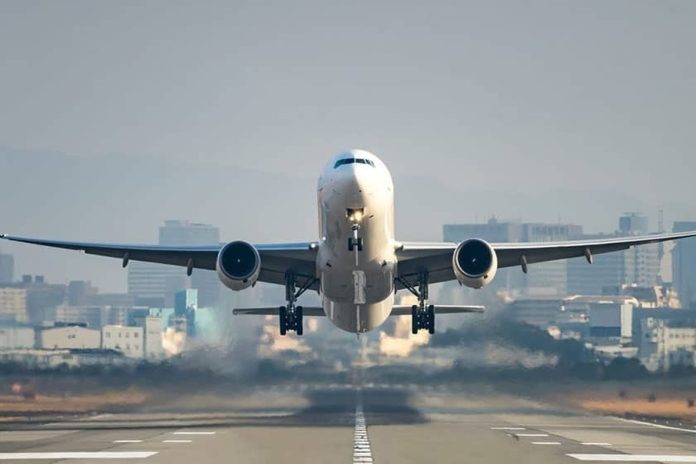
Most Iranian airports resume operations amid safety review

Iran’s Civil Aviation Organization (CAO) announced on Thursday that all domestic and international flights have resumed at airports across the country following the airstrikes by the US and Israel last month, except for those in Isfahan and Tabriz.

According to the CAO, this decision follows multiple inter-agency meetings and thorough safety and security assessments. As a result, major airports including Tehran’s Mehrabad and Imam Khomeini, as well as airports in the north, south, east, and west of the country, have reopened and are now fully operational for scheduled flights.

Isfahan and Tabriz airports remain closed, but the CAO stated that they will rejoin the national aviation network once necessary infrastructure is restored and no further restrictions remain.

Additionally, Iran has reopened its central and western airspace to international overflights during daytime hours (5 a.m. to 6 p.m.), while eastern airspace remains open 24/7 for transit flights and regional operations.

Iran’s airspace had been closed to flights since June 13 when the Israeli regime, later joined by the US, launched strikes that targeted civilian and military targets across the country.

Iran says committed to NPT, its safeguards agreement

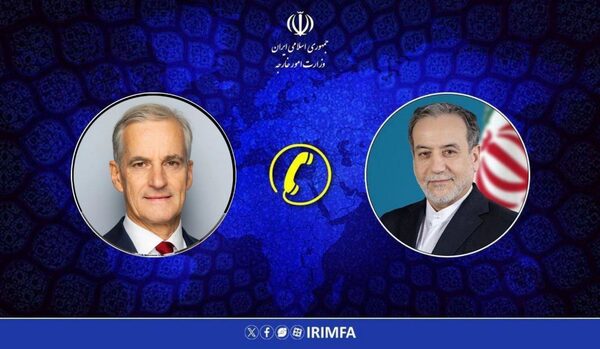
In a phone conversation with Norwegian Prime Minister, Jonas Gahr Støre, on Thursday evening, Araqchi said, however, in accordance with new legislation passed by the Iranian Parliament in response to the illegal attacks on Iran’s nuclear facilities by Israel and the US, Iran’s cooperation with the IAEA has been suspended for clear safety and security reasons and will now be managed solely through Iran’s Supreme National Security Council.

Araqchi stressed that the unlawful attacks by the US and the Zionist regime against Iran amid ongoing indirect Iran-US negotiations dealt a severe blow to the very principle of diplomacy.

He reiterated the Iranian people’s determination to defend their national sovereignty, territorial integrity, and legitimate rights, emphasizing that the Islamic Republic of Iran’s Armed Forces, as demonstrated during the 12-day national defense, are fully prepared to confront any adventurous moves by the Zionist regime and its supporters.

Araqchi criticized some European countries and the Director General of the International Atomic Energy Agency (IAEA) for their stance in issuing the IAEA Board of Governors’ resolution, as well as their continued support for the aggression by the Zionist regime and the US against Iran.

He condemned their failure to denounce the dangerous actions of the aggressors in targeting Iran’s peaceful nuclear facilities, warning that such a destructive approach by certain European countries could further complicate the current situation and make the path of diplomacy more difficult.

Araqchi emphasized the need for the international community and the UN Security Council to hold the US and the Zionist regime accountable for their military aggression against Iran’s national sovereignty and territorial integrity, as well as for their violation of the fundamental principles of the UN Charter and peremptory norms of international law.

The Norwegian prime minister also emphasized the need to prevent any further conflict or escalation of tensions in the region.

He also stressed the importance of finding a diplomatic solution to the Iranian nuclear issue and expressed support for ongoing efforts aimed at de-escalation and establishing regional stability.

FM Araghchi raps Germany’s support for attacks on Iran, reaffirms NPT commitment

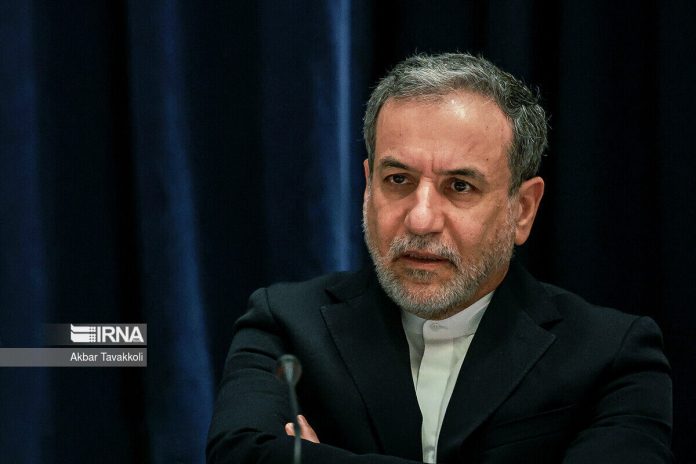
Abbas Araghchi

Responding to recent foreign speculation, Araghchi clarified: “Iran remains committed to the NPT and its Safeguards Agreement. However, in accordance with new legislation passed by the Islamic Consultative Assembly in response to the unlawful attacks on Iran’s nuclear facilities by Israel and the United States, all cooperation with the IAEA will, for clear safety and security reasons, be regulated solely through the Supreme National Security Council of the Islamic Republic of Iran.”

He went on to sharply criticize Germany’s role in the crisis, stating: “What truly sends a ‘devastating message’ and destroys any path toward a diplomatic solution is clear to the Iranian people: Germany’s open endorsement of Israel’s unlawful military aggression against Iran—including attacks on safeguarded nuclear facilities—which German officials have grotesquely referred to as ‘dirty work’ carried out on behalf of the West.”

Araghchi further condemned Berlin for its support of the recent U.S. missile strikes against Iran’s nuclear sites, calling the attacks a blatant violation of international law, the NPT, and the United Nations Charter.

He also cited Germany’s “flagrant breach” of its JCPOA commitments, particularly through its repeated demands for “zero enrichment” in Iran.

“Iranians have long been disgusted by Germany’s Nazi-style support for genocide in Gaza and its past complicity in Saddam Hussein’s chemical warfare against Iran,” Araghchi wrote, referring to German companies’ provision of chemical weapons to the former Iraqi dictator during the imposed war on Iran in the 1980s.

He concluded that Germany’s open support for bombing Iran has left no illusion,  stressing that the German regime harbors nothing but hostility and ill intent toward the Iranian nation.

Iran’s Deputy Parl. speaker: IAEA chief ‘liar’, ‘Zionist agent’

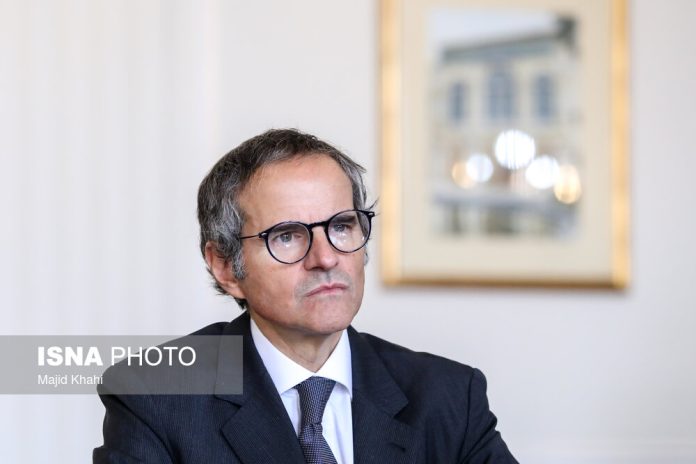
IAEA Grossi

Ali Nikzad said Grossi was behind fueling the Zionist regime’s recent military aggression against Iran through false reports.

Nikzad stated that during the 12-day war with the Israeli regime and the United States, over 260 Iranian lawmakers remained active in open and closed parliamentary sessions to ensure legislative and oversight functions continued.

He emphasized that Parliament had passed two “crucial and defensive” bills, one of which suspended the agency’s operations in Iran and barred IAEA inspectors and Grossi himself from entering the country.

Nikzad further condemned Grossi for facilitating Israel’s aggression through “false and provocative reports,” asserting that Iran will not allow the return of IAEA inspectors until the agency fulfills its legal obligations with transparency and fairness.

He also cited legislative action to regulate drone activity domestically and urged government bodies to accelerate post-war reconstruction efforts.