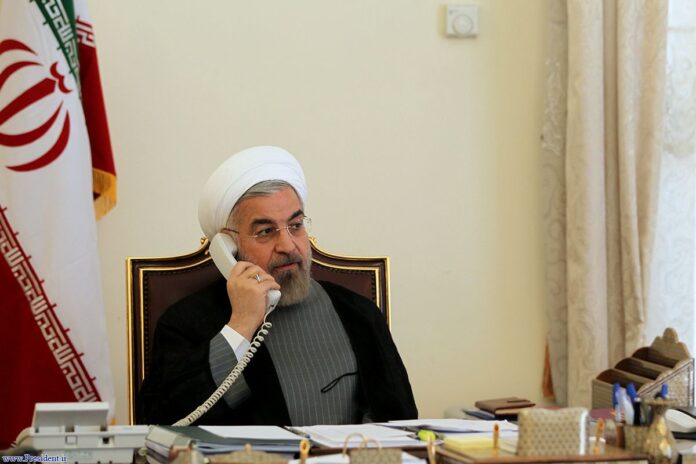
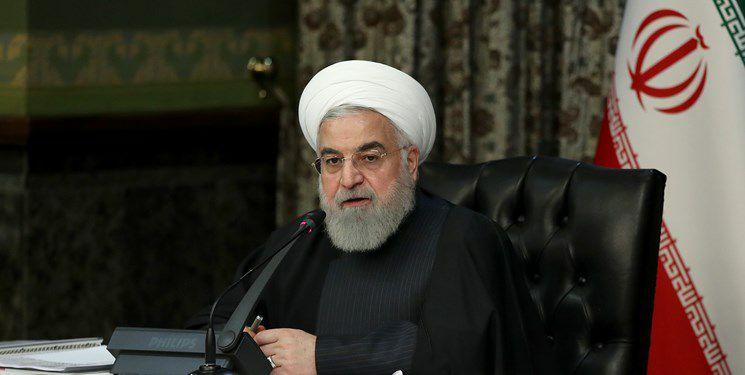
President Rouhani on Tuesday held telephone conversations with the governors of Qom, Gilan and Mazandaran, the hardest-hit of the Iranian provinces following the outbreak of the novel coronavirus.
In the conversations, the president was briefed on the latest efforts to contain the epidemic and treat the patients in those provinces.
President Rouhani also emphasized the necessity for the “serious, exact and strict” implementation of all protocols and decisions formulated by the Coronavirus Fight National Headquarters, run under the Health Ministry’s supervision.
The president further ordered the provincial governors to make the necessary arrangements to handle the situation during the new year’s holidays and turn the sports stadiums and other indoor locations into makeshift convalescent homes for the coronavirus patients.
President Rouhani also praised the Iranian medical staff for their unwavering efforts in the battle with the coronavirus, and stressed the need for taking advantage of the Armed Forces to supply the hospital equipment, establish mobile medical centers, and employ the capacities of the medical staff of the Armed Forces.
He finally reiterated the necessity to avoid unnecessary trips and to stay at home in order to curb the spread of the virus, calling on the governors of Qom, Gilan and Mazandaran to ask the residents of their provinces to observe the advisories and cooperate with the authorities.
Iran’s Health Ministry announced on Tuesday that 54 people, the highest number since the outbreak of the COVID-19, have died of coronavirus during the past 24 hours.
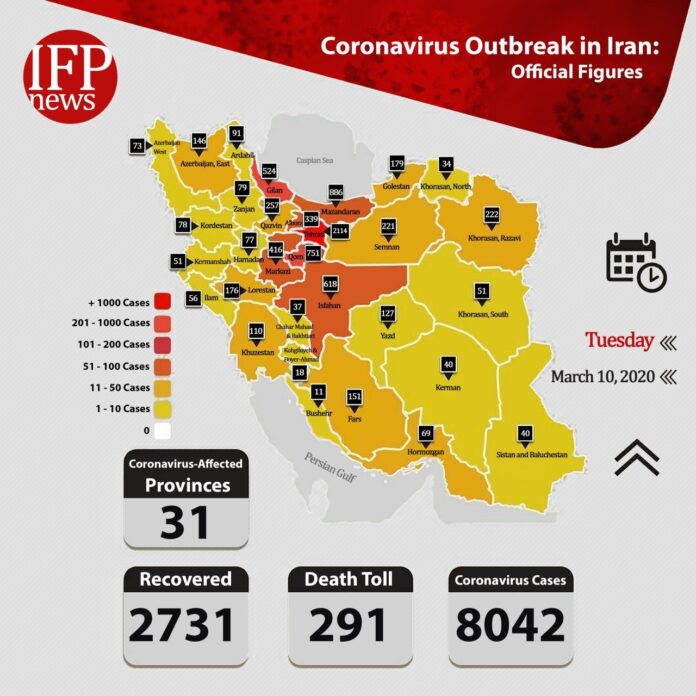
The total number of infections in Iran has increased to 8,042 and the death toll to 291.
Kianoush Jahanpour, the Health Ministry’s spokesman, announced on Monday that 881 new cases of Coronavirus have been confirmed in Iran in the past 24 hours, including the 54 new deaths.
Now the total number of infections in Iran has increased to 8,042 and the death toll to 291, he added.
According to Jahanpour, 2,731 have also recovered and been discharged from hospital so far.
The 8,042 confirmed cases so far include 2,114 in Tehran, 886 in Mazandaran, 751 in Qom, 618 in Isfahan, 524 in Gilan, 416 in Markazi, 339 in Alborz, 257 in Qazvin, 222 in Khorasan Razavi, 221 in Semnan, 179 in Golestan, 176 in Lorestan, 151 in Fars, 146 in East Azarbaijan, 127 in Yazd, 110 in Khuzestan, 91 in Ardabil, 79 in Zanjan, 78 in Kurdistan, 77 in Hamadan, 73 in West Azarbaijan, 69 in Hormozgan, 56 in Ilam, 51 in Kermanshah, 51 in South Khorasan, 40 in Kerman, 40 in Sistan and Baluchestan, 37 in Chaharmahal and Bakhtiari, 34 in North Khorasan, 18 in Bushehr, and 11 in Kohgiliyeh and Buyer-Ahmad.
Nowadays, considerable effort is made to overcome bacterial diseases and combat bacterial resistance. In this context, development of safe and efficient antimicrobial wound dressings which can selectively fight against the bacteria and decrease disruption of normal cells such as red blood cells in wound bed is highly required.
To that end, a group of researchers at Iran’s Royan Institute and the University of Tehran carried out a study in which a series of ammonium salts of alginate were prepared and the role of different counter-cations including sodium, triethylammonium, tributylammonium and dihexylammonium were examined with respect to antimicrobial efficacy and selectivity as well as fibroblasts viability.
The results of the study, published in ‘Materials Science and Engineering: C’, reveal that many different parameters such as hydrophilicity, linearity and branching structure, molecular weight and charge density can influence the selectivity of ammonium counter-cations.
In vitro biological studies also indicated that tributylammonium alginate (TBA-Alg) possesses optimum anti-hemolytic and antibacterial properties compared with other counter-cations.
Furthermore, the fibrous mat of TBA-Alg demonstrated higher swelling ratio and better anti-hemolytic and cytotoxic activities against fibroblasts compared to a commercial silver-impregnated calcium alginate wound dressing.
Moreover, histopathological analysis of tributylammonium alginate fibrous mat revealed that this dressing accelerates reepithelialization of infected full-thickness skin wounds as well as the commercial silver-impregnated calcium alginate wound dressing.
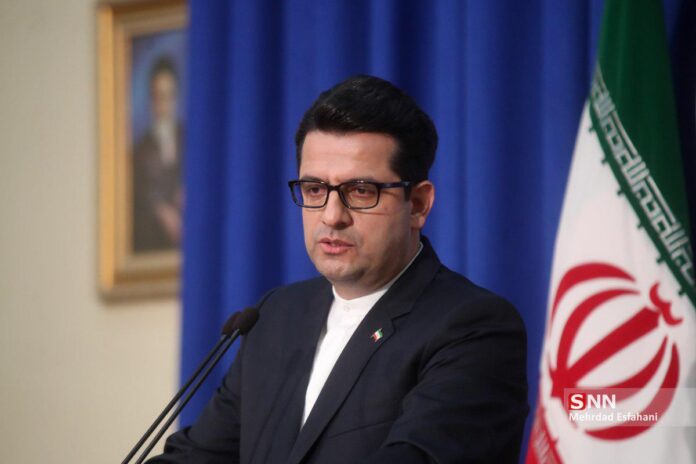
In remarks on Tuesday, Mousavi said the first group of Bahraini nationals has been sent to their own country.
“In line with the humanitarian measures, the Ministry of Foreign Affairs made efforts to transfer the foreign nationals to their respective countries, and as a result of these measures and frequent coordination with the Ministry of Foreign Affairs of the Sultanate of Oman, the first group of Bahraini citizens left for their country this morning (Tuesday, March 10),” the Iranian spokesperson said.
“The Islamic Republic of Iran offers special gratitude to the government of Oman, praises that country’s humanitarian approach to cooperation and determination to perform such humanitarian task, and hopes that positive interaction on part of the Bahraini government and continuation of this process would allow the other Bahraini citizens in Iran to return to their homeland according to the schedule,” Mousavi added.
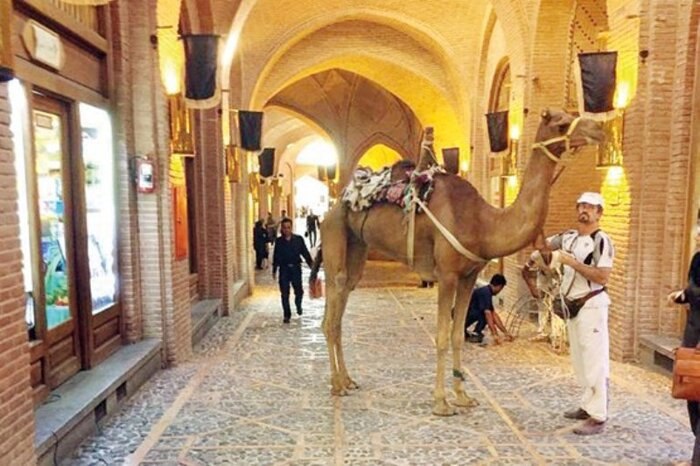
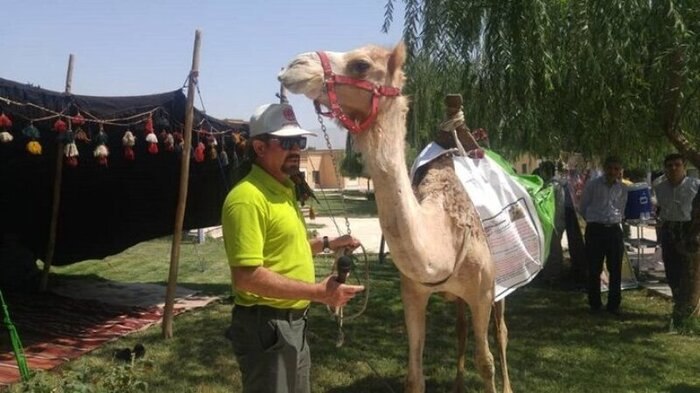
Mohammad Amiri Roodan is a school teacher in Hormozgan province. He set off on his journey around the world on camel in June, 2019. The trip was scheduled to take two and a half years. Now, he has stopped his journey due to the epidemic.
The trip was geared to introducing the tourist attractions of Iran, especially those of Hormozgan province, including the Iranian Bactrian camel and a wonderful local lagoon. The journey began in a ceremony attended by officials and a group of local people.
“First, I intended to go to Europe via Russia before visiting other continents. However, the type of the trip was little known to people, which further complicated the process of administrative work and receiving permits and delayed my work,” says the tourist.
He says he travelled a long stretch of his journey inside Iran with a truck in order to protect the health of the camel on which he was supposed to travel.
“I was warmly welcomed by locals while passing through different provinces,” he says.
Amiri Roodan says he first began to tame a camel provided by the State Livestock Sciences Institute, but had to change it as he found the animal not suitable for the journey.
“Finally I decided to swap the camel with a tame one bred by nomads,” he says.
According to the tourist, it took him one and half months to go through all paperwork and administrative procedure to swap the camel.
He says finally he set off on his journey and arrived in the Azerbaijan Republic after almost a month.
“Bu the necessary arrangements had not been made with that country and I was not allowed to enter the country with a camel,” he notes.
“Moreover, the coronavirus outbreak in China further intensified these restrictions,” he says.
“So, I had to return to Iran. I began my journey again after a short rest,” says the tourist.
He says he has now stopped his trip due to the coronavirus epidemic, and when he will restart his journey depends on the extent to which the coronavirus outbreak is controlled.
He says he is likely to begin his journey in the next Iranian year (beginning March 20, 2020).
He has 23 years of journeying experience and has set different records in various sports fields.
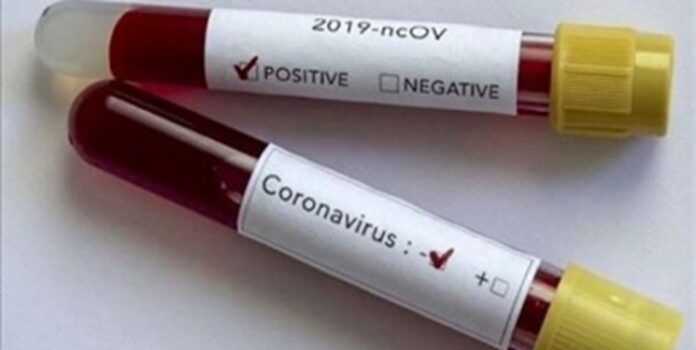
An early diagnosis of COVID-19 is the primary and most important process in the treatment of the respiratory disease whose global cases have surpassed 100,000 in 100 countries.
While the test kits have turned into a vital tool in screening the coronavirus patients and diagnosing the disease, the Iranian experts have buckled down to work to manufacture the test kits inside the country.
To diagnose COVID-19, the Iranian medical staffs are currently using the test kits that have been purchased or obtained from the World Health Organization, China and the UNICEF.
Amid the growing demand for the coronavirus test kits, the Biotechnology Development Headquarters of Iran’s Vice Presidency for Science and Technology called on the domestic knowledge-based companies to make the kits.
Following the call, a large number of companies expressed readiness to manufacture the kits.
A total of 50 enterprises volunteered to carry out the task, five of whom were chosen after being vetted by the officials, and contracts were signed to do the job.
Secretary of Biotechnology Development Headquarters of the Vice Presidency for Science and Technology, Mostafa Qanei, says the homegrown test kits will be available on the open market by the Iranian month of Farvardin (March 20 – April 19).
He also noted that the imported test kits currently at Iran’s disposal are adequate for the next two months, but there will be a shortage of such diagnostic tools afterwards. “That’s why we are fulfilling this need with the help of the domestic capabilities.”
Iran’s Health Ministry announced on Monday that the number of people who have died from the coronavirus in the country has risen to 237 and the total number of confirmed cases to 7,161. At least 2,394 people have recovered from the disease in Iran so far.
The novel coronavirus has infected more than 108,000 people around the world and killed more than 3,800.
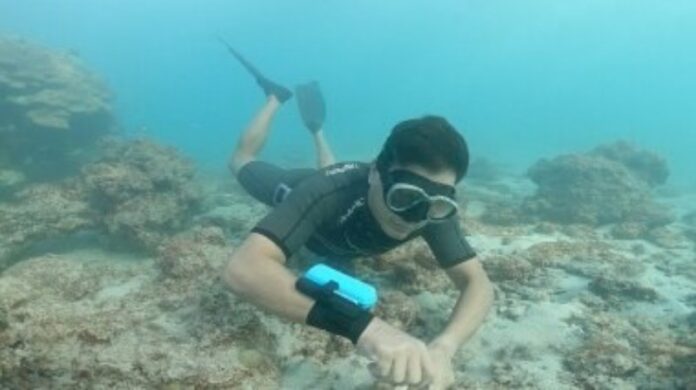
CEO of the Iranian manufacturing company told ISNA that his team has designed and developed the inflatable lifesaving wristband which can easily keep the swimmers afloat in an emergency, without the need for a lifeguard.
Afshin Salari said thousands of people die from drowning in Iran every year, including a remarkable number of skilled swimmers and divers.
He noted that the lifesaving wristband made by his company is a smart product equipped with GPS location technology that could track the swimmers in danger of drowning by allocating an exclusive IP to each wearer.
The Iranian wrist strap has an air pressure control valve that could be utilized by the divers in deep water, and is also equipped with a compass and emergency lighting.
According to Salari, the homegrown lifesaving wristband enjoys greater advantages in comparison with the US-made product, such as higher capsule capacity and flexible airbag.
The Iranian lifesaving device could be also attached to all parts of the body, is sold under warranty, and costs one-tenth the price of similar foreign products, he said.
Salari finally noted that his company’s research and development team, including five experts, is working to optimize the products.
Iranian Judiciary Chief Seyyed Ebrahim Raisi said on Monday that the release of the prisoners will continue to the point where it doesn’t create insecurity in society.
Officials say due to the measures taken at the prisons last month, the prisoners’ health is under full control.
So far, over 7000 have been infected and over 200 died of the novel Coronavirus in Iran.
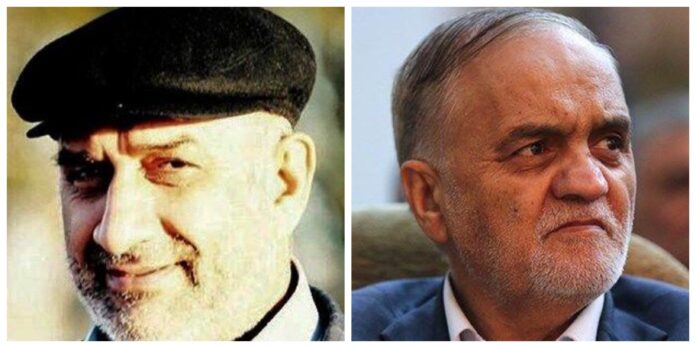
Mohammadreza Rahchamani, a reformist politician and former lawmaker, and Farhad Tazari, a former head of Islamic Revolution Guards Corps’ Political Bureau died on Monday from the COVID-19.
Born in Sabzevar in 1952, Mr. Rahchamani represented the city in the second, third, fourth and fifth Iranian parliaments.
He had also recently run a failed campaign on the reformists’ slate for membership in the eleventh parliament.
During early 2000s, Mr. Rahchamani was the head of Iran’s Welfare Organization under President Mohammad Khatami.
He was also the secretary general of the National Unity and Cooperation Party and the licence holder and managing director of the party’s newspaper Asrar.
On the same day but at the other end of Iranian politics’ scale, Farhad Tazari the former head of the Islamic Revolution Guards Corps’ Political Bureau died of coronavirus at Baqiyatallah Hospital.
A member of Intelligence Organization of IRGC for a while, he was a co-founder of the magazine Sobh-e Sadeq whose stands are close to IRGC.
The virus had earlier killed two former Iranian officials, and infected several incumbent officials.