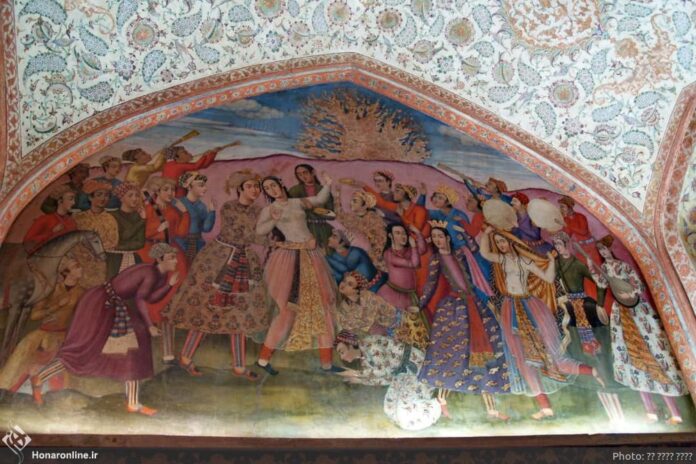
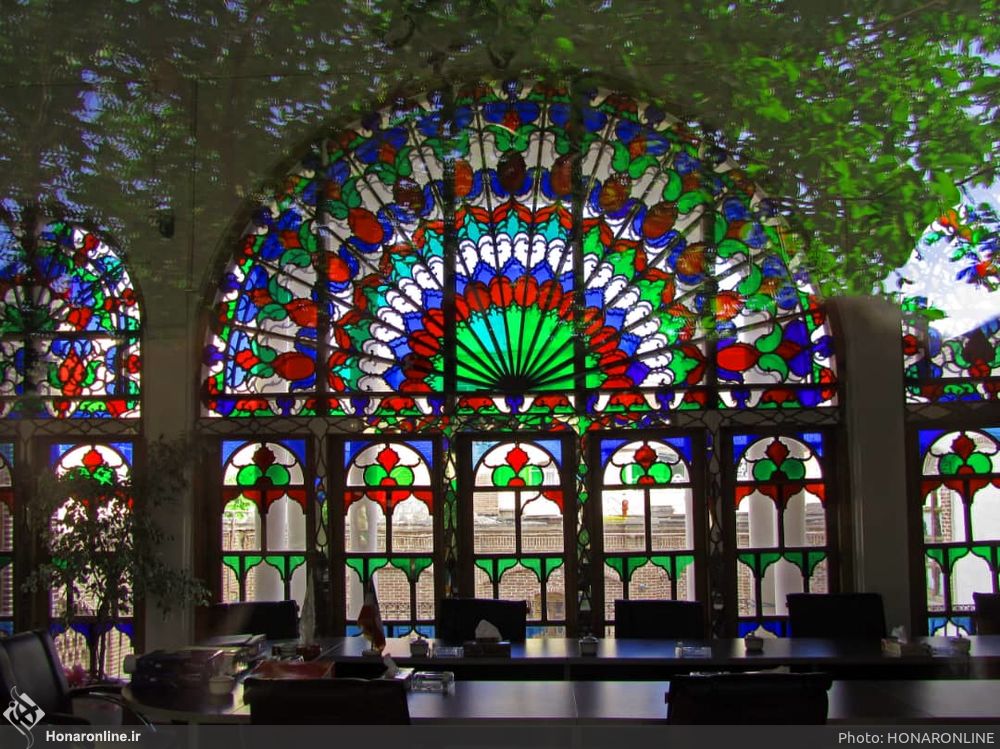
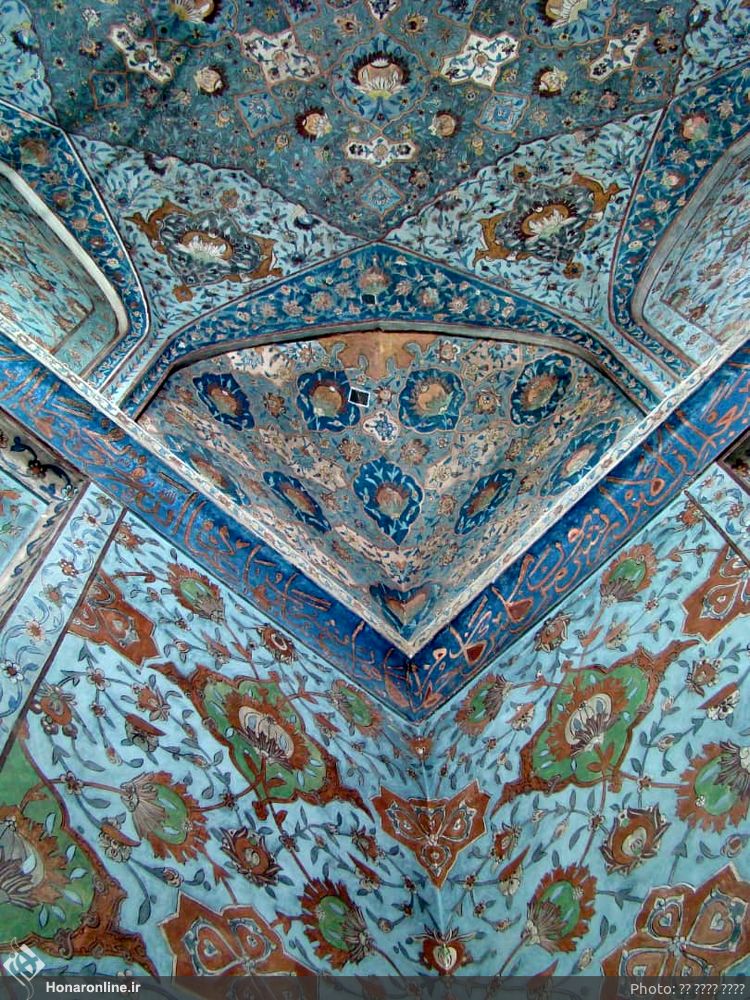
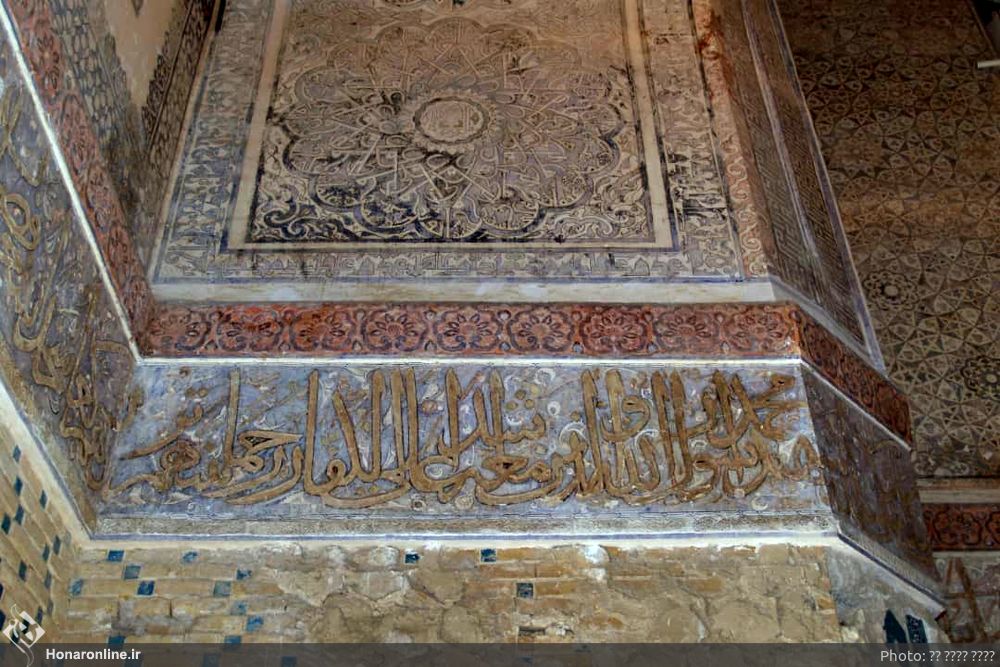
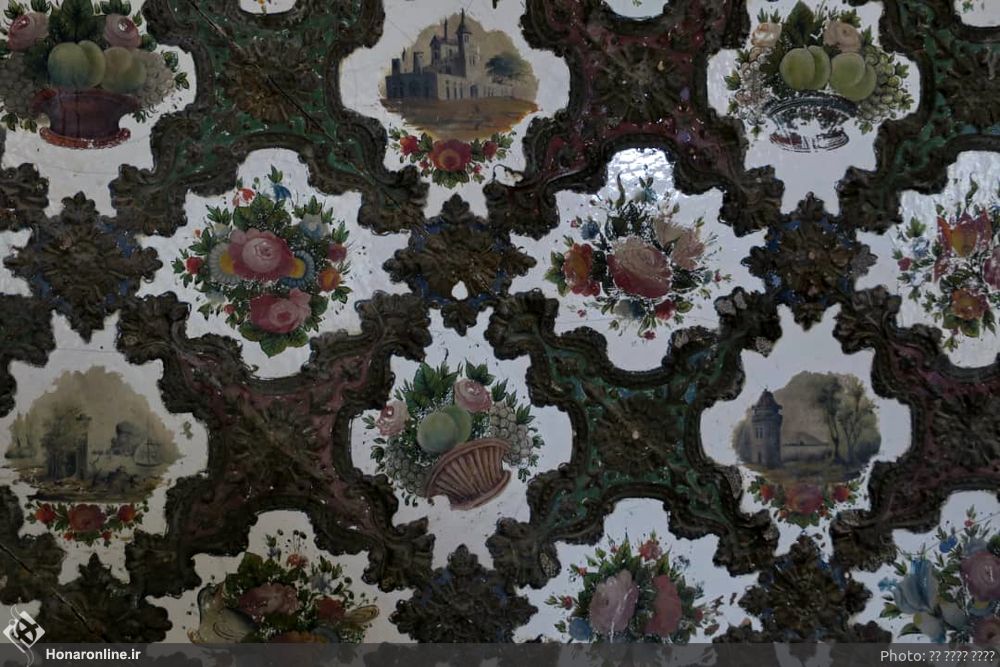
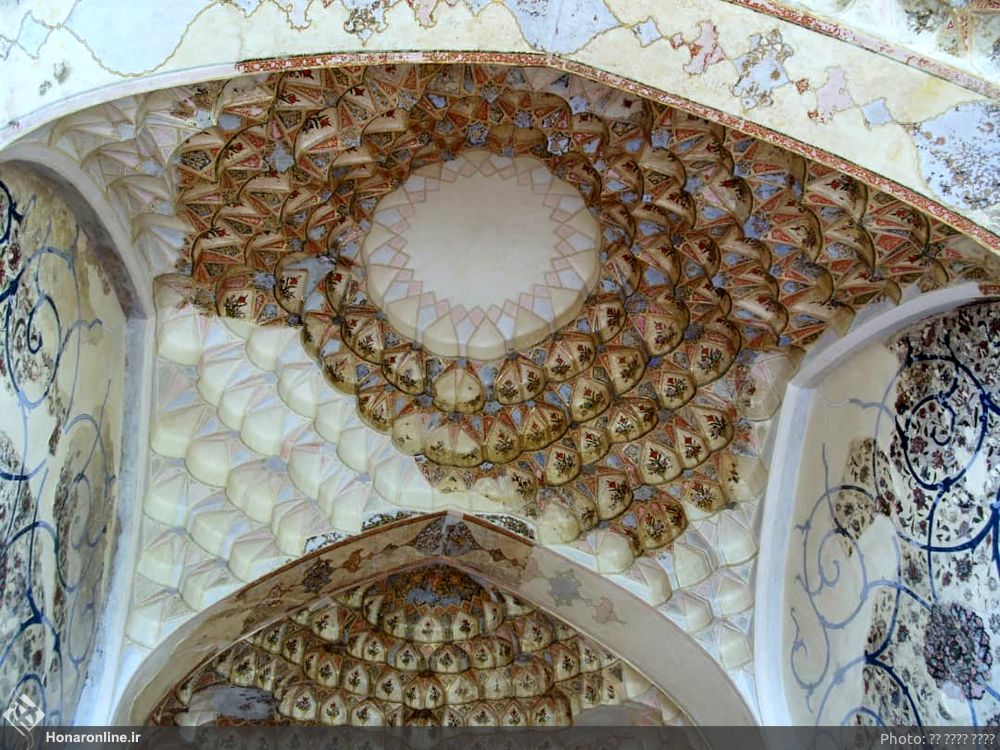
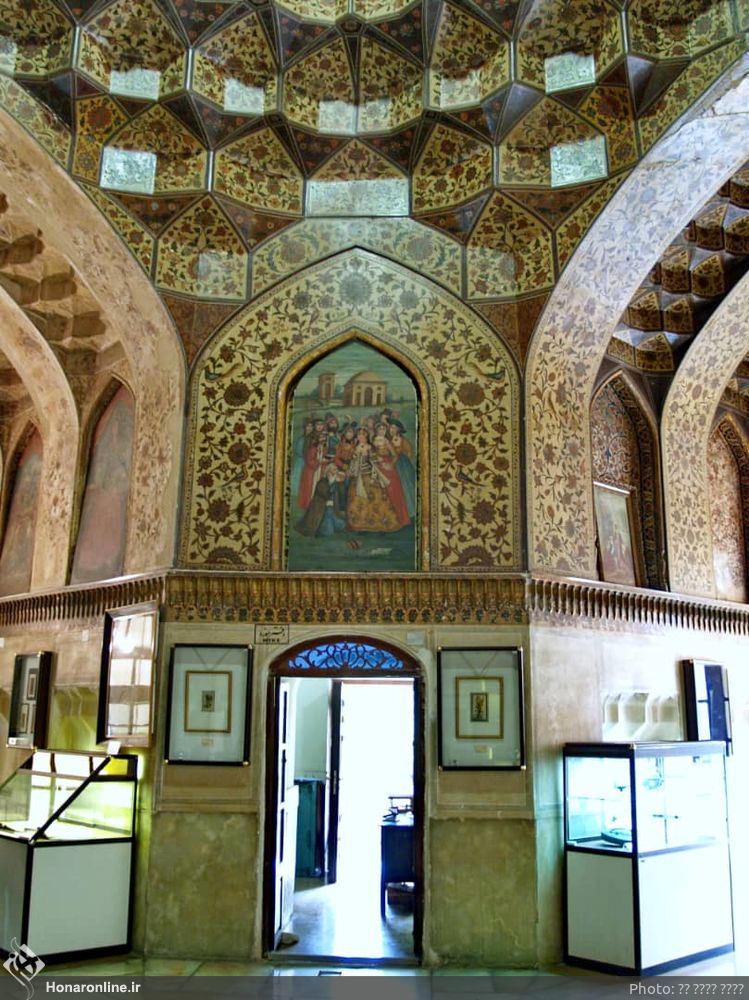
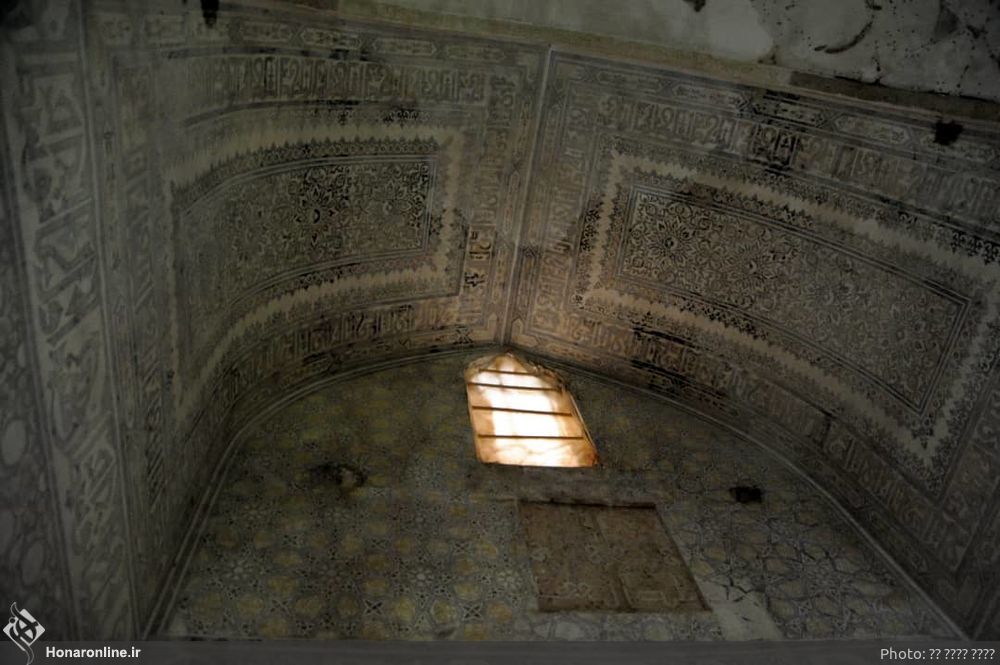
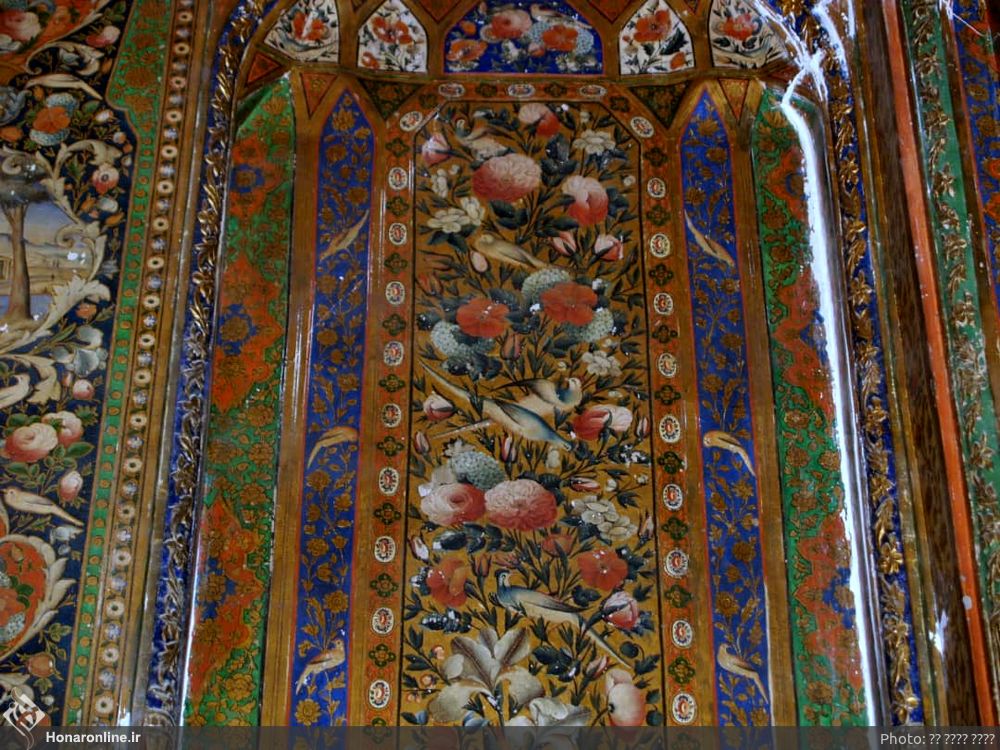
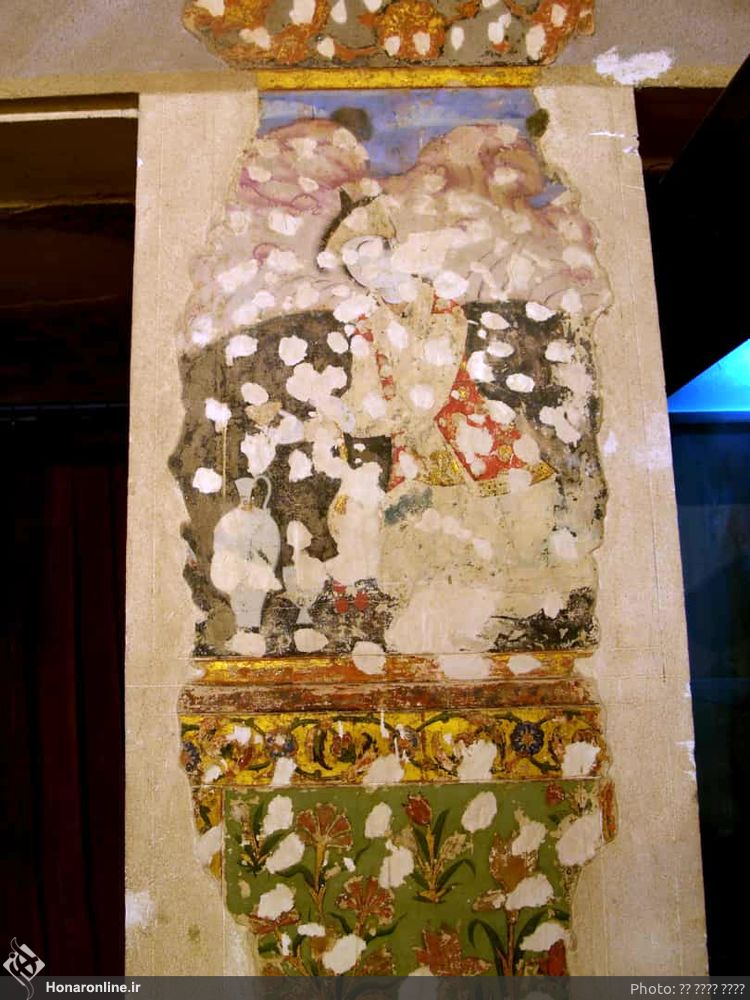
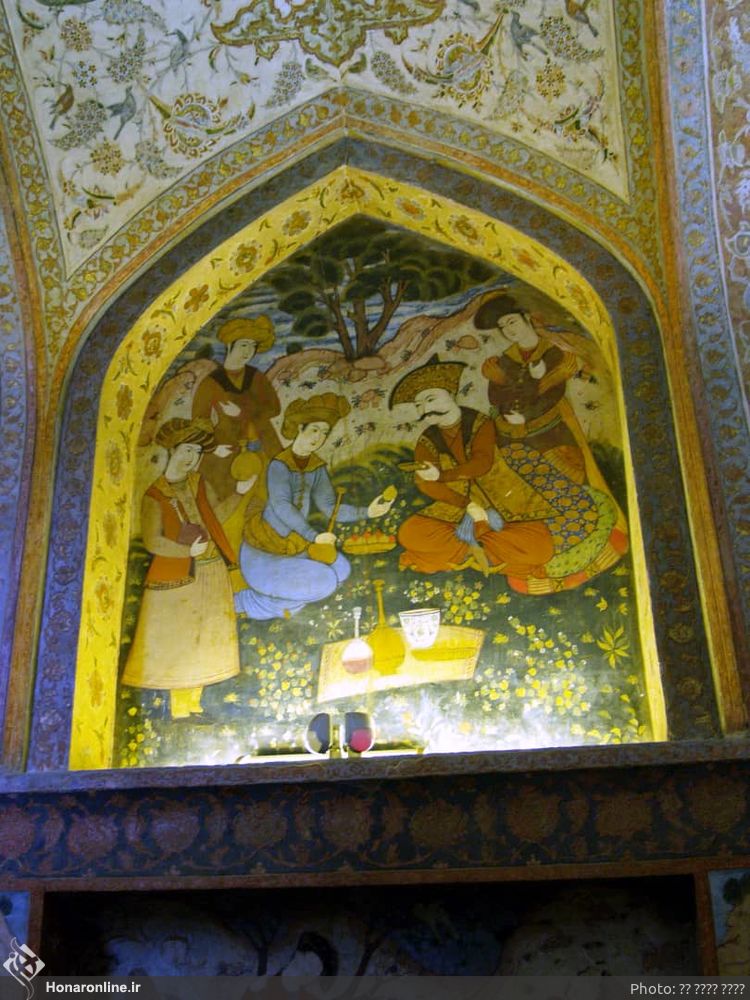
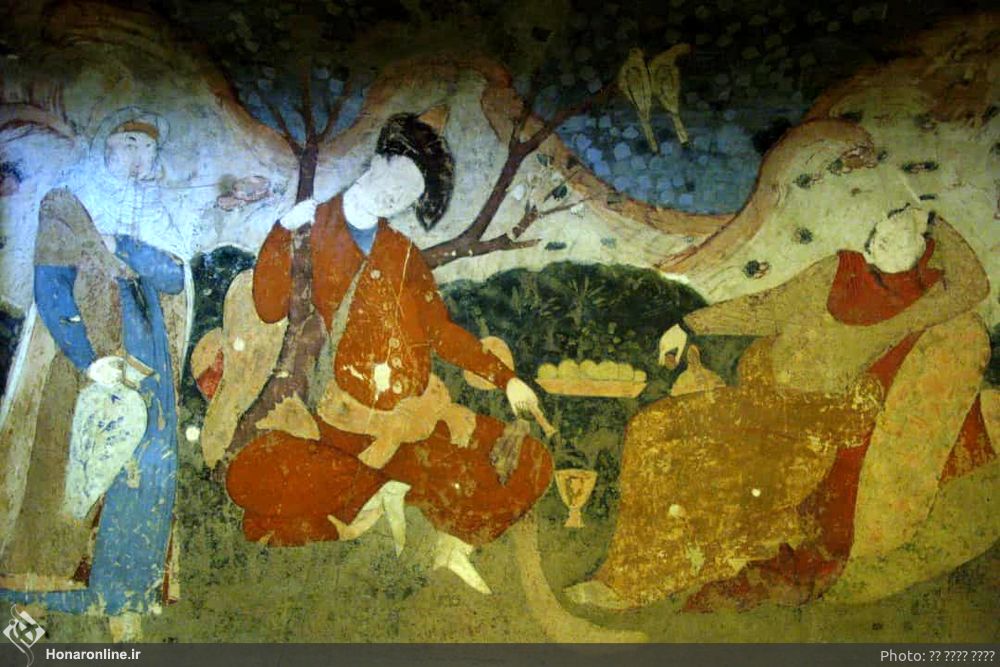
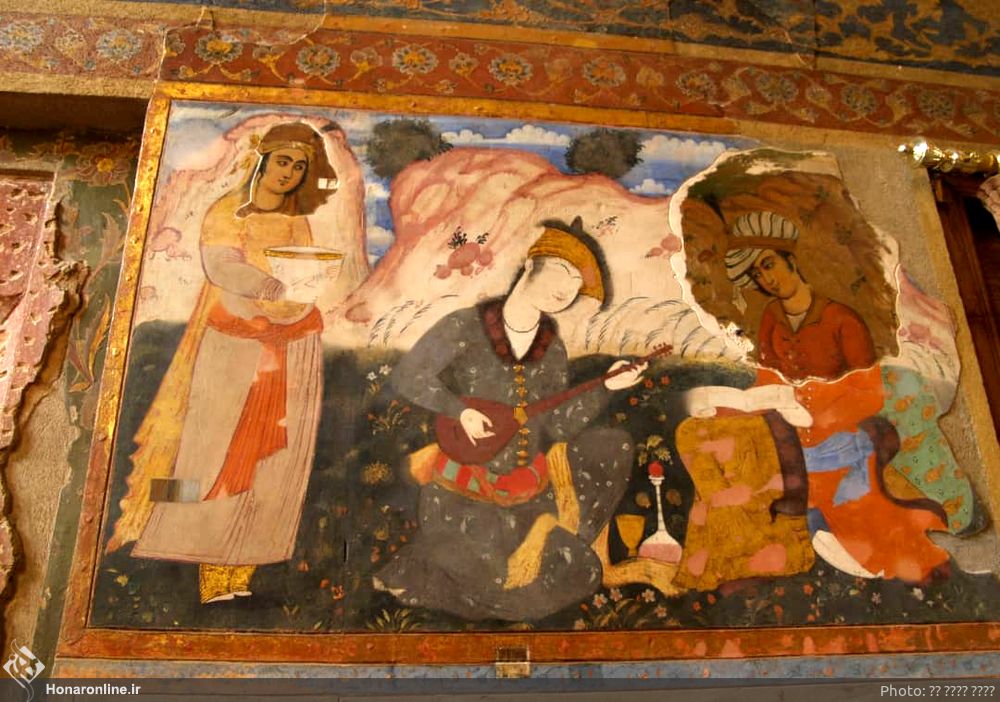
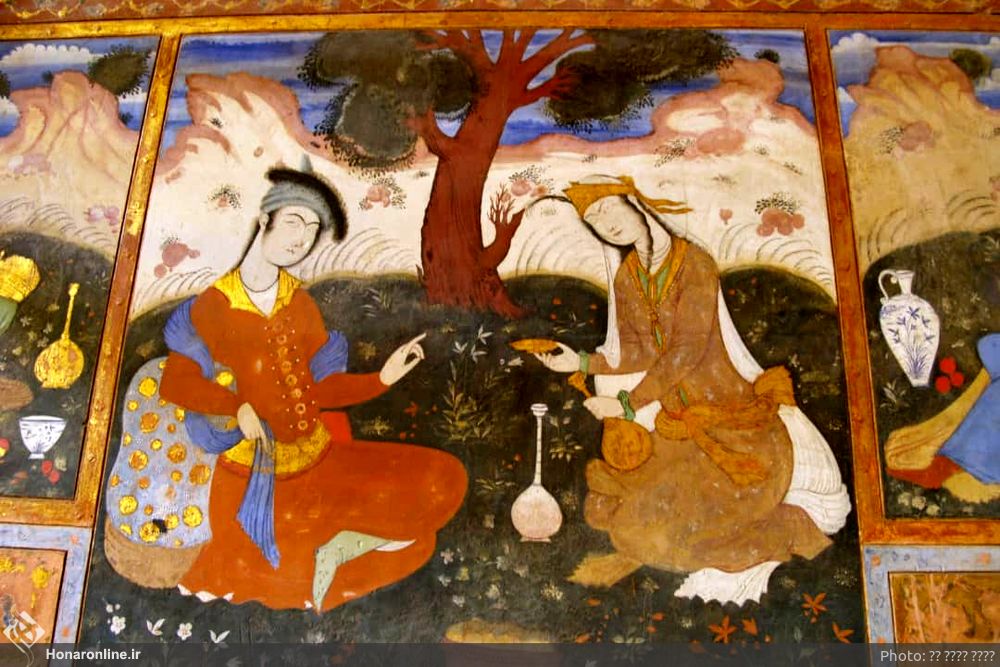
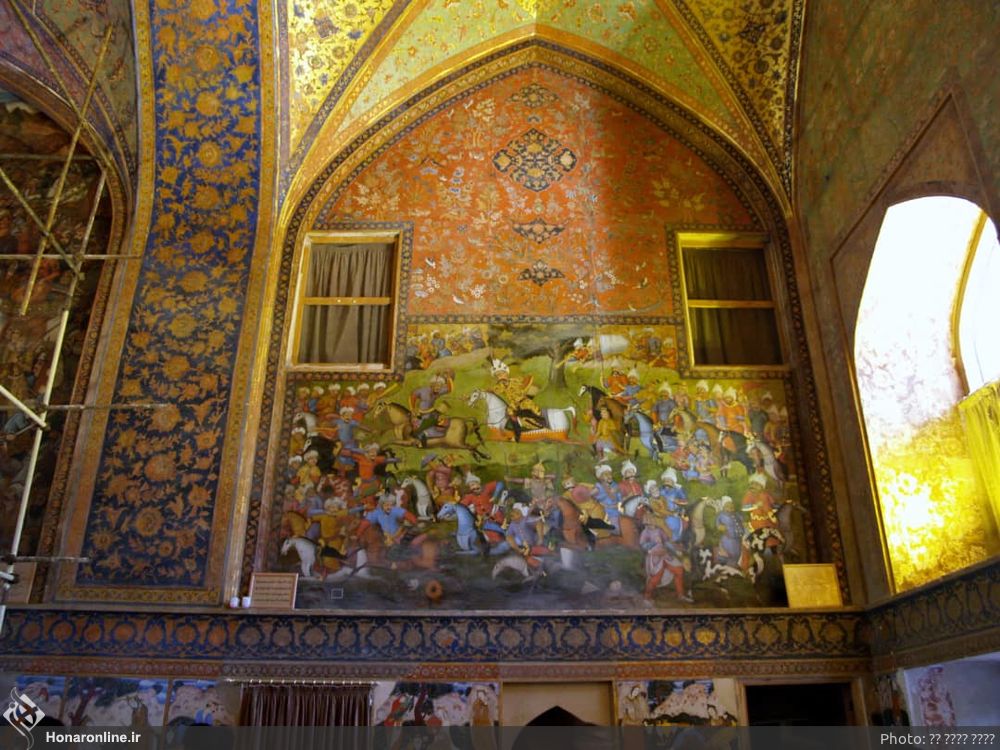
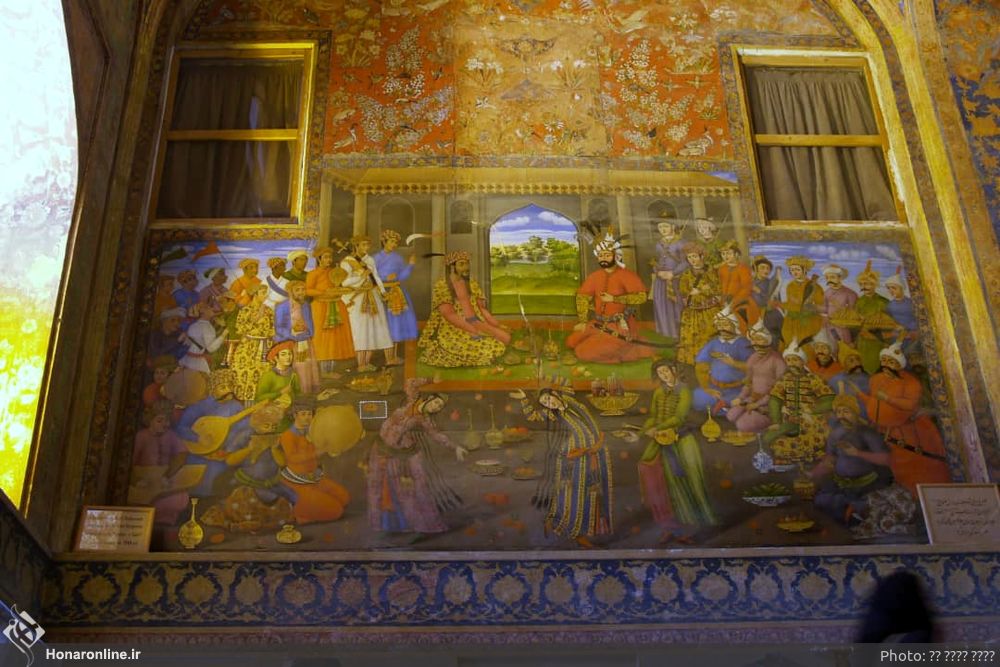
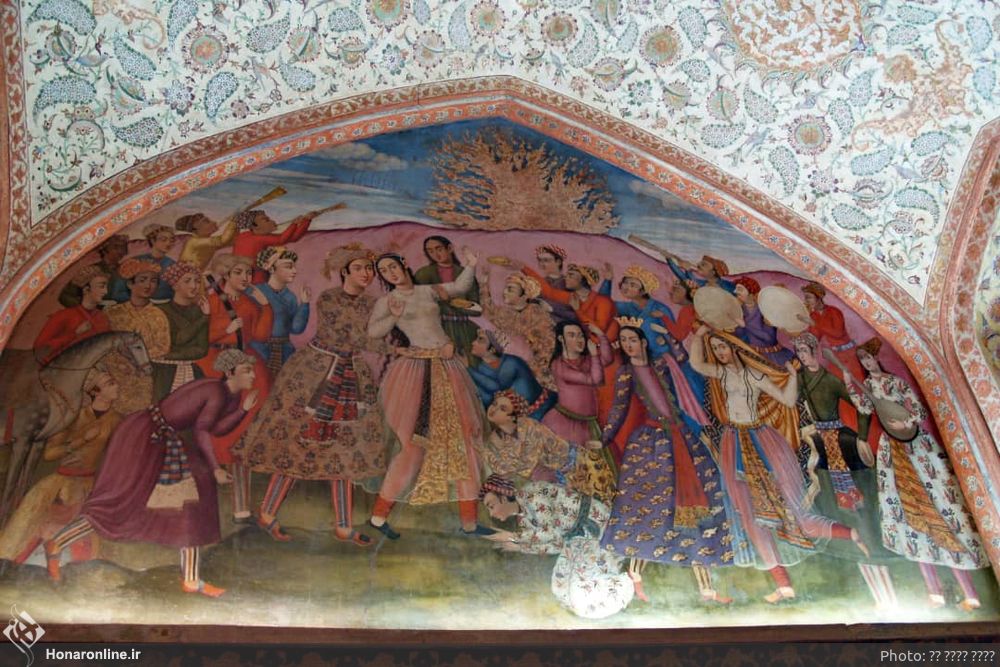
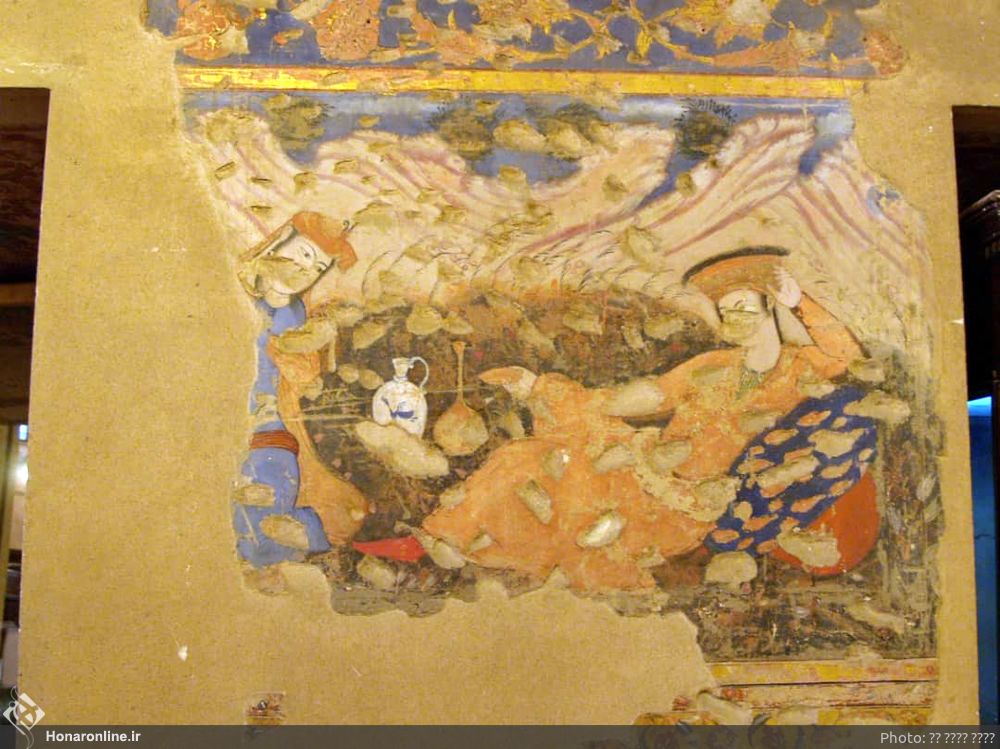
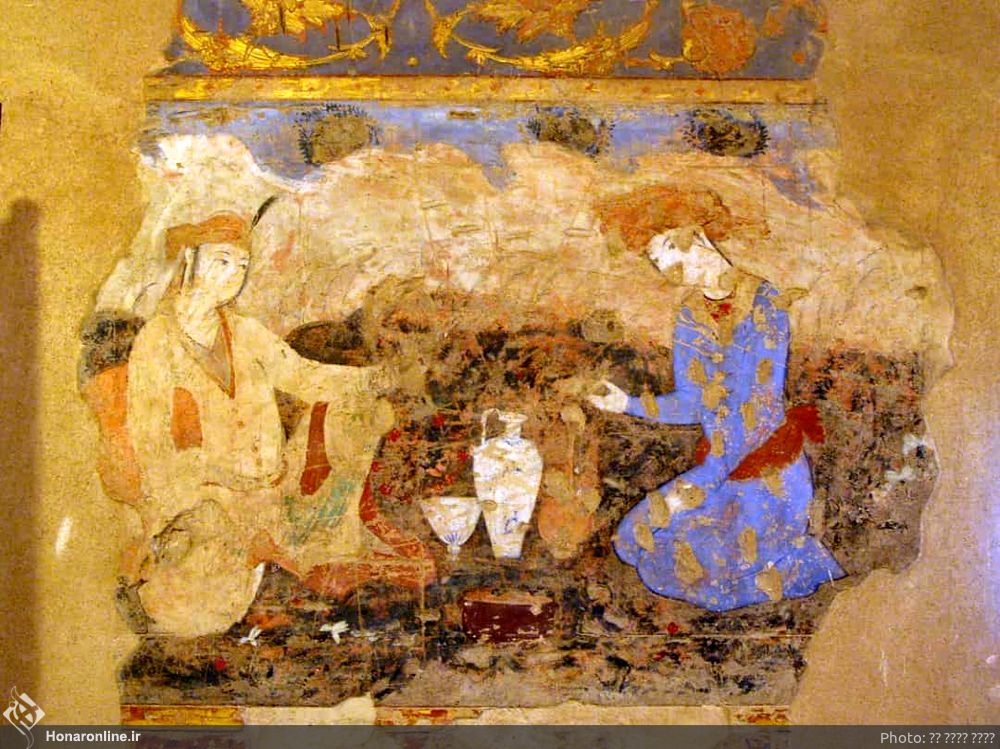
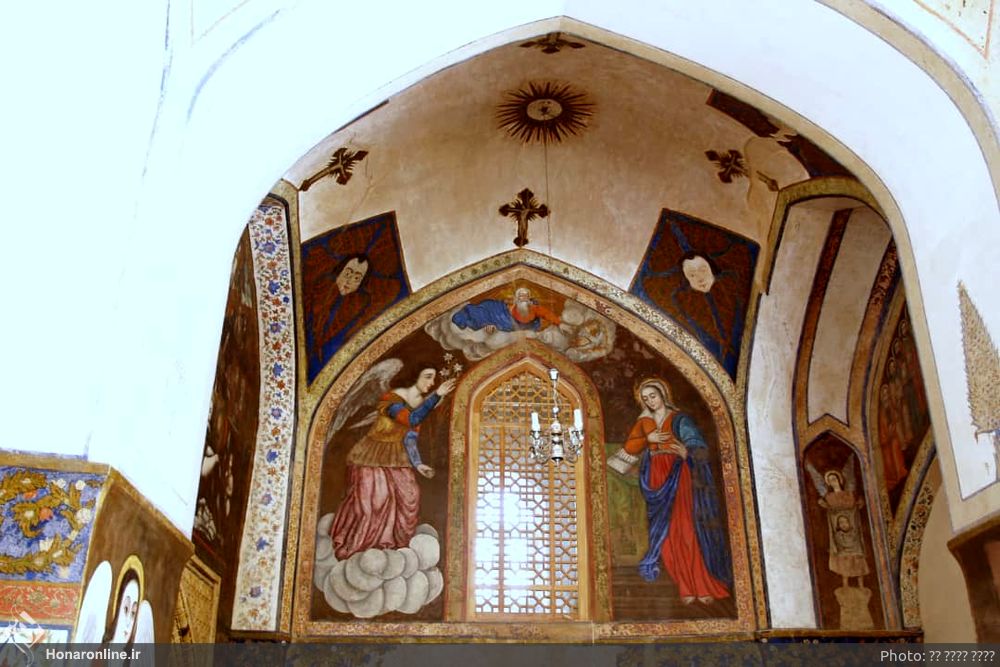
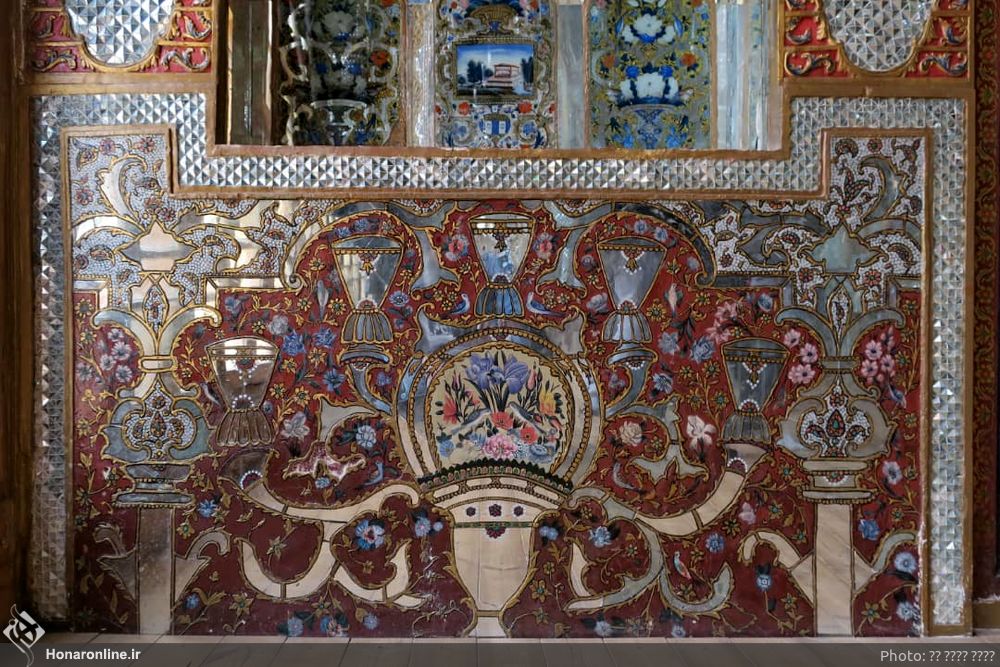
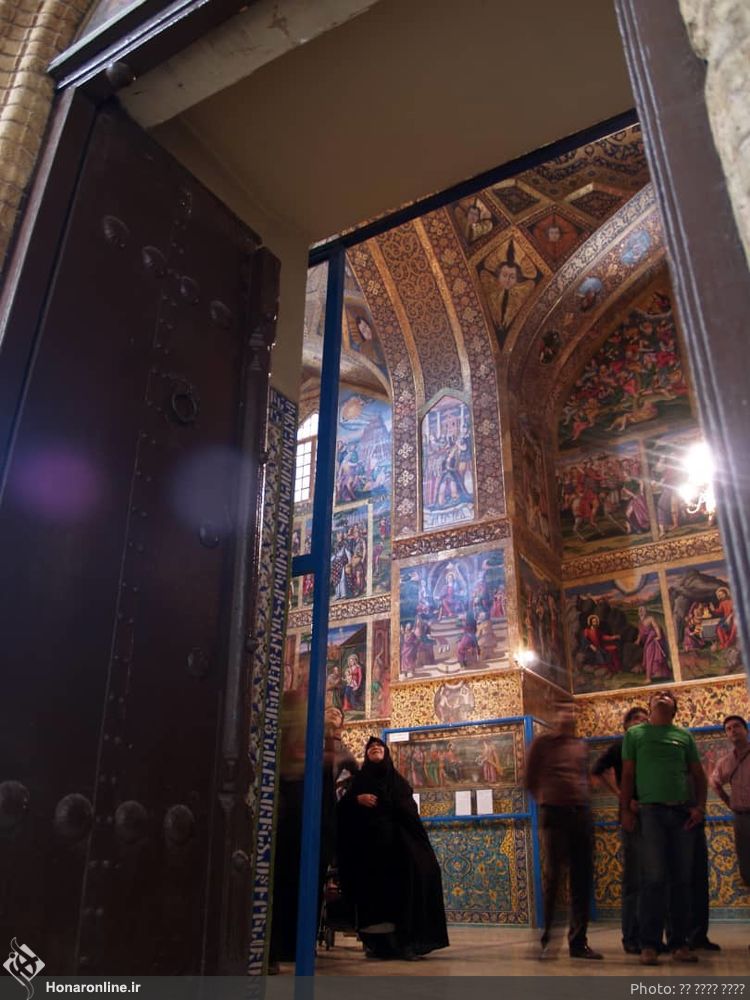
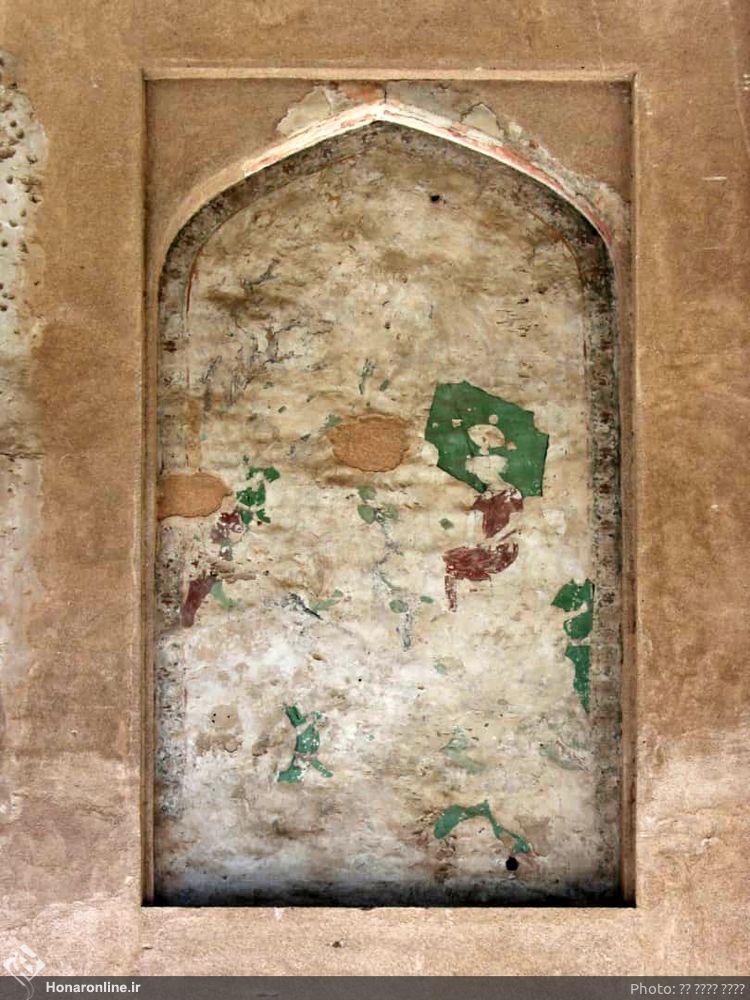
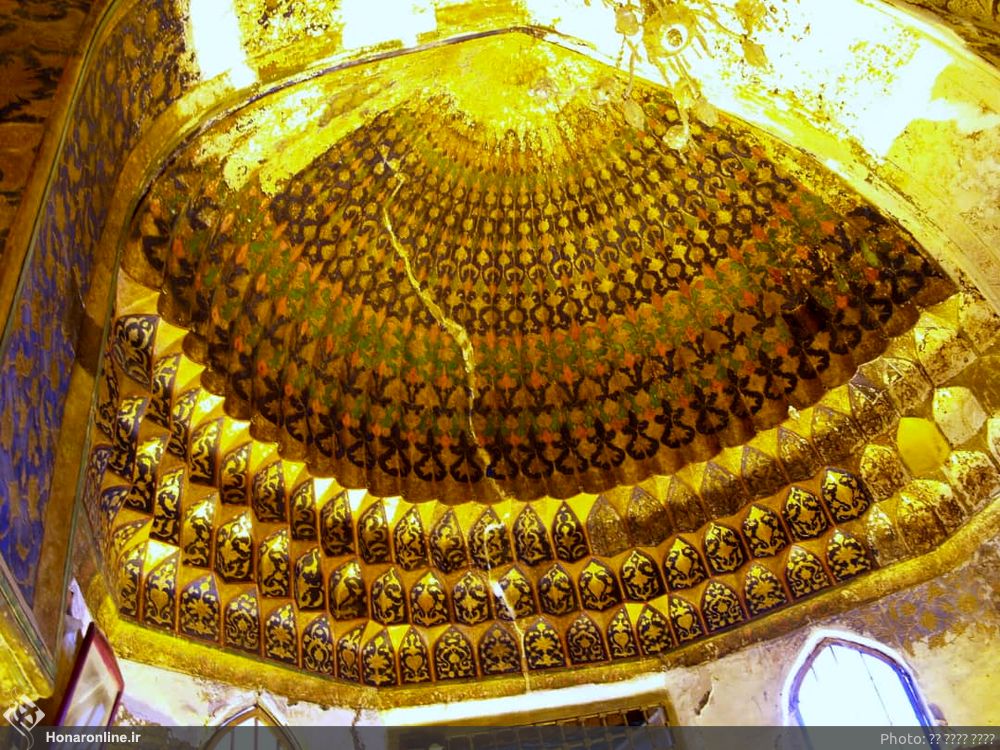
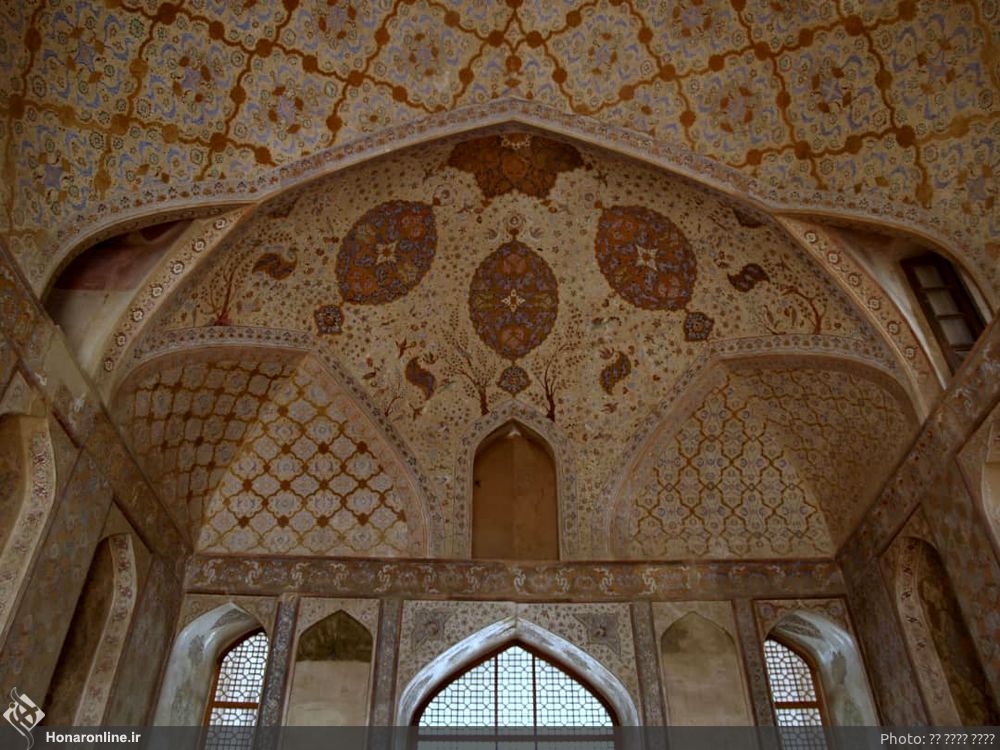
Methods and materials used in frescoes have been consistent with both the traditional Iranian architecture and the country’s climatic conditions. The wall paintings are dependent on available materials as well as the Iranian architecture, and have been depicted in different ways in different eras.
The Parthian era was one of the epochs when the stucco art was booming, but when paintings and murals were also used to decorate monuments. From the Safavid era onwards, oil paint was used to draw large frescoes and murals. The knowhow to use this method had been adapted from the Europeans.
However, frescoes do not only refer to figurative paintings in the Persian architecture; rather, frescoes represent the relationship between the wall painting and the environment, architecture and audience as three factors which give value to wall paintings in the Persian architecture.
The status of the fresco art in traditional Iranian architecture has a direct role in visually organizing architectural environments as these paintings in different monuments established a form-based, semantic and conceptual relationship with the surrounding environment as well as the dominant architecture and the audience.
The outstanding frescoes and murals in the traditional Iranian architecture include those on Sheikh Lotfollah Mosque or Ali Qapu Palace as two icons of religious and non-religious frescoes and murals.
The following are images of some other wall paintings on Iranian monuments.
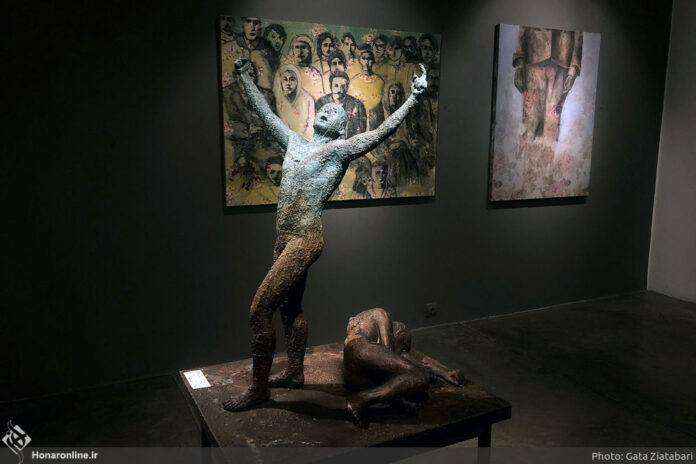
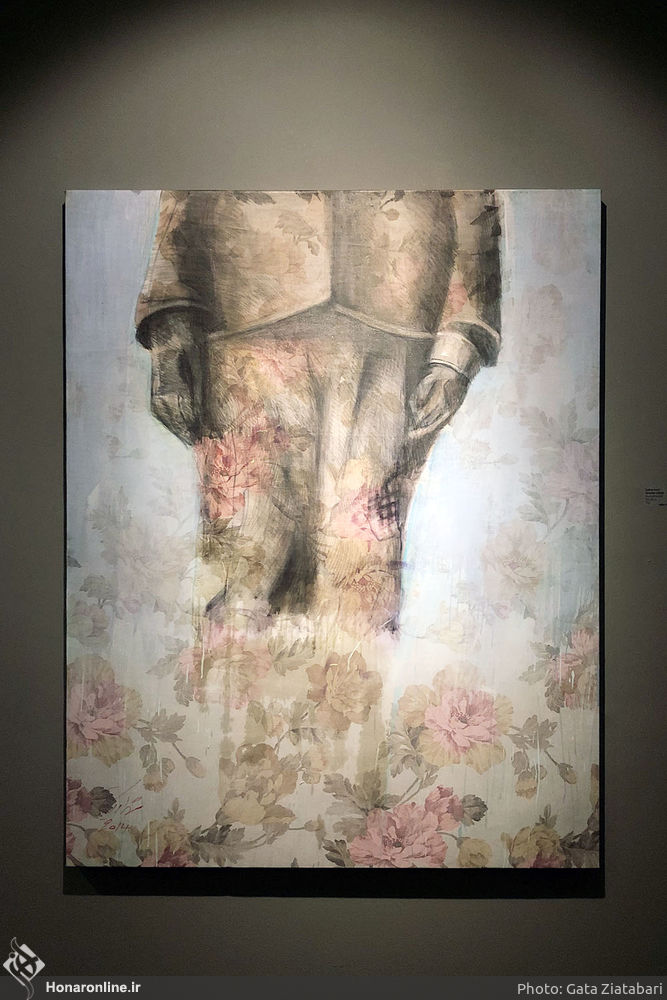
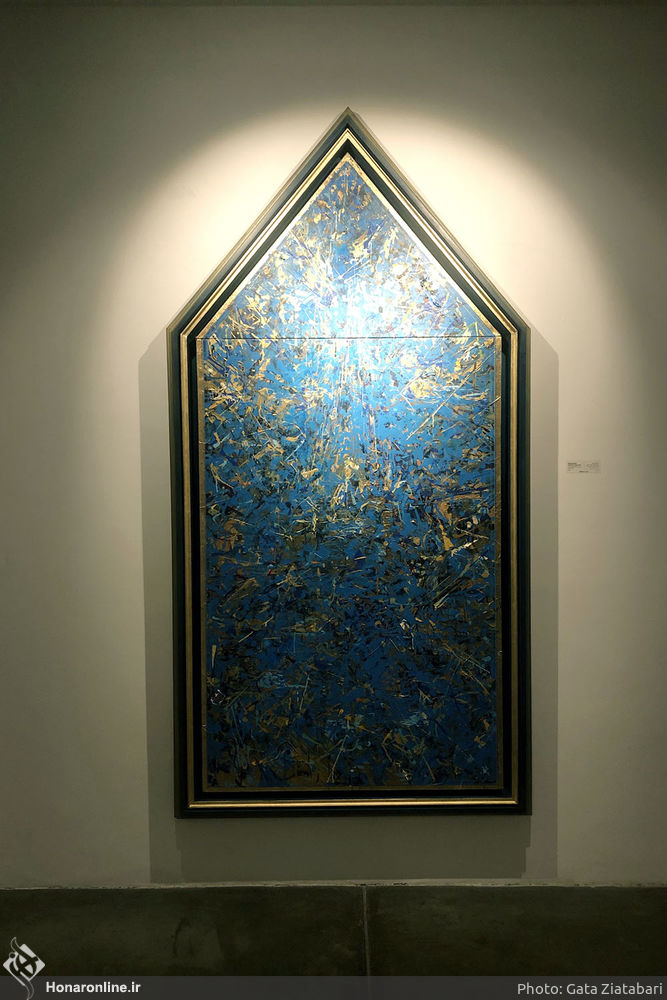
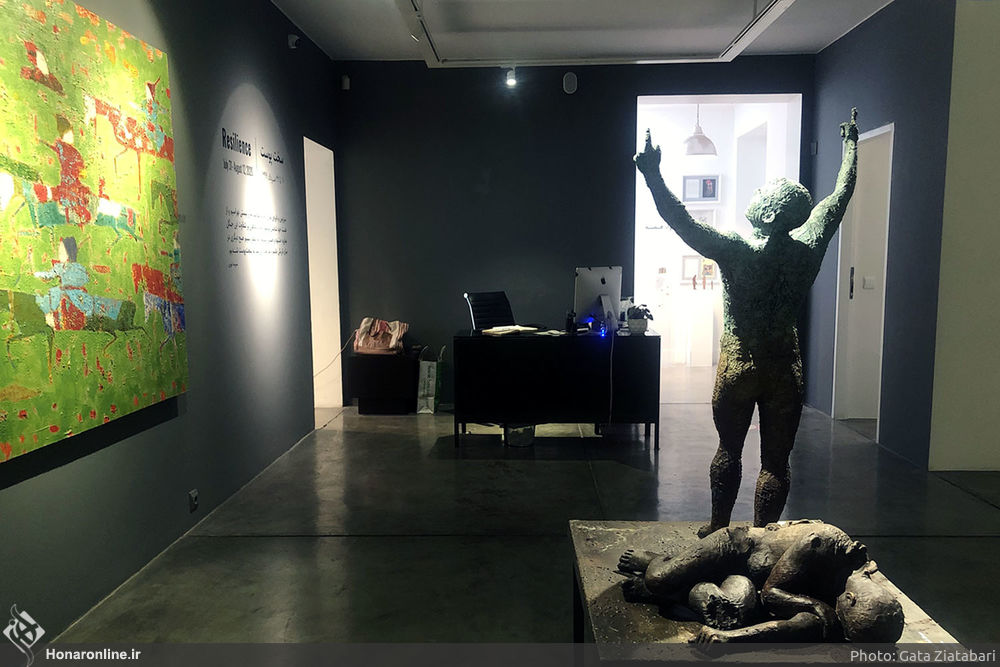
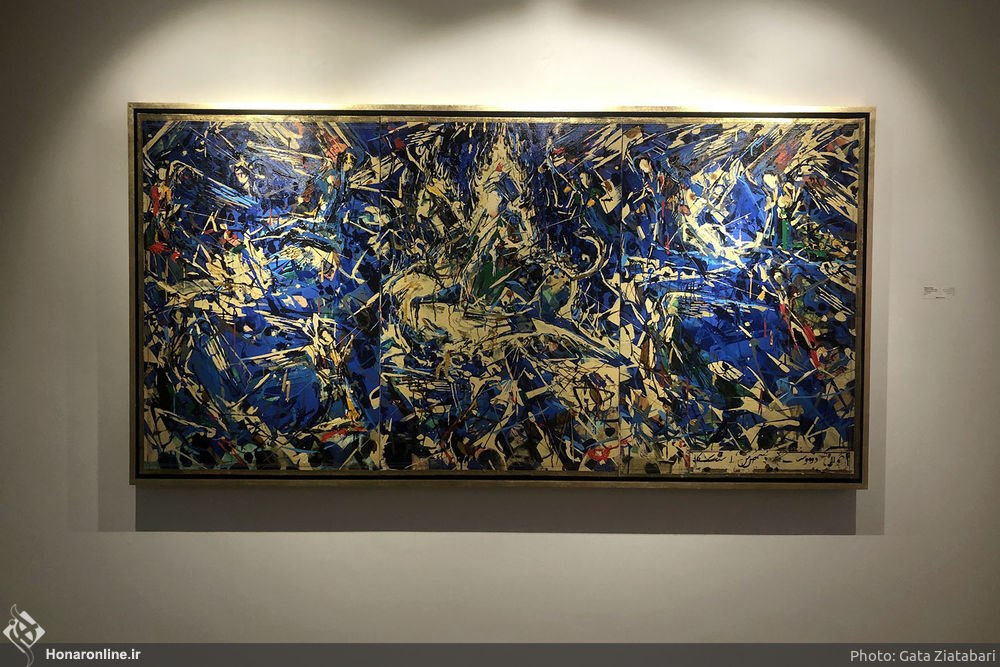
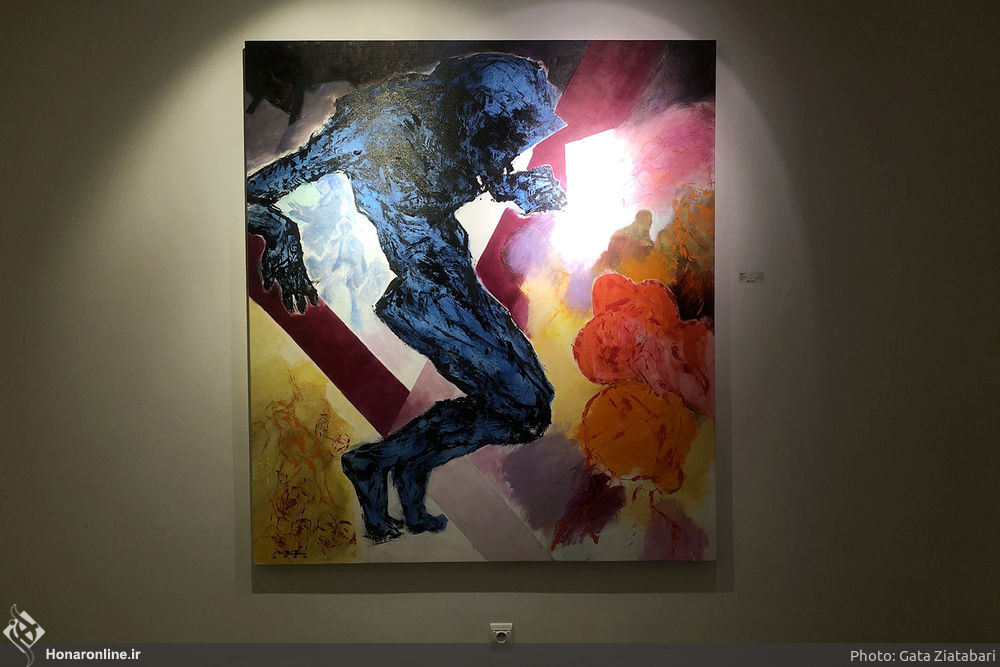
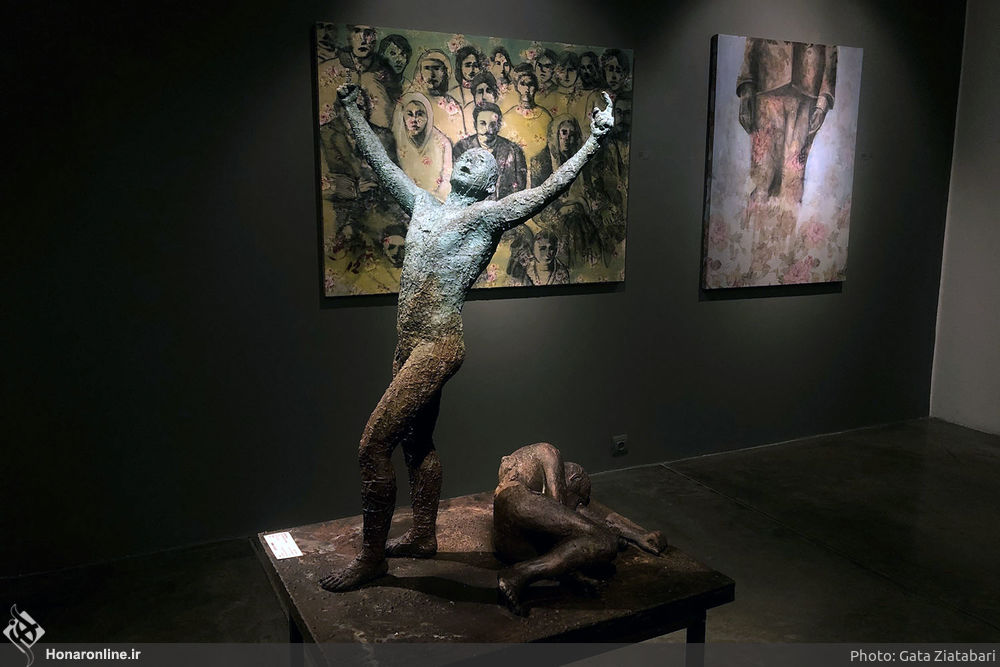
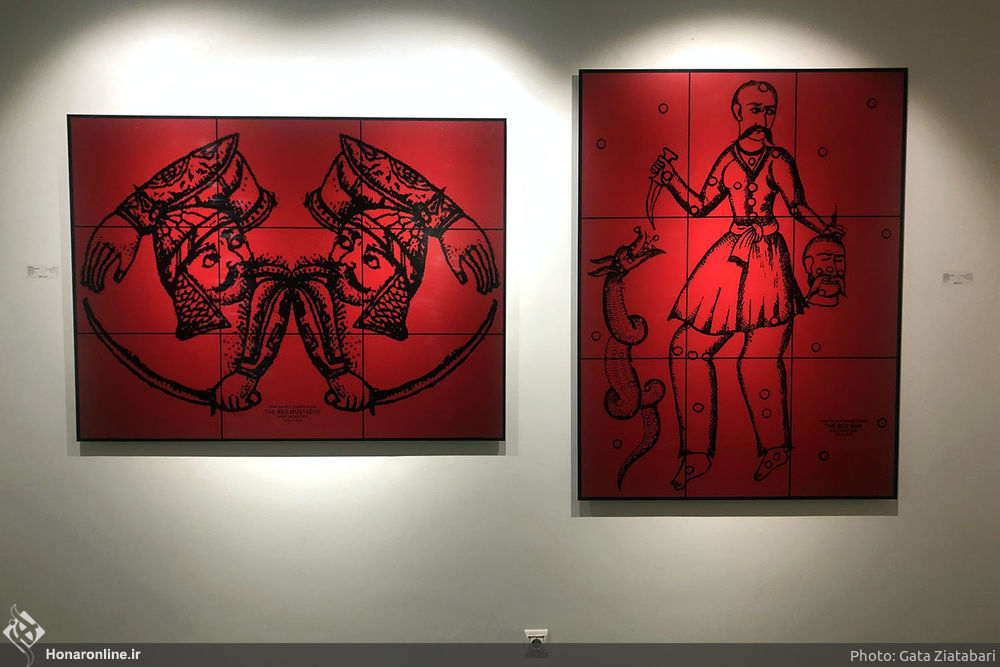
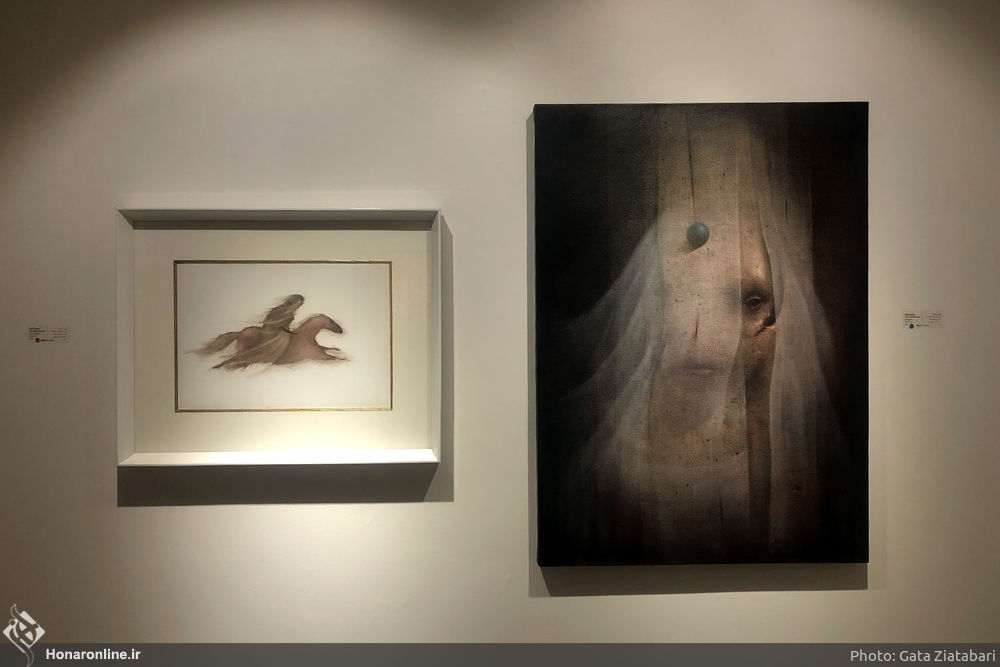
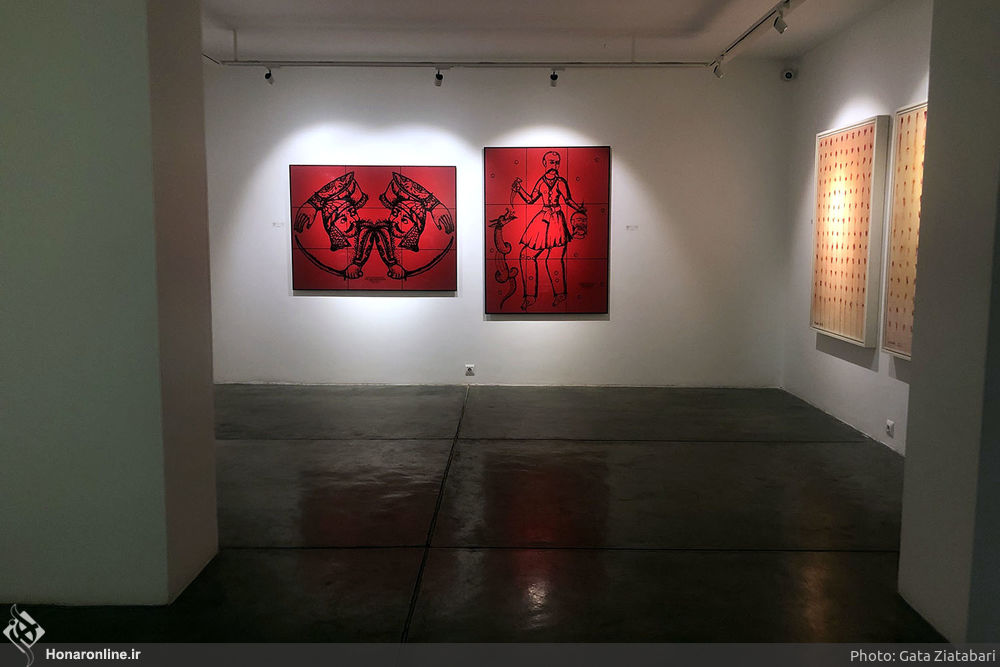
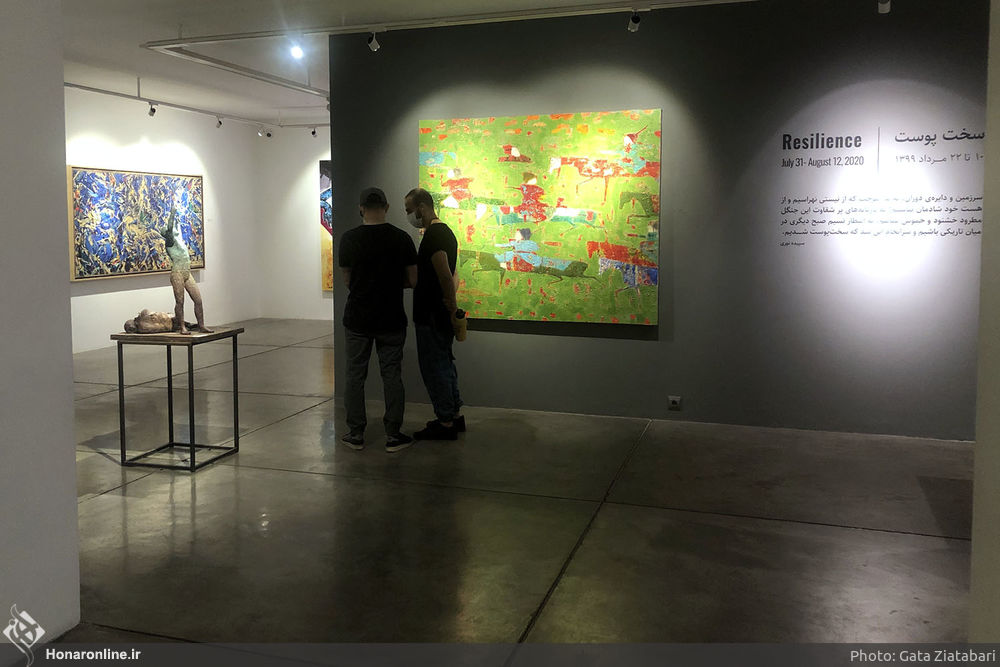
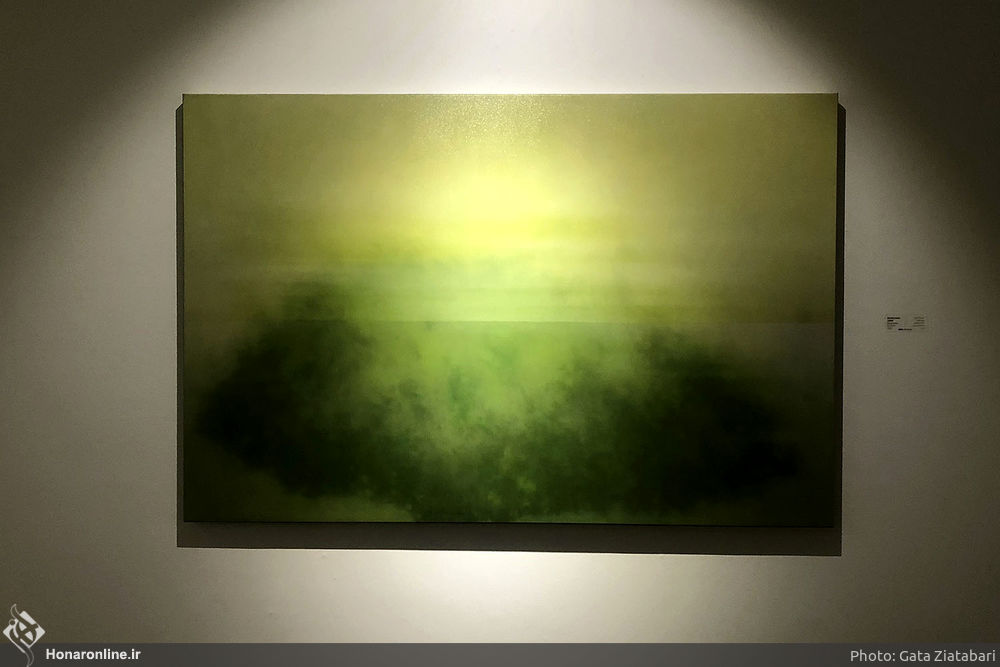
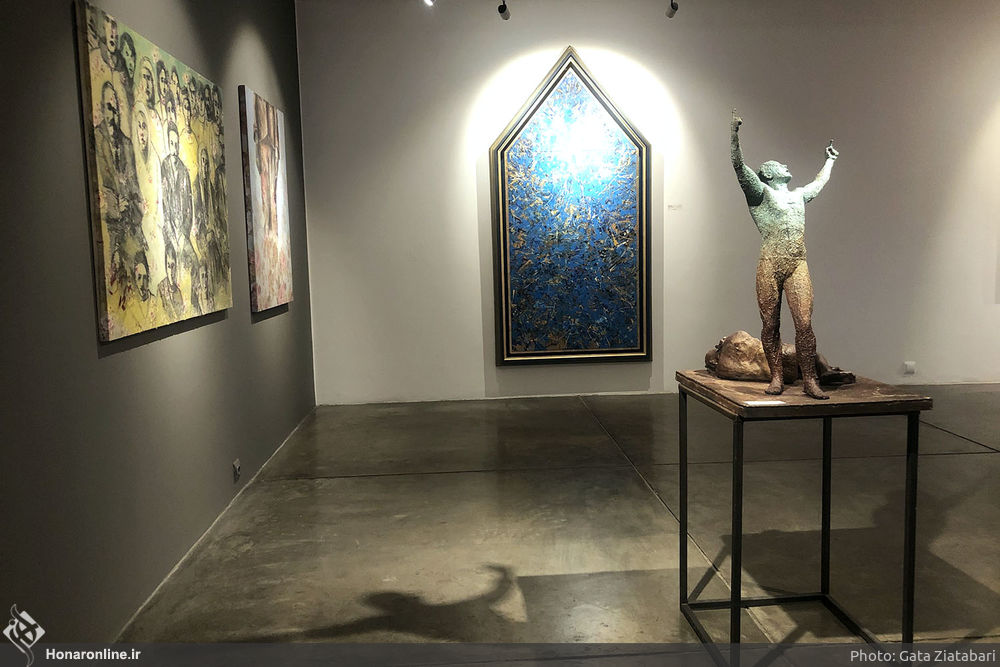
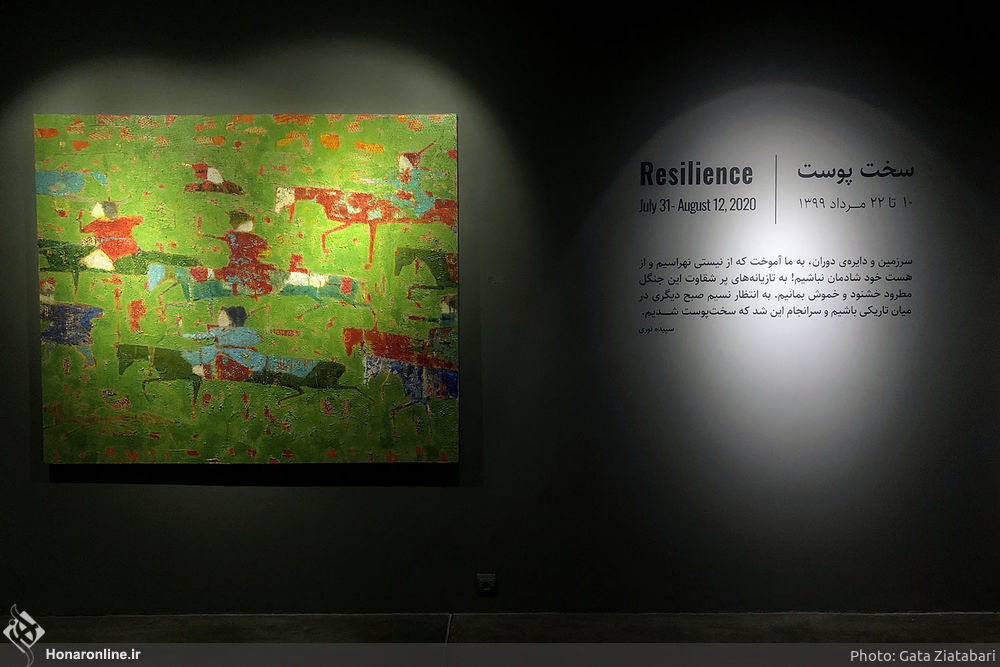
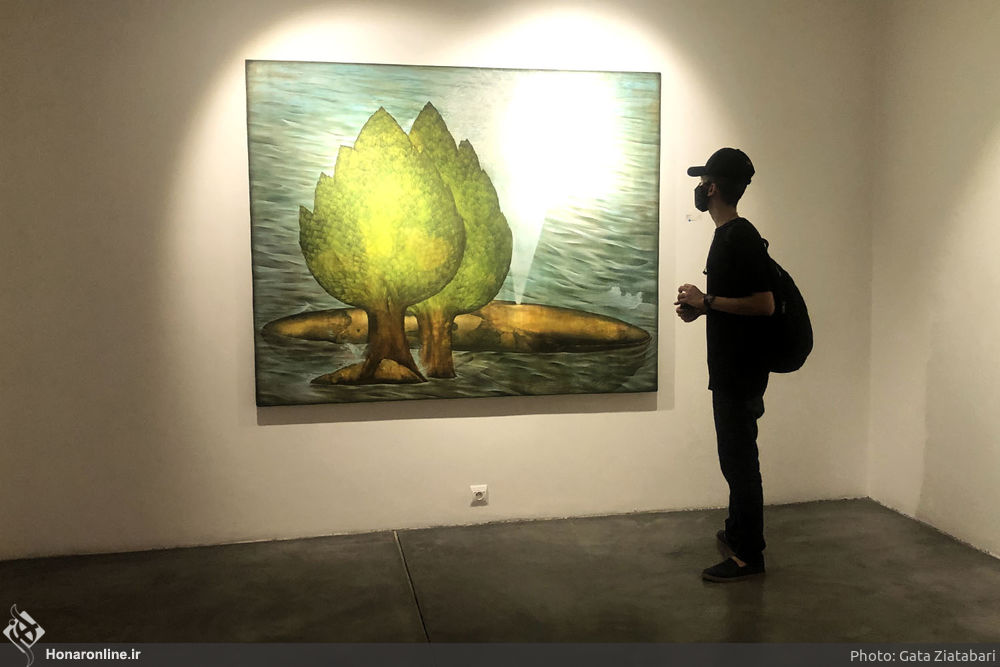
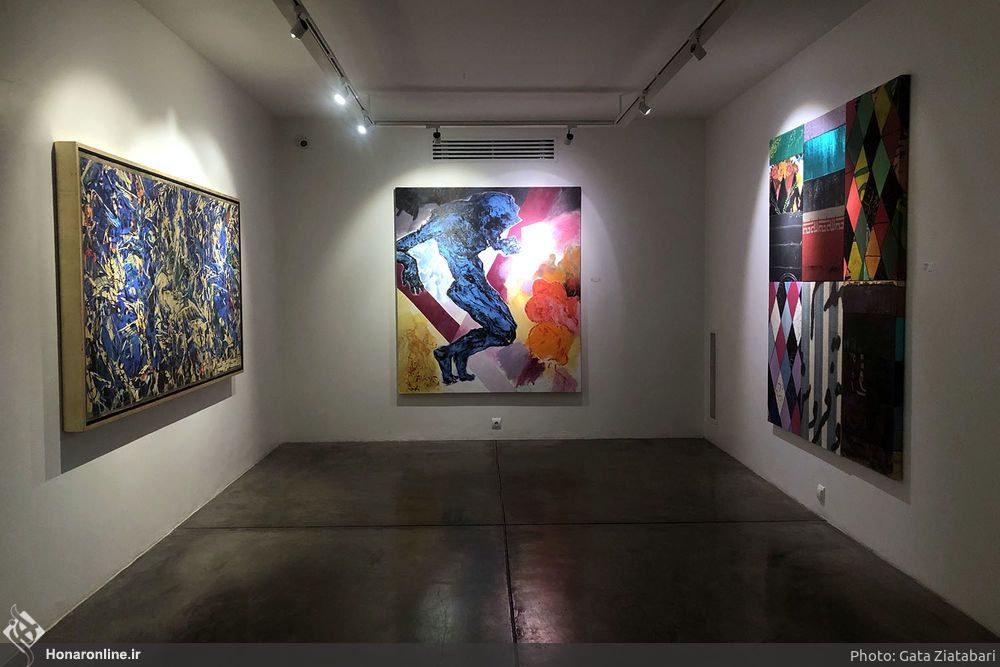
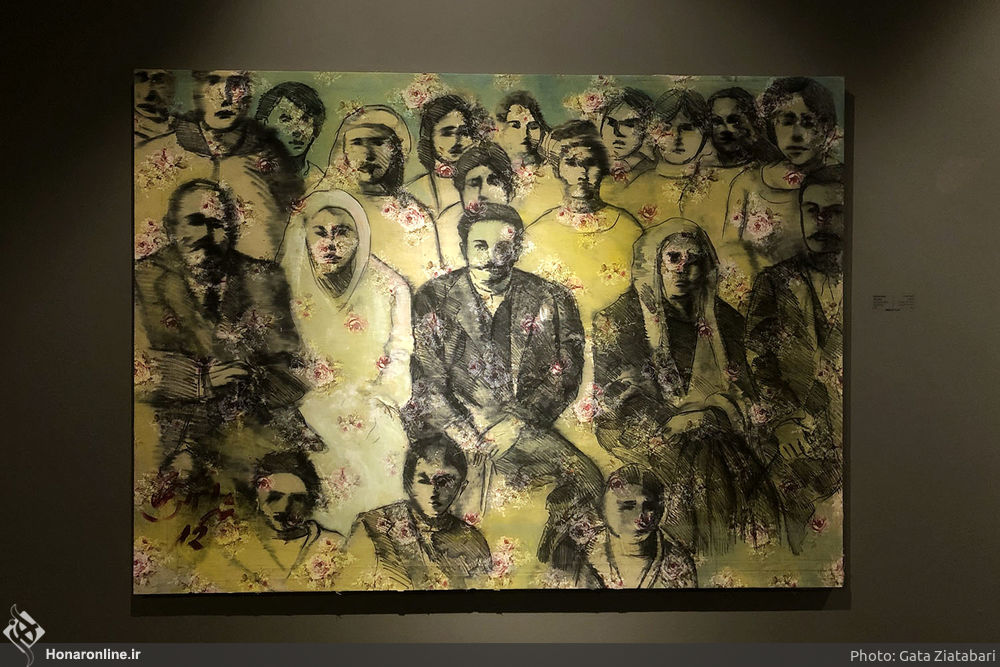
“Tough-skinned” exhibition was held in Shirin Gallery, central Tehran, earlier this month.
According to a statement by the gallery “we learned from the history of our land and the circulation of time not to fear our inexistence, nor be happy about our existence… but to wait for another morning breeze in the heart of darkness. That’s how we became tough-skinned.”
What follows are Honar Online News Agency’s photos of this exhibition, which ended on August 12:
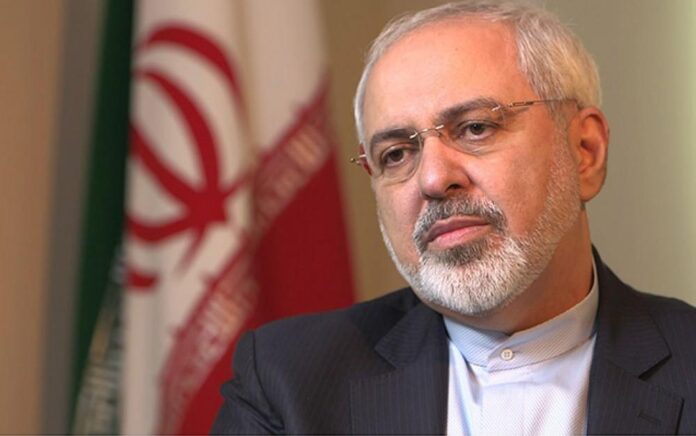
“Outlaw [Mike] Pompeo has no qualms about violating his own country’s laws,” Iranian Foreign Minister Mohammad Javad Zarif said in a tweet on Monday.
“Standing next to the World’s number one nuclear threat, he declares his desire to flood our region with even more US weapons — all while trying to impede lawful normalization of Iran‘s defence cooperation with the world,” Zarif added.
His comments came after Pompeo said following his meeting with Israeli Prime Minister Benjamin Netanyahu in Jerusalem al-Quds that the US will find a way to balance helping its military ally, the United Arab Emirates, without weakening Israel’s qualitative military edge (QME).
Pompeo’s remarks came amid controversy over whether the US will sell F-35 stealth jets to Abu Dhabi, after the Emirati officials unveiled their plan to totally normalize their country’s relations with Israel.
In his Monday tweet, Zarif shed more light on the US administration’s plan to sell more weapons to the West Asian countries by mentioning a July 24 article by the New York Times in which the prestigious American daily had revealed the Trump administration’s plan to sell “large armed drones” to Saudi Arabia and the UAE.
The New York Times noted that the Trump administration’s decision has been opposed internally by arms control officials and lawmakers trying to limit the proliferation of such drones, especially in countries like Saudi Arabia and the UAE.
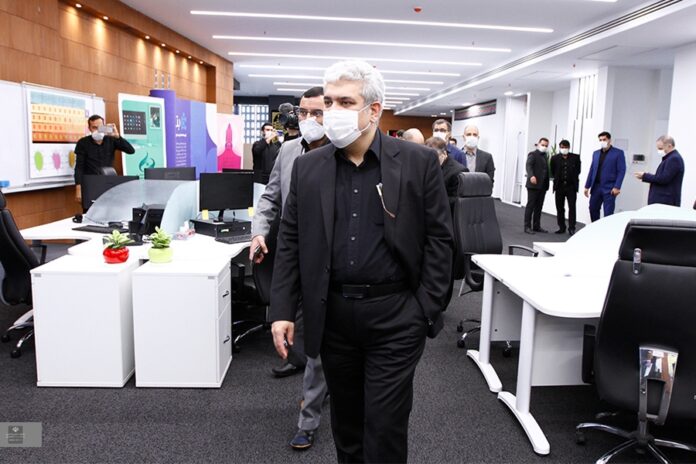
Iranian Vice President for Science and Technology Sorena Sattari, Mayor of Tehran Pirooz Hanachi, and a number of other officials attended a ceremony held in Tehran on Monday to inaugurate the BONTECH technology tower.
The project, funded by the private sector, has been implemented in the “Sharif Innovation Area” that is supposed to contribute to urban development and public culture.
In comments at the event, Sattari hailed Sharif Innovation Area as a successful model for other provinces and universities in Iran, saying the new technology tower is an outstanding example of interaction between the academic centres and the private sector.
The vice-president also noted that technology towers would result in the promotion of technology and innovation ecosystem.
The society should sense the palpable results of formation of technology ecosystems and see new technological services in the daily life, Sattari added.
Describing Sharif Innovation Area as a model of urban development, the Iranian vice president said such a model could be used for reconstruction of aging urban structures.
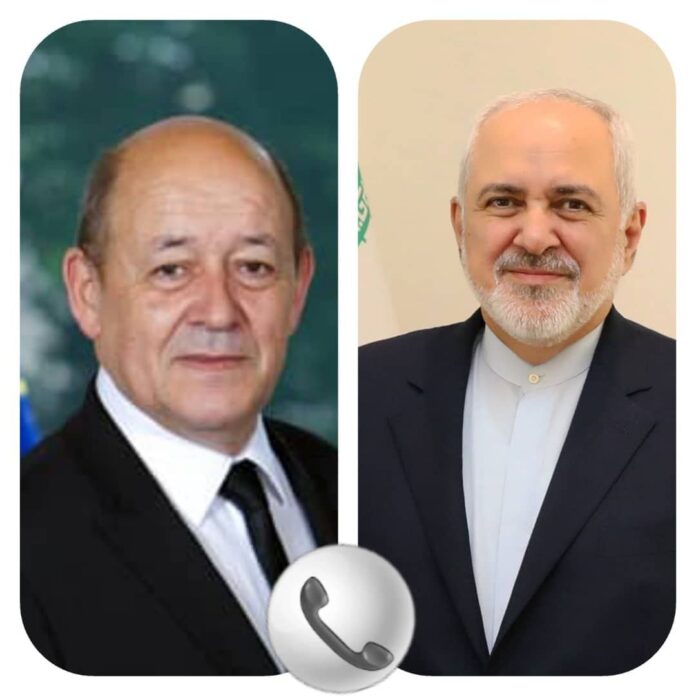
Minister of Foreign Affairs of the Islamic Republic of Iran Mohammad Javad Zarif and Minister of Europe and Foreign Affairs of France Jean-Yves Le Drian held a telephone conversation on Monday evening.
In the phone call, the senior diplomats discussed the issues relating to Iran-France bilateral relations, the latest developments of the JCPOA, and the situation in Lebanon in the wake of the recent blast in Beirut’s port.
Earlier this month, Iranian President Hassan Rouhani and his French counterpart Emmanuel Macron had discussed the Lebanon blast in a phone conversation.
During the talks, the French president called on Iran to help resolve the Lebanese political crisis, and invited the Islamic Republic to join the international action group to help resolve Lebanon’s problems.
Rouhani, in turn, said it is very important that “we all help the Lebanese judiciary to find the root causes of this incident.”
Referring to Iran’s aid delivery to Lebanon immediately after the incident, Rouhani said, “Lebanon needs more unity among political groups and we must all help create this unity. Lebanon today needs a strong government, and the Lebanese parliament and all parties must work together in this regard.”
Senior assistant to the Iranian Foreign Minister, Ali Asghar Khaji, and the delegation accompanying him in a meeting of the Astana Peace Process, held a meeting with Deputy Foreign Minister of Turkey Sedat Onal on the sidelines of the third meeting of Syria’s Constitutional Committee in Geneva on Monday.
In the meeting, the two diplomats highlighted the principles of respect for Syria’s national sovereignty, unity, and territorial integrity agreed upon by the Astana Peace Process member states, and stressed the need to keep supporting the political process and Syrian-Syrian dialogue within the framework of the Constitutional Committee and the fight against terrorism.
Pointing to his last week’s visit to Syria and his meetings with the Syrian president and other officials, Khaji expressed Iran’s readiness to continue supports for the meetings of the Constitutional Committee without foreign interference.
For his part, Onal voiced Turkey’s preparedness to continue negotiations within the framework of the Astana Process and to hold consultations with Iran on this issue and other regional subjects.
The Iranian and Turkish diplomats finally expressed hope that Syria’s Constitutional Committee would go ahead with its plans successfully.
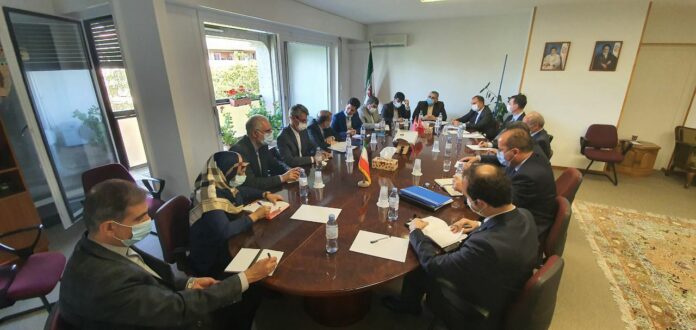
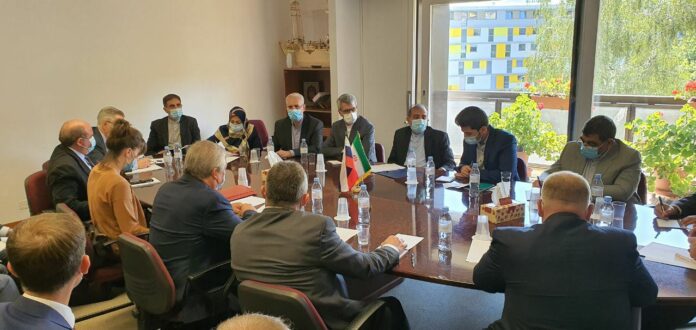
Senior assistant to the Iranian Foreign Minister, Ali Asghar Khaji, and the delegation accompanying him in a meeting of the Astana Peace Process held a meeting with Alexander Lavrentiev, the Russian president’s special envoy for Syria, on the sidelines of the third meeting of Syria’s Constitutional Committee in Geneva on Monday.
In the gathering, held at the office of Iran’s diplomatic mission in Geneva, the two sides discussed the developments in Syria’s Constitutional Committee and its third meeting, which is underway under the auspices of the three guarantor states of the Astana Process, the United Nations Secretary-General’s Special Envoy for Syria, and the Syrian parties.
Khaji and Lavrentiev emphasized the necessity of supports for the Constitutional Committee to help it go on and meet with success.
The Iranian diplomat highlighted the success achieved by the Astana Peace Process, and called for the continuation of consolations and coordination among the guarantor states of the Astana format.
For his part, Lavrentiev pointed to the role of the Astana Process in the settlement of the crisis in Syria, stressing the need to hold summit meetings in Tehran after a meeting of senior experts in Kazakhstan’s capital Nur-Sultan.
The two sides finally underlined the need for closer consultations to ensure the Constitutional Committee’s success in its mission.
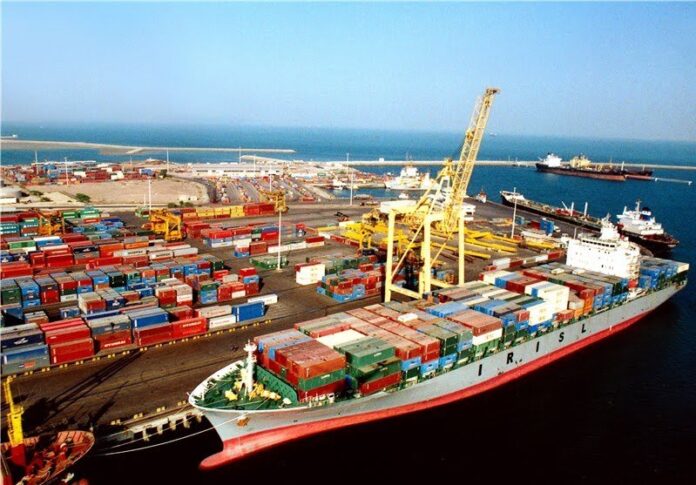
In remarks on Monday, secretary of the Kuwait desk at the Trade Promotion Organization said the exports of cement clinker, white cement, seafood, building stones, fruit and ornamental birds to Kuwait in the first four months of the current Iranian year have increased compared to the corresponding period last year.
Masoud Taheri-Mehr said the Kuwaiti government has already eased restrictions on the import of agricultural products and foodstuff from a number of countries, including Iran, to meet its food demands after the outbreak of the coronavirus pandemic.
In separate comments, Soheila Rasoulinejad, who is in charge of the Oman desk at the Trade Promotion Organization, said Iran has also earned $110 million in exports to the Sultanate of Oman during the first four months of the current Iranian year.
The Iranian exports to Oman include foodstuff, construction materials and equipment, machinery components, and gas condensates, she added.
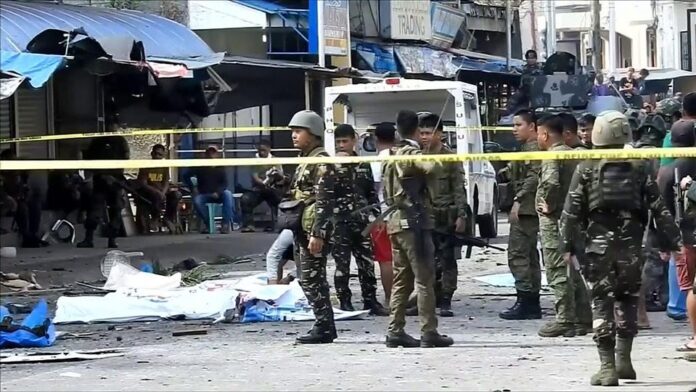
In a statement on Monday, Saeed Khatibzadeh condemned the terrorist attack in Jolo town south of the Philippines that killed and wounded a number of innocent citizens.
The Iranian spokesperson has also expressed sympathy with the Filipino government, nation, and the bereaved families of victims of the terrorist attack.
At least 14 people were killed and dozens wounded, including soldiers and police, in a twin bombing involving a suicide attacker on an island in southern Sulu province of the Philippines.
Military officials say the militants allied with the ISIS terrorist group set off a powerful motorcycle explosive followed by a suicide bombing that killed people in the worst extremist attack in the Philippines this year.
At least 75 soldiers, police and civilians were wounded in the midday bombings.