
The sculpture is one of the 55 historical works registered nationally by the Minister of Cultural Heritage today.
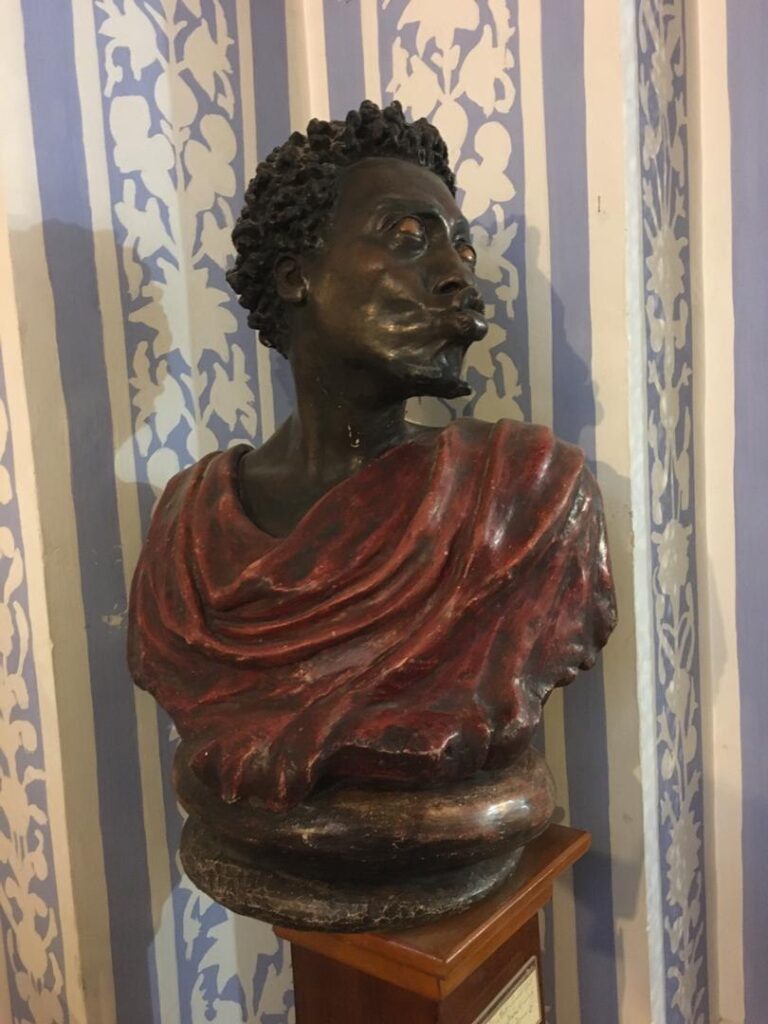
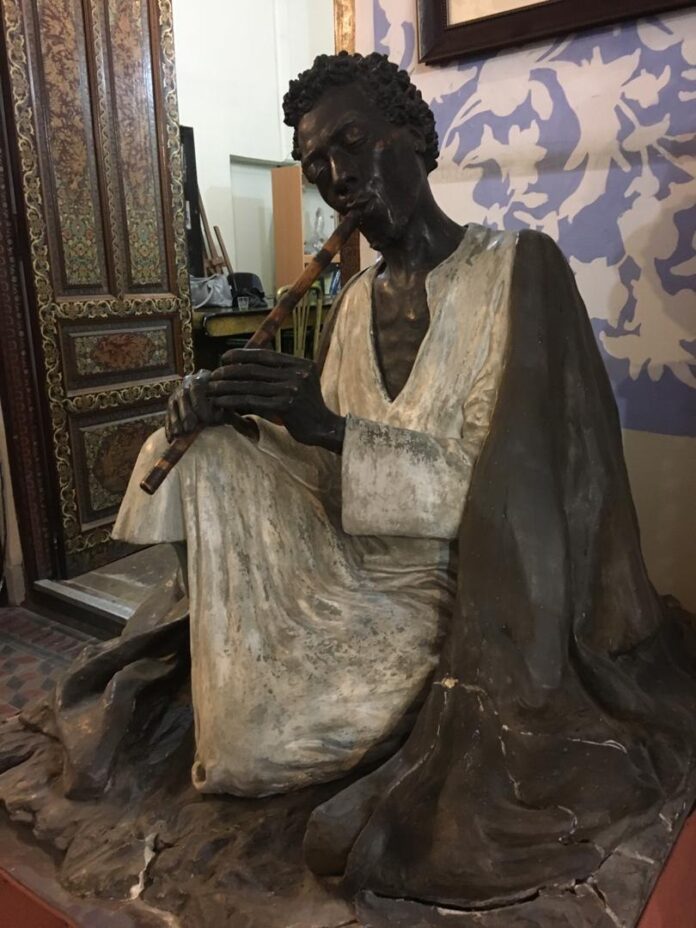
The sculpture is one of the 55 historical works registered nationally by the Minister of Cultural Heritage today.
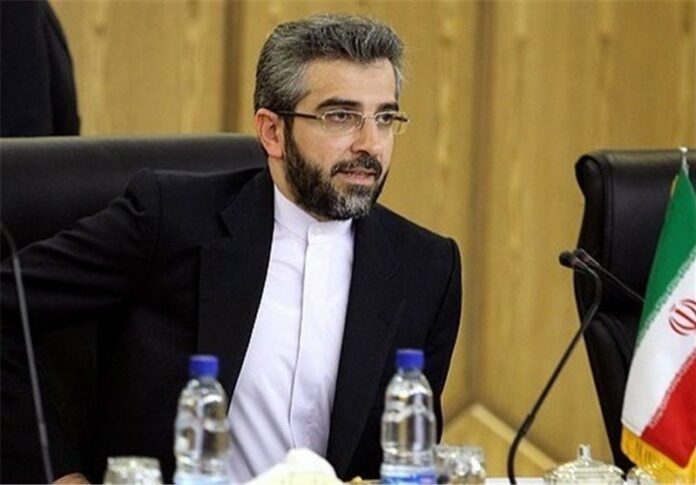
Referring to the annual report of the UN Human Rights Rapporteur on the human rights situation in Iran, the draft of which has been given to the Islamic Republic, Baqeri Kani said the report has various flaws.
He said the party supporting the appointment of the Special Rapporteur for Iran is a country that refused to sell medical equipment for the treatment of innocent sick children.
Baqeri further emphasized that the process of appointing Javaid Rehman as the Iran rapporteur was political and no human rights indicator had role in it.
“Even at the meeting of the Human Rights Council, the number of countries that agreed to appoint Rehman as the Iran rapporteur was less than that of those who disagreed,” Baqeri said during a meeting of the Supreme Council of the Judiciary.
The Special Rapporteur’s report is based on allegations and information received from groups affiliated with governments opposed to the Iranian people or terrorist groups, noted Baqeri.
“The report only addresses the numerous allegations and accusations of terrorist groups about human rights in Iran, while they have not paid attention to the allocation of more than a third of the directives of the head of the judiciary to human rights issues; therefore, it indicates injustice, lack of independence and neutrality in this report.”
Baqeri further underlined that the assassination of General Qassem Soleimani has no place in Javaid Rehman’s report; this comes as the special rapporteur on the extrajudicial and arbitrary killings of the Human Rights Council recently described the crime as a violation of human rights, a violation of humanitarian law and a clear violation of the right to life.
That indicates Rehman’s politicized approach, he added.
“The Special Rapporteur not only did not talk about the lifting of unlawful sanctions, but also made statements that seek to establish these sanctions, which are also illegal according to the ruling of the International Court of Justice in 2018.”
Head of the Iranian Judiciary’s High Council for Human Rights underscored that instead of lifting unlawful sanctions, the Special Rapporteur has called on the parties who impose sanctions to reduce only the negative effects of sanctions through humanitarian action.
“The report also calls on the Iranian government to establish transparent mechanisms to ensure the trade of drugs and other humanitarian items. This is aimed at identifying the hidden channels used by Iran to bypass sanctions, so that the US can block them as well. In this respect, Javaid Rehman has worked more as an employee of the US Treasury Department,” reiterated Baqeri.
The Iranian official also stated that the Special Rapporteur has not fulfilled any of the requirements of a Human Rights Council-elected rapporteur and has practically proved that he was neither impartial, nor independent, fair, and honest.
“He did not act professionally, proving that such a person did not have the necessary competence and efficiency to report on human rights, and accordingly his report lacks legitimacy,” stressed Baqeri.
Speaking in his weekly press conference, Ali Rabiei said part of the forex resources have already been returned.
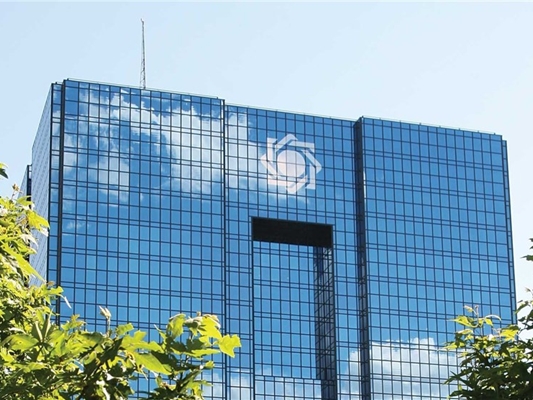
“We now have tens of billions of dollars’ worth of foreign currency in other countries. The Central Bank [of Iran] and the Ministry of Foreign Affairs are working through a joint committee to bring back those assets,” he said.
“So far, a number of these countries have returned to us our forex assets in the form of barter or other forms,” he added.
“These foreign currency assets fall into two categories. One of them is the forex that we deposited as backup for our money in some banks in other countries such as China. And part of the forex is the money we need for our day-to-day expenses, and we are trying to bring it back” the government spokesman noted.
Rabiei, however, refused to name the countries where Iranian forex assets are deposited.
“Let me not mention the names of those countries until the efforts being made by our colleagues at the Central Bank bear fruit,” he said.
He then criticized South Korea for failing to offer the necessary cooperation with regards to freeing Iranian assets.
“We are still expressing our concerns with regards to South Korea as this country does not show the same willingness and efforts that other countries do,” he said.
“Recently, they (South Korea) opened up a small channel for medicines, which we welcomed; however, that channel basically does not meet our needs,” he said.
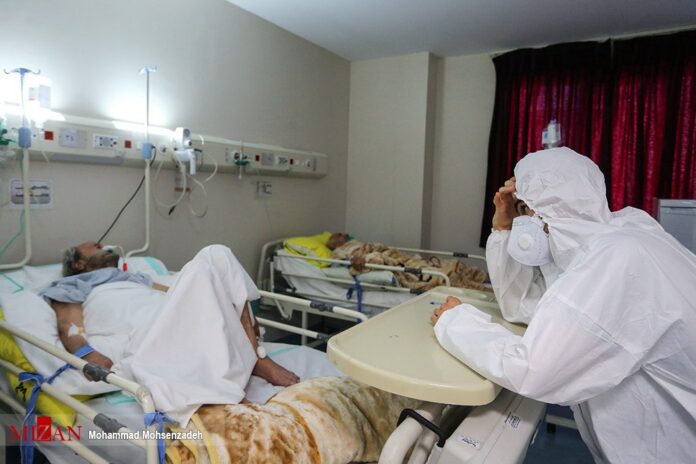
In a press briefing on Tuesday, Sima-Sadat Lari said the new fatalities and infections raise the overall death toll and the total number of cases to 33,299 and 581,824, respectively.
So far, she added, 463,611 patients have recovered from the disease or been discharged from the hospital.
Lari said 4,995 patients are also in critical conditions caused by more severe infection.
The spokeswoman noted that 4,786,769 COVID-19 tests have been taken across the country so far.
She said the high-risk “red” zones include Tehran, Qom, Mazandaran, East Azarbaijan, Isfahan, Yazd, Ardabil, Khorasan Razavi, Khuzestan, Hamadan, West Azarbaijan, Bushehr, Chaharmahal and Bakhtiari, Kohgiluyeh and Boyer-Ahmad, Alborz, Lorestan, Markazi, Ilam, South Khorasan, Kermanshah, North Khorasan, Semnan, Gilan, Zanjan, Qazvin, Kurdistan, and Kerman provinces.
The “orange” and “yellow” zones also include Golestan, Hormozgan, Fars, and Sistan and Baluchestan provinces, she added.
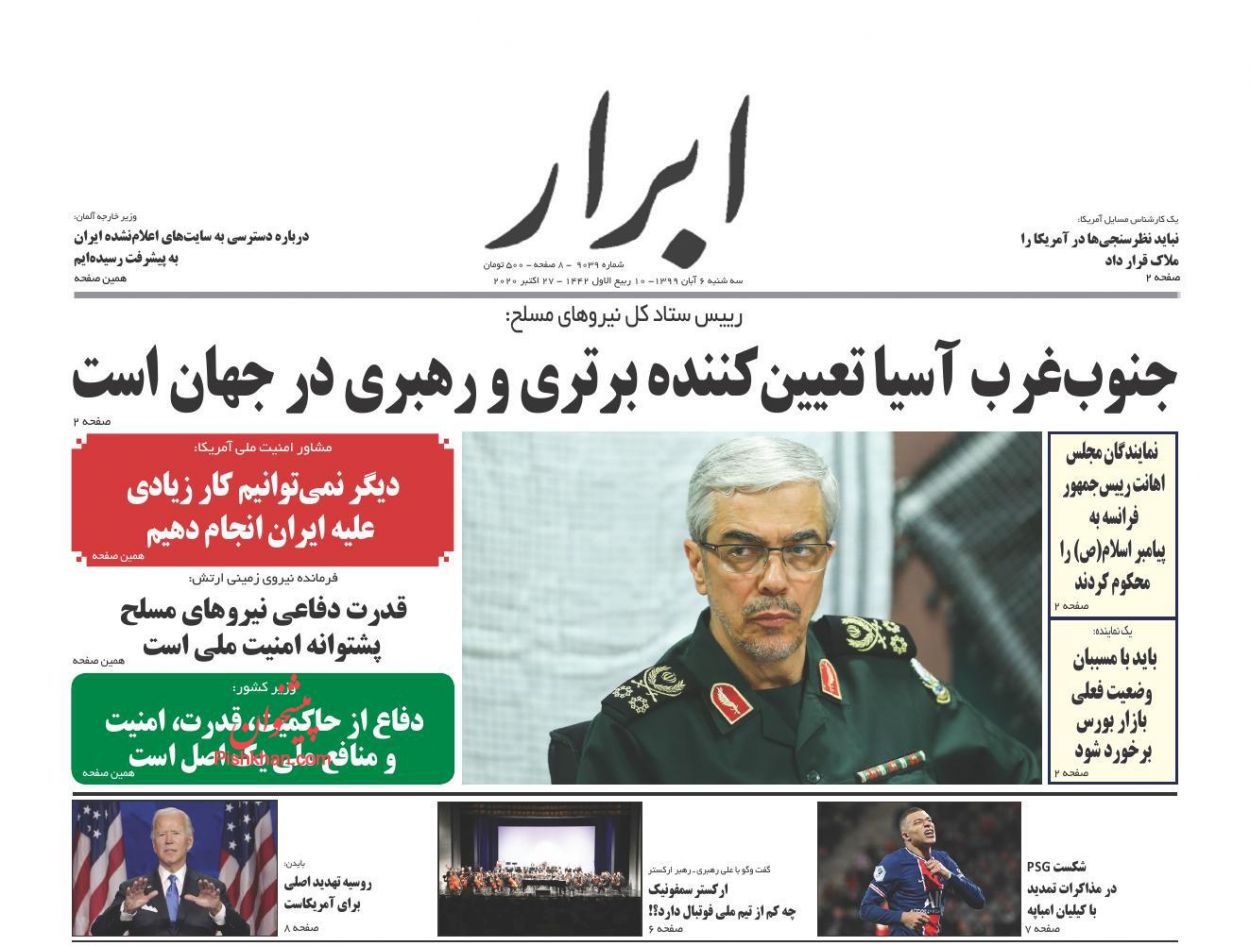
1- Iranian MPs Condemn French President’s Insult to Prophet Muhammad
2- Southwest Asia Decisive Region for Global Domination: Iran Top General
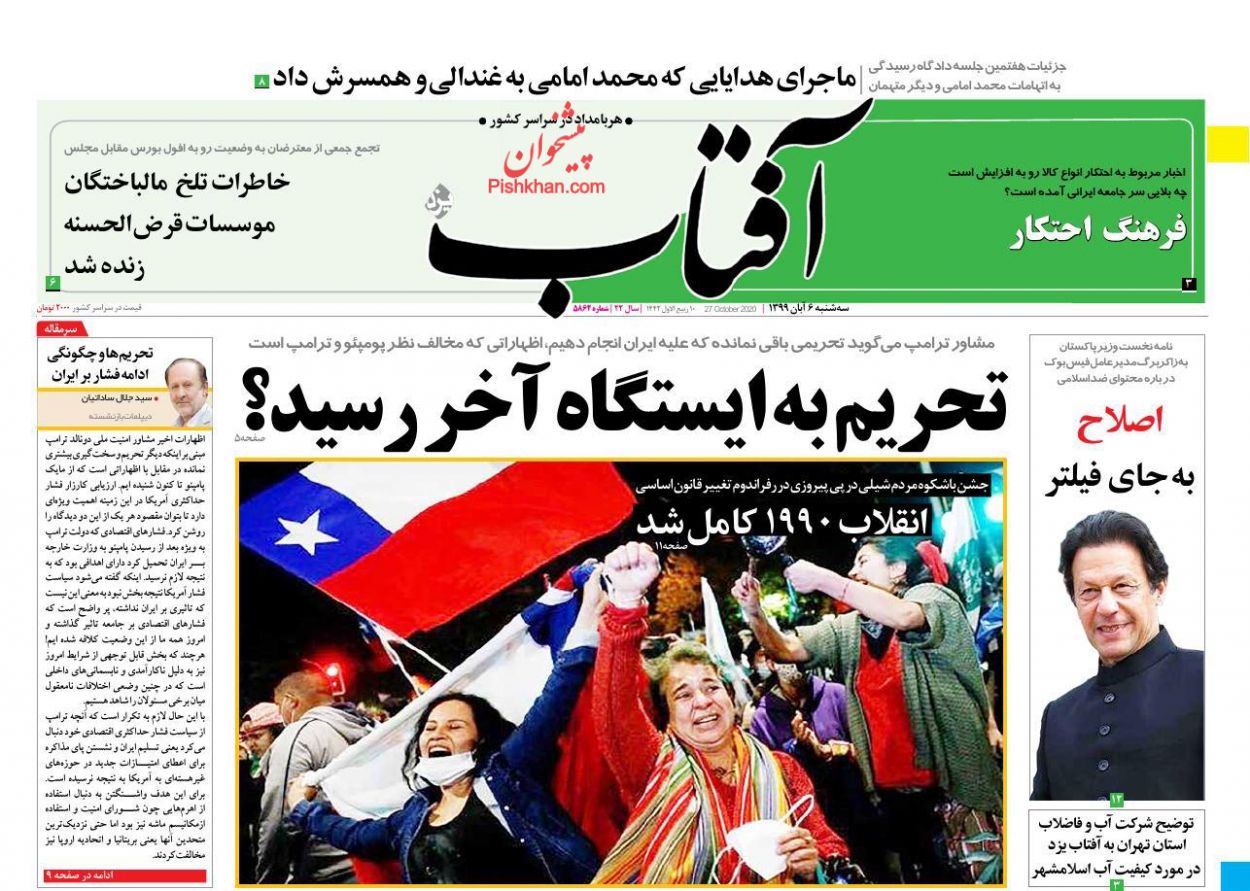
1- No More Sanctions Left
2- 1990 Revolution Completed in Chile
* People’s Glorious Celebration after Constitutional Referendum Victory
3- Sanctions and How Anti-Iran Pressure Will Be Continued [Editorial]
4- Pakistani PM Writes to Facebook Chief: Remove Anti-Islamic Content
* Revision Instead of Censorship
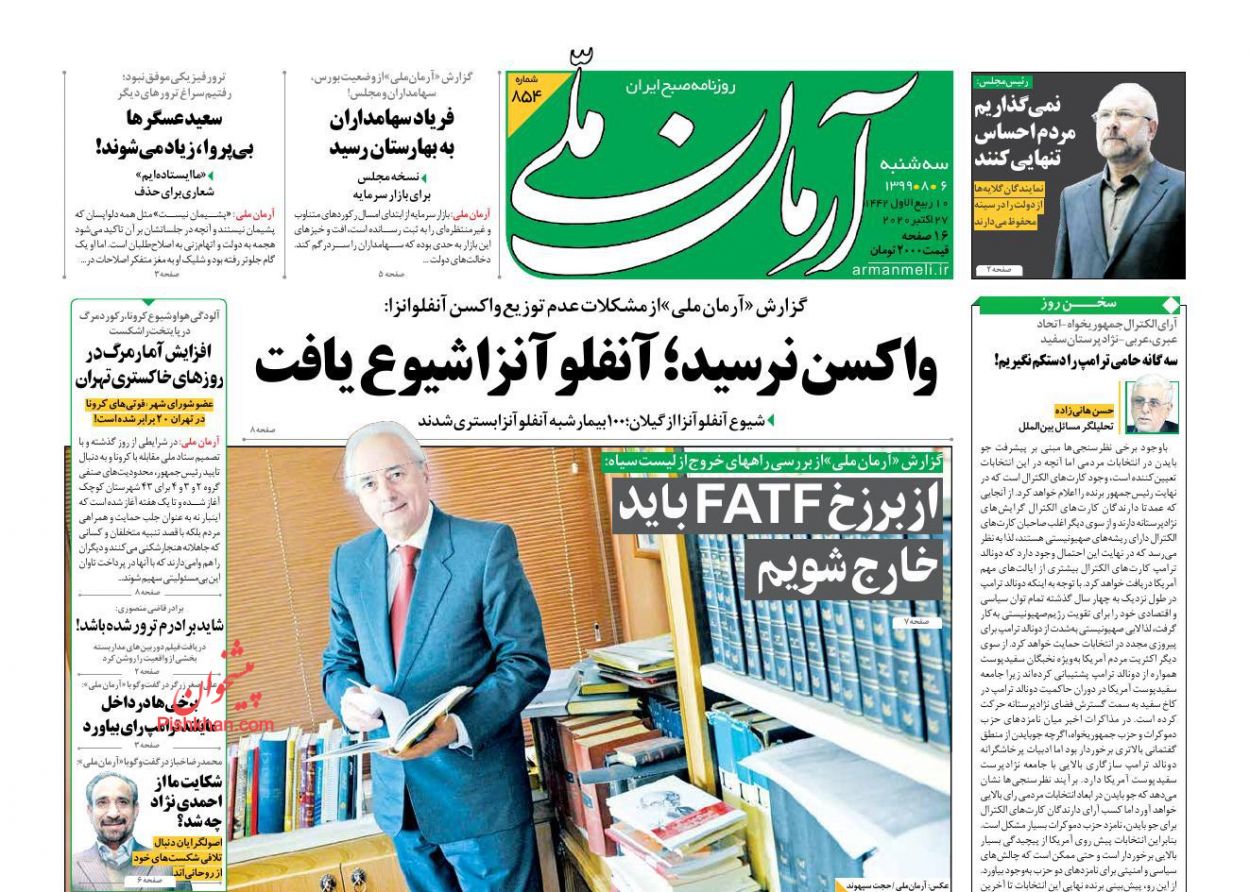
1- Vaccine Not Delivered; Flu Spreads in Iran
2- Increased COVID-19 Fatalities in Dark Days of Tehran
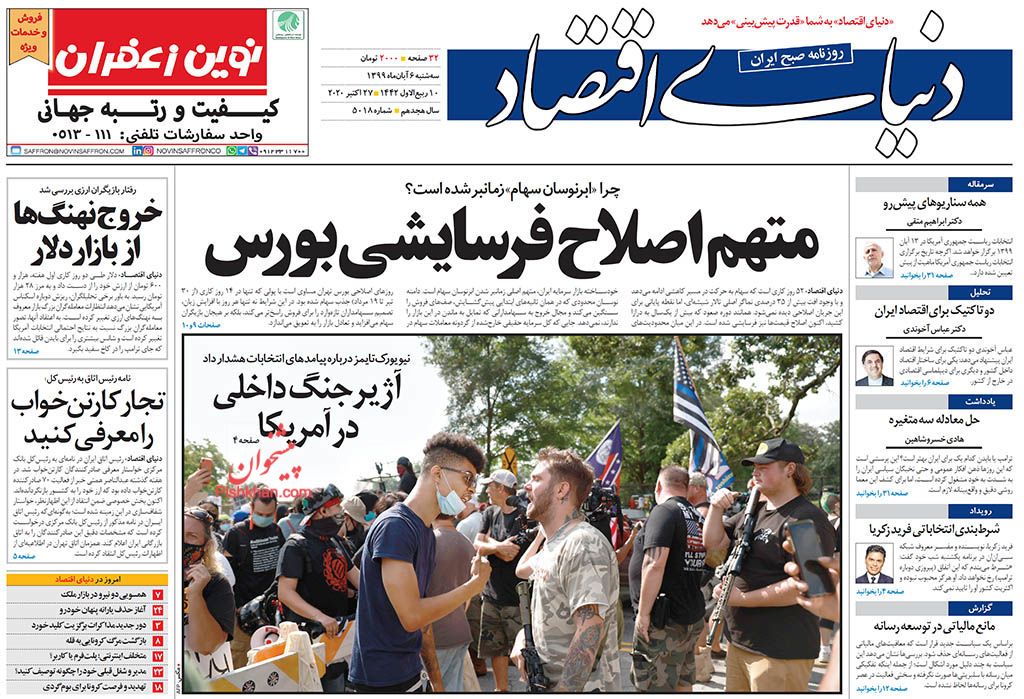
1- Civil War Ahead of America
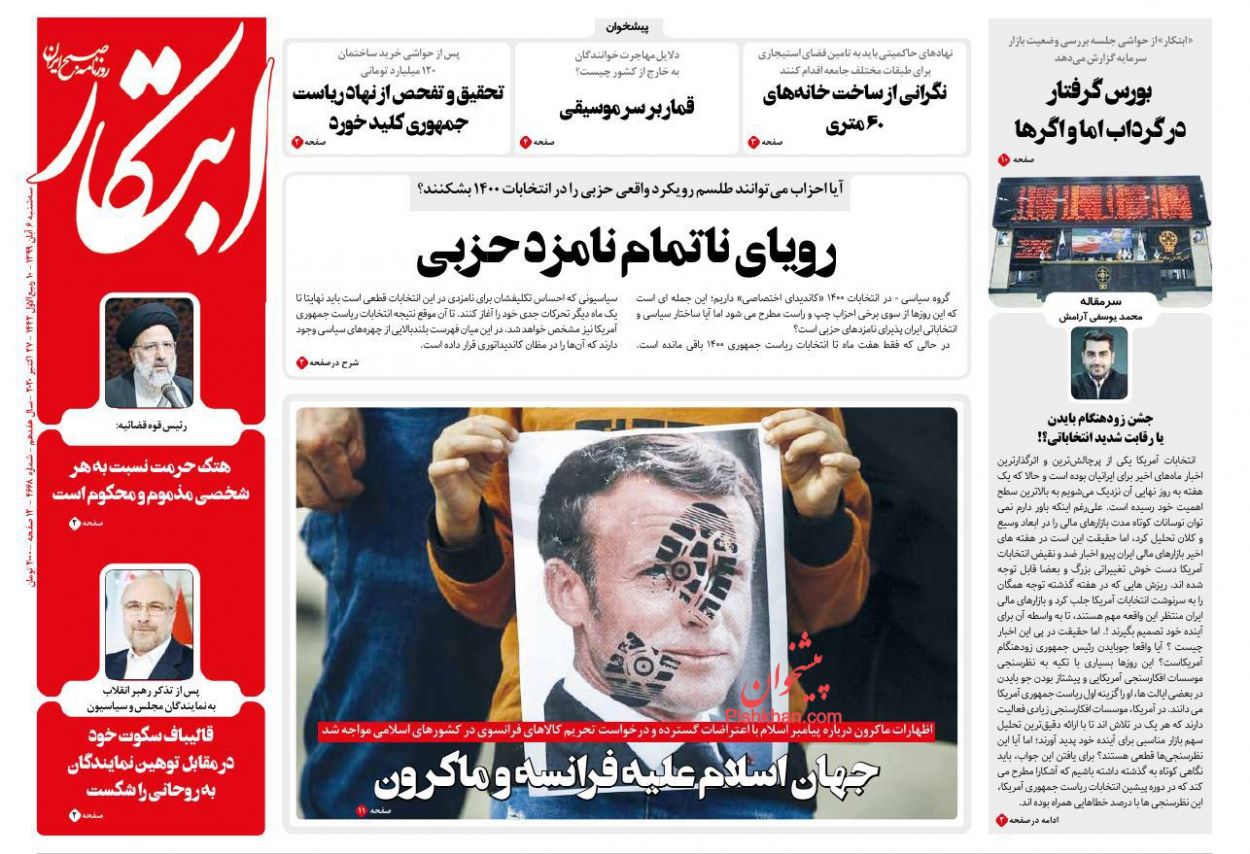
1- Muslim World against France and Macron
2- Qalibaf Breaks His Silence over MPs’ Insult to Rouhani
3- Biden’s Early Celebration or Fierce Election Competition?
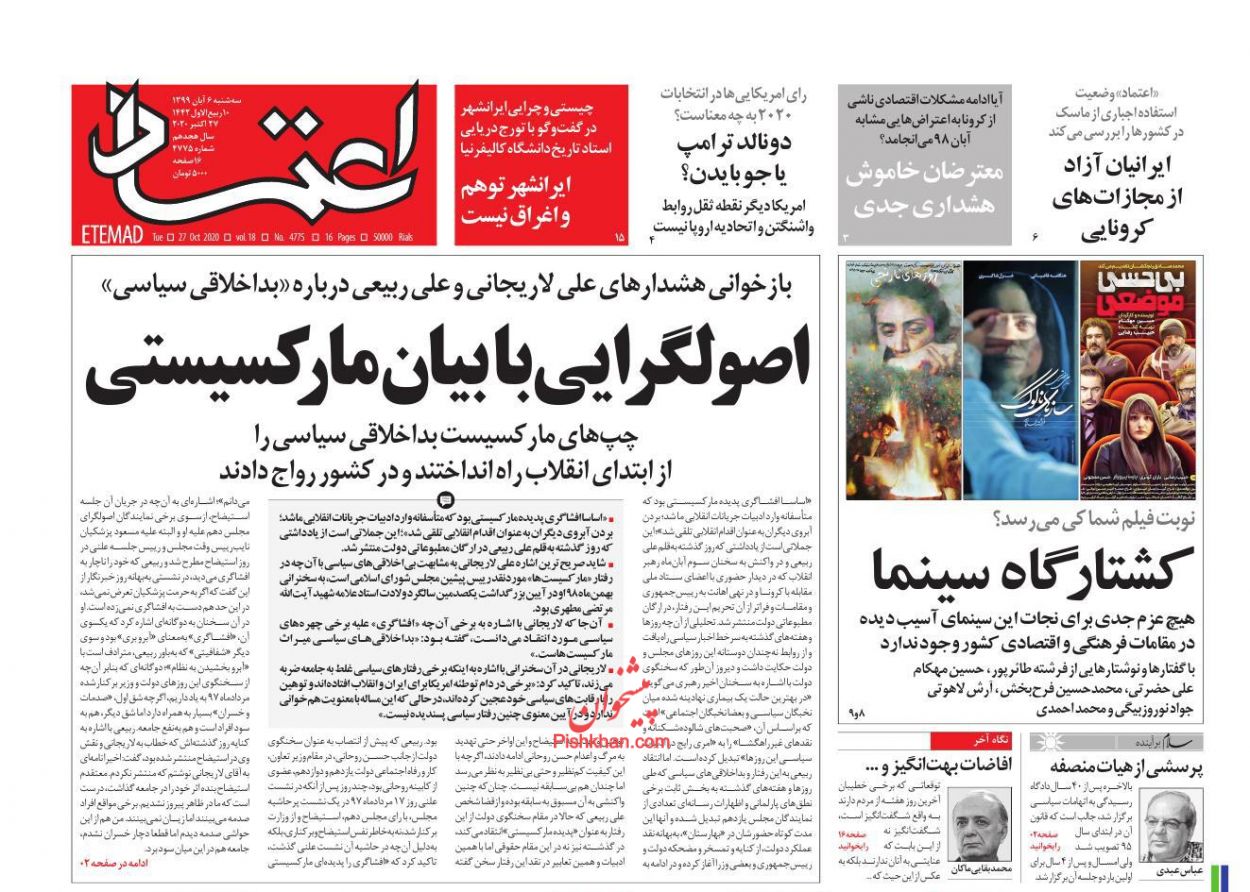
1- Trump or Biden?
2- Iranians Free from Coronavirus Punishments
1- Zarif: UN Must Stand against Unilateralism and War
2- French President’s Insult to Muslim Sanctities Widely Condemned in the World
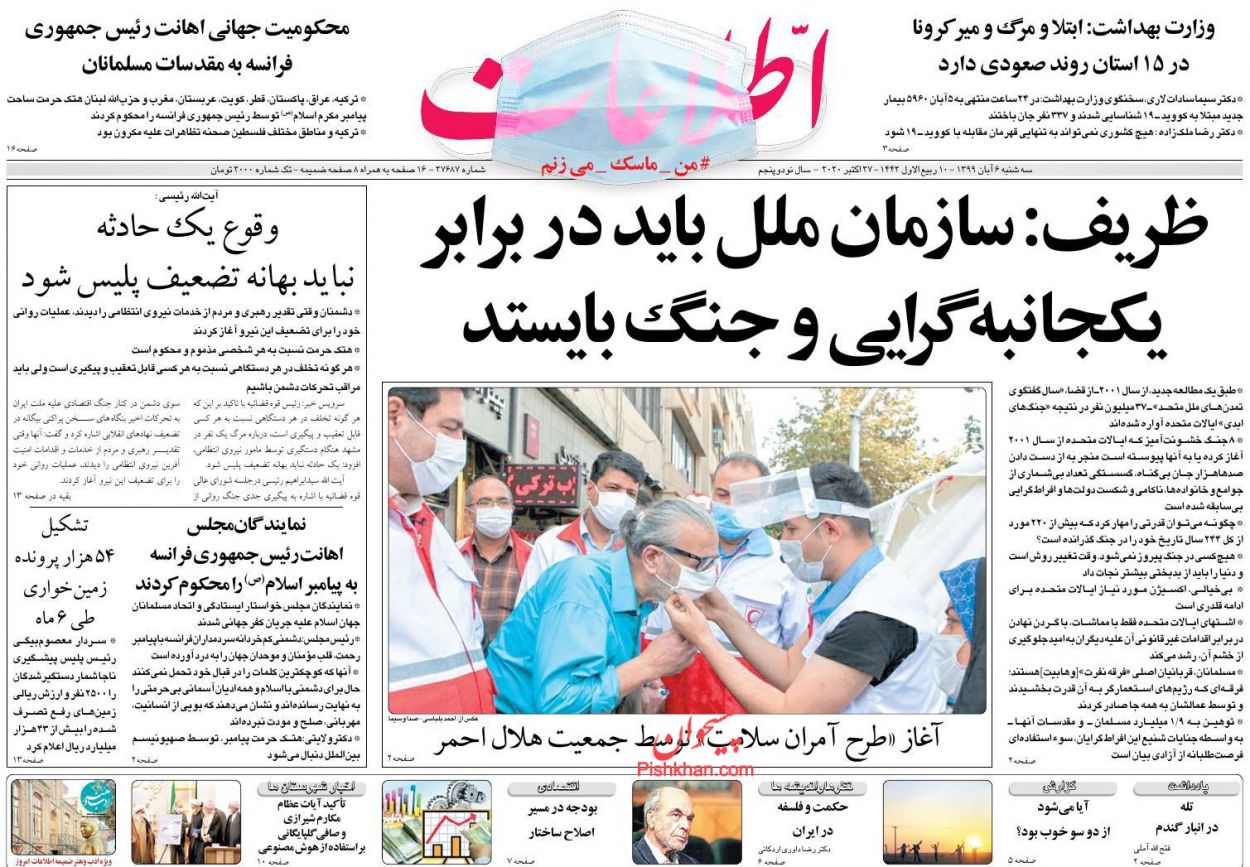
1- Anti-Sanction Dams of Iranian Economy
2- Judiciary Chief: Insulting Any Individual Is Condemned
3- Insulting Religious Sanctities Cruelty against Freedom
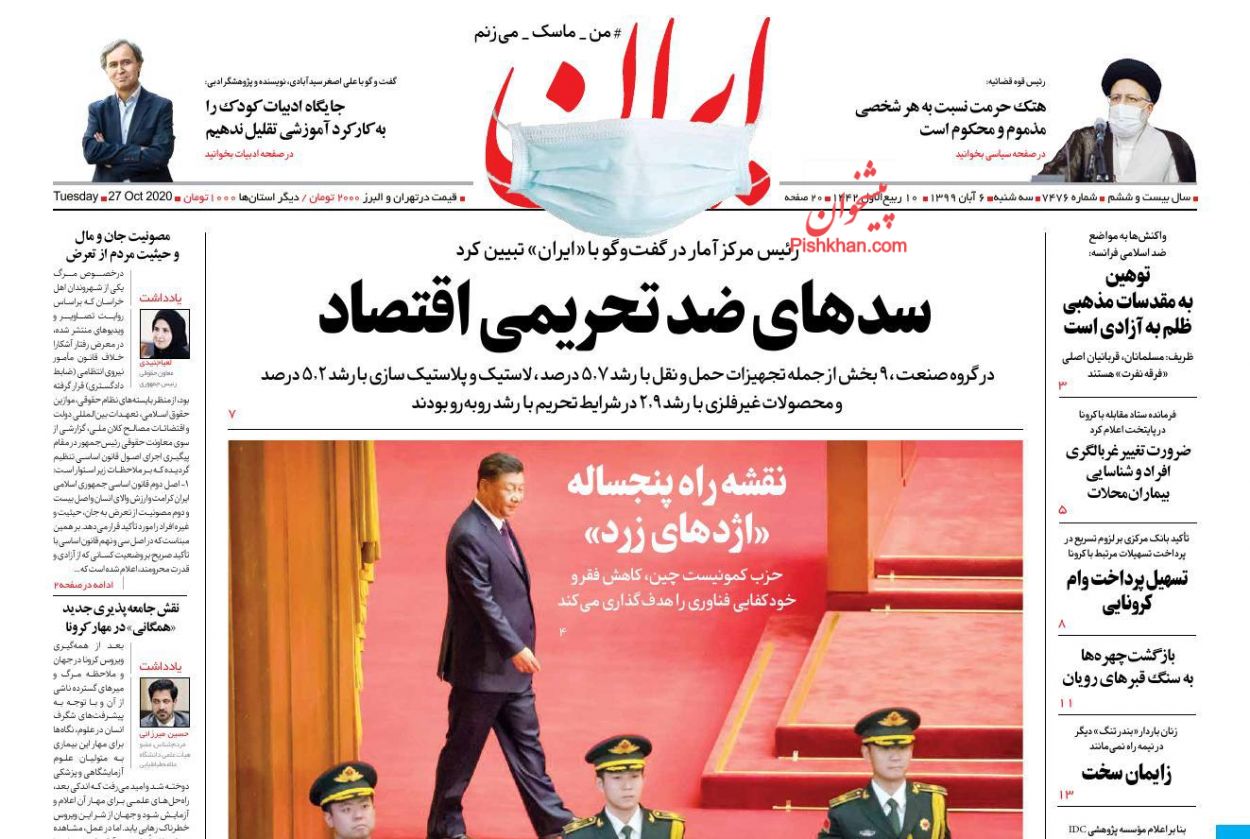
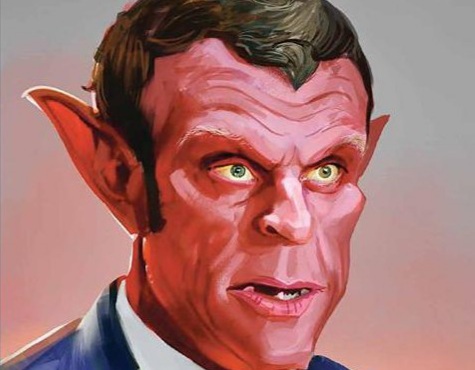
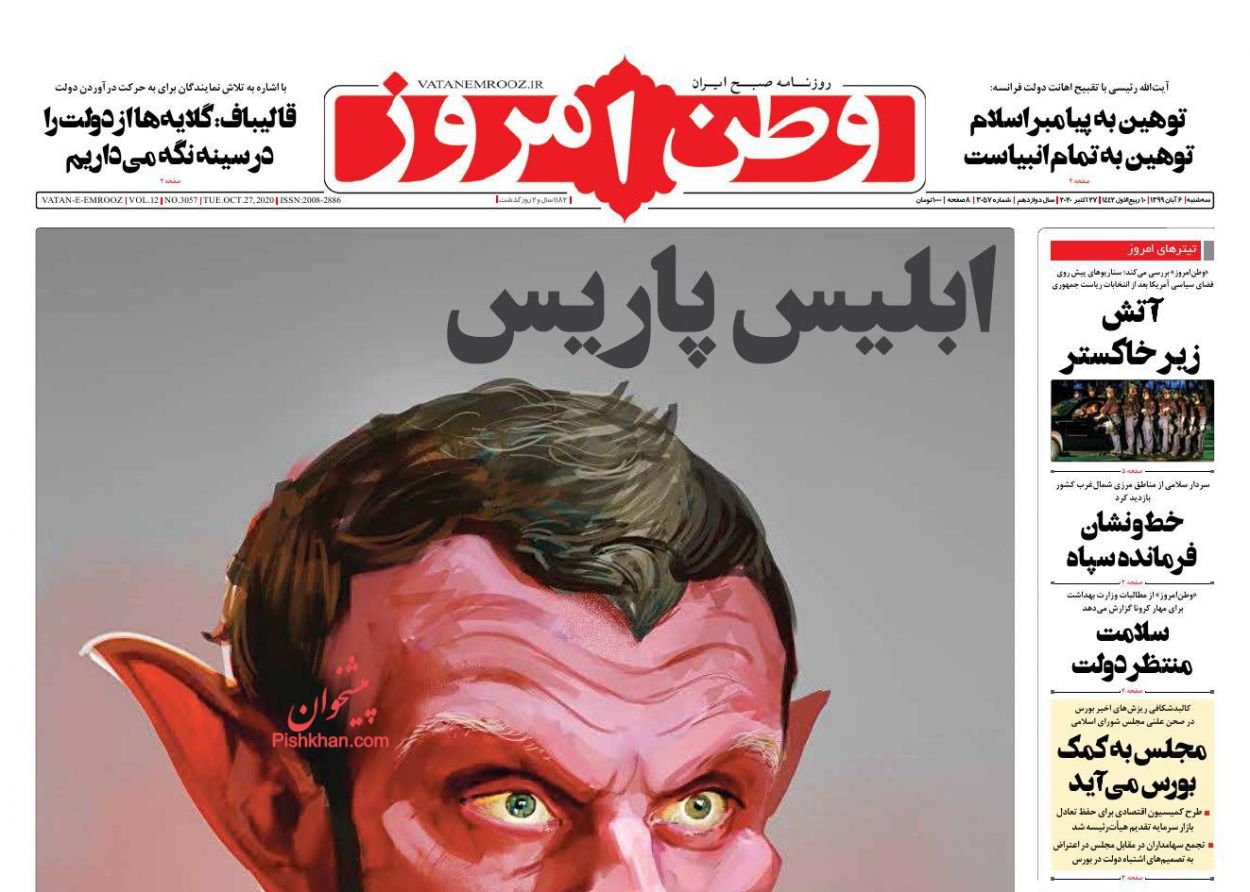
1- Evil! [Macron]
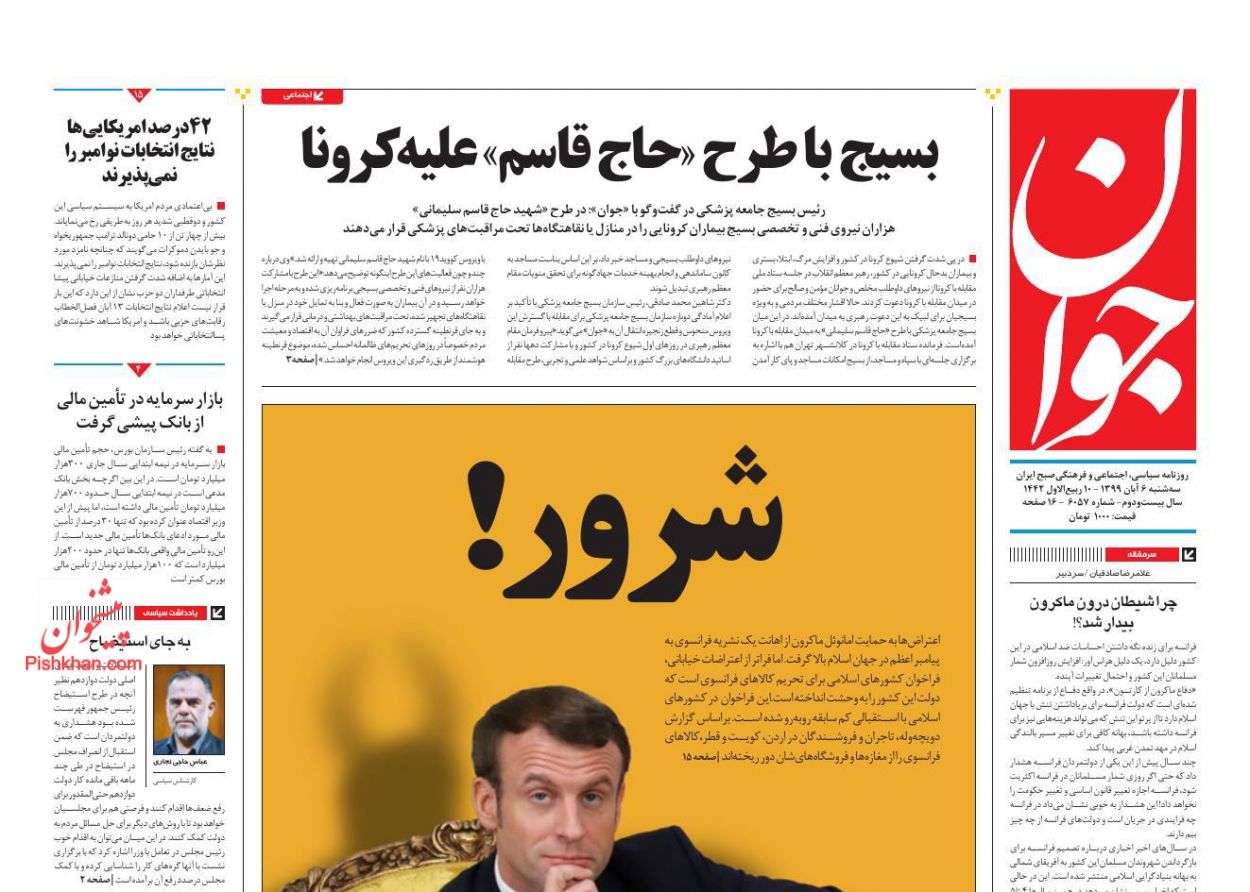
1- Nothing More Left to Sanction: Trump’s National Security Advisor
2- Baghdad Gathering on Anniversary of Big Sedition: Few People on Streets, Fuss Made in Social Media
3- Madness of Buying Weapons on Verge of US Elections
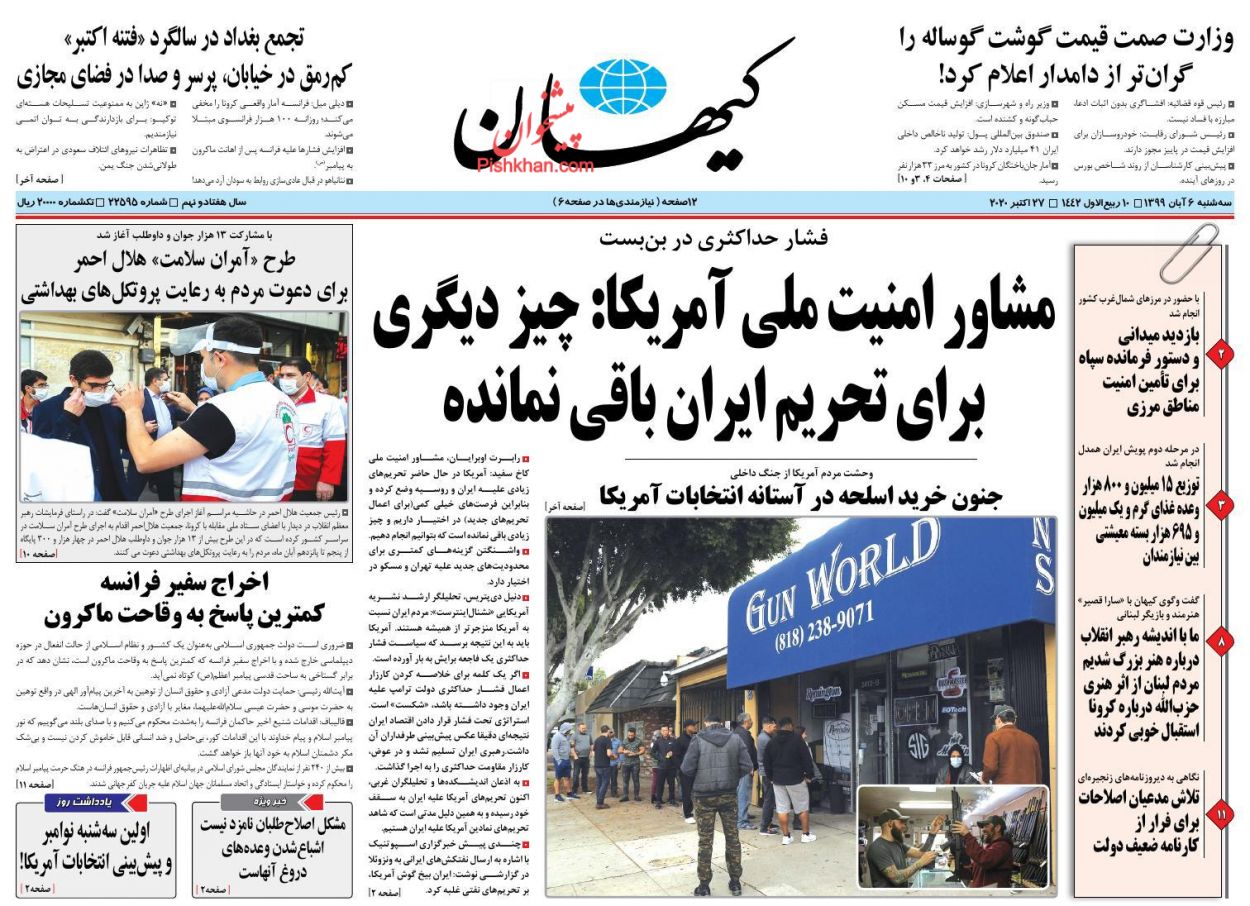
1- Macron Target of Muslims’ Wrath
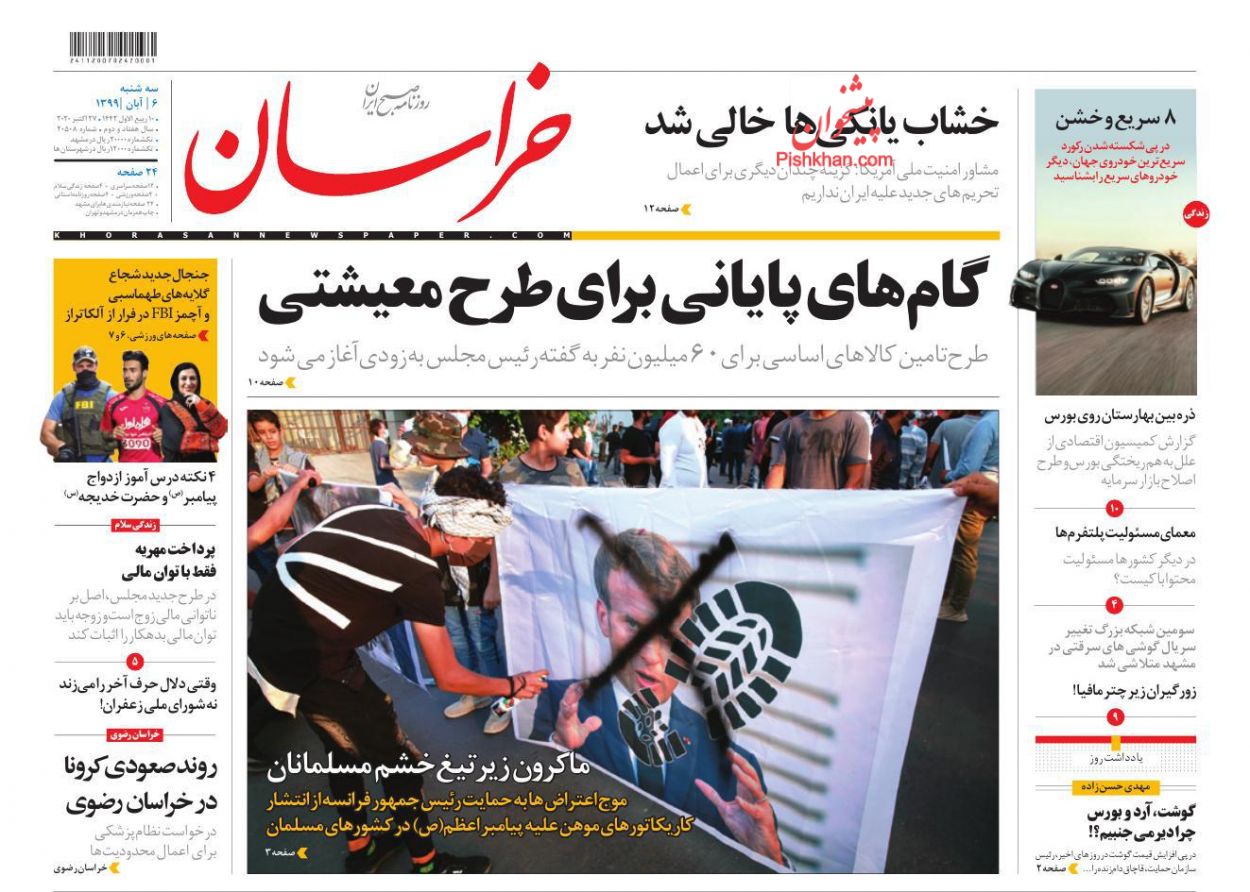
1- US Admits Its Maximum Pressure Failed
2- Stances of Trump and Biden toward Iran
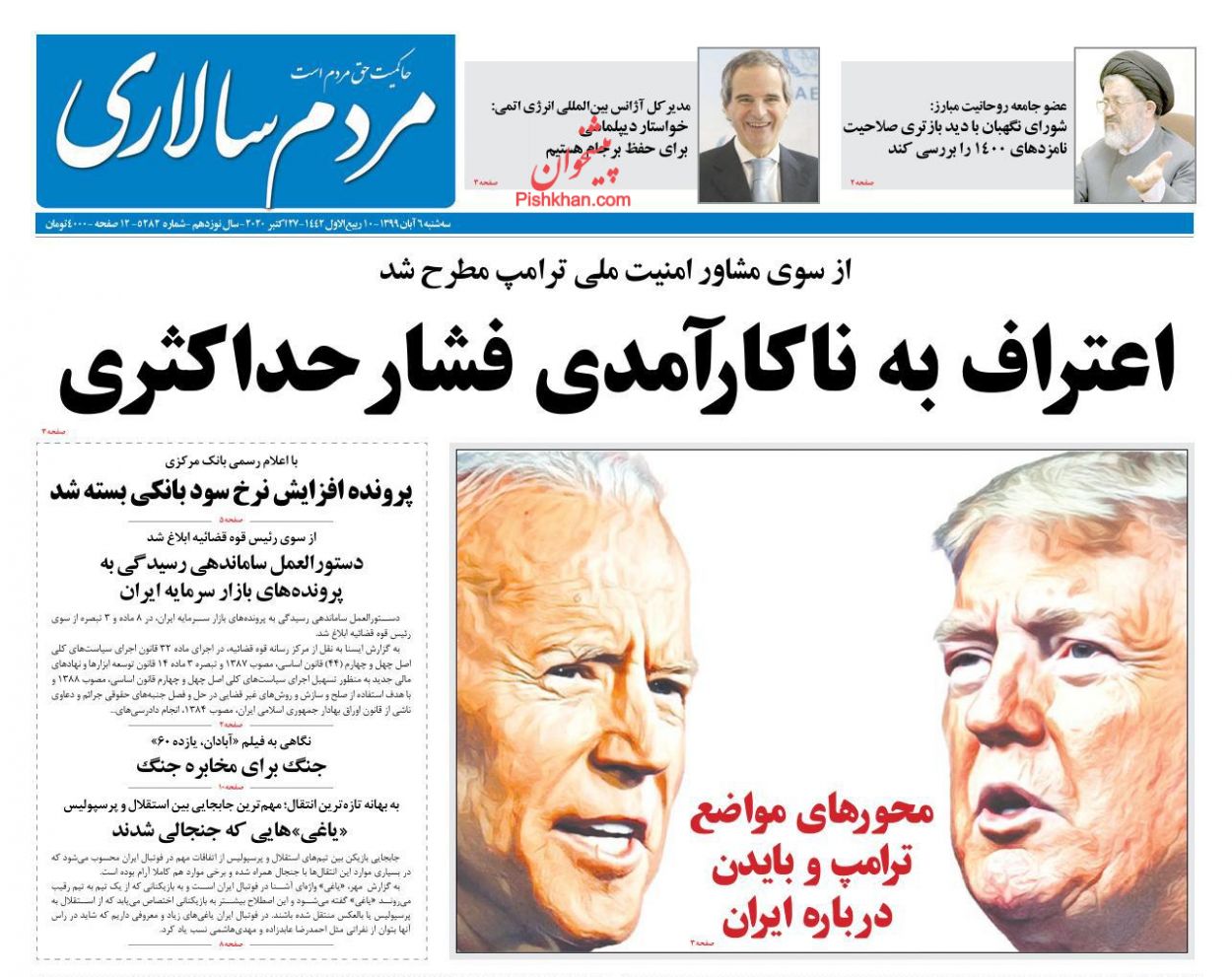
1- Iran and US Senate Election
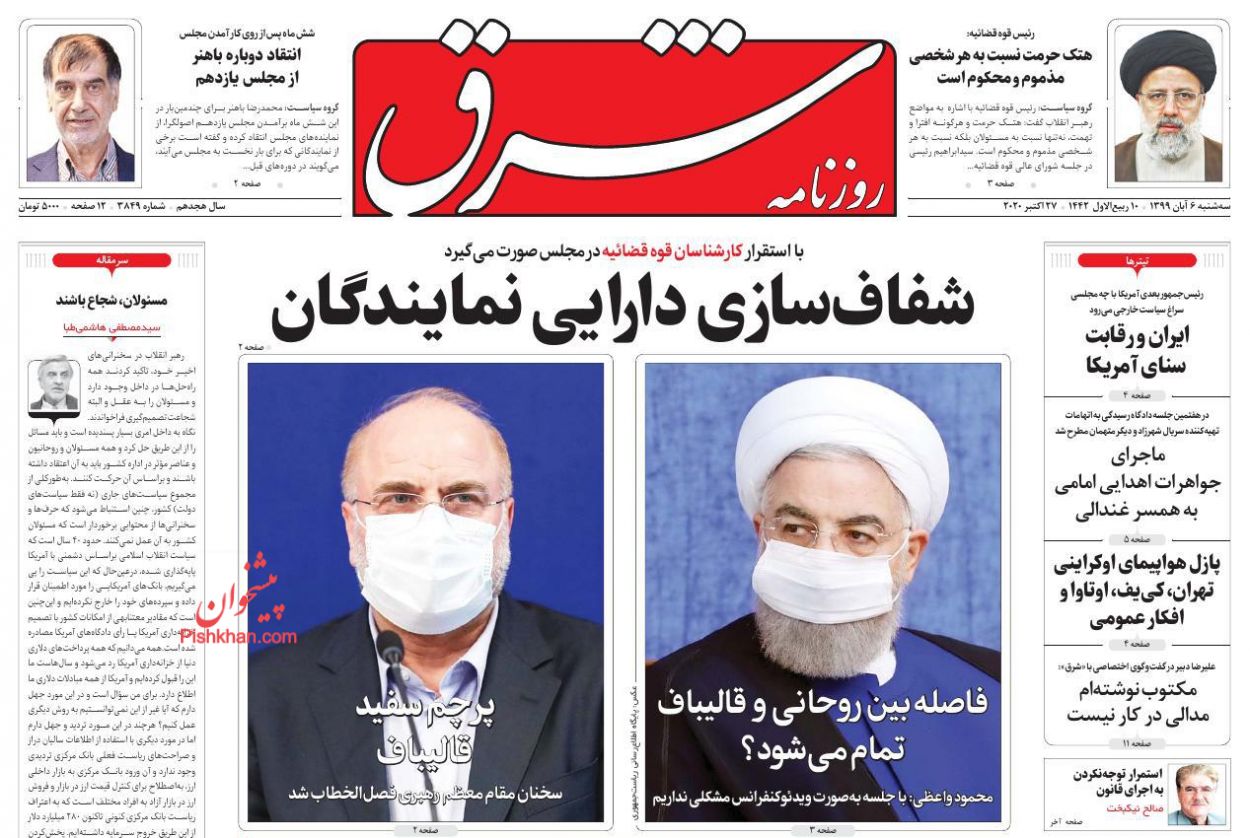
* With What Senate Composition Will Next US President Deal with Foreign Policy
2- Puzzle of Ukrainian Plane: Tehran, Kiev, Ottawa, and Public Opinion
1- Satan of Paris
In a statement on Tuesday, Khatibzadeh said the killing of innocent civilians, including defenceless children, indicates that the perpetrators of such terrorist activities do not respect any moral and humanitarian principles.
The spokesperson also described the targeted acts of terrorism in a number of neighbouring countries in recent weeks as part of the vicious plots to escalate the sectarian and religious conflicts in the region.
He also called for vigilance, collective efforts and concerted action by all regional governments to deal with the problem.
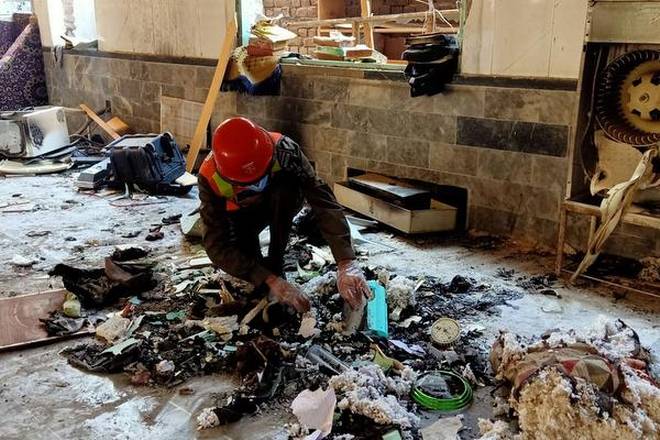
An explosion at a religious school in the northwestern Pakistani city of Peshawar has killed at least seven people and wounded 109 others on Tuesday.
The blast occurred at the Speen Jamaat mosque, which also serves as a religious school for the local community in the city’s Dir Colony area.
A local police chief said students were reading the Quran at the mosque when the explosion occurred, saying the initial investigation shows that five to six kilograms of explosive material was used in the blast.
Since 2017, the frequency of bombings like Tuesday’s attack has lessened in Pakistan, but sporadic attacks aimed at civilians and security forces continue.
On Sunday, at least three people were killed after explosives planted in a motorcycle in the southwestern city of Quetta exploded in a market.
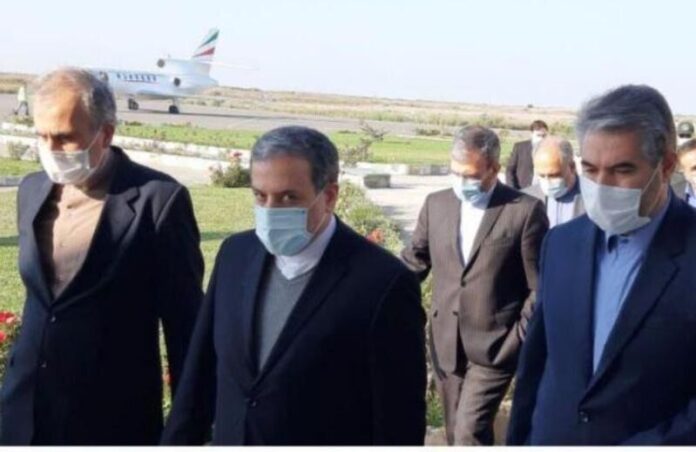
According to Foreign Ministry Spokesman Saeed Khatibzadeh, Araqchi will first visit Iranian border regions to see first-hand the latest developments on the ground.
Araqchi’s tour will later take him to Baku, Moscow, Yerevan and Ankara, Khatibzadeh said.
During his Tuesday visit to border areas in the northwestern province of Ardabil, near the Republic of Azerbaijan, Araqchi warned the warring parties in the Nagorno-Karabakh conflict to prevent any harm to the security of Iranian territories.
Commenting on the escalation of fighting between Armenia and the Republic of Azerbaijan over the disputed Nagorno-Karabakh region, the Iranian diplomat said, “The security of border regions, dams, and constructions is highly significant for the Islamic Republic of Iran and is a red line.”
The deputy foreign minister underlined that the two neighbouring states must prevent any damage to the Iranian border sites and zones amid the fighting.
“The Islamic Republic of Iran has major water and electricity facilities at the Aras border river,” Araqchi noted, saying he would visit those sites in the trip.
The ranking Iranian diplomat visited a number of dams in the provinces of Ardabil and East Azarbaijan during the Tuesday visit.
The Republic of Azerbaijan and Armenia have been locked in a bitter conflict over Nagorno-Karabakh, as the fighting has escalated over the past recent weeks.
The two neighbours of Iran have agreed to respect a new humanitarian ceasefire in the conflict that took effect on Monday.
Dozens of rockets and mortar shells fired during the armed clashes have fell in Iran, damaging rural houses and injuring civilians.
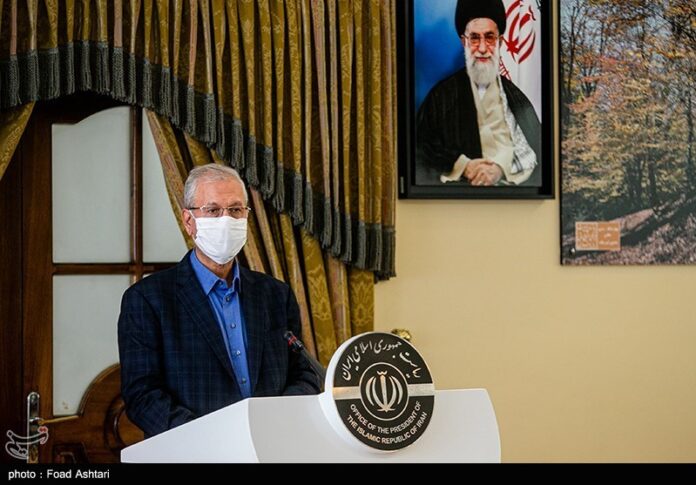
Speaking in his weekly press conference, Ali Rabiei said Washington has underestimated the power of Iranians.
The new sanctions imposed by the US government are “not only a frank admission of an end to the sanctions, but also an admission of the failure of the maximum-pressure policy aimed at bringing the Iranian nation to its knees,” he said.
“The US government’s wrong assessment whereby it [falsely] aggrandized its power to exert pressure on Iran on the one hand, and its underestimating of Iran’s willpower in standing up to bullying on the other, have entangled US leaders in a self-made predicament today,” the spokesman noted.
“Not it’s time the US government set aside vanity and obstinacy, and moved to make up for its past mistakes,” he added.
“The US cannot change the fact that exerting maximum pressure on the Iranian nation may have no result other than crime against humanity and breach of the law on an unprecedented scale in modern times, and bring discredit to the United States worldwide,” he added.
“Washington should rest assured that no better results are ahead if it continues on the same path,” he said.
The spokesman underlined that Iran will never bow to bullying, whatsoever.
“We hope the US regime will learn lessons from history and, at the end of the day, behave as befits the US nation’s dignity,’ he said.
The Vice Presidency for Science and Technology launched a project earlier this year to assess the export capabilities of the local knowledge-based enterprises, boost their capabilities, and remove the obstacles to exports to the five member states of the Eurasian Economic Union.
After detecting more than 140 firms with the necessary abilities to have access to the lucrative Eurasian market, the vice presidency’s office selected 20 top companies and linked them with the trade dealer.
The results of trade interaction between the Iranian knowledge-based companies and the Eurasian market are going to be presented in an upcoming webinar.
The knowledge-based, innovative and technological companies can seize the opportunity to export their products and services to Russia, Belarus, Kyrgyzstan, Armenia and Kazakhstan under the EAEU trade regulations.
Preferential tariffs and a customs-free list of hundreds of items and services have turned the Eurasian market into an attractive option for the foreign companies.
In 2019, Iran joined the EAEU for a temporary 3-year period. Turkey and India are also vying for access to the Eurasian market.
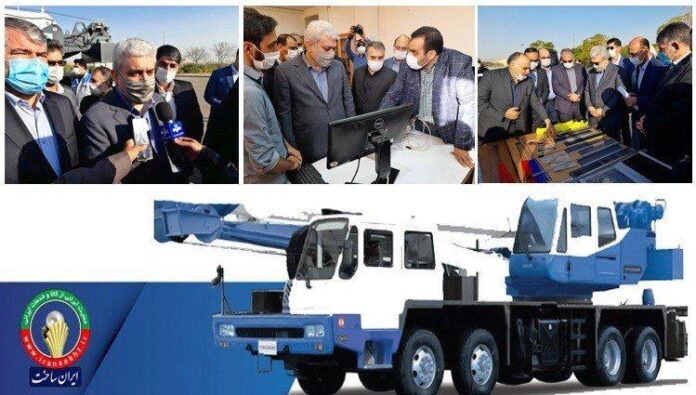
Present at the unveiling ceremony was Iranian Vice President for Science and Technology Sorena Sattari, who said the government will increase its support for knowledge-based firms and innovative industries on the back of new decisions by the cabinet and parliament.
“Telescopic cranes are used in different projects, so the country needs to be able to produce them,” he said.
“The manufacturing of telescopic cranes in Iran has broken new ground in that domain, and the Science and Technology Department of the Presidential Office backs such ground-breaking moves,” he said.
© All Content by IFP News ( Iran Front Page ) is licensed under a Creative Commons Attribution 4.0 International License.
