Friday, January 2, 2026
Home Blog Page 2137

‘Pakistan-based Taliban leader killed in Afghanistan’

pakistan taliban

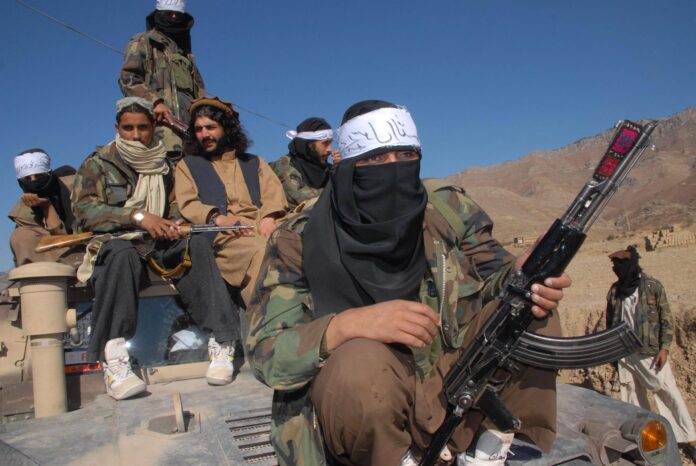
Khalid Balti, also known by the nom de guerre Muhammad Khorasani when he served as the spokesperson of the group, was killed in Nangarhar province, a security source told Al Jazeera on Tuesday.

The official spoke on condition of anonymity because he was not authorised to speak to the media on the issue.

“It is clear that the person who was killed is Khalid Balti,” added the official, while also confirming the killing took place in Afghanistan’s Nangarhar province, along the border with Pakistan.

When asked about the circumstances of the killing, he stated, “We are trying to get that information.”

Local media in Pakistan reported that Balti had been shot dead by unidentified gunmen, but the source was unable to confirm those reports.

In a statement, the Pakistani Taliban, announced that “investigations were ongoing” into the reports that Balti had been killed.

“It should be remembered that Mufti Khalid Balti did not currently have any responsibilities in [the Pakistan Taliban],” the statement added.

Balti’s alias of Muhammad Khorasani became a moniker for each successive Pakistan Taliban spokesperson, and the group clarified that the current spokesperson was “alive and well”.

Balti, said to be in his late 40s, hailed from the northern Pakistani region of Gilgit-Baltistan, and took over as Pakistan Taliban spokesperson from Sheikh Maqbool – who went by the alias Shahidullah Shahid – in 2014.

That year, the Pakistani military launched a security operation against the Pakistan Taliban in its erstwhile headquarters and stronghold of North Waziristan, displacing the group and many of its fighters into eastern Afghanistan.

The Pakistani security source described Balti as a “pivotal leader” of the Pakistan Taliban, contradicting the armed group’s claims.

It is unclear what, if any, operational role Balti has played with the Pakistan Taliban recently, after being released from Afghan government custody by the Afghan Taliban when that group took control of Kabul in August.

Last month, a month-long ceasefire between the Pakistani military and the Pakistan Taliban ended without renewal, as a nascent peace process – brokered by the Afghan Taliban – appeared to have stalled.

The Pakistan Taliban claimed the Pakistani government had reneged on its promises to release Pakistani Taliban prisoners and to cease security raids on TTP hideouts.

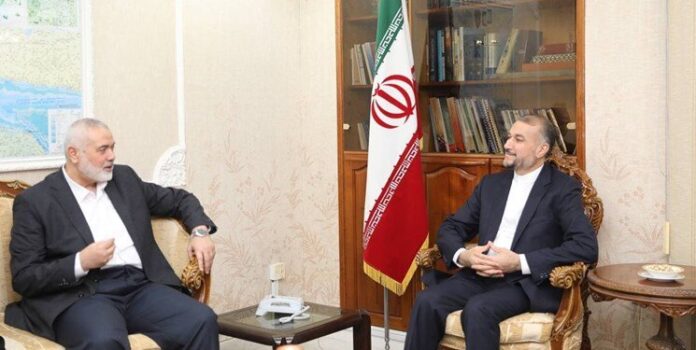
Iranian FM reaffirms Tehran’s backing for Palestine

In a meeting with Ismail Haniyeh, head of the political bureau of Palestinian resistance movement Hamas in Qatar, Amir Abdollahian said Iran will continue supporting the legitimate defense of the Palestinian people and resistance against the occupation of the Zionist regime.

He outlined the Islamic Republic’s principled policy toward the issue of Palestine as a plight in the heart of the Islamic ummah created by the Zionist regime which enjoys support from the West.

Ismail Haniyeh for his part appreciated the Islamic Republic’s support of the Palestinian people’s struggle against the Zionist regime’s continued aggression.

He also called for the Muslim and Arab world as well as the international community to adopt a decisive stance against the Israeli regime’s violations.

Iran has repeatedly vowed to keep backing Palestinians in the face of Israel over the past couple of years. It has also vehemently opposed some Arab states’ move to normalize ties with Tel Aviv.

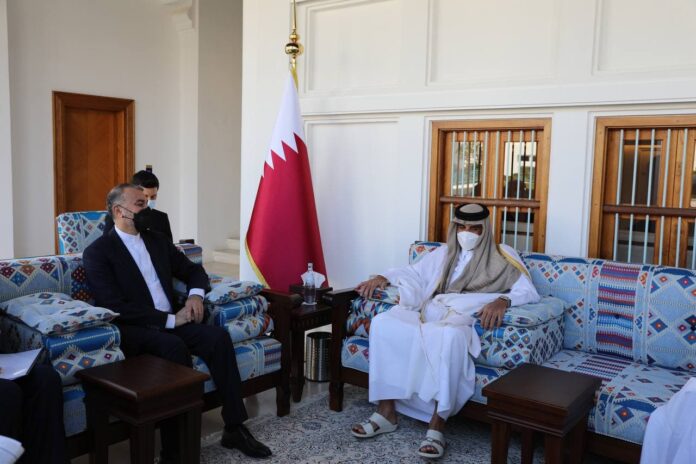
Iran’s top diplomat holds extensive talks with Qatari Emir, FM

Sheikh Tamim made the comment on Tuesday in a meeting with visiting Iranian Foreign Minister Hossein Amir Abdollahian.

He underlined that Qatar is interested in expanding relations with Iran.

Amir Abdollahian also examined the latest developments in bilateral ties in political, security, trade and economic areas.

Amir Abdollahian referred to the existing capacities for expanding economic relations between Iran and Qatar, underlining the need for forging cooperation in economic areas.

The Iranian foreign minister further outlined Tehran’s approach to relations with neighboring countries.

Amir Abdollahian also spoke about the Vienna talks over removing the oppressive sanctions against Iran as well as the issues related to Afghanistan and Yemen.

He also held negotiations with Qatari Deputy Prime Minister and Foreign Minister Sheikh Mohammad bin Abdul Rahman Al Thani.

Amir Abdollahian underlined the need to expand cooperation, particularly in trade, economic and investment areas between the two countries.

He stressed the priority of neighbors in Tehran’s foreign policy, saying Tehran welcomes holding regional dialog to establish stability in the region.

Qatar’s foreign minister also outlined the Qatari leadership’s view regarding the boosting and expanding of relations with the Islamic Republic of Iran.

He underlined that Doha is interested in expanding cooperation with Tehran especially in economic activities.

The two top diplomats further discussed, among others, regional and international issues, particularly the developments in Afghanistan and Yemen.

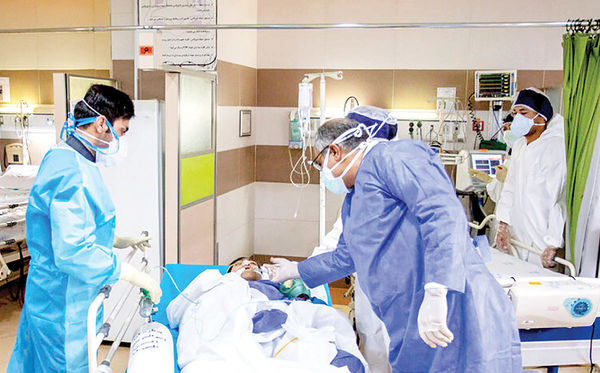
Iran Covid: 25 killed, 2k new cases registered

The Health Ministry also logged 1961 new Covid cases including 292 hospitalizations.

The latest fatalities push to 131,940 the total death toll from the disease since the Coronavirus pandemic hit the whole world.

The total caseload in Iran is 6,210,298. The number of deaths and infections in the country indicates a downward trend in Covid compared with several months ago when hundreds of people died from the disease daily.

This has been attributed by officials to a nationwide vaccination campaign that has seen the administering of 124,042,534 doses of vaccine to people in Iran. Meanwhile, 11,045,991 people have been triple-vaxxed against Covid.

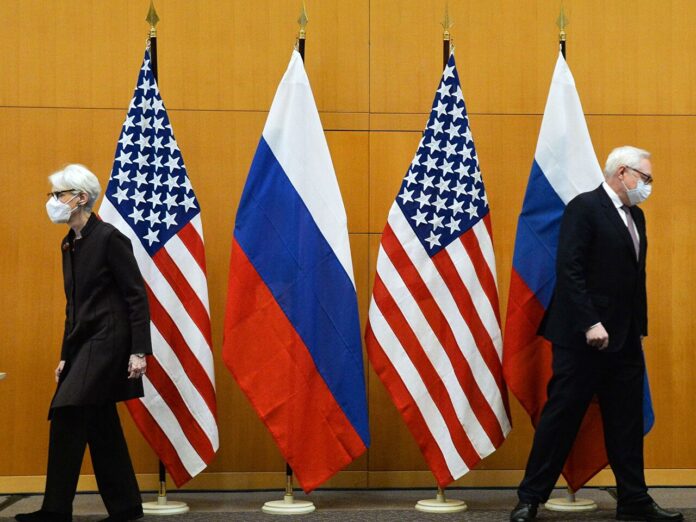
Kremlin says not optimistic on US talks

Kremlin spokesman Dmitry Peskov stated on Tuesday it was positive that Monday’s talks in Geneva had been held in an open, substantive and direct manner, but Russia was interested only in results.

“There are no clear deadlines here, no one is setting them – there is just the Russian position that we will not be satisfied with the endless dragging out of this process,” he continued.

Russian and the US negotiators gave no sign of narrowing their differences in briefings after the first session in Geneva.

Peskov noted the situation would be clearer after two further rounds of talks that Russia is due to hold this week – with NATO in Brussels on Wednesday and at the Organisation for Security and Cooperation in Europe (OSCE) in Vienna on Thursday.

During an interview with the Soloviev Live YouTube channel on Tuesday, Russian Foreign Ministry Spokeswoman Maria Zakharova took White House Press Secretary Jen Psaki to task over her remarks that Russia would spread disinformation over the Geneva talks.

“What you are talking about is no longer a matter of bewilderment but of deep pity. After all, this is a great nation, a great country. And when left to the mercy of people who do not have a good grasp of the subject matter and do not feel responsible for the words they utter, this evokes deep pity,” the diplomat insisted.

“Let’s presume that we heard yesterday’s statement made by their negotiators, and we heard the expert statements yesterday. In some ways, they were the same as ours, in other ways we had different assessments. I would still keep those statements in mind. By those people who were present at the negotiations,” the spokeswoman noted.

Following the most recent talks, Psaki stated that the US was bracing for Russia to spread disinformation about commitments related to the bilateral consultations in Geneva on security guarantees.


Russia’s Deputy Foreign Minister Sergey Ryabkov warned his American counterparts that some form of military response to the US stationing advanced weapons in Europe could be possible in the future. Moscow and Washington gave no sign that they had narrowed their differences on Ukraine and wider European security in talks in Geneva, Switzerland, which lasted for more than 7.5 hours.

He insisted that if NATO proceeds toward the deployment of new capabilities in weaponry, “which are being developed very rapidly in the US”, the Russian military may reply in a way that “will inevitably and unavoidably damage the security of the US and its European allies”.

Speaking to the media after a day of crucial US-Russian negotiations on security guarantees in Geneva, Ryabkov also said that there has been no progress so far on Russia’s proposals to curb NATO expansion. He added that the ball is now in NATO’s court, which, in his words, has to finally make a “real step” toward finding common ground with Russia.

“We are calling on the US to demonstrate a maximum of responsibility at this moment. Risks related to a possible increase of confrontation shouldn’t be underestimated,” Ryabkov said, adding that “significant” effort has been made to persuade the Americans that “playing with fire” is not in their interests.

Following discussions on Monday in Switzerland over the future of European security, the Russia’s chief negotiator has warned that his American counterparts “underestimate the gravity of the situation”.

While the US delegation came to Geneva for “serious” discussions on Moscow’s European security proposals, they failed to show an understanding of how key issues need to be resolved, Ryabkov claimed.

Russia laid all of its cards on the table in proposals made public last month, Ryabkov insisted, and those represent “demands that we cannot retreat from”.

The diplomat described the Geneva talks as useful because they discussed matters previously considered off the table, and noted he did not think the situation was hopeless. The greatest difference of views between the US and Russia was on the further expansion of Washington’s NATO military bloc.

“Unfortunately we have a great disparity in our principled approaches to this. The US and Russia in some ways have opposite views on what needs to be done,” the deputy FM told reporters.

“For us, it’s absolutely mandatory to make sure that Ukraine never ever becomes a member of NATO,” Ryabkov said, and Moscow is insisting that the institution amend its policies to reflect this reality.

“We are fed up with loose talk, half-promises, misinterpretations of what happened in different negotiations behind closed doors,” he added, referring to the State Department’s claims in recent days that NATO and the US never promised Moscow that NATO would not expand to the east.

“We do not trust the other side, so to speak,” Ryabkov said, adding, “It’s over, enough is enough.”

Following Monday’s talks in Geneva, Ryabkov will meet with NATO representatives on Wednesday, and with the OSCE on January 13, after which Moscow will make a decision whether to continue the negotiations further.

US Deputy Secretary of State Wendy Sherman has told reporters that Russia’s proposed limit on the expansion of NATO further into Eastern Europe is a “non-starter”. However, she said that progress in talks with Moscow is possible.

Sherman on Monday met with Ryabkov in Geneva. Called to discuss a series of security proposals offered to the US and NATO by Moscow, the Cold War-style meeting lasted more than seven hours.

Afterwards, Sherman told reporters that the pair found some room for progress. She added that US officials are “open to discussing” the size and scope of NATO military exercises in Europe “on a reciprocal basis”, and suggested that the US could alter its placement of missiles in Europe to better accommodate Russian security concerns.

Both sides remain deadlocked, however, on one of the most crucial of Moscow’s demands: that NATO cease taking in new members from the former Warsaw Pact states. Sherman called this idea a “non-starter”, saying that the US “will not allow anyone to slam closed the door to NATO membership to anyone”.

Declassified documents have previously revealed that during the dying days of the USSR, Western leaders promised their Soviet counterparts that NATO would not expand into Eastern and Central Europe. However, the US’ current position is that no such promise was ever made, and that NATO’s membership books must remain open – even for states bordering Russia.

At the core of the dispute is Ukraine. Pro-Western factions in Ukraine aspire to join the military alliance, a move that would put Western troops and arms on Russia’s border. Moscow considers such a situation unacceptable, but NATO leaders insist that Ukraine needs protection from a potential invasion by Russia, something that Moscow has repeatedly dismissed as “hysteria”.

Sherman noted that no decision on issues affecting Ukraine would be made without Ukrainian involvement, and stated that talks aimed at resolving the crisis would continue.

However, she described the overall tone of Monday’s meeting as “frank and constructive”, and stated that herself and Ryabkov would continue to find common ground on arms control issues. This statement echoes Secretary of State Antony Blinken’s comments to US cable news networks on Sunday, in which he suggested that the current talks could possibly revive the Intermediate Nuclear Forces Treaty, a Cold War agreement that banned the deployment of medium-range nuclear missiles in Europe by either the US or Russia. Under President Donald Trump, the US pulled out of the treaty in 2019. However, Moscow insisted that any such possibilities rely fully on whether Russia’s main demand about the expansion of NATO is heard.

Preventing nuclear war is something both sides can easily agree on.

Sherman said that herself and Ryabkov reiterated a promise signed in writing last week by the US, Russia, and the world’s other nuclear powers that “a nuclear war can never be won and must never be fought”.

Resolving the crisis in Ukraine is a different matter.

After the meeting, Sherman insisted that Russia must pull back any troops stationed near Ukraine’s border, even though they may be on Russian soil.
“It is on Russia to de-escalate tensions”, she told reporters.

However, talk of military solutions to the standoff have come from both sides, with NATO Secretary General Jens Stoltenberg openly suggesting that the West may take military action if talks fail.

“We have significant capabilities,” he stated on Friday, adding, “We have troops, we have forces. We have the readiness. We have the plans to be able to defend, protect all allies … to make sure that we preserve peace in Europe.”

The US State Department has said the US and Russia have a better understanding of each other’s concerns following a meeting between the two sides in the Swiss city of Geneva, but again threatened Moscow with “financial sanctions” and other “costs” if it launches any military action in neighboring Ukraine.

“If Russia stays at the table and takes concrete steps to deescalate tensions, we believe we can achieve progress,” stated Sherman, the number two diplomat in the State Department.

She reiterated potential actions that Washington and its allies are prepared to take if Russia launches an invasion, despite the fact that Moscow has rejected Washington’s allegations of preparing to invade the neighboring country.

“Those costs will include financial sanctions, and it’s been reported those sanctions will include key financial institutions, export controls that target industries; enhancements of NATO force posture on ally territory; and increased security assistance to Ukraine,” Sherman added.

China’s Iran oil imports hit record high despite US bans

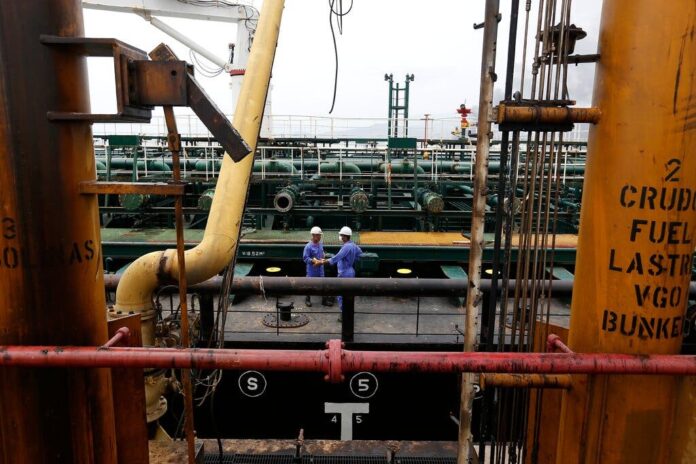
China doubled down on imports of Iranian and Venezuelan crude in 2021, taking the most from the US-sanctioned governments in three years, as refiners brushed off the risk of penalties to scoop up cheap oil.

Crude processors in the world’s biggest importer were observed to have bought 324 million barrels from Iran and Venezuela in 2021, about 53% more than the year before, according to data from market intelligence firm Kpler. That’s the most since 2018, when China took 352 million barrels from the two nations.

Chinese buyers, particularly private refiners, have benefited from Washington’s tough line on Iran and Venezuela, continuing to buy their oil long after their counterparts elsewhere in Asia ceased purchases. The risk that non-US entities may lose access to the US financial system or have their American assets frozen if found guilty of breaching the sanctions hasn’t dissuaded them.

A glut of unsold cargoes, rising international prices, and the issuance of more crude import quotas by Beijing, have incentivized the private refiners, known as teapots, to snap up more oil from the pariah states. These shipments typically don’t show up in official customs data.

“This surge was triggered by rising crude prices, making Iranian crude, anecdotally, up to 10% cheaper when delivered into China,” said Anoop Singh, head of tanker research at Braemar ACM Shipbroking Pte Ltd.

The US also eased sanctions enforcement as it tried for a nuclear deal with Iran, he added.

Sanctioned oil is typically transported on old ships that would have otherwise been set for the scrapyards, providing cost savings, according to Singh. Cargoes may be shipped directly from the country of origin on tankers that have gone dark — meaning their transponders are turned off — or transferred between vessels at sea to mask where the crude has come from, he noted.

Iranian and Venezuelan crudes are often re-branded and passed off as oil from Oman and Malaysia. China hasn’t received any Iranian crude since December 2020, while imports from Oman and Malaysia have risen, official data show.

Chinese imports of sanctioned crude should stay elevated around current levels early this year amid slow progress on the nuclear talks, according to Braemar and industry consultant Energy Aspects Ltd.

Global oil prices that have jumped almost 50% over the past year are also making cheaper, sanctioned barrels more attractive. That could be exacerbated by tax and pollution probes into Chinese teapots, which are putting more pressure on them, stated Yuntao Liu, an analyst at Energy Aspects in London.

The price of sanctioned oil will always be discounted, said Emma Li, a Singapore-based analyst at Vortexa Ltd.

“For teapots, the incentive is always the low price, compared with other popular grades,” Li added.

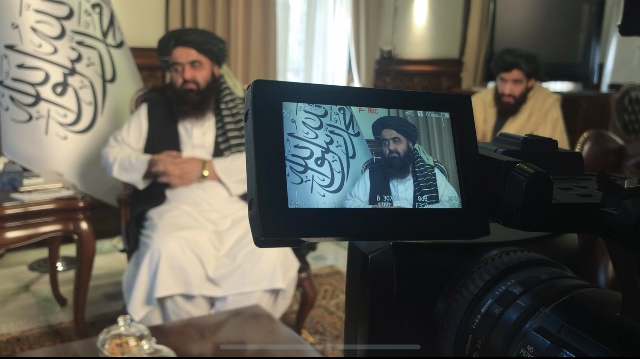
‘Afghanistan not to pose threat to other countries’

Muttaqi, who was talking with Afghan citizens in the United States in a video conference, stated the government has pledged to not allow foreign countries to interfere in Afghanistan’s internal affairs, and that Afghanistan will open a new chapter of good governance and relations with neighbors and regional and world countries.

He added that the political isolation of Afghanistan is not in the interest of anyone.

“We seek positive and constructive relations with our neighbors, region and the world. We want positive interaction based on mutual respect with all nations,” Muttaqi told the participants of the conference.

Referring to the fall of Kabul in mid-August, Muttaqi said that Islamic Emirate forces sought to enter Kabul through dialogue but the security organization of the previous administration ran away and created a power vacuum in Kabul, so Kabul residents requested Islamic Emirate forces to enter and maintain security.

“We sought to enter Kabul city through dialogue and understanding, but as the head, and security organs of the previous administration chose to run away and a power vacuum gripped Kabul, public figures and residents of Kabul requested our forces to enter the city and establish security, he added.

The acting foreign minister once again announced that the Islamic Emirate entered Kabul with a message of national unity and had no plans of killing or detaining anyone. Some of former opposition are still living a dignified life under the shade of the Islamic Emirate, he said.

“The Doha agreement is a good framework for relations between Afghanistan and the world, specifically with the United States of America. We believe that the complete implementation of the Doha agreement can remove existing impediments in relations between us and the United States of America along with its allies, therefore, it is needed that all sides remain committed to contents of the Doha agreement,” Muttaqi noted.

He added that Afghans deserve to have a good life in their own country. The new government does not want its citizens, specifically its educated and professional cadres, to be encouraged or forced to migrate to Europe.

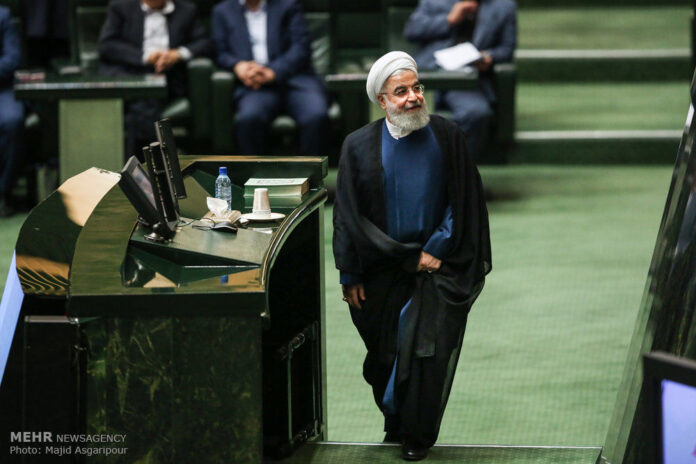
Iran MPs back investigation into Rouhani admin performance

The proposals were ratified with 138 votes in favor, 28 votes against and 10 abstentions.
The ratification calls for an investigation into the following issues during Rouhani’s term in office:

1. What was the role of deputies and directors of the presidential office in its ‘wrongdoing’, especially in terms of finances, intervention in the nuclear talks and control over “bottlenecks that create rent”?

2. Investigation into the role of presidential aide Hossein Fereydoon in the nuclear talks and the ‘negative consequences of his intervention.’

3. The role of the presidential chief of staff in appointing directors of economic institutions, factories, banks and other sensitive centers with high revenues.

4. Examining the role of the economic team of Rouhani, especially his deputy for economic affairs Mohammad Nahavandian, in injecting 18 billion dollars into the foreign currency market and distribution of 60 tons of gold to help control prices, which the lawmakers said had no positive outcome.

Rouhani’s opponents have long accused his administration of mismanaging the foreign currency and gold markets amid biting US sanctions.

The critics also accuse his aides of abusing their positions of power for personal gains.

Rouhani at the time repeatedly rejected the accusations saying sanctions left no space for doing a better job on the foreign currency and gold markets.

Council: Iran ranks 4th in global nanotech rankings

“The global rank and standing of Iran in the field of nanotechnology is assessed in quantitative terms.

Of course in terms of quality, Iran also ranks among the top 10 countries in the world given the articles published on the subject,” the INIC Spokesman Saeed Sarkar said.

Sarkar stressed that, in nanotech Iran is ranked higher than such countries as South Korea, Germany and Japan, among others.

He said Iran has so far produced around 850 certified products, which have been industrialized and have helped improve people’s lives.

The official added that Iran produced some 2.7 billion dollars worth of nanotech products last year. He said the construction and pharmaceutical industries are the key sectors, where nanotech products are more widely used.

Kazakhstan govt. says coup attempts failed, 10k arrested

“Interior Ministry: 9,900 people were detained by law enforcement officers,” a report in a Telegram channel, which posts information from Kazakh departments, said.

The Kazakh president stated on Tuesday that a terrorist war was unleashed against the country.

“A terrorist war was unleashed against our country. The enemy showed extreme cruelty and readiness to take any steps. He sowed fear among the population in order to suppress even the very idea of resistance. The plan of attack on Kazakhstan included a number of different aspects: military, political, ideological, disinformation and others,” Tokayev told lawmakers.

The leader lashed out at the country’s National Security Committee, noting that the committee failed to detect the threat to the country’s national security.

“Professionals worked on the preparation of the seizure of power in Kazakhstan,” the president added, noting that the attempted coup failed.

Tokayev also signed on Tuesday a decree on the appointment of former First Deputy Prime Minister Alikhan Smailov, who is currently the acting prime minister, as government head, the presidential office said.

“To appoint Alikhan Smailov … the prime minister of Kazakhstan,” the office added citing the decree.

Earlier in the day, the lower house approved Smailov’s candidacy.

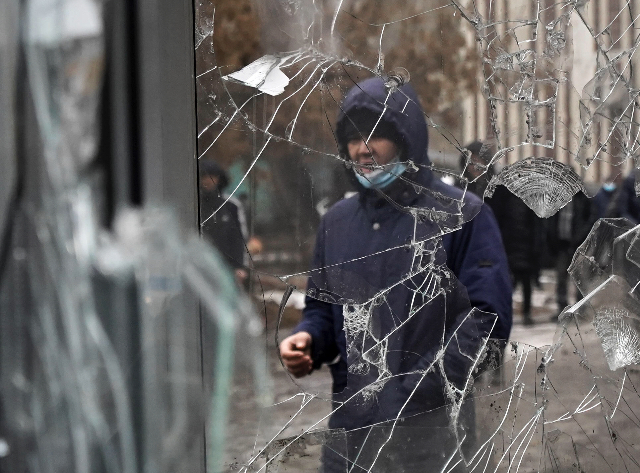
Violent protests erupted in Kazakhstan earlier in the month over an increase in prices for liquefied gas.

Despite the government’s attempts to quell the crowds and now-fulfilled promises to decrease prices, peaceful demonstrations turned into violent clashes with law enforcement officers, as well as looting, arson and acts of terrorism across Kazakhstan.

Tokayev declared a nationwide state of emergency, effective until 19 January, and also invited the Collective Security Treaty Organization (CSTO) peacekeeping forces to help bring the situation under control. The peacekeepers were helping with protecting vital facilities in some regions

Foreign militants, including some recruited from Afghanistan and the Middle East, have participated in the aggression against Kazakhstan, Tokayev claimed on Monday.

The State Secretary of the Republic of Kazakhstan, Erlan Karin, noted that the unrest in Kazakhstan was a “hybrid terrorist” attack carried out with the participation of both internal and external forces and aimed at overthrowing the government.

Tokayev said that the withdrawal of a CSTO peacekeeping contingent, sent to the nation to restore order, would begin in two days and would take no more than 10 days.

“The main mission of the CSTO peacekeeping forces has been successfully completed, in two days a phased withdrawal of the united CSTO peacekeeping contingent will begin. The process of withdrawal of the contingent will take no more than 10 days,” Tokayev added.

Kazakhstan has appealed to the CSTO, requesting peacekeepers assistance, on legal grounds since control over Almaty could have been lost, Tokayev noted.

“The plan of attack on Kazakhstan included a number of different aspects … Since it was an armed aggression on the part of international terrorism, Kazakhstan legally appealed to its partners in the Collective Security Treaty with a request to send a peacekeeping contingent … We could have completely lost control over Almaty,” Tokayev told lawmakers.

Additionally, he stated that the acute phase of a counterterrorist operation in Kazakhstan had been generally passed, noting that the situation is stable in all regions.