Friday, January 2, 2026
Home Blog Page 2136

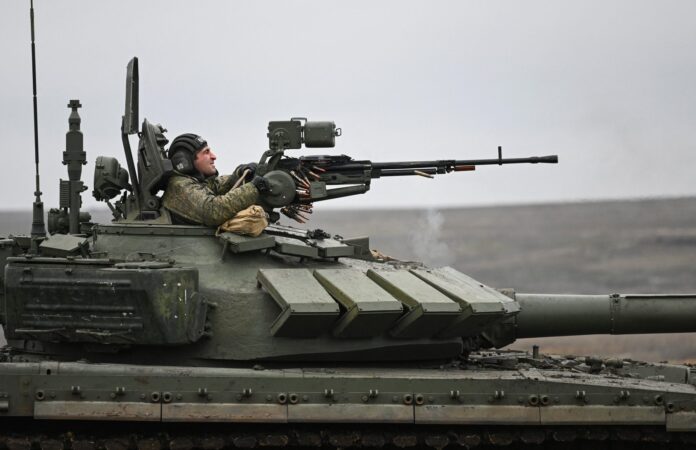
Russia launches military drills near Ukraine border

A day after the US side urged Russia at talks in Geneva to pull back an estimated 100,000 troops from near the border, the defense ministry said about 3,000 servicemen had started combat training including mock battles in four regions of southwestern Russia.

The drills suggested that the Kremlin has no intention of easing the military pressure that has brought the United States to the negotiating table, where Moscow has presented demands for sweeping security guarantees from the West.

Moscow has dismissed months of claims by Western officials and media that it has any plans to “invade” its neighbor, and rejected Western “concerns” about Russian troop movements and exercises inside the country’s own territory.

Kremlin spokesman Dmitry Peskov has said it was positive that Monday’s talks had been held in an open, substantive and direct manner, but that there was no real cause for optimism.

Russia wants quick results, he continued, adding, “There are no clear deadlines here, no one is setting them – there is just the Russian position that we will not be satisfied with the endless dragging out of this process.”

US Under Secretary of State Victoria Nuland told reporters it was “disappointing to hear” the Kremlin found no cause for optimism in the talks, and said Washington wanted the “constructive” exchange of views to continue.

Russia staging live-fire exercises “obviously goes in exactly the opposite direction” of the de-escalation Washington wants to see, Nuland added.

White House Press Secretary Jen Psaki confirmed Tuesday that President Joe Biden has been following the talks with Russia “pretty closely”, and “receives nearly daily, if not daily, updates from his national security team on how the conversations are going, what the talks look like and what the status of those conversations is”.

After the Geneva talks on Monday, Russian Deputy Foreign Minister Sergei Ryabkov stated the two sides had “in some ways opposite views”. He told reporters, “For us it’s absolutely mandatory to make sure that Ukraine never, never, ever becomes a member of NATO”.

US Deputy Secretary of State Wendy Sherman also noted, “We were firm … in pushing back on security proposals that are simply non-starters to the United States”.

NATO has no immediate plans to admit Ukraine, but says Russia cannot dictate its relations with other sovereign states – a stance reaffirmed by Ukraine’s foreign minister on Tuesday.

Biden warned Russian President Vladimir Putin in two conversations last month that any new Russian aggression would trigger severe economic costs in the form of unprecedented sanctions. Putin responded that such moves would be a colossal mistake and lead to a complete rupture in relations.
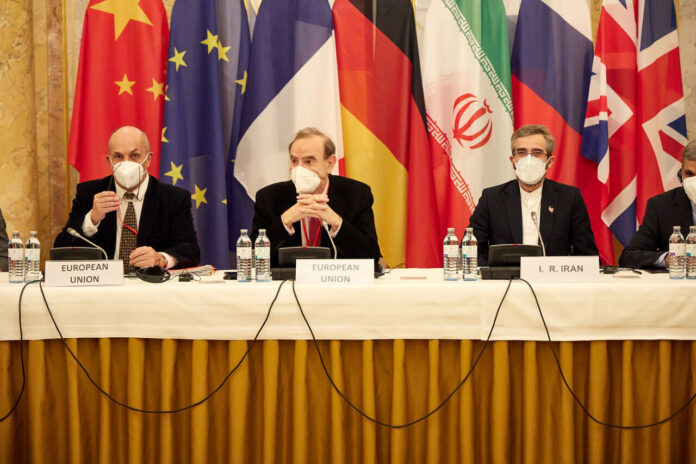
Iran says not seeking interim deal in Vienna talks

Vahid Jalalzadeh, who heads the Parliament’s National Security and Foreign Policy Committee, said on Tuesday that Tehran’s negotiating partners in Vienna were “after an interim agreement as well and have submitted relevant proposals to us in that regard.”

“This is, however, not an ideal for us, but at the same time, we have not rejected that. We are studying it,” he added.

He said the Iranian delegation is, in the first place, tasked with negotiating a permanent agreement that would meet Iran’s interests to a maximum level, but, “whenever the negotiations enter a difficult stage, the other sides keep saying that ‘we cannot achieve results and let’s discuss an interim agreement.’”

This means that each side can accept a certain set of things and reach a temporary deal on the agreed issues before proceeding to other topics, he explained.

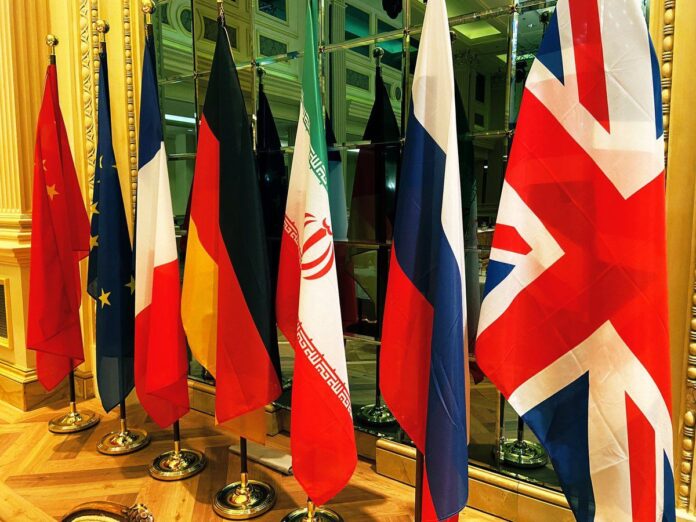
On Monday, however, Iran’s Foreign Ministry ruled out an interim agreement with the P4+1 group – Russia, China, France, Britain and Germany- as the sides continue their talks in Vienna aimed at securing a US return to the 2015 nuclear deal and reviving the international document.

Lebanon central bank chief banned from leaving country

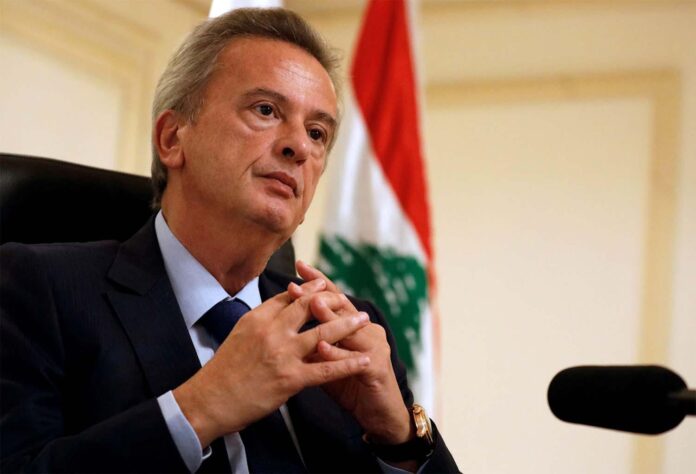
Judge Ghada Aoun slapped a travel ban on Banque du Liban Governor Riad Salameh on Tuesday, as the once-vaunted steward of the country’s economy faces probes for financial misconduct at home and abroad.

“He is scheduled for a questioning on Thursday, based on the clear evidence we have,” Aoun, who has been investigating Salameh, told Al Jazeera.

“There is important information we need to verify in the questioning,” Aoun added.

The judge had questioned senior central bank employees. The ban, which was first reported by Reuters News Agency, took effect immediately.

Lawyers from an activist group called “The People Demand the Reform of the Regime” filed a legal request earlier on Tuesday to impose a travel ban on Salameh.

Haitham Ezzo, one of the lawyers from the group, told Al Jazeera that Salameh is accused of a handful of financial crimes, including illicit enrichment, money laundering, embezzlement, and squandering public funds.

Ezzo added that the lawyers have evidence that Salameh rented a small apartment on the Champs-Élysées in Paris via Lebanon’s central bank, at an inflated price.

“He’s personally profiting from the difference,” Ezzo alleged.

Once heralded for financial prowess, Salameh is held responsible by many in Lebanon for a financial collapse that has left the country’s banks largely insolvent and wiped out the life savings of many Lebanese.

Salameh is under several investigations in Lebanon and four European countries. Switzerland and France last year opened probes into alleged money laundering involving him.

Salameh has repeatedly denied he engaged in any wrongdoing during his nearly three decades at the helm of the Banque du Liban. He says the allegations against him are politically motivated and that his personal wealth was amassed before he became central bank governor.

Tuesday’s travel ban comes as the Lebanese pound continues to spiral, having lost 15 percent of its value over the past few days. It’s lost over 95 percent of its value since the country first plunged into crisis in late 2019. Three-quarters of the population live in poverty, and the government has not met since last October.

Ezzo notes his activist group wants the Lebanese courts to go even further and freeze all of Salameh’s assets. They successfully filed a legal complaint to freeze some of his assets in July 2020.

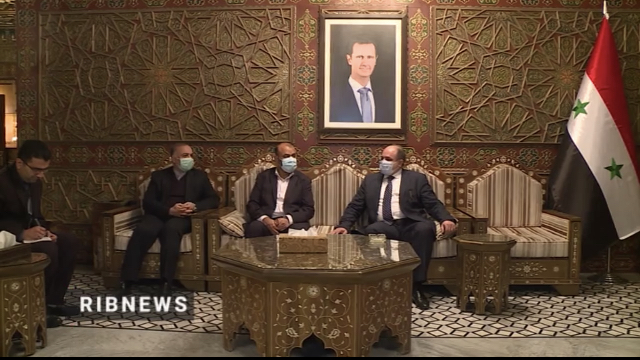
Iranian economic delegation visiting Syria for talks

He added that the end of the Syria war opens a new chapter for economic relations between Tehran and Damascus.

He suggested that these relations will be strong given that Iran and Syria fought terrorism alongside each other during the war.

Qassemi is going to meet with Syrian President Bashar al-Assad and the country’s prime minister as well as foreign and economy ministers during his three-day stay in Syria.

The Syrian economy minister said upon the Iranian delegation’s arrival in Damascus that he hopes the visit will result in agreements over launching economic and trade partnerships between the two countries.

Iranian intelligence operatives dismantle drug trafficking cell

A number of the drug traffickers were also arrested and one of them was killed.

Iran has been engaged in a decades-long war on drugs which has cost the country many lives and huge amounts of money.

The UN has said in a report that drug trafficking represents a major challenge for the Islamic Republic of Iran.

According to the report, the geographical location of Iran, particularly its 923 km-long Eastern border with Afghanistan- the world’s largest opium producer-and Pakistan, has turned it into a major transit country for drugs.

In response to this challenge, the country has built one of the strongest counter-narcotics enforcement capabilities in the region over the years.

The UN also said Iran accounts for a huge percentage of the world’s opium, heroin and morphine seizures.

4 soldiers killed in Armenia-Azerbaijan border clashes

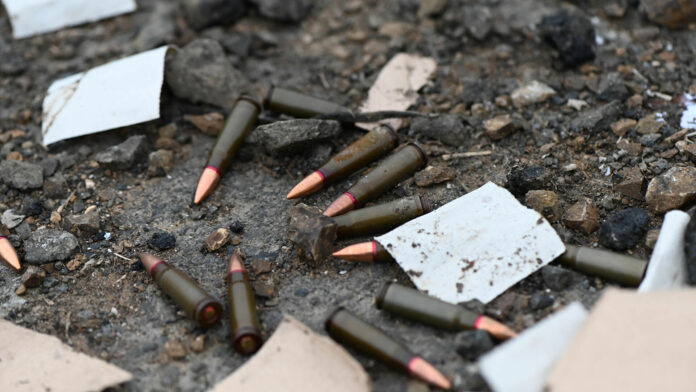
The Armenian military announced it recovered the body of a serviceman from the area where the heavy fighting took place on Tuesday when Azerbaijani forces attacked Armenian positions from the eastern side of the Armenian-Azerbaijani border.

The Azeri military deployed UAVs and artillery in the assault.

This brings the Armenian military’s death toll in the shooting to three.

The two other Armenian servicemen who were wounded in action while suppressing the Azeri attack are in non-life threatening condition, according to the Ministry of Defense.

Earlier, Azerbaijan claimed one of its soldiers had been killed by Armenian forces.

Azerbaijan’s Defense Ministry announced the soldier died as a result of a “provocation” by Armenian troops and that “all responsibility for tension lies with the military-political leadership of Armenia”.

The two Caucasus countries clashed in late 2020 for control of the disputed Nagorno-Karabakh region, leaving more than 6,000 dead in a matter of weeks.

Iran, Cuba seek closer cooperation against shared enemies’ pressure

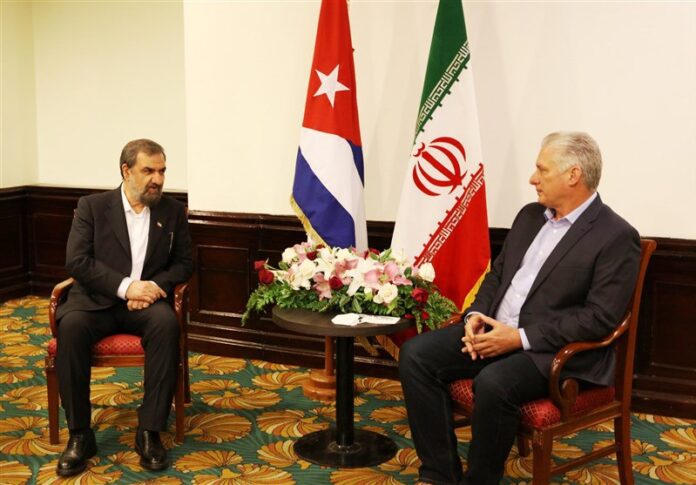
In a Tuesday meeting with Cuba’s President Miguel Diaz-Canel, Mohsen Rezaei highlighted the long-running friendship between Iran and Cuba and said it was of paramount importance for the two sides to broaden bilateral ties in various fields.

Rezaei praised effective Tehran-Havana cooperation in jointly developing a vaccine against COVID-19.

“We should neutralize the enemies’ sanctions and pressure, [among] all their conspiracies against resilient nations, through the expansion of cooperation,” he said.
Rezaei proposed the formation of a joint trade union meant to facilitate and increase the volume of commercial exchanges between Iran and Latin American states, especially Cuba.

Iran “pays special respect to the Cuban nation and government and their resistance against the excessive demands of the bullying states,” he added.

In turn, the Cuban president hailed the Iranian nation’s cause of resistance against America and other bullying powers of the word.
Diaz-Canel emphasized the need for closer bilateral cooperation and said the joint vaccine produced by the two states was a great success in the fight against the plots of common enemies.

He also voiced support for Iran’s right to use nuclear energy for peaceful purposes.

The Cuban president also urged the banking sectors of the two countries to enhance trade and other exchanges, which have been slowed down by US sanctions.

US says modest progress made in nuclear talks

Price stressed that the previous administration’s decision to withdraw from the Joint Comprehensive Plan of Action (JCPOA) is ill-considered.

President Joe Biden has stated the United States is “continuing to suffer” from former President Donald Trump’s decision to pull Washington out of the Iran nuclear deal. US Secretary of State Antony Blinken has also called Washington’s withdrawal from the 2015 agreement “a terrible mistake”.

“This round is ongoing. We’ve spoken to the modest progress that we have seen in recent days,” Price stated on Tuesday.

“Of course, that progress needs to be more than modest if we are going to be in a position to salvage the JCPOA and to ensure that the nonproliferation benefits that the JCPOA conveys aren’t diminished, watered down, eliminated by the advancements that Iran has made in its nuclear program,” he added.

“We’ve spoken of the modest progress that we’ve seen since the resumption of the eighth round. But we’ve also spoken of the urgency and the need for progress to take place at a pace that is – that not only is on par with but that outpaces the significant advancements that Iran has been able to make in its nuclear program since the last administration abandoned the JCPOA,” the spokesperson continued.

Also on Tuesday, France’s foreign minister said Iran and world powers are still far from any agreement to revive nuclear deal despite making some progress at the end of December.

“The discussions are ongoing. They are slow, too slow and that creates a gap that jeopardises the chance of finding a solution that respects the interests of all sides,” Jean-Yves le Drian told a parliamentary hearing.

“Bits of progress were made at the end of December, but we are still far from concluding this negotiation,” he added.

The eighth round of talks kicked off in Vienna in late December. The negotiations seek to restore the JCPOA in its original form and bring the US back into the agreement.

Iran insists that the talks must lead to the removal of all American sanctions that were imposed against Tehran following Washington’s unilateral withdrawal from the landmark agreement in May 2018. Tehran has also demanded credible guarantees that Washington will not abandon the deal again.

Iran FM: Regional crises cannot be resolved through force

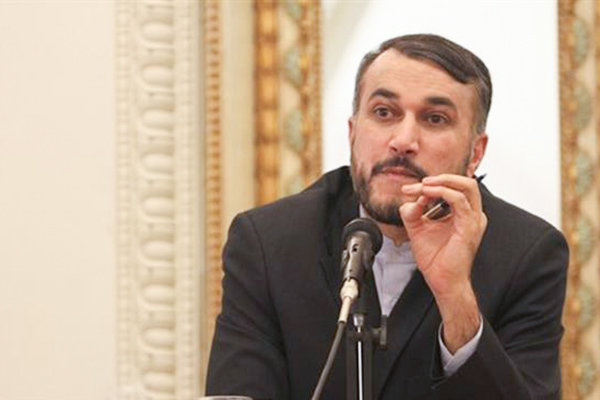
Amir-Abdollahian

He was speaking to reporters in Doha on the sidelines of his meetings with Qatari officials on Tuesday.

He added that the Islamic Republic of Iran has always played a pivotal, constructive and fundamental role in regional affairs, and that Iran has been on the right side of the regional developments, both in the fight against the Daesh terrorist group and in regional dialogue.

“We support any initiative that contributes to stability, security and development in the region,” he said.

Amir Abdollahian added that Iran welcomes these ideas and present them, hoping the region will develop further.

The Iranian foreign minister also said Tehran keeps its regional friends posted on the latest developments and negotiations in Vienna.

Amir Abdollahian noted, as neighbors, Iran’s friends have the right to be in the know of the negotiations between the Islamic Republic and the P4 + 1.

On Iran’s nuclear program, Amir Abdolalhian said, “We believe that the peaceful achievements of Iran’s nuclear program can be made available to all neighboring and Muslim countries. It is natural that some negotiators in Vienna try to cause concern among our neighbors by misrepresentation. Therefore, one of the goals of this regional trip is to tell the Islamic Republic’s account of the Vienna talks to its neighbors”.

China says cooperation with Iran contributes to peace, stability in ME

At the invitation of Chinese State Councilor and Foreign Minister Wang Yi, Iranian Foreign Minister Hossein Amir Abdollahian will visit Beijing on January 14.

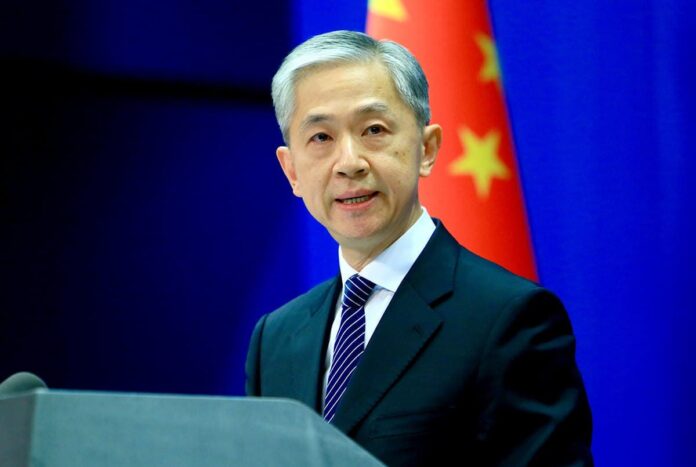
“China and Iran enjoy long-standing and profound friendship. Under the leadership of the two heads of state, the relations have achieved marked progress in recent years,” Foreign Ministry Spokesman Wang Wenbin stated at a press conference on Tuesday.

“We firmly support each other on issues concerning our respective core interests, promote practical cooperation across the board in a steady manner and maintain close communication and coordination in international and regional affairs,” he added.

“Facing the impact of COVID-19, China and Iran rendered each other help and assistance in times of need, highlighting the strength of our profound relations. In 2021, the two countries jointly celebrated the 50th anniversary of the establishment of diplomatic ties and opened up a new chapter in our friendship. Standing at a new historical starting point, China is ready to work with Iran to further deepen the China-Iran comprehensive strategic partnership to the benefit of our two countries and two peoples,” the spokesperson continued.

Ankara has also announced Turkish Foreign Minister Mevlut Cavusoglu will pay a visit to China on Wednesday. The Turkey’s Foreign Ministry said Cavusoglu will address “bilateral relations as well as current regional and international issues” during the visit.

Wang retired that “Turkey and Iran are all China’s good friends. China has carried out productive cooperation with them in various sectors, delivering tangible benefits to our peoples”.

“Maintaining high-level exchanges with the above-mentioned countries will help to deepen bilateral relations and contribute to the peace, stability and development in the Middle East,” the Chinese official noted.

Amir Abdollahian has recently travelled to Oman and Qatar with the intention of advancing the Iranian administration’s policy of establishing closer ties with neighboring countries.

In March 2021, Iran and China signed a 25-year cooperation agreement to strengthen their long-standing economic and political alliance.