Friday, January 2, 2026
Home Blog Page 2135

Elderly Palestinian beaten to death by Israeli troops

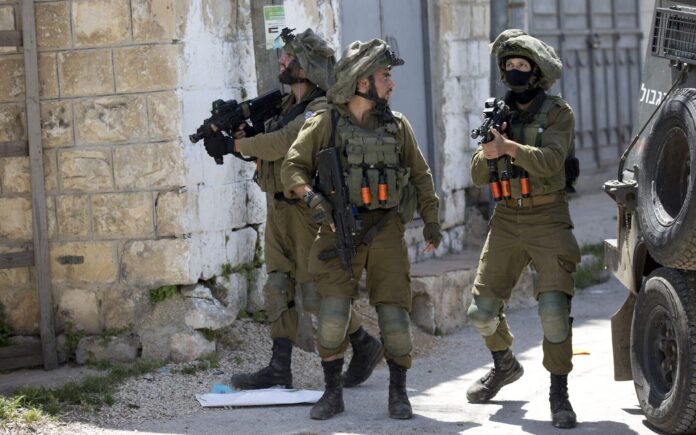
On Wednesday, an 80-year-old Palestinian man died after Israeli soldiers detained, blindfolded, and handcuffed him in the village of Jiljilya, north of the occupied West Bank city of Ramallah, sources confirmed.

Fouad Moutee, head of the Jiljilya village council, told WAFA that Omar Abdalmajeed As’ad was going home after a visit to his relatives when Israeli soldiers stopped his vehicle and pulled him out of it, blindfolded, handcuffed, and harassed him before leaving him in a building that was under construction.

He added the soldiers did the same to four other citizens, including workers and vegetable sellers, who were on their way to work in the early hours of the morning.

Moutee said that at approximately 4:30 in the morning, and after the Israeli soldiers had left the area, residents rushed to the building where the detainees were left to find the elderly man dead, holding the Israeli soldiers responsible for his death.

Prime Minister Mohammad Shtayyeh and the foreign ministry have both condemned in two separate statements the army treatment of As’ad that led to his death, accusing the soldiers and settlers of espousing a terrorist approach in their treatment of Palestinians.

Violent raids by Israeli forces are a regular practice in the occupied West Bank, during which Palestinians are exposed to live fire, arrests, assaults and killings.

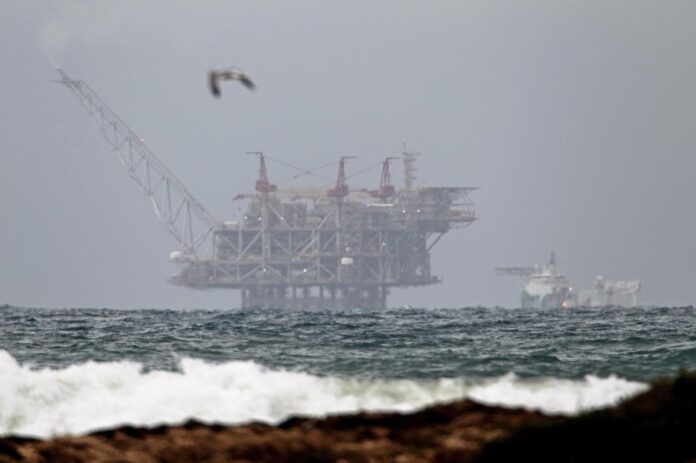
Report: US quietly ditches Israel gas pipeline to Europe

The US non-paper, according to the Greek media, described the project as a “primary source of tension” and something “destabilising” the region by putting Turkey and regional countries at loggerheads.

A non-paper is an unofficial diplomatic correspondence.

A Greek diplomat, speaking anonymously to Middle East Eye, said the media reports were exaggerations.

Greek public broadcaster ERT claimed that the non-paper also listed three reasons to explain why the US no longer supports the project: environmental concerns, lack of economic and commercial viability, and creating tensions in the region.

The project angered Ankara in 2020 after Greece, Israel and the Greek Cypriot administration signed a deal to build a 1,900-km long natural gas pipeline in the eastern Mediterranean, passing through disputed maritime territories claimed by both Turkey and Greece.

The Donald Trump administration and its Secretary of State, Mike Pompeo, had been strong supporters of the project, as well as the Eastern Mediterranean Gas Forum that excludes Turkey, under the pretext that Europe needs to diversify its energy needs vis-a-vis Russia.

The US State Department, now under President Joe Biden, abruptly changed that policy on Sunday and announced that Washington was shifting its focus to electricity interconnectors that can support both gas and renewable energy sources.

Following the reports on the non-paper, the State Department stated it remained “committed to physically interconnecting East Med energy to Europe”.

“We support projects such as the planned EuroAfrica interconnector from Egypt to Crete and the Greek mainland, and the proposed EuroAsia interconnector to link the Israeli, Cypriot and European electricity grids,” it added.

Ankara has always said that Israeli gas could only be sold to Europe via Turkey. Turkish and Israeli officials sought a way to sign a deal to deliver gas in 2016, but political disagreements killed the alternative project.

Turkish officials on Tuesday welcomed the US statement on the project.

One Turkish official told MEE that Turkey wasn’t particularly surprised by the decision.

“US officials never thought this project was feasible,” the official continued, adding, “We knew that they didn’t support it.”

A second Turkish official noted Ankara always told its neighbors that it wasn’t technically possible to carry Israeli gas through Cyprus and the only alternative was through Turkey.

“Otherwise the Israeli gas could be used for local consumption,” the second official added.

The Israelis themselves had their doubts about the project’s viability, as its price tag is well over $7bn and both Israel and the EU are seeking to depend on renewable energies in the near future.

Israeli gas also has the potential to be a competitor to US liquefied natural gas (LNG), which has been in high demand in Europe due to energy supply issues.

Vessel tracking data showed a record-breaking 7.15 million tonnes of LNG were shipped to Europe last month on 106 vessels, up 16 percent compared to 6.14 million tonnes on 89 vessels the same month a year ago. That topped the previous record of 6.51 million tonnes set last May.

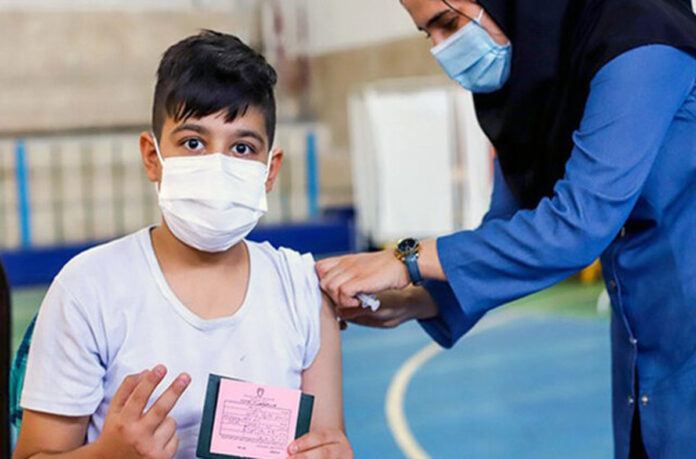
Over 124 million doses of Covid vaccine administered in Iran

Over 11 million people have been triple-vaxxed too. Meanwhile, 32 people died of the Coronavirus in the past 24 hours. The Health Ministry also logged 2,089 new Covid cases including 284 hospitalizations.

The latest fatalities push to 131,972 the total death toll from the disease since the Coronavirus pandemic hit the whole world.

The total caseload in Iran is 6,210,298. The number of deaths and infections in Iran indicates a downward trend compared with several months ago when everyday hundreds of people died from the disease.

This has been attributed by officials to the country’s nationwide vaccination and also people welcoming the campaign.

Iran has been largely remained unaffected by the latest strain of Covid, dubbed Omicron, which is said to be highly contagious, though less deadly that the Delta variant.

Omicron’s failure to sneak into Iran is due to precautions taken by Iran’s National Taskforce for Fighting Covid. The body has banned people of several world countries where Omicron has infected huge numbers of people from entering Iran.

Yemen berates ‘ridiculous and pathetic’ Saudi use of US film to accuse Iran

“The fact that Spokesman of the Saudi-led military coalition in Yemen Colonel Turki al-Maliki has admitted to his great scandal about the footage, and said such missile sites do not exist other than in films is ridiculous and pathetic,” Spokesman for Ansarullah Mohammed Abdulsalam said in a post published on his Twitter page.

He added, “What is called the margin of error is the gravest sin that aggressors have repeatedly committed against Yemeni people with the support of the United States.”

Maliki, who traveled to Yemen’s southern Shabwah Province on Tuesday, has officially acknowledged that the coalition’s recent footage about the Yemeni army’s missile depot in Hudaydah was fake.

Earlier, he had claimed to have incriminating evidence of weapons development in Hudaydah. The remarks were broadcast on the Saudi state-run al-Saudiya channel, and shared to its YouTube channel.

“Hudaydah port is the primary port for receiving Iranian ballistic missiles. The missiles are put together and assembled in [the port] under the supervision of Iranian security officials,” he claimed, while displaying purported satellite images of the coastal area.

“I will show you a video which shows the ballistic missiles in Hudaydah,” Maliki continued.

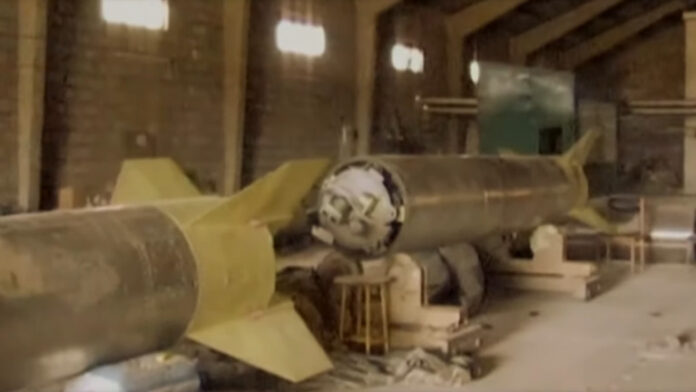
At this moment, a two-second clip of two large warheads is shown on screen.

The clip was taken from the 2009 documentary “Severe Clear”, featuring videos taken by US Marine Mike Scotti at the beginning of Iraq’s invasion by Western forces.

The original footage, shot in Baghdad around April 2003, shows two large missiles, with an American voice saying, “So much for him [presumably Saddam Hussein] not having weapons”. It then sweeps to the other side of the room to show US soldiers.

It is believed that the Saudi coalition used the footage to justify the bombing of a port in Hudaydah – a strategically important maritime city that has been the site of intense fighting between Saudi-led coalition forces and Yemeni army troops.

Saudi Arabia and its allies launched a war against the Arab world’s most impoverished nation in March 2015. The war has been seeking to restore power in Yemen to Riyadh’s favorite officials.

The death toll of the war, now in its seventh year, will reach an estimated 377,000 by the end of 2021, according to a recent report from the UN’s Development Programme.

The fighting has seen some 80 percent of the population, or 24 million people, relying on aid and assistance, including 14.3 million who are in acute need.

‘Iran won’t tolerate any mistreatment, rights violations in prisons’

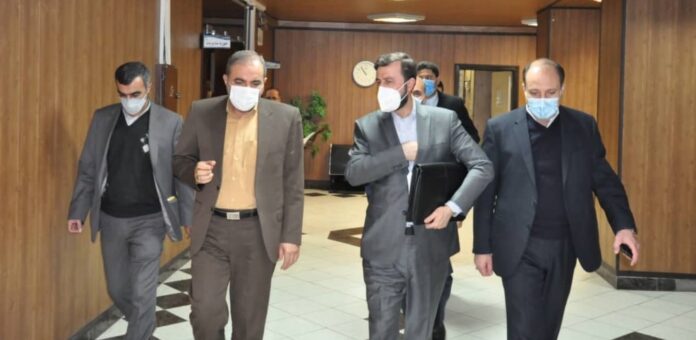
Kazem Gharibabadi, the Iranian Judiciary Chief’s Deputy and Secretary General of the country’s High Council for Human Rights, paid a visit to Evin Prison in Tehran on Wednesday to inspect the conditions under which inmates are serving their terms.

On the sidelines of the visit, Gharibabadi said Iranian prisons have a higher number of recreational facilities compared to detention centers in other countries.

He said the Council under his watch planned to set the stage for more interactions with Iran’s prison authority and international monitoring institutions.
“Our style of running prisons is based on humanitarian principles,” said Gharibabadi. “No one tolerates any mistreatment of the inmates. We do not accept any violations of their rights.”

Gharibabadi highlighted the responsibilities of High Council for Human Rights vis-à-vis the prisoners, saying under the country’s rules, the rights of inmates should be fully respected and they should have their judicial affairs pursued.

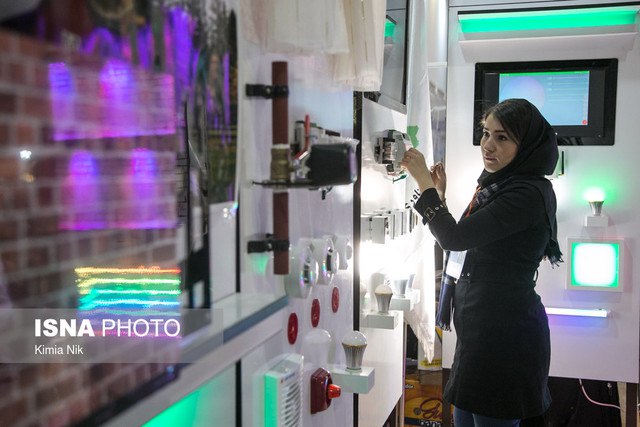
“House for Innovation and Export of Iranian-made Technology” to be launched in Istanbul

According to Iranian Students News Agency (ISNA), one of the important goals of policies to support knowledge-based and creative companies is to support them to enter the markets of target countries and offer their scientific and technological capabilities and expand their exports. Turkey, given its political and economic relations and historical and cultural commonalities with Iran as well as its convenient location in the Eurasian basin as the gateway to this geographical region, is a suitable market for creating infrastructure and developing the export of products made by Iranian knowledge-based, technological and creative companies.

The house, which is supported by the Vice President’s Office, is the fifth largest export-oriented infrastructure after Russia, Syria, China and Kenya.

It offers hardware services such as “providing private and shared workspace”, “providing Iranian innovation ecosystem in Istanbul” and “gathering and seminar infrastructure”, and providing software services such as “market research and marketing to knowledge-based and creative companies.

In short, the house seeks to facilitate the presence and export of Iranian companies and products to Turkey.

The House for Innovation and Export of Iranian-made Technology in Istanbul has been created with the investment of the private sector and the support of the Vice President’s Office in an area of more than 500 square meters in the best commercial district of Istanbul. It has been built according to international standards.

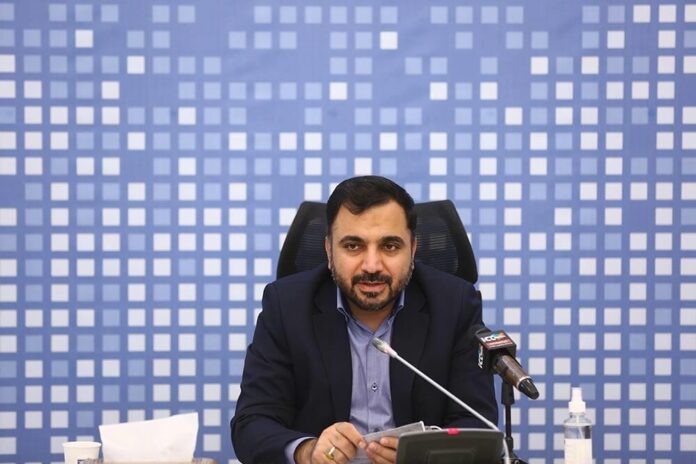
Iran regains 430 gigabytes of lost Internet bandwidth

Isa Zarepour said the 430 gigabytes became unavailable some two months ago after one of the marine fiber optic cables to Qatar was cut.

The minister of communications emphasized that this disruption reduced the country’s bandwidth by seven percent, noting that now the good news is that with the relentless efforts of his colleagues in the Infrastructure Communications Company, the breakdown of this offshore fiber optic line has been repaired.

He noted that alternative routes have also been envisaged to prevent the recurrence of a similar incident.

“US, Israel making mischief between Iran, Saudi Arabia”

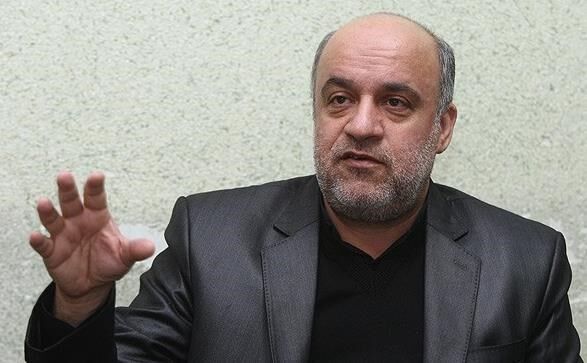
Mojtaba Amani, the former head of Iran’s interest section in Cairo, told IRNA on Wednesday that if Saudi authorities adopt a realistic approach towards Iran, they will be able to see that not only isn’t Iran “a security threat” to them but also cooperation with Tehran can be very advantageous.

“Through cooperation with Iran, they (the Saudis) will be able to do away with many unnecessary costs,” Amani said. “Such costs are not merely financial, but are also spiritual, because Saudi Arabia can have a very elevated position in the Arab world spiritually.”

He said even though Tehran-Riyadh relations have had ups and downs, the Saudi government has been generally inclined to see Iran as a security threat since the Islamic Revolution of 1979 in Iran. That perception, itself the result of wrongful analysis, has prompted Saudi Arabia, which proclaims leadership in the Arab world, to spend financial and political capital to convince other Arab countries to be hostile to Iran.

“If the Saudis change their approach in the region, a good atmosphere will emerge wherein regional countries will co-exist and cooperate peacefully without having to pay unnecessary costs,” he said.

“It would only be natural that, under those conditions, US forces will be of no use in the region, and that’s why America and the Zionists attempt to fan the flames of enmity among regional countries and project a manufactured ‘Iranian security threat’ to Saudi Arabia,” Amani said.

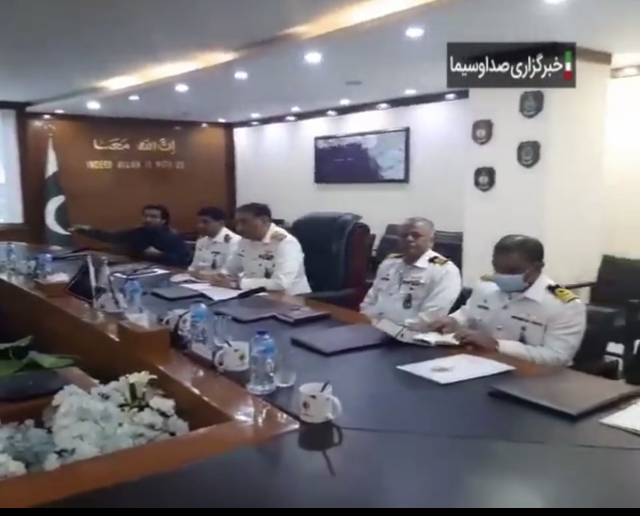
Head of Iranian Border Guard Command visiting Pakistan

Goudarzi is heading a military delegation during the visit. He’s going to take part in the maritime drill code-named Barracuda XI.

The head of Iran’s Border Guard Command is visiting Pakistan at the invitation of the director general of Pakistan’s naval security agency.

Goudarzi will visit the agency and hold negotiations with Pakistani military officials during his stay there.

The Barracuda XI drills began Tuesday and will continue till Thursday. 19 countries are participating in the exercises.
Iran and Pakistan have strengthened their military relations in recent years.

Iran lifts Omicron-related ban on arrivals from neighbors

The ban had been put in place to prevent an outbreak of the highly contagious Omicron variant in Iran.
The National Task Force for Fighting Covid however said the ban on two European countries, namely Britain and France, and eight African countries will be maintained.

It also said traveling to Iran via ground borders are possible through observation of health protocols, vaccination and presentation of negative PCR test results. Iran has been largely remained unaffected by the Omicron outbreak that has hit much of Europe and the US.

The Islamic Republic has also successfully contained the Covid pandemic, maintaining a downward trend in Coronavirus deaths and infections thanks to a nationwide vaccination campaign that has seen the bulk of its population inoculated against the disease.