Friday, January 2, 2026
Home Blog Page 2138

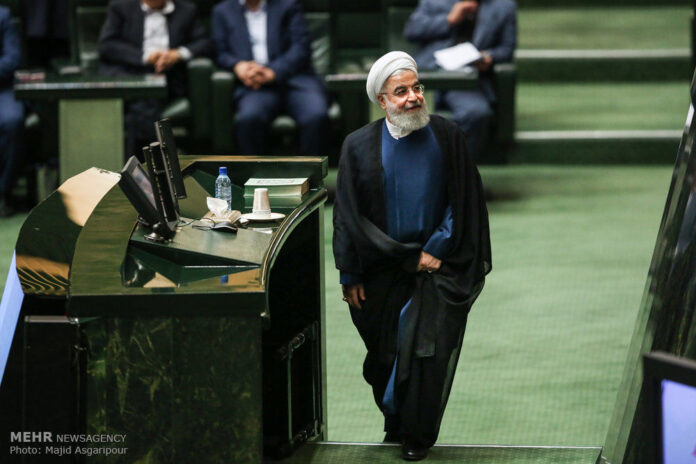
Iran MPs back investigation into Rouhani admin performance

The proposals were ratified with 138 votes in favor, 28 votes against and 10 abstentions.
The ratification calls for an investigation into the following issues during Rouhani’s term in office:

1. What was the role of deputies and directors of the presidential office in its ‘wrongdoing’, especially in terms of finances, intervention in the nuclear talks and control over “bottlenecks that create rent”?

2. Investigation into the role of presidential aide Hossein Fereydoon in the nuclear talks and the ‘negative consequences of his intervention.’

3. The role of the presidential chief of staff in appointing directors of economic institutions, factories, banks and other sensitive centers with high revenues.

4. Examining the role of the economic team of Rouhani, especially his deputy for economic affairs Mohammad Nahavandian, in injecting 18 billion dollars into the foreign currency market and distribution of 60 tons of gold to help control prices, which the lawmakers said had no positive outcome.

Rouhani’s opponents have long accused his administration of mismanaging the foreign currency and gold markets amid biting US sanctions.

The critics also accuse his aides of abusing their positions of power for personal gains.

Rouhani at the time repeatedly rejected the accusations saying sanctions left no space for doing a better job on the foreign currency and gold markets.

Council: Iran ranks 4th in global nanotech rankings

“The global rank and standing of Iran in the field of nanotechnology is assessed in quantitative terms.

Of course in terms of quality, Iran also ranks among the top 10 countries in the world given the articles published on the subject,” the INIC Spokesman Saeed Sarkar said.

Sarkar stressed that, in nanotech Iran is ranked higher than such countries as South Korea, Germany and Japan, among others.

He said Iran has so far produced around 850 certified products, which have been industrialized and have helped improve people’s lives.

The official added that Iran produced some 2.7 billion dollars worth of nanotech products last year. He said the construction and pharmaceutical industries are the key sectors, where nanotech products are more widely used.

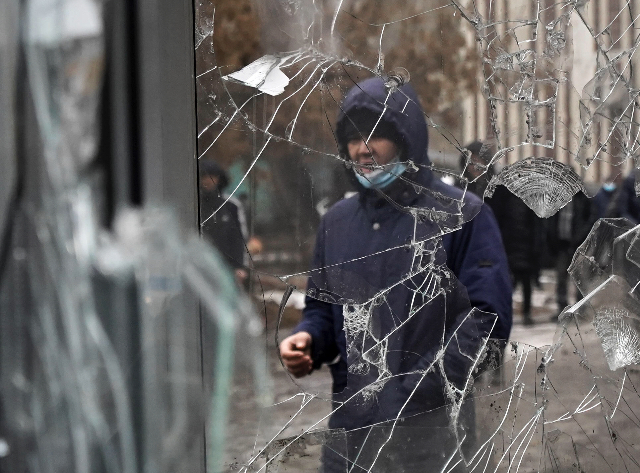
Kazakhstan govt. says coup attempts failed, 10k arrested

“Interior Ministry: 9,900 people were detained by law enforcement officers,” a report in a Telegram channel, which posts information from Kazakh departments, said.

The Kazakh president stated on Tuesday that a terrorist war was unleashed against the country.

“A terrorist war was unleashed against our country. The enemy showed extreme cruelty and readiness to take any steps. He sowed fear among the population in order to suppress even the very idea of resistance. The plan of attack on Kazakhstan included a number of different aspects: military, political, ideological, disinformation and others,” Tokayev told lawmakers.

The leader lashed out at the country’s National Security Committee, noting that the committee failed to detect the threat to the country’s national security.

“Professionals worked on the preparation of the seizure of power in Kazakhstan,” the president added, noting that the attempted coup failed.

Tokayev also signed on Tuesday a decree on the appointment of former First Deputy Prime Minister Alikhan Smailov, who is currently the acting prime minister, as government head, the presidential office said.

“To appoint Alikhan Smailov … the prime minister of Kazakhstan,” the office added citing the decree.

Earlier in the day, the lower house approved Smailov’s candidacy.

Violent protests erupted in Kazakhstan earlier in the month over an increase in prices for liquefied gas.

Despite the government’s attempts to quell the crowds and now-fulfilled promises to decrease prices, peaceful demonstrations turned into violent clashes with law enforcement officers, as well as looting, arson and acts of terrorism across Kazakhstan.

Tokayev declared a nationwide state of emergency, effective until 19 January, and also invited the Collective Security Treaty Organization (CSTO) peacekeeping forces to help bring the situation under control. The peacekeepers were helping with protecting vital facilities in some regions

Foreign militants, including some recruited from Afghanistan and the Middle East, have participated in the aggression against Kazakhstan, Tokayev claimed on Monday.

The State Secretary of the Republic of Kazakhstan, Erlan Karin, noted that the unrest in Kazakhstan was a “hybrid terrorist” attack carried out with the participation of both internal and external forces and aimed at overthrowing the government.

Tokayev said that the withdrawal of a CSTO peacekeeping contingent, sent to the nation to restore order, would begin in two days and would take no more than 10 days.

“The main mission of the CSTO peacekeeping forces has been successfully completed, in two days a phased withdrawal of the united CSTO peacekeeping contingent will begin. The process of withdrawal of the contingent will take no more than 10 days,” Tokayev added.

Kazakhstan has appealed to the CSTO, requesting peacekeepers assistance, on legal grounds since control over Almaty could have been lost, Tokayev noted.

“The plan of attack on Kazakhstan included a number of different aspects … Since it was an armed aggression on the part of international terrorism, Kazakhstan legally appealed to its partners in the Collective Security Treaty with a request to send a peacekeeping contingent … We could have completely lost control over Almaty,” Tokayev told lawmakers.

Additionally, he stated that the acute phase of a counterterrorist operation in Kazakhstan had been generally passed, noting that the situation is stable in all regions.

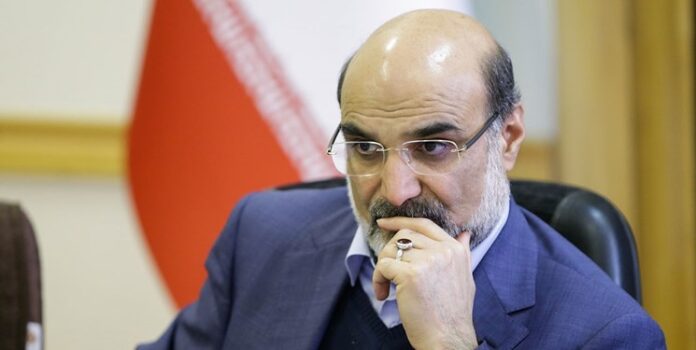
Appointment of Iran petrochemical giant’s chief triggers criticism

The former president of Islamic Republic of Iran Broadcasting (IRIB) has replaced Jaafar Rabeie who held the post for four years.
With more than 15 manufacturing and service companies, Persian Gulf Petrochemical Industries Corporation is known as the second largest petrochemical holding company in the Middle East.

Ali-Asgari’s appointment has been met with criticism as he lacks expertise and experience in the field.

Former IRIB chief Mohammad Sarafraz joined the chorus of criticism on Tuesday saying ironically in a twitter post that Ali-Asgari who addressed all the problems of the IRIB in the past will now resolve the administration’s financial woes.

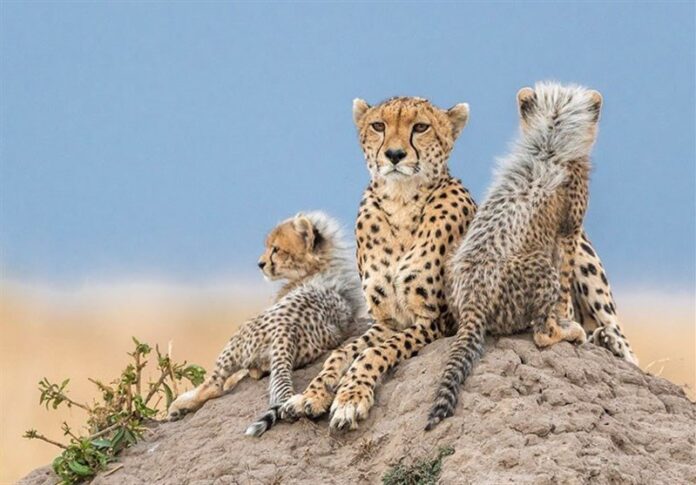
12 Asiatic cheetahs left in Iran

Iran’s Deputy Head of the Department of Environment Hassan Akbari says measures taken so far to increase protection, reproduction, and the installation of road signs have not been enough to save the species.
“There are currently only nine males and three females against 100 in 2010 and their situation is extremely critical,” the deputy head of environment department added.

Akbari blamed drought, hunters and car accidents, especially in the country’s central desert for the feline’s decreasing population.
According to the International Union for Conservation of Nature, the Asiatic cheetah is critically endangered.

Iran is one of the last countries in the world where the animals live in the wild.

In 2001, the Islamic Republic launched a United Nations-supported protection program to save the endangered species.

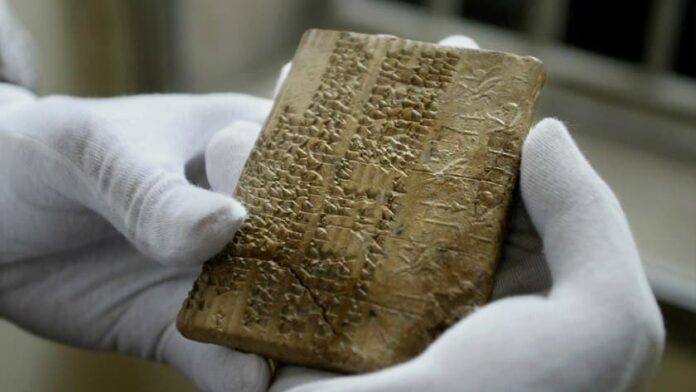
Iran UN envoy calls on US to deliver Achaemenid tablets

Majid Takht-e Ravanchi said, “About 90 years ago, Achaemenid tablets went to the American Institute of Oriental Studies in Chicago for a three-year loan and have not been fully returned since then.”

Stating that these tablets are part of the culture and history of the country and belong to the people of Iran, Takht-e Ravanchi added, “The United States postpones every time under the pretext of doing so, while the Americans themselves admit that the tablets came to the United States on loan, but were not fully returned.”

Iran’s ambassador and permanent representative to the United Nations called Tehran’s request “clear” and stressed, “The loan must be returned in full, orderly, and safe and handed over to the Iranian government.”

The Achaemenid tablets contained more than 30,000 tablets and were shipped to the Institute of Oriental Studies of the University of Chicago in 1915 with the approval of the then Iranian government.

These tablets were to be returned to Iran during three years of studies.

This did not happen in the first few years, but with Iranian pursuits, some of the tablets were returned to Iran in 1948 and some in 1971. Another part of these tablets was returned to Iran in 2004, but some of these tablets remain in the Oriental Institute of Chicago.

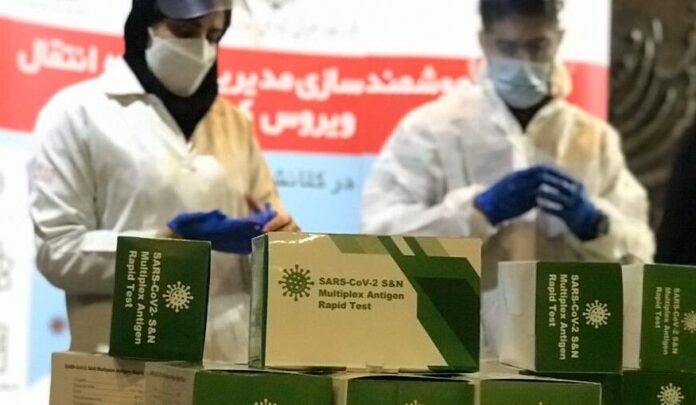
Iran produces rapid test kits for Omicron Covid

The managing director of Barekat E-Health Company says only three countries in the world currently possess the technology to produce the kits.

Sajjad Moraveji says the kits enable tracking of the new variant in just 15 minutes.

“After testing, the kit’s barcode, the patient’s national number and the sampler’s national number as well as the date and venue of sampling are digitally registered and then people who were in contact with the infected person are tracked,” he said.

Moraveji added that the diagnostic kit has been produced by Iranian researchers and is now available on the Iranian market.

He said the kit has an accuracy rate of 92 percent and a sensitivity rate of 98 percent.

Moraveji further stressed that his company is now producing 200-thousand kits a day, but its capacity can be increased if there is demand inside the country.

Iran has seen a 25-percent leap in the number of its daily coronavirus infections since Friday, after weeks of low infection numbers that raised hopes the disease had subsided across the country.

Officials say the surge is due to the omicron variant of the coronavirus. They say currently more than one in four of the new infections are diagnosed as omicron and have called on people to pay greater attention to observing health protocols.

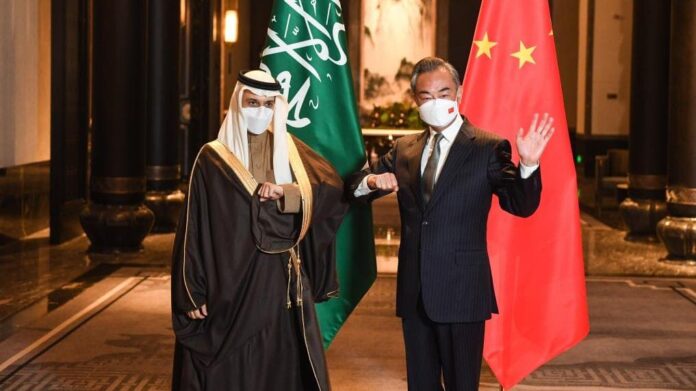
Chinese, Saudi FMs discuss Iran nuclear deal, Yemen

After an in-depth exchange of views, the two sides reached broad consensus on bilateral relations, practical cooperation and multilateral coordination.

Wang said that China stands ready to work with Saudi Arabia to jointly implement the important consensus reached by two heads of state to promote the development of bilateral relations.

Wang added the two sides should continue to firmly support each other in safeguarding their respective core interests, jointly oppose unilateralism and bullying, safeguard the collective interests of developing countries and the basic norms governing international relations.

Faisal stated Saudi Arabia has always opposed interfering in China’s domestic affairs, firmly championed the one-China principle and firmly supported China’s legitimate position on issues concerning Taiwan and Xinjiang, as well as human rights.

On the Iran nuclear issue, Wang noted China supports Persian Gulf countries in setting up multilateral dialogue platforms and taking the initiative in regional issues into their own hands.

The two sides also exchanged views on Yemen, Afghanistan and other international and regional issues of common concern.

Minister: 90% of Iranians vaccinated against Covid-19

“Vaccination of people against the coronavirus in the Islamic Republic of Iran was a completely unique movement in the world and all people participated in it and gave their support. Today, about 90 percent of the target population has received one dose and about 79 percent has received two doses of the vaccine,” the health minister said in a ceremony honoring health workers and others involved in the battle against the respiratory disease.

Einollaho lauded the sacrifices and endeavors of Iranian health workers since the beginning of the outbreak two years ago.

“While many were staying at home and fleeing from the coronavirus, the medical community stood up to the virus day and night, and to date, more than 200 health workers have lost their lives…and a number of medical staff and their family members have died because they transmitted the virus to their loved ones,” the health minister stated.

Iran has been hit hard by several waves of the disease, but has recently managed to contain the outbreak all thanks to an intensified national vaccination campaign and the people welcoming the it.

Health authorities are now urging people to get a third dose as they try to avoid another wave.

Official figures show nearly 132,000 people in Iran have so far lost their lives to the coronavirus.

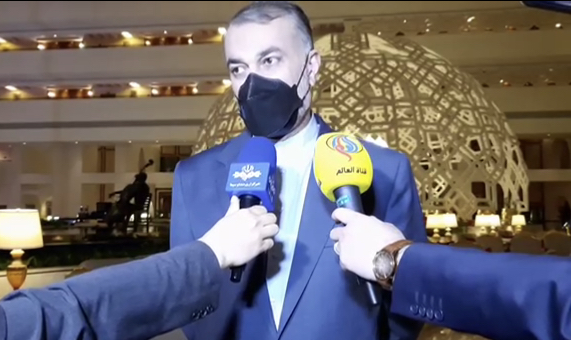
Iran FM arrives in Qatari capital Doha

The foreign minister told reporters upon his arrival that he will hold talks with his Qatari counterpart as well as the Qatari Emir on bilateral and international topics during his visit.

“Good opportunities exist in Qatar. In the past, there have been talks on FIFA World Cup games and we will be discussing the capabilities of the Islamic Republic of Iran, especially in the technical and engineering fields, which are available to Qatar,” he said.

“During this visit, we will also discuss expansion of bilateral cooperation, especially in the field of trade.”

Amir Abdollahian also briefed reporters on his talks with Omani officials.

“In the economic domain, we raised the issue of resuming operation of launches between the two countries, seeing that the coronavirus outbreak is curbed, and the Omani side promised to follow up on this matter, so that we would witness the resumption of the operation of launches for exchange of goods between the two countries,” the foreign minister said.

Amir Abdollahian noted that he discussed joint investments with Oman, including in the Iranian port city of Chabahar, as well as resumption of flights between the two countries to ease problems nationals of both countries are facing, especially in the area of trade.

The foreign minister also touched the negotiations between Iran and the P4+1 countries for the removal of sanctions, which are underway in Vienna.

“In the past, Omanis played a role in helping these negotiations bear fruit within the framework of the nuclear deal … in connection with some western sides. Omanis … continue their diplomatic efforts to help the involved parties reach a good agreement,” he said.