Sunday, December 28, 2025
Home Blog Page 2067

Poll finds majority of Israeli settlers ready to exit WB

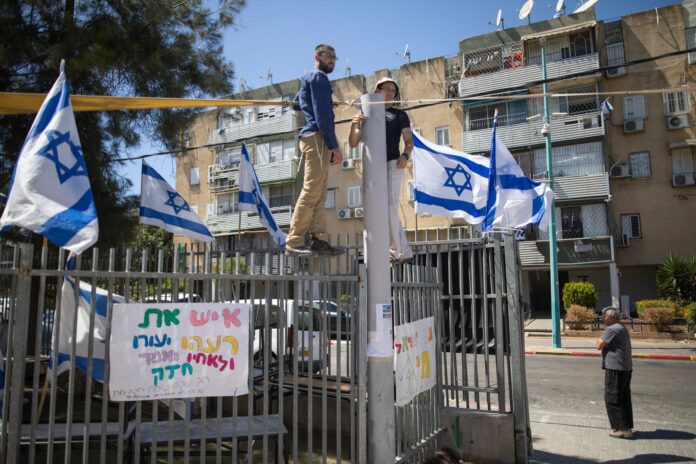
According to their findings, 47 percent of those asked were willing to accept a two-state solution. Seventy-seven percent said they were ready to evacuate their settlements if such a decision was made by Israel’s government.

Those findings did not come as a surprise to David Elhayani, the chairman of the Yesha Council, an umbrella organisation of all local authorities in the Jordan Valley, Judea, and Samaria (the Jewish names for the West Bank).

He says the positive answers of those who participated in the poll can be put down to the majority of settlers being “law-abiding citizens”.

“Of course, there might be passive rejection of the decision, but the majority of citizens will not stir up problems. They will leave, if such a decision is made. But the way I see it, it won’t happen any time soon,” he added.

The reason for this is the weakness of the Israeli coalition and the fact that it is comprised of eight parties with quite conflicting ideologies.

The government of Prime Minister Naftali Bennett that was sworn in in June contains some hawkish elements, including the PM’s party Yamina, New Hope of Justice Minister Gideon Saar, and Israel Beitenu of Finance Minister Avigdor Lieberman.

It also contains some liberal circles like the Labour Party and the left-wing Meretz, and the coalition enjoys the support of Raam, an Islamic faction believed to be linked to the Muslim Brotherhood movement.

With such a constitution, the coalition has so far been struggling to agree on major issues splitting Israeli society. Such was the case with the so-called citizenship bill that bans granting permits to Palestinians who marry Israelis to live with their spouses in Israel.

And Elhayani believes it will also be the case with the issue of Jewish settlements – if it ever reaches the desk of Israeli decision-makers.

“It is unlikely that this government will take any decisions when it comes to Jewish settlements. They won’t evacuate us. But they won’t extend Israel’s sovereignty either. They will simply keep on maintaining the status quo because if they don’t, Bennett knows well enough that this government will not last for long,” Elhayani continued.

Yet, the fragility of the current coalition is far from being the only reason preventing decision-makers from taking a decision on the evacuation of the West Bank’s Jewish settlements. Another factor bogging down progress is public opinion.

The issue of Jewish settlements has always been an apple of discord – ever since the first ones appeared in the area in the 1960s after Israel captured the West Bank from Jordan in the Six-Day War.

But the sentiments around the issue reached a peak in 2005, following the evacuation of 22 Jewish settlements in the Gaza Strip.

“For many Israelis, it was a real shake-up and many have struggled to accept it. Another evacuation of this sort will be hard to contain and it will be difficult to execute,” explained Elhayani.

Today, there are 132 settlements and 140 outposts in the West Bank, housing more than 440,000 Jewish settlers. Uprooting, resetting, and compensating them will be a tough issue for any Israeli government. But what’s also going to be tough is the security threats that such a move could entail.

The evacuation of Jewish settlements in the Gaza Strip is believed to have paved the way for Hamas to take over the area. And since they took over the rocket attacks that started in 2001 have only become stronger.

Since then tens of thousands of rockets have been launched towards Israel, disrupting the lives of the country’s south, and Elhayani believes history might repeat itself if decision-makers in Tel Aviv opt to take a similar move in the West Bank.

“We don’t have the privilege to leave the place and give the Palestinians a chance to establish their own state. We can’t take those risks and hope that Hamas will not take over and wreak havoc on our towns and cities. And this is why we will continue to resist this possibility and will fight any attempts to evacuate us,” Elhayani summed up.
Shamkhani: Divisions in US show lack of unity in Washington over deal in Vienna

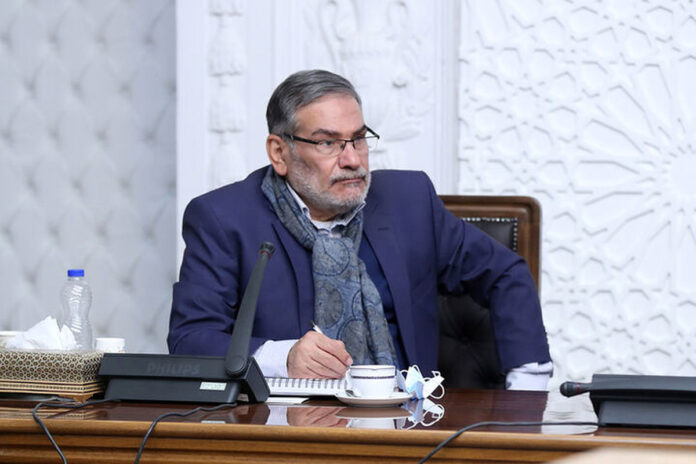
Ali Shamkhani

Ali Shamkhani says the different voices coming out of the US show the lack of coherence in the country to make political decisions regarding the Vienna talks.

Shamkhani added in a tweet that Washington cannot pay for its internal disputes by violating the rights of the Iranian people.

Shamkhani’s tweet comes as reports say US Republican Senator Ted Cruz, a member of the Senate Foreign Relations Committee, sent a letter to President Joe Biden co-signed by 32 senators rebuking the administration’s negotiations for a deal with Iran.

In the letter, the lawmakers say a law dubbed “The Iran Nuclear Agreement Review Act (INARA)” requires the president to submit any Iran deal to Congress – and they will block implementation of any deal not submitted.

Talks between Iran and the P4+1 group of countries, Russia, China, France, Britain and Germany, resumed in Vienna on Tuesday.

Iran says it seeks a good and prompt deal in the negotiations, reiterating all anti-Tehran sanctions must be lifted.

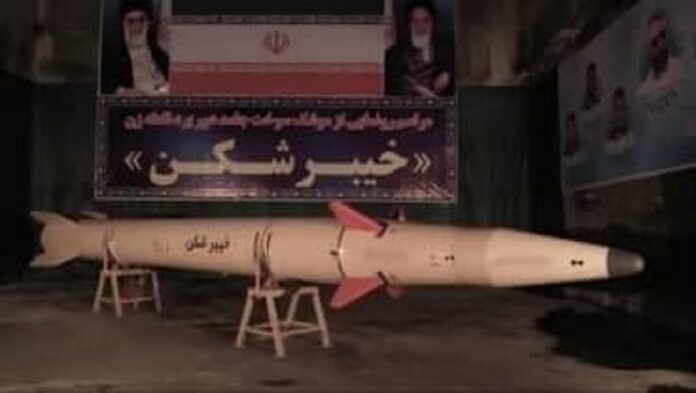
Iran unveils new strategic long-range, precision missile

The missile, dubbed Khaybar-Shekan, was unveiled during a visit by Chief of the General Staff of the Iranian Armed Forces Major General Mohammad Baqeri and Brigadier General Amir-Ali Hajizadeh, who is the commander of the Aerospace Division of the Islamic Revolution Guards Corps, at an IRGC missile base.

Hajizadeh explained that Khaybar-Shekan is a third-generation missile whose launch time is one-sixth of similar projectiles.

He said the kind of substance used in its warhead has also increased its explosive power to several times that of T.N.T.

The new missile also runs on solid fuel and is maneuverable at the landing phase, which enables it to evade missile defenses. It is capable of hitting targets at a range of 1,450 kilometers.

The unveiling of the missile comes ahead of ceremonies to mark the 43rd anniversary of the victory of Islamic Revolution of 1979 in Iran.


US says Russian invasion of Ukraine could create instability in ME

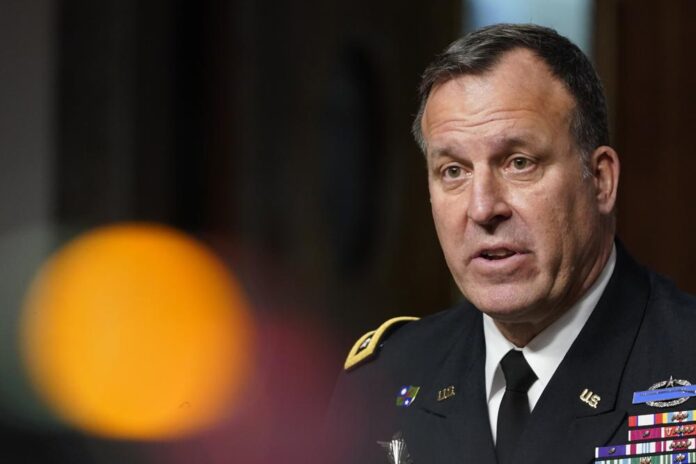
Lt. Gen. Erik Kurilla also told the Senate Armed Services Committee that China is expanding its power and spending in the Central Command region, including in countries needed by the U.S. to gather intelligence on extremist activities in Afghanistan.

“The United States faces a new era of strategic competition with China and Russia that is not confined to one geographical region and extends into the (Central Command) area of responsibility,” said Kurilla during the committee’s hearing on his nomination.

“As the United States rightfully prioritizes competition with China, we must remain engagedrussia in the Middle East and Central and South Asia,” he added.

Kurilla, a combat-hardened officer with extensive experience in the Iraq and Afghanistan wars, got a friendly reception from the panel and was told he would probably be confirmed.

If he gets the job, Kurilla would take over as the Pentagon continues to try to shift its focus to the Indo-Pacific and counter a rising China, and to bolster defenses against Russia in Europe. But, he was clear that Iran remains the key threat to US and allies in the region.

Kurilla would replace Marine Gen. Frank McKenzie, who is retiring after three years leading the command. McKenzie has overseen a tumultuous time in the region, with America’s chaotic withdrawal from Afghanistan, the dismantling of the Islamic State in Iraq and Syria, and escalating threats from Iran and what Washington calls “Tehran-backed proxies”.

Kurilla, who is currently the commander of the 18th Airborne Corps, told the committee that after the hearing he was deploying to Germany as part of the U.S. effort to reassure allies concerned about Russia’s military build-up along Ukraine’s borders.

Asked about the potential for repercussions in the Middle East of a potential Russian invasion of Ukraine, Kurilla stated he believes that it could spill over into Syria, where Russia already has a military base and troops.

“If Russia does invade Ukraine they would not hesitate to be able to act as a spoiler in Syria as well,” said Kurilla, who previously served as a deputy at Central Command.

He added that the U.S. doesn’t believe Russia wants to go to war with the United States.

On China, Kurilla noted 18 of the 21 countries in the Central Command region have signed strategic agreements with Beijing, which has increased its development in the Middle East. The U.S., he added, has to be able to counter China there.

Senators quizzed Kurilla on efforts to monitor al-Qaida and Islamic State extremists in Afghanistan, now that there are no longer U.S. forces in the country. He said efforts continue to work with surrounding nations to set up “over-the-horizon” capabilities.

The U.S., which left Afghanistan at the end of August, has been struggling to negotiate with a number of countries in the region to allow overflights, basing or other intelligence gathering from within their borders. Military leaders say it is difficult to monitor extremist groups from afar because doing so requires long drone flights that allow limited surveillance time.

Asked about working with the Taliban, Kurilla said the U.S. should take a pragmatic approach. He said the Taliban also views the Islamic State group as an enemy, so that may be a potential area of agreement. He also added the U.S. must find ways to deal with the humanitarian crisis in Afghanistan, and that may involve Taliban help with food deliveries.

Kurilla graduated from the United States Military Academy at West Point in 1988, and has served multiple tours in Iraq and Afghanistan, commanding conventional and special operations forces. He commanded a Stryker battalion in Iraq in 2004, and was shot and wounded.

Journalists rush to cover Vienna talks amid speculation of ‘final deal’

Journalists rush to cover Vienna talks amid speculation of ‘final deal’

The eight round of the negotiations started in the Austrian capital on Tuesday, amid widespread media speculation about the prospects of a final agreement between Iran and the five remaining parties to the deal, officially named the Joint Comprehensive Plan of Action (JCPOA).

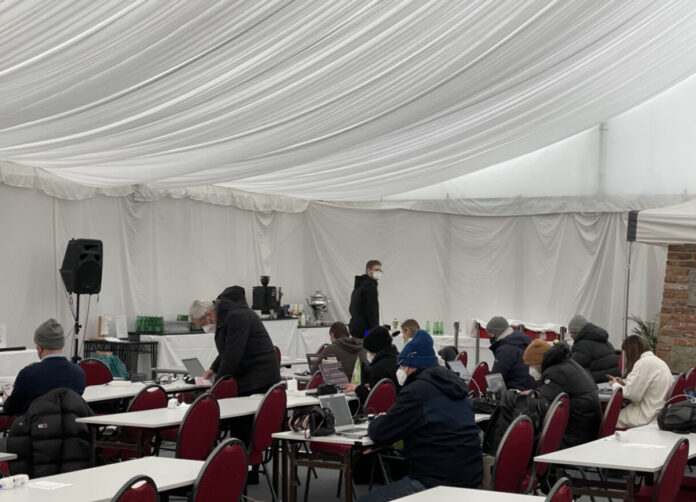
At the same time, many journalists and representatives of media outlets, who had left the venue with the pause in the negotiations, returned to their position to provide coverage of what is going on inside the hotel.

The Austrian government is said to be spending 15,000 euros on a daily basis to provide security for the tent set up for the journalists outside the venue of the JCPOA negotiations.

The journalists have been widely speculating about a final agreement between the two sides, with the phrase “deal is at reach” going viral in many media outlets worldwide.

Russia’s chief nuclear negotiator Mikhail Ulyanov told the Moscow newspaper Kommersant that talks to revitalize the JCPOA are on the finish line with a final document already on the table.

The two sides have bridged some gaps since the talks began last year but differences remain, especially on the issue of US sanctions on Iran.

Tehran wants all sanctions imposed by the administration of former US president Donald Trump removed and says the issue is its red line.

New Iran-made test kit can detect COVID-19 in 20 seconds

New Iran-made test kit can detect COVID-19 in 20 seconds

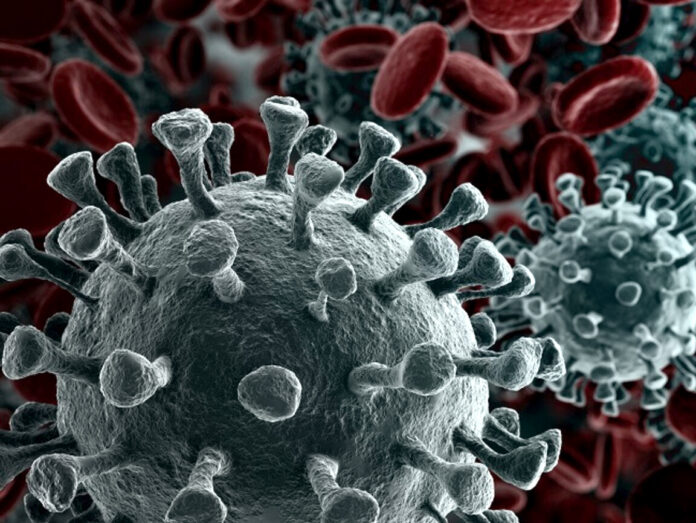
Tahereh Rohani, the chairwoman of the board of directors at a knowledge-based company, said the diagnostic kit had been designed and manufactured by relying on domestic capabilities.

The test kit, designed to respond specifically to the coronavirus, can be used both at home and at laboratories.

The product has a sensitivity of 96% and a specificity of 98% and is based on saliva sampling. The detection time varies between 10 and 20 seconds.

Since the emergence of the coronavirus in Iran in February 2020, several biotechnology firms have developed test kits for detecting the virus, despite restrictions imposed on the imports of diagnostic tools due to the US sanctions.

Iran has also managed to develop its own vaccines against the outbreak.

The country, one of the worst hit by the pandemic in the Middle East, is currently witnessing a new peak of infections with COVID-19, triggered by the Omicon variant of the coronavirus.

Iran produces saffron-based medicine against Alzheimer’s disease

Iran produces saffron-based medicine against Alzheimer’s disease

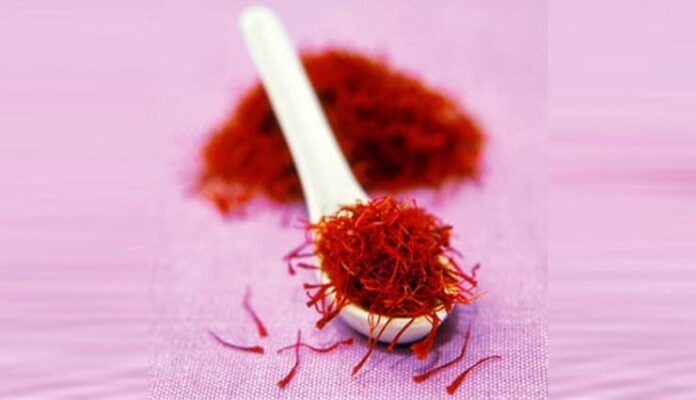
An Iranian pharmaceutical company has produced an herbal medicine based on saffron that can prevent or reduce the symptoms of the Alzheimer’s disease, the most common form of dementia among the elderly population.

Ali Jalali, a member of the managing board of the Green Plants of Life, said the domestically-developed capsules, named SaffroTin, can help cure Alzheimer’s and reduce the number of fatalities caused by the degenerative brain disorder.

SaffroTin also “eliminates the side effects of other medicines” typically used against the Alzheimer’s disease, the official said.

The effective substance in SaffroTin has been taken from saffron, an Iranian herb, Jalali added.

Research in the field of medicinal herbs show that crocin, a chemical compound used in SaffroTin, reduces the death of nerve cells and prevents the degeneration of the human brain.

The substances used in SaffroTin act as a powerful antioxidant, activate the serotonin chemical messenger in the brain, and are capable of preventing depression and behavioral changes among the elderly, among other things.

The Alzheimer’s disease is estimated to account for 60-80% of dementia cases. It is a progressive disease, where dementia symptoms gradually worsen over a number of years.
In its early stages, the patient suffers mild memory loss, but in the late-stage, individuals lose the ability to carry on a conversation and respond to their environment.

EU optimistic about resolving differences over JCPOA

EU optimistic about resolving differences over JCPOA

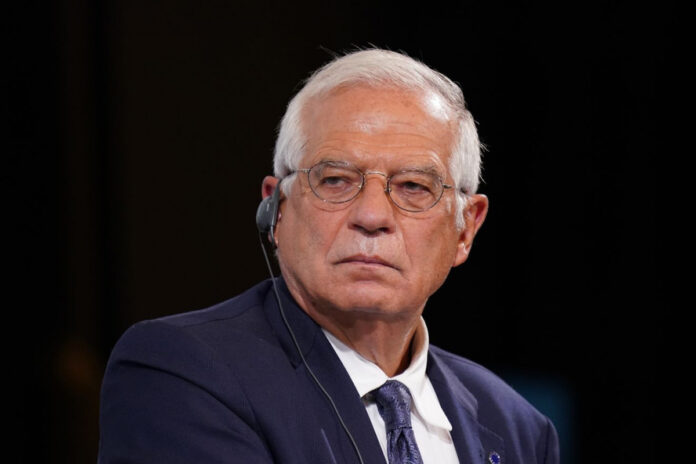
Both sides are considering written proposals and “I see that we are in the last meters of the game”, Borrell told reporters at the conclusion of a two-day visit to Washington, DC.

He endorsed Washington interpretation of the quick timeline for wrapping up indirect US-Iran talks in Vienna.

The talks will have to conclude before advances in Iran’s nuclear program make the 2015 Joint Comprehensive Plan of Action (JCPOA) nuclear deal impossible to restore, he stated.

Borrell said, “There is a US offer, there is a counter-offer.”

“I don’t if know it’s going to be one week, two weeks, three weeks, but certainly we are in the last steps of the negotiation,” he added.

The EU’s foreign policy chief noted reaching agreement was “the most important problem” but that he was hopeful of a breakthrough “because both sides have been showing willingness.”

The nuclear negotiations resumed on Tuesday in Vienna after being halted at the end of last month. Talks come after parties in recent weeks cited progress in seeking to revive the 2015 accord.

On Monday, Foreign Ministry Spokesman Saeed Khatibzadeh said Iran is waiting for the US to change its behavior in practice.
Speaking at his weekly press briefing, Khatibzadeh added that all statements about positive talks must now translate into action.

He noted that Iran is after a good and reliable deal in Vienna and the US must pay the price for violating the Iran nuclear deal and UN Security Council Resolution 2231.

The spokesperson urged the European parties to the talks to end their inaction regarding the US violations.

Iran’s VP: Knowledge-based momentum law to cause ecosystem of innovation to boom

Over 5,300 Iranian Knowledge-Based Firms Opened in 6 Years: VP

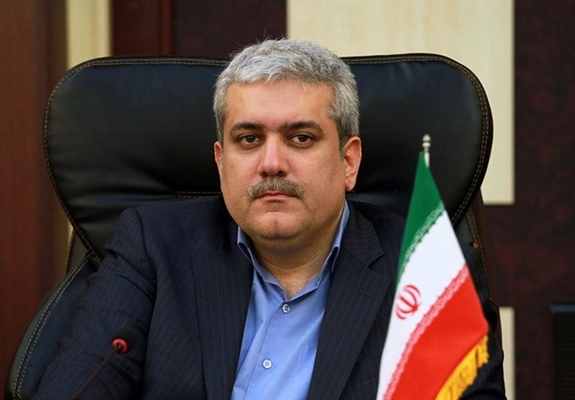
The 2-day exhibition was inaugurated on Tuesday with the visit of Mohammad Mokhber, Iran’s First Vice President, and Sorena Sattari, Vice President for Science and Technology.
Sattari referred to the administration of President Ebrahim Raisi’s determination to support the technology and innovation ecosystem.

At the opening ceremony of the event, Sattari pointed out that the permanent exhibition of Iranian technologies is a venue used to offer products and the capabilities of knowledge-based and creative companies.

According to Sattari, the exhibition hosts a variety of products such as medical equipment, laboratory equipment, agricultural machinery, information and communication technologies, creative technologies, mechanical engineering equipment and many products and goods in various fields that are growing significantly with the influence of knowledge-based companies.

Sattari, who is also the director of the National Foundation of Elites, expressed hope that the movement that has started to support the technology and innovation ecosystem will produce good results with the serious backing of the 13th government, and “we will see a significant leap in the sphere of knowledge-based economy”.

Sattari also said the new law that was approved by parliament to support knowledge-based companies and will soon be approved by the Guardian Council, will bring positive outcomes for companies.

150 creative, knowledge-based companies are participating in the exhibition.

Lavrov calls on all parties in Vienna to return to JCPOA commitments

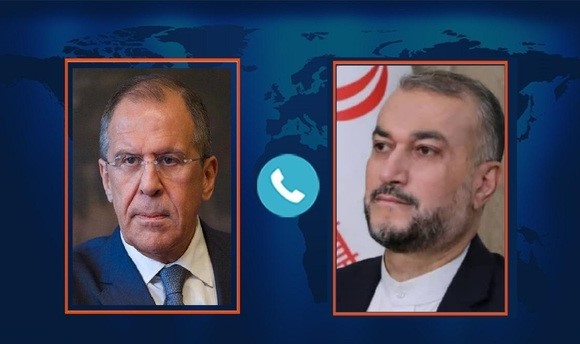
In a phone conversation with Iran’s Foreign Minister Hossein Amir Abdollahian on Tuesday, Lavrov emphasized the importance of reviving the Joint Comprehensive Plan of Action and lifting illegal sanctions, stating that all parties, and in the first place the United States, must return to their commitments.

Lavrov noted that Moscow has always stressed the need to stop destructive actions against the JCPOA and that Russia understands Iran’s concerns.

The Russian Foreign Minister also welcomed the Iranian side’s position on the need to increase the speed to reach an outcome in the Vienna talks.

During the call, Amir Abdollahian also called on the West to show realism and take tangible and genuine actions to help reach a deal in Vienna.

The top Iranian diplomat said Tehran is resolutely seeking a good agreement within the framework of its interests and rights.

The Iranian foreign minister described as constructive Russia’s position on the issue of Iran’s nuclear program.

He stressed that the effective lifting of sanctions is a very important issue and that Iran will continue its consultations and contacts with Moscow and other parties in this regard.

Earlier in the day, Amir Abdollahian told his Chinese counterpart that the western sides in Vienna should make serious decisions on the removal of anti-Iran sanctions for a deal to emerge.