Saturday, December 27, 2025
Home Blog Page 2060

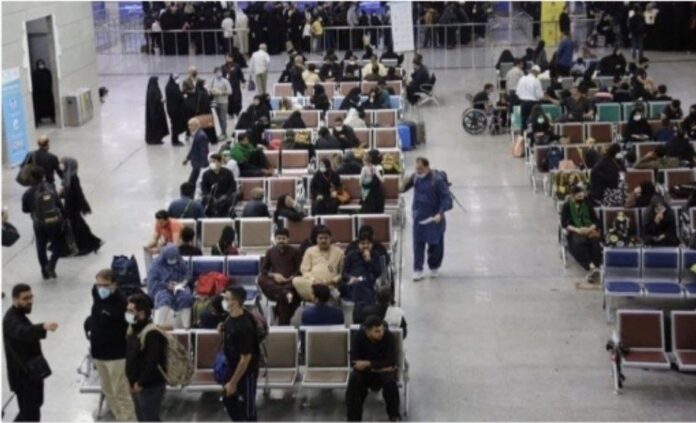
Tehran waives PCR test requirement for Iranian pilgrims returning home

Nevertheless, the issue will be reviewed by the National Coronavirus Task Force given that some officials have objected to the waiver.

As the deputy health minister says, the waiver could even be reversed.

Another problem which has emergence has been the Iraqi visitors travelling to Iran without having a negative coronavirus test result.

“One of the problems we have seen over the past two days on flights carrying pilgrims to Iran has been the presence of Iraqi pilgrims and passengers without having a negative COVID-19 test result,” says an informed source.

This is while the waiver was only supposed to apply to Iranian pilgrims returning home.

According to Fars News Agency, however, now many Iraqi pilgrims get on flights to Iran without having a negative PCR test result and no one is paying attention to this issue.

No blue cities as Iran grapples with sixth Covid-19 wave

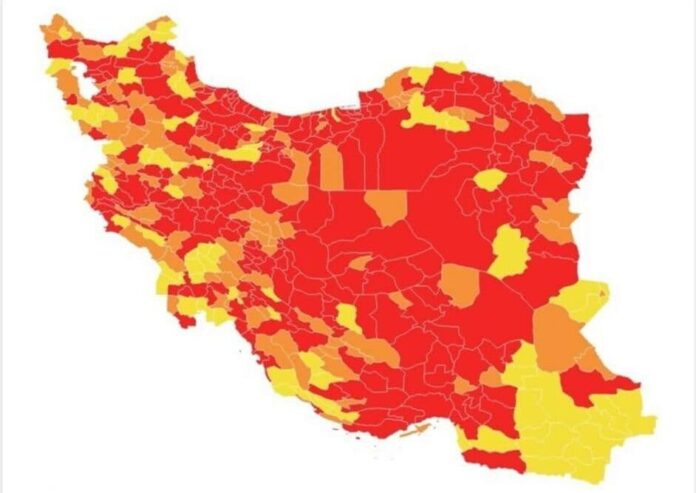
 The latest figures released on Saturday show that there are currently 112 orange (high risk) cities and 89 are Yellow (medium risk).

Iran is grappling with its sixth wave of the respiratory disease with health officials urging the people to get their booster jabs as soon as possible in a bid to contain the latest surge of infections and deaths.

On Friday, Iran reported 143 new fatalities from the disease and more than 31,000 new infection cases over the past 24 hours.

So far, according to official data, more than 133,400 people in Iran have lost their lives to Covid-19.

The latest surge comes despite an accelerated vaccination campaign over the past months.

According to Iran’s Health Minister Bahram Einollahi, 90% of the target population in Iran has received one dose, 80% two doses and 27% three doses of coronavirus vaccine.

He has also warned that children are particularly vulnerable to the new variant of the virus.

The health minister says the current wave of the disease will reach its peak in two to three weeks, urging people to observe health protocols and get the booster shot as soon as possible.

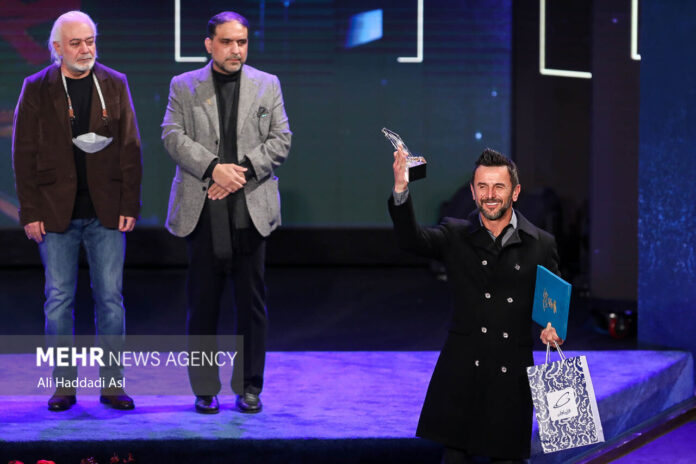
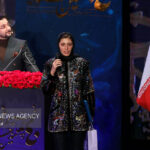
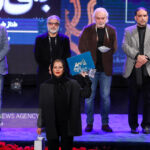
Fajr Film Festival: “Mehdi’s Position”, “The Grassland” and “The Last Snow” win main awards

One of the strange and unexpected events of the closing ceremony of the 40th Fajr Film Festival was the revelation of the list of prizes minutes before the beginning of the ceremony.

The Crystal Simorgh award for the best film from the national point of view went to “Without Prior Appointment” directed by Behrouz Shoaibi and produced by Mahmoud Babaei.

Behzad Abdi won the Diploma Honorary of the best original score category for the film “The Grassland”. However, The Crystal Simorgh for the best original score went to Massoud Sekhavatdoost for “Mehdi’s Position”.

The Crystal Simorgh for the best editing went to Hamid Najafi Rad for the film “The Grassland” and the Crystal Simorgh for the best cinematography to Arman Fayyaz for “The Last Snow”.

Fereshteh Hosseini was awarded the Diploma Honorary for the best supporting actress for “The Group of Girls” and the Crystal Simorgh for the best supporting actress, was awarded to Sadaf Espahbodi for “The Grassland”.

In the best supporting actor category, Ali Akbar Osanloo received a Diploma Honorary for “The Night Guard”. The Crystal Simorgh for the best supporting actor however went to Nader Soleimani for the movie “Opponent”.

The Crystal Simorghs for the best actress and actor in the leading roles went to Tanaz Tabatabai for “Dreamless” and Amin Hayaee for “The Last Snow”, respectively.

The Crystal Simorgh for the best director of the first film was won by Hadi Hejazifar for the film “Mehdi’s Position” and the Crystal Simorgh for the best screenplay was snatched by Kazem Daneshi for “The Grassland” and Reza Mirkarimi won the Crystal Simorgh for the best director for “The Night Guard”.

The special jury award was given to Amir Hossein Asgari for “The Last Snow”.

In the final part, the Crystal Simorgh for the best film of the 40th Fajr Film Festival went to Habib Valinejad, the producer of “Mehdi’s Position” directed by Hadi Hejazifar.

Iran’s Minister of Culture and Islamic Guidance, Mohammad Mehdi Ismaili, said at the closing ceremony of the Fajr Film Festival that cinema has a high place in cultural diplomacy.

He added that the Covid pandemic has done a lot of damage to the economy of culture and art, but “we tried to solve some of the problems”.

Massoud Naghashzadeh, secretary of the 40th Fajr Film Festival, also said, “We emphasized legalism to improve the festival…we chose the films according to the schedule and did not give in to pressure….of course, we had a lot of difficulties, and in the face of threats and
despair, our colleagues tried to do the right thing.”

Many critics and viewers described the 40th Fajr Film Festival as one of the weakest. The event became controversial in the final moments with the removal of the Crystal Simorgh for the best film chosen by the audience.

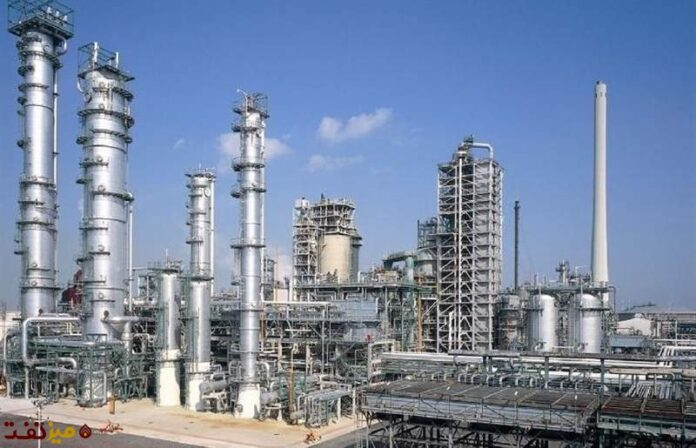
Oil minister: Iran boosting refineries to decrease crude sales

Javad Owji said Friday that the development of Iran’s oil sector and investment in the field are among the Iranian administration’s top priorities given the vast resources of oil and gas existing in the country.

“In the next three years, refineries will have a significant development both qualitatively and quantitatively. Besides creating jobs, such measures will help decrease the sales of crude and increase petrochemical products instead,” he said.

The minister pointed to the recent launch of Iran’s first super heavy oil refinery on the southern island of Qeshm, saying the country will operationalize the oil refinery in the southern city of Bushehr next year, with a refining capacity of 68,000 barrels of oil per day.

“In the next four years, the production capacity of the country’s refineries will reach 1.4 million barrels per day, which will create a turning point in the country’s oil industry,” Owji said.

He said efforts are being made to decrease the budget’s reliance on oil revenues and increase exports of refined oil products, something that will provide manifold added value.

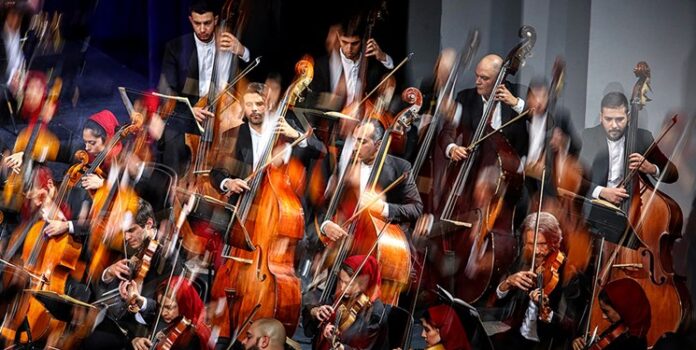
Nine Iranian provinces host 37th Fajr Music Festival

During the festival running through 18th of February, a total of 53 stage performances will take place in the different provinces.

In this period of provincial performances of Fajr Music Festival, Bushehr Province has five performances with the participation of 49 artists, and Kerman Province with 10 performances and 74 artists will welcome the Fajr Music Festival.

In the 37th Fajr Music Festival, 62 artists from Chaharmahal and Bakhtiari Province will host three stage performances in the halls of this province.

In Zanjan, five performances will be held and three performances will happen in Sistan and Baluchestan. Other provinces host musical performances are Semnan, Lorestan and Ilam.

Thursday night, the festival spent its second day in the pop section in Tehran.

To hold the festival, the artists, along with all the agents and organizers, took the Covid test according to health instructions.

The 37th Fajr Music Festival is being held in commemoration of the anniversary of the victory of the Islamic Revolution in two sections: competitive (Barbad Award) and non-competitive.

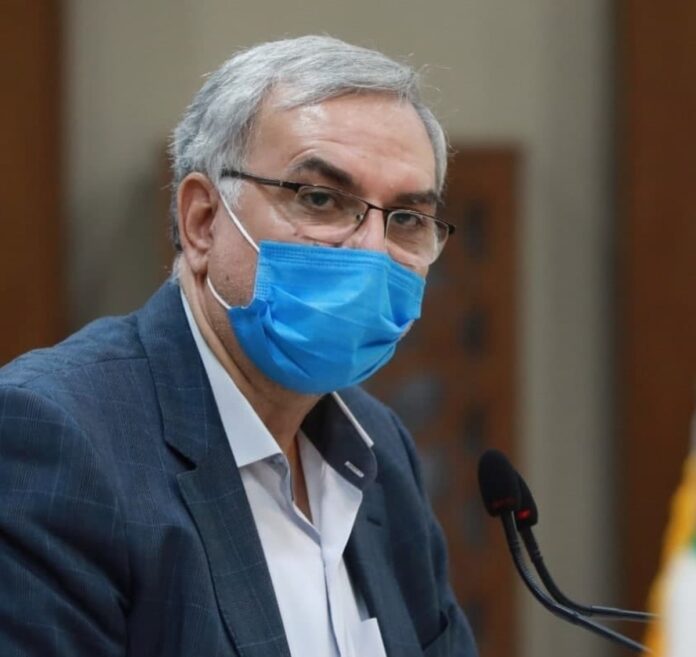
Health Minister: Iran in middle of 6th wave of Covid

Einollahi said the safest and best thing to do is to complete vaccination and follow health protocols.

He also urged Iranians to avoid attending family gatherings as it could increase the likelihood of contracting Covid, adding that the sixth wave of the Coronavirus will continue for several weeks.

Einollahi added that if people trusted health officials equally, Iran would have crossed the 137 million mark in terms of the number of administered doses.

He added that probably on Saturday morning, important decisions will be made by the Covid taskforce, which will be announced to the people.
Einollahi also hailed the anniversary of the victory of the 1979 Islamic Revolution.

The health minister said, “If we can stand on our own feet today despite all the sanctions and treat the people and get them vaccinated, all these have been achieved thanks to the Islamic Revolution.

Tehran ‘most unsafe’ Iranian province for investment: Study

In the study, conducted and released by the Iranian Parliament’s Research Center, 17 statistical factors were examined to determine the level of investment safety in Iran’s 31 provinces.

According to the study’s parameters, the closer the figure is to 10, the worse is the situation for investment, and vice versa.

Iranian website Eghtesad News, quoting the research, adds Tehran Province, which is home to the country’s capital city, received an average score of 5.6 to get classified as the most unsafe place for investment in Iran, followed by the southwestern province of Kohgiluyeh and Boyer-Ahmad.

In Tehran, cases of theft liable to Tazir and fraud as well as the number of accidents resulting in death or injury were among the main reasons behind the classification.

According to the research, economic insecurity in Tehran also stems from the cases of breach of trust and commercial disputes.

On the contrary, the index for investment security in West Azerbaijan Province stands at 2.8.

The number of legal cases concerning trade disputes was found to be lower compared to other Iranian provinces.

Many killed, injured in blast outside mosque in Afghanistan

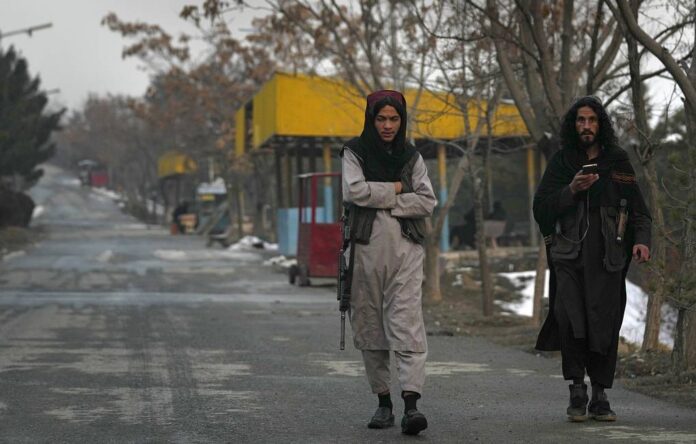
Taliban fighters walk on a park road, in Kabul, Afghanistan, Monday, Feb. 7, 2022. (AP Photo/Hussein Malla)

It was reported that the incident occurred in the city of Qala-e-Naw, the region’s administrative center when the parishioners were leaving the mosque after Friday prayers.

The Taliban, which seized the power in Afghanistan, confirmed the blast. Director of Information and Culture of the Badghis provincial administration Baz Mohammad Sarwari, appointed by the radicals, revealed that several people suffered injuries as a result of the incident, all of them were rushed to the nearest hospital.

Last autumn, over 250 people were killed in terrorist attacks on Afghanistan’s mosques, while hundreds more were injured. The Islamic State – Khorasan Province, which is an affiliate of the Islamic State (IS), took responsibility for these terrorist acts.

Meanwhile, the Taliban have repeatedly stated that the IS posed no threat to Afghanistan.

U.S. says major issues in nuclear talks remain unresolved

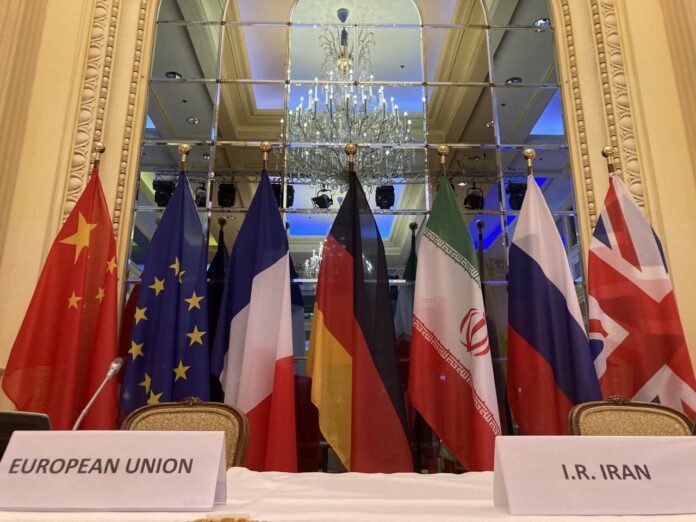
Talks between Tehran and world powers over revitalizing the Iran nuclear agreement have reached their final stage and are expected to conclude one way or the other by the end of this month, according to participants.

“I don’t know if it’s one, two or three weeks,” European Union foreign policy chief Josep Borrell said this week during a visit to Washington. But the latest round of meetings in Vienna, he added, are “certainly the last steps.”

The Joe Biden administration has announced that only a “handful” of weeks remain before ongoing advances in Iran’s nuclear program will make agreement impossible.

Iran, Russia and China have pushed back on the need to establish a fixed deadline for the nuclear negotiations to conclude. Iranian officials have rejected western diplomats’ remarks about a deadline for reaching an agreement in Vienna talks, and stressed Tehran is only after a good agreement.

While there is general agreement that negotiations are reaching an end state, opinions differ widely on the likely outcome.

A senior U.S. official noted that major issues on the table remain unresolved.

Negotiations are both “closer than we have been to a deal,” in that some progress has been made, and “closer than we have been to breakdown,” as time for agreement runs out, the official added.

“Both outcomes are still very possible,” said the official, speaking on the condition of anonymity to comment on the sensitive diplomacy.

But “based on where we are, it is more likely than not that we don’t succeed,” the official stated.

In 2018, the U.S., under President Donald Trump, pulled out of the pact and reinstated sanctions under the so-called ‘maximum pressure campaign’ against Tehran, effectively depriving Iran of the deal’s benefits by forcing third parties to stop doing business with Iran.

Iran remained patient for an entire year, after which it began to take incremental steps away from its nuclear obligations, especially after Europeans failed to salvage the deal under the U.S. pressure.

“So far, we haven’t heard from Iran positions we believe are consistent” with full compliance, the U.S. official claimed.

“They are still making demands that go beyond [U.S. positions] on the sanctions side and not reaching what we believe we need to reach on the nuclear side,” the official continued.

“There is no reason to be overly optimistic about the outcome,” the official said, adding, “We haven’t been able to bridge the gaps.”

Intensive talks are underway in Austria, with the western side still failing to put forward any meaningful initiative to speed up the process aimed at revitalizing the embattled agreement.

Although the U.S. is blamed by all sides as the party behind the crisis, the western side has been attempting to put the ball in Iran’s court.

Iran insists that the talks must lead to the removal of all American sanctions that were imposed against Tehran following Washington’s unilateral withdrawal from the landmark agreement in May 2018. Tehran has also demanded credible guarantees that Washington will not abandon the deal again.

On Thursday, Iranian Foreign Minister Hossein Amir Abdollahian said that “today in Vienna, the United States and the western parties are faced with a litmus test in which they must show their real behavior to the world.”

“The termination of the negotiations will be determined by the western side’s resolve to remain fully committed to the removal of sanctions and return of all sides” to full compliance “with their commitments,” he added.

President Ebrahim Raisi has also stressed that the Biden administration was no different from its predecessor in its policies and actions.

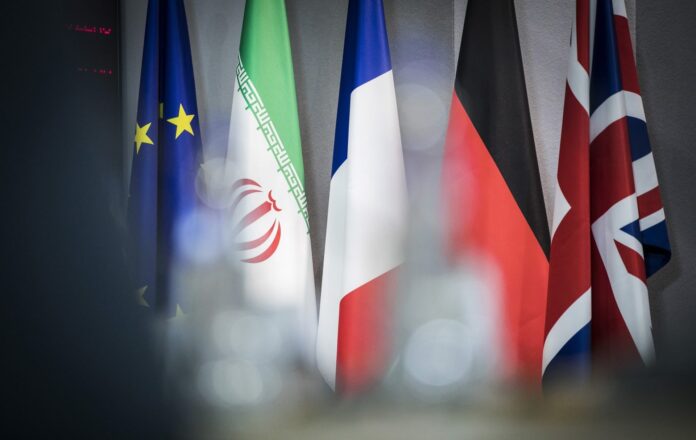
As Vienna talks continue, EU calls for full implementation of JCPOA

The meeting is taking place in Vienna’s Coburg Hotel.

Meanwhile, the European Union has underlined the need for the full implementation the JCPOA. “Given the importance of time, intensive consultations continue and our goal is to ensure the full implementation of all aspects of the JCPOA,” wrote Stephen Clement, EU Ambassador and Permanent Representative to the Vienna-based International Organizations.

He chaired the meeting of the nuclear measures action group.

Earlier, Russia’s top negotiator Mikhail Ulyanov said on Twitter intensive work is being done on the nuclear deal in Vienna.

The eighth round of talks between Iran and the P4+1 began on December 27, 2021. Nearly all sides agree that the talks have made headway despite complexities.

The US and its European allies, namely, Britain, France and Germany say time is running out for a deal but Iran insists that it will negotiate as long as needed to reach a good deal with the other parties which will realize its interests.

The talks aim to pave the way for the return of the US to the deal. Iran says it will also return to full compliance with the JCPOA once all sides stick by their parts of the agreement.