Thursday, December 25, 2025
Home Blog Page 1945

Iraqi MPs draft bill to criminalize normalization with Zionist regime

Iraq Parliament

The Iraqi parliament’s information office said in a statement that the initial review of the draft proposed by the legislature’s legal commission is complete.

The statement added that the bill is meant to safeguard the national, Islamic and humane principles in Iraq given the grave dangers of normalization with the Zionist enemy.

The Iraqi parliament added that the law will punish anyone seeking to normalize with Tel Aviv.

Iraq’s culture and tourism ministry also approved some rules and regulations to ban any normalization with Israel.

Meanwhile, some campaigns will be launched by the Iraqi Ministry of Culture to counter any normalization with the Zionist enemy, and in general, the fight against normalization with the occupying regime by any means is included in the activities and programs of this ministry.

Palestinian groups have thanked Iraq for the legislation.

The Islamic Jihad movement said the bill is a major step toward fighting the Zionists’ efforts to infiltrate into Arab countries.

A statement by the Islamic Jihad movement said, “We salute the Iraqi parliament for taking a decisive stance at an important juncture to prove that the free Iraqi people stand with Palestinians and the resistance and are against any normalization with the Zionist regime, the main enemy of all Islamic nations.”

A few other Arab states have normalized ties with the Zionist regime, drawing condemnation from Palestinians and many of their own people.

Iran has also deplored the normalization deals with Tel Aviv as a stab in the back to the Palestinian cause.

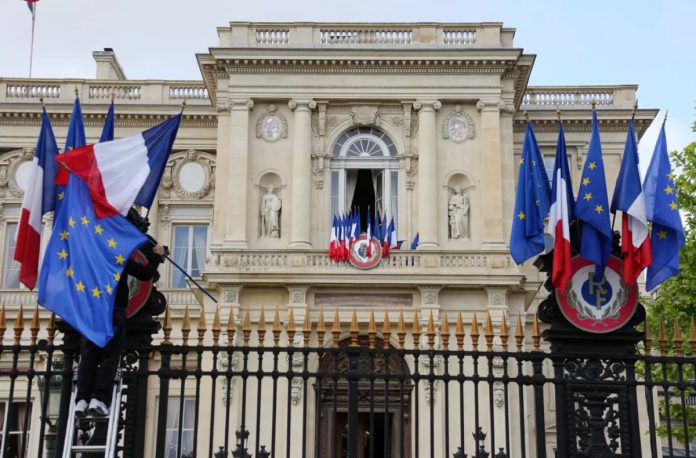
Paris calls for release of French nationals ‘detained in Iran’

France Foreign Ministry

The foreign ministry said France’s ambassador in Tehran had approached Iranian authorities to obtain consular access, adding that it had summoned Iran’s representative in Paris.

Earlier on Thursday, a French teachers’ union announced one of its members had gone missing while on holiday in Iran with her partner. Christophe Lalande, federal secretary of the FNEC FP-FO union, said he had no news from his staffer, who was due back in France earlier this week.

The Iranian Intelligence Ministry has announced its forces have arrested two individuals of unspecified European nationality who had been dispatched to Iran to provoke unrest.

The ministry said the two, “experts in inciting unrest and instability,” had been exposed during Iranian intelligence gathering outside of Iran and had been under surveillance since their entry into the country.

All their activities, including plans, secret meetings, and guises had been monitored and documented, it added. In Iran, they sought to “brief, guide, network, and link individuals and infested domestic networks” to turn rightful demands inside the country into “unrest, social disorder, and societal instability.”

It stated the two individuals were “professionals” in the inciting of unrest who had trained local agents in several countries for a number of years, and had been in contact with, among others, a particular illegal association inside Iran.

In recent weeks, a number of gatherings have been held by the practitioners of various trades and professions in some cities in Iran to protest rising prices, inflation, and their living conditions.

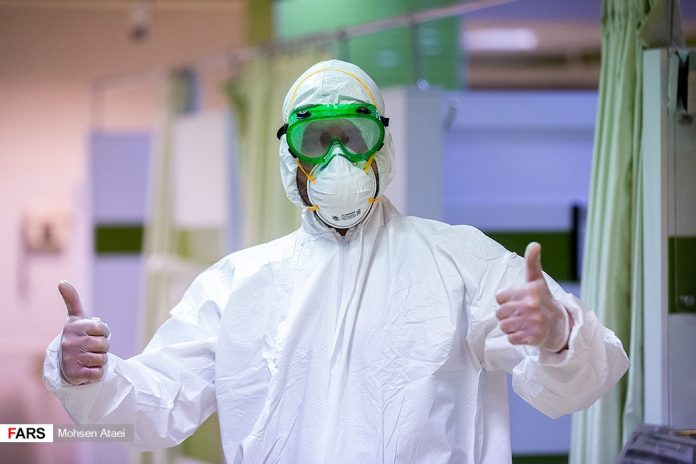
Iran Covid: Downward trend holding

COVID in Iran

The daily caseload was 371 as per the figures released by the Health Ministry on Thursday. They included 71 hospitalizations.

The daily deaths have been single-digit for the past few days.

Officials in Iran attribute this to a nationwide vaccination process and the people’s observance of the health protocols.

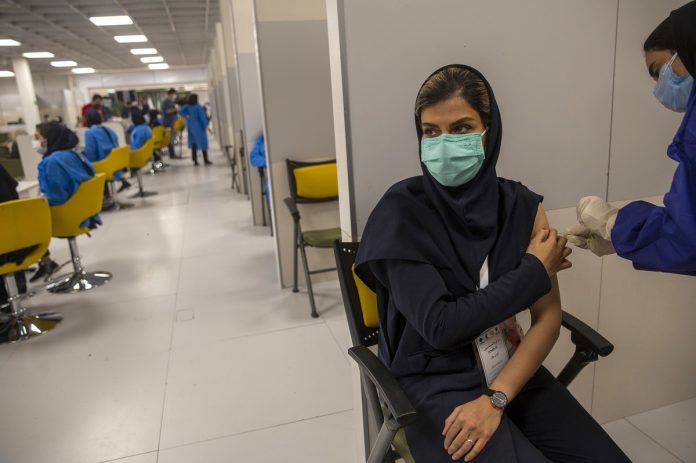
Now over 85 percent of the country’s population are double-vaxxed with the officials saying herd immunity has occurred in Iran.

Nearly 30 million people are triple-vaxxed in the country. Authorities say people over the age of 70 and also healthcare personnel must get their fourth shot of vaccine. The authorities say thanks to the vaccination process, the vast majority of cities and towns have no deaths.

They are however warning Iranians to not relax health protocols so they will not cause a resurgence of the Coronavirus pandemic.

No red cities or towns exist in Iran currently. Red zones are areas where people face the highest level of risk from the virus.

Most cities are however Yellow while over 120 cities and towns are blue, which means the situation has returned to normal there.

Covid killed millions worldwide before subsiding in many parts of the world.

Russian envoy believes restoring JCPOA still possible

Nuclear Talks Vienna

“There is always a chance, but the Iranians insist, and quite rightly so, that their red lines be respected,” he stated.

According to the diplomat, exchanges between Washington and Tehran are continuing, mediated by Brussels.

“One of the main stumbling blocks is the issue of Iran’s insistence that the Islamic Revolutionary Guard Corps be removed from the sanctions list. Not just the corps itself as a whole, but some of its units, so that everything is considered in a comprehensive way,” he added.

“And while there are no meetings on the Vienna platform yet, the exchange of messages between Washington and Tehran continues. As we understand it, [US President Joe] Biden’s administration is under a lot of pressure. Not only from Republican opponents, but more and more Democrats are starting to oppose the restoration of the JCPOA,” Dzhagaryan noted.

Iran insists that the nuclear talks must lead to the removal of all American sanctions that were imposed against Tehran following Washington’s unilateral withdrawal from the landmark agreement in May 2018. Tehran has also demanded credible guarantees that Washington will not abandon the deal again.

Raisi: Foreign interference undermines regional security

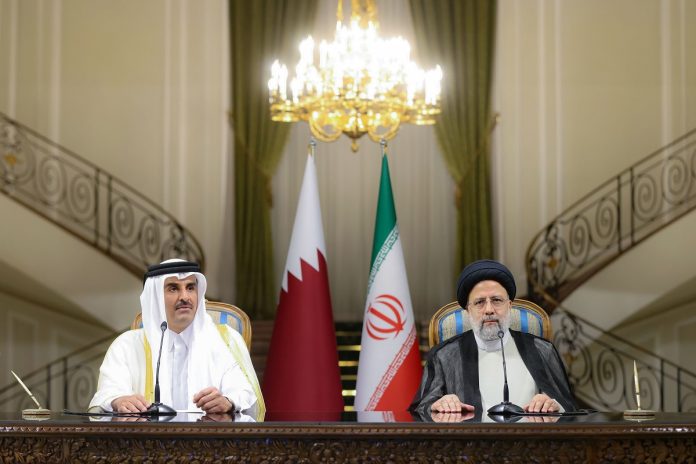
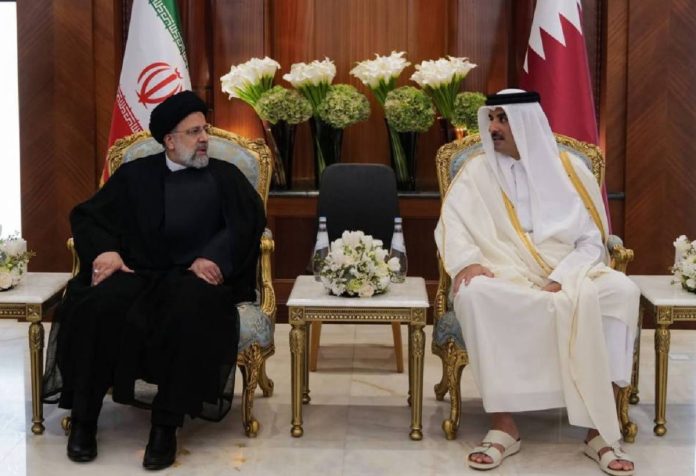
Sheikh Tamim bin Hamad Al Thani & Ebrahim Raisi

“Managers, officials and governments present in the region should know that any interference of foreign countries and Westerners in the region does not provide security but is harmful to regional security,” Raisi said during a joint press conference with Qatari Emir Sheikh Tamim bin Hamad al-Thani in Tehran on Thursday.

He also said Tehran and Doha believe that the blockade imposed on Yemen must be removed as soon as possible and the Yemeni people must be allowed to decide for their own country.

Raisi said Iran and Qatar share the view that the people of Afghanistan must have an inclusive government with the participation of all ethnic groups so that the government can establish lasting security in Afghanistan.

The Iranian president went on to say that the two countries believe that Palestine must be liberated and the Israel siege of Gaza must be broken and the crimes committed by the Israeli regime must end.

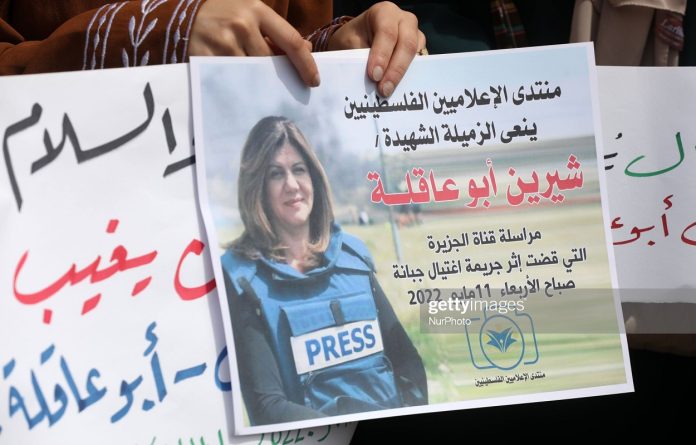
Raisi offered his condolences to the Qatari emir for the death of Al Jazeera’s journalist Shireen Abu Akleh. She was shot dead by Israeli forces in the occupied West Bank on Wednesday.

“Such crimes cannot provide security for the Zionist regime in any way… such crimes will increase the global hatred of the crimes of the Zionist regime more than before,” the Iranian president stated.

Raisi went on to say that the visit of the Qatar emir to the Islamic Republic of Iran is a turning point in the expansion of relations between the two countries and the two nations, and will certainly play a significant role in enhancing bilateral relations and cooperation.

“In our talks with the emir of Qatar today, in addition to emphasizing the expansion of relations between Iran and Qatar in the political, economic, trade, cultural, tourism and energy fields, it was stressed that joint investments should be made between the two countries and we placed emphasis on the development of bilateral relations,” he added.

The Iranian president said during his visit to Qatar in February, preparations were made for the development of relations and that the two countries should now take steps to implements the agreements reached in Doha and Tehran.

The Qatari emir said for his part that “We talked about bilateral issues today, and we believe that disputes in the region can only be resolved through constructive dialogue.”

Sheikh Tamim bin Hamad al-Thani praised the status of relations between Iran and Qatar as strong, adding that bilateral ties are based on a sense of neighborliness.

Israel reverses assertion Palestinian fire killed Al Jazeera journalist

Shireen Abu Akleh

Lieutenant General Aviv Kochavi stated it was now unclear who fired the shot that killed Abu Akleh on Wednesday in the occupied West Bank town of Jenin.

“At this stage, we cannot determine by whose fire she was harmed and we regret her death,” he said, according to news reports.

The Israeli army initially raised the possibility that the veteran Al Jazeera journalist might have been killed by Palestinian gunfire, saying armed fighters were also present in the area at the time the journalist was shot.

Releasing a video earlier on Wednesday showing Palestinians firing in an alley at the Jenin camp, the Israeli army announced the video was meant to bolster its contention that armed Palestinians were firing in the area at the time

Israeli Prime Minister Naftali Bennett also shared a tweet with a video clip appearing to show armed Palestinian fighters who he stated had claimed to have shot a soldier. Because no Israeli forces were hurt on Wednesday, he noted that suggested the gunmen had shot a journalist instead.

“According to the data, we currently have, there is a considerable chance that armed Palestinians, who fired wildly, are what led to the unfortunate death of the journalist,” the prime minister wrote in a tweet.

However, the Israeli human rights group B’Tselem conducted its own research into the claims and released a video on Wednesday that cast doubt on the Israeli army’s narrative of the killing of the journalist.

B’Tselem wrote in a series of tweets that its field researcher in Jenin documented the exact locations in which the Palestinian fighter, depicted in a video distributed by the Israeli army, had fired the shots. The researcher also identified the exact location in which Abu Akleh was shot and killed.

“Documentation of Palestinian gunfire distributed by Israeli military cannot be the gunfire that killed Journalist Shireen Abu Akleh,” the organisation wrote in a tweet.

The organisation provided coordinates for the two locations, which appeared to be about 300 metres (330 yards) apart and separated by walls and buildings.

Dror Sadot, a spokeswoman for the rights group, stated its evidence shows “there is no way” that the gunfire shown in the video distributed by Israeli forces had killed Abu Akleh.

Israel’s Defence Minister Benny Gantz said later on Wednesday that “the preliminary investigation conducted by the [Israeli army] in the last several hours indicate that no gunfire was directed at the journalist – however, the investigation is ongoing”.

The European Union has called for an “independent” investigation into her death, while the US envoy to the UN, Linda Thomas-Greenfield, called for the killing to be “transparently investigated”.

Asked about Israel’s openness to an international investigation, army spokesman Amnon Shefler stated the military’s internal investigative systems were “robust” and that it would conduct its own probe.

Shefler told reporters that Israel “would never deliberately target non-combatants”, calling the journalist’s death “a tragedy that should not have occurred”.

Speaking to Al Jazeera on Wednesday, Omar Shakir, Israel and Palestine director for Human Rights Watch, noted the organisation is looking into the killing of Abu Akleh, but decried Israeli investigations as “mechanisms” for whitewashing.

“That is the assessment that’s been reached by human rights organisations including Israeli’s premier human rights organisation B’Tselem. Human Rights Watch has a similar diagnosis,” he continued, adding, “The reality is there is no accountability for those sorts of abuses when it comes to actions by the Israeli authorities”.

Qatari emir arrives in Tehran on high-profile visit

Qatar’s Emir Sheikh Tamim bin Hamad Al Thani

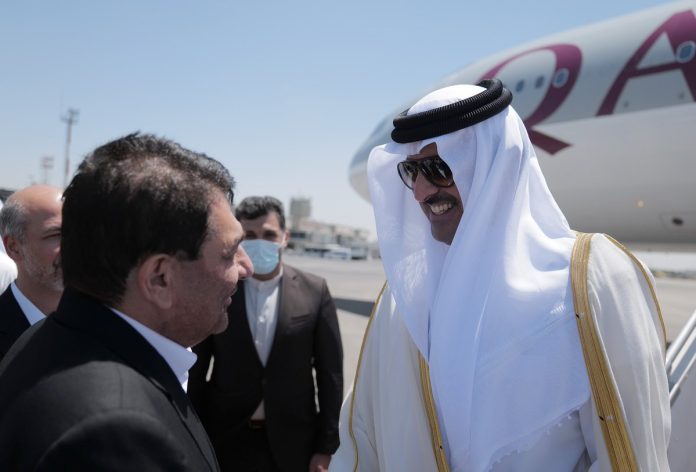
The emir’s plane touched down in Tehran’s Mehrabad International Airport on Thursday, and he was welcomed by Iran’s Vice President Mohammad Mokhber.

President Ebrahim Raisi hosted the emir in an official welcoming ceremony at the Sa’adabad Complex later in the day.

Sheikh Tamim bin Hamad Al Thani is scheduled to meet a number of other high-ranking Iranian officials during his visit.

Observers say the visit is a sign that the Raisi administration is implementing a policy of more interaction with Iran’s neighbors and would open a new chapter in neighborly ties between Iran and Qatar.

Oman says supporting all efforts to revive Iran deal

Nuclear Negotiations in Vienna

Oman’s Foreign Minister Sayyid Badr Albusaidi said at a presser alongside his Russian counterpart, Sergei Lavrov, that Muscat blamed no one for a hiatus in the talks and backed direct negotiations for the revival of the Iran nuclear deal.

Former US President Donald Trump unilaterally withdrew from the Iran deal in 2018. But his successor, President Joe Biden, has expressed a desire to return to compliance, and Iran has been negotiating with its international partners over the US’s potential return.
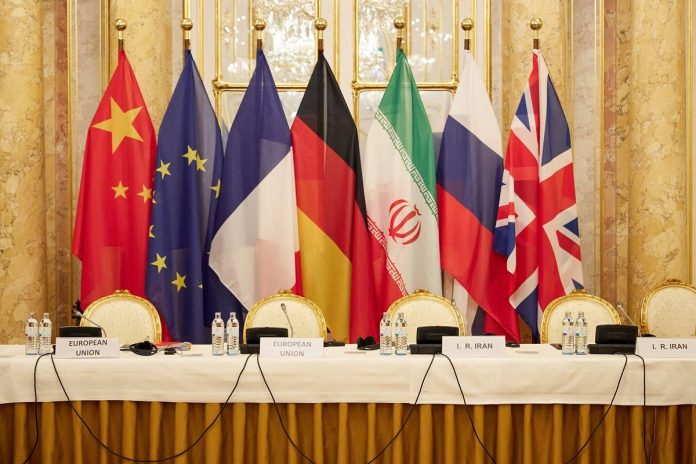
The talks, effectively but indirectly between Iran and the US, recently stopped in an apparent deadlock.

European Union (EU) deputy foreign policy chief Enrique Mora traveled to Iran on Wednesday in an attempt to bring about a breakthrough.

Also on Wednesday, Iran’s Foreign Minister Hossein Amir Abdollahian said negotiations would continue to be pursued to have the sanctions on Iran removed.

He said negotiations would take place while “observing Iran’s red lines in reaching a good, strong, and maintainable deal.”

A majority of Iranians say they want the President Ebrahim Raisi administration to revive the nuclear deal, according to a recent national poll.

Fewer but still many vaccination centers active in Iran: Official

COVID Vaccine

Mohsen Zahrayi, director of the Department of Vaccine Preventable Diseases at Iran’s Health Ministry, told Fars News Agency on Thursday that the number of active vaccination centers in Iran matched demand.

“There was a period of time when almost 1.5 million COVID vaccines were administered in the country [daily]… and vaccination centers numbered as high as 13,000,” Zahrayi said.

He explained that vaccination had slowed down recently partially because a majority of people had received two doses.

Another reason was a reduction in infections, he said, adding that some people had also delayed getting vaccinated.

Daily COVID-19 infections and deaths have significantly dropped in Iran in recent days. On Tuesday, May 10, the country reported a mere three COVID-related deaths in 24 hours, the lowest daily tally since the pandemic reached Iran some two years ago. Daily caseloads are also down to the lower hundreds.

Qatari emir’s visit to Iran sign of policy to engage with neighbors more actively: Commentator

Sheikh Tamim bin Hamad Al Thani & Ebrahim Raisi

Jafar Qannadbashi told IRNA on Thursday that the visit would be a sign that the President Ebrahim Raisi administration was implementing a policy of more interaction with Iran’s neighbors and would open a new chapter in neighborly ties.

Qannadbashi said Qatar and Iran had proved reliable partners for one another, as Doha had refused to join anti-Iran measures and Tehran had helped the Qatari government avoid some of the harshest effects of an economic blockade by its fellow Arab neighbors.

“Qatar has realized in the past couple of years that one reliable and trustworthy country with which they can establish friendly ties and not face all kinds of pressure from is Iran,” he said.

“When all countries imposed sanctions on Qatar, it was Iran that offered them all the tools to continue to have their paths to trade and to have ways [to evade] those economic sanctions.”

“When [former US President Donald Trump] asked regional countries to impose sanctions on Iran, Qatar did not cooperate with the US to fill the void caused by Iran’s absence in the oil [market] and even faced the wrath of some of the countries of the region,” the commentator said.

Sheikh Tamim bin Hamad Al Thani is due in Iran on Thursday.