Saturday, December 27, 2025
Home Blog Page 1872

US says Iran’s satellite carrier launch “unhelpful and destabilizing”

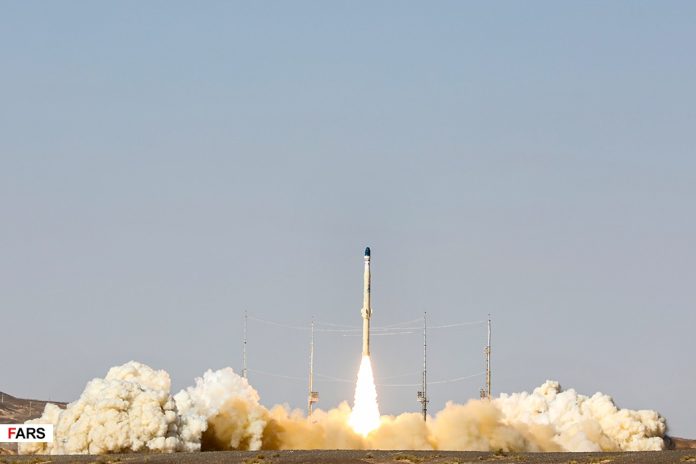
Iran Zoljanah satellite carrier

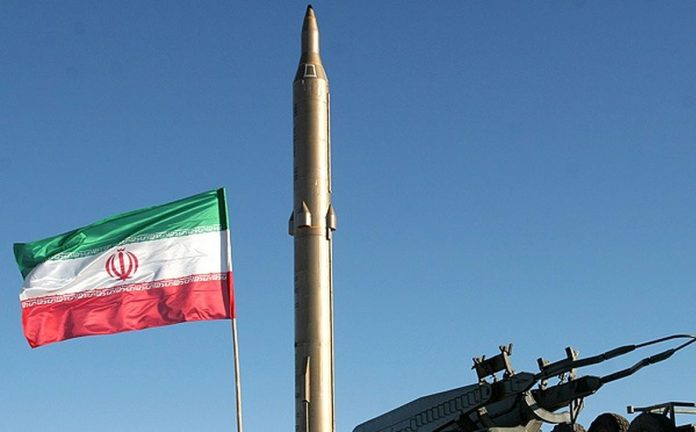
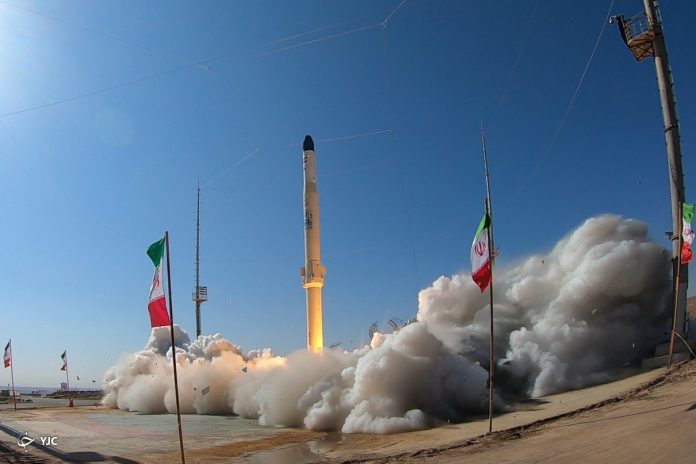
Iran announced on Sunday it has tested its domestically-developed hybrid-propellant satellite carrier rocket called Zoljanah for “predetermined research purposes” for the second time.

Ahmad Hosseini, a spokesman for Iran’s Defense Ministry, explained that the three-phased Zoljanah is competitive with the world’s top satellite carriers in technical aspects, noting that it has two solid propulsion phases and a single liquid propulsion phase.

The official noted added that the third development phase of the satellite carrier has started.

The White House has said it was aware of Sunday’s test and criticized the move as “unhelpful and destabilizing.”

It added it was committed to using sanctions and other measures to prevent further advances in Iran’s ballistic missile program.

Iran, which long has stressed it does not seek nuclear weapons, maintains its satellite launches and rocket tests do not have a military component.

Iran’s Defense Ministry launched the Zuljanah satellite carrier into space for the first time in February 2021.
President Raisi: Normalization will not result in security for Israel

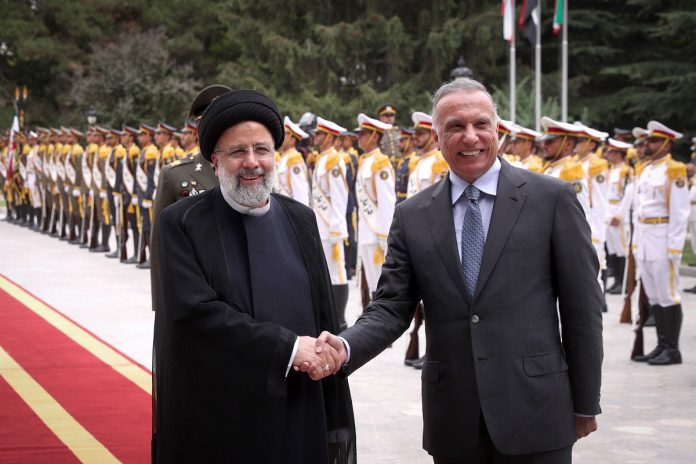
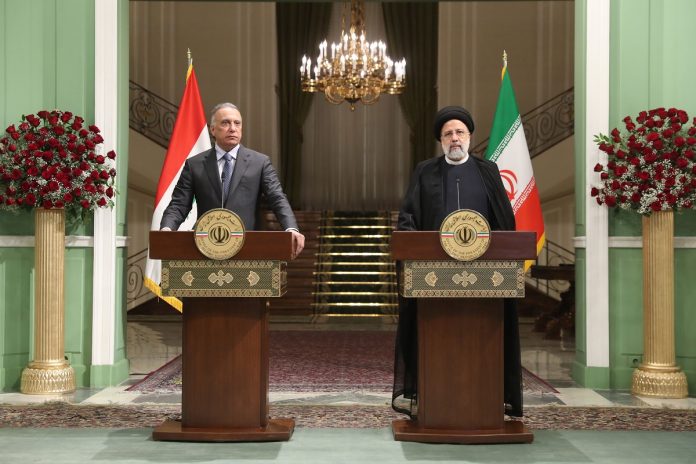
Ebrahim Raisi & Mustafa al-Kadhimi

President Ebrahim Raisi made the comment in a joint press conference with Iraq’s Prime Minister Mustafa al-Kadhimi in Tehran on Sunday.

President Raisi also said he views Iraq as the closest nation to the Iranian people while he continues his policy of expanding ties with neighboring countries.

He added that Iran has more ties with Iraq than other neighbors.

The Iranian president added that he and the Iraqi prime minister held talks over ways of expanding political and economic ties including the railroad linking the Shalamcheh region in Iran to the Iraqi city of Basrah.

The Iranian president noted that Iran and Iraq have decided to take further measures to facilitate their monetary ties as well.

He said the Iraqi government is supposed to resolve problems that Iranian pilgrims faced in previous years during pilgrimage to the holy shrines in Iraq especially during the Arbaeen ceremony.

Raisi also spoke of issues other than bilateral ties.

On Yemen, he said Iran insists that the siege on the Yemeni people be lifted. The president said Iran thinks of the war on Yemen as futile.

Raisi then pointed to the Zionist regime’s efforts to normalize ties with regional countries, saying normalization will not bring security for Tel Aviv.

The Iraqi prime minister for his part said relations with Iran are highly important to his country.

Kadhimi added that during his meeting with Raisi, the two sides decided to strengthen trade relations between Tehran and Baghdad.

He added that Iran and Iraq have also agreed to set a timetable to facilitate visits by Iranian pilgrims to the holy shrines in Iraq.

Kadhimi added that Iranian pilgrims can now obtain visas both at Iraqi airports and at the border crossings to enter Iraq.

Kadhimi also reaffirmed Iraq’s support for the truce in Yemen.

Iran carries out second launch of home-made satellite carrier

Iran Zoljanah satellite carrier

Hosseini, a spokesman for the Iranian defense ministry’s space organization said three research launches had been planned for Zoljanah satellite carrier.

He added that the second test was for research purposes and the third test will be for research purposes as well.

He also said the three-phased Zuljanah satellite carrier rocket is competitive with the world’s top satellite carriers in technical aspects, noting that it has two solid propulsion phases and a single liquid propulsion phase.

The official noted that the third development phase of the satellite carrier has started.

Iran’s defense ministry unveiled Zoljanah on 1 February 2021.

The rocket can carry a satellite weighing 220 kg into an orbit 500 kilometers above the Earth.

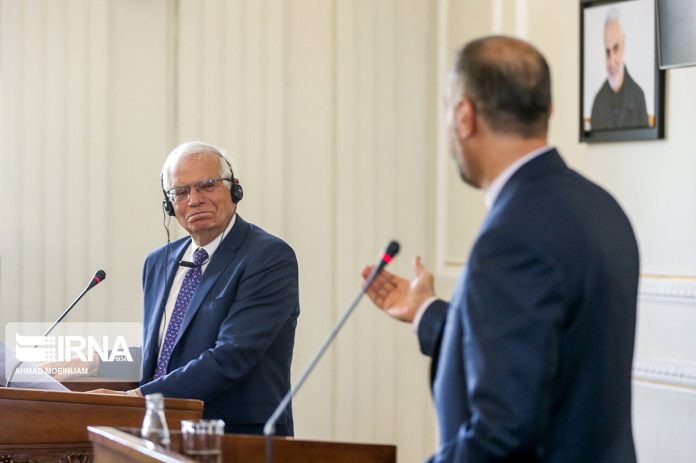
Aide to former president: Europe unable to build trust between Iran-US

Borrell and Amirabdollahian

Hamid Aboutalebi said Europe is merely a mediator between Iran and the US. Aboutalebi added that Iran’s purported consent to talks with the US came due to the current economic situation and pressures.

He noted that it’s unclear if the negotiations will be fruitful because of the strategic confusion in policies and nuclear moves in recent months.

Aboutalebi however welcomed the decision as an appropriate beginning for the resolution of the foreign policy problems and the nuclear crisis and also for the lifting of anti-Iran sanctions despite “fruitless hardline slogans” over the past year.

The aide to the former Iranian president said the current administration has lost much time but time is a decisive element and Iran should not be hesitant.

Aboutalebi said Iran must have a strategy with the parties to the 2015 nuclear deal being back at the negotiating table.

Iranian interior minister slams West’s “poor performance” in war on drugs

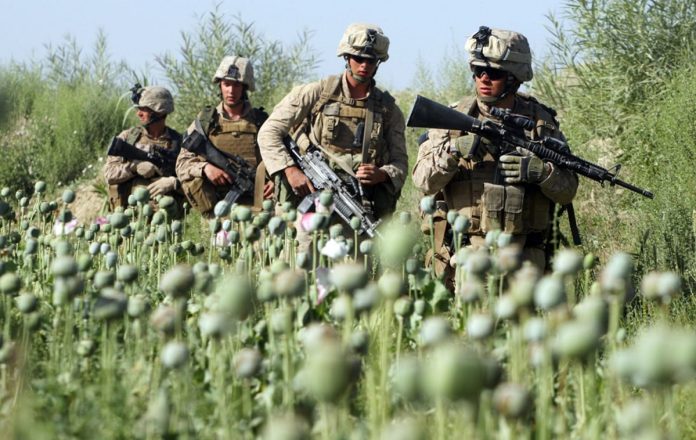
US Troops Afghanistan

Ahmad Vahidi said the main culprits behind the promotion of drug use are some Western intelligence agencies and Western politicians.

He was speaking at a ceremony marking the International Day against Drug Abuse and Illicit Trafficking in Tehran on Sunday.

The Iranian interior minister thanked the United Nations for its positive efforts in this regard but noted that the West’s fight against narcotics is not genuine and is little more than window dressing.

He blamed the current dire economic situation in Afghanistan on the US and its allies, saying they brought bombs, terrorism and crime to Afghanistan instead of boosting its industries and agriculture.

The interior minister said an important stage in narcotics today is the production of industrial drugs, which is being done at labs in Western countries.

Vahidi added that the production of industrial drugs is a lucrative business for the Western countries.

He demanded that Western banks control the financial operations of narcotrrafickers, saying it’s questionable that financial institutions in the West turn a blind eye to the issue.

Vahidi said Iran is now going it alone in the fight against narcotics but instead of being thanked, it’s getting accused by its adversaries under various pretexts.

He underscored that 3,850 Iranian security forces have been killed on the line of duty in the war on drugs and 12,000 others have been injured.

Vahidi said despite that, Iran has received meager assistance to carry on the fight.

Iran to unveil missiles with 300-km range in near future

Iran Missile

“The only way to counter all sanctions and threats is to become stronger in all matters, especially in the military field,” stated Elhami in a meeting with some forces of the army, the IRGC and the police of the Islamic Republic of Iran.

“Increasing the missile capability of the army and the IRGC is one of the requirements of deterrence and protection of national interests, which must be further enhanced,” he added.

He pointed out that the missiles with a range of 300 km will be unveiled by the army air defense in the near future, noting that the development of missile capability is a symbol of self-reliance and independency.

Elhami also noted that Iranian armed forces are capable of observation, identifying and tracking all aircraft, drones, and fighters within the air borders of the country, especially in the Persian Gulf region, adding that any threats against Iran will be decisively responded to.

297 new covid cases, 2 deaths registered in Iran

COVID in Iran

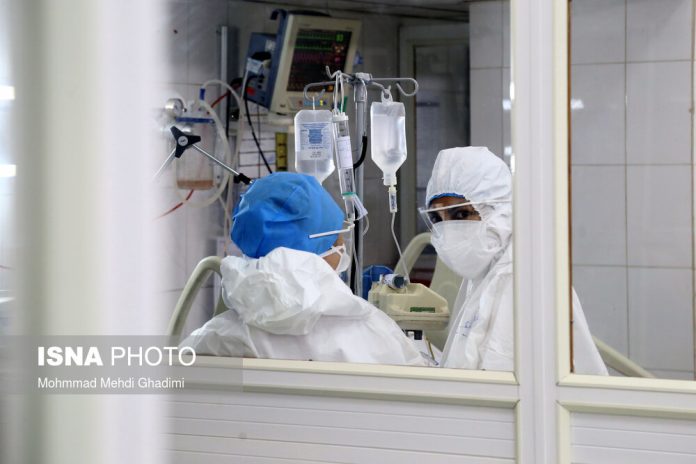
The number of deaths from the coronavirus pandemic in Iran increased to 141,385 with two more Iranians killed by the deadly disease over the past 24 hours, the Iran’s Health Ministry announced on Sunday.

297 new cases of infection with the COVID-19 were found over the past 24 hours, 40 of whom were hospitalized, it added.

The Iranian Health Ministry noted that 7,061,727 patients out of a total of 7,236,361 infected people have recovered or been discharged from hospitals.

215 COVID-19 patients are in critical conditions and in intensive care units, it said.

The Health Ministry also added that 64,631,064 Iranians have received the first dose and 57,978,548 people have so far received the second dose of the COVID-19 vaccine.

Moreover, 27,713,666 people have also received the third shot as the booster jab.

Iraqi PM in Tehran for talks, officially welcomed by President Raisi

Ebrahim Raisi & Mustafa al-Kadhimi

Kadhmi was officially received by Iranian President Ebrahim Raisi after his arrival on Sunday.

The Iraq prime minister is going to hold talks with Iranian officials over bilateral and internationals issues.

Before travelling to Iran, Kadhmi visited Riyadh where he met with Saudi Crown Prince and de factor ruler Mohammad bin Salman.

Kadhimi and bin Salman underlined Iraq’s role in bringing views of regional countries closer together for promoting regional peace.

Iraq has brokered several rounds of talks between Iran and Saudi Arabia.

The negotiations are meant to pave the way for normalization of ties between Tehran and Riyadh that were severed by the Saudis in 2016.

Iran parliament seeking to replace manager of natl. soccer team

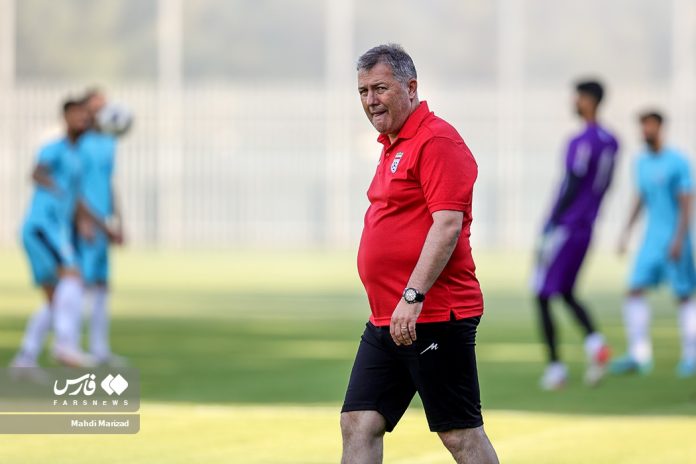
Dragan Skočić

“In the parliament’s corridors, I’m hearing from members of the [legislature’s] Sports Bloc that they are seeking to change the head coach of the national team and replace him with an Iranian manager,” said Vice Parliament Speaker Ali Nikzad.

He said there are indications that legislators are not satisfied with Skočić’s performance.

He noted lawmakers are paying due regard to sports federations, especially that of soccer, particularly in the year when World Cup competitions are to be held.

The MP added legislators are attaching special significance to soccer in the short period of time left until the 2022 Qatar World Cup contests.

Iran’s national soccer team (Team Melli) is in Group B with England and the United States at the World Cup, which kicks off Nov. 21 in Qatar.

Report: Qatar likely to be new host of fresh talks on revival of Iran deal

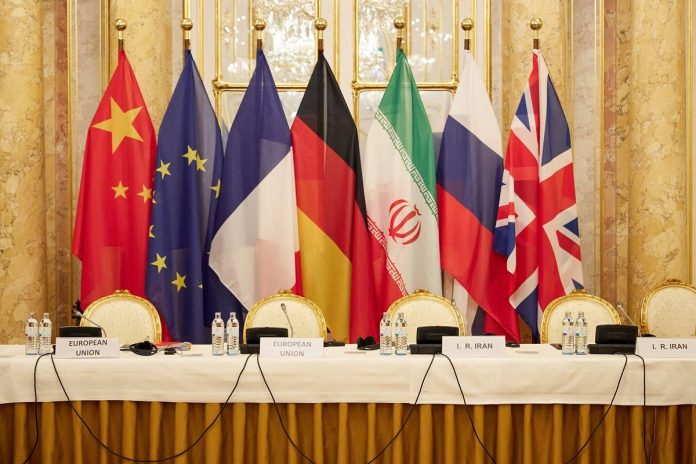
Nuclear Negotiations in Vienna

In an article on Sunday, Nour News, which is affiliated with Iran’s Supreme National Security Council (SNSC), highlighted a “lengthy and unannounced” meeting that took place a day earlier between the European Union’s foreign policy chief, Josep Borrell, and SNSC Secretary-General Ali Shamkhani in Tehran.

Borrell announced during the trip that Iran and the other parties to the 2015 nuclear deal had agreed to resume their negotiations, which hit an impasse in Vienna, Austria months ago.

Unlike the previous rounds, however, the fresh round of negotiations will not take place in Vienna and will instead be held in a place closer to the Persian Gulf, Borrell said.

Following Borrell’s visit to Iran, “all eyes are on the location and date of the future talks and how” they will be held, Nour News said.

Citing “obtained information,” the report said, “Given Qatar’s constant efforts toward a resumption of the sanctions removal talks, it has a higher chance of [being chosen] as the host of the future round of negotiations compared to the other Persian Gulf littoral states.”

Tehran has assured that if the other parties to the negotiations return to their commitments under the nuclear deal, it will follow suit.