Friday, January 16, 2026
Home Blog Page 1801

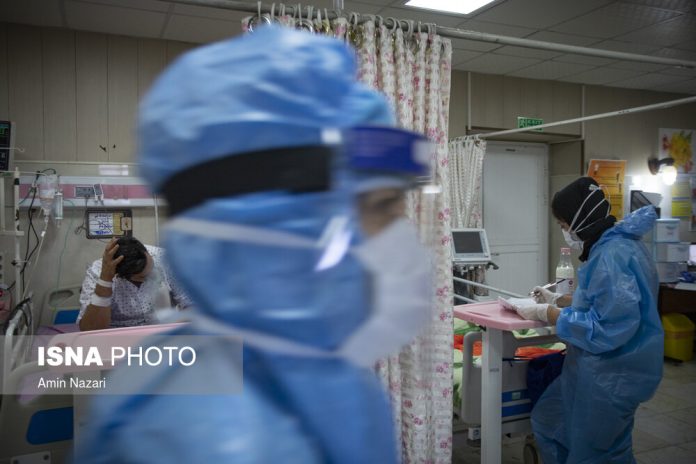
Iran records rise in cases of cholera, Crimean-Congo fever

COVID in Iran

Maryam Massoudifar, who heads the Health Ministry’s department tracking diseases caused by contaminated food and water sources, told ISNA that 65 people had been diagnosed with cholera in different provinces.

She said men constitute the majority of cholera patients, and that most of those infected had a history of traveling to neighboring countries.

The official said no death had so far been recorded due to cholera.

Cholera is an acute diarrheal illness caused by infection of the intestine with Vibrio cholera bacteria. People can fall sick by having food or water contaminated with the bacteria.

Meanwhile, Behzad Amiri, the head of the ministry’s department dealing with the diseases transmitted from animals to humans, said in an interview with ISNA that the cases of infection with the Crimean-Congo fever had soared to 63, out of whom five lost their lives.

The CCHF virus is typically spread by tick bites or close contact with the blood, secretions, organs or other bodily fluids of infected persons or animals.

Farmers and those who work in slaughterhouses face a higher risk of the infection.

Advisor to Iran negotiating team urges compensation if US exits nuclear deal

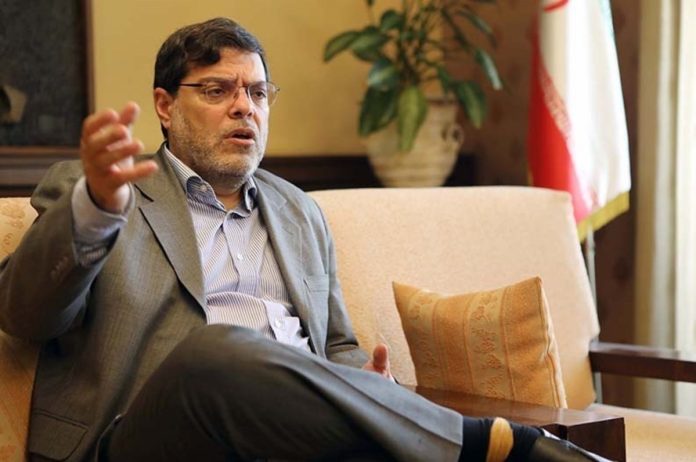
Mohammad Marandi

Mohammad Marandi, told Al Jazeera making it costly for any party to quit the deal aims to strengthen the agreement and will be beneficial to all sides.

He added that one aspect of doing so is about nuclear guarantees and the other one is about economic, political and legal assurances.

The adviser to the Iranian negotiating team noted that economic guarantees mean making foreign companies immune against US sanctions.

Meanwhile, Russia’s top negotiator in the Vienna talks, Mikhail Ulanov, said Iran’s demand for inserting a compensation provision in the EU’s proposed draft deal is logical.

On Monday, Iranian Foreign Minister Hossein Amirabdollahian said if the US shows flexibility, a deal will be reached in the coming days.

Iran has already delivered its response to the EU’s proposed draft deal. Tehran has repeatedly said that it is ready for a deal that would guarantee it will enjoy full economic benefits from such an agreement.

Report: EU views Iran’s response to nuclear draft deal constructive

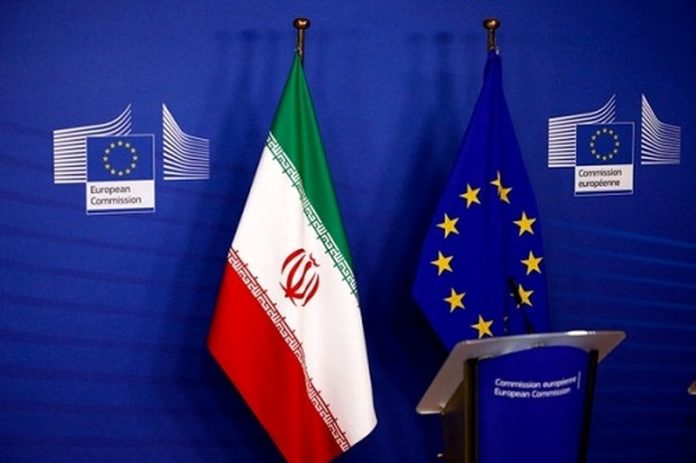
Iran and EU Flags

The remark is among the first positive signs about Iran’s response, officially delivered on Monday evening to the European parties as the coordinator of the months-long talks aimed at reviving the Joint Comprehensive Plan of Action (JCPOA) after Washington withdrew from the deal in 2018.

This European official, who spoke on condition of anonymity, added that Iran’s response to the European proposal needs to be further studied by the parties involved in the talks.

As a last-ditch effort the EU circulated a “final” proposal aimed at rescuing the landmark deal last week, saying it the last remaining hope to salvage the deal and lift US-speared sanctions on Iran.

Meanwhile, Russia’s representative in the talks Mikhail Ulyanov said the Islamic Republic’s response to the European side was constructive.

Ulyanov was quoted as saying by Russia’s Sputnik that Tehran has asked for guarantees to protect the restored JCPOA, adding the ball is in US court to decide whether it wants to return to the nuclear accord.

“One of the amendments that the Iranians introduced yesterday is precisely aimed at strengthening the guarantees,” Ulyanov said on Tuesday, adding an imminent meeting at the level of foreign ministers on the agreement and lifting of sanctions is not unlikely.

Tehran had already announced it needs written sanctions relief and economic engagement guarantees to reap the benefits of the nuclear pact.

Leader’s aide: Iran backs ‘One China’ policy, opposes US encroachments

Ali-Akbar Velayati

In a meeting on Tuesday with Beijing’s Ambassador to Tehran Chang Hua, Ali-Akbar Velayati referred to Washington’s threats against China’s territorial integrity and said “the enemies’ conspiracies, encroachments and threats should be faced with resistance.”

He reaffirmed Tehran’s support for the globally-recognized ‘One China’ policy and said Beijing is “considered to be a strategic ally” of Tehran.

Velayati said Russia is also facing similar threats by the US-led NATO military alliance, calling for closer defense cooperation among Tehran, Beijing and Moscow.

“Undoubtedly, Iran-Russia-China cooperation in the region, such as the holding of joint drills, is highly important for the region’s security and fate. Iran stands ready to further expand such cooperation,” he said.

The veteran Iranian politician said Iran and China enjoy long-running cultural, historical and friendly relations, which have had positive effects on both states.

Velayati also pointed to China’s Belt and Road Initiative and said Iran possesses great capacities that could contribute to the strategy.

In turn, the Chinese diplomat stressed the need for serious follow-up on the enhancement of Tehran-Beijing relations.

He said ties between the two nations are based on mutual respect and leaders of both countries have exerted great efforts to lay the foundation of such relations.

Chang also thanked Iran for its positions as well as its support for the Belt and Road Initiative and said the Islamic Republic is viewed in Beijing as a very important state in the project.

Russia’s “Special Operation” in Ukraine; Day 175: UN chief to meet with Zelensky and Erdogan in Ukraine

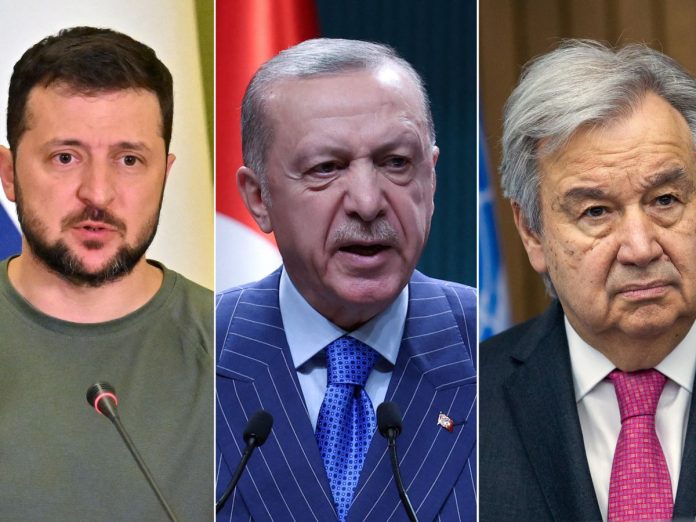
Zelensky Erdogan Guterres

Alexey Navalny believes West should sanction 6,000 oligarchs identified by his foundation

Western nations are not doing enough to punish Russian oligarchs with close ties to Russian President Vladimir Putin, according to prominent Kremlin critic Alexey Navalny.

Navalny, who is serving a prison sentence that Putin’s critics say is politically motivated, wants Western governments to sanction thousands of people his organization, the Anti-Corruption Foundation, accuses of wrongdoing.

“We must get the foreign officials to support our list of 6,000 or create their own instead of babbling on endlessly, and actually do what has been loudly and fervently proclaimed since the first day of the war,” Navalny wrote on Twitter.

According to Navalny, only 46 out of the 200 Russian oligarchs from the Forbes list have been sanctioned by the West. Others, despite their close ties to Putin, were spared.

The jailed Kremlin critic also proposed imposing a 20-year travel ban to the UK, the US and the EU for Russian officials and oligarchs who publicly support the war in Ukraine.

Navalny decried the fact that Alexei Miller, the head of Russia’s state-run energy giant Gazprom and purportedly a friend of Putin’s, is not on the European sanctions list.

Navalny also questioned why the US had not sanctioned Roman Abramovich, the former owner of Chelsea football club. Navalny claims Abramovich supplies metal to the Russian defense ministry.

Abramovich was sanctioned by the UK government in March and forced to sell the club, despite repeatedly denying that his business activities merited any punishment.


Russian-appointed leader of Crimea: Arms depot explosions continued into Wednesday

The Russia-appointed regional leader in Crimea, Sergei Aksyonov, has said detonations at an ammunition depot near Dzhankoi continued into Wednesday.

Aksyonov stated the last explosions were at about 8:15am local (5 GMT) and two fires were still burning, according to the Associated Press news agency.

He added efforts were underway “to get all the machinery off the ground and finish extinguishing fires” by the afternoon.

Russia has announced saboteurs were responsible for a series of explosions at strategic sites on the annexed peninsula.


Russia says it has neutralised ‘terrorist’ cell in Crimea

The top official in Russian-annexed Crimea has said Russia’s Federal Security Service (FSB) had arrested the members of a six-person “terrorist” cell, a day after explosions rocked one of Russia’s military bases there.

“All of them are detained. The activities of the terrorists were coordinated, as one would expect, from the territory of the terrorist state of Ukraine,” Sergei Aksyonov, the official, said on the social messaging app, Telegram.

Aksyonov added the suspects were members of the group Hizb ut-Tahrir, which is banned in Russia.

An FSB statement did not say whether the detained individuals were linked with explosions on Tuesday at a base in Dzhankoi in northern Crimea and last week at a Russian military base in western Crimea. However, it mentioned Dzhankoi, along with the city of Yalta, as the two locations where the alleged cell had been ‘neutralised’.


Ukraine says Russia fired on northern city from Belarus

Russia flew Su-34 fighter jets in Belarussian airspace to launch missiles on the Ukrainian city of Zhytomyr, a major transportation hub that links to the capital Kyiv, the Ukrainian Air Force claimed.

The strike on the northern city Tuesday damaged an airfield and surrounding infrastructure, officials said, adding that Russia had also used Kh-59 tactical land-attack missiles.

Elsewhere in the northern and eastern regions of the country, fighting raged as Russian forces focused on taking territories still under Ukrainian control. Ukrainian officials reported shelling in multiple cities including Sloviansk and Kramatorsk.

The city of Kharkiv, the country’s second largest, was also targeted.

“In the Bohorodychne district, enemy tried to conduct an offensive battle, was unsuccessful, and withdrew. Fighting continues near Mazanivka and Novodmytrivka,” the military’s General Staff said, noting, “The enemy was conducting aerial reconnaissance in the Kramatorsk area. Near Spirne, the invaders decided to go on the offensive, suffered losses and retreated.”

The General Staff added that Russian forces had also been trying to take control of the Donetsk town of Bakhmut but Ukrainian forces continue to hold it, despite air and missile strikes, and intense shelling.

“[Russia] led offensive and assault actions near Zalizne, Shumy and Zaitseve, was unsuccessful, withdrew,” the General Staff said, adding, “Fighting continues in the Soledar and Bakhmutske districts.”


Satellite images show first grain shipment out of Ukraine in Syria

The first shipment of grain to leave Ukraine under a deal brokered by the UN and Turkey in late July, appears to have ended up in Syria, satellite images from Planet Labs PBC analysed by The Associated Press show.

The arrival of the ship in Syria has raised eye-brows, as Damascus remains closely aligned with Russia and has cut diplomatic ties with Ukraine. Syria had previously received Ukrainian grain taken from Russian-occupied areas in the weake of the February 24 invasion.

The arrival of the cargo ship Razoni in Syria comes after the government in Kyiv praised the ship’s initial departure from the port of Odesa as a sign that Ukraine could safely ship out its barley, corn, sunflower oil and wheat to a hungry world where global food prices have spiked since the invasion began.

But its arrival in Syria’s port of Tartus shows how complicated and murky international trade and shipping can be.


Zelensky warns Ukrainians in occupied areas to stay clear of Russian military sites

President Volodymyr Zelensky has warned Ukrainians living in occupied areas to stay clear of Russian forces’ military facilities.

“Every day and every night, we see new reports of explosions in the territory temporarily occupied by the occupiers. I am asking now all our people in Crimea, in other areas, in the south of the country, in the occupied areas of Donbas and Kharkiv region to be very careful. Please do not go near the military facilities of the Russian army and all those places where they store ammunition and equipment, where they keep their headquarters,” Zelensky said in his daily video message.

Zelensky’s remarks follow a series of explosions in Crimea Tuesday and a surge in attacks on Russian ammunition depots and supply lines in occupied parts of southern Ukraine in recent weeks.

“The reasons for the explosions in the occupied territories can be different, very different. Including, I quote the definition of the occupiers themselves as ‘bungling,’ but they all have the same meaning. The destruction of the logistics of the occupiers, their ammunition, military and other equipment, and command posts saves the lives of our people,” he added.

Ukraine has not officially announced it was responsible for last week’s major attack on an airbase in Crimea, which destroyed at least seven military aircraft, nor Tuesday’s explosions that appear to have destroyed a large stock of munitions.

Referring to long queues of traffic seen leaving Crimea for Russia last week, after the air base attack, Zelesnky stated, “The queue these days to leave Crimea for Russia via the bridge proves that the absolute majority of citizens of the terrorist state already understand or at least feel that Crimea is not a place for them. “


Russians are shelling positions up to 800 times daily: Ukrainian official

Valeriy Zaluzhny, the commander-in-chief of Ukraine’s armed forces, has acknowledged that Russian forces “continue to advance” in Donbas but said the “intense” situation is “fully controlled.”

“I have informed my counterpart about the situation at the front line. It is intense but fully controlled,” Zaluzhny stated after talking with Gen. Wayne Donald Eyre, chief of the Defence Staff of Canada.

Zaluzhny added that “the enemy continues to advance along the entire front line. At the same time, the enemy carries out approximately 700-800 [actions of] shelling of our positions every day, using from 40 to 60,000 pieces of ammunition.”

That estimate is in line with many made by Western analysts about the volume of ammunition being used by Russian forces, after a relative lull in early July.

“The enemy’s main efforts are concentrated on pushing our troops back from the Donetsk oblast. The most intense situation is now on the axis of Avdiivka-Pisky-Mariinka,” Zaluzhny continued.

That axis is a stretch of some 25 kilometers (15 miles) west of Donetsk.


Half million tons of grain exported from Ukraine: UN

More than half a million tonnes of grain have been exported from Ukraine across the Black Sea since the beginning of August, the United Nations has announced.

Since Ukraine, Russia, Turkey and the UN agreed to open the Black Sea route at the end of July, 36 passages have been approved, the UN said, adding that 21 ships left Ukraine for the Bosporus Strait and 15 moved through the channel in the direction of the war-torn country.


Ukraine nuclear agency reports cyberattack on its website

Ukraine’s nuclear agency Energoatom has reported what it called an “unprecedented” cyberattack on its website, but said its operations had not been disrupted.

“On August 16, 2022, the most powerful cyberattack since the start of the Russian invasion occurred against Energoatom’s website,” the agency said on Telegram. It “was attacked from Russian territory”, it added.


Erdogan, Guterres and Zelensky to meet Thursday in Ukraine

Ukrainian President Volodymyr Zelensky, his Turkish counterpart Recep Tayyip Erdogan and UN chief Antonio Guterres will meet in Ukraine on Thursday, the United Nations has announced.

“At the invitation of President Volodymyr Zelensky, the secretary-general will be in Lviv on Thursday to attend a trilateral meeting with President Recep Tayyip Erdogan of Turkey and the Ukrainian leader,” Guterres’s spokesman stated Tuesday.

Guterres will then visit the Ukrainian port city of Odesa on the Black Sea on Friday before heading to Turkey.


Polish PM says France, Germany run EU as ‘oligarchy’

Poland’s prime minister on Tuesday said France and Germany were running the European Union like a “de facto oligarchy,” ignoring voices, such as Poland, that had long warned of Russian expansionism.

“Many European leaders let themselves be seduced by Vladimir Putin. They are now in shock,” Mateusz Morawiecki wrote in an op-ed for French daily Le Monde.

“The return of Russian imperialism should come as no surprise to us,” he added.


German troops return to Bosnia amid instability due to Ukraine war

Germany has sent troops to Bosnia and Herzegovina to join the European Union’s peacekeeping mission for the first time in 10 years as concerns mount about instability from the Ukraine war spilling over to the Western Balkans.

On Tuesday, the first German troops to return to the country were greeted in a ceremony at the Sarajevo headquarters of the EUFOR force that marked the start of their mission, a German military spokesman said.

Germany will deploy some 30 troops in total to Bosnia by mid-September, returning to the force that it had left at the end of 2012.


Zelensky condemns ‘Russia’s nuclear terrorism’ in call with Macron

President Volodymyr Zelensky has said he had discussed “Russia’s nuclear terrorism” at the Zaporizhzhia nuclear power plant in southern Ukraine during a call on Tuesday with French President Emmanuel Macron while calling for more sanctions on Moscow.

“Continued dialogue with French President Emmanuel Macron. Informed about the situation at the front, Russia’s nuclear terrorism at the ZNPP (Zaporizhzhia nuclear power plant),” Zelensky wrote on Twitter.

“Thanked (him) for France’s tangible defense aid … We must increase sanctions on Russia,” he added.

Iran’s security chief briefs MPs on latest status of Vienna talks

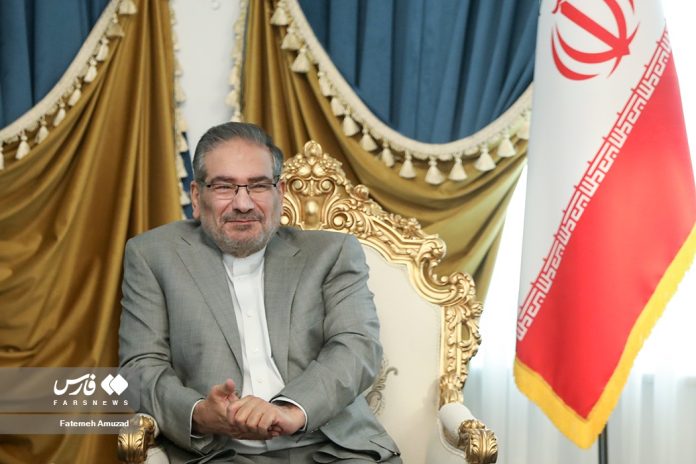
Secretary of Iran’s Supreme National Security Council Ali Shamkhani

Nour News, which is affiliated with Iran’s Supreme National Security Council (SNSC), reported on Tuesday that SNSC Secretary Ali Shamkhani had joined a meeting with a group of the legislators who sit on the Parliament’s National Security and Foreign Policy Committee.

Shamkhani, it added, provided them with a comprehensive report about the process of the Vienna negotiations, reviews of the EU coordinator’s initiatives, and the Islamic Republic’s views on the proposals.

During the session, which was also attended by Foreign Minister Hossein Amirabdollahian and Head of the Atomic Energy Organization of Iran (AEOI) Mohammad Eslami and top nuclear negotiators Ali Bagheri Kani, the lawmakers received answers for their questions revolving around various aspects of the EU’s proposal.

Shamkhani reaffirmed the government’s pivotal policy of not tying the Iranian economy to the outcome of the talks.

He said the law adopted by the parliament, titled the Strategic Action Plan to Lift Sanctions and Protect the Iranian Nation’s Interests, “places very good capacities for following up on the policy of active resistance at the disposal of the country.”

The top security official praised the Iranian negotiating team and other institutions involved in the process for exerting round-the-clock efforts toward achieving final results.

Regardless of achieving or failing to achieve a deal, no red line was crossed or will be crossed thanks to the good coordination among different sectors of the country, Shamkhani said.

During the meeting, Bagheri Kani and Eslami also provided explanations to the lawmakers and answered their questions.

Iran confirms first case of monkeypox

Monkeypox

A spokesman for the Iranian health ministry said a 34-year-old woman in the southwestern city of Ahvaz has been put under quarantine after testing positive for the disease.

There are three ways one can contract monkeypox: Direct skin-to-skin contact with an infected person; touching contaminated surfaces, objects, or fabrics; and contact with respiratory secretions like mucus.

But the dominant way to catch and spread monkeypox is by touching an infected person.

The World Health Organization (WHO) reports monkeypox death rates around 3%–6% in recent years, and rates as high as 11% historically.

Most monkeypox infections are mild and resolve without treatment, so many people may not seek care unless they are very ill.

Famous Iranian photographer dies of brain hemorrhage

Babak Borzouyeh

A union member of Iran’s photographers’ guild said hypothalamic hemorrhage caused Borzouyeh to lose consciousness and made his surgery very risky.

A friend of his also said Borzouyeh’s family was shocked when they were informed of his death.

Borzouyeh suffered a stroke in the autumn of 2017 as well.

He worked as photographer with many famous Iranian filmmakers like Rasoul Molla Ghilpour, Ahmadreza Darvish, Masoud Kimiaie and Pouran Derakhsahndeh.

Borzouyeh won the Award of the Best Film Photographer for Molla Gholipour’s movie “A Journey to Chazabeh” in 1996.

Borzouyeh is viewed as one of the most prolific art photographers in Iran as he has worked in more than 10 TV series, 35 long and short films and over 200 dramas.

He died in Tehran on Tuesday at the age of 52.

Iran’s ex-foreign ministry spokesman: US has shown flexibility in nuclear talks

Robert Malley

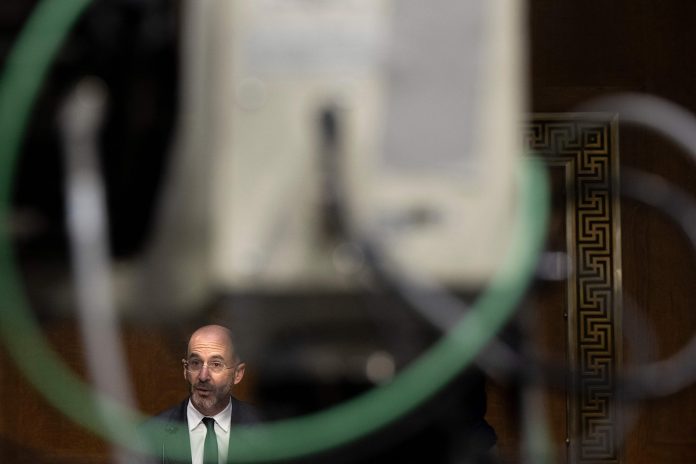
Hamdireza Asefi told ISNA that it was not just Iran that was flexible in the Vienna negotiations over the revival of the JCPOA and lifting anti-Iran sanctions.

He noted that Iran and the P4+1 group – Russia, China, Britain, France and Germany- are closer than ever to clinch a deal to revive the 2015 nuclear agreement.

Asefi said that a few minor issues remain to be resolved on which all sides must find common ground.

He however said a deal will not be reached until the parties to the Vienna talks agree on everything.

The former Iranian ambassador to Germany declined to say if he was optimistic about the outcome of the talks, saying, “As a person who worked in the foreign policy field for many years, I am neither optimistic nor pessimistic, but I view things realistically.”

Asefi said what matters in the talks is that the US should avoid taking wrong actions and if it really wants a deal, it needs to show flexibility, and this has happened with regard to some issues. Iran and the US both say all sides are close to reaching a deal to revive the JCPOA.

This comes as the parties have been engaged in talks for nearly a year to achieve that goal.

Swedish citizen arrested in Iran likely to face new charges: Judiciary spokesman

Iran Court

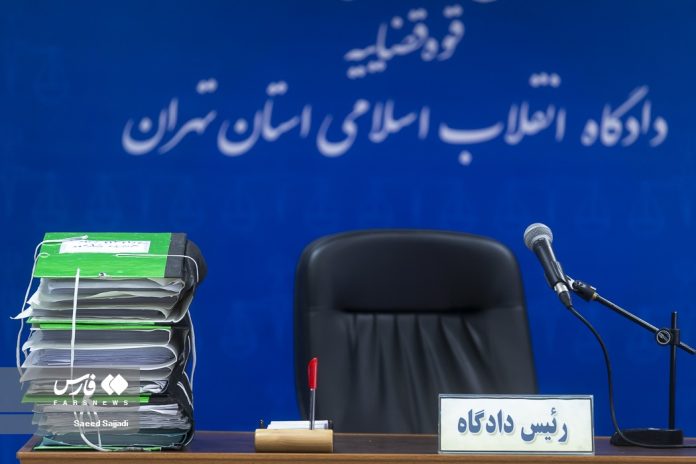
“The Swedish national has been detained on charges of spying. Preliminary investigations are underway. There is a possibility that other charges will be brought against the individual later,” said Massoud Setayeshi in a presser on Tuesday in Tehran.

The arrest was announced by the Iranian Intelligence Ministry late last month.

The unidentified Swedish citizen had been under surveillance during several earlier trips to the Islamic Republic before being detained.
The Swedish citizen is said to have established links with a number of other European and non-European suspects in Iran. The individual had a history of travelling to the Israeli-occupied territories prior to visits to the Islamic Republic.

The arrest has fueled diplomatic tensions between Tehran and Stockholm, which first broke out after Sweden arrested ex-Iranian official Hamid Nouri in 2019.

In mid-July, a life sentence was handed over to Nouri based on what Iranian authorities call unfounded allegations made by the notorious Mujahedin-e-Khalq Organization (MKO) terrorist group.

Elsewhere in his comments, Setayeshi said Nouri was being held under “the harshest conditions.”

“The court ruling has not yet been conveyed to Hamid Nouri in Persian, while the deadline for appealing the verdict is drawing near,” he said.

The official added, “We expect the Swedish government and judicial system not to make excuses for [preventing] Nouri from exercising its fundamental rights,” unlike what happened in the preliminary court.