Sunday, December 28, 2025
Home Blog Page 179

Former Iranian FM warns parliament against pushing for leaving NPT 

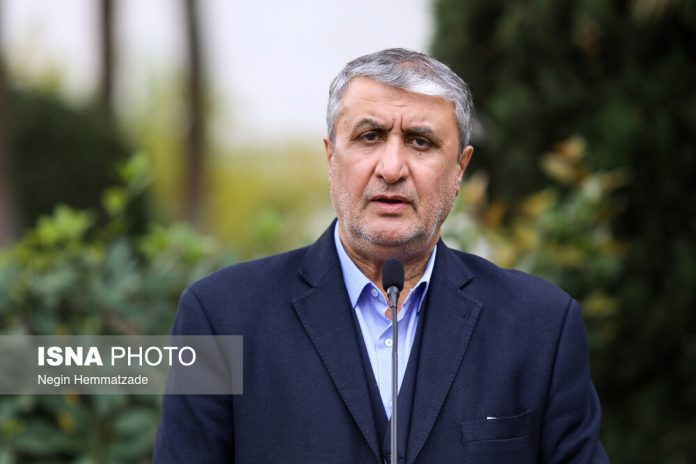
Salehi made the remark in an interview with Entekhab onlione news outlet when he was asked about the parliamentary initiative to withdraw from the NPT.

The ex-head of the Atomic Energy Organization of Iran also said the issue of leaving the NPT has both a religious dimension and a governmental dimension. He added that, in his view, discussing this matter is exclusively within the leader’s jurisdiction, as his decree carries both religious and governmental authority.

Salehi underlined that individuals or governmental bodies, such as parliament, should not express opinions on such matters without consulting the leader, because such statements could be exploited by enemies due to Iran’s unique position in the international arena, potentially complicating the country’s diplomatic efforts.

Kayhan editor-in- chief: E3  snapback move continuation of 12-day war

as a continuation of the recent 12-day war waged by the Zionist regime against Tehran.
He slammed the E3 after the three European powers submitted a letter to the UN Security Council to trigger the “snapback” mechanism and reinstate UN sanctions on Tehran.

In an editorial, Shariatmadari described the move as “illegal, humiliating, and extortionate”, opposing continued negotiations with Europe under such conditions.

He noted that Washington’s concern lies less with Iran’s nuclear program and more with its growing technological and military power.

He further welcomed a decision by Iranian lawmakers to draft a triple urgent bill to compel the government to withdraw from the Nuclear Non-Proliferation Treaty (NPT). Shariatmadari said the move is a necessary “retaliatory measure”.

Iran urges EU to stop “selective interpretations” of JCPOA

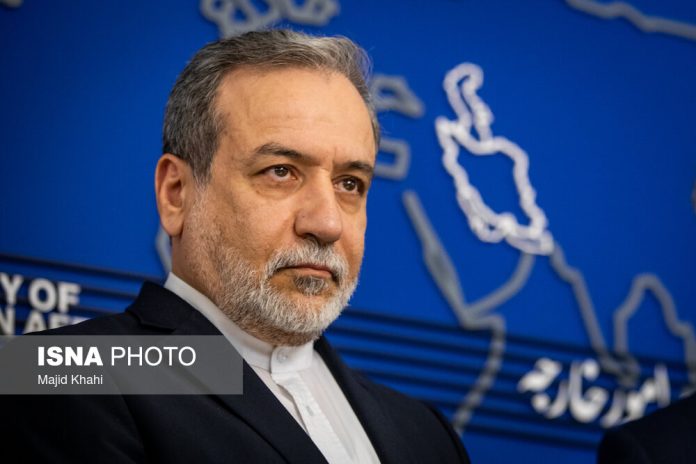
Abbas Araghchi

In a letter to EU foreign policy chief Kaja Kallas, who serves as coordinator of the JCPOA Joint Commission, Araghchi criticized “biased and distorted narratives” regarding the implementation of the deal and its dispute-resolution mechanism.

The remarks followed the decision by the three European parties to the JCPOA to trigger the snapback mechanism at the UN Security Council in order to reinstate sanctions on Iran.

He reiterated that Iran activated the mechanism in May 2018 after the US withdrawal from the JCPOA and Europe’s “failure to fulfill commitments to normalize trade and economic ties with Iran.”

He added that Russia and China also reject European attempts to trigger the mechanism or reinstate UN sanctions.

Araghchi also said the EU and the E3, France, Germany, and the UK, have failed to meet key obligations, including those tied to the JCPOA’s “transition day” in October 2023, ignoring illegal attacks on Iran’s nuclear sites by the US and Israel.

Despite the criticism, Araghchi emphasized that Iran “remains committed to diplomacy” and is prepared to resume “fair and balanced negotiations,” provided other parties demonstrate seriousness.

Iran’s ambassador denies Australia’s anti-Semitism allegations

Speaking to reporters at Sydney Airport, Sadeghi also dismissed Australia’s renewed travel warning advising citizens not to visit Iran, stating that Australians “will be safe” if they travel to the country.

The move follows comments by Australian Prime Minister Anthony Albanese, who reiterated his government’s advice against travel to Iran and announced plans to designate Iran’s Islamic Revolution Guard Corps (IRGC) as a “terrorist organization,” citing alleged links to anti-Semitic incidents in Melbourne and Sydney last year.

Sadeghi said the accusations were “part of a conspiracy” aimed at undermining relations between the two countries and said Australia’s actions were influenced by “the anger of the Zionist regime” over Canberra’s stated intention to recognize an independent Palestinian state.

The ambassador added that despite the diplomatic tensions and his expulsion, “Iran has very good feelings toward Australia,” highlighting a “positive mission” during his two-and-a-half-year tenure.

Sadeghi condemned last year’s anti-Semitic attacks in Australia but denied any Iranian involvement.

Iranian lawmaker chides European move on JCPOA dispute mechanism

In an interview with Tasnim News Agency, Boroujerdi said the European action is “mainly an attempt to exit political isolation and to project influence in international affairs,” adding that its primary purpose is to exert “psychological and economic pressure” on the Iranian public.

He noted that the US unilaterally withdrew from the deal in 2018 and argued that European signatories have also failed to uphold their commitments. “If there is any violator of the JCPOA, the US comes first, with the Europeans in second place,” he said.

Boroujerdi added that Russia and China, both permanent members of the UN Security Council, have openly rejected the European move, making a return of pre-2015 UN sanctions unlikely.

He emphasized that Iran will not yield to external pressure and remains committed to the peaceful use of nuclear technology.

Spox: E3 Move Against Iran Follows Orders of JCPOA Violator

Esmael Baghaei

In a post on the social media platform X, Ismail Baghaei, questioned the independence and “credibility” of the three European states, the UK, Germany, and France, as “negotiating partners.”

He stressed that their attempt to revive the annulled UN Security Council resolutions against Iran reflects a distorted notion of a “credible negotiating partner” in a so-called rules-based international order—one in which force creates rights and the “chief violator” dictates the rules of the game.

According to Baghaei, the decision of the three European countries to initiate the process of reimposing the canceled Security Council resolutions against Iran stems neither from a legal obligation nor from a rational assessment.

He added that, as US Secretary of State Marco Rubio admitted in his August 28 press statement, the move is based on a directive from the US President under Presidential Memorandum No. 2 dated February 4, 2025.

Baghaei underlined that this is being driven by a party that is not a JCPOA member, has been the main violator and destroyer of the agreement, unilaterally withdrew from it in 2018, and triggered a chain of adverse developments that continues to this day.

Former Iranian foreign minister Zarif calls for paradigm shift in US relations

In an interview with Foreign Policy, he argued that decades of US confrontation and pressure, from Obama-era sanctions to Trump’s “maximum pressure” campaign, have failed to achieve their goals.

Zarif proposed that regional cooperation, not coercion, is the path forward.

He pointed to his previous initiative for a 3+3 regional consortium, including Iran, Russia, Turkey, the Republic of Azerbaijan, Armenia, and Georgia, as a model for fostering security and prosperity, suggesting even American companies could participate.

While acknowledging Iran suffered damage from recent attacks by the US and Israel, Zarif said the country proved it is “not a cost-free target” by standing firm against acts of aggression by nuclear-armed powers.

He reiterated that Iran is not seeking a nuclear bomb and stated the 2015 nuclear deal had definitively proven this peaceful intent.

Zarif disclosed that during the height of US-Iran tensions, intermediaries close to Donald Trump had approached him with informal proposals, some of which he described as “surreal.”

He also commented on Benjamin Netanyahu’s influence over US foreign policy, suggesting that the Israeli prime minister had “outsized sway” in shaping Washington’s stance toward Tehran.

The former diplomat concluded that building a different future is possible but requires both sides to move beyond failed policies of the past.

Iran sends letter to UN Security Council after activation of snapback mechanism

According to state media, Araghchi said the E3 letter “misrepresents facts” and seeks to undermine the legal basis of Iran’s measures taken after the US unilaterally withdrew from the agreement in May 2018 and reimposed sanctions.

He rejected claims that Iran triggered the JCPOA dispute-resolution mechanism only in July 2020, insisting the process was formally activated by Tehran in May 2018, in line with Articles 26 and 36 of the deal.

Araghchi warned that any attempt to extend provisions of Resolution 2231 beyond its scheduled expiration would be “illegitimate” and could deepen divisions within the Security Council.

He emphasized that Iran will take a “firm and proportionate” response while remaining open to “meaningful diplomatic engagement” aimed at achieving a new, balanced agreement that addresses all parties’ concerns, including sanctions relief.

Iran Foreign Ministry: E3 UNSC notification null, void, without legal effect

The statement says, this unjustifiable measure, being in contravention of the Dispute Resolution Mechanism (DRM) provided under the Joint Comprehensive Plan of Action (JCPOA), constitutes an illegal and unfounded attempt to reinstate annulled resolutions and stands in manifest contradiction to Resolution 2231 (2015).

It points out: “As emphasized repeatedly in numerous prior communications with the Security Council of the United Nations, the three European States possess neither legal nor moral standing to resort to the so-called “snapback” mechanism. Their notification is, therefore, null, void, devoid of validity, and without any legal effect whatsoever.”

It says, as confirmed by certain members of the Council, most notably China and Russia, the three European States have not observed the prerequisites of the dispute resolution mechanism envisaged in both the JCPOA and Resolution 2231. Their notification is thus a legally defective attempt to abuse Resolution 2231 for the purpose of pursuing a biased political agenda against Iran.
The statement adds given that these States have, over an extended period, gravely breached their obligations and aligned themselves with the unlawful withdrawal and coercive measures of the United States, they can in no manner lay claim to the status of “good-faith parties.”

It further points out that it was the United States, and not Iran, that unilaterally withdrew from the JCPOA and reinstated sanctions in 2018. It was the European Union and the three European States, and not Iran, that failed to fulfill their commitments to mitigate the economic consequences of the U.S. withdrawal.

The Foreign Ministry reiterated this decision of the three European States will gravely undermine the ongoing course of interaction and cooperation between Iran and the Atomic Energy Agency. Such provocative and unnecessary escalation shall be met with appropriate responses.

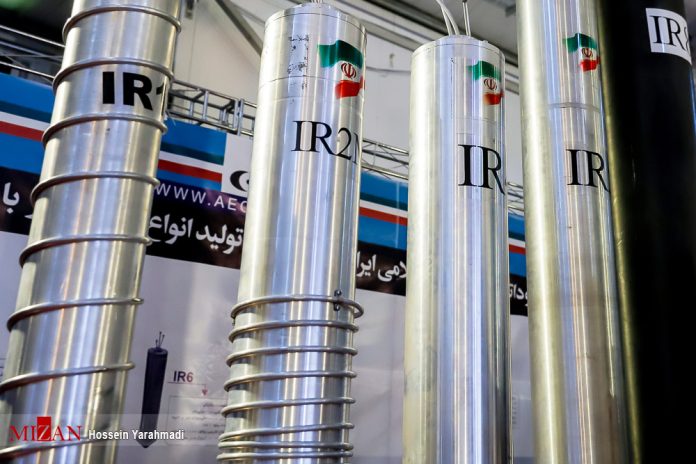
Iranian parliament initiates urgent plan to withdraw from NPT

The proposal, according to Hossein Ali Haji Deligani, will be uploaded to the parliamentary system on Friday and is expected to be reviewed in next week’s public sessions.

The move follows the recent activation of the “snapback mechanism” by Germany, France, and the United Kingdom as part of the 2015 Joint Comprehensive Plan of Action (JCPOA), aimed at reinstating sanctions on Iran.

“As predicted, these three countries have triggered the mechanism,” Haji Deligani told Tasnim News Agency, calling the measure neither surprising nor new.

He criticized Iran’s diplomatic team for continuing negotiations with European powers, accusing them of pursuing “futile talks” that have only emboldened Western nations.

The lawmaker noted that negotiations with these countries should be halted until they “abandon their double standards.”

He also slammed the US and Israel for their aggressive actions, including strikes on Iran’s peaceful nuclear facilities.

Haji Deligani said that “Iranian public opinion widely supports a tougher stance against Western powers.”