Sunday, December 28, 2025
Home Blog Page 180

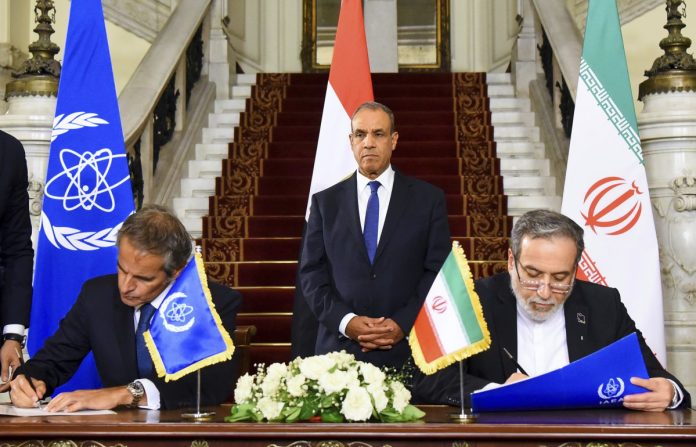
Iran ties IAEA cooperation to parliamentary law, natl. security council decisions

Mohammad Eslami

Mohammad Eslami said that assessments of damage inflicted on Iran’s nuclear facilities during the recent 12-day war are still underway, stressing that the process is lengthy due to the sensitive security conditions at the affected sites.

He emphasized that Iran’s nuclear program is a fundamental requirement for the nation’s scientific development and will continue despite external pressures.

Commenting on the latest exchanges with the IAEA, Eslami stated: “If the Agency reaches an arrangement with the Islamic Republic of Iran based on the law passed by Parliament, then the Supreme National Security Council will decide on the framework of cooperation.”

Iran warns of possible halt to IAEA cooperation if E3 triggers snapback mechanism

Iran Nuclear Program

Kazem Gharibabadi, Deputy Foreign Minister for Legal and International Affairs, stressed that Iran has repeatedly conveyed to European parties and the European Union that such an action would not go unanswered.

“For seven years, the Europeans have failed to implement the JCPOA,” Gharibabadi said, pointing to new sanctions imposed on Iran in sectors such as shipping and aviation.

“If they proceed with snapback, Iran will respond accordingly, and our current path of engagement with the IAEA will be completely affected, possibly halted.”

He added that Iran would formally notify the Security Council of its position if the European powers move ahead.

“It makes no sense to expect Iran to continue with cooperative measures while they pursue snapback. Europe will effectively exclude itself from diplomatic dialogue with Iran.”

The developments come as the E3 states have informed the UN Security Council that they are activating snapback sanctions against Iran, although if negotiations on a nuclear deal resume in the next 30 days, before the sanctions take effect, the snapback process will be halted.

European countries trigger process to reimpose sanctions on Iran

Nuclear Negotiations in Vienna

The three European countries, known as the E3, have been warning Tehran for weeks that United Nations sanctions could be reimposed by October when a 2015 nuclear agreement between Tehran and major powers expires.

At least 14 people killed in Russian missile and drone attack on Kyiv

Twelve people were reported killed when a five-storey residential building in the eastern Darnytskyi district was struck in the middle of the night, said Ukraine’s interior minister, Ihor Klymenko.

The victims included three children aged two, 14 and 17, one of whom died at the scene and two others in hospital. Ten more people were missing at the site as searches continued, the minister added.

A 13th person died in Kyiv’s central Shevchenkivskyi district, where an attack damaged buildings and offices near the railway station, including those housing the EU delegation to Ukraine and the British Council. The council in Ukraine announced on social media that its office had been “severely damaged” and would be closed to visitors until further notice.

The location of the 14th fatality was not immediately known.

President Volodymyr Zelenskyy said the onslaught showed that Russia had no intention of negotiating an end to the war.

“These Russian missiles and attack drones today are a clear response to everyone in the world who, for weeks and months, has been calling for a ceasefire and for real diplomacy,” the president wrote on social media.

“Russia chooses ballistics instead of the negotiating table,” he added.

Aerial bombardment of Kyiv had been relatively muted during August, when Trump made a failed attempt to bring about an end to the war by meeting Putin in Alaska.

But the overnight attack indicated Russia was ready to return to its deadly campaign of bombing cities, even though Trump has previously complained about such attacks and threatened to impose sanctions on Russian oil if they continued.

The Kremlin announced on Thursday it was “still interested” in diplomacy but would continue to launch strikes on Ukraine

IRGC spokesperson: Intelligence Operations key to Iran’s victory in 12-day conflict with Israel

IRGC

Speaking at a training session for Basiji university professors, Naeini emphasized that modern warfare success is measured by achieving strategic objectives and imposing national will.

He compared the 12-day conflict to Iran’s eight-year war, noting that while the previous conflict relied heavily on ground forces, the recent confrontation focused on airpower, missile capabilities, and advanced technology.

Iran responded within hours, reflecting a significant leap in defense capabilities.

Naeini highlighted that over 82 percent of Iranians viewed the country as victorious, and more than 120 international entities condemned Israel’s actions.

He noted key factors in Iran’s success included strong leadership, national unity, and an intelligence database maintained by the IRGC, which integrated information from cyber operations, infiltration, and field intelligence.

He also noted the role of counter-terrorism operations within Iran, including dismantling terrorist and weapons-smuggling networks, which prevented attacks during the conflict.

Naeini called for continued involvement of scholars, media, and scientific institutions to preserve and reinforce the narrative of Iran’s victory.

Iranian security forces discover explosives workshop linked to terrorist cell in Iranshahr

Iran Police

Brigadier General Mohammadreza Eshaqi, the provincial police commander, said the discovery was made during a follow-up operation after a major raid on Wednesday that targeted a militant cell.

During the operation, authorities seized 64 homemade electric detonators, 24 remote-control receivers, five hand grenades, two 40-millimeter grenades, five kilograms of homemade explosives, 11 wireless remote devices, 140 meters of explosive fuse, two reflective vests, one ready-to-detonate bomb, and various firearms and ammunition.

Eshaqi said the cell had planned to attack economic infrastructure, carry out explosions in crowded public areas, and destabilize the province by inciting fear and unrest.

The operation followed coordinated actions by the Quds Headquarters of Iran’s Islamic Revolution Guards Corps (IRGC) in Iranshahr, Khash, and Saravan, where 13 militants were killed in clashes with security forces.

The region has been the scene of fierce fighting between Iranian security forces and militants, mostly based on Pakistan. The terrorist attacks has claimed many civilian lives in recent months.

EU public skeptical of sending forces to Ukraine: WSJ

Russia Ukraine War

While some Western European leaders are contemplating the idea of dispatching thousands of soldiers to the country if the hostilities were to end, they have to “contend… with the inconvenient fact that many voters are opposed to any deployment that places troops in harm’s way,” the report says.

Unnamed European officials also told the WSJ that “it is difficult to secure public support without a clear US commitment to backstop any deployment.” US President Donald Trump has ruled out sending ground troops to Ukraine, but said Washington could provide other kinds of support.

Eastern European countries are generally cautious about shifting forces from their own borders, the WSJ noted, adding that opposition to troop deployment is particularly strong in Germany and Italy, where the historical memory of World War II still shapes public opinion.

In Germany, domestic opposition runs deep, spanning both right and left-wing parties; a recent Insa poll suggested that 56% there are opposed to sending troops to Ukraine.

France, one of the more vocal supporters of a potential European military force, has seen public opinion hinge on conditions. A March survey by Elabe found 67% supported sending troops if a peace accord is reached, but 68% opposed a deployment without one.

Meanwhile, the British public generally supports possible deployment, but several polls have indicated that it “wouldn’t want to provoke a direct confrontation with Russia,” the report says. Prime Minister Keir Starmer has also stressed the need for a US security backstop if UK forces were deployed – something Washington has not committed to.

Russia has consistently opposed the idea of NATO countries sending in troops. Kremlin spokesman Dmitry Peskov has stated the prospect of the bloc shifting its military infrastructure into Ukraine was “one of the root causes” of the conflict and has reiterated that Moscow views current discussions about deployments negatively.

Statue of legendary Persian archer ‘Arash Kamangir’ unveiled in Kerman

The unveiling ceremony, held on Jomhouri Eslami Boulevard, was attended by Minister of Culture Seyed Abbas Salehi, alongside the governor of Kerman, provincial officials, and city managers.

The event coincided with the Government Week celebrations, which honor public service and national development projects across the country.

Arash Kamangir, a heroic archer in Iranian mythology, is celebrated for his act of self-sacrifice in defining the borders of ancient Iran by shooting an arrow from the Alborz Mountains, a story deeply rooted in Persian literature and cultural heritage.

More in pictures:

62% of Americans support US sanctions on Russia’s trading partners: Poll

The latest Reuters/Ipsos survey, released Wednesday, found that 62 percent of U.S. adult respondents were in favor of the Donald Trump administration slapping sanctions on Moscow’s trading partners, including India and China.

Sens. Richard Blumenthal (D-Conn.) and Lindsey Graham (R-S.C.) spearheaded a massive sanctions bill in the upper chamber that, if adopted, would impose 500 percent secondary tariffs on Russia’s trading partners.

“We propose in our bill 500 percent. If it’s 250 percent, I could live with it. Even if it’s 100 percent, possibly,” Blumenthal said earlier this month, adding, “But you ought to impose bone-crushing sanctions that will stop them from fueling Russia’s war machine.”

On Wednesday, President Trump’s steep tariffs against India, now totaling 50 percent, went into effect. The administration stated it would impose additional import taxes on India’s purchases of Russian oil, arguing that New Delhi is helping to fuel the Kremlin’s continued military operations in Ukraine.

Trump met separately with Russian President Vladimir Putin and Ukrainian President Volodymyr Zelensky earlier this month to nudge the leaders closer to a ceasefire deal. The administration is also working to get the leaders to meet face-to-face.

In the poll, the large majority of MAGA-aligned Republicans, 76 percent, said they support imposing sanctions against Russian trading partners to help stop the more than three year war in eastern Europe. The majority of Democratic Party voters, 58 percent, were also for slapping sanctions on Moscow’s trading partners, according to the survey.

The Reuters/Ipsos poll was conducted Aug. 22-24 among 1,022 U.S. adults. The margin of error for the full sample is 3 percentage points.

Hamas accuses US diplomat of justifying Israeli genocide by blaming Palestinian group for failed ceasefire negotiations

Gaza War

Izzat al-Rishq, a member of Hamas’s Political Bureau, criticized Witkoff’s claims that Hamas disrupts Gaza ceasefire negotiations in a statement on Telegram.

Al-Rishq said these claims ignore Israel’s systematic obstruction of talks.

He characterized Witkoff’s statements as echoing Israeli Prime Minister Benjamin Netanyahu and his government while repeating the Israeli narrative.

Al-Rishq noted that the group accepted a ceasefire proposal mediated by Egypt and Qatar on Aug. 18 while Israel ignored it and began preparations to occupy Gaza City.

He added Witkoff’s statements showed bias toward Israel and provided Netanyahu with justification to continue Israel’s genocide in Gaza.

Israel’s Security Cabinet approved a plan to occupy Gaza City. The plan involves displacing approximately one million Palestinians southward, surrounding the city and occupying it after intense attacks.

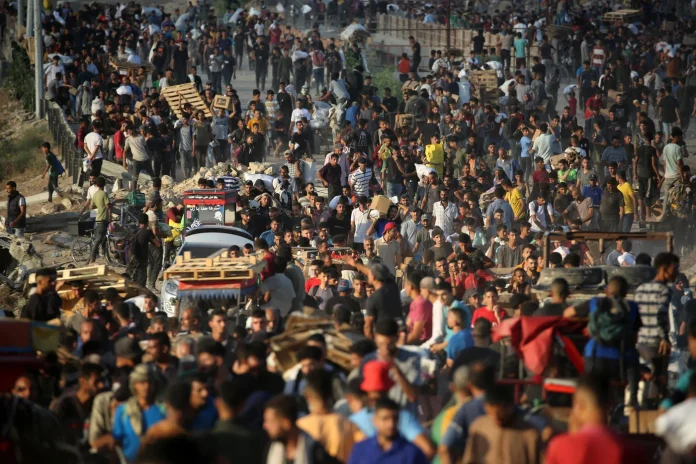
Israel has killed nearly 63,000 Palestinians in Gaza since October 2023. The military campaign has devastated the enclave, which is facing famine.

Last November, the International Criminal Court issued arrest warrants for Netanyahu and his former Defense Minister Yoav Gallant for war crimes and crimes against humanity in Gaza.

Israel also faces a genocide case at the International Court of Justice for its war on the enclave.