Sunday, December 28, 2025
Home Blog Page 181

Iran warns Europe IAEA interaction will stop if ‘snapback’ activated

Kazem Gharibabadi

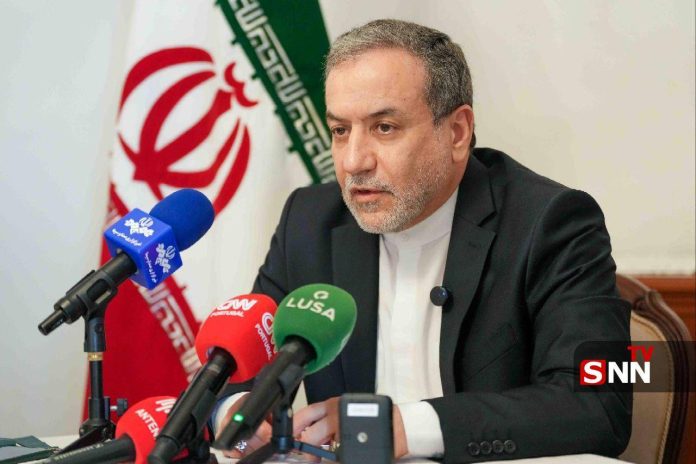
Deputy Foreign Minister Kazem Gharibabadi made the remarks on Wednesday after coming back from talks with the countries’ representatives in Geneva.

According to the official, the Iranian diplomatic mission to the talks ”made it clear” to the European sides that if they managed to force restoration of the bans, “then naturally Iran will show the necessary reaction.”

The troika has been trying to enable the bans’ reinstatement, alleging, without any evidence, that Iran had violated a 2015 nuclear deal by “diverting” its peaceful nuclear energy program towards military purposes.

In order to realize return of the bans, they have been pushing for activation of the so-called “snapback” mechanism that has been included in the deal.

The International Atomic Energy Agency (IAEA) has, however, never found any proof of the trio’s claims.

Gharibabadi said the troika were warned about the consequences of their “choosing to disregard the goodwill and constructive approach of the Islamic Republic, which has consistently stressed diplomatic settlement of the issue.”

In case of the European parties’ refusal, “continuing this interactive process would be meaningless,” he added.

The Islamic Republic, the official stated, would additionally retaliate by stopping its talks with the Europeans.

“We also underlined that if this scenario unfolds, Europe will in practice sideline itself from the diplomatic track and from dialogue with Iran.”

From that point onward, talks would be pursued only within the framework of the Security Council and with its members, and no further dialogue with Europe would take place in this field, the official continued.

The ball is, therefore, in Europe’s court to either take the path of confrontation or that of engagement and cooperation, according to the official.

“Iran is prepared for both scenarios. We hope they will act wisely.”

He, meanwhile, reminded that the European trio had lost all legal and moral rights to resort to “snapback” because they had already failed to implement the nuclear deal, officially known as the Joint Comprehensive Plan of Action (JCPOA).

He was pointing to the countries’ having illegally and unilaterally returned their own sanctions against Iran that they had lifted in line with the JCPOA.

Gharibabadi additionally underlined that Russia and China had proposed prevention of activation of the “snapback” by submitting a draft resolution aimed at extending Security Council Resolution 2231 that has endorsed the JCPOA.

Iran sets new solar power generation record as renewable capacity grows

SATBA chief Mohsen Tarztalab, who also serves as Deputy Energy Minister, announced that 150 megawatts of new solar plants were inaugurated across 24 sites in Tehran, Yazd, Alborz, Semnan, Markazi, Qazvin, Sistan-Baluchestan, and Isfahan provinces.

He noted the projects were financed through both private investment and national development funds.

He added that construction of a 200-megawatt solar power plant in Bushehr, backed by Tourism Bank, also began this week.

Iran’s total installed renewable energy capacity has now reached 2,100 megawatts, with plans to expand to 7,000 megawatts by the end of the year, raising renewables’ share of the national energy mix to about 7 percent.

Tarztalab emphasized that the expansion of solar capacity not only reduces reliance on fossil fuels but also creates opportunities for investors. He called for the savings from reduced fuel consumption to be allocated to further support renewable energy developers.

Israel launches new military operations in Syria after attack kills soldiers

Video verified by Al Jazeera’s Sanad fact-checking agency showed Israeli aircraft attacking sites in the village on Wednesday.

A Syrian military source told Al Jazeera that the Israeli military carried out a landing operation in the barracks with the use of four helicopters.

According to the source, the Israeli army brought in dozens of soldiers and an unspecified amount of search equipment as it spent more than two hours at the site.

No clashes took place between the Israeli troops involved in the landing and the Syrian army forces.

The operation came a day after an Israeli drone strike killed six soldiers near Kiswa, and as Syrian officials in the government of interim President Ahmed al-Sharaa have increasingly accused Israel of seeking to expand its control in the region.

In a statement on Wednesday, Syria’s Ministry of Foreign Affairs called the raid “a gross violation of international law and the United Nations Charter”.

It added that the attack represented “a clear breach of the sovereignty and territorial integrity of the Syrian Arab Republic”.

Israel has launched hundreds of strikes targeting military sites and assets across Syria since the fall of former leader Bashar al-Assad in December. It has also expanded its occupation of the Syrian Golan Heights by seizing the demilitarised buffer zone, a move that violated a 1974 disengagement agreement with Syria.

On Monday, Syria’s Foreign Ministry announced that Israel had sent 60 soldiers to take control of an area inside the Syrian border around Mount Hermon, near a strategic hilltop close to the border with Lebanon.

Syrian Minister of Foreign Affairs Asaad al-Shaibani decried the “military incursion” as part of an effort by Israel to advance its “expansionist and partition plans”.

The latest Israel operations follow deadly clashes in the Druze-majority Syrian province of Suwayda, where 1,400 people were killed in a week of sectarian violence in July.

Israel has since attacked Syrian troops and bombed the heart of the capital, Damascus, under the pretext of protecting the Druze people.


Iranian para-cyclists miss world championships after Belgium denies visas

The championship, which began on Wednesday, August 27, with mandatory medical classification sessions, features two events; the individual time trial and the road race.

According to local reports, Ahmad Hamzehlou and Behrouz Farzad, along with their coach Maziar Farzad, were scheduled to travel to Belgium for classification and competition. However, the visa applications of the Iranian delegation were not approved in time, preventing them from attending the event.

This is not the first setback for Hamzehlou, who also missed the previous Asian Para-Cycling Championships in Thailand due to incomplete medical classification. Both Iranian athletes were expected to undergo international classification on Wednesday before receiving authorization to compete at the world level.

Iranian sports officials have not yet commented on the reasons behind the visa refusal, while Belgian authorities have not issued a statement on the matter.

Iran considers revisiting ban on social media amid ongoing debates

Iran Internet Mobile

“The president’s approach is to resolve the issue through dialogue and coordination,” Elyas Hazrati, said, emphasizing that the Supreme Council of Cyberspace is the main decision-making body on filtering policies.

“Some members are completely opposed to unblocking platforms,” he pointed out.

Hazrati noted that partial unblocking has already occurred for some services, including access to YouTube for schools, researchers, and universities, as well as parts of Google.

Regarding WhatsApp, he argued that filtering the platform has not been effective.

“If WhatsApp is truly a tool for espionage, blocking it only doubles or triples the problem,” he said. “People simply use VPNs and even pay for them, which increases the damage.”

He also revealed that the Ministry of Communications has held talks with international platforms to open offices in Iran.

Hazrati stressed the need to strengthen domestic platforms so that users choose them voluntarily rather than through restrictions on foreign services.

US ambassador cuts Lebanon trip short amid protests, outrage over press comments

The altered trip on Wednesday came amid protests against Washington’s push to disarm Hezbollah, as well as continued outrage over Barrack’s recent derision of journalists in the country.

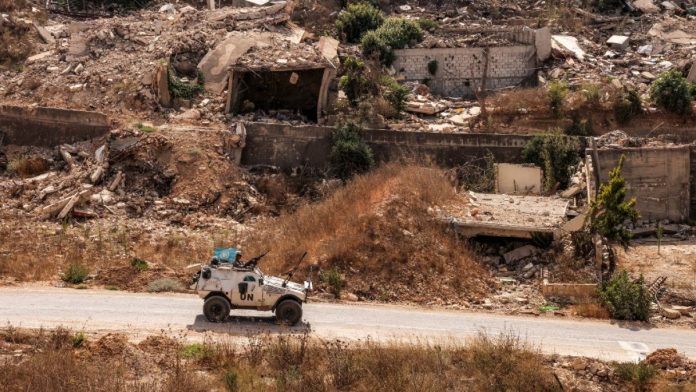
The National News Agency reported that Barrack was flown by helicopter to a Lebanese army barracks in Marjayoun, near the Israeli border, where troops were deployed in advance of his arrival on Wednesday.

However, scheduled visits to nearby Khiam, a town devastated during fighting between Israel and Hezbollah, and to the coastal city of Tyre were later cancelled.

Barrack, who is the US ambassador to Turkiye and also serves as Washington’s special envoy for Syria, has faced growing outrage in Lebanon since Tuesday, when he told journalists to “act civilised” as they peppered him with questions following a meeting with President Joseph Aoun in Beirut.

The US envoy further stated that he would stop taking questions if the situation “starts becoming chaotic, like animalistic”, while appearing to compare the exchange to the wider unrest in the Middle East.

Critics accused the diplomat of displaying a colonial mentality, with the Lebanese presidency later expressing regret for the comments.

Barrack also said on Tuesday that Lebanon’s government will present a Hezbollah disarmament plan in the coming days.

That came after Lebanon’s cabinet last month instructed the army to prepare a plan to disarm Hezbollah by the end of the year, a decision taken under heavy US pressure and amid threats by Israel of further military escalation.

The push has also led to unrest, particularly in southern Lebanon, where Hezbollah maintains support. Early on Wednesday, images showed protesters waving Hezbollah flags, carrying pictures of slain fighters and standing near anti-US slogans scrawled on the road in Khiam.

One message in Arabic read: “America is the great Satan”. Another in English said: “Barak [sic] is animal.”

Protests were also reported in Tyre, where Bilal Kashmar, an official from the union of southern municipalities, noted that dozens gathered to oppose Barrack’s expected arrival and to denounce Washington’s “biased policies”.

Fighting between Israel and Lebanon escalated in the wake of the October 7, 2023, attacks on Gaza, and Israel’s subsequent military campaign in the Palestinian enclave.

Israel and Hezbollah reached a ceasefire agreement in November 2024, but Israel has continued near-daily strikes in Lebanon, in violation of the deal. Tel Aviv has accused Hezbollah and Lebanon’s governments of failing to comply with the provisions of the agreements.

Hezbollah leader Naim Qassem has dismissed any plans to disarm the group, stressing Israel must first withdraw fully from Lebanese territory and stop its continuing attacks before any discussion on laying down weapons can begin.

All UN Security Council members, except for US, urge ceasefire and aid into Gaza

The United States was the only holdout.

“We express our profound alarm and distress at the IPC data on Gaza published last Friday – it clearly and unequivocally confirms famine in Gaza,” the Guyanese ambassador, speaking on behalf of the group, told reporters at UN headquarters in New York City on Wednesday.

“We stand in front of you, especially disturbed by the levels of acute malnutrition among children in Gaza. We note that at least 41,000 children are at heightened risk of death from malnutrition between now and June 2026. This is a man made crisis. The use of starvation as a weapon of war is clearly prohibited under international humanitarian law. Famine in Gaza must be stopped immediately. International humanitarian law must be respected,” ambassador Carolyn Rodrigues-Birkett said.

“We call for an immediate, unconditional and permanent ceasefire. We call for the immediate, dignified and unconditional release of all hostages held by Hamas and other groups. We call for a substantive surge of humanitarian assistance throughout Gaza,” she stressed.

“Israel must immediately and unconditionally lift all restrictions on aid delivery. This includes opening all land routes and allowing the UN and humanitarian partners to operate safely and at scale. Humanitarian principles of humanity, neutrality, impartiality and independence must be central to humanitarian action,” Rodrigues-Birkett continued.

“We call on Israel to immediately reverse its decision to further expand its military operation in Gaza with the aim of taking over Gaza City. This decision, which we reject, will inevitably worsen the already horrific humanitarian situation and endanger the lives of all civilians, including the hostages”.

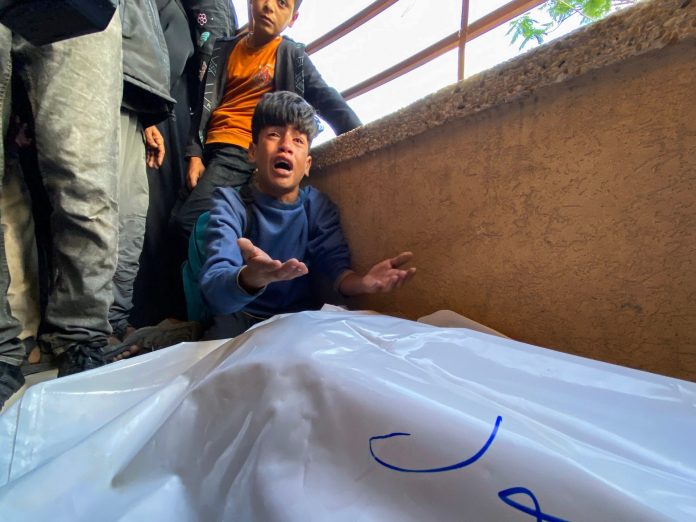
Israel has killed nearly 63,000 Palestinians in Gaza since October 2023. The military campaign has devastated the enclave, which is facing famine.

Last November, the International Criminal Court issued arrest warrants for Israeli Prime Minister Benjamin Netanyahu and his former Defense Minister Yoav Gallant for war crimes and crimes against humanity in Gaza.

Israel also faces a genocide case at the International Court of Justice for its war on the enclave.

Poll finds majority of Americans disapprove of US-Israel military alliance

A Quinnipiac University survey found 60 percent of voters disapprove of the U.S. sending military aid to Israel, while 32 percent support additional aid — the highest level of opposition and lowest level of support for the U.S. military alliance with Israel in a Quinnipiac poll since the Oct. 7, 2023 attacks against Israel by Hamas.

The growing disapproval of U.S. support for Israel comes as President Donald Trump continues to seek an end to the conflict and as Democrats look to bridge divides between party members on both sides of the debate over whether to back Israel.

Democrats and independent voters largely oppose Israel’s military actions in Gaza. In the new poll, 75 percent of Democrats and 66 percent of independents said they were against more spending to provide additional military aid for Israel, while 56 percent of Republicans supported additional spending.

Half of the voters surveyed, including 77 percent of Democrats, said they believe Israel is committing genocide. Sixty-four percent of Republicans said they do not believe Israel is committing genocide.

Voters were roughly split when asked whether they sympathized more with Israelis or Palestinians — 37 percent said they sympathized more with Palestinians, while 36 percent said they sympathized more with Israelis. Those figures represent the highest mark for Palestinians and the lowest mark for Israelis in a Quinnipiac poll since 2001.

The waning support for Israel brings a new urgency around the White House’s efforts to bring an end to the Israel-Hamas war. The president and top advisers held a meeting on Wednesday to strategize about plans for Gaza after the end of the conflict, even as Israel continues to bombard the region.

Quinnipiac surveyed 1,220 registered voters nationwide from August 21-25. The margin of error for the poll is +/- 3.4 percentage points.

Iranian MP: IAEA not allowed to visit nuclear sites

IAEA Team

Boroujerdi, who sits on Iran’s Parliament’s National Security Commission,
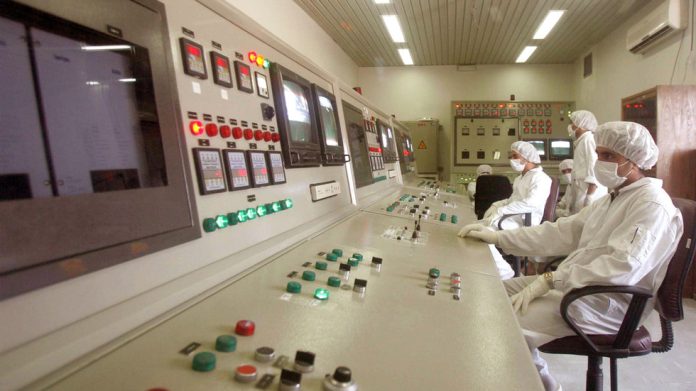
stressed that only the Bushehr Nuclear Power Plant, which requires supervision during refueling, has been conditionally accepted for inspection, which must be solely conducted by Russian inspectors.

Boroujerdi criticized IAEA Director General Rafael Grossi for presenting false reports to the IAEA’s Board of Governors, which he argued were used as pretexts for military threats by the US and the Zionist regime.

The MP added that inspector access is now subject to approval by Iran’s Supreme National Security Council and that negotiations are underway for a new framework of cooperation with the IAEA, rather than allowing inspections as in the past.

Iran prepares to drag aggressors before intl. courts over illegal attacks

Speaking to reporters after a cabinet meeting in Tehran on Wednesday, Ansari said his team has worked extensively to compile evidence.

He noted that documentation began immediately on the second day of the recent 12-day war, covering territorial aggression, attacks on prohibited sites such as media centers, hospitals, nuclear facilities, and civilian casualties, including women and children.

The Iranian vice president for legal affairs underlined that the next step involves operational lodging of lawsuits abroad.

According to Ansari, the office of the vice president for legal affairs will take necessary action in close cooperation with the Foreign Ministry and under the guidance of the Supreme National Security Council to make Iran’s voice for justice and accountability heard on the global stage.