Regular power line to Zaporizhzhia plant restored: Ukraine tells IAEA
The last regular power line supplying electricity to the Russian-held Zaporizhzhia nuclear power plant (ZNPP) in Ukraine is working again after having been cut earlier, the UN nuclear watchdog has said, citing Ukraine.
“Ukraine told the IAEA that the ZNPP, Europe’s largest nuclear power plant, at least twice lost connection to the power line during the day but that it was currently up again,” the International Atomic Energy Agency (IAEA) announced in a statement, adding that information on the direct cause of the outage was not immediately available.
Ukraine warns of another Fukushima if power plant is not reconnected
An advisor to the Ukrainian government has warned of another nuclear disaster after the Zaporizhzhia was disconnected from the national power supply.
“For the first time in history nuclear plant was stopped because of war,” tweeted Anton Geraschenko, an advisor to the Minister of Internal Affairs.
“If Zaporizhzhia plant isn’t connected to the grid again, another Fukushima or Chernobyl can happen,” he said, adding, “Immediate demilitarization of 30km zone around plant must take place.”
“If not, Rosatom must be sanctioned,” he stated, referring to the Russian state-run nuclear power giant.
Putin signs decree to increase size of Russian armed forces
Russian President Vladimir Putin signed a decree to increase the size of Russia’s armed forces from 1.9 to 2.04 million, the RIA Novosti news agency reported.
The figure, which includes a 137,000 increase in the number of military personnel to 1.15 million, comes into effect on January 1.
UN calls on Russia to halt armed attacks on Ukraine
United Nations human rights chief Michelle Bachelet has called on Russian President Vladimir Putin to halt attacks on Ukraine and said the Zaporizhzhia nuclear plant must be demilitarised.
“The international community must insist on documentation” to be able to one day prove war crimes, added Bachelet in a speech marking the end of her term as the UN high commissioner for human rights.
IAEA “very, very close” to agreement with Russia over visit to Zaporizhzhia
Rafael Grossi, director general of the International Atomic Energy Agency (IAEA), told French channel France 24 he might soon be able to visit Ukraine’s Zaporizhzhia nuclear power plant, currently under Russian control.
“We are very, very close to that [an agreement with Russia],” Grossi said Thursday.
Earlier today, Grossi met with French President Emmanuel Macron in Paris.
The French and Russian defense ministers also talked about the nuclear power plant on the phone the same day, according to the Russian Defense Ministry.
Russia ready to assist UN visit to Zaporizhzhia nuclear plant: Defense minister
Russian Defense Minister Sergei Shoigu and French counterpart Sébastien Lecornu discussed the situation at Zaporizhzhia nuclear power plant during a call on Thursday, according to the Russian Defense Ministry
Shoigu shared his assessments of the actions of the Ukrainian Armed Forces during the call, which was initiated by the French side, said the ministry.
The Russian minister also stressed the importance of an International Atomic Energy Agency (IAEA) visit to the plant, and added Russia is ready to provide the necessary assistance to the organization’s inspectors.
US President Joe Biden and Western leaders have stressed the need for the United Nations nuclear watchdog to visit the plant in southeastern Ukraine, where shelling has sparked fears of a disaster.
Kyiv and Moscow have made a barrage of accusations against each other about security and military action at and around the plant, the largest nuclear complex in Europe.
But the lack of independent access to the plant, which has been occupied by Russian forces since March, makes it impossible to verify what is happening there.
American public changing mood on Ukraine: Poll
Six months on from the start of Russia’s military offensive against Ukraine, nearly three in ten Americans are unsure about continuing to support Kiev in the conflict, a new poll has shown.
While 53% of US adults agree that Washington should continue to support Kiev “until all Russian forces are withdrawn from territory claimed by Ukraine,” 28% are undecided, according to a Reuters/Ipsos poll released on Wednesday. Doubts about continuing to pump weapons and other aid into Ukraine are especially prevalent among independents, at 37%, while 18% of Americans oppose the shipments altogether.
The survey suggests waning support for US involvement as the conflict drags on, contributing to surging inflation on the home front. In fact, 40% of Americans now agree with the statement that “the problems of Ukraine are none of our business, and we should not interfere.” That compares with 31% when the same question was asked in April.
Moreover, 59% of survey respondents, including 69% of Republicans, agree with the statement that “given the current economic crisis, the US cannot afford to lend financial support to Ukraine.” About half (51%) still support providing weapons to Ukraine, down from 73% in April. Just 26% support sending US troops to Ukraine, down from 39% in April.
US President Joe Biden announced $3 billion in additional military aid to Ukraine on Wednesday, the biggest package of weaponry earmarked for Kiev since the fighting began in February. The US has committed more than $15.5 billion in military assistance to Ukraine since backing the overthrow of Kiev’s elected government in 2014. The lion’s share of that aid, $13.5 billion, has been announced over the past six months.
Americans are evenly divided on restricting imports of Russian oil and natural gas if doing so means paying higher prices for their own energy use. The survey showed that 50% support limits on imports from Russia, even at the expense of higher prices. Similarly, 49% agree that it’s more important to have gas supplies for their homes and businesses than to try to influence Russia. However, only 21% agree that anti-Russia sanctions aren’t worth the impact they’re having in the US.
Inflation is a far greater concern than the Ukraine crisis, the poll showed. While 58% of Americans are following the conflict at least “somewhat closely,” 75% are closely tracking news on inflation.
Russia says it killed Ukrainian troops in rail attack in Chaplyne
Russia’s defence ministry says it had killed Ukrainian troops in a railway station attack in central Ukraine that Kyiv said left 25 people, including children, dead.
“As a result of a direct hit by an Iskander missile on a military train at the Chaplyne railway station … more than 200 servicemen of the reserve of Ukraine’s Armed Forces and 10 units of military equipment en route to the combat zone in Donbas were destroyed,” the ministry announced in its daily briefing.
Moscow also added it had destroyed eight Ukrainian fighter planes in raids against airbases in Ukraine’s Poltava and Dnipropetrovsk regions. That would be one of the heaviest losses for Ukraine’s air force in recent weeks.
Spain to send anti-aircraft battery and other weapons to Ukraine
Spain will send Ukraine an anti-aircraft battery and missiles for the first time since Russia’s invasion began in February, Spain’s Ministry of Defense announced.
Madrid’s latest shipment of military aid will also include 1,000 rounds of field artillery munitions, a thousand tons of diesel fuel, various armored vehicles and 30,000 winter uniforms, the Defense Ministry said in a statement.
“Coinciding with the sixth month of the war in Ukraine, and with (Ukraine’s) Independence Day, Spain continues supporting the Ukrainian people in their fight to defend peace and freedom against the Russian invasion,” the statement added.
Spain will train Ukrainian troops in the operation of the anti-aircraft battery, and also provide training for Ukrainian air force personnel “in an allied country,” which was not specified, the statement read.
Spain last April announced the shipment of 200 tons of ammunition and other military aid to Ukraine.
EU warns Russia to be held to account for ‘rocket terror’
The European Union has condemned Russia’s deadly bombardment of a railway station in Ukraine and warned those “responsible for Russian rocket terror will be held accountable”.
“The EU strongly condemns another heinous attack by Russia on civilians,” EU foreign policy chief Josep Borrell tweeted, as the death toll from the attack on Chaplyne rose to 25.
US says trial of Ukrainian POWs would be ‘mockery of justice’
The US State Department has condemned plans by Russian-backed authorities to put on trial Ukrainian prisoners of war in the southern port city of Mariupol, saying Russia would try to deflect responsibility for the war on its neighbour.
“The planned show trials are illegitimate and a mockery of justice, and we strongly condemn them,” department spokesman Ned Price stated in a statement.
Death toll from Chaplyne train attack rises to 25
A Russian attack that took place on Ukraine’s Independence Day on Wednesday has killed 25 civilians when missiles struck a railway station and a residential area in eastern Ukraine, officials in Kyiv confirmed.
The death toll rose from an initially reported 22 after three more bodies were retrieved from the rubble in the town of Chaplyne as rescue operations ended, Ukrainian presidential aide Kyrylo Tymoshenko stated.
Residents of the small town, located some 145km (90 miles) west of Russian-occupied Donetsk, grieved for their loved ones amid the rubble of their wrecked homes.
Russia’s use of cluster bombs in Ukraine ‘extensive’: Monitor
Russia has widely used cluster bombs in Ukraine, causing hundreds of civilian casualties and damaging homes, schools and hospitals, the Cluster Munition Coalition (CMC) said in an annual report.
Ukrainian forces appear to also have used cluster munitions several times, the monitoring group added.
Neither Russia nor Ukraine has joined the convention prohibiting the use, transfer, production and stockpiling of cluster bombs, which has 110 states as parties and 13 other signatories.
“Russia’s extensive use of internationally-banned cluster munitions in Ukraine demonstrates a blatant disregard for human life, humanitarian principles and legal norms,” stated Mary Wareham of the Cluster Munition Monitor 2022.
“Unequivocally condemning ongoing use of cluster munitions in Ukraine is crucial to strengthen the stigma against these weapons and bring an end to the threat they pose,” Wareham continued.
Rescuers search through rubble after Chaplyne train attack
Rescuers are digging through the rubble at the train station in Chaplyne, a small town in eastern Ukraine after Russian missiles targeted the site and killed 22 people were killed.
“Chaplyne is our pain today. As of this moment there are 22 dead,” President Volodymyr Zelensky said in an evening video address to the United Nations Security Council.
Ukraine would hold Russia responsible for all it had done, he added.
Chaplyne lies some 145km (90 miles) west of Russian-occupied Donetsk in eastern Ukraine.
Zelensky aide Kyrylo Tymoshenko later stated Russian forces had shelled Chaplyne twice.
A boy was killed in the first attack when a missile hit his house, and 21 people died later when rockets hit the railway station and set fire to five train carriages, he noted.
The Russian defence ministry did not immediately respond to a request for comment. Moscow denies targeting civilians.
Russia to use Ukrainian military activity near nuclear plant for propaganda: UK
Russia is probably prepared to exploit any Ukrainian military activity near the Zaporizhzhia nuclear power plant (ZNPP) for propaganda purposes, the British defence ministry said in its daily update.
It also added that Russian forces have kept an “enhanced military presence” at the site, which it took control of in
While Russia maintains the military occupation of ZNPP, the principal risks to reactor operations are likely to remain disruption to the reactors’ cooling systems, damage to its back-up power supply, or errors by workers operating under pressure.
A joint anti-Russian statement on the conflict in Ukraine, which was released on Wednesday, was supported by only 58 United Nations member states, or less than a third of the organization’s 193 members.
Ukraine’s Permanent Representative to the United Nations Sergey Kislitsa read out the document to journalists at the UN headquarters and named all the states that supported it. The statement lambastes Russia’s actions and calls on it to immediately stop combat operations.
Among the signatories of the statement are the European Union nations, the United States, the United Kingdom, Georgia, Turkey, several Asian and Latin American countries.
More than 6.85 million Ukrainian refugees arrived in European countries in a period from February 24 to August 23, 2022, the Office of the United Nations High Commissioner for Refugees (UNHCR) has announced.
According to the UNHCR, more than 3.93 million of them have been registered in these countries under national assistance programs.
Thus, as of August 23, the total number of Ukrainian refugees in European countries stood at 6,858,825. Of them, 2,308,790 arrived in Russia, 1,338,339 – in Poland, 967,000 – in Germany, 415,859 – in the Czech Republic, 159,968 – in Italy, 145,000 – in Turkey, 137,637 – in Spain, and 115,200 – in the United Kingdom.
Since February 24, as many as 11,536, 470 Ukrainians have crossed into neighboring countries, and 4,984,904 people have crossed back since February 28.
Apart from that, according to the International Organization for Migration, some 6.6 million Ukrainians are internally displaced persons.
UN chief laments ‘sad and tragic’ six-month Ukraine war milestone
United Nations Secretary-General Antonio Guterres has called the six-month anniversary of the start of Russia’s war in Ukraine a “sad and tragic milestone”.
Guterres made the comments during a special meeting of the United Nations Security Council in New York to mark the anniversary of Russia’s invasion of its neighbour on February 24.
“The consequences of this senseless war are being felt far beyond Ukraine,” stated Guterres, referring to its effect on food and fuel prices.
Zelensky: At least 22 killed in attack on train station in southeastern Ukraine
President Volodymyr Zelensky says the death toll has risen to 22 people in Wednesday’s attack on the Chaplyne train station in Dnipropetrovsk Oblast.
“Chaplyne is our pain today. As of this moment, there are 22 dead, five of them burned in the car, a teenager died, he was 11 years old, a Russian rocket destroyed his house. Search and rescue operations at the railway station continue. We will definitely make the occupiers answer for everything they have done. And we will certainly throw out the invaders from our land,” he added.
The attack occurred on the Chaplyne train station and at least 50 people were injured. Earlier in the day, Zelensky stated he expects the number of injured to increase.
Italy’s PM calls for EU price cap on Russian gas
European Union countries should agree upon a cap on the price of gas imported from Russia to help ease the burden of rising prices on businesses and households, Italian Prime Minister Mario Draghi has said.
“The Italian government has pressed hard at the European level for a maximum ceiling on the price of Russian gas that we import,” Draghi told a conference in the Italian town of Rimini.
“Some countries continue to oppose this idea because they fear that Moscow could interrupt supplies,” added Draghi, who will step down after a national election next month.
“But the many blocks on supplies of Russian gas this summer have shown the limits of that position,” he continued, noting the issue would be discussed at the next meeting of EU leaders.
DoD: US to provide Ukraine with counter-unmanned aerial systems to “shoot missiles out of sky”
The US will provide Ukraine VAMPIRE counter-unmanned aerial system, or counter-drone system that uses “small missiles essentially to shoot missiles out of the sky,” Department of Defense undersecretary for policy Dr. Colin Kahl told reporters on Wednesday.
The VAPIRE counter-UAS systems are included in the latest $3 billion US security assistance package for Ukraine announced Wednesday.
The US continues to “train Ukrainian forces on all systems” that the US and NATO allies are providing, Kahl said. This training has been happening on a “rolling basis,” he added.
For training on systems included in the latest package of security assistance, the US believes there is “time to train the Ukrainians on whatever system they are not familiar with,” Kahl continued.
Because the latest security assistance comes from Ukraine Security Assistance Initiative funding — meaning it will be sourced and produced by industry partners and not directly from DoD stockpiles of weapons — it could take “months to get on contract and one, two, three years in some instances to arrive in Ukraine,” Kahl stated.
EU to discuss training mission for Ukrainian forces next week
EU defence ministers will discuss options to set up a military training mission for Ukrainian forces at an August 29-30 meeting in Prague, the bloc’s foreign policy chief has said.
“As EU, we have to see what else we can do in terms of support to Ukraine and increasing the cost of this war for Russia,” Josep Borrell stated in a blog to mark Ukraine’s Independence Day, six months after Russia invaded the country.
“We will discuss this … in Prague next week, including on the issue of visas for Russian citizens and a possible EU training mission for Ukrainian armed forces,” he added.
Borrell referred to the idea of an EU military training programme at a conference in Spain on Monday, explaining that it would not be based in Ukraine, but in neighbouring countries. The 27-nation bloc has launched more than 30 missions and operations during the past 20 years aimed at peacekeeping, conflict prevention and strengthening international security outside its borders.
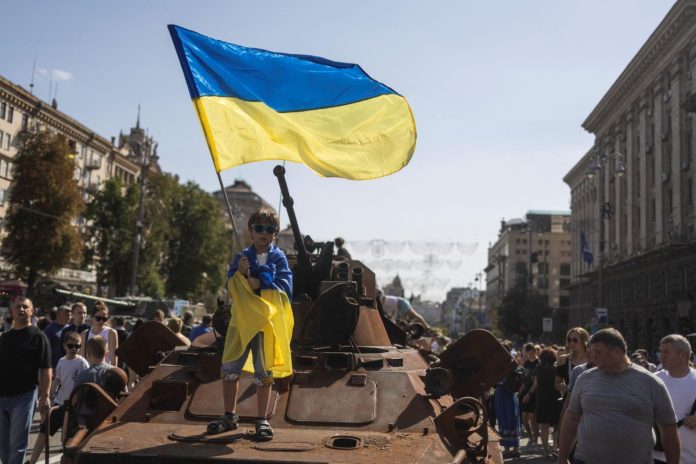
There have been Russian missile strikes across Ukraine on its Independence Day: Official
Russia has conducted “missile strikes across Ukrainian territory” on Wednesday, according to Yuriy Sak, an adviser to the Ukrainian Defense Minister Oleksii Reznikov.
“The aggressor … proved the expectations that we had and is conducting today missile strikes across the Ukrainian territory,” Sak told CNN’s Sara Sidner on “Amanpour.”
He said that Ukraine had “been receiving warnings about the possibility of massive missile strikes” on Ukraine’s Independence Day for nearly a week.
Wednesday marks six months since Russia’s invasion and 31 years since Ukraine declared independence from the Soviet Union.
Sak added that Ukraine had been prepared for strikes because it had been living in an “atmosphere of missile terror for six months.”
“In Kyiv today … we’ve already had eight air raid sirens. In other major cities of Ukraine, even those which are far away from the battlefield, there have been explosions, there have been missile strikes,” Sak added.
Sak said that an 11-year-old child in the Dnipro region had been killed and that residential homes had also been destroyed.
“The number of strikes, the number of regions of Ukraine which are targeted, the number of air raid sirens…this is abnormal, even by our standards,” he continued.
Russia’s ruble has stabilized after crashing at beginning of war
After Russia launched its invasion of Ukraine in February, its currency — the ruble — crashed, with Moscow scrambling to prevent financial meltdown.
The United States, European Union and other Western allies imposed sanctions on much of the country’s banking system, including freezing hundreds of billions of dollars worth of reserves Moscow had been stockpiling for years to shield the economy.
Russia’s central bank introduced policies to prevent investors and companies from selling the currency and other measures that force them to buy it. Russia has also demanded that European countries make energy payments in rubles, cutting off gas supplies to customers who refused to do so.
Despite the early impact of the sanctions, they have largely failed to cripple Russia’s economy, as surging energy prices have padded the country’s coffers.
Meanwhile, Russia’s currency soared to a seven-year high against the US dollar, thanks to Russian President Vladimir Putin’s efforts to support the ruble.
And although the country defaulted on its foreign debt in June, global markets barely reacted — the move had been widely expected, and the market had been bracing itself.
Putin will issue payments to families with children in occupied territories in Ukraine: Kremlin
Russian President Vladimir Putin has instructed its government on Wednesday to pay 10,000 rubles ($613) to families with children in the Ukrainian territories occupied by Russia, according to the Kremlin.
According to the Kremlin’s readout, the payments will be administered to families with children aged 6 to 18 living in Zaporizhizhia, Kharkiv and Kherson regions, as well as the self-proclaimed Donetsk People’s Republic and Luhansk People’s Republic.
The money amounts are scheduled to be paid by Sept. 15 to families whose children go to school in the Russian-occupied territories.
WHO: Ukraine’s health system is “shaken” but “has not collapsed” despite war
The World Health Organization announced Wednesday that Ukraine’s health system has managed to survive, despite Russia’s invasion.
“Six months of war have had a devastating impact on the health and lives of Ukraine’s people, but despite many challenges the health system has managed to survive and deliver care where and when it is needed most,” said WHO Director-General Dr. Tedros Adhanom Ghebreyesus in a statement.
The head of the WHO went on to say that “though shaken, the health system has not collapsed. WHO continues to support the Ministry of Health of Ukraine to restore disrupted services, displaced health workers, and destroyed infrastructure, which is essential not only for the health of Ukraine’s people but for the country’s resilience and recovery. But no system can deliver optimum health to its people under the stress of war, which is why we continue to call on the Russian Federation to end this war.”
Six months into Russia’s invasion, the WHO noted it has helped deliver more than “1,300 metric tonnes of critical medical supplies to Ukraine in coordination with the Ministry of Health and partners, with more on the way.”
The agency added this includes “power generators, ambulances, and oxygen supplies for medical facilities; supplies for trauma and emergency surgeries; and medicines to help treat noncommunicable diseases (NCDs). However, attacks on health continue unabated, with 473 WHO-verified attacks recorded this past half-year, resulting in at least 98 deaths and 134 injuries.”
Zelensky tells UNSC “Russia has put world on brink of radiation catastrophe”
Ukrainian President Volodymyr Zelensky addressed the UN Security Council virtually Wednesday, urging that the organization’s nuclear watchdog, the International Atomic Energy Agency (IAEA), take permanent control of the situation at the Zaporizhzhia plant as soon as possible.
He also called on Russia to completely withdraw from the plant.
“Russia has put the world on the brink of radiation catastrophe. It is a fact that the Russian military has turned the territory of the largest nuclear power plant in Europe, the Zaporizhzhia Nuclear Power Plant, into a war zone. … Now Europe and neighboring regions face the threat of radiation pollution,” Zelensky said.
United Nations Secretary-General António Guterres also stated he is “gravely concerned” by the situation at Zaporizhzhia.
“The warning lights are flashing. Any actions that might endanger the physical integrity, safety or security of the nuclear plant are simply unacceptable. Any further escalation of the situation could lead to self destruction,” Guterres added while speaking at the UN Security Council.
The UN secretariat is in close contact with the IAEA to support any mission to the power plant from Kyiv provided both Russia and Ukraine agree.
UK PM announces $66 million aid package for Ukraine during surprise visit to Kyiv
UK Prime Minister Boris Johnson announced a $66 million (54 million pounds) aid package for Ukraine during a surprise visit to Kyiv on Wednesday, telling the country that it “can and will win” the war against Russia.
The UK called the package “a step up in the Ukrainian’s current capability, improving their long-range surveillance and defensive targeting ability,” according to a Downing Street news release.
It comprises of 2,000 state-of-the-art drones and loitering munitions which will “enable Ukraine to better track and target invading Russian forces,” the news release said.
It also contains 850 hand-launched Black Hornet micro-drones, which are “specifically designed for use in towns and villages, and are deployed to detect approaching enemy forces,” according to the news release.
Johnson noted he came to Ukraine “to deliver the message that the United Kingdom is with you and will be with you for the days and months ahead, and you can and will win.”
According to Downing Street, during the visit, Johnson and Zelensky held talks “on the challenges of the winter ahead for the country,” during which the prime minister reiterated the “UK’s all-encompassing and unwavering support for the Ukrainian people, from humanitarian aid to supporting the investigation of war crimes and rebuilding the country’s economy.”
Biden marks Ukraine’s Independence Day with $2.98 billion security assistance announcement
US President Joe Biden marked Ukraine’s Independence Day Wednesday by reiterating the United States’ commitment to Ukraine — six months after Russia began its invasion — with a new $2.98 billion investment in security assistance.
“I am proud to announce our biggest tranche of security assistance to date: approximately $2.98 billion of weapons and equipment to be provided through the Ukraine Security Assistance Initiative. This will allow Ukraine to acquire air defense systems, artillery systems and munitions, counter-unmanned aerial systems, and radars to ensure it can continue to defend itself over the long term,” Biden said in a statement Wednesday.
Because this package falls under the Ukraine Security Assistance Initiative (USAI), it will not be drawn from existing US inventories. Instead, it will come from contracts with arms manufacturers, according to a US official.
Last week, the US announced a $775 million package that included HIMARS and 105mm howitzer ammo, anti-armor missiles, mine-clearing capabilities and more. That package came through Presidential Drawdown Authority, which means it will be pulled directly from US stocks.
Biden also congratulated the people of Ukraine on 31 years of independence, noting that the country has “inspired the world,” and added that the US “looks forward to continuing to celebrate Ukraine as a democratic, independent, sovereign and prosperous state for decades to come.”
Macron warns of ‘sacrifices’ ahead after ‘end of abundance’
President Emmanuel Macron has warned that France faces “sacrifices” in a new era marked by climate change and instability caused by Russia’s invasion of Ukraine.
“I believe that we are in the process of living through a tipping point or great upheaval. Firstly because we are living through … the end of what could seem like the end of abundance,” he said during a televised address to his cabinet.
Referring to the war in Ukraine, Macron added: “Our system based on freedom in which we have become used to living, sometimes when we need to defend it, it can entail making sacrifices.”
The speech appeared designed to prepare the country for what promises to be a difficult winter ahead, with energy prices rising sharply amid Moscow’s ongoing offensive and many French families struggling with soaring inflation.
Pope Francis hopes that the international community will undertake concrete efforts to end the conflict in Ukraine as soon as possible and prevent a nuclear disaster at the Zaporozhye nuclear power plant.
“I hope that concrete moves will be taken to end the war and avoid a nuclear disaster at the Zaporozhye nuclear power plant,” the ANSA news agency quoted the pope’s speech to a collective audience on Wednesday.
The Zaporozhye nuclear power plant is located in Energodar and is under the control of Russian troops. In recent days, Ukrainian forces carried out several strikes on the territory of the plant by using drones, heavy artillery and multiple rocket launchers. In most cases, Russia’s air defense systems repelled the attacks, but various shells hit some infrastructure and the nuclear waste storage area.
On August 19, the International Atomic Energy Agency (IAEA) Director General Rafael Grossi stated that active negotiations were underway to dispatch a mission from the agency to the nuclear power plant.