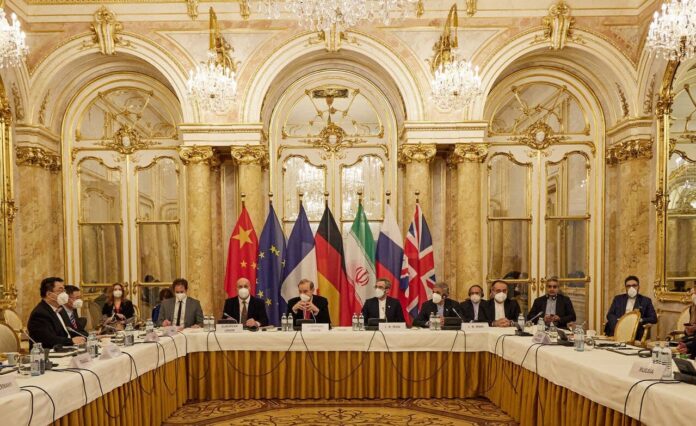
Ghassem Mohebali made the comment in an interview with Noandish website. He noted that Iran has no choice but to get the deal revived given that it is facing many economic woes.
Mohebali maintained that nothing is more valuable than the prosperity and well-being of citizens.
Mohebali said all parties to the Vienna talks had better resolve the issue as soon as possible, saying opponents of the revival of the JCPOA managed to hamper the negotiations and “we are in a situation where it’s unclear what the future holds in store for the deal.”
The ex-Iranian diplomat said a key obstacle to the revival of the JCPOA is that Republicans in the US have created many hurdles for President Joe Biden to prevent him from signing a deal with Iran.
Mohebali added that the Republicans and Israel do not want Washington to enter into any negotiations and dealings with the Islamic Republic.
Mohebali said if the JCPOA is not revived, then Iran should move toward a détente to prevent things from going from bad to worse.
He warned that if Iran’s case is sent to the UN Security Council, Tehran will be in trouble.
The Islamic Republic has repeatedly said it seeks a robust and lasting nuclear deal, but it has not tied the economy of the country to JCPOA.
Kioumars Sarmadi said that parliament is on summer break, noting that it’s unclear whether MPs will approve Zahedivafa as minister of labor, who was appointed as the acting minister some two months ago.
Sarmadi added that the acting minister’s interaction with the legislative body has not been acceptable.
He however said that parliament will put the matter to a vote after the summer break.
The previous minister of labor, Hojjat Abdolmaleki, resigned from his post some two months ago after his job performance came under fire from MPs.
Following his resignation, Zahedivafa was appointed as the acting minister of labor.
Abbaszadeh Meshkini says Iran is seeking guarantees on the nuclear deal because western governments have proved they are not trustworthy.
“Any agreement that deprives Iran of the advantages it seeks, or limits them, is unacceptable,” he said.
He added that Iran wants to conclude an agreement based on its national interests. He said, however, that western sides need the agreement more than Iran.
Meshkini further stressed that any deal on revival of the JCPOA should be drawn out in a fashion that allows Iran to “keep its finger on the trigger.”
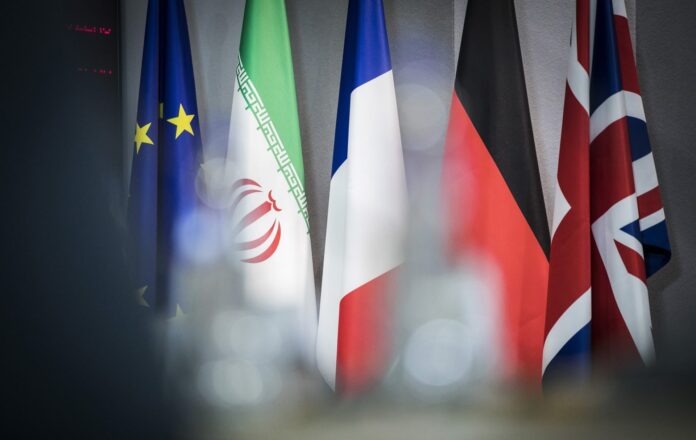
His comments come as the European Union said Iran and the US are trading changes to a “final” EU-drafted proposal to revive the nuclear deal.
An advisor to the Iranian negotiating team says the country will be patient.
Mohammad Marandi says the Barrack Obama administration “systematically violated the agreement” and his successors, Donald Trump and Joe Biden, imposed the maximum pressure campaign against Iranians.
This, Marandi says, justified Iran’s emphasis on refusing to accept any ambiguities or legal loopholes that may exist in the text of the accord.
He further warned that winter is coming and the EU faces a “paralyzing energy crisis”, in a reference to the fallout over the war in Ukraine that has led to the EU looking for alternative sources of natural gas.
In an opinion piece, Hossein Shariatmadari, the editor-in-chief of Iran’s Kayhan daily, said, “Economic sanctions are the only leverage left in the hands of America to confront Iran and it (the US) will never abandon them.”
“That is why engaging in negotiations on the removal of sanctions amounts to beating the air, and it could be said with confidence that these talks will lead nowhere,” Shariatmadari said.
He said when the Americans openly declare that they are not ready to guarantee their future stay in the nuclear deal, this clearly shows they are not serious in achieving a deal with Iran.
“Just look at the 20-year-long challenge! The job description defined for the Iranian Atomic Energy Organization has been hindering Iran’s peaceful nuclear industry, seeking widespread inspection of the country’s military sites under claims of undeclared nuclear activities, and provision of Iranian military data to the US, Israel and certain European countries,” he wrote.
Iran’s nuclear work accounts for only two percent of the world’s nuclear industry but 25 percent of IAEA inspections take place inside the Islamic Republic.
As a solution, he offered withdrawal from the Treaty on the Non-Proliferation of Nuclear Weapons to get rid of all the pressure the IAEA has been exerting on the country.
In the interview, Rouhani says the unsaid about key moments in his presidency.
Rouhani explains how his government was caught in an economic war after US President Donald Trump withdrew from the nuclear deal in 2018 and re-imposed economic sanctions on Iran.
The former president says Trump sought to push Iran’s oil exports down to zero, but failed.
On the other hand, Rouhani says, Iran managed to sell its oil and no “corruption like Babak Zanjani”, involving billions of dollars, emerged from it.
Rouhani says his government was right not to exit the nuclear deal, adding that Russian President Vladimir Putin later told him that “Trump would have breathed a sigh of relief” if Iran had exited the JCPOA.
The former president said Israel was also targeting Iranian ships in the Red Sea to cause famine in Iran.
Amid all this, he said, some ministers proposed that the government resign.
“I considered this backstabbing” and “leaving the leader alone”, he said, adding that he refused.
Rouhani also talked about a period in 2018, “when a group of people decided to collapse the government”, by starting a media campaign speculating that the fuel prices would rise. They were arrested and interrogated, he said, without offering further details.
He also dismissed talks that the nuclear deal achieved nothing, stressing that the money the very agreement helped Iran earn was used to fund the projects his government completed.
Shargh said the government would better think that no such thing as the Joint Comprehensive Plan of Action (JCPOA) ever exits and that the sanctions are there to remain and cannot be removed.
“Under such circumstances, there is no alternative but finding local and non-global solutions,” the paper wrote.
At least, Shargh wrote, Iran should tie the economy to the eastern countries such as China and Russia as well as neighbors.
“We should also leave the global banking system for now and advance the economy with bartering,” it added.
According to Shargh, Iran can limit the clients of its oil to China and a few other countries and prepare a development plan that is more than anything reliant on domestic capabilities.
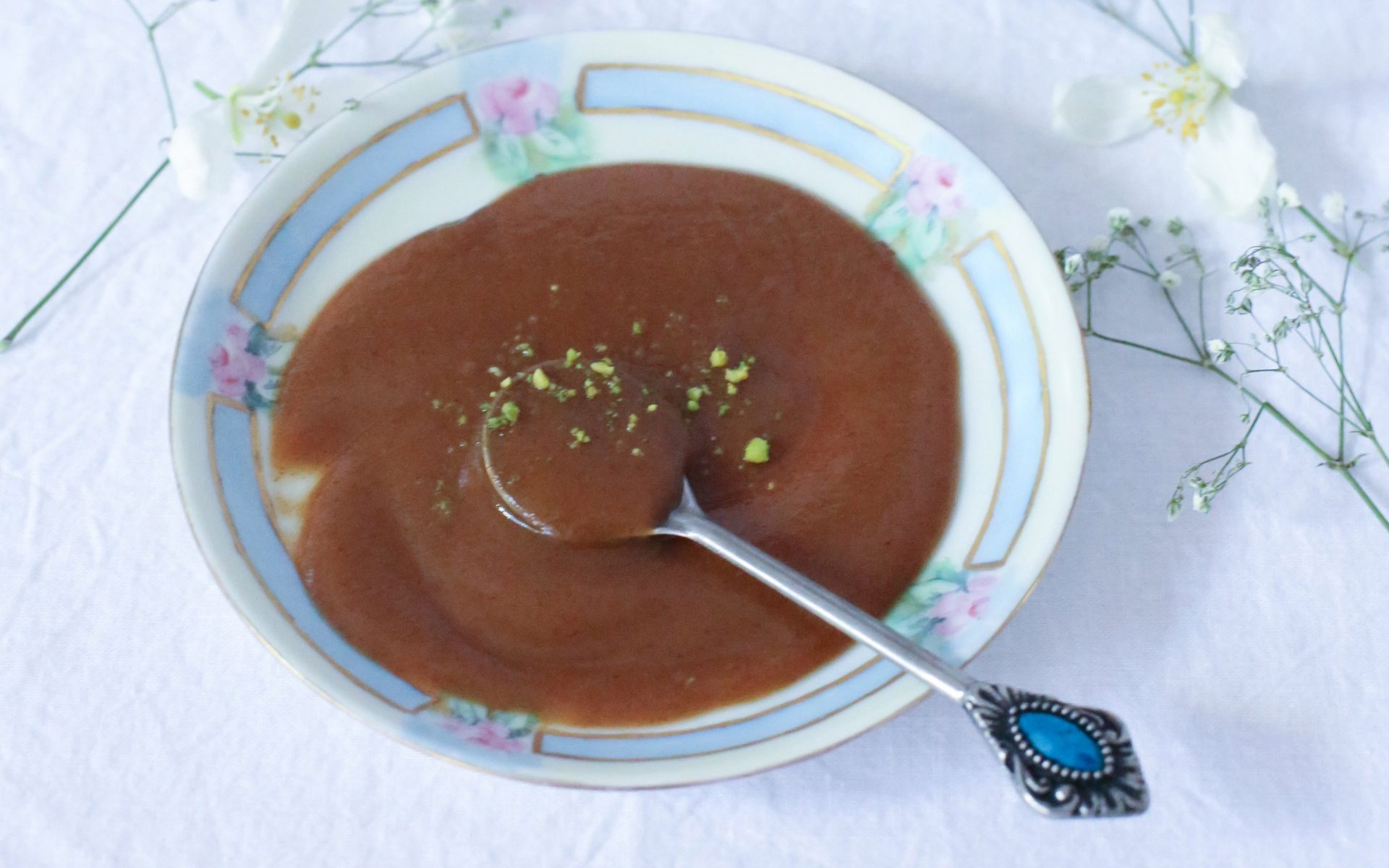
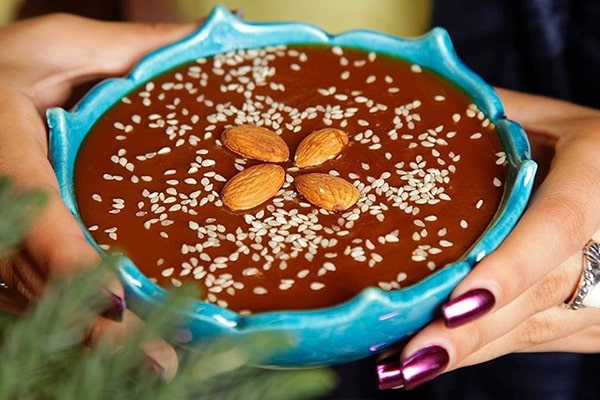
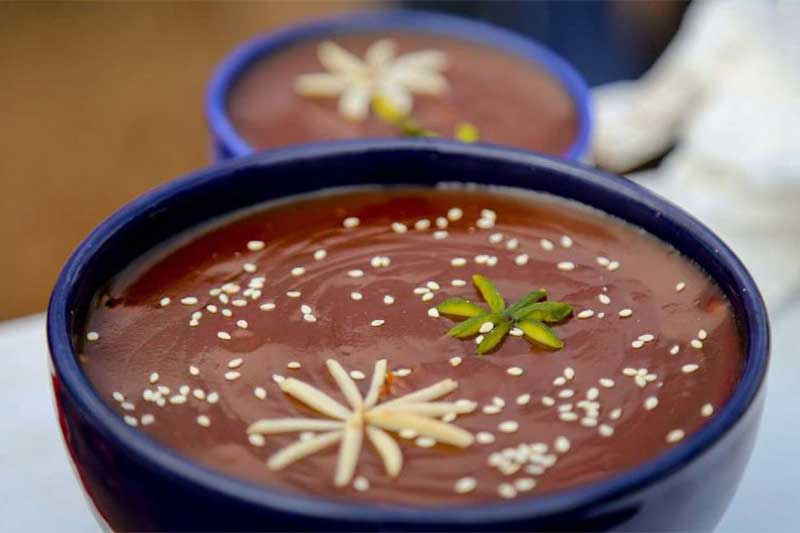
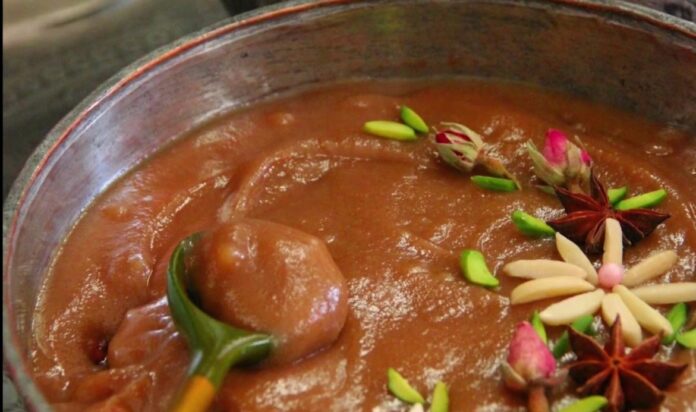
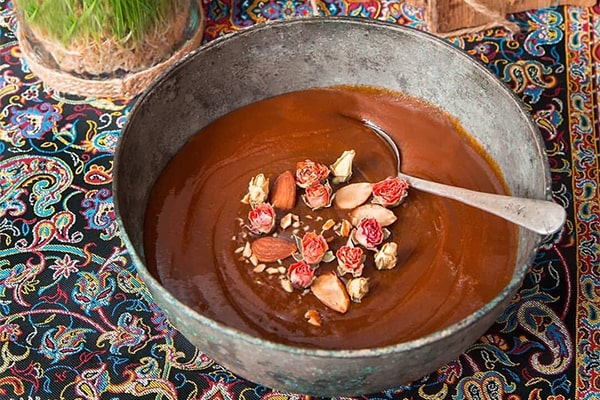
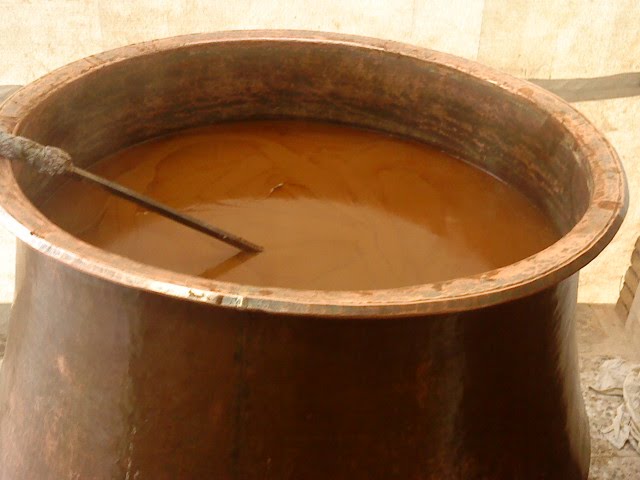
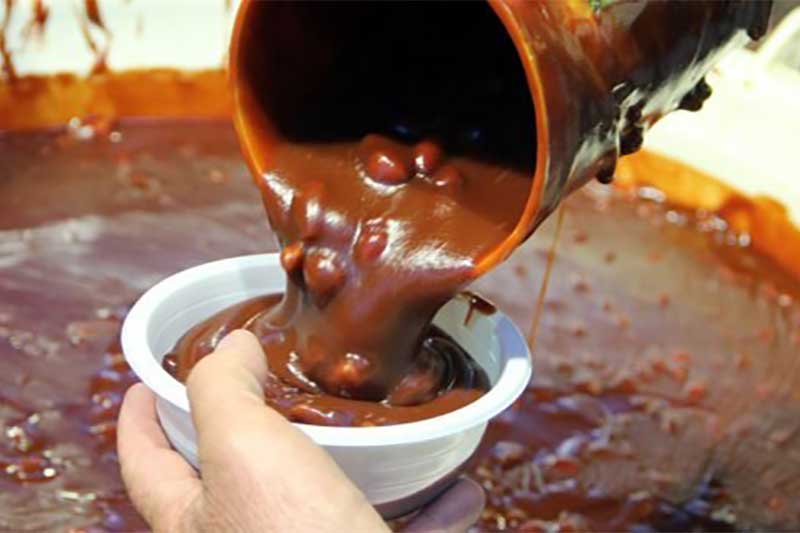
Samanu, also called Samanak or Somalak, is a type of sticky sweet food made of wheat germ and flour. History shows Samanu originates from today’s Khorasan, northeastern Iran. It is referred to as a “blessing on earth” and is usually cooked in the first month of spring as an item on the Haft-Sin table.
Annually on March 20 or 21, Iranian people celebrate the beginning of the Persian New Year, known as Nowruz. Just like other people around the world, people in Iran cook their own traditional foods to mark the arrival of spring and the beginning of their new year.
According to a Farsi report by Sarzamin-e Man magazine, among the main traditional dishes prepared and served on the eve or first day of Nowruz are Samanu (an Iranian sweet paste made entirely from germinated wheat), Sabzi Polo Ba Mahi (a mixture of rice and chopped herbs with fried fish), Kaak (a pastry and souvenir of the western Iranian province of Kermanshah), and Reshteh Polo (thin noodles with rice).
What follows is a brief historical background of Samanu and why it are served on the eve or first day of Nowruz as well as the recipe and instructions for cooking it:
Samanu; Sweet and Historical
Samanu is one of the items included in the traditional Iranian Haft-Seen(wikipedia) (literally seven Ss), a table-top arrangement of seven symbolic items [the first letter of which is ‘S’] traditionally displayed at Nowruz. Samanu is sweet, delicious and nutritious, and very popular among Iranians.
The first documents or evidence concerning the making of Samanu, reportedly, date back to the Sassanid Empire (224-651 AD). These evidence and documents confirm that Samanu has always been a religious food and made for a specific ritual. A large number of the anthropologists who have studied the food item from a religious point of view maintain that the religious dimensions and aspects of the stages involved in making Samanu gained greater significance following the entry of Islam into Iran,
particularly, during the Safavid dynasty (1501-1722).
Samanu is still cooked in the village about one week before Nowruz.
Benefits of Samanu
1. Since Samanu is rich in calcium and potassium, the elderly and those suffering from osteoporosis are recommended to place a balanced amount of the food on their diets.
2. There is a considerable quantity of phosphorus in Samanu and it is beneficial for brain growth in children and for women who breastfeed. Iron, folic acid, and the B-family vitamins existing in the food can contribute to the production of blood cells and hormonal balance and calm nerves. If sweet almonds are used in the cooking process, the food will become even more nutritious.
3. During the germination process, the vitamins and minerals in wheat increases several times and, on the contrary, the amount of calories and carbohydrate decreases. The protein will also be better digestible and the Vitamin C amount will be boosted.
Photo by Hossein Moammeri
4. It is recommended for women to have Samanu during the first three months of pregnancy because the food helps promote the development of the embryo’s nerve system and bones.
5. Samanu is rich in iron and helps cure anemia in pregnant women. It also prevents constipation during pregnancy.
The recipe of the comestible has been subject to a number of small changes. Most probably, the recipe used today has been handed down from Qajar era (1785 to 1925). Some 2,000 years have elapsed since Iranian first made Samanu, and the food has kept being served as the main dish in many Iranian religious as well as traditional ceremonies, such as Nowruz.
Since the process of making Samanu is quite time-taking, many buy it ready-made. However, if enough patience is shown, the ancient food item can be prepared at home using a simple recipe.
Ingredients for Samanu
Wheat grain seeds (one kilogram)
whole-wheat flour (three kilograms)
nuts (any desired amount or kind)
Samanu Recipe
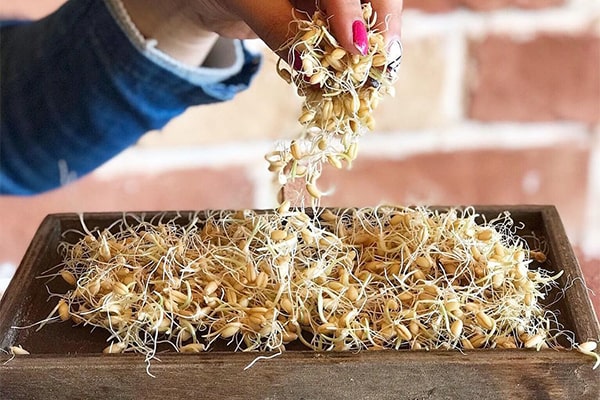
To prepare Samanu, primarily, the wheat sprouts’ sap is required to be extracted. After being winnowed, the wheat grain seeds should be poured in a bowl full of water to be soaked.
Normally, this will take up to three to four days. After being soaked, the grain seeds should be enfolded in a clean cloth to sprout in three days. During this period, grain seeds are required to be put in a dark and warm place.
The cloth also needs to be wetted [preferably with cold water] for two or three times a day to speed up the process of sprouting. It takes approximately one week for grain seeds to become ready for sap extraction.
After sprouting, the grain seeds should be washed and, then, mashed for as long as they turn into paste. They can even be ground.
The paste, then, should be sifted to extract its sap. To accelerate sap extraction, the paste can be well-mixed with some water before sifting. Then, the paste should be strained [through a sieve] until its sap is extracted. Great care should be taken to extract all the sap, as it is what sweetens Samanu.
Next, the flour should be poured in a stock pot and the sap must be added to it. Stirring is required to solve the flour in the sap and turn it into a thin liquid.
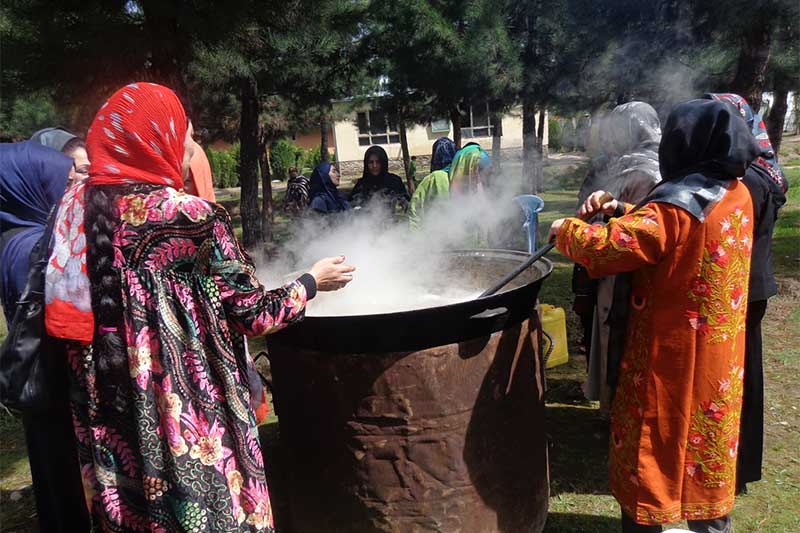
Then the stock pot should be put on the stove and be heated until the fluid [in it] boils and gradually becomes thicker. While heating, the fluid is required to be stirred constantly, otherwise, it will stick to the bottom of the stock pot, burns and turns into Halva (a dense, sweet confection served across the Middle East and many other places).
When the water of Samanu was drained through evaporation, a little bit more heating will be required. Adding some cold water to it at this stage will make it thinner and look brighter. Following that, Samanu is required to be poured into a bowl and be heated in an oven, or on a gas stove, with a slow flame for 30 minutes until it is prepared.
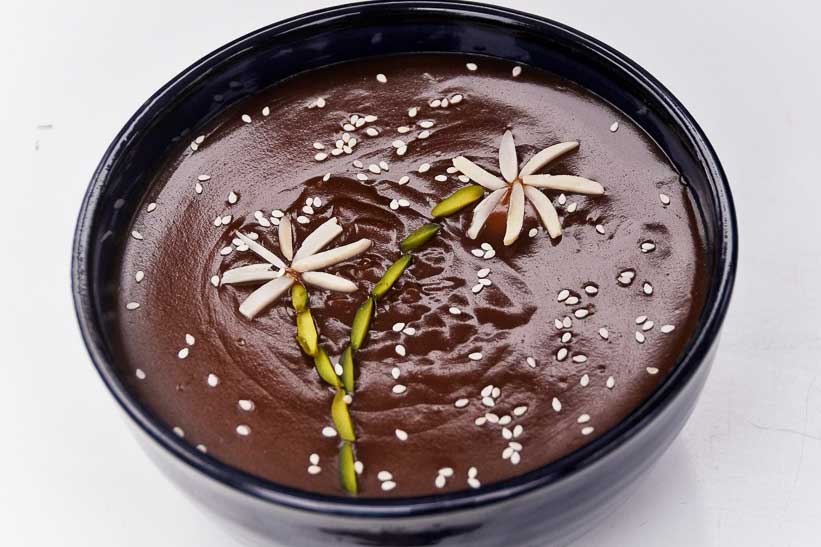
Samanu can be served in any desired dish or ornamented with chopped pistachios and almonds.
Samanu Contraindications
1. Overweight people who engage in little activity should not have too much Samanu.
2. Eating too much Samanu leads to stomach bloating in some people.
3. People with a cold temperament should not have Samanu.
Do people in other countries cook Samanu?
Samanu dates back centuries and is prepared for celebrations or national and religious ceremonies in different countries such as the Republic of Azerbaijan, Kirgizstan, Tajikistan, and Afghanistan.
The Tajiks and the Afghans call it Samanak. It may sound interesting that the Finnish also cook Samanu.
Every year, people in Daraq in Iran’s Northern Khorasan hold a Samanu-cooking ceremony in the month before spring and mainly export the food to Arab countries, Europe and East Asia. You can also buy ready-made Samanu.
In a tweet, Nezameddin Mousavi an Iranian MP from Tehran, said he and a group of his colleagues sent a letter to President Raisi and warned him to be “extremely careful about America’s legal tricks and unguaranteed pledges under a potential agreement” to avoid a repetition of the losses inflicted on the country in the wake of Washington’s withdrawal from the 2015 accord.
The letter comes as talks on a restoration of the nuclear deal seem close to a finish line.
Earlier this month, the European Union drafted a proposed text for a final agreement as most differences were said to have been narrowed.
Iran and the US have been trading responses to the proposed texts over the past days and it remains to be seen if they can hammer out the remaining differences.
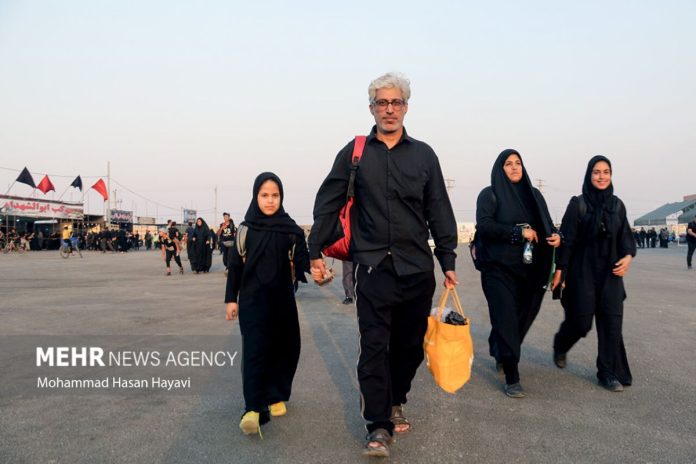
“Since early yesterday, we had a series of problems caused by a ban on the movement of Arba’een pilgrims holding temporary passports, but after follow-up, their movement resumed,” said Hassan Bahramnia on Sunday.
Since Saturday, he said, over 40,000 pilgrims have entered Iraq via the Mehran border crossing on their way to the holy cities of Najaf and Karbala, which are home to revered Shia shrines.
It is estimated that 65 percent of the pilgrims traveling to Iraq will take the Mehran crossing.
Pilgrims have been increasingly visiting Iraq since the start of the Islamic calendar month of Muharram, when Shia Muslims mourn the martyrdom anniversary of Imam Hussein, the third Shia Imam.
Iraq has lifted the visa requirements for Iranian pilgrims.
Iraq is currently making preparations for Arba’een, the fortieth day since the martyrdom of Imam Hussein in Karbala almost 1400 years ago.

 Normally, this will take up to three to four days. After being soaked, the grain seeds should be enfolded in a clean cloth to sprout in three days. During this period, grain seeds are required to be put in a dark and warm place.