Sunday, January 18, 2026
Home Blog Page 1761

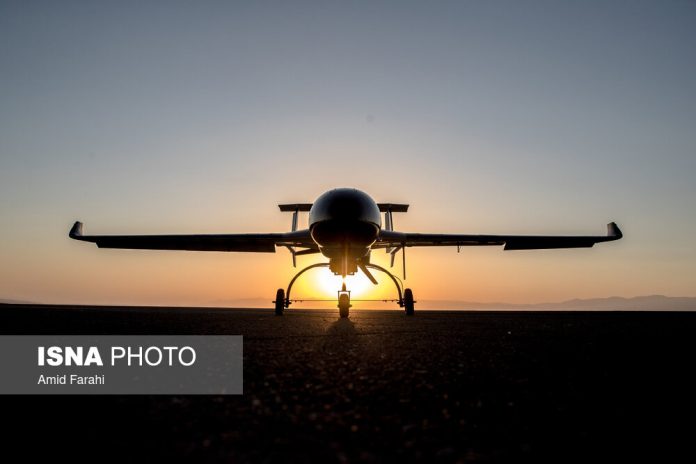
Iran military commander: Arash-2 drone earmarked for strikes on Israel

Iran Drone

Brigadier General Kioumars Pourdastan said in a TV program aired on IRIB’s news network that Arash-2 is a strategic precision-strike drone.

The general explained about the drone’s accuracy saying it was used to hit the same point targeted by Fath-360 missile during the ground forces’ recent military drills.

He said the ground forces are awaiting the army chief’s order to use the drone against Iseael.

Arash-2 has been developed in two versions that are equipped with either video or infra-red scanners.

The aircraft has an operational range of 2,000 kilometers and has an estimated maximum speed of around 100 kilometers per hour.

New chapter in Iran’s brain drain: ‘migrating university professors’

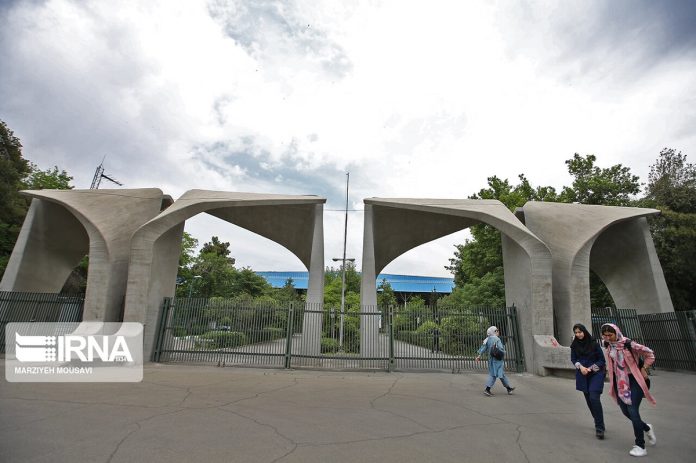
The University of Tehran

University professors are the latest group of brains to join the mass exodus which is feared to leave an irreparable damage to academic and educational centers in Iran, according to witness accounts.

The president of Iran’s prestigious Tarbiat Modares University based in Tehran says he receives almost a request every week by the university professors to take the whole year off to go to a foreign country ‘for research purposes’, adding some 60 to 70 percent of the applicants never return to the country.

Farhad Daneshju, in an interview with Iran’s Labor News Agency (ILNA), blamed the bureaucratic maze for implementation of the already long-term schemes in Iran meant to incentivize the ‘top genes’, including the academicians, to stay home.

The brain drain has sped up in recent years as the noose by the US-led sanctions, re-imposed after Washington’s 2018 withdrawal from a nuclear deal with Iran, has tightened around society.

Daneshju said, “delay in progress and putting people in hardships” are two of the impacts of the ‘inhumane’ sanctions that expedite the immigration.

He said the political-economic sanctions, even during wartime, should respect human rights and exclude certain aspects of life, such as scientific centers and medicines.

Iran says ready to cooperate with IAEA

Iranian Foreign Minister Spokesman Nasser Kanaani

Nasser Kanaani said in his weekly presser that cooperation with the agency will be both on Iran’s obligations and rights.

The spokesman added that he is aware of no draft resolution against Iran in the upcoming meeting of the agency’s board of governors.

He also touched on the resolution adopted against Iran in the IAEA’s board of governors in June, stressing that Tehran believes any repetition of the previous unconstructive moves would lead to another unconstructive result.

Kanaani said he hopes the countries that care about the IAEA’s credit as a non-political, specialized and technical organization do not sacrifice it for their own political viewpoints and interests.

Kanaani further warned that Iran will adjust its future steps and reactions with an eye on the developments in the IAEA.

The spokesman also talked about the recent anti-Iran statement by France, Germany and the UK, saying they should adopt a constructive approach and make up for their past mistakes.

Kanaani said their move was ill-advised, incorrect and taken at the wrong time.

“An agreement is a two-way road and we expected the parties to the [nuclear] negotiations to act constructively in this regard,” he said.

The spokesman also criticized the European trio for disregarding Iran’s constructive steps in relation to the IAEA, saying they issued the statement under the influence of Israel, “which is a party to no international safeguard system.”

The spokesman also touched on the regime’s claim that it has submitted new evidence on Iran’s nuclear activities to the IAEA.

He said Israel always played a clearly destructive role in the process of talks for revival of the nuclear deal.

The spokesman also said Iran has already submitted its response on the viewpoints of the US and is awaiting their official response, noting that Iran has not tabled new demands and has not raised new issues that may prevent an agreement.

Kanaani added that the US needs to adopt a constructive approach on the talks for the revival of the nuclear accord and must prove that it would be a trustworthy party to a renewed agreement, would not violate international laws and would not create crises.

FM Amirabdollahian: Iran to stand by Yemeni people, support their will

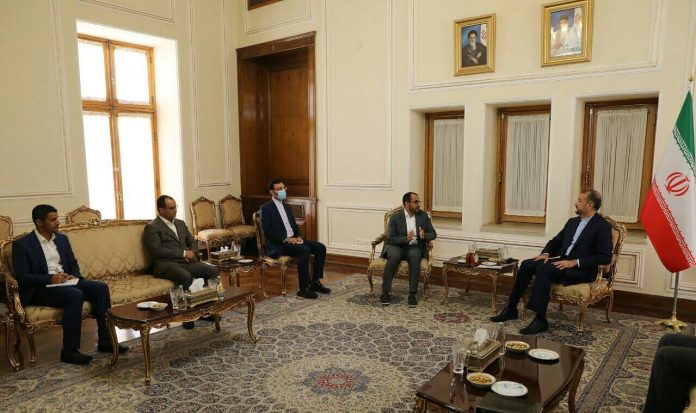
Hossein Amir Abdollahian and Mohammad Abdul Salam

Amirabdollahian made the remarks in a meeting with the visiting spokesman of Yemen’s Ansarullah movement and the head of the negotiating team of Yemen’s National Salvation Government Mohammad Abdul Salam in the Iranian capital Tehran on Sunday evening.

Amirabdollahian said Iran advocates a UN-brokered ceasefire between the Sana’a-based government of Yemen and the Saudi, UAE-backed militants and mercenaries in the south of the country as “a prelude to establishing a lasting peace and lifting the blockade on Yemen,” referring to the years-long siege imposed by the Saudi-led coalition on Yemen.

Saudi Arabia and its allies supported by the US and Western states launched a devastating war on Yemen in March 2015 to reinstall the Riyadh-friendly regime of former Yemeni president, Abd Rabbuh Mansur Hadi, and crush Ansarullah popular resistance movement.

The truce came into force in April between the Saudi-led coalition and Ansarullah and has been extended twice ever since.

For his part, the spokesman for the Yemeni Ansarullah movement briefed Amirabdollahian on the latest developments in Yemen and expressed gratitude for Iran’s support for the Yemeni people.

Abdul Salam slammed the Saudi-led coalition for ‘incomplete implementation’ of the ceasefire agreement, saying the coalition’s respect for the humanitarian issues in Yemen is indispensable for restoration of peace to the war-weary country.

Iran’s new power plant to generate 6,000 MW of electricity by next year

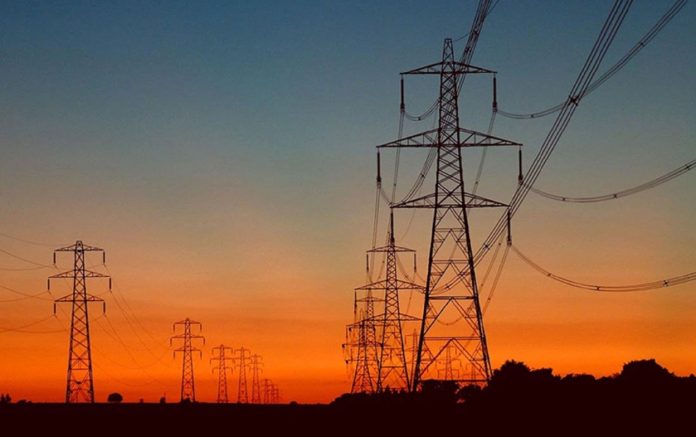
Electricity

Amir Doudabinejad added this is while it takes 3.5 years to construct a combined cycle block, and each 1000 MW power plant requires an investment of 600-650 million euros.

He also said last year, the average rise in the capacity of thermal power plants was three times the previous years.

Doudabinejad underlined the need to use Iran’s maximum capacity to generate electricity, saying some 80% of the country’s power output comes from the thermal power plants, 12% from the hydroelectric units and the rest from renewable, nuclear and small-scale power plants.

The official said this year for the first time, the country completed repair program of over 94,000 MW well before the start of the summer peak of electricity consumption.

Doudabinejad stressed that Iran succeeded in setting a new record in this sector and kept all its power plants and units at the maximum level of readiness.

The official further added electricity consumption by large industries witnessed 14 percent rise during this summer compared to last year.

Russia’s “Special Operation” in Ukraine; Day 201: Ukraine says Russia attacks caused widespread blackouts

Russia Ukraine War

White House pledges continued support for Ukraine amid counteroffensives

The White House has vowed to keep up support for Ukraine as Kyiv’s troops press ahead with counteroffensives aimed at recapturing territory seized by Russia.

“We’ll leave it to Ukraine to describe their operations but it is clear they are fighting hard to take back territory,” White House press secretary Karine Jean-Pierre told reporters.

“We will continue to support Ukraine as they continue to defend their democracy against Russian aggression,” she added.


Putin says Western ‘economic blitzkrieg’ has failed

Russian President Vladimir Putin has stated Moscow is “confidently handling external pressure” from the West over his country’s self-described “special military operation” in Ukraine.

“I would like to emphasise once again that Russia is confidently coping with external pressure, and in fact, we might say, with financial and technological aggression from some countries,” the Russian leader told government officials during a virtual meeting.

“The tactics of economic blitzkrieg did not work, this is already obvious to everyone and to them,” he added.

Western powers, including the United States, the United Kingdom and European Union member states, have imposed sweeping sanctions on Russia over its offensive.


WHO warns of possible COVID surge in Ukraine, sounds alarm over polio

The World Health Organization (WHO) expects a rise in COVID-19 in Ukraine to peak in October, possibly bringing hospitals close to their capacity threshold, the UN health agency’s director general has said.

Tedros Adhanom Ghebreyesus told WHO’S Regional Committee for Europe conference in Tel Aviv that oxygen shortages were predicted to occur in line with the envisaged spike in cases, with major supply sources located in parts of the country currently occupied by Russian troops.

Tedros also warned that Moscow’s offensive in Ukraine could increase the spread of polio. Ukraine has low vaccination coverage for COVID-19 and polio, an infectious disease mainly affecting children that can cause paralysis and kill in rare cases.

“We are also deeply concerned about the potential for the international spread of polio due to the gaps in immunisation coverage and mass population movement linked to the war,” he added.


Ex-president: ‘Moscow may eventually demand surrender of Kiev regime’

Russia’s current negotiating position on Ukraine is nothing but a “warm-up for kids”, because the eventual demand may be total surrender of the Kiev regime, the deputy head of Russia’s Security Council Dmitry Medvedev said on his Telegram channel on Monday.

He drew attention to the Ukrainian President Vladimir Zelensky’s statement about his refusal to conduct a dialogue with those who put forward ultimatums.

“The current ‘ultimatums’ are a warm-up for kids, a preview of demands to be made in the future. He knows them: the total surrender of the Kiev regime on Russia’s terms,” Medvedev warned.

Earlier, Zelensky stated in an interview with CNN that at the moment he was not ready to negotiate with Moscow.


Ukraine and Russia interested in Zaporizhzhia protection zone: IAEA chief

Ukraine and Russia are interested in a proposal put forward by the International Atomic Energy Agency (IAEA) to create a protection zone around the Russian-held Zaporizhzhia nuclear power plant, the agency’s chief has said.

“What I see is two sides that are engaging with us, that are asking questions, lots of questions,” Rafael Mariano Grossi told a news conference in Vienna, where the UN’s nuclear watchdog is headquartered.

Issues being discussed include the radius of the zone and the role of IAEA staff, Grossi said. Two IAEA officials are currently stationed at the plant and form what the agency calls a continuous presence there.

Asked if his proposal was for a ceasefire rather than a removal of all military equipment or personnel, Grossi stated what he was suggesting encompassed a ceasefire.


Ukraine’s military says 500 square kilometres of territory recaptured in south

Ukrainian forces have retaken about 500 square kilometres (193 square miles) of territory in the south of the country in the past two weeks as part of a counteroffensive against Russian troops, a spokeswoman for Ukraine’s southern military command claimed.

“On various sections we have advanced by [between] four and several tens of kilometres,” Natalia Humeniuk told a news briefing via video link, naming five settlements in the Kherson region which she said had been recaptured by Ukraine.

The Ukrainian army has been progressing more slowly with its southern counteroffensive compared with its operation in the country’s northeast, where it has made significant and rapid gains in recent days.


Russian-installed official says there is ‘no panic’ in occupied Kherson

A Russian-installed official in southern Ukraine’s occupied Kherson region has stated there is no reason for concern despite a counteroffensive in the area by Kyiv’s troops.

“In Kherson, there is no panic,” Kirill Stremousov noted in a video posted on Telegram.

However, he acknowledged that news from the northeastern Kharkiv region, where Ukrainian troops have recently recaptured swaths of territory, had disturbed some pro-Russian locals.

“It’s calm. Possibly it’s the calm before the storm, but we are ready to stand until the end and will not surrender our Russian city of Kherson to anyone,” Stremousov continued.


Russia says its forces conducting air raids in Kharkiv

Russia’s defence ministry says its forces are conducting air raids on parts of Ukraine’s northeastern Kharkiv region retaken by Kyiv’s troops during a lightning counteroffensive.

The ministry announced in its daily briefing that Russian air, rocket and artillery forces were “delivering precision strikes on units and reserves of the Ukrainian armed forces”, including in the urban hubs of Kupiansk and Izyum.

It added that 250 Ukrainian troops had been killed in the raids.

There was no immediate response to the minstry’s claims from Kyiv.


Hundreds killed in Izyum since start of war: Ukrainian official

At least 1,000 people have been killed in Ukraine’s northeastern city of Izyum since Russia launched its offensive in late February, a Ukrainian official has said, two days after Kyiv’s forces recaptured the major supply hub from Moscow’s troops.

“Izyum suffered heavily due to Russian aggression,” Maksym Strelnikov, a member of the city council, told a televised news conference, adding that 80 percent of its infrastructure including the central heating system had been destroyed.

“According to the information we have, at least 1,000 residents unfortunately died as a result of fighting, but we believe that an even larger number of people suffered due to not being able to receive necessary medical help as the Russians destroyed all medical institutions in Izyum in March,” he said.

Strelnikov added that only around 10,000 people remained in Izium, about a fifth of the city’s prewar population.


Norway PM says gas price cap will not solve Europe’s energy crisis

Norway’s prime minister says his country and the European Union have agreed to a closer dialogue on proposals to resolve Europe’s energy crisis.

“We’re going into the talks with an open mind but are sceptical towards a maximum price on natural gas,” Jonas Gahr Stoere stated in a statement following talks by phone with European Commission President Ursula von der Leyen.

“A maximum price would not solve the fundamental problem, which is that there is too little gas in Europe,” the PM added.

EU energy ministers last week asked the European Commission to propose broad gas price caps, even as the bloc’s executive itself poured cold water on the feasibility of such an idea. Norway, which is not an EU member, has become the bloc’s largest supplier of gas after Russia slashed exports to member states following its invasion of Ukraine.


Azerbaijan: Gas exports to Europe will rise by 30 percent this year

Azerbaijan says its gas exports to Europe will increase by 30 percent this year, as the European Union tries to decrease its reliance on Russian gas.

Energy Minister Parviz Shahbazov wrote on Twitter that Baku had “supplied to Europe 7.3 billion cubic metres of natural gas” so far this year.

“The overall volume of [gas] supplies to Europe in 2022 will amount to 12 billion cubic metres,” he added.

The figure marks a 31 percent increase compared to the volume supplied in 2021.

In July, the EU agreed a deal with Baku to double gas imports from Azerbaijan over the next few years.


Ukrainian defence minister warns of Russian counterattack

Ukraine’s defence minister has warned the country needs to secure retaken territory against a possible Russian counterattack on stretched Ukrainian supply lines.

“A counteroffensive liberates territory and after that you have to control it and be ready to defend it,” Oleksii Reznikov told the Financial Times newspaper, cautioning Kyiv’s troops could be encircled by Russian reinforcements if they advanced too far.

But he also lauded the Ukrainian push as a “snowball rolling down a hill”, saying it had made more progress than expected.

“It’s a sign that Russia can be defeated,” Reznikov added.


Kremlin says Russia will achieve its goals in Ukraine

Russia will achieve the goals of its self-described “special military operation” in Ukraine, the Kremlin’s spokesman has said.

“The military operation continues,” Dmitry Peskov stated in a conference call with reporters. “And it will continue until the goals that were originally set are achieved,” he added.

Peskov’s comments mark the Kremlin’s first response to recent counteroffensive manoeuvres conducted by Kyiv’s forces.

He refused to respond to questions about a possible mobilisation to support Moscow’s invasion, however, saying such queries should be directed to the country’s defence ministry.


Ukraine says it has recaptured more than 20 settlements in past 24 hours

The General Staff of the Armed Forces of Ukraine says the country’s forces have recaptured more than 20 towns and villages in the past 24 hours during their eastern counteroffensive.

It added in an operational update posted on Facebook that “stabilisation measures” were being carried out in the newly re-taken settlements.

According to Kyiv, Ukraine’s forces have retaken more than 3,000sq km (1,160sq miles) of territory in the country’s east this month.

Russia’s ministry of defence acknowledged on Saturday that it had abandoned Izyum, its main stronghold in Ukraine’s northeast, and neighbouring Balakliia, in what it called a preplanned “regrouping” to gather forces in the eastern Donetsk region.


Macron calls for Russia to withdraw from Zaporizhzhia nuclear plant during phone call with Putin

French President Emmanuel Macron reiterated his demand for a ceasefire in Ukraine and Russian withdrawal from the Zaporizhzhia nuclear power plant during a phone call with Russian President Vladimir Putin, the Elysee Palace said Sunday.

Macron “condemned the continuation of Russian military operations in Ukraine and reiterated his demand that they cease as soon as possible, that negotiations begin and that the sovereignty and territorial integrity of Ukraine be restored,” his office announced in a statement.

The French President “also stressed the need to ensure the safety of the Zaporizhzhia nuclear power plant.

He recalled that the Russian occupation was the cause of the current risks to the integrity of Zaporizhzhia. He called for Russian forces to withdraw their heavy and light weapons from the plant and that the IAEA’s recommendations be closely followed to ensure the safety of the site be restored,” the Elysee added.

Zaporizhzhia is the site of the largest nuclear plant in Europe, and the facility sits on the fire line between the Russian occupiers and Ukrainian forces.

The Elysee noted that Macron “will speak again to President Putin in the next few days in order to reach an agreement that guarantees the safety of the Zaporizhzhia nuclear power plant.”

On the issue of global food security, Macron told Putin that European sanctions against Russia do not apply to agricultural products. He also asked the Russian leader to ensure that the Ukraine grain export agreement between Russia, Ukraine and Turkey, under the supervision of the United Nations “to ensure that the exported grain goes to those who need it most.”


‘Do you still think you can scare us?’ Zelensky tells Russia

President Volodymyr Zelensky has delivered a fierce response to Russian attacks on the Kharkiv region.

In a nightly message on Telegram, the Ukrainian president said that although the Kremlin was trying to deprive his people of “gas, light, water and food”, it would not succeed in defeating them.

“Do you still think that you can scare us, break us, make us make concessions?” he asked.


Ukraine: Russian attacks on infrastructure ‘revenge’ for counteroffensive success

Ukrainian officials have accused retreating Russian forces of launching retaliatory attacks on civilian infrastructure, including a thermal power station in Kharkiv, that the authorities in Kyiv said caused widespread blackouts.

“No military facilities, the goal is to deprive people of light & heat,” Ukrainian President Volodymyr Zelensky wrote on Twitter of the attacks.

Moscow denies its forces deliberately target civilians.

Zelensky confirmed that Russian attacks caused a total blackout in the Kharkiv and Donetsk regions, and partial blackouts in the Zaporizhzhia, Dnipropetrovsk and Sumy regions.

“They are unable to reconcile themselves to defeats on the battlefield,” Dnipropetrovsk Governor Valentyn Reznichenko wrote on Telegram.

Kyrylo Tymoshenko, the deputy head of the president’s office, posted an image on Telegram of a power station on fire but added power had been restored in some regions.

Kharkiv Mayor Ihor Terekhov described attacks on infrastructure as “cynical revenge” for the success of Ukrainian troops at the front, particularly in Kharkiv.

“Last night’s situation is being repeated. Due to the [Russian] strikes … power and water supplies have halted,” Terekhov stated in a Telegram post, adding that emergency services were working to restore the services.

Earlier, Kharkiv’s regional governor had announced 80 percent of power in the city had been restored following Russian shelling on Sunday, which followed a large Ukrainian counteroffensive to recapture territory in the area.


Russia military map shows troop withdrawal in east Ukraine

Moscow’s forces have made a major withdrawal from Ukraine’s northeastern Kharkiv region, according to a military map presented by the Russian defence ministry on Sunday.

Russia controlled just a sliver of territory in the region’s east, behind the Oskil river, the map showed.

It was part of a ministry video of its daily briefing.

An earlier map on Saturday showed Russia occupying much more territory in the region.

Ukraine says it has reclaimed swathes of land over the last two days as part of a lightning counter-offensive, pushing back Russia’s military from strategic holdouts in the east.

The Russian military made the surprise announcement Saturday that it was “regrouping” its forces south from Kharkiv to the Donetsk region to focus its military efforts there.


Moscow remains ‘silent’ on defeats in Ukraine

Russia has been nearly silent about its soldiers being forced to abandon their main bastion in northeastern Ukraine.

The swift fall of Izyum in Kharkiv province was Russia’s worst military defeat since its troops were forced back from Kyiv in March, Reuters reported.

Moscow has almost been totally silent about the defeat – not offering any explanation for what had taken place in northeastern Ukraine.

“We take pride in Moscow, and love this city with its majestic antiquity and its modern and dynamic pace of life, the charm of its cosy parks, lanes and streets and abundance of business and cultural events,” Vladimir Putin told citizens on Moscow Day, according to a Kremlin transcript of his message.


Putin ally criticises Russian performance in parts of Ukraine

Ramzan Kadyrov, the Kremlin-appointed leader of Chechnya and Vladimir Putin ally whose troops have been at the forefront of the war in Ukraine, has conceded that the campaign was not going to plan.

In an 11-minute-long audio message posted on Telegram Kadyrov said: “If today or tomorrow changes are not made in the conduct of the special military operation, I will be forced to go to the country’s leadership to explain to them the situation on the ground.”

The criticism came after the Russian army’s leadership appeared to be caught off-guard by Ukraine’s fightback against its invasion in the northeast.

Pro-Russian Telegram channels are saying that this is a defeat, “and one high-profile military analyst said that their troops are in an operational crisis and that the Ukrainians have seized the initiative in this war”.


Putin, Macron discuss Zaporizhzhia nuclear plant in Ukraine

Russian President Vladimir Putin and his French counterpart Emmanuel Macron have discussed the security situation at the Zaporizhzhia nuclear plant in Ukraine, the Kremlin announced.

Speaking by phone, the two leaders expressed readiness for a “non-politicised interaction” on the matter with the participation of the International Atomic Energy Agency (IAEA), according to the statement published on the Kremlin’s website.


Citing UN figures, UK dismisses Putin’s claim on Ukraine grain export

The UK has dismissed as untrue Russian President Vladimir Putin’s claim that only a fraction of grain exported from Ukraine under an international deal was going to poor countries.

Last week, Putin asserted that only two of 87 ships, carrying 60,000 tonnes of products, had gone to poor countries. The deal to allow grain exports from Ukrainian Black Sea ports, brokered by the United Nations and Turkey, took effect last month.

Quoting UN figures, the British Defence Ministry announced about 30 percent of grains exported under the deal has been supplied to low- and middle-income countries in Africa, the Middle East and Asia.

Russia is pursuing a deliberate misinformation strategy as it seeks to deflect blame for food insecurity issues, discredit Ukraine and minimise opposition to its invasion, the ministry said in its daily intelligence bulletin on Twitter.


France to sign deal with Romania to increase Ukraine grain exports

France’s transport minister has said he would sign an agreement with Romania to increase Ukrainian grain exports to developing countries, including to the Mediterranean.

“Tomorrow, I will sign an accord with Romania that will allow Ukraine to get even more grains out … towards Europe and developing countries, notably in the Mediterranean [countries] which need it for food,” Clement Beaune told LCI television, adding that the deal covered exports by land, sea and river.

Iranian MP slams US as “greedy” regarding nuclear deal talks

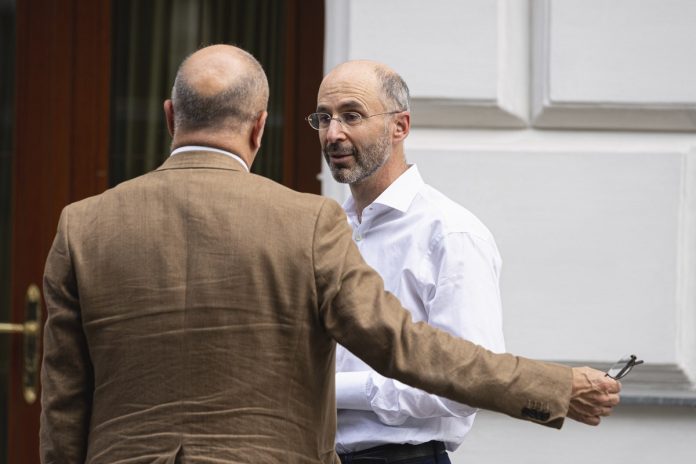
Robert Malley

Hossein Noushabadi was speaking in reaction to the US side’s recent comments about Iran’s response Washington’s proposals regarding revival of the 2015 nuclear deal, the Joint Comprehensive Plan of Action, JCPOA.

Noushabadi said the White House wants more than what’s enshrined in the JCPOA and that is why the US called Iran’s response “unconstructive.”

The Iranian MP underlined that Iran wants transparency and a deal that would lift all sanctions on the country.

He added that Tehran also seeks guarantees and verification of the removal of the bans. The lawmaker stressed that the Islamic Republic is defending its nuclear program because it has moved within the confines of the International Atomic Energy Agency, IAEA, up until now.

Noushabadi noted that Iran seeks guarantees because it does not trust then other sides.

Noushabadi said if there are no guarantees, transparency and verification of sanctions removal, the past bitter experience will arise again.

The Iranian lawmaker noted that Tehran is seeking to finalize a deal within the rules and regulations of the IAEA and in line with its own national interests.

Iranian interior minister: One fourth of Arbaeen pilgrims have returned home

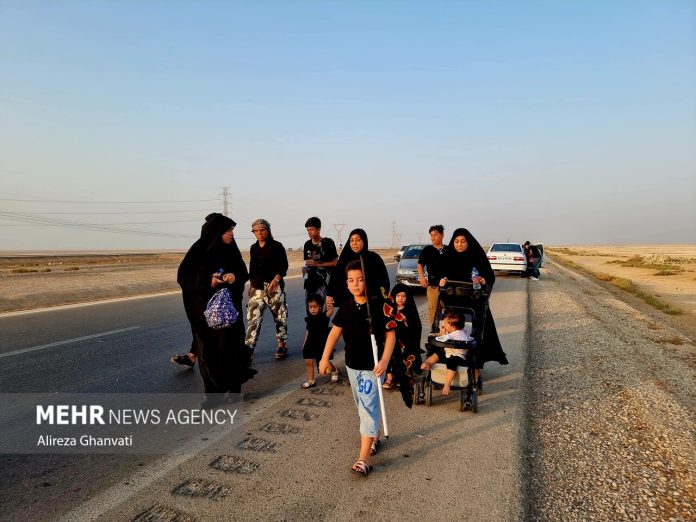
Iranian families host pilgrims of Arbaeen walk

Vahidi added that people are now crossing the border into Iraq but they should avoid gathering at the border crossings in huge numbers so that authorities could let them into Iraq in a controlled manner.

Vahidi added that more than 2.5 million pilgrims have travelled to Iraq to participate in the Arbaeen ceremonies.

Meanwhile, the head of the immigration police and passport department of Iran’s Law Enforcement has announced suspension of issuing temporary traffic cards for Arbaeen pilgrims.

General Ali Zolghadri said the Arbaeen headquarters of the Interior Ministry has announced the suspension due to some problems in areas near the border with Iraq.

He added that 520,000 temporary traffic cards have so far been issued for pilgrims and sent to applicants by mail.

Zolghadri said that measures have been put in place to speed up the issuance of passports for applicants.

Earlier, the head of the Iranian parliament’s health commission criticized the government for failing to create the necessary infrastructure for the travel of five million Iranians to Iraq for Arbaeen ceremonies.

Hosseinali Shahriari said the pilgrims are facing shortage of health and welfare facilities and inadequate transportation at the border.

Shahriari added that the Iranian health ministry and Red Crescent Society have been working hard to provide health services to the pilgrims but they are under pressure due to shortage of funding and required workforce.

Covid infects 700 people in Iran, 24 killed

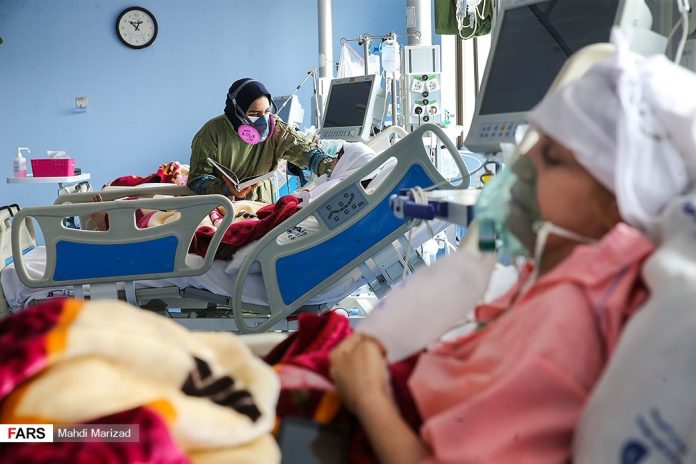
COVID in Iran

Some 24 more Iranians have died from the coronavirus over the past 24 hours bringing the total deaths to 144,178, Iran’s Health Ministry said on Sunday.

696 new cases of infection with COVID-19 were found over the past 24 hours, 199 of whom were hospitalized, it added.

The Iranian Health Ministry noted that 7,315,563 patients out of a total of 7,538,821 infected people have recovered or been discharged from hospitals.

547 COVID-19 patients are in critical conditions and in intensive care units, it added.

The Iranian Health Ministry also announced that 65,046,295 Iranians have received the first dose and 58,438,202 people have so far received the second dose of the COVID-19 vaccine.

Moreover, 31,049,116 people have also received the third or fourth shots as the booster jab.

Analyst: Europeans’ claim on Iran nuclear work unacceptable

Iran nuclear programe

The former chair of the parliament’s national security and foreign policy commission told ISNA that Europe lacks independence in its decision-making and is under the deep influence of the US and Israel.

“Accordingly, the viewpoint of Europe, even at the level of the Troika that consists of the three major and powerful European countries, is of no greater worth,” Alaeddin Boroujerdi said.

He was referring to the statement by France, Germany and the UK that they doubt Iran’s intentions in its nuclear work.

The international affairs analyst noted that Iran’s nuclear steps have been taken only in reaction to the US withdrawal from the nuclear deal based on its own national interests and the conditions stipulated in the accord.

“I think under the current circumstances, seeing that the decisions Americans make about the JCPOA are affected by the upcoming election on the one hand, and the pressure by Israel, as a sponsor of the US elections, on the other hand. It is the US-requested line of action that Europeans continue and prolong the game,” he said.

Boroujerdi contended that this means it is the Europeans, who are to blame for the involved parties to have failed to get a final agreement on the revival of the 2015 nuclear deal so far.

He further stressed that Iran will continue the push to safeguard its national interests based on its announced stance and will not wait for its rights to be violated.