Modi tells Putin now ‘is not an era of war’
Indian Prime Minister Narendra Modi has told Russian President Vladimir Putin that now is not a time for war, with food, fertiliser and fuel security among the major concerns of the world at present.
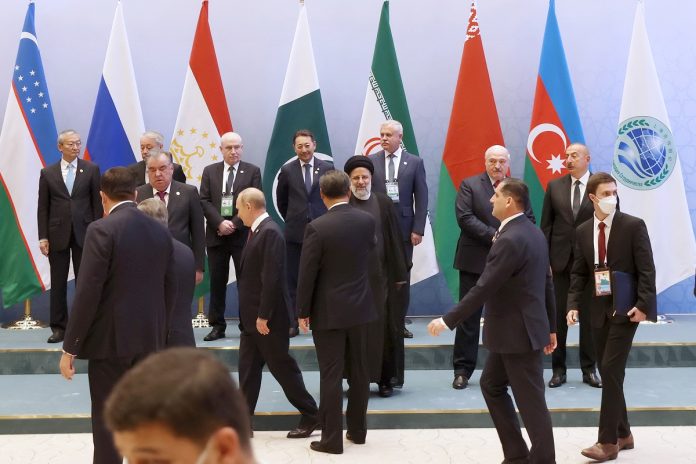
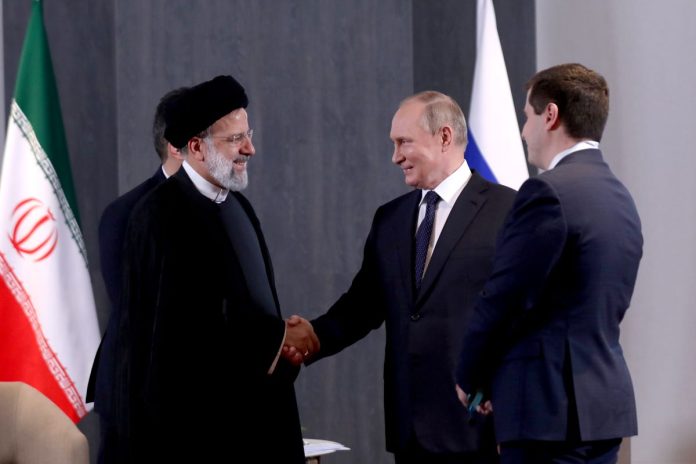
“I know that today’s era is not an era of war, and I have spoken to you on the phone about this,” Modi told Putin on the sidelines of a meeting of the Shanghai Cooperation Organisation (SCO) in Uzbekistan.
UN rights office to investigate reports of Izyum mass grave
A spokeswoman for the United Nations’s human rights office has said it plans to send monitors already stationed in Ukraine to Izyum to investigate Ukrainian reports of a mass grave there.
“They [the monitors] are aiming to go there to try to establish a bit more about what may have happened,” Liz Throssell told a press briefing at the agency’s headquarters in Geneva, without giving a timeframe.
Throssell added she could not confirm if the bodies were contained in one mass grave or in a series of individual graves.
Izyum mass grave mostly contains civilians: Ukrainian police chief
Most of the people buried in the mass grave discovered in Izyum are civilians, Ukraine’s police chief has announced, based on a preliminary estimate.
“On a preliminary estimate, civilians. Although we have information that there are troops there, we haven’t recovered a single one yet,” Ihor Klymenko told a news conference after being asked if the mass grave contained mainly civilians or soldiers.
Two separatist officials killed by bomb in Ukraine’s Luhansk
The head of the Moscow-backed administration in eastern Ukraine’s self-proclaimed Luhansk People’s Republic (LPR) says the breakaway region’s prosecutor general and his deputy have been killed by a bomb blast at their offices.
“Today, as a result of a terrorist act, Prosecutor-General of the LPR Sergei Gorenko and his deputy Ekaterina Steglenko were killed,” Leonid Pasechnik said in a statement posted on Telegram.
Pasechnik blamed Kyiv for the attack. There was no immediate response from Ukraine.
The reported blast comes as Ukraine is conducting a multi-pronged counteroffensive aimed at driving Russia’s forces out of the country.
Erdogan urges end to war in Ukraine ‘as soon as possible’
Turkish President Recep Tayyip Erdogan has told a regional summit attended by his Russian counterpart Vladimir Putin that he wants the war in Ukraine to end “as soon as possible”.
“We are making efforts to finalise the conflicts in Ukraine through diplomacy as soon as possible,” Erdogan told the meeting of the Shanghai Cooperation Organisation (SCO) in Uzbekistan.
Germany seizes Russian oil firm Rosneft’s refineries
Germany has taken control of the German operations of Russian oil firm Rosneft to secure energy supplies which have been disrupted after Moscow’s full-scale invasion of Ukraine.
Rosneft’s German subsidiaries, which account for about 12 percent of oil refining capacity in the country, were placed under the trusteeship of the Federal Network Agency, Germany’s economy ministry announced in a statement.
Putin hails ‘new centres of power’ at SCO summit
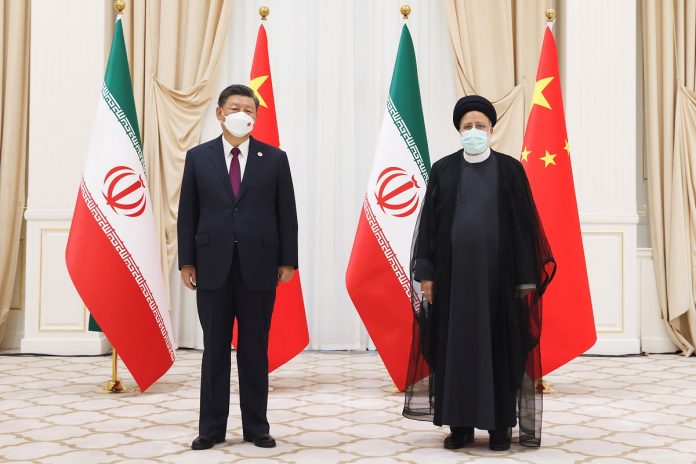
Russia’s president has hailed the growing influence of “new centres of power” at the Shanghai Cooperation Organisation (SCO) meeting in Uzbekistan.
“The growing role of new centres of power who cooperate with each other… is becoming more and more clear,” Putin told the meeting of the regional security group, formed by Beijing and Moscow as a counterweight to the influence wielded by the US.
The Russian leader added Moscow was “open to cooperation with the entire world” and denounced the use of “illegal sanctions”, calling for such measures to be reversed.
Western powers, including the US, the United Kingdom and EU member states, have imposed sweeping sanctions on Russia over its offensive in Ukraine.
Swiss cut off tax data, make visas harder for Russians
Switzerland will temporarily halt the exchange of tax information with Russia and make it harder for Russian citizens to get visas, the country’s government has announced.
At a meeting on Friday, the cabinet decided to suspend the exchange of tax information with Russia, the Swiss government said in a statement, citing the public policy proviso of the administrative assistance convention in tax matters.
It had earlier said it would fully suspend an agreement that eases visa rules for Russian citizens, thus bringing Swiss visa rules for Russians in line with those in the European Union.
Switzerland, the world’s largest centre for managing offshore wealth, routinely exchanges bank data with other countries on their citizens’ Swiss accounts.
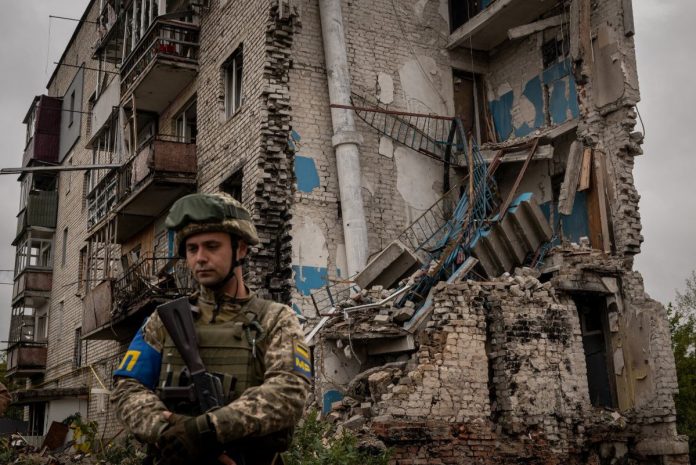
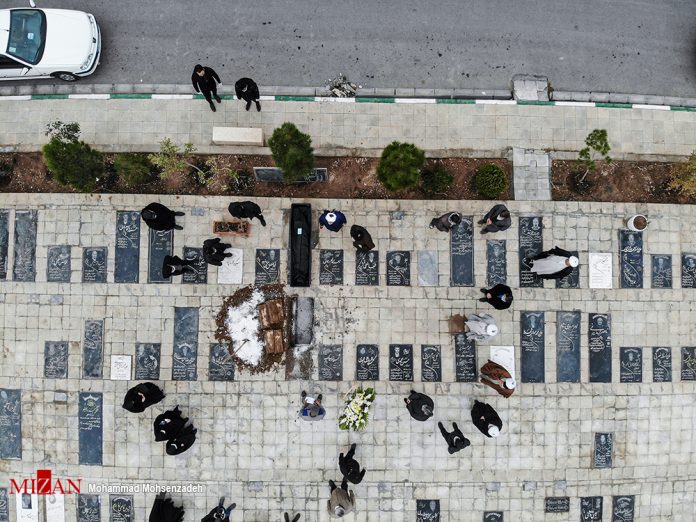
At least “440 graves” found in Izium: Ukraine
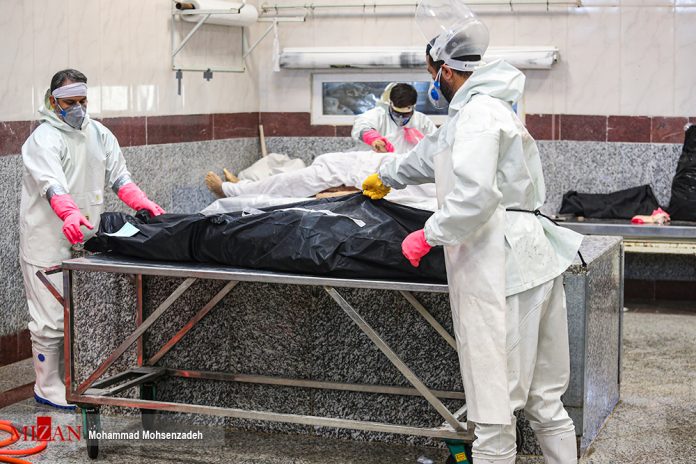
The Ukrainian Ministry of Defense reported a burial site in Izium, Kharkiv region, and said that “440 unmarked graves” had been discovered after the region was liberated from Russian forces last weekend.
Ukraine’s Center for Strategic Communications on Thursday announced that some of the graves discovered after the Russians fled were “fresh” and that the corpses buried there were “mostly civilians.”
The cause of deaths and the circumstances around the burials are unclear; President Volodymyr Zelensky srared that the “necessary procedural actions have already started.”
White House announces $600 million security package for Ukraine during counter-offensive
The White House announced a $600 million security package for Ukraine, providing the Ukrainian military with another round of assistance during its counter-offensive against Russian forces.
The equipment will be drawn from existing US stocks and inventories, and it will include additional arms, ammunition, and equipment, according to a statement from Secretary of State Antony Blinken.
Together with our Allies and partners, we are delivering the arms and equipment that Ukraine’s forces are utilizing so effectively as they continue their successful counter-offensive against Russia’s invasion,” Blinken noted.
The package includes additional ammunition for the HIMARS system, which Ukraine has used to hit multiple Russian logistics hubs, command posts, and ammo depots. It also includes tens of thousands of conventional 105mm artillery rounds, 1,000 precision 155mm rounds, and counter-drone systems. With winter coming, the United States is also providing cold weather gear and more night vision devices.
One week ago, the Pentagon announced another $675 million package, which included additional ammunition for the HIMARS, as well as tens of thousands of rounds of artillery ammunition.
For now, the US has decided against sending long-range ATACMS ammunition to Ukraine for use with the HIMARS platform, despite repeated Ukrainian requests. The ATACMS have a range of nearly 200 miles (320 kilometers), capable of striking deep within Russian territory.
Pentagon officials have stated the HIMARS launchers coupled with GMLRS, a munition with a range of some 40 miles (64 kilometers), is what the US should be focused on providing to Ukraine.
Since the beginning of Russia’s invasion of Ukraine on Feb. 24th, the US has provided $15.1 billion in security assistance to Ukraine.
Mass burial site discovered in Izium after Russian forces fled the city: Zelensky
President Volodymyr Zelensky said a mass burial site has been discovered in the Ukrainian city of Izium after the area was re-captured last weekend from Russian forces.
“In Izium, Kharkiv region, a mass burial of people was found. The necessary procedural actions have already started there, more information — clear and verified — should be available tomorrow,” Zelensky stated in his nightly address.
He added that Ukrainian and international journalists will visit Izium Friday to see what they have uncovered.
“We want the world to know what is really happening and what the Russian occupation has led to,” Zelensky said.
“Bucha, Mariupol and now, unfortunately, Izium… Russia leaves death everywhere. And must be responsible for it. The world must hold Russia to real responsibility for this war. We will do everything for this,” he added.
Russia has used hypersonic weapons “to almost no effect” in Ukraine: US deputy defense secretary
Russia has “already used some hypersonic weapons in the Ukraine war almost to no effect,” according to US Deputy Secretary of Defense Kathleen Hicks.
Hicks made the remarks during a fireside chat at the AFCEA/Intelligence and National Security Alliance 2022 Intelligence and National Security Summit on Thursday.
Essentially, all missiles are hypersonic — which means they travel at least five times the speed of sound. Almost any warhead released from a rocket miles in the atmosphere will reach this speed heading to its target.
Defense Secretary Lloyd Austin downplayed the effectiveness of the missile in March, telling CBS that he “would not see it as a game-changer.”
Chechen leader calls on Russian regions to mobilize more troops
The leader of the Russian republic of Chechnya, Ramzan Kadyrov, has urged Russian regions to “self-mobilize,” according to a Telegram post published on Thursday.
Kadyrov has been outspoken about changes to the Russian campaign following the military setback in Kharkiv, saying that the Ministry of Defense should learn from mistakes — and that in his personal view, martial law should be introduced in Russia.
“Russia is a federal state in which the regions can be the initiators of any undertakings. And one of these undertakings today should be self-mobilization,” Kadyrov stated, adding, “The head of each subject of Russia today must prove his readiness to help the state.”
“I believe that each leader of the region is quite capable of preparing, training and staffing at least one thousand volunteers,” Kadyrov continued.
Sergey Aksenov, the Russian-appointed leader in Crimea, added his voice to calls for the Russian regions to raise more volunteer units for the military.
Aksenov said on Telegram: “I fully support the initiative of the Head of the Chechen Republic, my friend and brother Ramzan Kadyrov to train volunteers in the regions.”
“We must make every effort to defeat the Nazis as quickly as possible and restore peace,” Aksenov added, parroting Russian President Vladimir Putin’s unfounded claims for his invasion.
He said Crimea had already fielded more than 1,200 volunteers and is forming two more battalions, and is providing them with equipment.
Pope says selling weapons to Ukraine is morally acceptable if they are used for self-defense
Pope Francis stated it could be morally acceptable to sell weapons to Ukraine if they were used in self-defense.
“To defend oneself is not only legitimate, it’s also an expression of love for one’s country,” Francis said during an in-flight news conference on the plane returning from Kazakhstan.
Asked by a journalist if it was right to sell weapons to Ukraine, the Pope noted, “It’s a political decision. It could be morally acceptable if done morally.”
“It is immoral if it’s done with the intention of provoking more war, or to sell weapons, or to get rid of weapons that are no longer needed,” Francis continued, adding, “Morality is defined by motivation.”
In answer to a question about Russian aggression in Ukraine, the Pope said that dialogue is important, “even if you have to hold your nose.”
“I don’t exclude dialogue with any power that is at war,” the Pope stated, “even if it is the aggressor.”
“It may smell but one has to do it,” Francis added.
US to soon announce new $600 million arms package for Ukraine
The United States will soon announce a new $600 million arms package for Ukraine to help the Ukrainian military battle Russia, US officials have stated.
President Joe Biden would authorise the assistance using his Presidential Drawdown Authority, which allows the president to approve the transfer of excess weapons from US stocks, the officials told the Reuters news agency.
Two people familiar with the deliberations said the package could be announced later this evening.
Several sources expected the package to contain munitions, including more High Mobility Artillery Rocket Systems (HIMARS).
Two of the sources said the package would include ammunition for howitzers.
US likely won’t provide longer-range systems to Ukraine for now: Sources
US President Joe Biden’s administration is unlikely to significantly change its approach to helping Ukraine fight Russia, sources tell CNN, and is rebuffing some Ukrainian weapons requests for now — even as Ukrainian forces have made sweeping gains and recaptured thousands of miles of territory from Russia in recent days.
US officials broadly view Ukraine’s recent momentum as evidence that the types of weapons and intelligence that the West has been providing to Ukraine in recent months has been effective. And some caution that it’s too early to call Ukraine’s rapid progress in recent days a turning point in the war, warning that Russia is far from a spent force militarily.
Officials do not believe the battlefield landscape has changed enough to warrant a dramatic strategy shift in the short term despite recent Ukrainian requests to lawmakers and the Pentagon for long-range missile systems and tanks, which they assert can help them sustain the push for longer and keep the territory they have regained.
But for now, at least, the US is still not inclined to provide Ukrainian forces with the long-range Army Tactical Missile Systems, also known as ATACMS, that they have been requesting for months, officials told CNN.
ATACMS have a range of up to 300 kilometers (around 185 miles). The administration still thinks providing those systems could be escalatory because they could be used to fire into Russia itself. Currently, the maximum range of US-provided weapons to Ukraine is around 49 miles.
“It’s our assessment that they don’t currently require ATACMS to service targets that are directly relevant to the current fight,” Under Secretary of Defense for Policy Colin Kahl told reporters in late August.
Last week, Defense Secretary Lloyd Austin intimated the US position hasn’t shifted.
“The HIMARS, using the GMLRS rockets, have been extraordinary in terms of enabling the Ukrainians to service the targets that they need to service inside of Ukraine,” Austin stated in Prague on Friday, making no mention of ATACMS.
Since the beginning of the conflict in February, the Biden administration has taken an incremental approach to providing arms to Ukraine — in some cases, later agreeing to send weapons that earlier in the conflict would have been deemed far too escalatory. Its calculus has largely been based on avoiding systems that might be seen by Russian President Vladimir Putin as too provocative, although those lines have moved over time and been criticized by some former officials as arbitrary.
Some US military officials also acknowledged that systems currently considered too escalatory — like F-16 jets, for example — might eventually be provided to Ukraine. But those sources cautioned that such a decision is likely far in the future and isn’t linked to Ukraine’s recent, but nascent, successes. And there are no indications that such discussions are underway now.
Zelensky calls on US, Germany, Italy, France and Israel to provide air defense system
Ukrainian President Volodymyr Zelensky called on the US, Germany, Italy, France and Israel to provide air defense systems to counter Russian strikes on civilian infrastructure.
Ukrainian officials are concerned that after suffering losses on the battlefield, Moscow is turning to missile strikes on critical civilian infrastructure.
Regarding air defense systems, Zelensky noted that in addition to talking to the US, “we are talking with France, Italy, Germany, and Israel, though we have not received a positive reaction from the latter [Israel]. There are not many countries capable of guaranteeing sky protection to us in terms of air defense. This issue is to be solved around these five countries.”
Russian missile strikes damaged a water pumping station at a major dam in the central Ukrainian city of Kryvyi Rih, one of the latest attacks from Moscow in a series of bombardments on civilian infrastructure.
Zelensky also asked for more weaponry to try to consolidate their gains and complete this war as quickly as possible.
IAEA board passes resolution to demand Russia leave Zaporizhzhia
The United Nations nuclear watchdog’s 35-nation Board of Governors has passed a resolution demanding that Russia end its occupation of the Zaporizhzhia Nuclear Power Plant in Ukraine.
The resolution, which says the board calls on Russia to “immediately cease all actions against, and at” the Zaporizhzhia plant and “any other nuclear facility in Ukraine”, was passed with 26 votes in favour, two against, and seven abstentions, diplomats said.
Russia and China were the only countries that voted against the resolution.