Wednesday, December 31, 2025
Home Blog Page 151

Gaza death toll surges past 65,000

Gaza War

In its daily update, the ministry reported 98 deaths and 385 injuries in the past 24 hours alone. It warned the figures remain incomplete, as many victims are still trapped under rubble or on roads that rescue teams cannot reach.

Since Israel resumed its attacks on Gaza on March 18, at least 12,511 people have been killed and 53,656 wounded, according to the ministry.

The statement added Israeli forces continued to target Palestinians seeking food aid, with seven people killed and 87 injured in the past day. This brought the total number of aid seekers killed to 2,504, with over 18,381 injured since May 27.

The ministry also confirmed four deaths from famine and malnutrition in the past day, raising the toll since October 2023 to 432, including 146 children.

Since famine was formally declared in Gaza last month, 154 such deaths have been recorded, among them 31 children.

Israel has sealed Gaza’s crossings since March 2, preventing food and aid trucks from entering despite hundreds waiting at the border. The move has exacerbated the humanitarian catastrophe in the enclave, leaving residents without access to basic supplies.

Last November, the International Criminal Court issued arrest warrants for Israeli Prime Minister Benjamin Netanyahu and his former Defense Minister Yoav Gallant for war crimes and crimes against humanity in Gaza.

Israel also faces a genocide case at the International Court of Justice for its war on the enclave.

Iran’s health minister: Sanctions cause more deaths than wars

Iran Hospital Surgery Doctor Nurse

Speaking on Wednesday at the closing ceremony of the 17th National Olympiad of Medical Students in Tehran, he spoke about a study published in The Lancet about sanctions in 150 countries between 1971 and 2021.

The minister said sanctions result in about 564,000 deaths each year, largely due to shortages of food and medicine.

The health minister also pointed to challenges such as population decline and air pollution. According to him, around 50,000 Iranians die annually from air pollution, while 700,000 children worldwide lose their lives for the same reason.
He called on universities and students to focus on solutions.
Samineh Baghcheban, founder of deaf education institutions, dies at 97

Born on March 24, 1927, in Tabriz, Ms. Baghcheban was the daughter of Jabbar Baghcheban, the pioneer of deaf education in Iran. Baghcheban authored acclaimed children’s books such as “The Wooden Bridge” and “Nowruz and Kites”, both recognized by the Children’s Book Council of Iran.
She also translated and produced materials in sign language and promoted folklore for deaf children.

A graduate of Columbia University in deaf education and speech therapy, Ms. Baghcheban played a key role in teacher training and curriculum development. Her funeral is expected to be held in Tehran on Thursday.

Two smugglers killed in police operation in Iran’s northeast

Iran Police

Through intelligence efforts and a joint operation by the anti-narcotics police of South Khorasan province and the 102nd special forces unit in Dehkhod, which took place on Wednesday morning near the Halvan police station in the Tabas county, two armed criminals and smugglers were killed, and one other was injured; this was reported by the spokesperson of the Police Force, Brigadier General Saeed Montazer al-Mahdi.

Following the order of the Commander-in-Chief of the Police Force, Brigadier General Ahmadreza Radan, a large-scale operation against criminal and terrorist elements has been initiated.

The identification and elimination of eight terrorists involved in the terrorist incident in Iranshahr, located in southeastern Iran, and the discovery of a workshop for producing explosives and suicide vests are among the recent operations by the Police Force in combating terrorist groups in the past weeks.

Brigadier General Montazer al-Mahdi stated that during this operation, in addition to seizing quantities of various drugs and military weapons and ammunition, several vehicles and motorcycles left behind by the criminals were also discovered and confiscated, and that the agents are currently in the process of clearing the area.

Ukraine’s Zelensky ready to meet Russia’s Putin without preconditions except one

Putin and Zelensky

Putin has said he is ready in principle to meet Zelensky and suggested talks in Moscow, which Kiev rejected as “deliberately unacceptable.”

At the same time, Putin has questioned Zelensky’s legitimacy and whether talks with him would be “meaningful.” Zelensky’s term expired in May 2024, but he has refused to hold elections, citing martial law.

Trump has been pushing for direct talks between Zelensky and Putin and previously claimed that he would need to “intervene” personally to bring them together.

In an interview with Sky News released on Tuesday, Zelensky said he is “ready to meet with President Trump and Putin trilaterally or bilaterally … without any kind of conditions.”

Asked whether he was prepared to travel to Moscow for talks at Putin’s invitation, Zelensky stated no, calling it the capital of the country that “attacked” Ukraine.

Trump suggested holding a one-on-one meeting between the Ukrainian and Russian leaders first to allow them to exchange views directly before moving on to a broader summit.

Kremlin spokesman Dmitry Peskov said direct talks between Russia and Ukraine remain possible but are now “paused.” He noted negotiators can use existing channels, though no meetings are planned.

The Foreign Ministry announced a Putin-Zelensky summit could happen only once a proper agenda is set, while Deputy Foreign Minister Sergey Ryabkov added that it would require a “reasonable response” from Kiev to Moscow’s proposals.

Trump administration approves first Ukraine weapons aid funded by NATO allies: Reuters

The aid will be the first use of the Prioritized Ukraine Requirements List (PURL), a mechanism developed by NATO members and the United States to coordinate and fund Kyiv’s most urgent battlefield needs.

The shipments, valued at up to $500 million each, were cleared by Undersecretary of Defense for Policy Elbridge Colby, according to Reuters. The packages could ship “soon” as Washington is resuming arms deliveries to Ukraine, this time financed by allied governments.

Through PURL, allies pool contributions to buy American weapons, munitions, and equipment from U.S. stockpiles. The initiative could ultimately provide as much as $10 billion worth of weaponry, according to the sources cited by Reuters.

Since taking office in 2025, U.S. President Donald Trump’s administration has sold weapons to Ukraine or shipped deliveries authorized under former U.S. President Joe Biden. The new mechanism marks the first aid packages initiated during Trump’s second term.

“It’s the stuff they’ve been asking for. A lot of stuff,” one source reportedly said.

In August, President Volodymyr Zelensky said that Ukraine aims to secure at least $1 billion a month from its allies to purchase American-made weapons.

The plan also calls for a $50 billion partnership with Ukrainian companies to produce drones and includes at least 10 U.S.-made Patriot air defense systems.

US pressuring other states not to support Tehran’s IAEA resolution: Iran envoy

IAEA

The draft, submitted by Iran and five other nations to the 69th General Conference of the International Atomic Energy Agency (IAEA), calls for a ban on any attack or threat against nuclear sites under the IAEA Safeguards.

Reza Najafi said on Tuesday that the US has no valid argument against the resolution, which is rooted in longstanding international norms, including UN Security Council Resolution 487, which condemned Israel’s 1981 strike on Iraq’s nuclear reactor.

He added the resolution’s principles align with the UN Charter, the IAEA Statute, and the Non-Proliferation Treaty (NPT), and have previously been endorsed at NPT review conferences.

Najafi also noted that IAEA Director General Rafael Grossi, though inadequately, affirmed that no attack should occur under any circumstances.

He warned that attacks on facilities containing nuclear material could have devastating environmental and public health consequences.

The resolution comes in the wake of the US-Israeli aggression against Iran in June, which targeted the country’s nuclear facilities.

Iran says the attacks on its safeguarded nuclear facilities have endangered personnel, nuclear material security, the environment, and the credibility of the non-proliferation regime.

Iran has sought international support for the resolution, with its ambassadors meeting foreign ministries in various capitals, and similar consultations taking place in Tehran.

Despite broad agreement on the resolution’s principles, Najafi said political pressure has led some countries to withhold support. So far, only five nations, in addition to Iran, have endorsed the draft.

The Iranian envoy added that it remains unclear how far the US pressure will influence the final vote, which is scheduled for September 18.

He said reason dictates support for the resolution, though reason does not always prevail in international politics.

Najafi cited two years of Israeli crimes against the Palestinians, particularly women and children, that have gone unaddressed by the international community.

He criticized the post-WWII international system for concentrating power in the hands of a few states, citing the US veto in the Security Council as a barrier to even basic ceasefire resolutions.

Iran, along with Belarus, China, Russia, Venezuela, and Nicaragua, has submitted the draft resolution to the IAEA General Conference.

It stresses the need to prohibit any attack or threat against peaceful nuclear facilities under the IAEA Safeguards, considering such actions a serious violation of international law and a threat to global peace and security.

The 69th IAEA General Conference opened on Monday and will run until September 19.

Russia warns oil producers of possible output cuts after Ukrainian drone attacks: Reuters

The warning comes as Ukraine intensifies strikes on Russian energy infrastructure in an effort to undermine the Kremlin’s war effort and revenues.

Ukrainian forces have targeted at least 10 refineries since last year, reducing Russia’s refining capacity by almost a fifth at one point, according to Reuters.

Transneft, which handles more than 80% of Russia’s crude output, has restricted firms’ ability to store oil in its pipelines and warned it may have to accept less oil if infrastructure sustains further damage, Reuters reported.

President Volodymyr Zelensky has described drone strikes on Russian energy assets as “the sanctions that work the fastest.” Kyiv maintains that oil facilities are legitimate military targets, as they finance and fuel Moscow’s war against Ukraine.

Russia’s oil and gas sector has long been its most important source of state revenue, providing between a third and half of the federal budget. The country has managed to redirect much of its crude to Asian buyers despite Western sanctions, but recurring drone strikes have forced suspensions, disrupted exports, and deepened domestic fuel shortages.

In the past week, Ukrainian drones struck Russia’s largest oil-loading port of Primorsk, temporarily halting operations, and hit the Kirishi refinery in Leningrad Oblast, one of the country’s biggest, with an annual processing capacity of 60 million tons.

The Kirishi site had previously been targeted in March, Ukraine’s military intelligence announced.

Zelensky will have to make a deal with Putin: Trump

WASHINGTON, DC - APRIL 07: U.S. President Donald Trump, accompanied by Israeli Prime Minister Benjamin Netanyahu, speaks during a meeting in the Oval Office of the White House on April 7, 2025 in Washington, DC. President Trump is meeting with Netanyahu to discuss ongoing efforts to release Israeli hostages from Gaza and newly imposed U.S. tariffs. (Photo by Kevin Dietsch/Getty Images)

Trump, who has been pushing for direct talks between Zelensky and Russian President Vladimir Putin to bring an end to the hostilities, previously claimed that he would need to “intervene” personally to bring them together.

Speaking to reporters on Tuesday as he was departing for London, Trump repeated several times that “Zelensky’s gonna have to make a deal.”

Putin has said he is ready in principle to meet Zelensky and suggested the Ukrainian leader could travel to Moscow for talks. Kiev has rejected the idea, saying it would not accept “deliberately unacceptable proposals.”

At the same time, the Russian president has questioned Zelensky’s legitimacy and also expressed doubt about whether talks with him would be “meaningful.” Zelensky’s presidential term expired in May 2024, but he has refused to hold elections, citing martial law.

Moscow has insisted on a peace agreement that addresses the underlying causes of the conflict. It has demanded that Ukraine maintain neutrality, stay out of NATO and other military blocs, demilitarize and denazify, and accept the current territorial reality – including the status of Crimea and the other regions that voted to join Russia in referendums in 2014 and 2022.


Iran: Any hostile action against Tehran to End understanding with IAEA

Esmail Baghaei

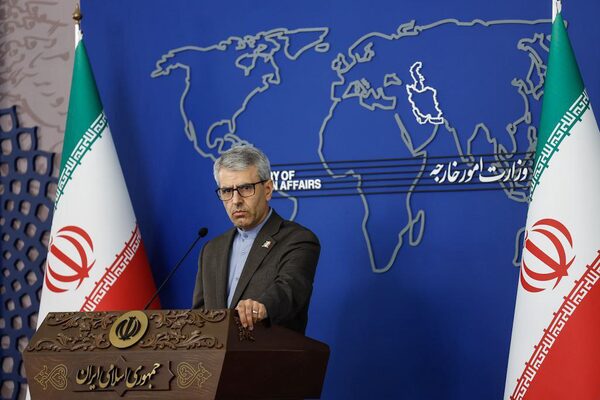
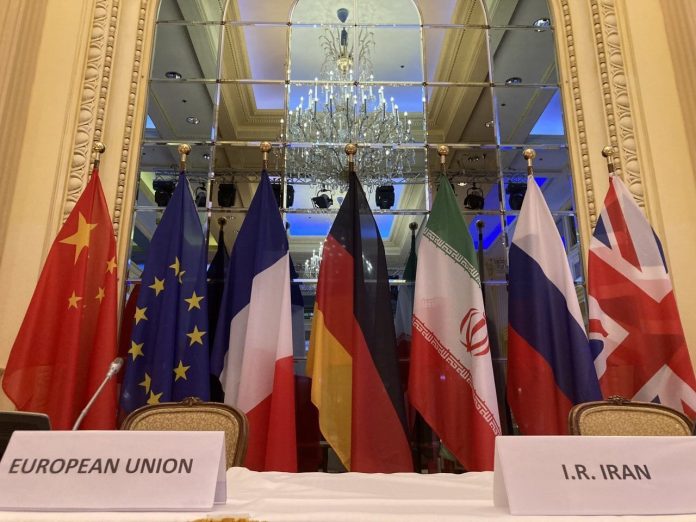
Esmail Baqaei, commenting on the Iran–IAEA understanding, said: “The IAEA has its own narratives regarding how Iran should implement its safeguards commitments under the new circumstances, but Iran insists that the Agency must only perform its technical duties, and no country can oblige Tehran to adhere to an understanding whose very basis has changed.”

Regarding the ongoing IAEA General Conference in Vienna, the Iranian Foreign Ministry spokesperson stated: “The draft resolution proposed by Iran at the IAEA General Conference is based on well-established rules of international law, including IAEA Resolution 533, and its purpose is not to create a new rule.”

Referring to US threats to oppose the adoption of this resolution, he added that these threats are a continuation of the recent US policy of either threatening or withdrawing from various international organizations such as the International Criminal Court, the World Health Organization, and UNESCO over the past months.

Baqaei emphasized that such actions are an example of unprecedented threats against multilateralism and the rules that have formed the basis of international relations among states for the past 80 years, adding Iran expects all countries to stand up against the violation of these rules.

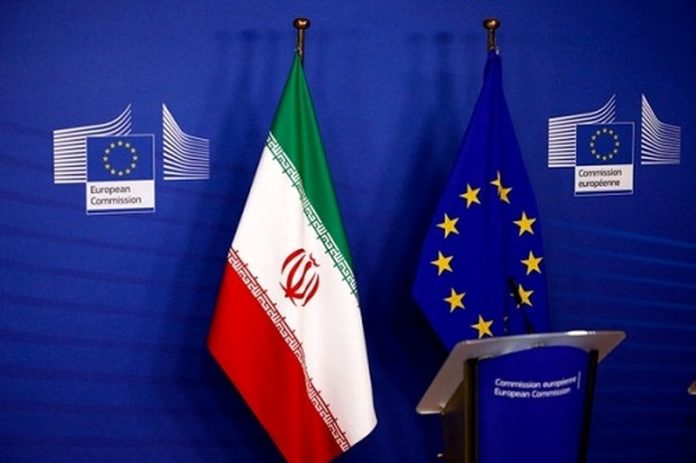
Regarding the European reaction to the Iran–IAEA agreement, Baqaei said: “Iran has always shown that it does not turn away from diplomacy, and now it is time for the other parties to adopt a positive and reciprocal approach.”