Monday, April 20, 2026
Home Blog Page 152

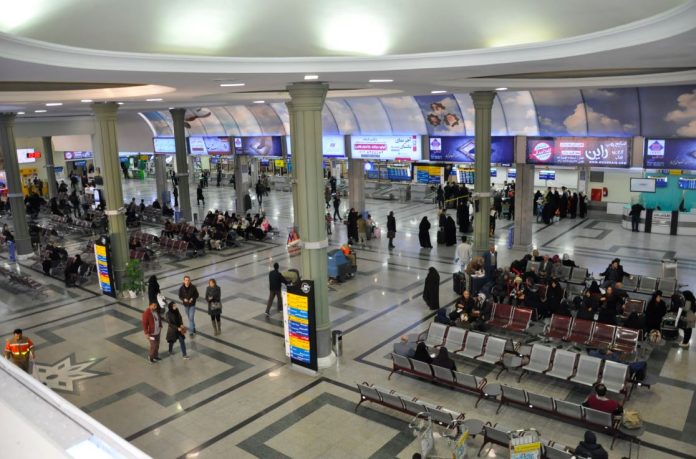
Isfahan International Airport reopens after 34-day closure

In a statement issued by the organization, it was confirmed that the airport has been cleared for operations following thorough on-site inspections and comprehensive evaluations of its technical, operational, and security conditions.

The reopening comes after a 34-day suspension of all flights over safety concerns.

Authorities stated that all flight restrictions have now been lifted and key infrastructure has been fully prepared to support full-scale operations.

The first flight is scheduled to land on Friday morning and the airport will return to normal, offering round-the-clock services to passengers and airlines as before.

Iranian officials respond to public concern over ‘tiered internet’ plan

Iran Internet Mobile

Azar Mansouri, head of the Reformist Front, voiced sharp criticism on social media, saying recent statements by government officials and the passage of a new regulation by the Supreme Council of Cyberspace have alarmed and angered the public.

She called on the government to clearly and transparently abandon these plans and accelerate efforts to lift internet filtering and ensure open access.

The controversy follows the Council’s recent unanimous approval of a regulation to facilitate digital business. Critics say the measure marks the beginning of a tiered internet system, potentially limiting access based on user type or role.

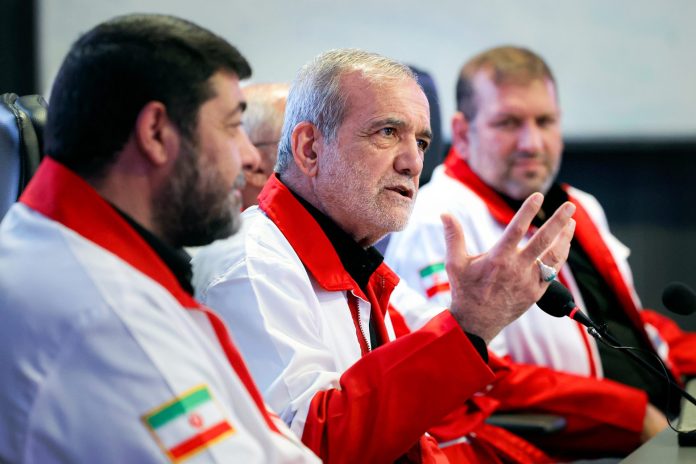
Communications Minister Seyed Sattar Hashemi responded by emphasizing President Massoud Pezeshkian’s firm opposition to tiered access. Both officials reiterated that unrestricted internet access is a right for all citizens.

President Pezeshkian stated that the government’s aim is to promote a high-quality and inclusive internet, not impose restrictions. He further warned against policies that would increase reliance on restriction-bypassing VPNs or undermine digital security.

Iranian govt. spokesperson says regulation of foreign nationals key to economic relief

Fatemeh Mohajerani made the remarks during a press briefing on Wednesdsy.

She underlined that unregulated foreign populations contribute significantly to rising costs in subsidized sectors, especially in energy and bread.

She also said that managing the presence of undocumented migrants is not only an economic necessity but also a public demand.

“We are currently facing drought conditions, and the state of the country’s dams is far from satisfactory”, Mohajerani added. She further noted that Iran is facing broader environmental and infrastructure challenges as well.

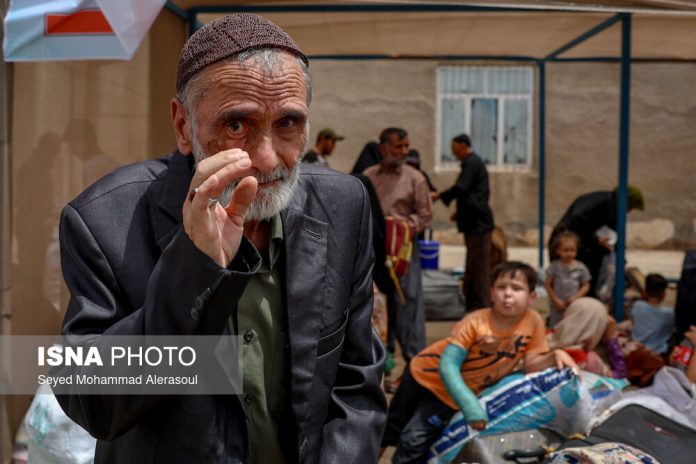
Iran has been hosting millions of Afghan refugees over the past decades. The population has put a strain on Iran’s economy, prompting authorities to deport illegal Afghan nationals to their country.

President Pezeshkian urges security review, respectful engagement with public after 12-day war

Pezeshkian said the events revealed clear shortcomings in Iran’s security performance and called for an in-depth evaluation to identify and correct these vulnerabilities.

The president further referred to the importance of learning from past mistakes, stressing the necessity of reform in certain government approaches, especially those that have led to public dissatisfaction.

Pezeshkian underscored that the government’s treatment of its citizens must be entirely respectful at all levels.

He then spoke about the need for a shift in how the government engages with its critics and noted that many people who have voiced opposition to government policies or questioned its direction had, during the Iran–Iraq war, stood firmly in defense of the country.

“We must revise our approach toward those whom we may have considered adversaries simply for criticizing us”, Pezeshkian said.

“Some of them did not accept our views or even our legitimacy, but when Iran was under threat, they stood by the nation…that must not be forgotten.”

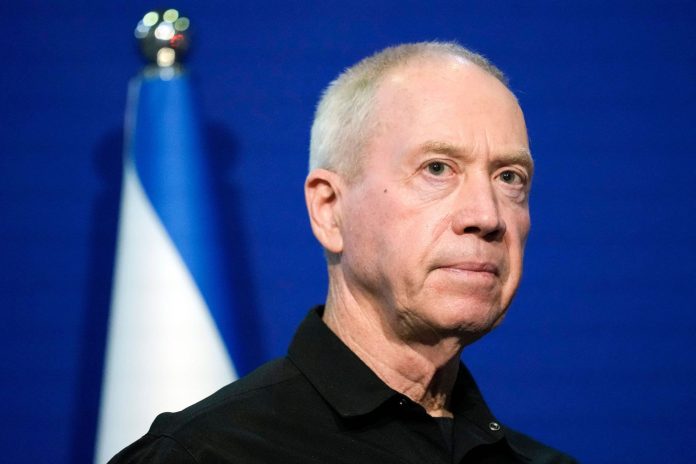
Iran leader’s website dismisses Gallant’s letter as “psychological warfare tactic”

Yoav Gallant

The article describes the letter as a uniquely structured and content-dense piece, consisting of 1,354 words and nearly 50 distinct content points—23 of which are considered core and strategic.

This density, the article says, transforms the letter into a complex text designed for purposes beyond direct communication.

According to the analysis, the letter employs a psychological tactic known as “stationary displacement”, wherein truthful, well-documented information is initially presented to build trust, followed by subtle distortions to manipulate perception.
Despite Gallant’s claim that he has focused on Ayatollah Khamenei for 30 years, the article argues that the real targets of the letter are Iran’s decision-makers, regional allies, and the public, not Iran’s leader himself.

The article further says Gallant is attempting to create a hyperbolic image of Israel’s intelligence dominance.

It says this is a form of psychological and narrative warfare.

The article also says the former Israeli minister of war’s letter is part of an evolving cognitive conflict between the Zionist regime and Iran, where the battlefield is public perception rather than traditional warfare theaters.

Iranian MPs: US  govt. main responsibile for aggression against Islamic Republic

Iran's parliament

In a strongly worded statement issued on Wednesday, the lawmakers asserted that the blatant act of aggression, carried out in coordination with European governments claiming to uphold human rights, was executed by the Israeli regime as part of a “dirty mission and massive crime.”

According to the statement, this was a failed attempt to dismantle Iran and overthrow the Islamic Republic.

The MPs added that efforts to divide Iran have been pursued by colonial powers for at least the past century, and that the Islamic Republic has stood as a firm barrier against such ambitions for the past five decades.

The statement goes on to say that the U.S. government, particularly the “murderous American president”, was the primary instigator of the attack, authorizing Israel’s prime minister to carry out the mission. During the 12-day war, the US provided full support to the Israeli regime, including arms, operational backing, and defensive aid.

Referring to the timing of the aggression during the Tehran–Washington negotiations, the lawmakers said the US president proved “pure deception,” stating that while presenting himself as a proponent of diplomacy, he effectively signed off on the assault against Iran’s nuclear facilities and took full responsibility for it.

U.S. and E3 agree Iran to face stiff sanctions if no agreement by end of August

If no agreement is reached by that deadline, the three European powers plan to trigger the “snapback” mechanism that automatically reimposes all UN Security Council sanctions that were lifted under the 2015 Iran deal.

The snapback provision will expire in October.

The process of activating “snapback” takes 30 days, and the Europeans want to conclude the process before Russia assumes the UN Security Council presidency in October.

U.S. and European officials view snapback as both a negotiating tool to pressure Tehran and a fallback if diplomacy fails.

But the Iranians argue there is no legal basis to reimpose the sanctions, and have threatened to withdraw from the nuclear Non-Proliferation Treaty in response.

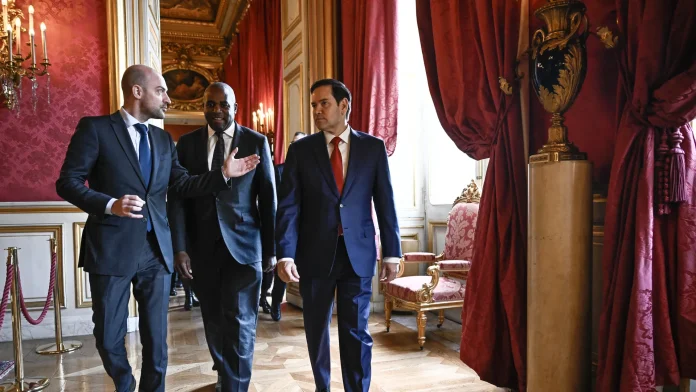
The call between Rubio and his European counterparts was aimed at coordinating positions on “snapback” and the path forward on nuclear diplomacy with Iran, the sources said.

According to two of the sources, the Europeans now plan to engage with Iran in the coming days and weeks with the message that Tehran can avoid the snapback sanctions if it takes steps to reassure the world about its nuclear program.

Such steps could include resuming International Atomic Energy Agency (IAEA) monitoring, which Iran suspended after the U.S. and Israeli strikes on its nuclear facilities.

One source stated that another such step could be the removal from Iran of the roughly 400kg of uranium enriched to 60% purity that’s contained in those sites.

Since the end of the war between Israel and Iran, the Donald Trump administration has been trying to resume negotiations on a new nuclear deal.

Some officials in France, Germany, the U.K. and Israel were concerned the Trump administration would press the European powers not to trigger the snapback sanctions so as not to harm potential negotiations.

When Israeli Prime Minister Benjamin Netanyahu visited the White House last week he raised the issue with President Trump, Rubio and White House envoy Steve Witkoff, two Israeli officials said.

Netanyahu asked Trump not to block snapback and told Witkoff that the U.S. should make it clear to the Iranians that they don’t have much time if they want to get a deal and avoid the reimposing of UN sanctions.

“We felt that Trump and his team agreed with us,” an Israeli official stated.

A senior U.S. official said the Trump administration supports activating snapback and sees it as leverage in the talks with Iran.

The U.S. official added Trump is highly frustrated that the Iranians haven’t come back to the table yet.

Witkoff has made it clear to the Iranians that any future talks must be direct, rather than mediated by a third party, to avoid misunderstandings and expedite the process, the U.S. official continued.

Iranian striker Taremi nominated again for AFC Best Player of World Cup qualifiers round

Mehdi Taremi

Following the conclusion of the third round of qualifiers, the AFC invited fans to vote for the best player of the stage.

Taremi, 32, was named as one of 12 nominees for his standout performances that helped Iran secure qualification for the World Cup for the fourth consecutive time.

The AFC praised the Iranian striker’s consistency, stating on its website: “Mehdi Taremi once again proved why he is among the top forwards in Asia.”

Taremi, who currently plays for Inter Milan, scored five goals during the third-round matches, placing him among the top scorers of the stage. In addition to his scoring record, he also provided four assists, underlining his vital contribution to the attacking strength of Team Melli, Iran’s national soccer team.

Iran’s parliament elects three legal experts to Guardian Council

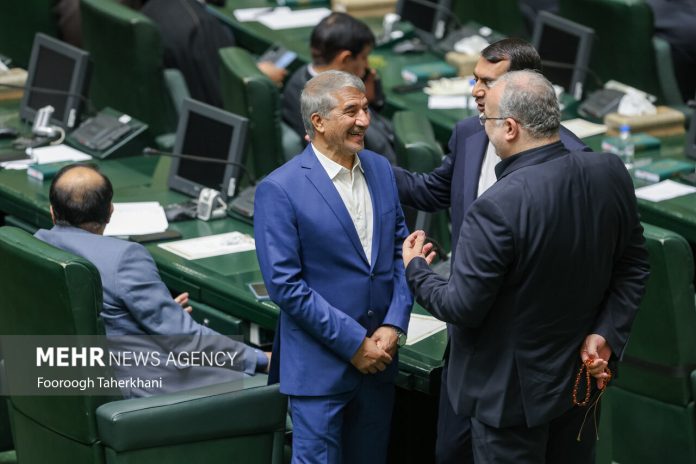
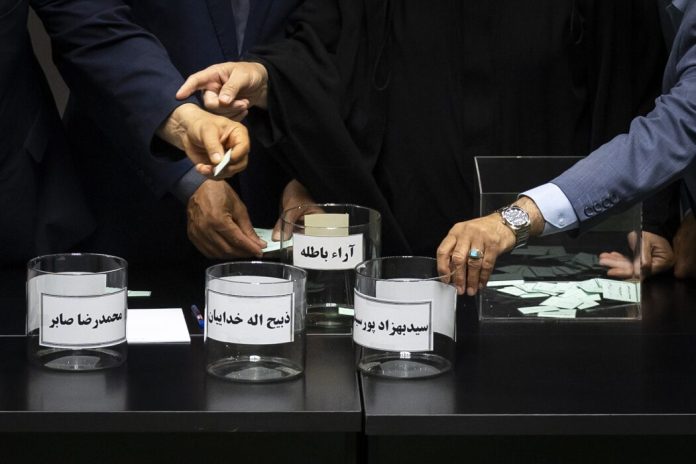
In the open session, lawmakers reviewed the qualifications and programs of six candidates nominated by the judiciary for the legal expert positions. Following individual presentations and discussions, a paper ballot vote was held.

Out of the 269 lawmakers present, Hadi Tahan Nazif received the highest number of votes with 257, followed by Gholamreza Molaei-Beygi with 226, and Seyed Behzad Poursaeed with 178 votes. The three individuals were elected to serve as the Council’s legal members for a new term.

The Guardian Council consists of 12 members: six Islamic jurists appointed by the Leader and six legal experts nominated by the judiciary and approved by Parliament.
The Council plays a central role in Iran’s legislative process and electoral oversight, including approving candidates for presidential and parliamentary elections.

EU delays measures against Israel on Gaza war despite pressure to act 

Gaza War

The ministers were in Brussels to discuss an EU-Israel agreement brokered last week to increase the number of trucks and distribution of food entering Gaza as well as the opening of several other crossing points. They also examined an exhaustive list of 10 options, including the suspension of visa-free travel and the blocking of imports from the Jewish settlements, in response to Israel’s breach of the EU-Israel Association Agreement.

“Israel needs to take more concrete steps to improve the humanitarian situation on the ground,” Kallas told reporters, adding that Israel had already improved access and supplies of aid to Gaza.

“The EU will keep a close watch on how Israel implements this common understanding and the pledges.”

“The aim is not to punish Israel, the aim is to improve the situation in Gaza,” Kallas continued.

The bloc’s ambassadors will be tasked to update Israel’s compliance of the agreement every two weeks, Kallas said, and the EU would keep the 10 options “on the table” and “stand ready to act if Israel does not live up to its pledges”.

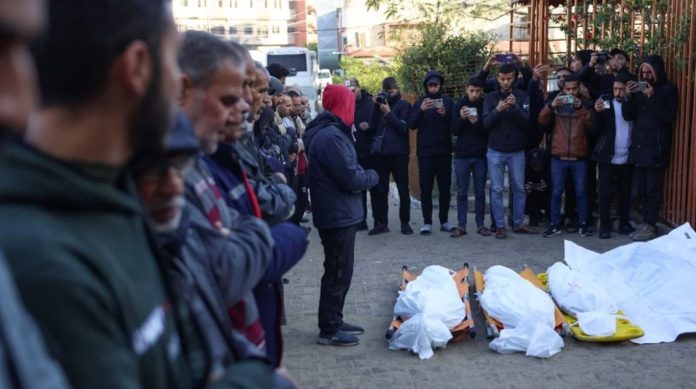
Last week, the Israeli military admitted a “technical error” following a strike that reportedly killed 10 people, including six children, near a Gaza water distribution point.

Some ministers expressed frustration at the lack of action against Israel.

Following Tuesday’s meeting, Slovenian foreign minister Tanja Fajon wrote on X that she regretted there hadn’t been “any consensus” during the meeting to follow up on the review of the EU-Israel Association Agreement.

She added that an “agreement in principle” on improving humanitarian aid “can’t be used as an excuse to inaction”.

“We all have a responsibility to protect civilians,” she added.

Prior to the meeting on Tuesday, some ministers had also sent clear signs that they wanted to take concrete measures against Israel.

Spain’s foreign affairs minister José Manuel Albares told reporters that in accordance with EU and international norms, his country would push for a suspension of the EU-Israel Association Agreement, an arms embargo to Israel and the ban of products from the Jewish settlements.

“This war needs to end, and the Israeli army needs to withdraw,” Albares added.

His French counterpart, Jean-Noël Barrot also said France would be ready to take sanctions targeted at “individuals and entities that are responsible for the extremist and violent colonisation” in the West Bank and to “stop any direct and indirect financial support to the colonisation”.