Wednesday, April 22, 2026
Home Blog Page 153

EU delays measures against Israel on Gaza war despite pressure to act 

Gaza War

The ministers were in Brussels to discuss an EU-Israel agreement brokered last week to increase the number of trucks and distribution of food entering Gaza as well as the opening of several other crossing points. They also examined an exhaustive list of 10 options, including the suspension of visa-free travel and the blocking of imports from the Jewish settlements, in response to Israel’s breach of the EU-Israel Association Agreement.

“Israel needs to take more concrete steps to improve the humanitarian situation on the ground,” Kallas told reporters, adding that Israel had already improved access and supplies of aid to Gaza.

“The EU will keep a close watch on how Israel implements this common understanding and the pledges.”

“The aim is not to punish Israel, the aim is to improve the situation in Gaza,” Kallas continued.

The bloc’s ambassadors will be tasked to update Israel’s compliance of the agreement every two weeks, Kallas said, and the EU would keep the 10 options “on the table” and “stand ready to act if Israel does not live up to its pledges”.

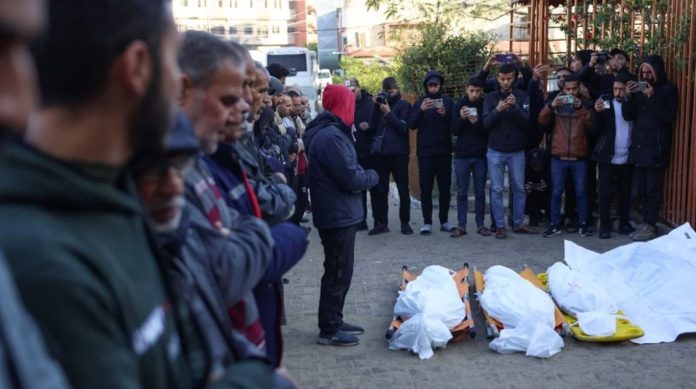
Last week, the Israeli military admitted a “technical error” following a strike that reportedly killed 10 people, including six children, near a Gaza water distribution point.

Some ministers expressed frustration at the lack of action against Israel.

Following Tuesday’s meeting, Slovenian foreign minister Tanja Fajon wrote on X that she regretted there hadn’t been “any consensus” during the meeting to follow up on the review of the EU-Israel Association Agreement.

She added that an “agreement in principle” on improving humanitarian aid “can’t be used as an excuse to inaction”.

“We all have a responsibility to protect civilians,” she added.

Prior to the meeting on Tuesday, some ministers had also sent clear signs that they wanted to take concrete measures against Israel.

Spain’s foreign affairs minister José Manuel Albares told reporters that in accordance with EU and international norms, his country would push for a suspension of the EU-Israel Association Agreement, an arms embargo to Israel and the ban of products from the Jewish settlements.

“This war needs to end, and the Israeli army needs to withdraw,” Albares added.

His French counterpart, Jean-Noël Barrot also said France would be ready to take sanctions targeted at “individuals and entities that are responsible for the extremist and violent colonisation” in the West Bank and to “stop any direct and indirect financial support to the colonisation”.
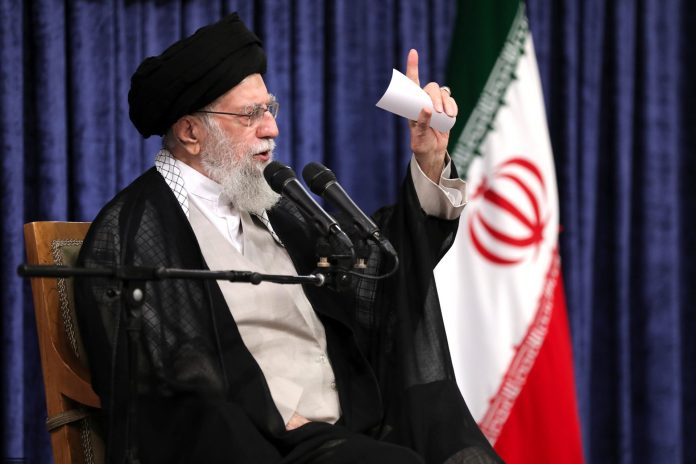
Iran’s Leader urges legal action over recent Israel-US aggression, praises national resolve

Speaking to top judicial officials on Wednesday, Ayatollah Khamenei stressed that “the collar of the criminal must not be released,” urging long-term legal follow-up even if it takes decades.

Highlighting a national display of strength, the Leader praised the Iranian people for their resolve in the 12-day conflict in June, stating that the confrontation was not merely military but a demonstration of national will and self-confidence.

“A nation that can stand face-to-face against the power of the US and its Zionist proxy in the region is demonstrating a very significant value,” he said.

Ayatollah Khamenei emphasized that Iran will not appear weak in any arena, be it diplomacy or military confrontation, declaring, “We have all the necessary tools: logic and power. Whenever we enter a field, we will do so with full hands.”

He also asserted that divine support has guaranteed Iran’s ultimate success. “Everyone should know that God has promised victory for the Iranian nation under the Islamic system and the guidance of the Qur’an,” he added.

Reflecting on recent regional tensions, the Leader stated that Iran’s adversaries miscalculated in their multi-month planning, but the outcome saw the public rallying behind the government and the Islamic system, contrary to what enemy strategists had anticipated.

He praised the unprecedented unity shown by Iranians across diverse political and religious spectrums during recent events. “People with different appearances, ideologies, and religious inclinations came together in support of Iran. This is a great national unity that must be preserved.”

Addressing internal dynamics, Ayatollah Khamenei advised caution in current circumstances. While calling for public enthusiasm and clarity to counter disinformation, he warned against counterproductive actions such as political infighting and impatience. “Public enthusiasm is essential, especially among the youth, but impatience is harmful,” he said.

The Leader stressed the need to distinguish between actions that are necessary and those that are harmful. “We must avoid amplifying partisan disputes and remain united in defense of Iran and its values,” he said.

Chine reaffirms support for Iran’s territorial integrity, national sovereignty

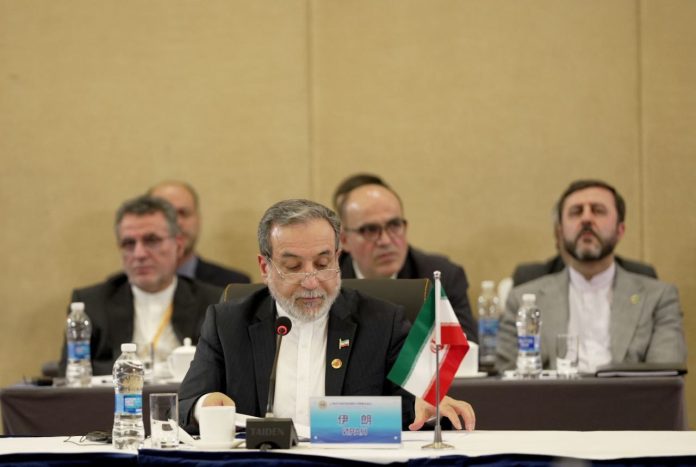
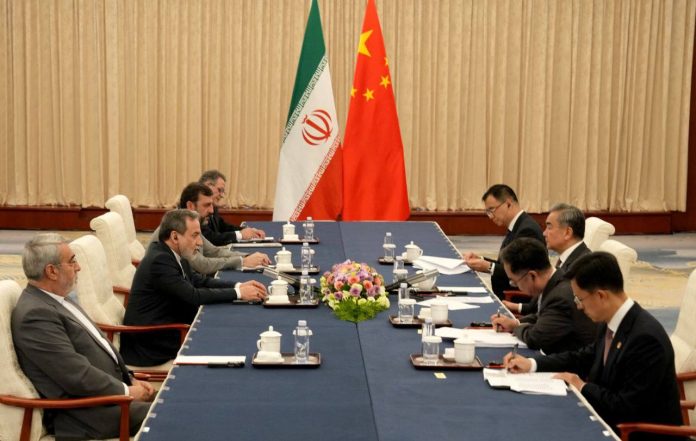
In a meeting with the Iranian Foreign Minister Seyyed Abbas Araghchi, on the sidelines of the 25th meeting of the Council of Foreign Ministers of the Shanghai Cooperation Organization (SCO), in Tianjin, the top Chinese diplomat stated that China’s principled position is opposition to coercive and unilateral policies, the use of force, and support for diplomacy and dialogue as the means for resolving disputes.

The Chinese foreign minister praised Iran’s goodwill, responsible, and wise approach in preventing further escalation and conflict in the region following the US-Israel aggression.

He also stressed the importance of continued bilateral and multilateral talks to prevent escalation in the region and announced China’s readiness to assist in this regard at international platforms, especially within the UN Security Council.

Iran’s Foreign Minister, Seyyed Abbas Araghchi, in turn thanked China for its principled, constructive, and influential positions in international forums, particularly at the United Nations Security Council, in condemning the aggression by the Zionist regime and US against Iran, especially the recent dangerous attacks on Iran’s peaceful nuclear facilities.

He said the aggression constitutes clear violations of the UN Charter and international law.

Recalling the deep-rooted ties between the ancient civilizations of Iran and China, Araghchi emphasized the serious commitment of the Islamic Republic of Iran to enhancing the comprehensive and friendly relations between the two countries within the framework of their Comprehensive Strategic Partnership.

Araghchi briefed his Chinese counterpart on the latest developments following the aggression and the cessation of hostilities, underscoring the responsibility of the Security Council and all states to uphold their duties in preserving regional and global peace and security.

Iran’s Gas company denies sabotage behind recent blasts, cites domestic causes

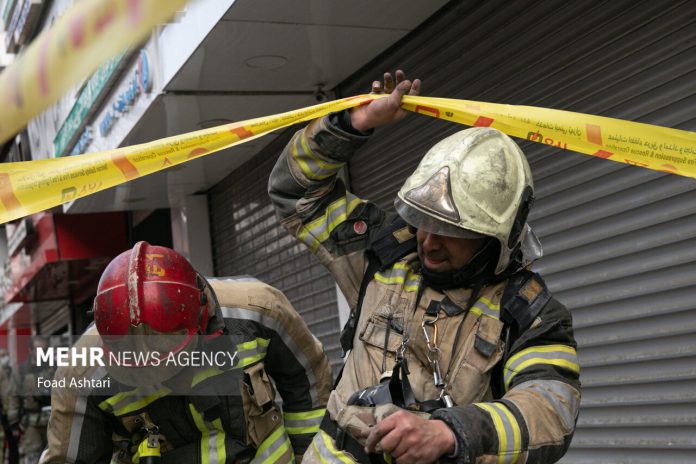
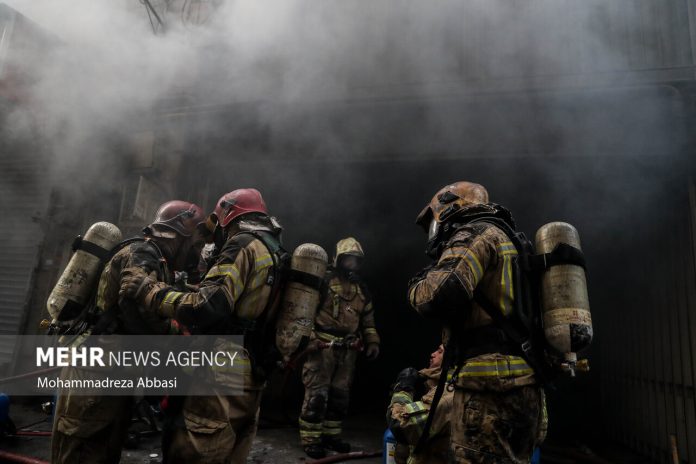
Firefighter

According to the head of the Passive Defense Department at NIGC, extensive field inspections and technical assessments have confirmed that all recent incidents were the result of internal factors. “There is no evidence pointing to deliberate sabotage or terrorist activity,” he stated.

Data released by the company indicate a rising trend in gas-related accidents across the country.

In the first half of 2024–25, over 2,196 gas incidents were recorded, with nearly 90% resulting in household explosions or fires.

The leading causes identified include worn or ruptured gas hoses (44%), various gas leaks (18%), the use of non-standard appliances (11%), and leakage from internal piping systems (5%).

Other contributing factors include faulty thermocouples, defective gas valves, and flammable materials placed near heaters.

The company urged citizens to adhere strictly to safety standards and called for improved oversight of gas installations to prevent further incidents.

US believes Russia will win: Politico

Russia Ukraine War

On Monday, Trump threatened to impose secondary US tariffs of up to 100% on Russia’s trading partners unless progress toward a peace agreement is made within 50 days. He also authorized new weapons deliveries to Ukraine, which are to be paid for by European NATO members. Moscow has warned that Trump’s declaration could be seen by Kiev as a signal to continue the war.

According to Politico, Trump decided to up the pressure on Moscow out of frustration with continued Russian strikes on Ukraine. The source noted that the US president believes that Moscow can secure military victory against Kiev thanks to its “bigger economy” and “bigger military.”

“The president’s view is Russia is going to win; it’s a matter of how long it takes,” the White House official told the outlet, noting Moscow’s progress on the battlefield.

In recent months, Russian forces have continued to gain ground, fully liberating the Lugansk People’s Republic, as well as the Kursk Region, which was invaded by Ukrainian forces last year.

Russia has rejected Trump’s latest ultimatum, while condemning attempts to pressure it. Deputy Foreign Minister Sergey Ryabkov asserted that this approach is “unacceptable” and demanded that Washington and NATO respect Russia’s interests and concerns.

Moscow has repeatedly stressed that it is open to conducting negotiations based on mutual respect with the aim of settling the Ukraine conflict diplomatically. However, Russian officials have also said they see no genuine effort on the part of Kiev or the West to pursue peace and repeatedly slammed calls by Western officials to inflict “strategic defeat” on Russia.

Russia has emphasized that it remains determined to achieve the goals of its military operation in Ukraine and, while it would prefer to do so through diplomacy, it is prepared to use military means if necessary.

Iran urges formation of security mechanism in Shanghai Cooperation Organization

Speaking on Tuesday at the 25th meeting of SCO foreign ministers in Tianjin, China, Araqchi said: “Today, more than ever, the SCO stands at the forefront as a major multilateral body advancing regional and international cooperation and confronting unilateralism and emerging threats.”

Referring to the recent Israeli aggression against Iran, which resulted in the martyrdom of hundreds of military commanders, scientists, and civilians, as well as widespread destruction across various regions, he added: “The subsequent involvement of the United States in this act of aggression—through targeting Iran’s peaceful nuclear facilities—left no doubt that the US is fully complicit in Israel’s war of aggression against Iran.”

He stated that these acts of aggression represent a clear violation of the UN Charter, a fatal blow to diplomacy, the rule of law, the Non-Proliferation Treaty (NPT), multiple IAEA resolutions, and UN Security Council Resolution 487, which prohibits attacks on safeguarded nuclear facilities.

Araqchi also pointed to the ongoing genocide of Palestinians in the Gaza Strip, saying: “It is deeply regrettable that over the past two years, the international community has failed to take effective action to stop the genocide of the Palestinian people or to end the occupation of neighboring Arab lands by the Israeli regime.”

He emphasized that the Israeli aggression against Iran is, in fact, a direct result of the absolute impunity the regime has enjoyed—primarily due to support from the United States and certain European countries.

The Iranian top diplomat further stated that the SCO, with its vast geopolitical, economic, and human capacities, can and indeed must play a central role in addressing emerging threats—particularly state terrorism, military aggression, cognitive warfare, and unilateral sanctions.

He also called for the creation of a permanent mechanism to monitor, document, and coordinate responses to military aggression, sabotage, state terrorism, and violations of the national sovereignty of SCO member states.

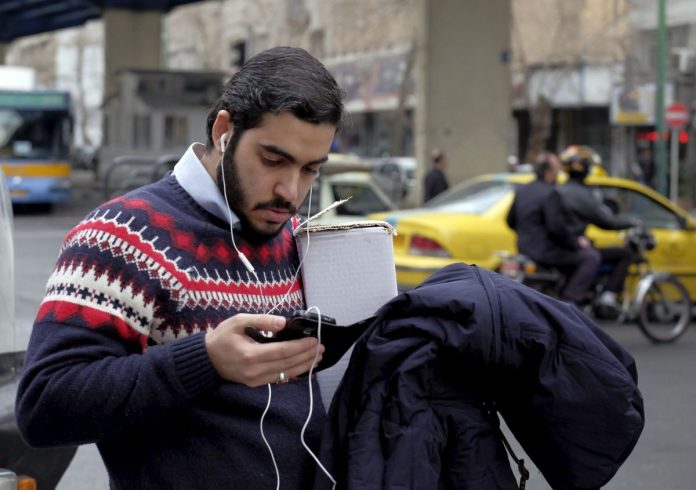
Iran gov’t spokesperson: No specific timeline for lifting Telegram ban; internet access must balance security, freedom

Iran Internet Mobile

Speaking to reporters on Tuesday, Mohajerani reiterated that since taking office, the government has supported open internet access.

However, she explained that during the recent 12-day military conflict with Israel, some drones targeting civilians were reportedly controlled via the internet.

“Naturally, for public safety, a temporary shift to the national internet was necessary, and as you saw, the internet returned afterward,” she noted.

Mohajerani stressed the government’s priority is protecting citizens while ensuring that accurate information can still be communicated. “If you were in the government’s position, would you choose people’s security or unrestricted news access? Of course, protecting lives comes first,” she said.

Addressing concerns about so-called “tiered internet,” Mohajerani said, “The government supports free internet, but if, for instance, journalists need broader access, they should be given that. Affairs cannot be stalled waiting for problems to be resolved.”

She also acknowledged that ongoing regional tensions, especially involving Israel, have fueled opposition narratives regarding internet policy.

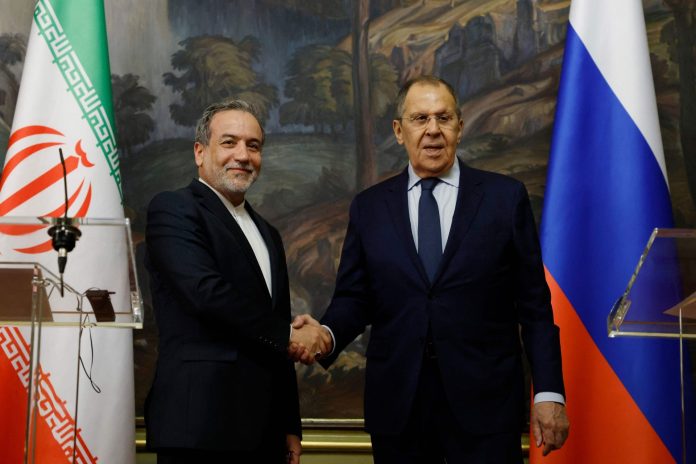
Lavrov says time for dialogue with Iran has come, emphasizes diplomatic solution to nuclear issue

According to a statement from the Russian Foreign Ministry, the two officials held talks on Tuesday on the sidelines of the Shanghai Cooperation Organization (SCO) Foreign Ministers’ Meeting in Tianjin, China.

During the meeting, Lavrov reaffirmed Moscow’s stance that the ongoing tensions surrounding Iran’s nuclear program must be addressed strictly through peaceful dialogue and in accordance with international law.

The two sides also exchanged views on a range of regional and international matters of mutual interest, underscoring the growing significance of diplomatic coordination between Tehran and Moscow.

Lavrov stated at the beginning of the meeting, “We now have the opportunity to discuss several developments that are unfolding rapidly.”

The report also notes that both parties agreed to continue consultations at various levels in the near future, highlighting the importance of sustained diplomatic engagement between the two sides, especially following Iran’s conflict with the US and Israel last month and its aftermath.

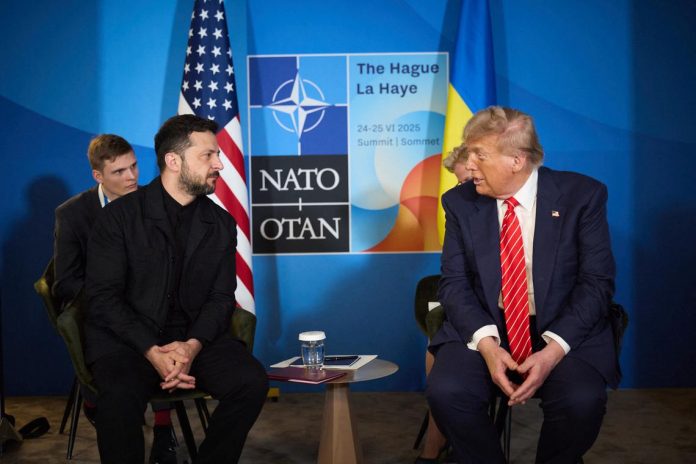
Trump asked Zelensky if Ukraine could strike Moscow: FT

The Washington Post also reported that, according to its source, Trump asked the Ukrainian leader why he had not struck the Russian capital. Zelensky allegedly replied that such an attack would be possible if the U.S. supplied the necessary weapons.

“Volodymyr, can you hit Moscow? . . . Can you hit St Petersburg too?” Trump said, according to the Financial Times, reportedly encouraging the strategy so that Russia can “feel the pain” and agree to negotiations.

The news comes as Trump seems to be warming up to Ukraine after months of a rocky relationship, offering advanced weapons to the war-torn country via a deal with NATO and threatening Russia with “severe tariffs” if Putin does not agree to a peace deal within 50 days.

The conversation reportedly took place during a phone call between Trump and Zelensky on July 4, only a day after the U.S. president talked with Russian President Vladimir Putin.

Following the call with the Kremlin’s chief, Trump complained he had made no progress toward peace and that Putin remained determined to continue his war against Ukraine.

According to the Washington Post, Trump considers authorizing Kyiv to use the 18 ATACMS missiles currently in Ukraine at their full range of 300 kilometers (about 190 miles) and supplying additional missiles.

The outlet also wrote that Trump previously considered supplying Ukraine with Tomahawk cruise missiles, weapons capable of striking Moscow and St. Petersburg, but their delivery is not on the table at the moment.

After the July 4 call between Zelensky and Trump, Ukraine was provided a list of long-range systems it could receive via third-party countries, the Financial Times reported, citing sources.

Speaking at the White House on Monday, Trump and NATO Secretary General Mark Rutte said Ukraine would be receiving significant military support under a new U.S.-NATO scheme, including missiles and Patriot air defenses.

Ukraine has previously received a number of ATACMS missiles from the Biden administration, though it was given permission to use them on Russian territory only in late 2024. Trump criticized the decision to ease the restrictions at the time.

Recent explosions in Iran: Annual gas incident statistics offer crucial context

Firefighter

To better understand the situation, we need to examine annual statistics on fires and explosions caused by gas leaks in buildings throughout Iran.

This helps assess whether such incidents, as portrayed by some media, are truly abnormal or instead part of a recurring accident pattern within the country.

This report, without seeking to confirm or deny the cause of any specific event, presents documented data to provide a rational perspective on the issue. It suggests that gas-related fires and explosions are common in Iran; a reality that may now be used as an opportunity for amplification and exploitation in the current media conflict.

High Volume of Fire Incidents in Iran: A Constant Reality

Iran faces a substantial number of fire-related incidents annually, only some of which result from gas leaks.

According to the Iranian Fire Department and Emergency Services, more than 450,000 firefighting operations take place nationwide each year, with roughly 170,000 fire incidents annually.

These figures reflect extensive emergency activity and a permanent backdrop of incidents, not limited to gas-related causes.

The Silent Killer: Carbon Monoxide Poisoning as an Ongoing Crisis

One of the deadliest gas-related incidents in Iran is carbon monoxide (CO) poisoning, commonly referred to as the “silent killer.”

This colorless and odorless gas claims hundreds of lives each year.

The Iranian Legal Medicine Organization regularly publishes statistics:

•  In the Iranian year 1400 (2021–2022), 839 people died from CO poisoning.
•  In the first 7 months of 1401 (March–October 2022), 255 deaths were recorded.
•  In the first 6 months of 1402 (March–September 2023), fatalities rose by 22.3% to reach 274.
•  On average, about 900 people die from CO poisoning in Iran each year.

These figures highlight an ongoing public health crisis, especially prominent in colder seasons due to unsafe heating appliances or poor ventilation.

Gas Leak Explosions: Recurrent Incidents Over the Years

Explosions and fires stemming from gas leaks in buildings are not new. They’ve occurred across the country for many years.

Although comprehensive yearly statistics are not publicly available for all such incidents, many documented cases confirm their repetition:

•  In 2020, a gas leak at the Sina Athar Health Center in Tehran caused an explosion that killed 19.
In the same year, a powerful natural gas blast in Ahvaz collapsed a five-story building, killing one and injuring 12. Another case in Rasht involved severe burns from a gas heater leak.
•  In 2023, a carbon monoxide leak in a residential complex in Tehran’s Lavizan district poisoned 10 people due to faulty boiler equipment.
•  In 2024, a blast in an unfinished building on Tehran’s Farahzadi Street injured 4.
A similar explosion in a caretaker unit at a religious center in Hamedan caused damage to 45 homes, shops, and vehicles, injuring one person slightly.
•  Most recently, in July 2025, a gas explosion near Chitgar Lake in Tehran injured 4, and another in the Pardisan neighborhood in Qom injured 7, both attributed to gas leaks.

These incidents across cities like Tehran, Ahvaz, Rasht, Deyhuk, Karaj, Hamedan, and Qom reveal the wide geographical distribution of this recurring issue.

Root Causes: Negligence and Technical Failures

Most of these incidents are linked to internal, preventable causes. Customer negligence and human error are among the most frequent reasons for gas accidents.

For instance, in East Azarbaijan Province in 2018, gas user negligence caused 219 incidents, and in 2019, 38 people died due to improper natural gas use.

Poor installation, malfunctioning equipment, and inadequate ventilation are also major contributors.

Conclusion: Common Events as Media Opportunities

Based on the available data, fires and explosions caused by gas leaks are frequent and ongoing in Iran, resulting in significant human and financial losses each year. Organizations like the National Iranian Gas Company and the Fire Department continue efforts, responding to over 343,000 calls in 2024 – 24% of which led to emergency services – but still face challenges like negligence, faulty infrastructure, and hazardous buildings, with 17,000 high-risk structures in Tehran alone.

Thus, while every incident requires accurate investigation, the recent rise in media focus, especially following Israel’s attack on Iran, suggests a trend toward using these commonly occurring events as tools in the media battle.

These incidents, regardless of the specific cause behind each one, unfold within a statistical backdrop of similar events across the country, a fact that should be considered in public analysis.