Monday, April 13, 2026
Home Blog Page 105

Iran’s parliament vows strong response if snapback mechanism is triggered

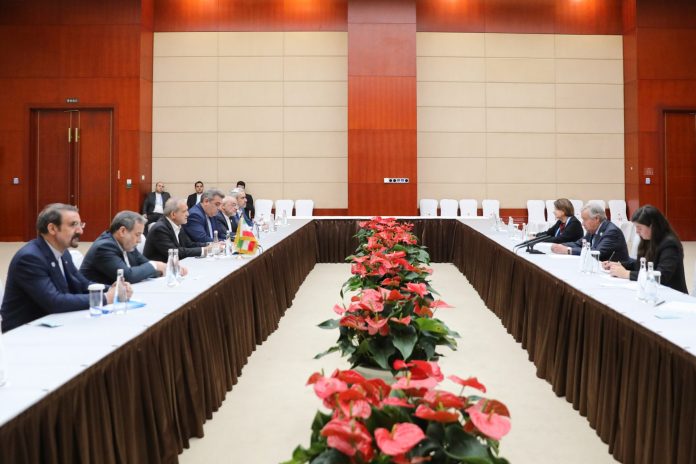
Iranian Parliament

According to Abbas Goudarzi, the spokesperson for the Parliament’s presidium, the National Security and Foreign Policy Committee presented a detailed report on the mechanism, outlining possible economic, political, and market implications.

Goudarzi said Parliament Speaker Mohammad Bagher Ghalibaf emphasized that Iran is fully prepared to take “any reciprocal action deemed necessary,” adding that “all branches and institutions of the system are united and determined to respond.”

He noted that the reactivation of snapback sanctions would technically restore six UN Security Council resolutions but would not significantly worsen Iran’s current situation, given that more than 2,000 individuals and entities are already under unilateral US sanctions compared with around 120 covered by the UN measures.

Goudarzi urged the public to remain calm, warning that foreign powers may attempt to exploit the situation to trigger psychological and economic instability.

He stressed that Iran will respond decisively, with strategic decisions to be finalized in upcoming high-level meetings involving Parliament and the National Security Council.
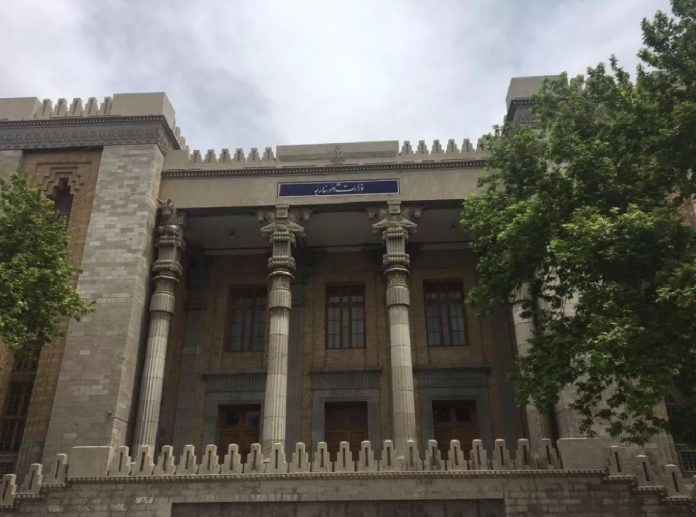
Iran rejects PGCC claims over islands, reaffirms sovereignty

The Iranian Foreign Ministry

In a statement released Tuesday, the ministry emphasized that the islands are “an inseparable part of Iran’s territory,” and that repeating unfounded claims “will not alter undeniable geographic, historical, and legal realities.”

It added that Iran will take all necessary measures to ensure the security and protection of its interests in the islands.

Addressing disputes over the Arash gas field, Iran labeled Kuwait’s unilateral claims “invalid” and reiterated that a fair and sustainable agreement requires constructive bilateral dialogue.

The ministry also reaffirmed Iran’s right to the peaceful use of nuclear energy under the Nuclear Non-Proliferation Treaty (NPT), criticizing the US and European powers for “continuous violations” of international law and for disrupting nuclear negotiations.

Iran further urged regional cooperation for a nuclear-free Middle East, warning of the “real and imminent threat” posed by Israel’s weapons of mass destruction, and welcomed PGCC condemnation of Israeli aggression in Gaza.

Spy agency claims about 2,000 North Korean soldiers killed in Russia deployment

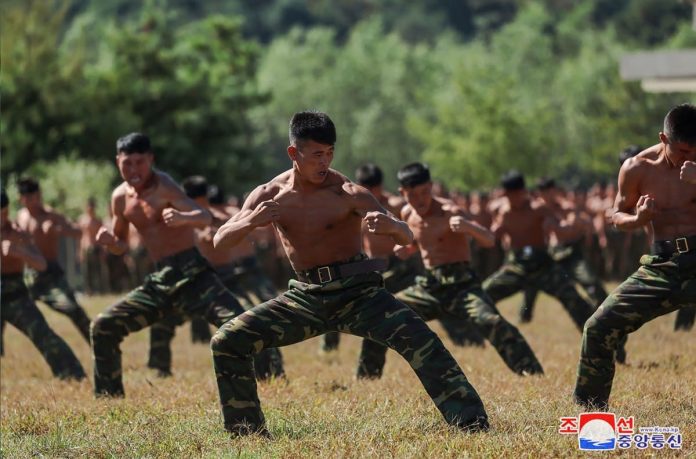
North Korean Soldiers

Seoul’s National Intelligence Service said in April “the number of war dead was at least 600. But based on updated assessments, it now estimates the figure at around 2,000,” lawmaker Lee Seong-kweun told reporters after a briefing from the spy agency.

South Korean and Western intelligence agencies have said the North sent more than 10,000 soldiers to Russia in 2024 — primarily to the Kursk region — along with artillery shells, missiles and long-range rocket systems.

Lawmaker Lee said that the NIS believed that Pyongyang planned to deploy another 6,000 soldiers and engineers to Russia and that 1,000 had already arrived.

“It is assessed that out of the recent third deployment plan of 6,000 troops, around 1,000 combat engineers have arrived in Russia,” Lee added.

Earlier this year, Moscow’s Foreign Minister Sergei Lavrov stated that the North would send builders and deminers to the Kursk region.

North Korea only confirmed it had deployed troops to support Russia’s war in Ukraine in April and admitted that its soldiers had been killed in combat.

Since then, North Korean leader Kim Jong Un has met with the families of soldiers killed fighting for Russia against Ukraine and offered condolences for their “unbearable pain”.

State media has run images of an emotional Kim embracing a returned soldier who appeared overwhelmed, burying his face in the leader’s chest.

The leader was also seen kneeling before a portrait of a fallen soldier to pay his respects and placing medals and flowers beside images of the dead.

Russia and North Korea signed a military deal last year, including a mutual defence clause, during a rare visit by Russian President Vladimir Putin to North Korea.

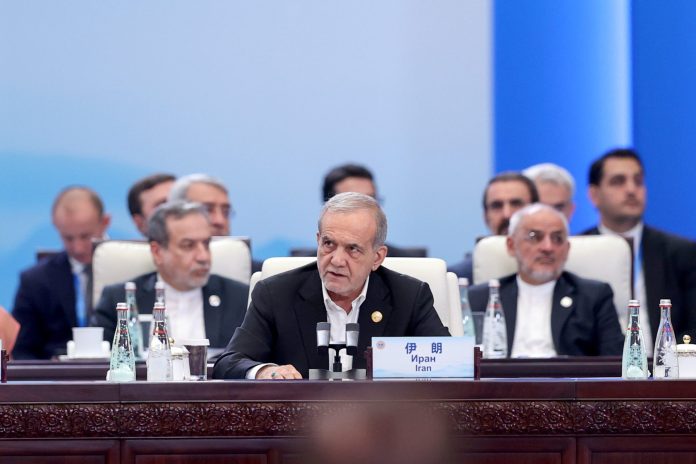
President Pezeshkian to UN Chief: Iran ready for diplomacy on nuclear issue

Pezeshkian underlined that Iran’s Supreme National Security Council will continue to determine the framework of cooperation with the IAEA, but underscored that Iran’s approach remains diplomatic.

President Pezeshkian added that Iran has always sought peace and stability, and said international organizations, particularly the UN, must take stronger and more practical measures against Israel’s crimes and aggression in the region.

He criticized the International Atomic Energy Agency for failing to condemn Israeli attacks on Iran’s peaceful nuclear facilities, despite Iran being under the agency’s strictest inspection regime.

Pezeshkian further slammed the Zionist regime for carrying out extrajudicial killings under the pretext of self-defense.

Guterres, for his part, said he’s personally convinced that Iran is not pursuing nuclear weapons and recognized Tehran’s right to a peaceful nuclear program.

The UN chief voiced concern over the possible activation of the “snapback” mechanism, saying he has urged European sides to cooperate with Iran to prevent escalation.

Iranian President urges SCO involvement in resolving Palestine crisis

Speaking at the Shanghai Plus meeting on Monday, Massoud Pezeshkian said what is happening today in Gaza is undoubtedly a stain on human history and a tough test for all nations and governments witnessing these brutal crimes.

Referring to the US and Israeli aggression against Iran in June, Pezeshkian noted that this occurred while the United States was hypocritically sitting at the negotiating table with Iran.

He added that Iran is now being threatened by European countries with the reimposition of international sanctions, even though they have failed to uphold their own obligations, while the Islamic Republic of Iran has been subjected to the most extensive international monitoring of its nuclear activities.

He reiterated Iran’s readiness to seek a diplomatic solution for the peaceful resolution of its nuclear program.The Iranian president further emphasized that Iran’s position as a central link between East and West provides a significant geographic advantage for connecting transit corridors within the framework of the Belt and Road Initiative.

Pezeshkian stressed that the world today needs a new understanding and framework for global governance—one that must move away from power-based logic and instead embrace principles of equality and justice.

According to him, the annual SCO summit has, since its inception, been a rare opportunity for dialogue and exchange of views among countries whose common concern has been peace, cooperation, and collective efforts toward building a fairer and more secure world.

He added that the SCO over the past three decades has promoted a new model of regional and international cooperation—one not built on enmity and identity-based confrontation, but on cooperation, mutual trust, and respect for diversity.

The Iranian president said that the SCO’s experience has shown that cooperation, especially among developing countries and emerging economies, can provide practical responses to global challenges, including economic inequality, sanctions pressure, climate change, and transnational security crises.

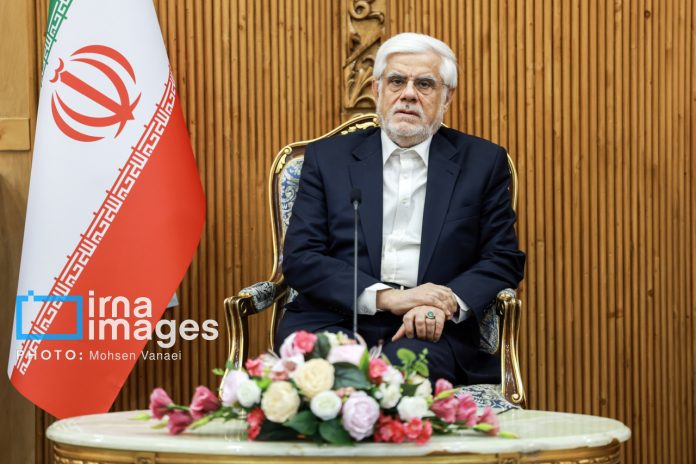
Iran’s first vice president: West using snapback to disrupt nation, but people have overcome sanctions

Mohammad Reza Aref

Speaking at a meeting with senior officials of the state IRIB broadcaster, Aref said the Iranian administration has faced a “state of war” since its first day in office last year.

“Our strategy has been that people should live in peace and continue their work, while we prepare for the worst scenarios,” he noted.

Aref revealed that the government drafted a “war economy” plan early in its term to respond effectively to any crisis.

He noted that despite external pressure, the recent 12-day standoff with the US and Israel in the region turned out to be “one of the calmest periods” domestically.

Addressing European threats of reimposing sanctions, Aref said: “They can play their last card, but we haven’t even revealed our first.”

He added that the Iranian nation, drawing on the experiences of the eight-year war with Iraq in the 1980s and years of sanctions, will stand resilient against Western pressure.

Iran urges Europe to reconsider snapback sanctions amid SCO consultations

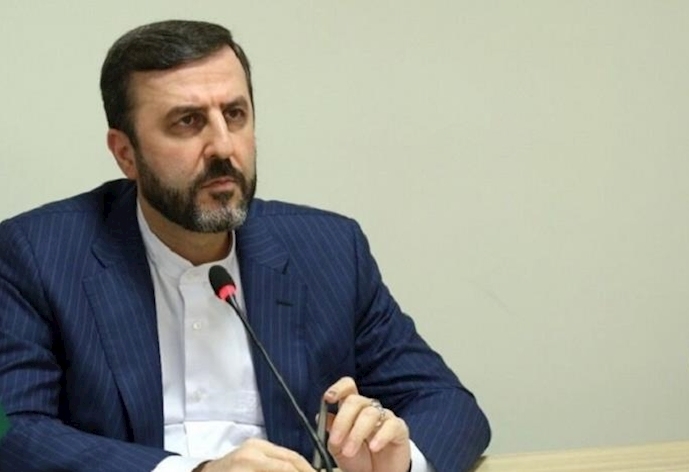
kazem-gharibabadi

Kazem Gharibabadi, Deputy for Legal and International Affairs at Iran’s Foreign Ministry, said on Monday that Iran has engaged with Shanghai Cooperation Organization (SCO) members, including China, Russia, and Pakistan, who oppose the snapback mechanism and the re-imposition of previously lifted UN sanctions.

“All three countries naturally reject the snapback and the return of lifted Security Council resolutions,” he stated.

Gharibabadi highlighted that Iran has proposed using the 20 to 30-day process outlined by Europe as an opportunity to correct the “legal and procedural error.”

“This opportunity is not only for Iran but also for them to rectify their own mistake,” he added.

The SCO summit’s final declaration included references condemning the Israeli and US military actions against Iran, including strikes on nuclear facilities, and emphasized that UN Security Council Resolution 2231 should be implemented fully and not selectively.

The Iranian deputy foreign minister stressed that Europe’s unilateral action lacks legal basis, and Tehran is prepared to respond appropriately if sanctions are reinstated.

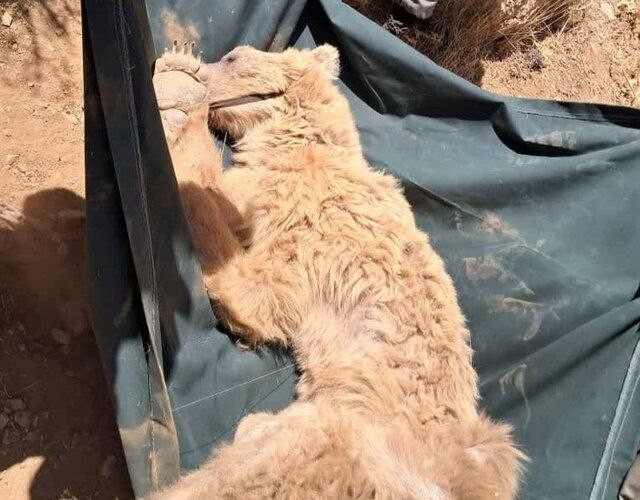
Injured brown bear in Iran succumbs to severe infection despite treatment efforts

According to Leila Joulai, head of the Wildlife Protection and Management Office, the bear had been transferred to a treatment facility after being found with a deep leg wound. Despite extensive veterinary efforts, the animal did not survive.

“The bear suffered from extreme physical weakness and a severe infection caused by a deep wound in its leg, which damaged the nerve and left it unable to move for a long period, preventing it from accessing food and water,” Joulai explained.

The brown bear is classified as an endangered species in Iran. The main habitats of the brown bears in Iran are Caspian forest areas, Arsbaran forests and Zagros forests as well as high mountain meadows near the forests and downstream valleys.

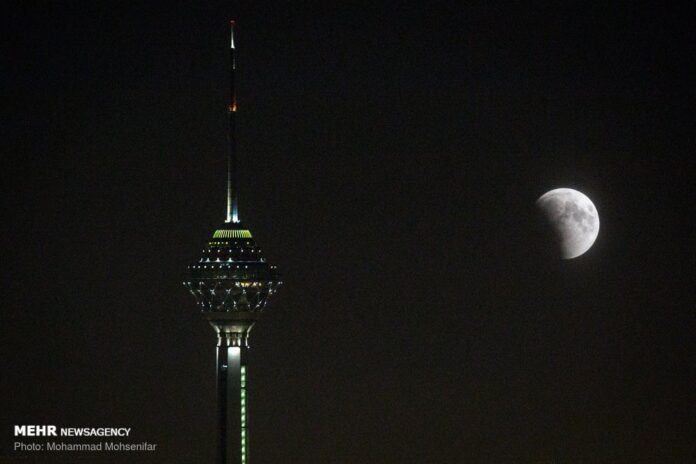
Longest lunar eclipse of the century to be visible across Iran on Sep. 7

Longest Lunar Eclipse of Century_in iran

According to astronomer Alireza Bayat, the rare total lunar eclipse will begin at 6:58 p.m. local time, with the partial eclipse phase starting at 7:57 p.m.

The total eclipse will commence at 9:00 p.m., reaching its peak at 9:41 p.m. and 46 seconds, before ending at 10:23 p.m. The moon will completely exit the Earth’s shadow by 12:25 a.m. on September 8.

Bayat explained that the moon will take on a coppery red hue during the total eclipse due to the scattering of sunlight in Earth’s atmosphere, the same phenomenon that gives sunrises and sunsets their distinctive colors.

Approximately 77% of the global population will be able to observe this event. In Iran, all phases will be clearly visible, offering sky watchers a rare opportunity to witness the celestial display from start to finish.

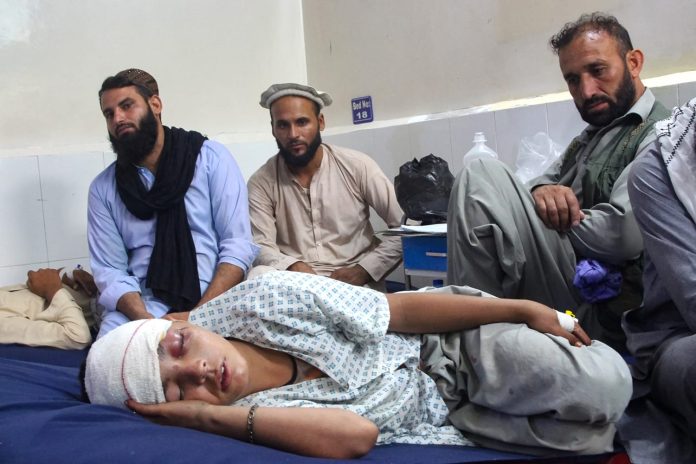
Iran offers aid after deadly earthquake strikes eastern Afghanistan

Foreign Minister Seyed Abbas Araghchi said in a message on Monday that Iran stands “in full solidarity with the resilient people of Afghanistan” and is prepared to dispatch emergency, medical, and humanitarian aid to affected areas.

“In these difficult moments, we share the grief of the Afghan nation and the bereaved families,” Araghchi wrote, emphasizing the importance of regional cooperation in overcoming the disaster.

Foreign Ministry Spokesperson Esmaeil Baqaei also reiterated Iran’s readiness to assist Afghan authorities in rescue and relief operations, extending prayers for the recovery of those injured.

According to Afghan and international agencies, the 6.2-magnitude earthquake struck several eastern provinces, including Kunar, Nuristan, Nangarhar, and Laghman, at 11:47 p.m. local time, followed by multiple aftershocks. Preliminary reports suggest significant casualties and damage, with some estimates indicating the death toll exceeded 600.

Rescue operations are underway as officials warn that the number of victims may rise in remote areas yet to be reached by emergency teams.