Friday, December 26, 2025
Home Blog Page 80

Venezuela pursuing military aid from Iran, Russia, China: WaPo

According to the newspaper, Venezuelan President Nicolas Maduro sent a letter to Chinese President Xi Jinping requesting radar detectors and directly citing the “escalation” with the US.

Caracas also reportedly urged Iran to provide radar-jamming equipment and drones capable of flying up to 1,000km (around 600 miles).

The Washington Post cited documents indicating that Venezuelan Transport Minister Ramon Celestino Velazquez was set to deliver a letter to Russian President Vladimir Putin during his trip to Moscow last month, requesting unspecified missiles and assistance in repairing Su-30MK2 fighter jets and radar systems previously purchased by Venezuela.

The report added that it is unclear how Russia, China, or Iran responded to the requests.

US President Donald Trump has accused Maduro of operating “macroterrorist” cartels that smuggle drugs into the US and has offered a bounty for his arrest.

Washington has deployed a naval armada in the western Caribbean, and since September, has conducted strikes in international waters against more than a dozen alleged cartel vessels.

Maduro has denied the allegations and accused Trump of “fabricating a new war.”

Yemen’s Houthis say detained UN staff will be tried over Israeli links

Yemen Houthis

Abdulwahid Abu Ras, Yemen’s acting foreign minister, told the Reuters news agency on Friday that a cell within the UN’s World Food Programme was involved in directly targeting the government.

The Houthi prime minister and nine other ministers were killed in an Israeli strike on the capital Sanaa in August, the first such attack to kill senior officials.

The UN, which has repeatedly rejected Houthi accusations, announced on Friday that a total of 36 UN employees were arrested after Israel’s attack. It noted that at least 59 UN personnel are being held by the group.

Abu Ras told Reuters that security agencies were acting “under full judicial supervision” and that public prosecutors were being kept informed “step by step”. It was certain, he added, that the process would lead “to trials and the issuance of judicial rulings”.

Separately, Nasruddin Amer, a senior Houthi official, told the dpa news agency on Friday that the detained UN workers would be tried on charges of spying for Israel.

“The judiciary will determine the penalty for those accused of spying for Israel in accordance with Yemeni law,” Amer continued, adding, “This is not a law we enacted. It is a law that has been in effect and applied in the country by previous regimes.”

The UN defendants are Yemenis and could face the death penalty under the nation’s laws.

Hundreds of UN personnel, including a small number of international staff, remain in parts of Houthi-controlled Yemen, according to Farhan Haq, deputy spokesperson for the UN secretary general.

Houthi security forces entered several UN offices in Sanaa on Sunday. The UN says it is operating under increasingly difficult conditions, hindering its ability to provide assistance to those in need in Yemen.

Amer told dpa: “The trial is not against the organisations, but against those who exploited humanitarian work to carry out espionage against our country and our people.”

Abu Ras claimed that the Houthis are supporting humanitarian provision, and will “assist organisations committed to the principles of humanitarian work, facilitating their activities and work”.

There was no immediate comment from the World Food Programme.

Since Israel launched its war on Gaza in October 2023, the Houthis have targeted vessels in the Red Sea and carried out drone and missile attacks against Israel, saying that they are acting in solidarity with Palestinians under fire in Gaza.

Israel has regularly struck the war-torn country, targeting civilian infrastructure, including residential buildings and the main international airport, while killing dozens at a time.

Last month, Israeli strikes on Sanaa and the northern province of al-Jawf killed dozens of people, including journalists and children.


Professor Samii: No surgical intervention possible for Iranian comatose volleyball star Saber Kazemi

Kazemi’s medical file was sent to Professor Samii for expert evaluation following the player’s critical condition after receiving an electric shock in a swimming pool in Qatar.

The news of the 25-year-old national team player’s severe brain injury has deeply shocked Iran’s sports community. Kazemi, regarded as one of the brightest talents in Iranian volleyball, remains under intensive care with an extremely low level of consciousness.

Earlier, the Medical Commission of the Volleyball Federation stated that his condition met the criteria for brain death, prompting an outpouring of prayers and messages of hope from fans and athletes.

However, Amirhossein Monazemi, the federation’s secretary-general, later clarified that Kazemi’s heart continues to beat with mechanical support while doctors work to maintain vital organ functions.

According to the latest reports, physicians describe his chances of recovery as minimal but not impossible.

The Al Rayyan Club of Qatar, with which Kazemi had signed for the current season, has not yet issued an official statement, reportedly out of respect for the player’s family and ongoing treatment.

Lawyer Confirms Iranian actor Pejman Jamshidi’s trip to Canada, denies rumors of migration

Pejman Jamshidi

Kambiz Barjas, Jamshidi’s attorney, told Fars News Agency that the trip was for family reasons, noting that Jamshidi’s father, sister, and other relatives live abroad.

“He has gone to Canada to visit his family and will return to Iran whenever necessary,” Barjas said.

He clarified that the judiciary has not issued any travel bans or supervision orders against Jamshidi, emphasizing that the actor has attended all required court sessions and that the preliminary investigation of his case has concluded. “There is no restriction preventing him from leaving the country, and he has traveled abroad several times in recent months,” Barjas added.

The lawyer also dismissed speculation about a heavy bail, saying it was provided by Jamshidi himself and approved by the appeals court.
He denied reports that Jamshidi is barred from working, stating that he remains active in several film projects.

Barjas criticized “false and speculative reports” by certain domestic and foreign media, describing them as “media hype without legal basis.”

Iran designates Azar 9 as national day of Persian Gulf trio islands

The decision marks the inclusion of this day in the country’s official calendar.

According to the Navy, the initiative honors the memory of Iranian servicemen who lost their lives during the 1971 operation that restored the islands to Iranian control.

The move also aims to reinforce Iran’s sovereign symbols in the Persian Gulf and counter “baseless territorial claims” by other countries.

The proposal was finalized through coordination between the Iranian Navy’s Legal Department and the Ministry of Culture.

The islands, located in the Persian Gulf, were under British occupation for roughly 70 years before being retaken by Iran in 1971. Three Iranian sailors were killed during the operation.

The Navy announced that this year’s inaugural National Day of the Three Islands will be commemorated with a ceremony attended by senior military commanders, families of the fallen servicemen, and national and local officials.

Iran transfers economic authority to governors to expand regional Trade despite sanctions

Iran’s Deputy Interior Minister for Economic Coordination and Regional Development announced that, as part of efforts to counter the effects of sanctions, certain executive powers have been handed over to provincial governors to enhance local trade with neighboring countries.

Mehdi Dousti noted that additional powers are also being transferred to further strengthen economic ties between Iran’s provinces and Dousti highlighted the importance of strategic planning to offset the impact of sanctions and the “trigger mechanism,” saying that the Islamic Republic has devised a comprehensive plan to cushion its economy and bolster national resilience.

He pointed out that Iran borders 15 countries and that 16 of its provinces have vast potential for trade with them. “Several of these nations can supply Iran with essential goods such as food, while Iran can in return meet their energy needs,” he explained.

Dousti emphasized that the expansion of regional cooperation is not merely an attempt to evade sanctions, but rather a strategic effort to render them ineffective in line with the country’s broader national policies and the guidance of the Supreme Leader.

“The necessary frameworks have been created,” he added, “and part of the authority has already been devolved to governors to facilitate provincial trade with neighboring nations.”

The deputy minister concluded that reinforcing regional and economic linkages represents the most effective route toward neutralizing sanctions and easing external pressures on Iran’s economy.

Tandoureh National Park: Guardians of Iran’s northern wilderness

These dedicated environmental guardians work far from urban centers, often from sunrise to midnight, protecting the country’s wildlife and natural habitats with minimal facilities and under harsh conditions.

Located near the Iranian-Turkmen border in the Dargaz region, Tandoureh National Park covers about 54 square kilometers and forms part of a 73,000-hectare protected area first established in 1968.

Around 10,000 hectares are officially designated as a conservation zone, while other sections serve as popular ecotourism and recreation areas.

Tandoureh is recognized as one of the world’s key genetic reservoirs, home to over 380 species of plants, many with medicinal properties, and a remarkable diversity of wildlife.

The park provides critical habitat for several endangered species, including the Persian leopard and the great bustard, making it one of Iran’s most valuable ecological reserves.

Iran FM condemns US resumption of nuclear tests after Pentagon name change

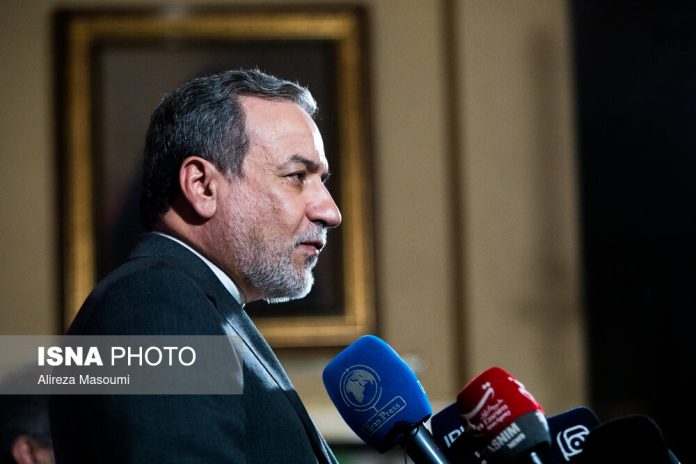
In a post on the social media platform X, Araghchi said the US, “a nuclear-armed bully”, had changed the name of its “Department of Defense” to the “Department of War” while restarting nuclear tests.

He noted that the same country portraying Iran’s peaceful nuclear program as a threat is now openly violating international law.

“This very bully,” Araghchi wrote, “depicts Iran’s peaceful nuclear activities as dangerous and threatens further attacks against our safeguarded facilities. All these actions are in clear breach of international law.”

He added that there is “no doubt the United States is the world’s most dangerous proliferator,” warning that Washington’s move to resume testing would normalize the spread of “such evil weapons.”

Araghchi urged the international community to speak with one voice and hold the US accountable for the normalization of nuclear proliferation.

Iran’s Hormuz Ballistic Missile Elevates Deterrence in Persian Gulf and Gulf of Oman

Because of its unique geopolitical position in the Persian Gulf and the Gulf of Oman, the Islamic Republic of Iran has long been at the forefront of confronting maritime threats from adversaries.

The importance of these waters is unmatched not only in military terms but also in the fields of energy, commerce, and global security.

The presence of foreign forces in waters surrounding Iran has reinforced the necessity of strengthening naval defense and deterrence — especially given that a large portion of Iran’s oil exports and foreign trade transit this vital route.

Accordingly, enhancing the ability to counter maritime threats is not merely a military option but a strategic necessity to preserve Iran’s sovereignty, security, and national interests.

Given their strong similarity to the Fateh-class missile, the Hormuz-1 and Hormuz-2 missiles can be regarded as optimized and upgraded extensions of that family, and are considered among Iran’s most precise missiles.

The Hormuz missile’s range is reported to be approximately 300 kilometers, and the Hormuz-2’s speed has been described as between four and five times the speed of sound.

Unlike anti-ship missiles such as the Khalij-e Fars, which use optical guidance, or the Fateh-110, which relies on a precise inertial guidance system, the Hormuz (anti-radar) missile employs radar-wave seekers and attacks the source of emission.

The missile’s warhead is estimated to weigh between 450 and 600 kilograms.

Martyr Brigadier General Amir-Ali Haji-Zadeh, former commander of the IRGC Aerospace Force, said: “Hormuz-1 can destroy the radars aboard an aircraft carrier, a Patriot site on land, or a radar search site.”

Another potential target for the Hormuz missile is the many large military vessels that currently operate in the Persian Gulf.

Firing this missile in combination with one like the Khalij-e Fars could become a real nightmare for any enemy at sea.

Iran Returns to World Taekwondo Podium After Eight Years, Finishes Runner-Up in Wuxi, China

The tournament was held from October 23 to 30 in Wuxi, China, featuring 898 athletes from 179 countries.

Iranian athletes delivered a strong performance, earning three medals: a gold by Abolfazl Zandi, a silver by Mehdi Hajimousaei, and a bronze by Amirsina Bakhtiari.

Based on the final standings released by the World Taekwondo Federation, Iran secured second place overall, reclaiming its status among the world’s leading teams.

The achievement marks Iran’s first world podium finish since 2017, highlighting a successful comeback for the national team, which had been absent from top-tier global rankings for nearly a decade.