Thursday, December 25, 2025
Home Blog Page 74

Chancellor invites Syrian president to Germany to discuss deportations

Ahmad Al Sharaa

“We will, of course, continue to deport criminals to Syria. That is the plan. We will now implement this in a very concrete manner,” Merz told reporters on Monday.

Germany also wants to help stabilise the country, he said, adding that he intends to discuss with Sharaa “how we can solve this together”.

Merz’s conservative predecessor Angela Merkel oversaw a historic open-doors policy towards refugees 10 years ago, welcoming some 1 million migrants to Germany, many of them Syrians fleeing the war.

Since then, support for the far right has surged and the conservative CDU party under Merz has pursued a far tougher line on border security and migration, pledging to speed up deportations.

“I will say it again: the civil war in Syria is over. There are now no longer any grounds for asylum in Germany,” Merz stated.

Since seizing power from former President Bashar al-Assad in December 2024, Sharaa has made a series of foreign trips as his transitional government seeks to re-establish Syria’s ties with world powers that had shunned Damascus during Assad’s rule.

He is expected to visit Washington in early November.

Britain supplies Ukraine with more long-range missiles to attack Russia: Bloomberg

London first announced the delivery of the air-launched rockets – which have a range of more than 250km (155 miles) – to Kiev in May 2023.

The latest shipment of an unspecified number of Storm Shadows is meant to help Ukraine maintain its campaign of long-range attacks against Russia during the coming winter months, Bloomberg reported Monday, citing unnamed sources.

During a meeting with Ukraine’s President Volodymyr Zelensky and NATO Secretary-General Mark Rutte last month, Prime Minister Keir Starmer said London was “accelerating our UK program to provide Ukraine with more than 5,000 lightweight missiles” to put “military pressure” on Russian President Vladimir Putin.

Also in October, Kiev claimed to have used Storm Shadow missiles, among other weapons, to strike an industrial facility deep inside Russia. The attack followed Zelensky’s earlier threat, made in late August, to launch “new deep strikes” against the neighboring country.

In April, The Times, citing anonymous Ukrainian and British military officers, reported that “UK troops were secretly sent to fit Ukraine’s aircraft with the missiles and teach troops how to use them.”

Speaking at the Future Forum-2050 in Moscow this June, Russian Foreign Minister Sergey Lavrov stated that Ukraine “would be helpless without the British,” adding that London is “100%” involved in the conflict.

Foreign Ministry spokeswoman Maria Zakharova noted in March that “the command” for the attack on the Sudzha oil pipeline infrastructure “came from London.”

Ukraine has repeatedly conducted long-range attacks inside Russia, which have often struck civilian areas and critical infrastructure.

Moscow has described the Ukraine conflict as a proxy war being waged against Russia by the West. Russian officials have noted that sophisticated systems such as Storm Shadows cannot be effectively used by Ukrainian forces without the direct involvement of Western military personnel.


Iranians hold nationwide rallies to mark Day of Fight Against Global Arrogance, National Student Day

The annual observance coincides with the anniversary of the 1979 takeover of the US Embassy in Tehran, an event that came to symbolize Iran’s resistance to American influence following the Islamic Revolution.

In Tehran, participants gathered at Palestine Square before marching toward the former US Embassy — now known as the “Den of Espionage.”

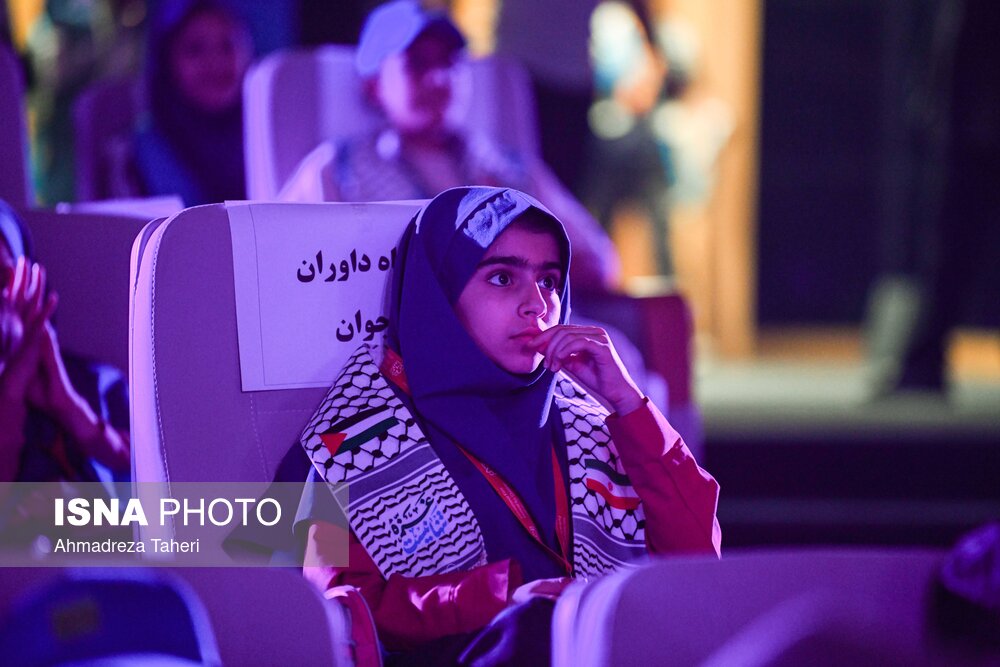
Demonstrators chanted anti-US slogans and carried banners criticizing Washington’s foreign policies and expressing solidarity with the Palestinian people amid the Israeli aggression in Gaza.

Organizers said the message reflects enduring resentment over decades of political and economic confrontation between the two countries.

Cultural and educational displays were set up along the march route by student and community groups to depict “the true meaning of arrogance” in international politics.

On November 4, 1979, Iranian students stormed the US Embassy in Tehran, slamming the American diplomats for plotting to undermine the nascent Islamic Republic. Documents later released by the students revealed that the mission had been used to coordinate espionage and efforts to restore US influence in Iran.

Israel attacks southern Lebanon, killing two and wounding seven

Lebanon’s Ministry of Health on Monday said that an Israeli strike on the town of Doueir in Nabatieh province killed one person and injured seven.

Another strike on Aita al-Shaab, a border town in the Bint Jbeil district, killed one person.

Lebanon’s National News Agency (NNA) reported that in Doueir, three missiles were fired at a car, igniting a fire that spread to nearby vehicles and a shopping complex.

Firefighters worked to extinguish the flames, while emergency crews cleared debris and shattered glass from damaged shops, according to a report by the AFP news agency.

The Israeli army claimed it killed Mohammed Ali Hadid, who it alleged was a commander in the Radwan Force, a special unit within Hezbollah, who was attempting to “reestablish Hezbollah terror infrastructure sites” in the Nabatieh area.

The military announced that another Hezbollah member was killed in Aita al-Shaab while “attempting to gather intelligence on Israeli troops”.

Israel’s bombardments came despite a ceasefire agreed to in November 2024, which was meant to halt more than a year of cross-border clashes. In recent days, however, Israeli officials have promised to intensify military operations.

On Sunday, Israeli Minister of Defence Israel Katz warned that Hezbollah was “playing with fire”, and accused Lebanon’s president of “dragging his feet” over efforts to rein in the group.

Hezbollah, weakened by the prolonged conflict, has faced mounting international pressure to disarm. The United States has urged Lebanon to push for direct talks with Israel, with US envoy Tom Barrack saying that Washington is “encouraging negotiations”.

On Saturday, Israeli strikes in Nabatieh killed four people, according to Lebanon’s Health Ministry.

President Joseph Aoun accused Israel of “responding to peace overtures with intensified air raids”.

The Israeli attacks have raised fears of a renewed escalation between Israel and Hezbollah as the fragile ceasefire appears increasingly meaningless.


Iran showcases military innovations at Pakistan Maritime Expo

Zarif calls on US to abandon illusion of Iran’s unconditional surrender

Javad Zarif

Zarif was speaking at the 63rd Pugwash Conference in Hiroshima.

He stressed that he was speaking not in any official capacity but as a private individual, a professor, and the founder and president of the non-governmental PAIAB Institute, dedicated to designing and building an inspiring future.

Zarif voiced hope for collective efforts to create a safer and more humane world.

Reflecting on the setting of Hiroshima, nearly eighty years after the first, and hopefully last, use of nuclear weapons, Zarif described the city as both a symbol of human folly and resilience.

He further noted the irony that the same countries now falsely accusing Iran of seeking nuclear weapons once supported Saddam Hussein during his war against Iran by arming him, including with chemical weapons, and ignoring his crimes.

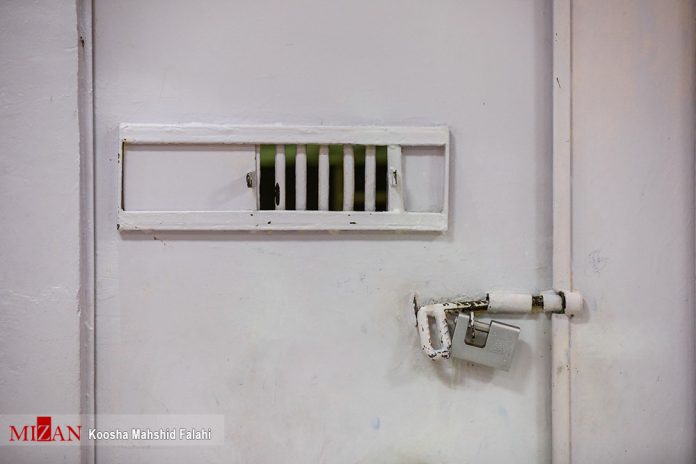
Bill allowing death penalty for Palestinian inmates advances to Israeli parliament

Israel Prison

The proposal, tabled by National Security Minister Itamar Ben Gvir’s far-right Jewish Power party, would allow Israeli courts to impose the death penalty on Palestinians convicted of killing Israelis on “nationalistic grounds”.

The legislation does not apply to Israelis who kill Palestinians under similar circumstances.

The bill has been promoted by far-right Israeli parties since before the genocide on Gaza began in October 2023, with renewed calls for its passage in recent months.

Israeli security officials had previously opposed the measure, warning that it could endanger Israeli captives held by Palestinian factions in Gaza.

However, following the release of all surviving captives by Hamas last month, Prime Minister Benjamin Netanyahu gave the green light for the bill to move forward, according to Prisoners and Missing Persons Coordinator Gal Hirsch, who addressed the committee before the vote on Monday.

He said the earlier objections had “become irrelevant”.

Hirsch added that the bill was “a tool in the toolbox that allows us to fight terror and secure the release of hostages”, according to Israeli media reports.

The bill could have its first of three readings in Israel’s parliament, the Knesset, as soon as Wednesday.

Ben Gvir, a leading advocate of the legislation, thanked Netanyahu for his support.

“I thank the prime minister for his support for Jewish Power’s bill for the death penalty for terrorists,” he wrote on X.

However, he stressed that courts should have no discretion in sentencing, saying: “Every terrorist who goes out to murder must know that the death penalty will be imposed on him.”

Hamas condemned the move, saying the bill “embodies the ugly fascist face of the rogue Zionist occupation”.

It called for “the formation of international committees to enter Israeli prisons and examine the conditions of Palestinian detainees”.

The Palestinian Center for Prisoners’ Advocacy, a Gaza-based NGO, announced that the bill “constitutes an Israeli war crime” and warned of its repercussions.

“The consequences of this fascist measure will be even more violent, dragging the entire region into a new cycle of chaos whose outcome no one can predict,” the rights group added.

Since October 2023, Israel has arbitrarily seized thousands of Palestinians from both the Gaza Strip and the occupied West Bank.

At least 10,000 people are currently being held in Israeli prisons, although the actual number is believed to be higher, as Israel has restricted information about the whereabouts of many detainees.

Israel has also blocked visits by lawyers and the International Committee of the Red Cross (ICRC) since October 2023.

Israeli Defence Minister Israel Katz stated last week that he had ordered a ban on ICRC visits to Palestinian prisoners held under the controversial “unlawful combatants” law, most of whom were seized from Gaza.

Human rights groups report that Israeli authorities have systematically used widespread torture against Palestinian prisoners since that time, resulting in the deaths of at least 80 detainees.

Documented forms of torture include physical assaults, rape, deprivation of food and sleep, denial of medical care, insults, humiliation and other forms of abuse.

These torture practices have been widely reported by eyewitnesses, non-governmental organisations and United Nations independent experts.

According to Palestinian prisoner rights groups, of the total number of Palestinian prisoners, nearly half are held without charge or trial for indefinitely extendable periods, including 3,500 held as administrative detainees and over 2,600 as “unlawful combatants”.

Probe discloses Israeli Air Force failed to act on warning signs before Oct. 7 events

Israel Army

The findings surfaced days before the release of an official report by the Turgeman Committee, which is examining the broader military and intelligence failures surrounding the events.

According to Israeli Channel 14, Air Force monitoring units detected “unusual signals and movements” from Hamas drones in the hours leading up to the Oct. 7 events, but the information “remained inside the Air Force” and was never passed to the army command or the chief of staff.

Operations officers exchanged calls at 2:30 am after receiving alerts of “abnormal activity” in Gaza, and some officers were told to prepare, but no field measures were taken. Air Force commander Tomer Bar “remained asleep until 5 am without receiving a single call,” the channel added.

The internal investigation also documented visible transmission signals from Hamas at several locations inside Gaza, detected in real time, but the data “stayed inside the Air Force intelligence system” and triggered no alert level upgrade, the broadcaster said.

The data “was enough to raise the army’s alert status,” yet emergency orders were not activated, planes and crews were not put on standby, and the army was “caught in unprecedented dormancy” when the attack began, the channel said.

According to the outlet, the first version of the probe, presented to Air Force commanders in early 2024, caused “internal shock” because of its direct language about negligence and the evidence it contained of negligence and shortcomings in information transfer, but most of its content was later deleted, and a “cleaner, softer” version was opened.

The Oct. 7 events have been widely labeled in Israel as a political, military, and intelligence failure. Multiple officials have acknowledged responsibility for the failure to detect the attack.

Former Chief of Staff Herzi Halevi was previously heard in leaked audio praising the “deception” Hamas used. Current Chief of Staff Eyal Zamir said last month the army “failed in its mission to protect the state and its citizens” that day.

Prime Minister Benjamin Netanyahu is pushing for an official inquiry committee, but insists it must not assign him personal responsibility, while his opponents accuse him of “hysterical attempts to escape accountability.”

A civilian investigative panel in May said the government failed to protect its citizens and concluded Netanyahu “led the country into the greatest disaster in its history,” according to Israeli media.

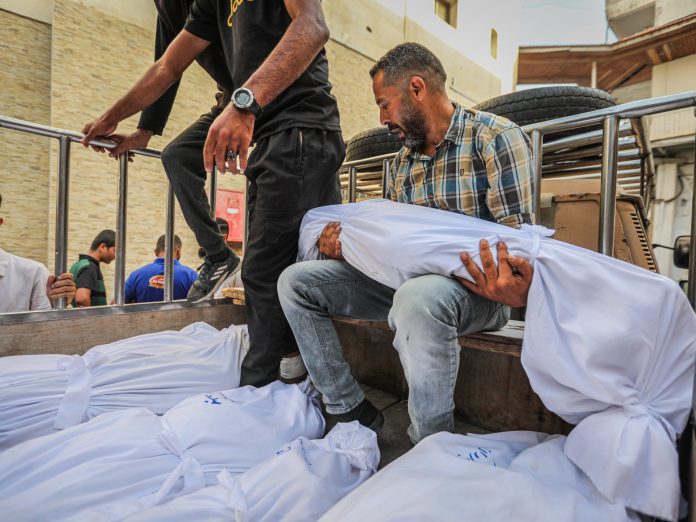
A subsequent brutal offensive launched by Israel has killed nearly 69,000 Palestinians, mostly women and children, injured over 170,000 others, and left the Gaza Strip uninhabitable.


Iran refutes start of negotiations with US

Esmael Baghaei

Speaking at his weekly press conference on Monday, Esmail Baqaei said that while intermediaries may exchange messages, this does not signify the beginning of a negotiation process between Iran and the US.

Regarding Iran’s conditions for dialogue, Baqaei emphasized that the rights and interests of the Iranian nation must be respected, and the other parties must acknowledge Iran’s undeniable rights.

He added that Iran will not unilaterally give up its legitimate rights in any negotiation.

“If such understanding and realism are achieved, one can say that conditions will be suitable for dialogue — but at present, we are not at that stage,” he noted.

In response to a question about the Iranian foreign minister’s recent remark that “Iran is in no rush to negotiate with the US,” Baqaei said: “When the other side seeks excessive demands, would you authorize your negotiators to enter talks under such circumstances?”

Asked what conditions must be met for Iran and the US to begin talks, Baqaei replied: “One must remember that during a diplomatic process, Iran was attacked by the US, and Israel’s assault took place with American collaboration. Iranians cannot forget that.”

The spokesman added that discussions on the principles and prerequisites for negotiations between the two sides can only take place when both parties recognize the existence of shared interests and concerns.

Baqaei pointed out that the United States still insists on pursuing its demands and ambitions unilaterally, without regard for the other side’s interests and concerns.

“Such an approach cannot work with Iran,” he said, “because that is not negotiation — it is dictation.”


Lebanese military mobilizes troops in south after Israeli army movements near border

According to the Lebanese state news agency NNA, Israeli army forces were placed on alert inside the occupied territories next to Kroum al-Marah neighborhood, east of Meiss El-Jabal, prompting the Lebanese army to mobilize and deploy vehicles and troops in the area.

The development comes days after Lebanese President Joseph Aoun on Thursday ordered the army to confront any Israeli military incursions into liberated Lebanese territories in the south.

His order followed an Israeli raid that left a municipal employee dead inside the Blida municipality building in southern Lebanon.
Tensions have been mounting in southern Lebanon for weeks, with the Israeli army intensifying near-daily air raids inside Lebanese territory despite the ceasefire that has been in place since November 2024.

On Friday, Israel’s public broadcaster KAN reported that Tel Aviv is considering escalating its military operations in Lebanon, citing the need to counter Hezbollah’s efforts to boost its capabilities.

The Israeli army has killed more than 4,000 people and injured nearly 17,000 in its attacks on Lebanon, which began in October 2023 and turned into a full-scale offensive in September 2024.

Under the ceasefire, the Israeli army was supposed to withdraw from southern Lebanon this January, but it only partially pulled out and continues to maintain a military presence at five border outposts.